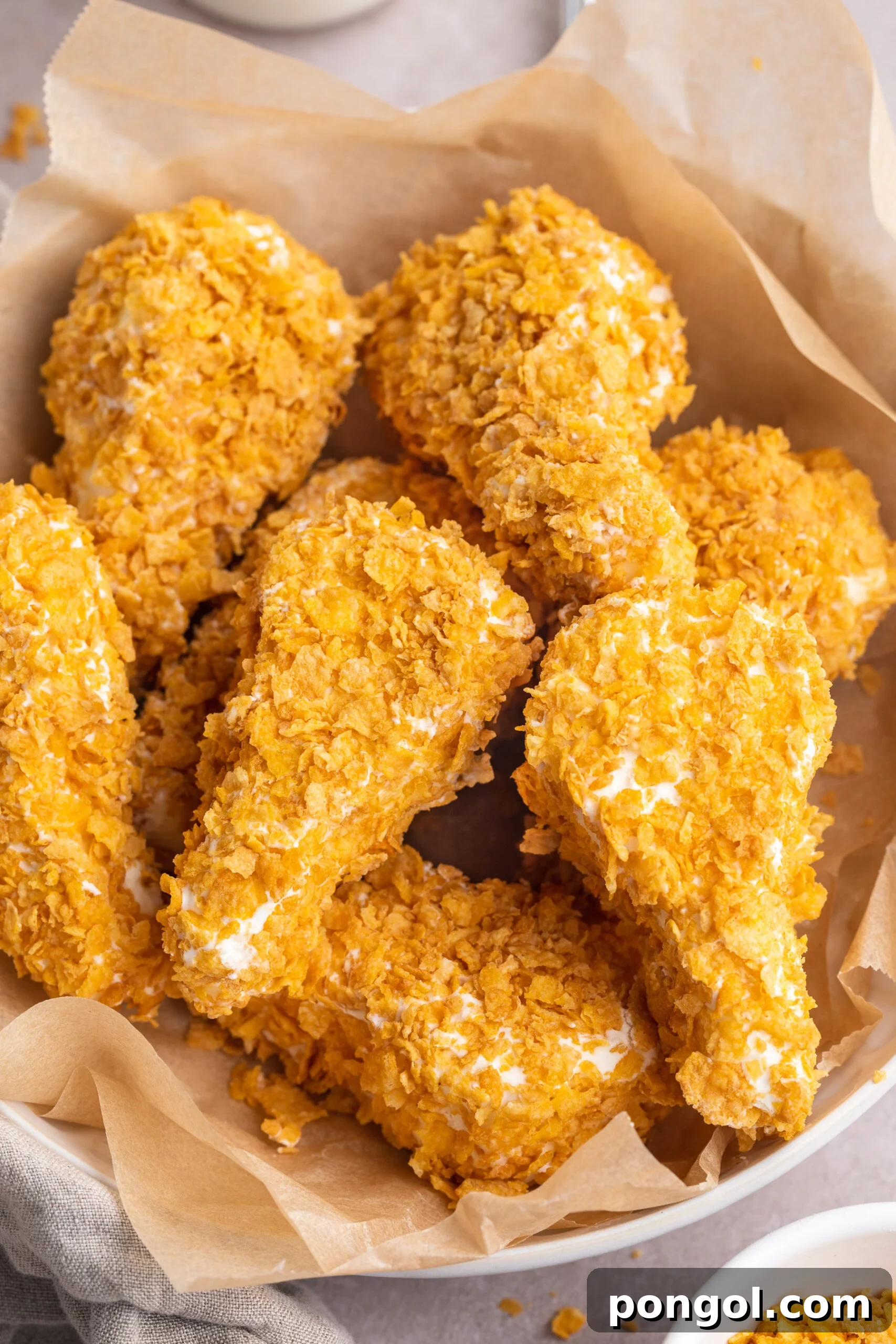
Prepare to amaze and delight your guests with a dessert that is truly a feast for the eyes and the palate! This spectacular “fried chicken” ice cream is a masterful illusion that will have everyone doing a double-take. Far from being a savory dish, this creative confection is a sweet, creamy, and crunchy ice cream bar ingeniously crafted to mimic the appearance of crispy fried chicken drumsticks or tenders. It’s an unforgettable treat that promises a playful surprise in every bite, delivering pure vanilla ice cream encased in a sweet, golden coating of crushed cornflakes.
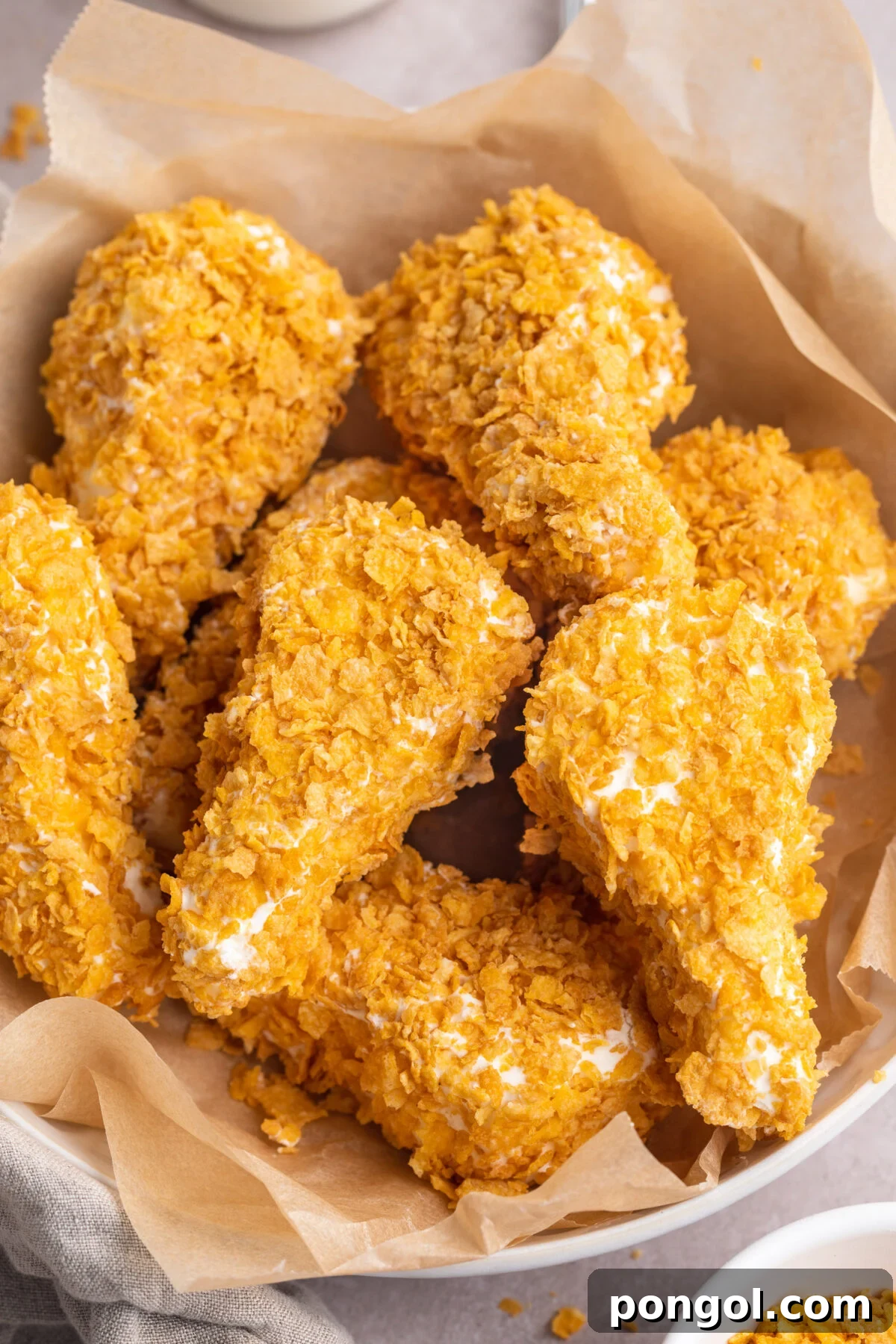
The Allure of This Unique Dessert
Looks can be incredibly deceiving, and that’s precisely the charm of this “fried chicken” ice cream. Don’t let the uncanny presentation fool you; there’s absolutely no chicken involved! This dessert is a celebration of contrasting textures and familiar flavors, made simply with:
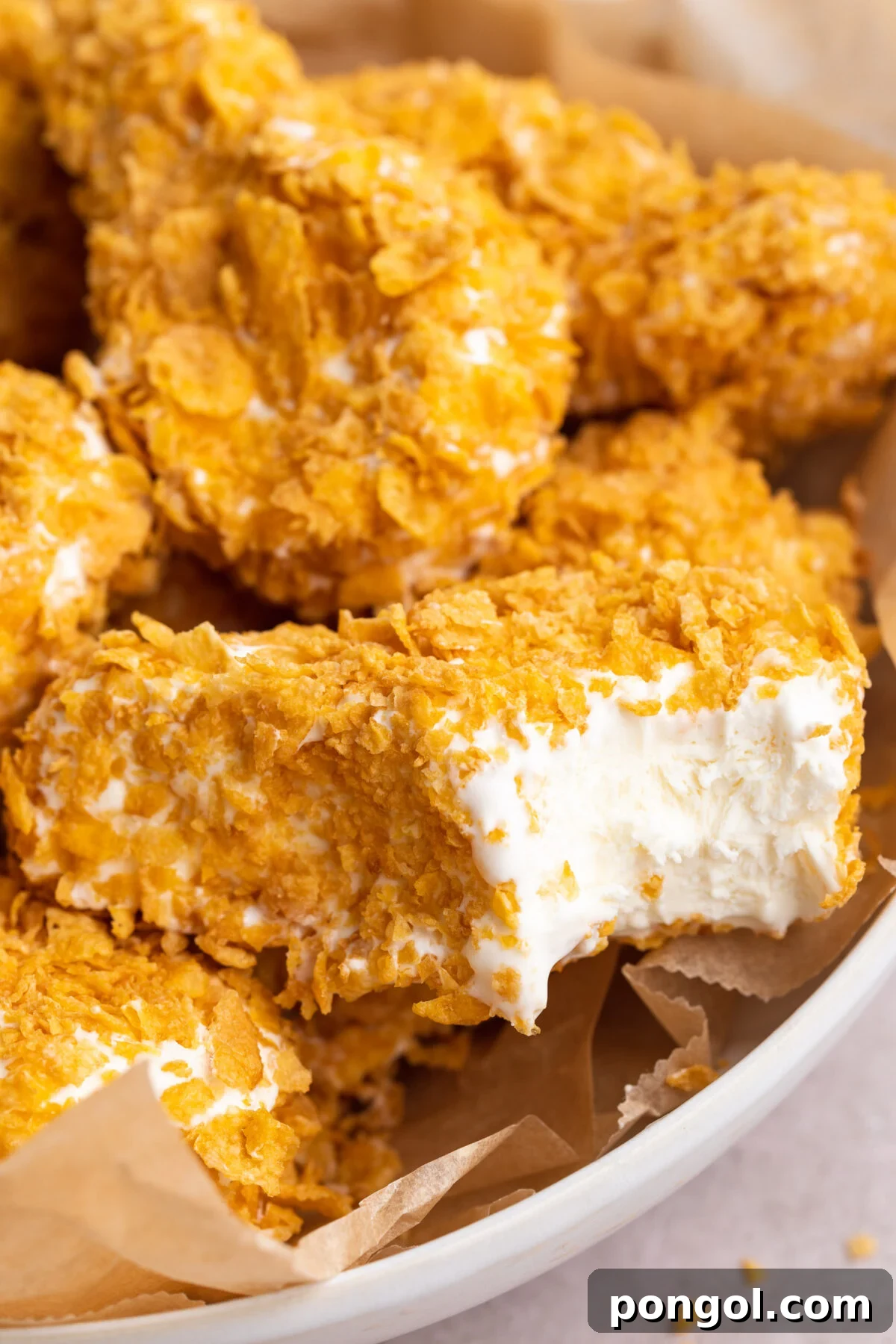
- Rich, Creamy Vanilla Ice Cream: The smooth, classic base that every good ice cream bar needs. We’ll guide you through making a delightfully easy homemade, no-churn vanilla ice cream that sets up perfectly for shaping.
- Sweet White Chocolate Coating: A shell of melted white chocolate provides the essential binder and adds an extra layer of sweetness and smoothness, ensuring the “breading” adheres beautifully.
- Crunchy Crushed Cornflakes: The secret ingredient for achieving that remarkably realistic crispy fried chicken texture and golden hue. The cornflakes deliver an irresistible crunch that perfectly complements the creamy interior.
This whimsical recipe draws its inspiration from the highly sought-after “Not Fried Chicken” ice cream popularized by Life Raft Treats. While our homemade version simplifies some elements—forgoing the cookie “bone” for a more streamlined, boneless tender or drumstick shape and opting for a simple, luscious vanilla base instead of a waffle cone ice cream—it captures all the fun and flavor without the gourmet price tag. It’s a fantastic, budget-friendly alternative that’s perfect for anyone looking to impress at a themed gathering, a summer cookout, or simply craving an extraordinary dessert experience. It’s more than just an ice cream bar; it’s a conversation starter, a delightful prank, and a seriously delicious treat all rolled into one!
Expert Tips for Crafting Perfect “Fried Chicken” Ice Cream
Creating these deceptive delights is a straightforward process, but a few expert tips can elevate your results from good to absolutely perfect. Follow these guidelines to ensure your ice cream “chicken” is consistently delicious and visually stunning:
- Work in Smart Batches: If your kitchen tends to be on the warmer side, or you’re making a large quantity, adopting a batch approach is your best strategy. Instead of attempting to cut, shape, and coat the entire block of ice cream at once, divide your workflow. Keep half the ice cream in the freezer while you work on the other. Similarly, when it comes to dipping in chocolate and coating in cornflakes, only bring out a few pieces at a time. This prevents the ice cream from softening too much, melting, and then refreezing inconsistently, which can compromise its texture. Using two separate baking sheets—one in the freezer, one for active work—can be incredibly efficient.
- The Secret to Smooth Cutting: Achieving clean, precise “chicken” shapes from a frozen block of ice cream is surprisingly simple with the right technique. You’ll need a long, sharp knife—either serrated or a chef’s knife with a smooth blade. The trick? Warm the blade under hot running water for about 30 seconds until it’s nice and warm. Quickly dry the blade with a clean dish towel or paper towel (safety first!) and make your cut into the frozen ice cream before the blade has a chance to cool. Repeat this warming and drying process before each cut. This method allows the warm blade to glide through the ice cream with minimal effort, resulting in cleaner cuts and a much faster, more enjoyable shaping process than struggling with a cold knife.
- Perfecting the “Breading” Texture: The cornflake coating is key to the illusion. For the most realistic and consistent “fried chicken” texture, aim for a mix of finely crushed flakes and some slightly larger pieces. You can achieve this by crushing them in a sealed plastic bag with a rolling pin for a rustic feel, or pulsing them briefly in a food processor for a more uniform “crumb.” Be careful not to turn them into powder; you want texture!
- Mastering the Chocolate Dip: When melting your white chocolate and coconut oil, temper it carefully. Microwave in short 15-second bursts at 50% power, stirring thoroughly after each burst. This prevents the chocolate from overheating, seizing, or burning. A smooth, warm (not hot) chocolate mixture will ensure a thin, even coating that sets quickly and beautifully. If the chocolate starts to thicken during the dipping process, a quick 5-10 second reheat in the microwave will bring it back to the perfect consistency. A small amount of additional coconut oil can also help if it becomes too thick.
- Serving Suggestions & “Dipping Sauces”: What’s fried chicken without its complementary sauces? For this sweet version, forget the BBQ or honey mustard! Instead, elevate your ice cream drumsticks with a selection of delicious dessert “dipping sauces.” Think rich caramel sauce, golden honey, decadent chocolate fudge, or a vibrant strawberry compote. These sweet accompaniments enhance the experience and complete the dessert illusion beautifully. For an extra touch of fun, serve them in miniature condiment cups!
- Optimal Freezing Times: Patience is a virtue when making frozen desserts. While the initial ice cream block needs at least 8 hours (or preferably overnight) to firm up completely, the shaped ice cream pieces require another 2 hours of freezing before coating. After coating in chocolate and cornflakes, a final 1-hour freeze ensures the “breading” is perfectly set and crunchy. Rushing these steps can lead to messy results and a less enjoyable texture.
- Storage for Future Enjoyment: Once fully assembled and frozen, these “fried chicken” ice cream bars can be stored in an airtight container in the freezer for up to 2-3 weeks. This makes them an excellent make-ahead dessert for parties or when you simply want to have a unique treat on hand. Separate layers with parchment paper to prevent sticking.
More Delectable Recipes to Explore!
- Crockpot Marry Me Chicken
- Bacon Cookie Butter Cookies
- Mochi Brownies
- Lobster Mac and Cheese
- S’mores Bars
- Cream Cheese Fruit Dip (No Marshmallow Fluff!)
- Instant Pot Mississippi Pot Roast
- White Chocolate Matcha Brownies
- Chicken Pot Pie Casserole
- Christmas Confetti Cookies
Sam Guarnieri
Homemade Fried Chicken Ice Cream
45 minutes
12 hours
12 hours 45 minutes
Looks can be deceiving! These fun and tasty homemade ice cream bars don’t taste like chicken at all. Perfect for cookouts, themed birthday parties or showers, or just anytime you want a different sort of treat.

Sam Guarnieri
Equipment
- Stand mixer bowl (or large mixing bowl)
- 9×9 baking dish (or 8×4 loaf pan)
- Parchment paper
- Stand mixer (or hand mixer, with whisk attachment)
- Large silicone spatula
- Freezer
- Cutting board
- Long sharp serrated knife
- Hot running water
- Dish towel (or paper towels)
- Baking sheet
- Large shallow bowl (or plate)
- Medium microwave-safe bowl
- Small silicone spatula
Ingredients
For the Homemade Vanilla Ice Cream
- 2 cups cold heavy cream (see Notes for whipping tips)
- 1 (14-ounce) can sweetened condensed milk, chilled
- 1 ½ teaspoons pure vanilla extract (see Notes for color)
For the Fried Chicken “Breading”
- 1 ½ cups white chocolate chips (see Notes for brand recommendations)
- 2 tablespoons refined coconut oil (solid or liquid)
- 3 cups cornflakes, crushed
Instructions
For the Homemade Vanilla Ice Cream
- Prepare for Whipping: Approximately 15 minutes before you begin mixing, pour 2 cups of very cold heavy cream into your stand mixer bowl. Place both the bowl of heavy cream and the whisk attachment for your mixer into the refrigerator to ensure they are thoroughly chilled. This step is crucial for achieving perfectly whipped cream.
- Line Baking Dish: Prepare your chosen baking dish (9×9 or loaf pan) by lining it with parchment paper. Allow a generous amount of parchment paper to overhang on two sides; these will serve as convenient “handles” to lift the frozen ice cream block later. Set the lined dish aside.
- Whip Heavy Cream: Retrieve the chilled bowl and whisk attachment from the refrigerator. Attach the whisk to your stand mixer and secure the bowl. Begin whisking the heavy cream on medium-low speed for 30 to 60 seconds. Gradually increase the speed to medium-high and continue whisking until the cream starts to form soft peaks. Reduce the speed to medium and continue whisking until stiff peaks are achieved. Be very careful not to over-whip, as this can result in a grainy texture. (Refer to the Notes section for a detailed guide on whipped cream stages).
- Fold in Flavor: Carefully remove the bowl from the stand mixer. Using a large silicone spatula, gently fold in the chilled sweetened condensed milk and the pure vanilla extract. Continue folding until these ingredients are fully and smoothly incorporated into the whipped cream, ensuring no streaks remain.
- Transfer and Freeze: Pour the ice cream mixture into your prepared parchment-lined baking dish. Use the silicone spatula to gently spread and smooth the mixture into an even, flat layer, making sure to push it into all the corners of the dish.
- Initial Freeze: Place the uncovered baking dish directly into the freezer. Allow it to freeze for a minimum of 8 hours, or ideally overnight, until the ice cream is completely solid and firm. This extended freezing time is essential for easy shaping.

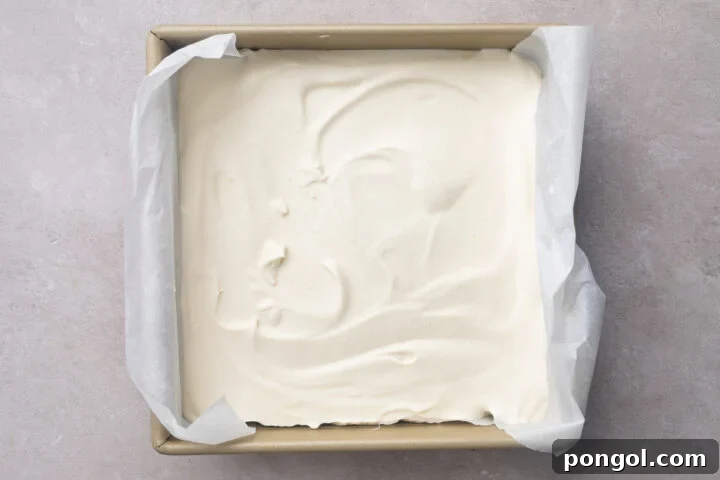
For the Fried Chicken Ice Cream Bars
- Prepare Baking Sheet: Line a clean baking sheet with parchment paper. This will be used to hold your shaped ice cream pieces. Set it aside in the freezer if space allows, to keep it extra cold.
- Remove Ice Cream Block: Once the ice cream is fully frozen, remove the baking dish from the freezer. Use the overhanging parchment paper “handles” to carefully lift the solid block of ice cream out of the baking dish and transfer it onto a cutting board. If it’s stuck, you can briefly warm the bottom of the dish with your hands or a warm towel.
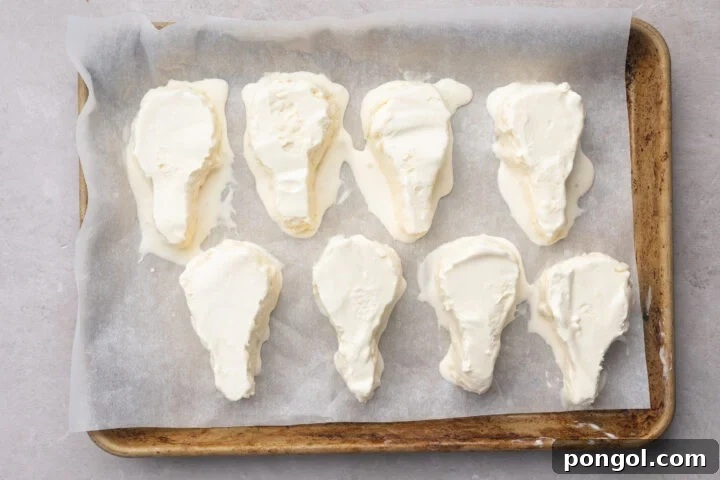
- Shape the “Chicken”: Employ the hot knife trick described in the “Chef’s Tips” above. Run a sharp knife under hot water, dry it, then use it to cut the ice cream block into desired “chicken nugget,” “strip,” or “drumstick” shapes. For a serrated knife, use a gentle sawing motion. For a straight-edge chef’s knife, press straight down without sawing. Remember to re-warm and dry the knife blade after each cut for the cleanest results.
- Freeze Shaped Pieces: As you shape each piece of ice cream, transfer it immediately to the prepared parchment-lined baking sheet. Continue this process until the entire ice cream block has been transformed into “chicken” shapes.
- Firm Up Shaped Ice Cream: Place the baking sheet with the shaped ice cream pieces back into the freezer. Freeze for an additional 2 hours until the ice cream is very firm. This prevents melting during the coating process.
- Prepare Cornflake Coating: While the shaped ice cream is firming, add your crushed cornflakes to a large, shallow bowl or plate. Spread them out evenly, ready for coating.
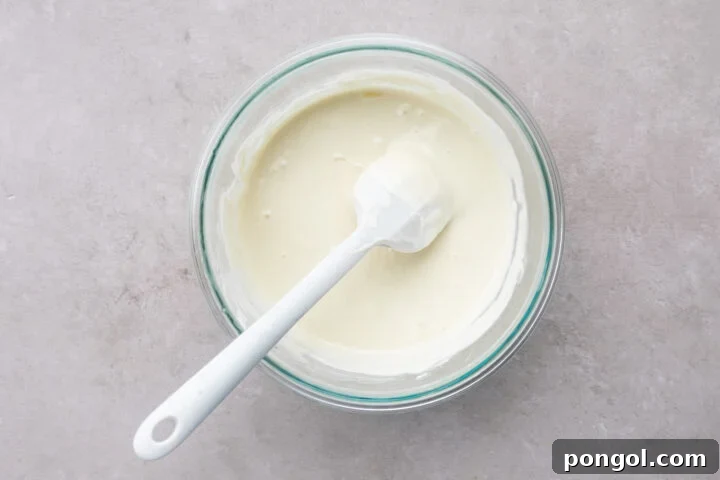
- Melt White Chocolate: In a completely dry, microwave-safe bowl, combine the white chocolate chips and refined coconut oil. Microwave at 50% power in short 15-second bursts, stirring diligently after each interval, until the chocolate is fully melted and smoothly combined with the coconut oil. Ensure no lumps remain.
- Begin Coating Process: Carefully remove the melted chocolate from the microwave, then retrieve the frozen, shaped ice cream from the freezer. Work quickly but carefully.
- Dip in Chocolate: Take one shaped ice cream piece from the baking sheet. Submerge it in the melted white chocolate, ensuring it’s completely coated. You can use a fork to hold the ice cream, or skewer it with a metal skewer and spoon chocolate over it to ensure full coverage.
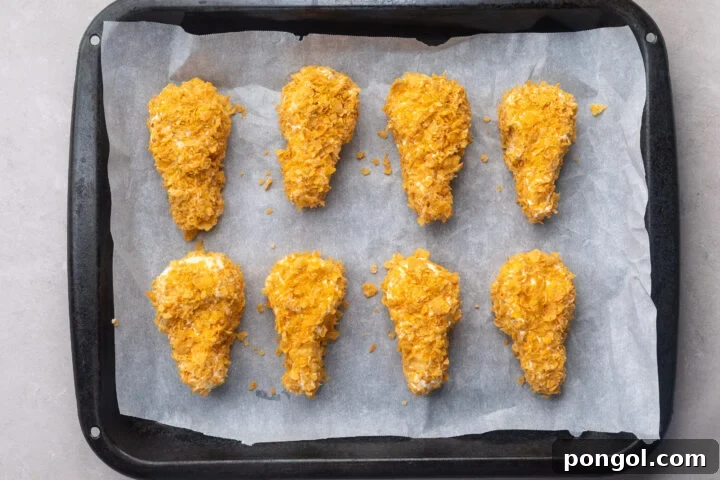
- Coat in Cornflakes: Immediately transfer the chocolate-coated ice cream bar to the bowl of crushed cornflakes. Gently flip and press the bar lightly to coat all sides evenly with the cornflakes, resembling a crispy fried crust. Once coated, return the bar to the parchment-lined baking sheet.
- Repeat & Reheat: Continue this dipping and coating process with the remaining chicken-shaped ice cream bars. If the white chocolate begins to thicken or cool, reheat it briefly in the microwave. If it seems too thick, add a tiny amount of additional coconut oil and stir well.
- Final Freeze: Once all the “chicken” bars have been coated and “breaded,” return the filled baking sheet to the freezer for a final freeze of at least 1 hour. This allows the chocolate coating to fully set and the cornflake “breading” to become perfectly crisp.
- Serve and Enjoy: After the “breading” has set completely, your fried chicken ice cream bars are ready to serve! You can enjoy them straight from the freezer. If desired, present them with a selection of sweet “dipping sauces” like caramel, honey, chocolate syrup, or strawberry sauce for an authentic, yet unexpected, dessert experience. Store any leftovers in an airtight container in the freezer.
Recipe Notes & Tips
The exact number of ice cream bars you’ll get will depend on the size and shape you cut from the frozen ice cream block. Experiment with nuggets, strips, or drumstick shapes!
- Heavy Cream: For successful whipping, your heavy cream must be exceptionally cold, but not frozen. Keep it in the refrigerator until the very moment you are ready to begin whisking.
- Vanilla Extract: Traditional pure vanilla extract has a natural brown hue, which might impart a slight off-white tint to your ice cream. If you desire a brilliantly stark white ice cream, opt for a clear vanilla extract. Be aware that clear vanilla extracts are typically artificial or imitation flavors.
- White Chocolate Chips: The quality of your white chocolate significantly impacts the flavor and smoothness of the coating. We highly recommend using a premium brand like Ghirardelli or Godiva chocolate chips. Alternatively, a good quality white chocolate bar (such as Lindt) can be roughly chopped and melted for excellent results.
Understanding Whipped Cream Stages
To accurately gauge the consistency of your whipped cream, pause your mixer, remove the whisk attachment, and hold it upright, with the cream-covered end pointing skyward:
- Soft Peaks: The heavy cream will form a distinct peak or point on the whisk, but this peak will gently fold over or quickly collapse under its own weight.
- Medium Peaks: At this stage, the whipped cream is sturdy enough that the peak or point will hold its shape and not immediately fold over, but it won’t stand perfectly straight up; it will have a slight curve.
- Stiff Peaks: The ultimate goal! The point or peak of the whipped cream will stand perfectly straight up and maintain its rigid form without any folding or collapsing.
- Over-Whipped: This is one step beyond stiff peaks. The whipped cream will lose its characteristic fluffy, ethereal texture and become grainy, curdled, or hard to work with, almost like butter. If you accidentally over-whip, you might be able to salvage it by gently folding in a tablespoon or two of additional cold, unwhipped heavy cream until the mixture regains a smoother consistency.
Approximate Nutrition Information for One Serving
Calories: 498 cal
Protein: 6 g
Fat: 27 g
Saturated Fat: 18 g
Trans Fat: 0 g
Cholesterol: 72 mg
Sodium: 223 mg
Potassium: 297 mg
Total Carbs: 57 g
Fiber: 1 g
Sugar: 38 g
Net Carbs: 56 g
Vitamin A: 83 IU
Vitamin C: 0 mg
Calcium: 170 mg
Iron: 6 mg
Nutrition Disclaimers
The number of total servings shown is approximate. Actual number of servings will depend on your preferred portion sizes.
Nutritional values shown are general guidelines and reflect information for 1 serving using the ingredients listed, not including any optional ingredients. Actual macros may vary slightly depending on specific brands and types of ingredients used.
To determine the precise weight of one serving, prepare the recipe as instructed. Weigh the finished recipe in its entirety (excluding the weight of the container). Divide this total weight by your desired number of servings to find the weight of each individual serving.
Did You Create This Recipe?
We’d love to see your amazing creations! Tag @40aprons on Instagram and make sure to leave a review on this blog post to share your experience!
Tag @40Aprons on Instagram
Frequently Asked Questions About “Fried Chicken” Ice Cream
Curious about perfecting this unique dessert? Here are answers to some common questions:
Can I use store-bought ice cream instead of making it homemade?
Absolutely! While our homemade no-churn vanilla ice cream recipe is simple and yields fantastic results, you can certainly use your favorite brand of high-quality store-bought vanilla ice cream. The key is to ensure it’s frozen very solid before you attempt to cut and shape it. If it’s too soft, it will be difficult to work with and may melt too quickly during the coating process. Allow plenty of time for it to refreeze firmly after purchasing if needed.
How can I make the cornflake coating stick better?
The secret to a robust and long-lasting cornflake coating lies in two main factors: the temperature of your ice cream and the consistency of your melted white chocolate. Ensure your shaped ice cream pieces are rock-hard frozen before dipping. The melted white chocolate should be warm and fluid, but not hot, allowing it to coat thinly and set quickly. Immediately after dipping in chocolate, roll and press the ice cream firmly into the crushed cornflakes. Working in small batches and returning coated pieces to the freezer quickly also helps prevent premature melting and ensures a good adherence.
Are there any flavor variations I can try?
Of course! The beauty of homemade treats is customization. For the ice cream base, consider using a different flavor like chocolate, strawberry, or even a coffee ice cream. You could also swirl in some caramel or chocolate fudge into the vanilla ice cream before the initial freeze. For the coating, while white chocolate provides the best “fried chicken” look, you could experiment with milk chocolate or dark chocolate for a different flavor profile. Instead of cornflakes, crushed pretzels or even a mix of nuts could offer an interesting texture, though the visual effect would be different.
How long does this “fried chicken” ice cream last in the freezer?
When stored properly in an airtight container, your homemade “fried chicken” ice cream bars can last in the freezer for up to 2 to 3 weeks. To prevent them from sticking together or absorbing freezer odors, place layers of parchment paper between the bars. For the best taste and texture, we recommend enjoying them within the first two weeks.
Is this recipe suitable for dietary restrictions (e.g., gluten-free, dairy-free)?
The core recipe as written contains dairy (heavy cream, condensed milk, white chocolate) and gluten (cornflakes). To make it gluten-free, ensure you use certified gluten-free cornflakes. For a dairy-free version, you would need to use coconut cream or another dairy-free heavy cream alternative, a dairy-free sweetened condensed milk, and dairy-free white chocolate chips. Please note that substitutions may alter the texture and flavor, and extensive testing would be required to ensure comparable results.