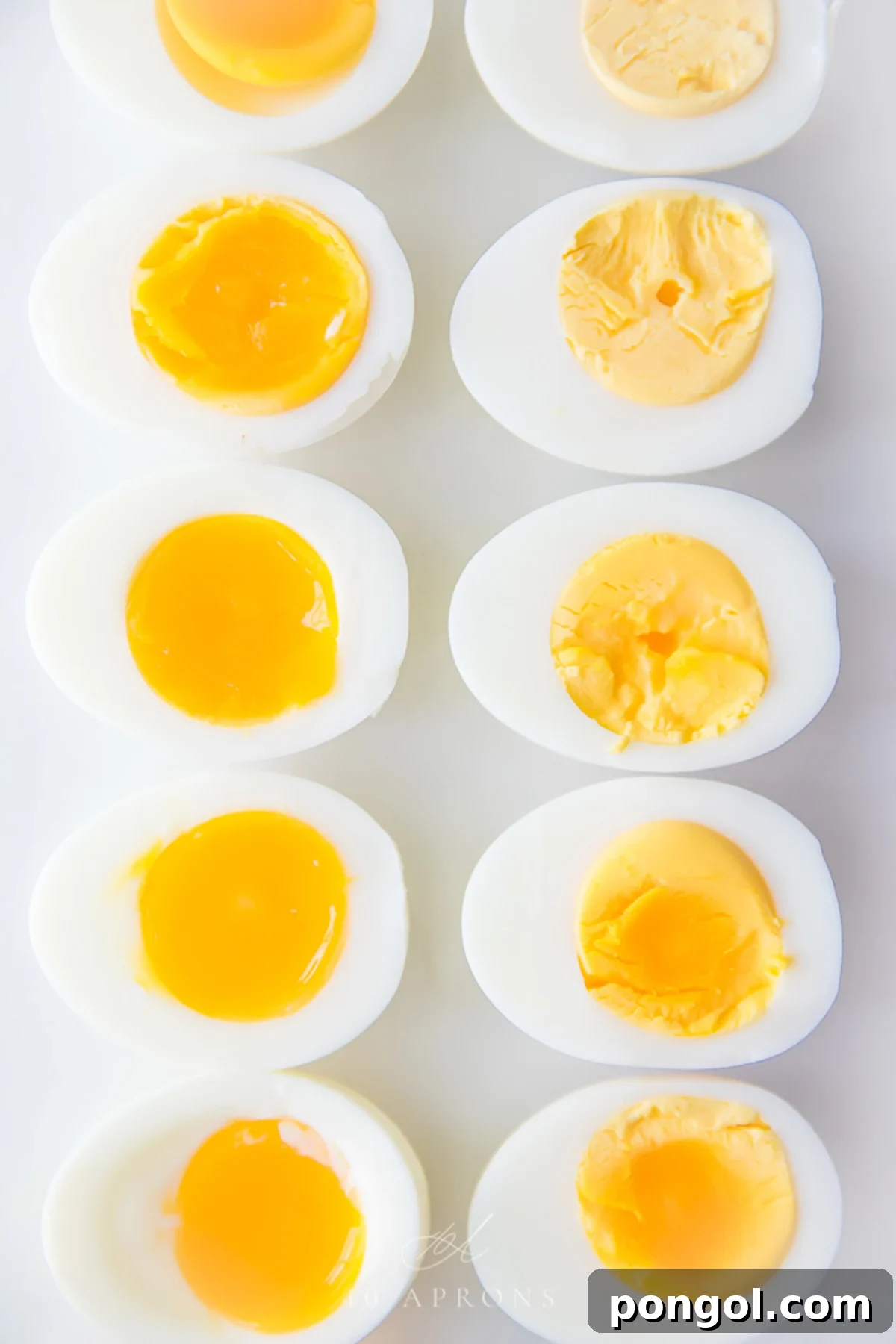
Unlock the secret to consistently perfect boiled eggs that peel effortlessly every single time. Whether you crave a velvety soft-boiled yolk, a beautifully jammy consistency, or a firm yet creamy hard-boiled egg, this comprehensive guide provides all the necessary techniques and timings. Bid farewell to frustratingly sticky shells and undercooked or overcooked yolks. This method guarantees impeccable results, making your culinary endeavors simpler and more satisfying. Ideal for everything from crafting exquisite deviled eggs for your next gathering to preparing vibrant Easter eggs for festive celebrations, this is the ultimate resource for egg perfection.
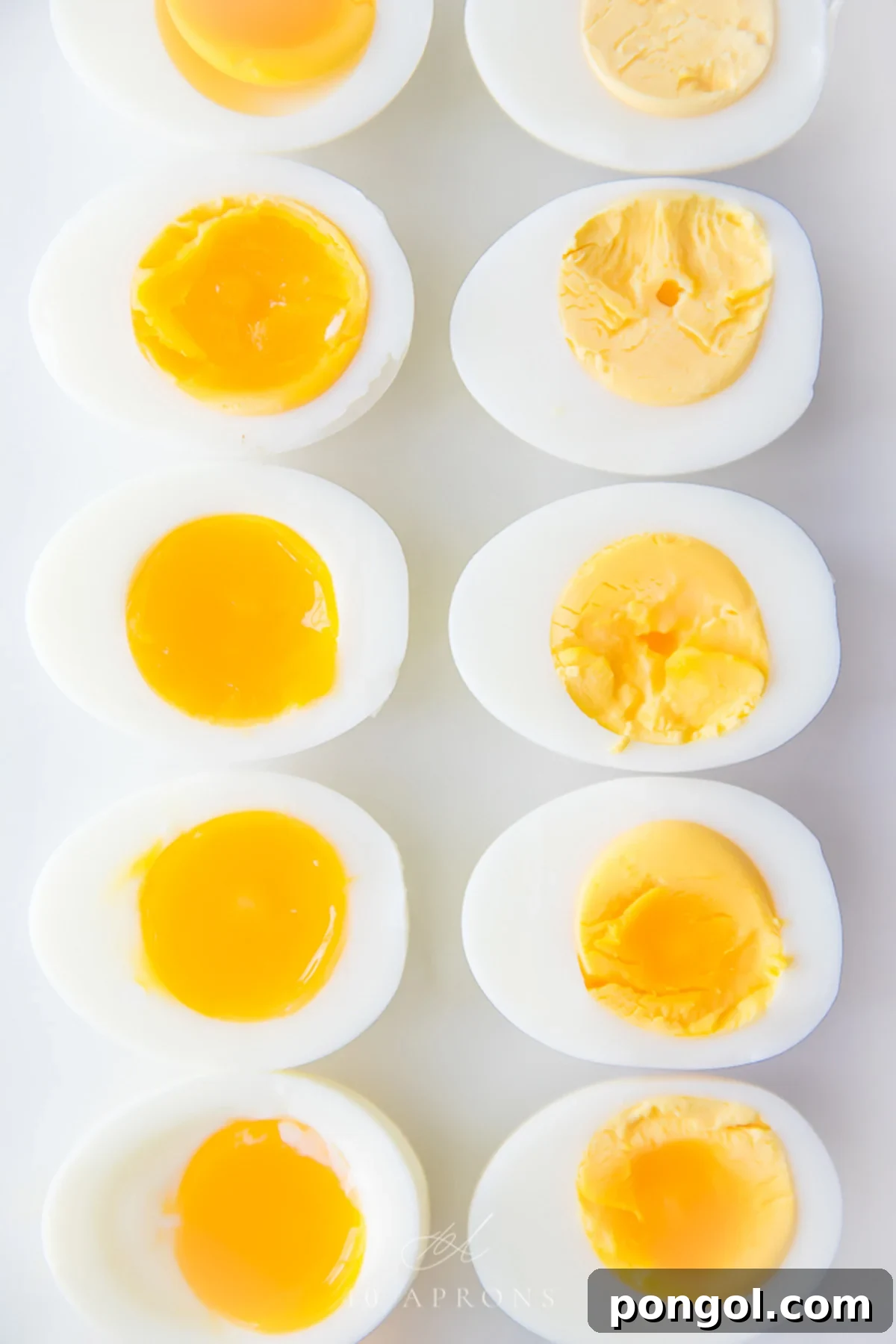
Discover the Foolproof Boiled Egg Method: Why It Works So Well
For far too long, achieving the perfect boiled egg felt like a culinary lottery. I’m not afraid to admit that my early attempts were often met with disappointment. Perhaps you can relate? Like many, I started eggs in cold water, slowly bringing them to a boil, hoping for the best. I also experimented with adding eggs to already boiling water, then removing them from the heat to steep for a set amount of time. Each approach promised ease, yet consistently delivered varying results – peeling became an absolute chore, and the yolk’s creaminess or firmness was a constant unknown.
If this sounds familiar, prepare to revolutionize your egg-boiling experience. This method stands out because it systematically addresses and eliminates common pitfalls, ensuring predictable and delightful outcomes. It’s designed for simplicity and efficiency, transforming a once challenging task into an enjoyable part of your cooking routine. Here’s what makes it truly exceptional:
- Unmatched Efficiency: This technique is not only quick and straightforward but also incredibly foolproof. You can flawlessly peel a full dozen boiled eggs in approximately two minutes, saving you precious time and effort in the kitchen.
- Superior Yolk Consistency: Whether you desire a gloriously runny yolk, a perfectly jammy texture, or a firm yet tender fully solid yolk, this method consistently delivers the richest, creamiest yolks imaginable. Say goodbye to dry, crumbly yolks and hello to culinary delight.
- Effortless Peeling: Prepare to be amazed by how easily these eggs peel. The process virtually eliminates the frustration of stubborn shells, leaving you with smooth, pristine egg whites every single time.
- Vibrant, Sulfuric-Free Yolks: A common issue with overcooked eggs is the unsightly blue-green ring around the yolk, often accompanied by a sulfuric odor. This method prevents such chemical reactions, ensuring your yolks remain beautifully bright yellow and free from any unpleasant smells.
Mastering Boiled Egg Timings: From Runny to Firm
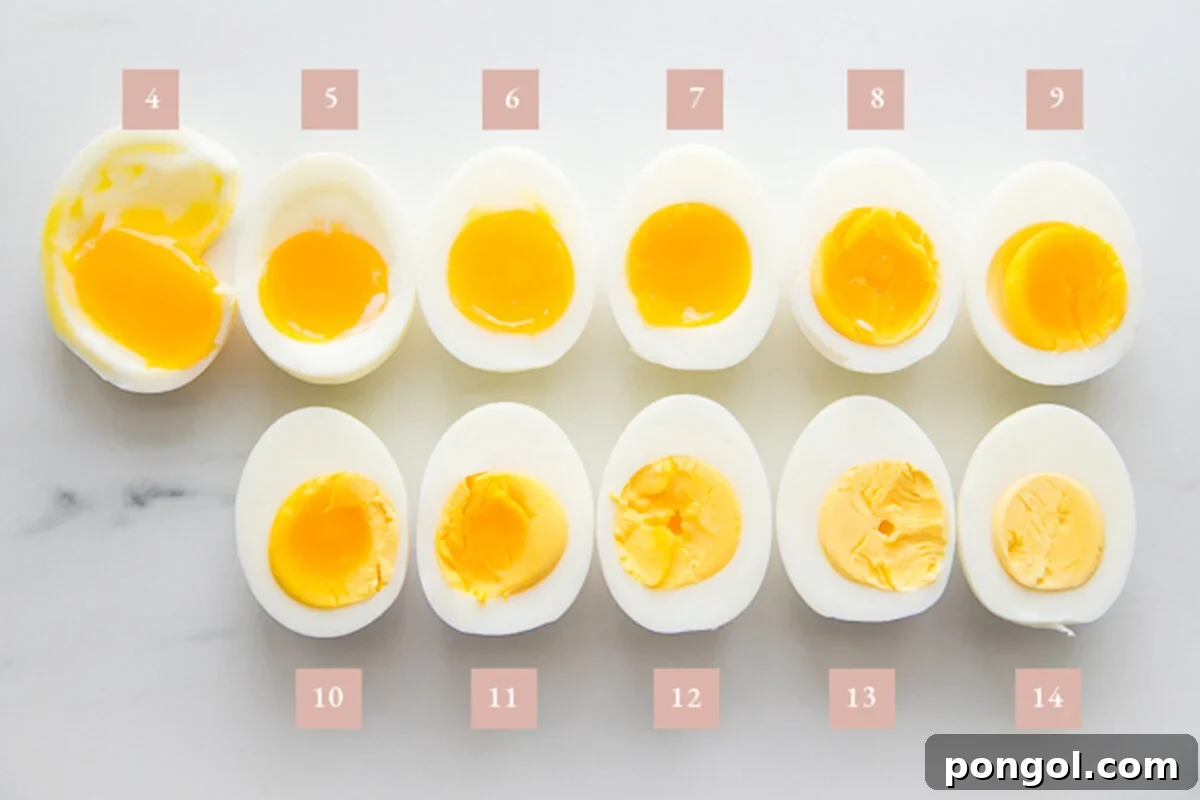
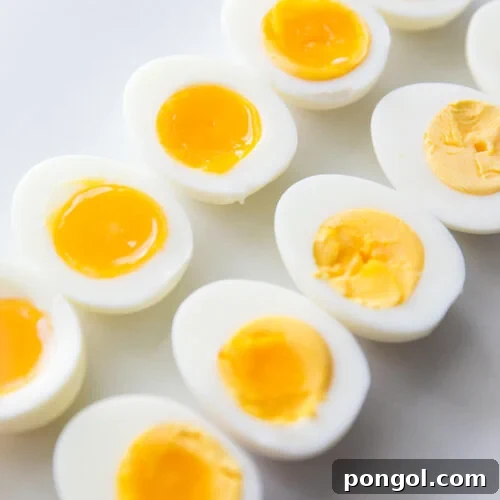
The duration you boil an egg is paramount in determining its final texture and consistency. There’s a wide spectrum of results between what’s typically considered “hard-boiled” and “soft-boiled,” each with its own culinary appeal. This guide outlines precise timings to help you achieve your desired yolk perfection. Each egg pictured below was prepared using the exact same foolproof method; the only variable was the boiling time.
Let’s explore the diverse range of outcomes, starting from the shortest cooking times:
- 4 minutes: The Liquid Dream
At this stage, the egg white is mostly set but still quite delicate and may not hold its shape perfectly when cut. The yolk, however, remains wonderfully super liquid, almost entirely raw, making it perfect for dipping toast or enriching a soup. - 5 minutes: Soft and Silky
The egg white is almost entirely set and firm, providing a pleasant contrast to the yolk. The yolk itself is still beautifully runny, verging on liquid, offering a luxurious, creamy texture that’s delightful with a sprinkle of salt and pepper. - 6 minutes: Creamy and Gooey Perfection
With six minutes of boiling, you achieve a fully set egg white and a gorgeously creamy, gooey yolk. This consistency is highly sought after for dishes like ramen, where the rich yolk slowly melds into the broth, adding depth and flavor. It’s also fantastic on avocado toast. - 7 minutes: The Jammy Favorite
Seven minutes yields firm egg whites and a distinctly jammy yolk – thick, vibrant, and incredibly satisfying. This is often my personal favorite for eating on its own, sliced in half and topped with a pinch of flaky sea salt, black pepper, and perhaps a dash of chili flakes. It’s also superb in salads or as part of a quick, nutritious snack.
Beyond the 7-minute mark, you can expect all boiled eggs to feature fully firm and opaque egg whites, ensuring a consistent base for increasingly solid yolks.
- 8 minutes: Soft Center Delight
The yolk is now half-set. Its edges are firm and creamy, transitioning to a softer, slightly jammy center. This provides a delightful textural contrast within the yolk itself. - 9 minutes: Moist and Almost Set
At nine minutes, the yolk is mostly set, though the very center retains a noticeable moistness. It’s a great option if you prefer a less runny yolk but still appreciate a hint of tenderness. - 10 minutes: Progressing Towards Firmness
A significant portion of the yolk is now fully set and a beautiful light yellow. However, the innermost core remains a darker yellow and noticeably moist, signaling it’s not quite fully firm. - 11 minutes: Just Shy of Fully Set
The yolk is nearly all light yellow and fully set, with only the very center maintaining a slightly moister texture than the rest. This stage offers a creamy, nearly firm consistency without any dryness. - 12 minutes: The Ideal Hard-Boiled Egg
This is often considered the pinnacle of hard-boiled egg perfection. The yolk is fully set, a uniform light yellow, and retains an incredibly creamy texture, never dry or chalky. It’s perfect for slicing, mashing, or enjoying whole. - 13 minutes: Firm but Less Creamy
The yolk is fully set throughout, but the creaminess starts to diminish slightly compared to the 12-minute mark. Still perfectly edible and firm, ideal for those who prefer a solid yolk for recipes. - 14 minutes: Fully Set, Approaching Dryness
At this point, the yolk is completely firm and fully set, but you’ll notice it beginning to lose its moisture and become a little drier. While still functional for recipes, boiling beyond 14 minutes is generally not recommended as it leads to an unappealingly dry and sometimes crumbly texture.
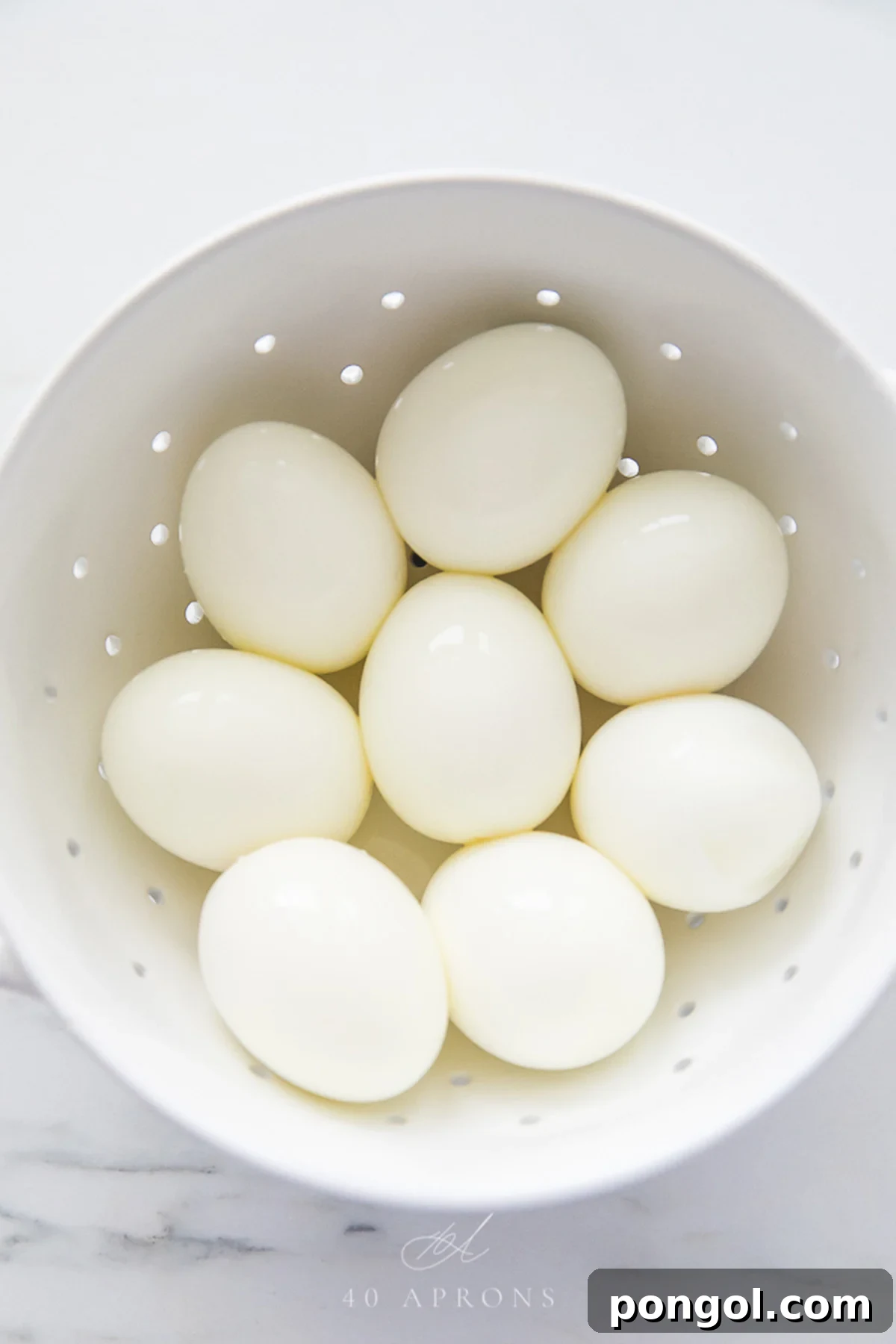
Creative Culinary Applications for Hard- and Soft-Boiled Eggs
Boiled eggs are a remarkably versatile ingredient, extending far beyond the simple snack with a dash of salt and pepper. Their various consistencies open up a world of culinary possibilities, from quick meals to elaborate appetizers. Here are some inspiring ways to incorporate perfect boiled eggs into your cooking:
- Festive Decorations: Unleash your creativity by dying eggs for Easter egg hunts, crafting beautiful holiday centerpieces, or adding vibrant, edible decor to your table.
- Classic Appetizers: Transform perfectly hard-boiled eggs into irresistible classic deviled eggs. These crowd-pleasers are a staple for cookouts, potlucks, and family gatherings, offering a rich, tangy, and savory bite.
- Elevated Snacks & Toppings: Halve your boiled eggs and sprinkle them with gourmet seasonings. Experiment with Japanese togarashi for a spicy kick, a dash of your favorite hot sauce, the savory blend of Old Bay, bold cajun seasoning, or smoky paprika for an instant flavor upgrade.
- Gourmet Breakfast Boards: Elevate your breakfast experience by serving them as a key component of a breakfast charcuterie board. Arrange them alongside an assortment of fine cheeses, cured meats, fresh fruits, artisanal breads, or even bagels for a sophisticated and customizable morning feast.
- Savory Salads & Spreads: Mash firm boiled eggs into a creamy, delightful egg salad. Perfect for sandwiches, wraps, or as a protein-rich dip, egg salad is a timeless comfort food.
- Ramen & Noodle Bowl Enhancements: Add a perfectly soft-boiled or jammy egg as the crowning glory to a bowl of homemade ramen or any noodle dish. The rich, custardy yolk adds an unparalleled depth of flavor and luxurious texture to the broth.
- Nutritious Meal Prep: Hard-boiled eggs are excellent for meal prepping. They provide a convenient source of protein for salads, grain bowls, or as a quick, healthy snack throughout the week.
- Creative Canapés: Slice and top with caviar, smoked salmon, or herb cream cheese for elegant small bites.
Fresh vs. Older Eggs: Does Age Affect Peeling?
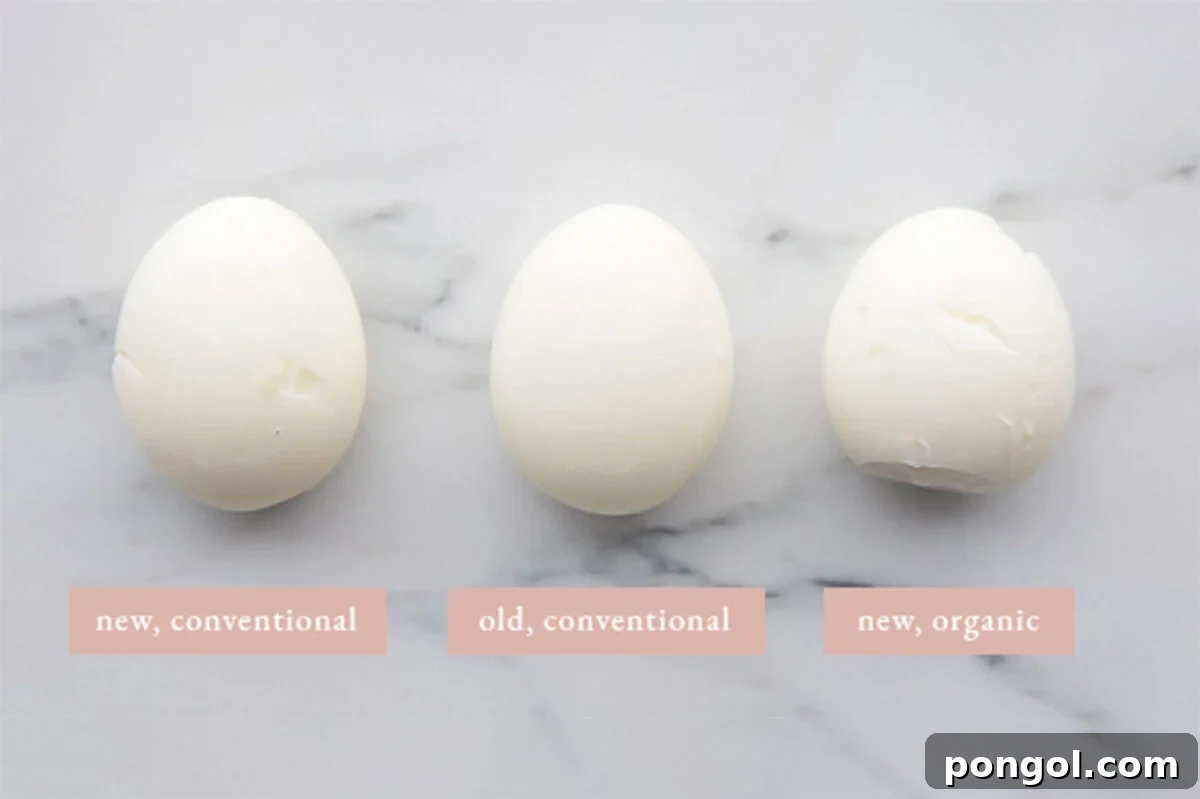
A common culinary myth suggests that older eggs are significantly easier to peel than fresh ones. To put this theory to the test, I conducted a direct comparison between eggs purchased just yesterday and those that had been refrigerated for at least a week. Visually, you can observe a slight difference in the two leftmost eggs in the photograph below, representing the “old” and “new” comparison.
However, the practical difference in peeling ease, using this particular method, was surprisingly minimal. While some anecdotal evidence might suggest a benefit to older eggs due to changes in albumen pH over time, my experience with this specific boiling technique showed consistent, easy peeling regardless of age. The remaining eggs used in my tests were also relatively new, conventional eggs, and I encountered zero issues with their peelability. Therefore, I wouldn’t recommend stressing too much about the age of your eggs when using this foolproof method; focus instead on the boiling process itself for optimal results.
The Secret Ingredients for Easy Peeling: Vinegar and Salt
Incorporating simple household ingredients like vinegar and salt into your boiling water can significantly improve the outcome of your boiled eggs. These additions are not just old wives’ tales; there’s a scientific basis for their effectiveness:
- Vinegar for Effortless Peeling: Adding vinegar to the boiling water helps to slightly denature the proteins in the egg white. This subtle change prevents the egg white from adhering too strongly to the inner membrane of the shell, making the peeling process remarkably smoother and easier. It works by creating a more alkaline environment, which helps the egg white separate cleanly from the shell once cooked and cooled.
- Salt for Crack Protection: The inclusion of salt in the water serves a crucial purpose: it helps the egg white coagulate quickly if a shell happens to crack during boiling. The salt increases the density of the water, and if a hairline fracture occurs, the escaping egg white will solidify almost instantly upon contact with the salted water. This effectively seals the crack, preventing excessive leakage of egg white and ensuring your eggs maintain their perfect shape.
The type of vinegar you use isn’t particularly important; white vinegar, apple cider vinegar, or even a milder vinegar will work. Aim for about 1-2 tablespoons of vinegar per pot of water as it warms up, along with a generous pinch or half a teaspoon of salt added at the same time. These small additions make a big difference in the quality and ease of your boiled eggs.
Note: Modifying recipes can sometimes lead to unexpected results. Any substitutions or variations suggested in this guide are simple changes believed to be effective, but exact outcomes cannot be guaranteed.
Easy Peel Hard- and Soft-Boiled Eggs
The quickest, easiest, most foolproof method for perfectly boiled eggs every single time, ensuring easy peeling and delicious results.
 Cheryl Malik
Pin Recipe
Save Recipe
Equipment
- Large saucepan (or large pot, ensuring eggs fit in a single layer)
- Water
- Slotted spoon (or handheld strainer)
- Timer
- Large bowl (filled with cold water and ice for an ice bath)
- Running water (optional, for final peeling assistance)
Ingredients
- 1-2 tablespoons vinegar (any type works well)
- ½ teaspoon salt
- 12 large eggs
Instructions
-
Fill a large saucepan with enough water so that the waterline sits approximately 1-inch above where the tops of the eggs will be when submerged. Ensure the saucepan is large enough to hold all your eggs in a single, even layer without stacking.
-
Place the saucepan on your stovetop over high heat and bring the water to a rapid, rolling boil. Once the water is vigorously boiling, stir in the vinegar and salt. Allow the water to return to a full, rolling boil.
-
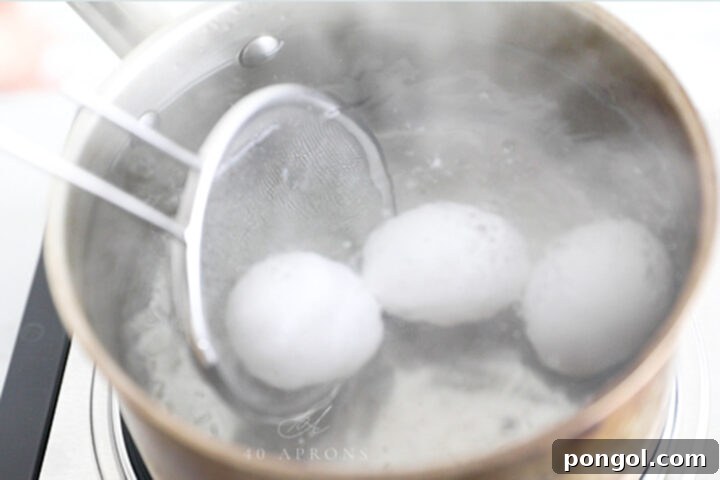
Working quickly but with extreme care, use a slotted spoon to gently lower 2 to 3 eggs into the boiling water at a time. Be cautious not to drop or crack the eggs against the bottom or sides of the saucepan. Continue this process until all eggs are submerged, then immediately start your timer. Refer to the “Boil Times & Egg Consistency” section in the Notes below for specific time recommendations based on your desired yolk texture.

-
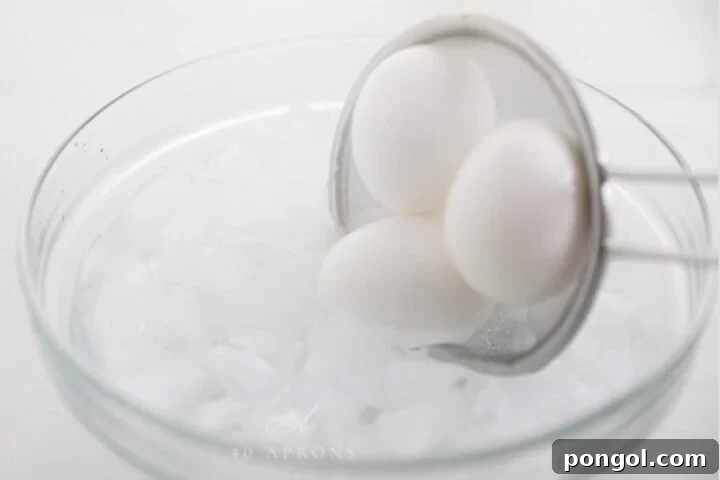
As soon as your timer signals the end of the boiling time, quickly but carefully transfer the boiled eggs from the hot saucepan directly into a large bowl filled with an ice bath (cold water and plenty of ice). Allow the eggs to sit in this ice bath for at least 5 minutes to halt the cooking process and aid in easy peeling.
-
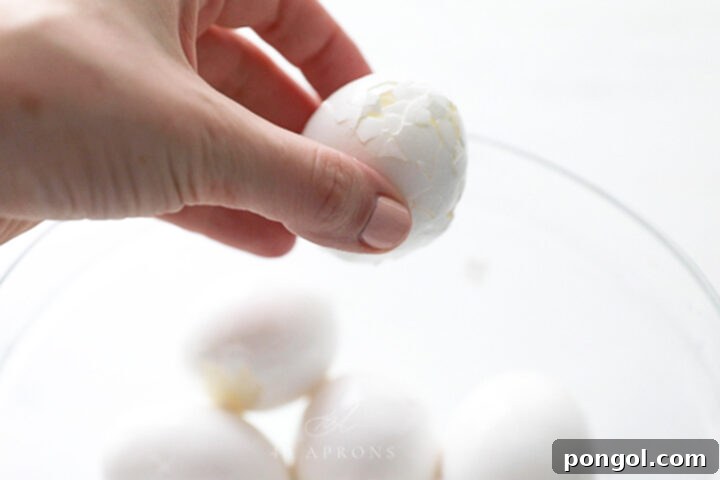
Once the eggs are thoroughly chilled, drain the water and any remaining ice from the bowl. Vigorously shake and toss the eggs within the empty bowl. This action will cause the shells to crack extensively. Continue shaking until the shells feel like a fine mesh, with no large, intact pieces remaining on the egg surface.
-
Gently peel away and discard the cracked egg shells. If you encounter any stubborn small pieces of shell, you can hold the eggs under a trickle of running water while peeling, allowing the gentle force of the water to help dislodge them.
-
Serve your perfectly peeled boiled eggs immediately, or for later use, place them in an airtight container and refrigerate for up to one week.
Video
Video instructions available.
- Saucepan Size: It’s crucial to use a saucepan or pot that is sufficiently large to accommodate all your eggs in a single, even layer without any stacking. If you’re boiling a large quantity of eggs or don’t have an adequately sized pot, work in smaller batches as needed to ensure even cooking.
- Storage Guidelines: Boiled eggs, whether peeled or still in their shells, can be safely stored in an airtight container in the refrigerator for up to 1 week.
Boil Times & Egg Consistency Reference
Use this guide to achieve your desired egg yolk texture:
- 4 minutes: The egg white will be mostly set but very delicate, unlikely to hold together perfectly. The yolk will be super liquid and runny.
- 5 minutes: You’ll have almost entirely set egg whites, with a yolk that is runny and nearly liquid, offering a wonderfully soft interior.
- 6 minutes: Expect fully set egg whites and a creamy, beautifully gooey yolk, ideal for enriching ramen or serving on toast.
- 7 minutes: This timing results in firm egg whites and a rich, jammy yolk. It’s excellent for eating plain with seasoning or adding to salads.
- 8 minutes: The yolk is half-set, featuring solid, creamy edges that gradually transition to a softer, slightly jammy center.
- 9 minutes: The yolk is mostly set, but the very center will still retain a distinct moistness, offering a tender bite.
- 10 minutes: The majority of the yolk will be almost fully set and a light yellow, while the central portion remains a darker yellow and noticeably moist.
- 11 minutes: Nearly all of the yolk will be light yellow and fully set, with just the very center being slightly moister than the surrounding areas.
- 12 minutes: This is the classic hard-boiled egg – fully set, uniformly light yellow, and wonderfully creamy without any dryness.
- 13 minutes: The yolk is completely fully set but will be slightly less creamy than a 12-minute egg, firmer in texture.
- 14 minutes: At this stage, the yolk is fully set but begins to show signs of dryness and a slightly crumbly texture. Boiling eggs for longer than 14 minutes is generally not recommended as it can compromise texture and flavor.
Approximate Nutritional Information for One Serving
Calories: 72cal
Protein: 6g
Fat: 5g
Saturated Fat: 2g
Trans Fat: 0.02g
Cholesterol: 186mg
Sodium: 168mg
Potassium: 69mg
Total Carbs: 0.4g
Sugar: 0.2g
Net Carbs: 0g
Vitamin A: 270IU
Calcium: 28mg
Iron: 1mg
Nutrition Disclaimers
The number of total servings provided is an approximation. Actual serving sizes may vary based on individual preferences.
Nutritional values presented are general guidelines and are calculated for one serving using the specified ingredients, excluding any optional additions. Actual macronutrient content may fluctuate slightly depending on the specific brands and types of ingredients utilized.
To accurately determine the weight of one serving, prepare the recipe as instructed. Weigh the entire finished dish (excluding the container’s weight), then divide this total weight by your desired number of servings. The resulting figure will be the precise weight of a single serving.
Did You Master This Recipe?
We’d love to hear about your experience! Share your culinary creations and leave a review to inspire other home cooks.
Share on Instagram
Frequently Asked Questions About Boiled Eggs
The key to easy-to-peel eggs lies in a specific sequence of steps. First, always add your eggs to water that is already at a rolling boil, rather than starting them in cold water. Second, immediately transfer the boiled eggs into an ice bath after their cooking time is complete. This shock cools them rapidly and helps the egg whites contract away from the shell membrane. Finally, gently shake the eggs in the ice bath to initiate cracking the shells, which further aids in the peeling process.
Absolutely! Adding eggs to already boiling water is a critical step for consistent results. This method allows you to accurately time the cooking process from the moment the eggs enter the hot water, significantly improving your ability to achieve your desired yolk consistency, whether you prefer runny, jammy, or firm.
It is definitively better to let them cool completely before peeling. As boiled eggs cool, the egg whites contract. This contraction pulls the white away from the thin membrane located just inside the shell, creating a small air gap that makes the shell much easier to separate cleanly. Peeling warm eggs typically results in pieces of egg white sticking to the shell.
The boiling time for an egg can range from 4 to 14 minutes, depending entirely on the desired texture and consistency of the yolk. For example, a 4-minute boil will yield barely-set egg whites and a super liquidy yolk, perfect for dipping. A 7-minute boil typically produces firm whites with a wonderfully jammy yolk. If you prefer a fully set yolk that is still incredibly creamy and vibrant, aim for 12 minutes. Beyond 14 minutes, yolks tend to become dry and crumbly.
Our Favorite Egg Recipes to Explore
- Keto Deviled Eggs with Bacon
- Mom’s Favorite Cheesy Scrambled Eggs
- Perfect Sous Vide Eggs
- Hearty Crockpot Breakfast Casserole
- Deviled Egg Salad
- Creamy Boursin Scrambled Eggs
- Fluffy Egg Bites with Cottage Cheese
- Whole30 Breakfast Casserole (Sausage & Eggs)
- Classic Denver Omelette
- Make-Ahead Freezer Breakfast Burritos
- Simple Keto Breakfast Casserole