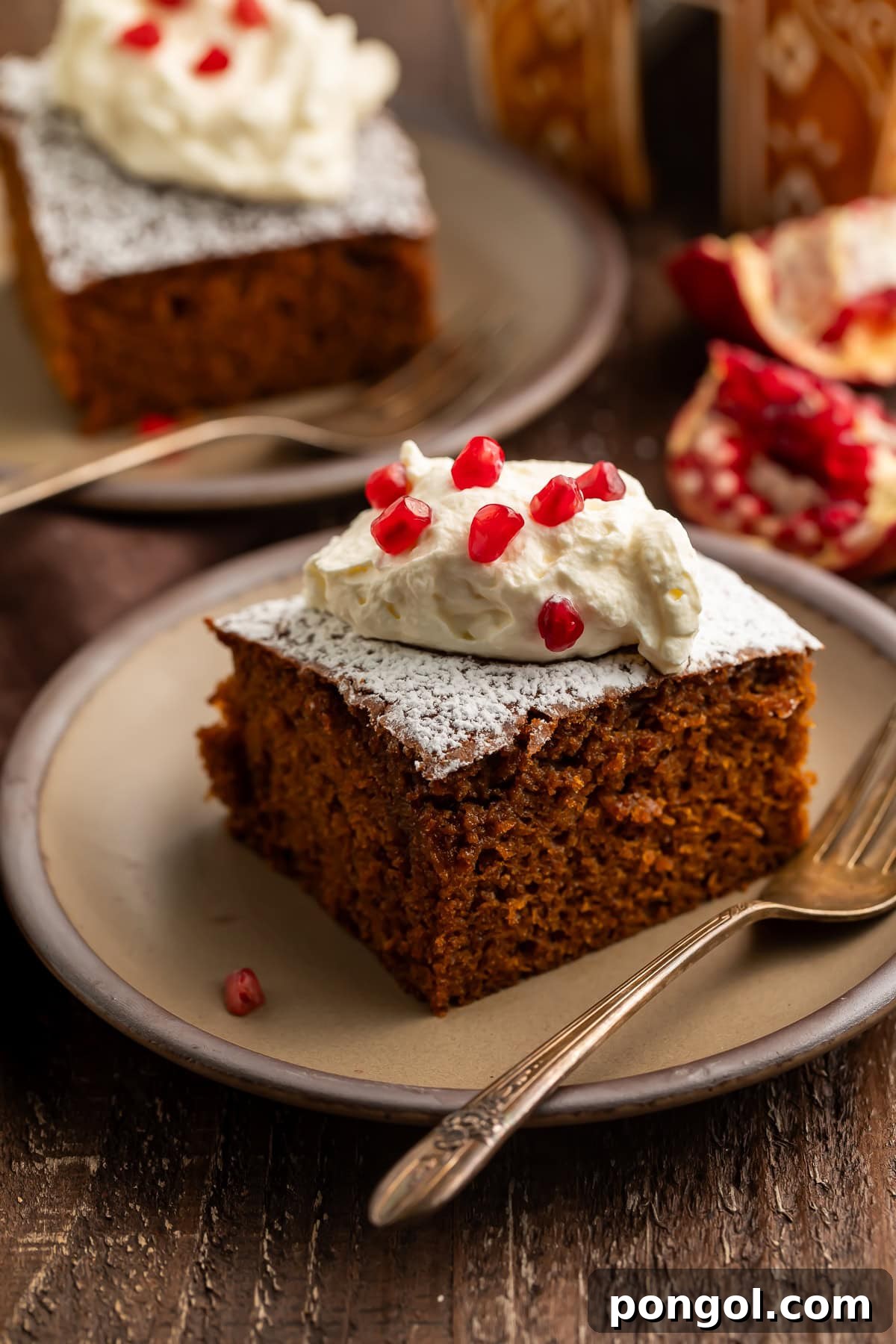
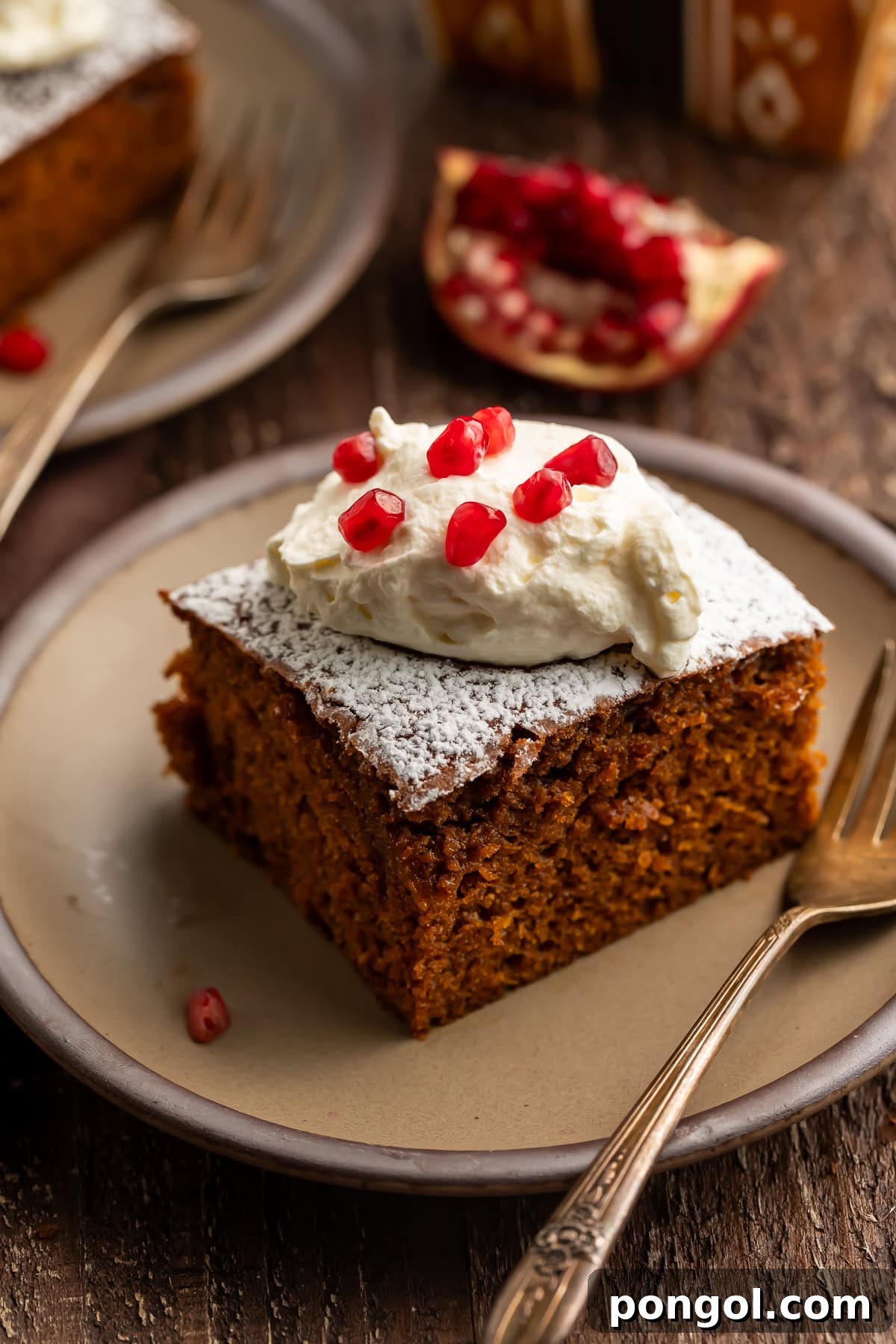
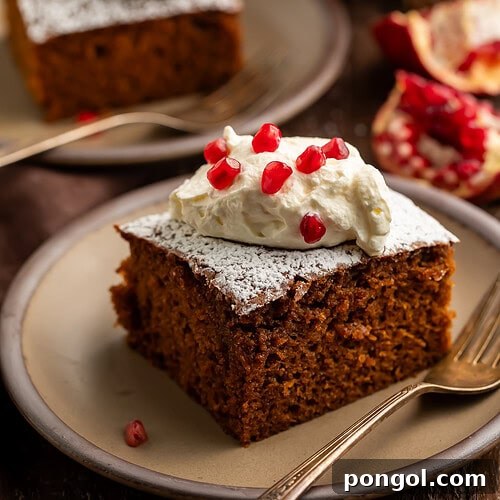
Welcome to the ultimate holiday dessert experience with our irresistible gingerbread cake recipe! Imagine a dessert that captures the essence of festive warmth, deep spice, and delightful sweetness, all wrapped in a perfectly moist crumb. This old-fashioned gingerbread cake is exactly that – a culinary masterpiece that promises to be the star of your holiday table. Each slice offers a harmonious blend of rich molasses, aromatic spices, and a bright, zesty hint of lemon, beautifully complemented by a cloud of freshly whipped cream and the vibrant burst of jewel-like pomegranate seeds. The contrasting flavors and textures create a symphony in every bite, making it an incredibly satisfying treat. Whether you’re hosting a grand Christmas dinner or bringing a show-stopping dish to a festive gathering, this elegant cake is guaranteed to impress and leave a lasting memory. It’s more than just a cake; it’s a celebration of holiday cheer and timeless tradition.
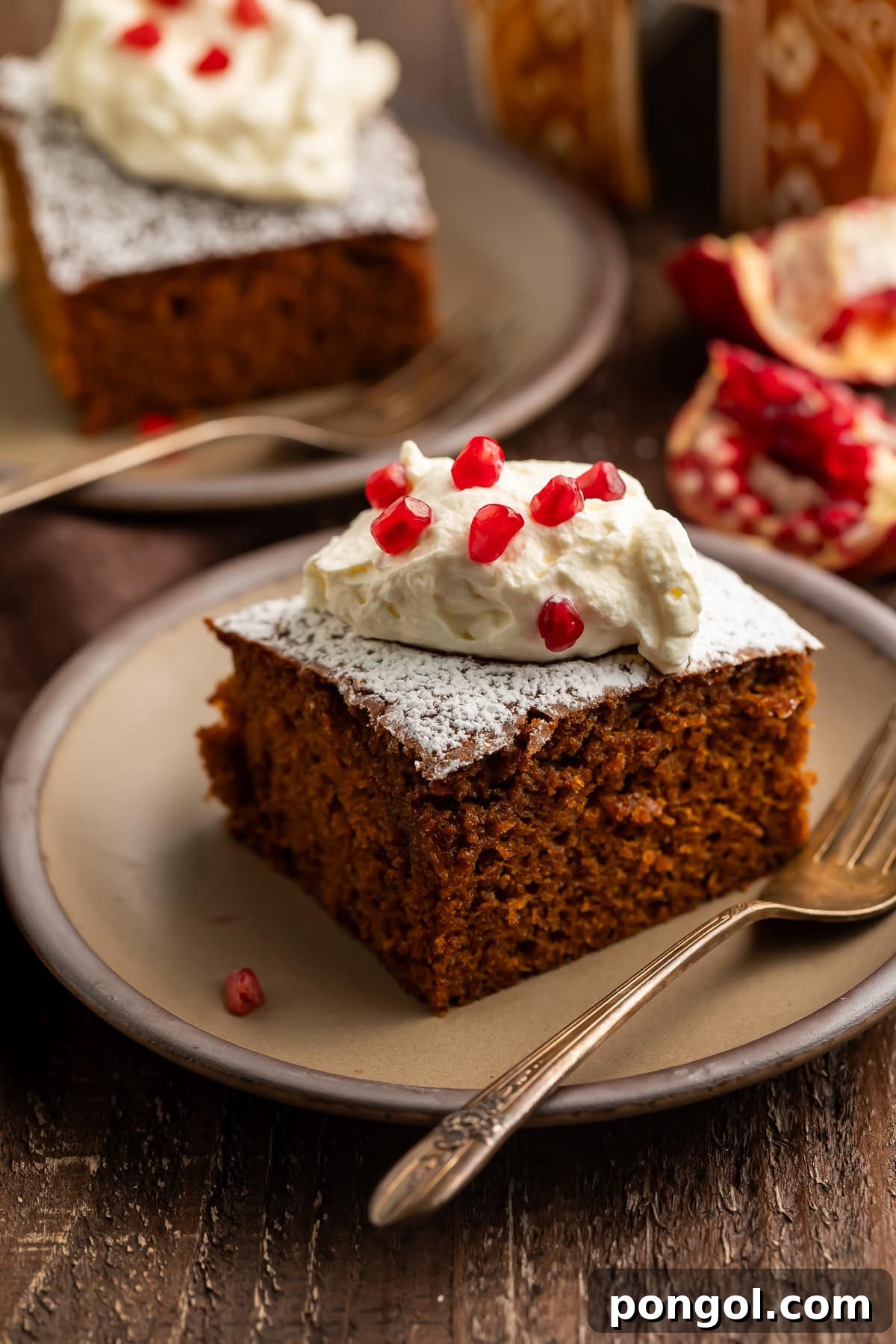
See recipe card below for a full list of measurements, ingredients, and detailed instructions.
Why This Gingerbread Cake Will Become Your Holiday Favorite
This gingerbread cake isn’t just another dessert; it’s a sensory journey designed to elevate your holiday celebrations. Here’s why this recipe stands out and is destined to become a cherished tradition in your home:
- A Symphony of Deep & Bright Flavors: Our gingerbread cake boasts a profound, warm molasses richness that forms its comforting base. This dark, complex sweetness is ingeniously brightened by the fresh zest of lemon, baked directly into the batter, offering a delightful counterpoint that prevents the cake from being overly heavy. Topping it all off are tart pomegranate seeds, which burst with juicy freshness, providing a lively pop that keeps every bite exciting and perfectly balanced. This thoughtful combination of flavors creates an incredibly dynamic and enjoyable eating experience.
- Effortless Elegance for Busy Holidays: We believe holiday baking should be joyful, not stressful. This recipe is designed with real life in mind. There’s no need for elaborate piping skills, complicated layering techniques, or any specialized equipment beyond a standard cake pan. The beauty of this cake lies in its rustic charm and the simple yet stunning presentation achieved with fresh whipped cream and glistening pomegranate. Moreover, the whipped cream topping can be prepared up to three days in advance and stored in the fridge, allowing you to assemble and serve with minimal last-minute fuss, perfect for entertaining.
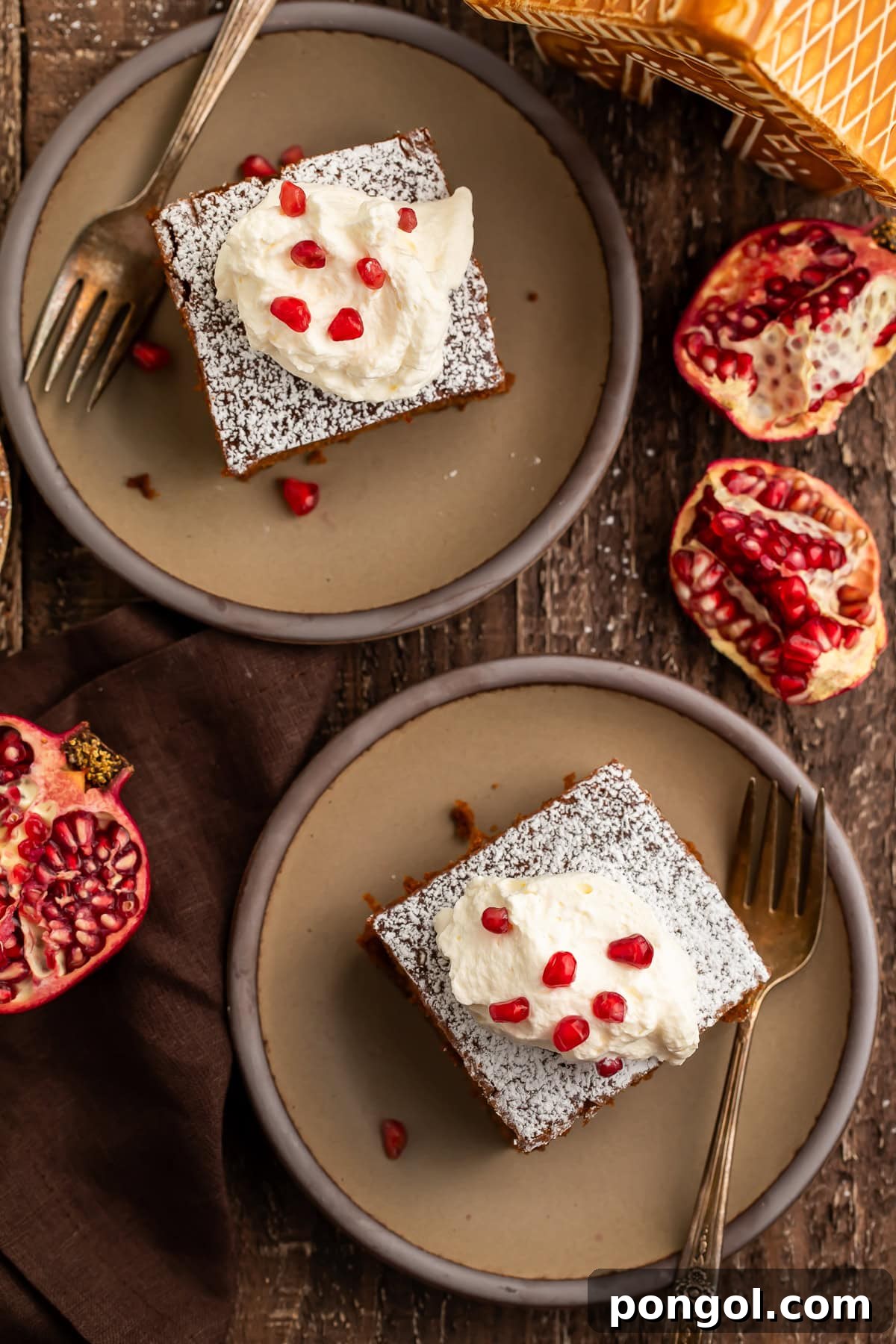
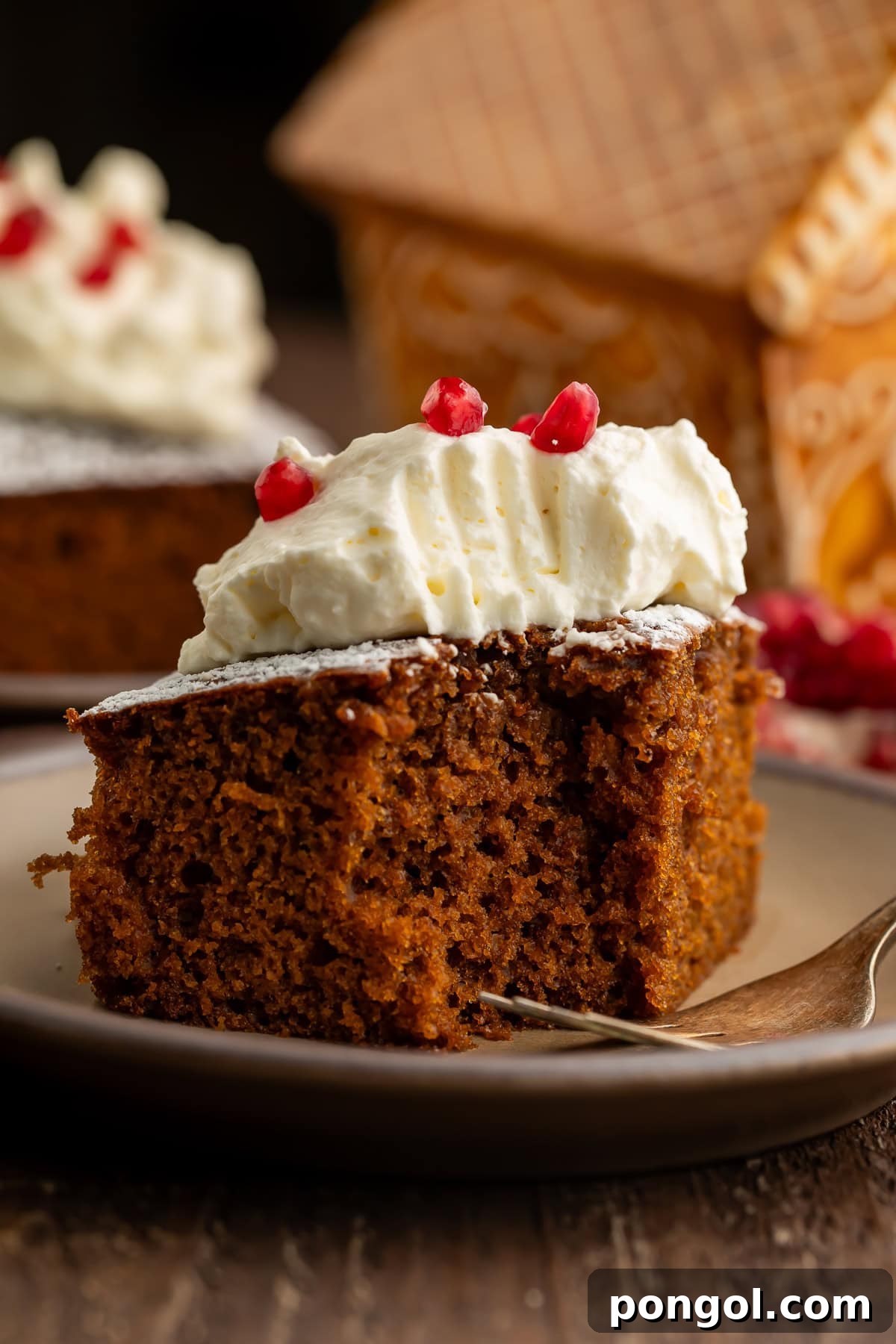
- Unmatched Moisture and Tender Crumb: Say goodbye to dry, crumbly gingerbread! This is truly the most moist gingerbread cake recipe you’ll ever encounter. The secret lies in the synergistic blend of molasses, rich butter, and wholesome milk, which together create an incredibly dense, tender, and succulent crumb that remains delightfully fresh for days. The key to this superb texture is careful baking – start checking for doneness around 35 minutes and avoid overbaking. Follow this simple tip, and you’ll consistently achieve a cake that is perfectly soft, rich, and utterly irresistible every single time. Its remarkable moisture ensures it tastes just as good, if not better, the day after it’s baked, allowing the flavors to meld and deepen beautifully.
Essential Ingredients for the Perfect Gingerbread Cake
Crafting the perfect gingerbread cake begins with understanding the role each ingredient plays in creating its signature flavor and texture. Here’s a closer look at the key components that make this recipe shine:
- Unsulphured Molasses: This is the heart of our gingerbread, providing its characteristic deep, caramel-like sweetness and a rich, slightly smoky undertone. Unsulphured molasses is preferred for its cleaner flavor, free from the subtle bitterness that sulphured varieties can sometimes impart. It also contributes significantly to the cake’s dark color and incredibly moist texture, ensuring a tender crumb that melts in your mouth.
- Warming Spices: A blend of ground cinnamon, ginger, and cloves creates the iconic gingerbread spice profile. Freshly ground spices, if possible, will yield the most potent and aromatic results. Cinnamon offers warmth and sweetness, ginger provides its signature zesty bite, and cloves add a deep, resonant note. For an even more complex flavor, consider adding a pinch of nutmeg or allspice.
- Bright Lemon Zest: The “secret weapon” of this recipe! Lemon zest is not just for decoration; its vibrant, aromatic oils cut through the richness of the molasses and spices, providing a much-needed lift and preventing the cake from tasting too heavy or one-dimensional. Ensure you only grate the bright yellow part of the peel, avoiding the bitter white pith underneath.
- Unsalted Butter (Room Temperature): Butter contributes richness and tenderness to the cake. Using unsalted butter allows you to control the overall salt content of the recipe. Bringing butter to room temperature before creaming with sugar is crucial for achieving a light and fluffy batter, which translates to a tender cake.
- Light Brown Sugar: While molasses provides the dominant sweetness and flavor, light brown sugar adds additional moisture and a subtle caramel note, enhancing the overall richness of the cake. Its fine texture blends seamlessly with the butter.
- Large Eggs (Room Temperature): Eggs bind the ingredients together, provide structure, and contribute to the cake’s richness and tenderness. Like butter, using room temperature eggs helps them emulsify better with the fat and sugar, resulting in a smoother, more uniform batter.
- All-Purpose Flour: The structural backbone of the cake. Using all-purpose flour provides the right balance of gluten to create a tender yet sturdy cake that holds its shape.
- Baking Soda and Salt: Baking soda acts as the leavening agent, reacting with acidic ingredients like molasses to create air pockets, giving the cake its rise and tender texture. Salt balances the sweetness and enhances all the other flavors, making them pop.
- Milk: Milk adds essential moisture to the batter, contributing to the cake’s signature moistness and tender crumb. Any type of milk (whole, low-fat, or non-dairy) can typically be used, though whole milk often provides the richest result.
- Fresh Whipped Cream & Pomegranate Seeds: These toppings are more than just pretty; they provide a crucial textural and flavor contrast. The light, airy whipped cream offers a cooling counterpoint to the warm spices, while the tart, juicy pomegranate seeds add a vibrant burst of freshness and a beautiful pop of color, making each serving feel incredibly special.
More Recipes You’ll Love
Ultimate Easter Guide: Brunch, Baskets, and Ideas for Everyone
Cottage Cheese Egg Bake
Cheesy Asparagus Casserole
Overnight Brioche French Toast Casserole
Expert Tips for Gingerbread Baking Success
Achieving a truly exceptional gingerbread cake involves a few simple yet crucial techniques. Keep these expert tips in mind to ensure your cake turns out perfectly moist, flavorful, and beautifully presented every time:
- Embrace the Power of Lemon Zest: Do not, under any circumstances, skip the lemon zest! It’s the unsung hero and the “secret weapon” in this recipe. The bright, fragrant citrus oils act as a magnificent flavor balancer, cutting through the deep richness of the molasses and warming spices. This prevents the cake from feeling too heavy or monotonous, adding an invigorating freshness that truly elevates the overall profile. Remember to only grate the bright yellow part of the peel, meticulously avoiding the bitter white pith directly underneath.
- Effortless Molasses Measurement: Molasses is notoriously sticky, making accurate measurement a challenge. To save yourself frustration and ensure precise quantities, simply give your measuring cup a quick spritz with cooking spray before pouring in the molasses. This creates a non-stick surface, allowing the thick syrup to slide out effortlessly and completely, ensuring you get every drop and an accurate measurement. This clever trick also works wonderfully for honey or any other sticky ingredient.
- Prepare Whipped Cream in Advance: For stress-free holiday entertaining, plan ahead! Fresh whipped cream holds up beautifully in an airtight container in the refrigerator for up to two to three days. This means you can whip it up when you have time, then simply pull it out when you’re ready to serve. If it separates slightly upon standing, a quick, gentle stir will restore its perfect fluffy consistency, making assembly a breeze just before serving.
- Mastering Pomegranate Seed Extraction: Extracting pomegranate arils without making a mess is simpler than you think. First, score the pomegranate around its equator or cut it into sections. Then, submerge the sections in a bowl of cool water. Gently roll the seeds out with your fingers—they will naturally sink to the bottom of the bowl, while the white membrane (pith) will float to the top. This method prevents juice from splattering and staining your hands, counters, or clothing. Drain the arils through a fine-mesh strainer and pat them dry before garnishing your cake.
- The Importance of Room Temperature Ingredients: Ensure your butter and eggs are at room temperature before you begin. Room temperature butter creams more easily with sugar, creating tiny air pockets that contribute to a lighter, more tender cake crumb. Similarly, room temperature eggs emulsify better into the batter, preventing curdling and resulting in a smoother, more uniform mixture.
- Do Not Overbake: Overbaking is the primary culprit behind a dry cake. Gingerbread cakes, especially with molasses, are prone to drying out if left in the oven too long. Begin checking for doneness at the 35-minute mark. A toothpick inserted into the center should come out clean or with only a few moist crumbs attached. Keep in mind that the cake will continue to cook slightly from residual heat as it cools in the pan, so it’s better to err on the side of slightly underbaked than overbaked for maximum moisture.
Creative Recipe Variations for Your Gingerbread Cake
This classic gingerbread cake recipe is wonderfully versatile, allowing for delightful modifications to suit your taste or occasion. Feel free to experiment with these delicious variations:
Make it Spicier: If you crave a bolder, more assertive gingerbread flavor, add an extra ½ teaspoon of ground ginger and a small pinch of freshly ground black pepper to the batter. The pepper, while subtle, enhances the warming properties of the spices and adds a sophisticated depth.
Experiment with Different Citrus: While lemon zest offers a bright, zesty contrast, you can easily swap it for orange zest for a sweeter, more mellow citrus note that harmonizes beautifully with the molasses. A combination of both—perhaps a total of 1 to 1.5 teaspoons of mixed zest—can also create a wonderfully complex aroma and flavor. Lime zest can offer an even tarter, more exotic twist.
Alternative Fruit Toppings: If pomegranates aren’t readily available or simply not your preference, there are many fantastic alternatives. Try fresh cranberries, simmered gently with a tablespoon of sugar until they just begin to pop, creating a tart and festive compote. Sugared fresh raspberries or thinly sliced candied ginger pieces also provide a beautiful contrast in flavor and texture. A sprinkle of toasted pecans or walnuts can add a delightful crunch.
Transform into a Gingerbread Bundt Cake: This robust batter performs exceptionally well in a greased and floured Bundt pan, offering an impressive presentation with minimal effort. The baking time will be similar to a round or square cake; start checking for doneness around 40-45 minutes and adjust as needed, as Bundt cakes can sometimes take a little longer due to their shape.
Add a Decadent Glaze or Frosting: Instead of, or in addition to, whipped cream and pomegranate, consider drizzling the cooled cake with a simple yet elegant lemon glaze. Prepare this by whisking 1 cup of powdered sugar with 2-3 tablespoons of fresh lemon juice until smooth. Alternatively, a creamy cream cheese frosting would provide a luscious, tangy complement to the spicy cake.
Gingerbread Cupcakes: For individual servings, bake the batter in lined muffin tins. Reduce baking time to about 20-25 minutes, checking with a toothpick for doneness. These are perfect for parties or lunchboxes!
Frequently Asked Questions About Gingerbread Cake
This gingerbread cake is wonderful because its flavors actually deepen and develop beautifully over time, making it an excellent make-ahead option. You can bake the cake up to 2-3 days in advance. Once it has cooled completely, wrap it tightly in plastic wrap to prevent it from drying out, and store it at room temperature. For best results, add the fresh whipped cream and pomegranate seeds right before you plan to serve it to ensure optimal freshness and presentation.
The most common culprit for a dry gingerbread cake is overbaking. The molasses in the recipe, while contributing to moisture, can also become firm if subjected to excessive heat. To prevent this, start checking for doneness at the 35-minute mark. Insert a toothpick or a thin skewer into the center of the cake; it should come out clean or with just a few moist crumbs clinging to it. Remember that the cake continues to cook slightly from its residual heat as it cools in the pan, so removing it just shy of “completely firm” is often ideal for maximum moistness.
Yes, this recipe is quite adaptable! While a 9-inch round pan is specified, you can easily use an 8-inch square pan, and the baking time will be quite similar. For a more decorative presentation, a standard Bundt pan works wonderfully; expect the baking time to be around 40-50 minutes, so start checking earlier. We do not recommend using a much larger pan (e.g., a 13×9 inch rectangular pan) as the batter will spread too thinly, leading to a much shorter baking time and a higher risk of overbaking and a dry cake.
If pomegranates aren’t available or you prefer a different topping, several options work beautifully. Fresh raspberries or sugared cranberries provide a similar tart burst of fruitiness and vibrant color. For a different texture and flavor, consider finely diced candied ginger pieces, toasted nuts like pecans or walnuts, or even a simple dusting of powdered sugar. A dollop of cranberry compote or spiced apple slices would also be delicious.
The most reliable test for doneness is the toothpick method. Insert a clean wooden toothpick or a thin cake tester into the very center of the cake. If it comes out clean or with only a few moist crumbs attached, the cake is done. The top of the cake should also spring back lightly when gently touched, and the edges will often appear slightly pulled away from the sides of the pan. Trust your oven and these visual cues over just the clock!
Absolutely! This gingerbread cake freezes exceptionally well, making it perfect for holiday meal prep. Ensure the cake is completely cooled before preparing it for freezing. Wrap the unfrosted cake tightly first in plastic wrap, then in a layer of aluminum foil. This double-layer protection helps prevent freezer burn. It can be stored in the freezer for up to 3 months. To serve, thaw the cake overnight in the refrigerator or at room temperature for a few hours. Once thawed, add your fresh whipped cream and pomegranate seeds for a freshly prepared taste.
For this gingerbread cake, we recommend using unsulphured (or “light”) molasses. This type has a milder, sweeter flavor that is perfect for baking, offering a deep caramel note without any bitterness. Blackstrap molasses, while nutrient-rich, has a much stronger, more bitter flavor and a thicker consistency, which can overwhelm the delicate balance of spices in this recipe. Always check the label to ensure you’re using unsulphured molasses for the best results.
More Festive Sweet Treats You’ll Love
Looking for more delightful desserts to complete your holiday spread? Explore these other sweet recipes perfect for festive gatherings:
- Gluten-Free Christmas Cookies with Homemade Icing
- Christmas Confetti Cookies
- Christmas Dessert Grazing Board
- Gluten-Free Sugar Cookies (Cut-Out or Drop Cookies)
- Gluten-Free Gingerbread Cookies
- Classic Coconut Cookies
- Paleo Cookies with Frosting (Lofthouse Style)
- Soft & Chewy Butterscotch Cookies
- Paleo Peppermint Oreos
- Easy 4-Ingredient Cranberry White Chocolate Cookie Bars
Please note: Making significant changes to a recipe can sometimes alter the intended outcome. Any substitutions or variations listed above are simple adjustments that we believe will work well in this recipe, but results are not guaranteed with extensive modifications. Always use your best judgment when adapting recipes.
Cheryl Malik
Christmas Gingerbread Cake
5
1
30
Cheryl Malik
Ingredients
- 2 cups all-purpose flour
- 1 teaspoon baking soda
- ¼ teaspoon salt
- 1 ½ teaspoons ground cinnamon
- 1 teaspoon ground ginger
- ⅛ teaspoon ground cloves or an additional 1/8 teaspoon cinnamon, if you don’t have ground cloves
- ½ cup (1 stick) unsalted butter, room temperature
- ½ cup light brown sugar
- 2 large eggs
- 1 whole Zest of 1 lemon avoid the white pith
- ½ cup unsulphured molasses spray measuring cup with cooking spray before pouring in molasses to help it come out easily
- 1 cup milk
- 1 pint whipping cream whipped until peaks form using an electric beater or stand mixer
- 1 whole pomegranate seeds of, see note in blog text for easy removal
- 1 tablespoon powdered sugar optional, for dusting
Instructions
-
Preheat your oven to 350º F (175°C) and position an oven rack in the middle. Generously butter and flour a 9-inch round or square cake pan with 2-inch high sides. Tap out any excess flour.
-
In a medium-sized bowl, whisk together the all-purpose flour, baking soda, salt, ground cinnamon, ground ginger, and ground cloves until well combined. Set aside.
-
In the bowl of an electric stand mixer fitted with the paddle attachment (or using a medium bowl with handheld electric beaters), cream together the room temperature butter and light brown sugar on medium speed for about 3 minutes, until the mixture is light and fluffy. Add the eggs one at a time, beating well after each addition until fully incorporated. Stir in the lemon zest and molasses, beating until just combined. Scrape down the sides of the bowl as needed to ensure everything is evenly mixed. Gradually add half of the dry ingredients to the wet mixture, mixing on low speed until just incorporated. Pour in the milk, followed by the remaining half of the dry ingredients. Continue to beat on low speed only until the ingredients are just combined and no streaks of flour remain. Be careful not to overmix.
-
Pour the prepared batter evenly into your buttered and floured pan. Use an offset spatula or the back of a spoon to smooth the top. Bake for 35 to 45 minutes, or until a toothpick inserted into the center of the cake comes out clean or with only a few moist crumbs attached. Begin checking for doneness at the 35-minute mark to prevent overbaking. *DO NOT OVERBAKE!* Once baked, remove the cake from the oven and let it cool in the pan on a wire rack for 10 minutes. After 10 minutes, carefully invert the cake onto the wire rack to cool completely.
-
To serve, you can optionally sprinkle a light dusting of powdered sugar over the entire cooled cake using a fine-mesh sieve. Cut into individual slices. Top each piece with a generous dollop of freshly whipped cream and garnish with several bright pomegranate seeds for a stunning finish.
Storage: Store the cooled gingerbread cake, covered, at room temperature for up to 2 days. For longer freshness, refrigerate it in an airtight container for up to 5 days; the flavors often deepen beautifully with time. Always store the whipped cream separately in the refrigerator and add it just before serving.
Make Ahead: This cake is ideal for preparing in advance. Bake the cake up to 2 days ahead, allow it to cool completely, then wrap it tightly in plastic wrap and store at room temperature. Whip the cream and prepare the pomegranate seeds on the day you plan to serve.
Don’t Overbake: This is crucial for a moist cake. Start checking for doneness at 35 minutes. A toothpick inserted in the center should come out clean or with just a few moist crumbs. The cake continues cooking slightly as it cools in the pan.
Molasses Measuring Tip: To ensure easy and accurate measurement, spray your measuring cup lightly with cooking spray before adding the molasses. It will slide out cleanly.
Removing Pomegranate Seeds: Cut the pomegranate into sections and submerge them in a bowl of water. Gently roll out the seeds with your fingers; they’ll sink to the bottom while the white membrane floats. Drain through a strainer and pat dry before using.
Citrus Substitution: For a sweeter, mellower citrus flavor, orange zest works wonderfully as a direct substitute for lemon zest in this recipe.
Pan Options: This recipe works beautifully in a 9-inch round pan, a 9-inch square pan, an 8-inch square pan (with similar baking time), or a Bundt pan (check around 40-50 minutes).
Serving Temperature: This cake is delicious served at room temperature, slightly warm (microwave individual slices for 15-20 seconds), or chilled, depending on your preference.
Freezing: To freeze, wrap the completely cooled cake (without any toppings) tightly in plastic wrap, then again in aluminum foil. It can be frozen for up to 3 months. Thaw overnight in the refrigerator or at room temperature for a few hours before topping and serving.
Approximate Nutrition Information for One Serving
Serving Size:
4g
Calories:
1115cal
Protein:
11g
Fat:
70g
Saturated Fat:
43g
Cholesterol:
231mg
Sodium:
519mg
Potassium:
889mg
Total Carbs:
115g
Fiber:
2g
Sugar:
64g
Net Carbs:
113g
Vitamin A:
2547IU
Vitamin C:
1mg
Calcium:
279mg
Iron:
5mg
Nutrition Disclaimers
Number of total servings shown is approximate. Actual number of servings will depend on your preferred portion sizes.
Nutritional values shown are general guidelines and reflect information for 1 serving using the ingredients listed, not including any optional ingredients. Actual macros may vary slightly depending on specific brands and types of ingredients used.
To determine the weight of one serving, prepare the recipe as instructed. Weigh the finished recipe, then divide the weight of the finished recipe (not including the weight of the container the food is in) by the desired number of servings. The result will be the weight of one serving.
Did You Make This Recipe?
Tag @40aprons on Instagram and be sure to leave a review on the blog post!
Tag @40Aprons on Instagram