
Welcome to the ultimate guide for crafting the most exquisite almond flour chocolate chip cookies you’ll ever taste! These cookies redefine perfection: irresistibly soft and delightfully chewy on the inside, with those coveted, slightly crispy edges that make every bite a dream. Using almond flour, this recipe proudly stands as a gluten-free and grain-free triumph, mirroring the nostalgic charm and incredible flavor of classic bakery-style chocolate chip cookies. And the best part? They’re surprisingly easy to whip up, proving that dietary considerations don’t mean compromising on taste or texture. Prepare to impress yourself and everyone you share them with!

My journey to perfect these almond flour chocolate chip cookies was nothing short of an obsession. At one point, my kitchen counter, butler’s pantry, and even my studio were overflowing with over a hundred cookies from various test batches. When I embark on a new recipe, especially one as universally beloved as the chocolate chip cookie, I promise myself patience. I vow to proceed slowly, meticulously, in pursuit of perfection. But, alas, patience often gives way to an unyielding drive. I become singularly focused on perfecting the recipe, iterating tirelessly until I’m surrounded by mountains of delicious, gluten-free cookie creations.
This particular recipe demanded absolute perfection. The classic chocolate chip cookie is a culinary icon, deserving of the utmost respect. Simply because we’re making it gluten-free and grain-free by utilizing almond flour doesn’t mean it should sacrifice any of its deliciousness. My goal was to create an almond flour cookie that not only met but exceeded the expectations set by its traditional counterparts, ensuring every single cookie offered that quintessential comforting experience.
Why These Almond Flour Chocolate Chip Cookies Stand Out
These aren’t just any almond flour cookies; they are a carefully crafted experience designed to deliver maximum delight with every bite. Here’s what makes them truly exceptional:
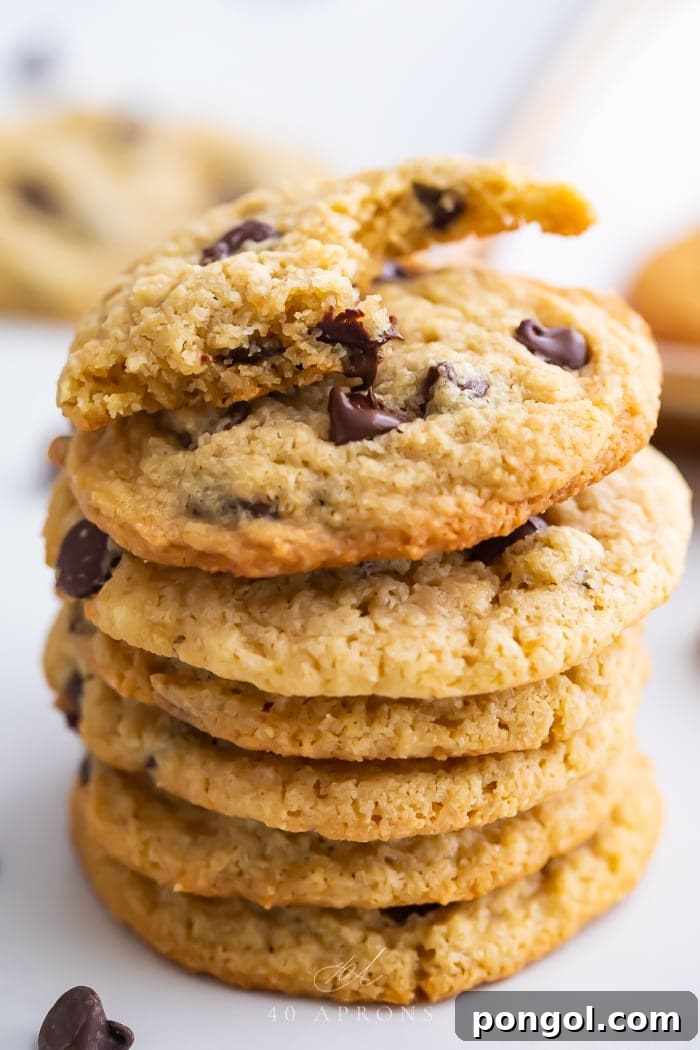
- They boast a magnificent texture: wonderfully soft and tender on the inside, yet satisfyingly chewy with those desirable crispy edges. This creates the quintessential chocolate chip cookie experience, often elusive in gluten-free baking. The almond flour contributes significantly to this delicate balance, providing a moist crumb that doesn’t feel heavy or dense.
- Each cookie is generously studded with chocolate chips, guaranteeing a burst of rich, melted chocolate in every single bite. We believe a chocolate chip cookie should live up to its name, and these certainly do! The abundance of chocolate ensures an even distribution, so you’re never left searching for that sweet, decadent morsel.
- This recipe is remarkably easy to make. You won’t need an arsenal of specialty flours or obscure ingredients. Beyond the almond flour, everything else is likely already in your pantry. The straightforward steps make it accessible for bakers of all skill levels, from beginners to seasoned pros.
- These almond flour chocolate chip cookies are inherently grain-free and gluten-free, making them an excellent choice for individuals with celiac disease, gluten sensitivities, or those simply choosing to limit their grain intake. They offer a delicious alternative without compromising on flavor or texture, proving that healthy choices can still be incredibly indulgent.
Are These Almond Flour Cookies Paleo-Friendly?
While these almond flour chocolate chip cookies are indeed gluten-free and grain-free, they are not strictly paleo. I conducted numerous tests with paleo-approved ingredients, such as coconut oil and coconut sugar, to create a truly paleo version. However, I found it incredibly challenging to achieve the exact texture and rich flavor profile that defines a truly exceptional chocolate chip cookie using those substitutes. The integrity of the classic cookie experience was my priority for this particular recipe.
Rest assured, a dedicated paleo chocolate chip cookie recipe is in the works and will be coming to 40 Aprons soon! My commitment is to deliver recipes that are both delicious and meet specific dietary needs without compromise. To be among the first to receive this and other new recipes, make sure to sign up for my newsletter. You won’t want to miss it!
Crafting Perfection: How to Make These Decadent Cookies
Creating these magnificent almond flour chocolate chip cookies is a simple yet rewarding process. Each step is designed to ensure optimal flavor and texture.
Begin by ensuring your butter is at perfect room temperature. This is crucial for achieving that light and fluffy base. Place the softened butter into a large mixing bowl. Add both the brown and white sugars, then beat with a handheld mixer on high speed until the mixture transforms into a noticeably lighter color and takes on a wonderfully fluffy consistency. This creaming process incorporates air, which contributes to the cookies’ delicate structure.
Next, introduce the remaining ingredients into the bowl, excluding the chocolate chips for now. Beat these on medium speed with your handheld mixer until everything is thoroughly combined and incorporated. Unlike traditional wheat flour recipes, you don’t need to worry about over-beating the dough here. Since there’s no gluten in almond flour, there’s no risk of developing tough cookies—only tender, delicious ones!
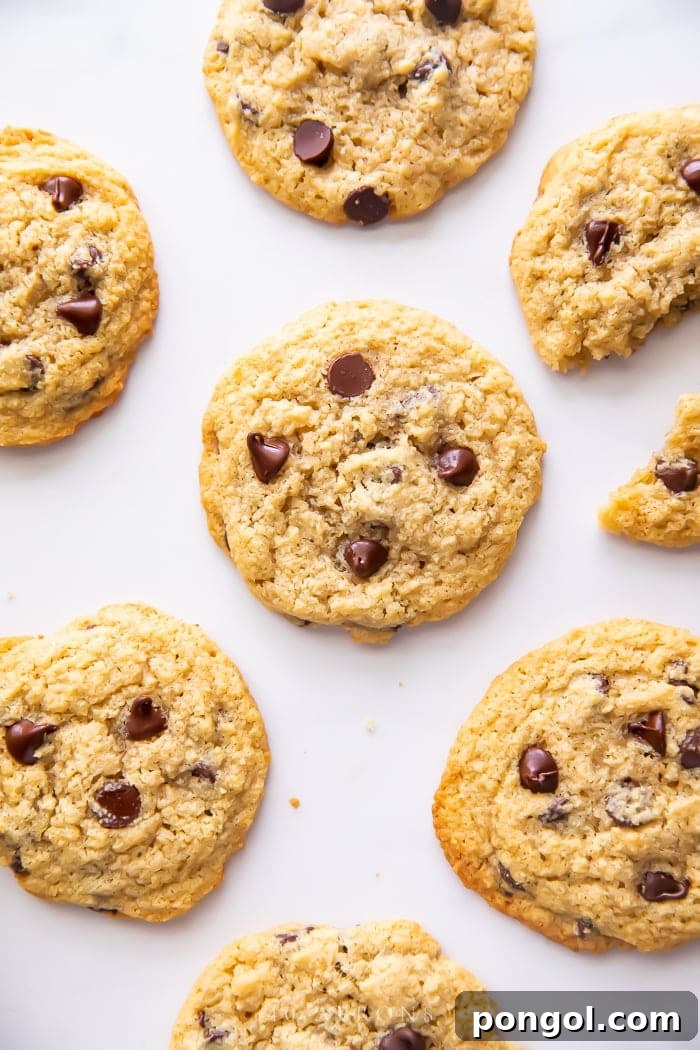
Now comes the chocolate! With a spatula, gently fold in the chocolate chips until they are evenly distributed throughout the dough. This ensures that every cookie will have that satisfying chocolatey goodness.
Prepare a baking sheet by lining it with parchment paper. Using a cookie disher, ideally a 1 1/2-tablespoon size, portion out uniform scoops of cookie dough onto the prepared sheet. Uniform portions are key for even baking. For an extra touch of bakery-style appeal, press 3-4 additional chocolate chips onto the top of each rounded scoop of cookie dough. This simple trick makes the baked cookies look absolutely gorgeous, with chocolate pooling invitingly on top.
Once portioned, the dough needs to chill. Place the baking sheet with the cookie dough in the refrigerator for a minimum of 30-60 minutes, or even longer if time allows. I highly recommend chilling for at least 60 minutes, as this step significantly impacts the final texture and prevents excessive spreading.
When ready to bake, preheat your oven to 325º F (160º C). Transfer the chilled baking sheet directly to the preheated oven and bake for 13-15 minutes. Keep a close eye on them; the cookies are done when their edges begin to turn a faint shade of golden brown and the centers appear set. Do not overbake! Almond flour cookies can dry out if left in the oven too long. Remove the baking sheet from the oven and allow the cookies to rest on the hot sheet for a few minutes. This crucial resting period allows them to firm up slightly. Afterward, carefully transfer them to a wire rack using a spatula and let them cool completely. The wait is worth it, as they will continue to set and develop their perfect texture as they cool.
Essential Baker’s Tips for Flawless Almond Flour Cookies
Achieving perfect almond flour chocolate chip cookies is simple when you follow a few key guidelines. These tips will ensure your cookies come out beautifully every time:
- Ensure your butter is truly at room temperature before you start beating. This is perhaps the most critical step for proper creaming and achieving the right texture. If your butter is too cold, it won’t cream properly with the sugars, resulting in a denser cookie. If it’s too warm or melted, it will lead to greasy cookies that spread too much. To soften quickly, you can microwave it on 50% power in short, 10-15 second bursts, flipping the stick each time. The goal is just to reach a point where you can easily press an indentation into the stick with your finger, without any melting.
- Do not substitute coconut sugar for the brown and white sugars in this recipe. While coconut sugar is a popular alternative in many healthy recipes, its different molecular structure and moisture content will drastically alter the texture and flavor of these specific cookies. It tends to melt differently, leading to cookies that spread excessively and have a less desirable consistency. Stick to the specified sugars for the intended result.
- Utilize a 1 1/2-tablespoon cookie scoop to effortlessly portion out your dough. This simple tool ensures that all your cookies are uniform in size, which is vital for even baking. When cookies are all the same size, they bake at the same rate, preventing some from being undercooked while others are overbaked. If you don’t have a scoop, use a measuring spoon and roll the dough gently between your palms.
- Chilling the portioned dough for a minimum of 60 minutes before baking is highly recommended. This step is not merely optional; it’s a game-changer for the cookie’s texture and appearance. Chilling allows the fats in the butter to solidify, preventing the cookies from spreading too rapidly in the oven. It also allows the flavors to meld and the almond flour to fully hydrate, resulting in a thicker, chewier, and more tender cookie with less spread and a richer depth of flavor.
- Use parchment paper on your baking sheets. This prevents sticking and makes cleanup a breeze. It also helps with even heat distribution and allows for easy transfer of the delicate almond flour cookies after baking.
- Avoid opening the oven door frequently. Consistent oven temperature is important for uniform baking and preventing the cookies from deflating.
- Let cookies cool completely on a wire rack. Although tempting to eat them warm, almond flour cookies continue to set as they cool. Transferring them too soon or eating them before they’ve fully cooled can result in them falling apart or having a less firm texture.
Is Chilling the Cookie Dough Absolutely Necessary?
Through extensive testing, I’ve found that chilling the cookie dough yields a superior product by a significant margin. The chilled dough results in cookies that are thicker, chewier, and have a more concentrated flavor, with those beautiful, slightly crispy edges everyone loves.
That being said, if you’re truly short on time or simply can’t wait another minute for warm cookies, you can certainly bake them without chilling. They will still be delicious, albeit a bit flatter and possibly more delicate. I would never want to keep you from enjoying these incredible almond flour chocolate chip cookies, regardless of whether you chill the dough or not! Just be prepared for a slight difference in texture and appearance if you skip this step.
The Undeniable Benefits of Baking with Almond Flour
Almond flour isn’t just a gluten-free substitute; it’s a fantastic ingredient in its own right, bringing unique benefits to your baking. Made from finely ground blanched almonds, it’s naturally low in carbohydrates and rich in protein, fiber, and healthy fats. This means your cookies are not only delicious but also offer a more nutritious profile compared to those made with traditional wheat flour.
It imparts a wonderful delicate flavor and a tender crumb, which is why these cookies are so soft and chewy. Almond flour also helps to create a slightly denser, more substantial cookie without being heavy, ensuring satisfaction with every bite. Its fine texture mimics wheat flour well, making it an excellent choice for cookies, cakes, and other baked goods where you desire a moist and tender result.
Troubleshooting Common Almond Flour Cookie Challenges
Even with the best recipes, sometimes things don’t go exactly as planned. Here are some common issues you might encounter with almond flour cookies and how to fix them:
- Cookies spreading too much: This is often due to butter being too warm or insufficient chilling time. Ensure your butter is softened but not melted, and always chill the dough for at least 60 minutes. Over-measuring liquids or under-measuring dry ingredients can also contribute.
- Cookies are too crumbly: Almond flour lacks gluten, which provides structure. If cookies are excessively crumbly, it might indicate too much almond flour or not enough binder (like egg). Ensure accurate measurements. They also firm up considerably upon cooling, so don’t assume they’re too crumbly right out of the oven.
- Cookies are too dense: While almond flour cookies are naturally a bit denser than wheat flour ones, they shouldn’t be brick-like. Over-mixing after adding dry ingredients (though less of a concern with almond flour) or using butter that’s too cold can lead to density. Make sure butter is properly softened and the dough is mixed until just combined.
- Burning quickly: Almond flour can brown faster than wheat flour due to its fat content. Ensure your oven temperature is accurate (an oven thermometer can help!) and keep a close eye on the cookies during the last few minutes of baking. Lowering the oven temperature slightly can also help if you consistently find them browning too fast.
Storage and Freezing Instructions
To enjoy these delicious almond flour chocolate chip cookies for longer, follow these simple storage and freezing tips:
- Room Temperature: Once completely cooled, store the baked cookies in an airtight container at room temperature for up to 5 days. Placing a slice of bread in the container with the cookies can help keep them soft and fresh for longer.
- Freezing Baked Cookies: For longer storage, flash freeze the completely cooled cookies on a baking sheet until firm (about 1-2 hours). Then, transfer them to a freezer-safe airtight container or heavy-duty freezer bag. They will keep well for up to 2-3 months. Thaw at room temperature or warm slightly in the microwave for a fresh-baked taste.
- Freezing Cookie Dough: You can also freeze the unbaked cookie dough! Portion the dough into balls as instructed, then flash freeze them on a parchment-lined baking sheet until solid. Once frozen, transfer the dough balls to a freezer-safe airtight container or bag. They can be stored for up to 3 months. When ready to bake, place frozen dough balls on a baking sheet and bake as directed, adding an extra 2-4 minutes to the baking time.
If You Love This Recipe, You’ll Also Love These Gluten-Free Treats!
If these almond flour chocolate chip cookies have won your heart, you’ll be thrilled to discover more delightful gluten-free and paleo-friendly recipes from our kitchen. Expand your baking repertoire with these fan favorites:
- Healthy Cookie Dough (Paleo, Vegan)
- Perfect Paleo Brownies (Gluten-Free)
- Paleo Microwave Cookie (Quick Dessert)
- Vegan No Bake Cookie Dough Cheesecake (Paleo, Raw)
- Homemade Vegan Marshmallows

Cheryl Malik
Classic Almond Flour Chocolate Chip Cookies
15 minutes
15 minutes
1 hour
1 hour
30 minutes

Cheryl Malik
Save
Saved!
30
cookies
(toggle on to prevent screen dimming)
Equipment
-
large mixing bowl
-
Handheld mixer
-
Spatula
-
Cookie sheet
-
parchment paper
-
Cookie scoop (1 ½ tablespoon size) or spoon
-
wire cooling rack
Ingredients
-
¾
cup
unsalted butter
softened to room temperature -
¾
cup
light brown sugar
packed (or Brown Swerve for sugar-free) -
¼
cup
granulated white sugar
(or Granular Swerve for sugar-free) -
3
cups
fine almond flour
(blanched, not almond meal) -
½
teaspoon
baking soda -
½
teaspoon
fine sea salt -
1
tablespoon
pure vanilla extract
-
2
large
eggs
room temperature -
1
cup
semi-sweet chocolate chips
plus an additional ¼ cup for topping, if desired
Instructions
-
In a large mixing bowl, combine the softened butter, brown sugar, and white sugar. Beat with a handheld mixer on high speed until the mixture becomes light, fluffy, and noticeably lighter in color, typically taking 2-3 minutes.
-
Add the almond flour, baking soda, salt, vanilla extract, and eggs to the bowl (all remaining ingredients except the chocolate chips). Beat on medium speed until all ingredients are thoroughly combined and the dough is uniform. As there is no gluten, you don’t need to worry about overmixing.
-
Using a spatula, gently fold the chocolate chips into the cookie dough until they are evenly distributed.
-
Line one or two large cookie sheets with parchment paper. Using a 1 1/2-tablespoon cookie scoop (or a spoon for equal-sized portions), scoop out rounded balls of cookie dough. If you don’t have a cookie scoop, use a measuring spoon to scoop approximately 1 ½ tablespoons of dough and gently roll it between your palms to smooth.
-
Arrange the dough balls on the prepared cookie sheet, ensuring they are spaced approximately 2 ½ inches apart to allow for proper spreading during baking. Crowding them can cause them to merge together.
-
For an enhanced visual appeal and extra chocolatey goodness, gently press 3-4 additional chocolate chips onto the rounded tops of each cookie dough ball.
-
Place the cookie sheets with the portioned dough into the refrigerator and chill for at least 30 minutes. For optimal texture and less spread, chilling for 60 minutes or even longer is ideal and highly recommended. 30 minutes is the absolute minimum time required.
-
Preheat your oven to 325º Fahrenheit (160ºC). Once preheated, transfer the chilled cookie dough on the baking sheets to the oven and bake for 13-15 minutes, or until the edges are faintly golden brown and the centers appear set. Avoid overbaking to maintain softness.
-
Remove the cookies from the oven and allow them to rest on the hot cookie sheet for approximately 5 minutes. This allows them to firm up without breaking. Then, carefully transfer the cookies with a spatula to a wire cooling rack to cool completely. They will continue to set as they cool.
- If your butter is cold, you can soften it in the microwave using 15-second bursts at 50% power until you can easily press your finger into the stick, leaving an indentation. It is crucial not to melt the butter! The recipe’s texture and overall success depend on properly softened, not melted, butter.
- Do not substitute coconut sugar for the combination of white and brown sugars specified in this recipe. Coconut sugar behaves differently and will negatively impact the cookie’s texture and spread.
- Avoid using only brown sugar. The combination of both brown and white sugars is essential for achieving the perfect balance of chewiness, crispiness, and flavor.
- For consistently sized cookies and ease of portioning, a cookie scoop is highly recommended. I recommend this one, or any scoop that holds approximately 1 1/2 tablespoons of dough will work perfectly.
- Storage: Keep these delightful cookies in an airtight container at room temperature for up to 5 days to maintain their freshness and chewiness.
Approximate Nutritional Information for One Serving
Serving Size:
1
cookie
Calories:
163
cal
Protein:
3
g
Fat:
12
g
Saturated Fat:
4
g
Cholesterol:
13
mg
Sodium:
103
mg
Potassium:
9
mg
Total Carbs:
14
g
Fiber:
1
g
Sugar:
11
g
Net Carbs:
13
g
Vitamin A:
155
IU
Vitamin C:
1
mg
Calcium:
36
mg
Iron:
1
mg
Nutrition Disclaimers
Number of total servings shown is approximate. Actual number of servings will depend on your preferred portion sizes.
Nutritional values shown are general guidelines and reflect information for 1 serving using the ingredients listed, not including any optional ingredients. Actual macros may vary slightly depending on specific brands and types of ingredients used.
To determine the weight of one serving, prepare the recipe as instructed. Weigh the finished recipe, then divide the weight of the finished recipe (not including the weight of the container the food is in) by the desired number of servings. Result will be the weight of one serving.
Did You Make This Recipe?
We absolutely love seeing your culinary creations! Tag @40aprons on Instagram and be sure to leave a review and your thoughts on this blog post!
Tag @40Aprons on Instagram