Indulge in Ultimate Comfort: The Rich and Smoky Bacon Ramen Experience
Embarking on a healthier eating journey for the new year? If that’s your primary goal, then you might want to avert your eyes. This isn’t just any ramen recipe; it’s a bold declaration of indulgence, a celebration of rich flavors, and a testament to the fact that sometimes, you just need a bowl of soul-satisfying comfort food. Welcome to the world of Bacon Ramen – where smoky, salty, and utterly delicious come together in a symphony of flavor that’s surprisingly easy to achieve.
From Childhood Cravings to Culinary Obsession: My Ramen Journey
My fascination with ramen began long before it became the culinary phenomenon it is today. I recall vividly, in my third-grade classroom in Phoenix, unwrapping those iconic cellophane bags of instant noodles. The process was ritualistic: breaking apart the brittle, deep-fried noodles, sprinkling that potent, MSG-laden flavor packet over the crunchy bits, and devouring them dry, experiencing an almost manic shiver from the immediate sodium rush. It was a simple pleasure, a secret treat that felt like pure magic to my young taste buds. I’m almost certain I penned a heartfelt poem about its wonders back then.
My childhood romance with instant ramen took an 18-year hiatus, only to be reignited by an unexpected celebrity crush. No, not Liam Hemsworth, but the visionary chef, David Chang. His groundbreaking approach to food, particularly his dedication to ramen, captivated me completely. Witnessing his culinary genius through “The Mind of a Chef” transformed my casual appreciation into a full-blown obsession. I found myself spellbound by steaming bowls of rich tonkotsu broth, perfectly chewy noodles, exquisitely creamy soft-boiled eggs, and melt-in-your-mouth tender chashu pork.
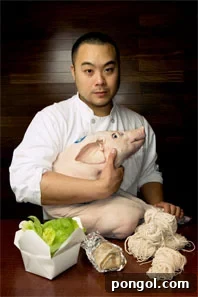
Living in Memphis at the time, authentic ramen joints were a rarity. I impatiently awaited the opening of a local izakaya, but my cravings couldn’t wait. Inspired by Chang’s mastery, I decided to take matters into my own hands and attempt to create tonkotsu from scratch, despite never having tasted the real deal. After investing thirty dollars in pork bones and dedicating twelve grueling hours to the simmering process, I finally tasted my first homemade bowl of that perfect broth. Ah, the revelation! It was incredibly rich, subtly salty, and full-bodied – love at first slurp. A loaded bowl of tonkotsu became my go-to comfort food, even my requested meal the day my son Leo was born. However, the lengthy and laborious process of making it from scratch, while rewarding, became less appealing with a busy schedule. And let’s be honest, after such a significant time and ingredient investment, any less-than-perfect result could bring a tear to your eye.
The Ingenious Shortcut: Crafting a Rich Bacon Broth
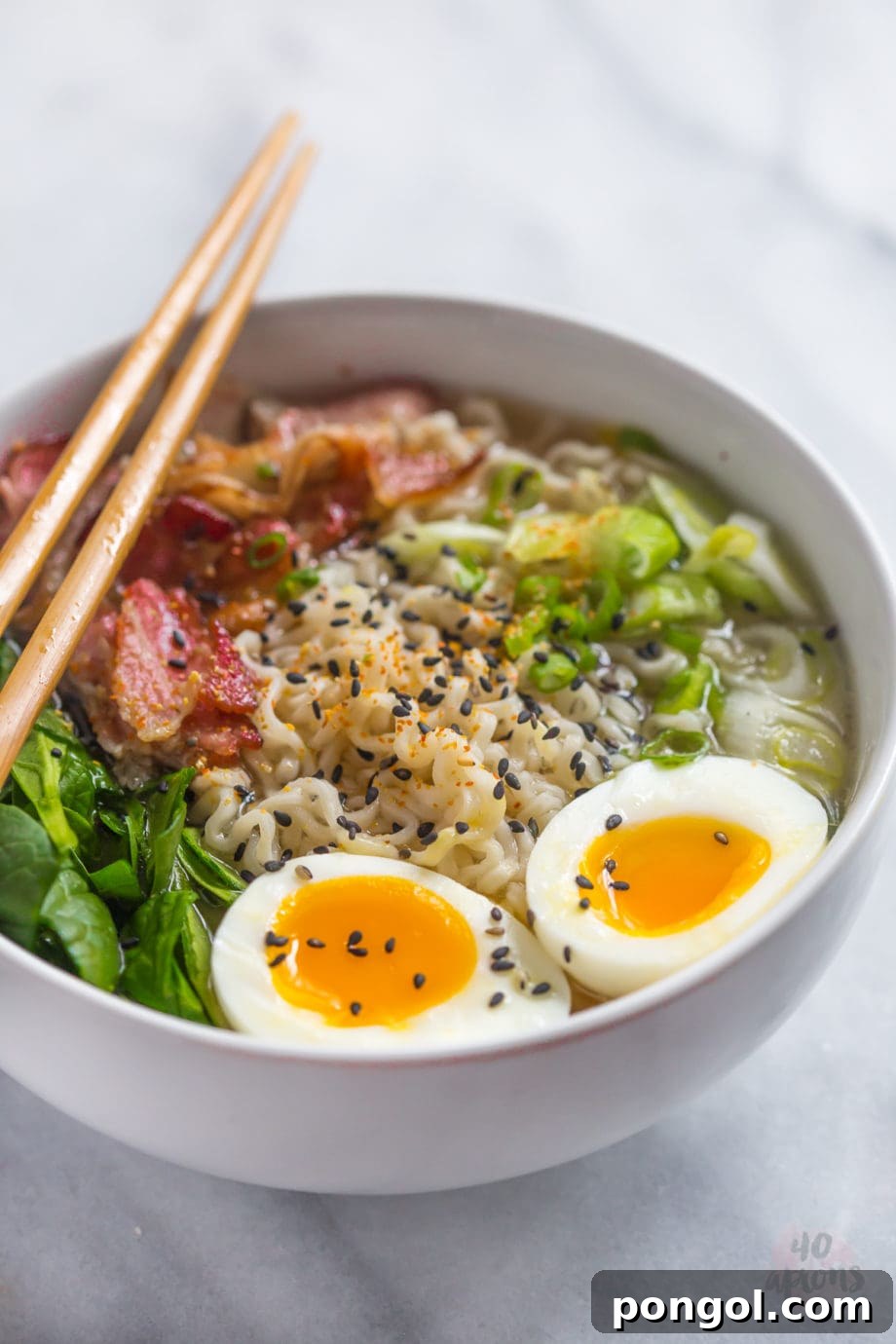
My desire for a rich, deeply flavored ramen broth, without the arduous 12-hour commitment, led me to synthesize two brilliant concepts from Chef Chang: the principle of fat emulsification in water, which gives tonkotsu its signature milky richness, and the ingenious use of bacon to infuse broths with unparalleled flavor. While Chang masterfully creates a smoky bacon dashi, I pushed the idea further. My goal was to emulsify bacon fat directly into water, creating a luscious, tonkotsu-like richness in a mere fraction of the time. This innovative approach yields a broth that is both indulgent and incredibly quick to prepare, offering a satisfying alternative for busy weeknights or whenever a deep ramen craving strikes.
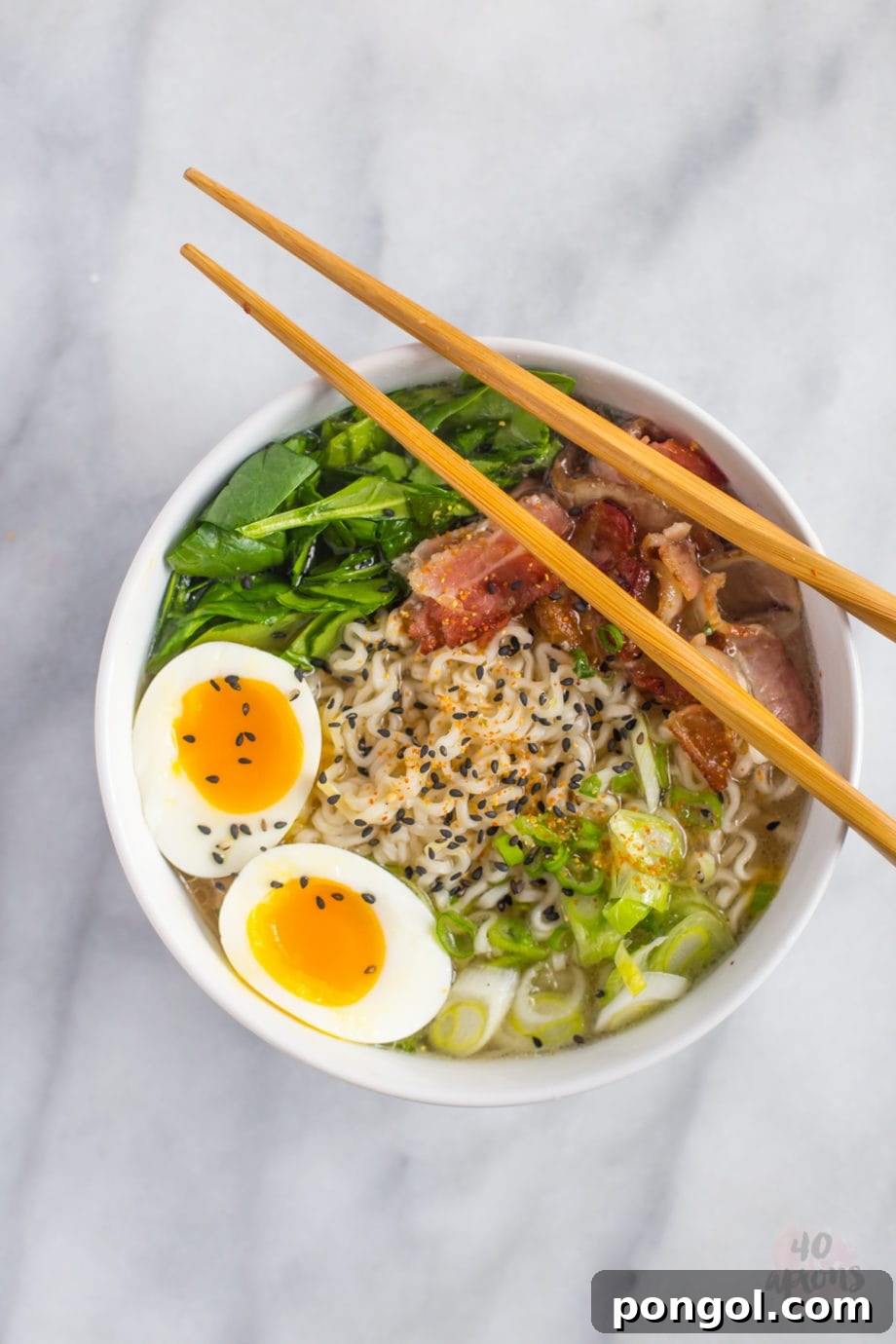
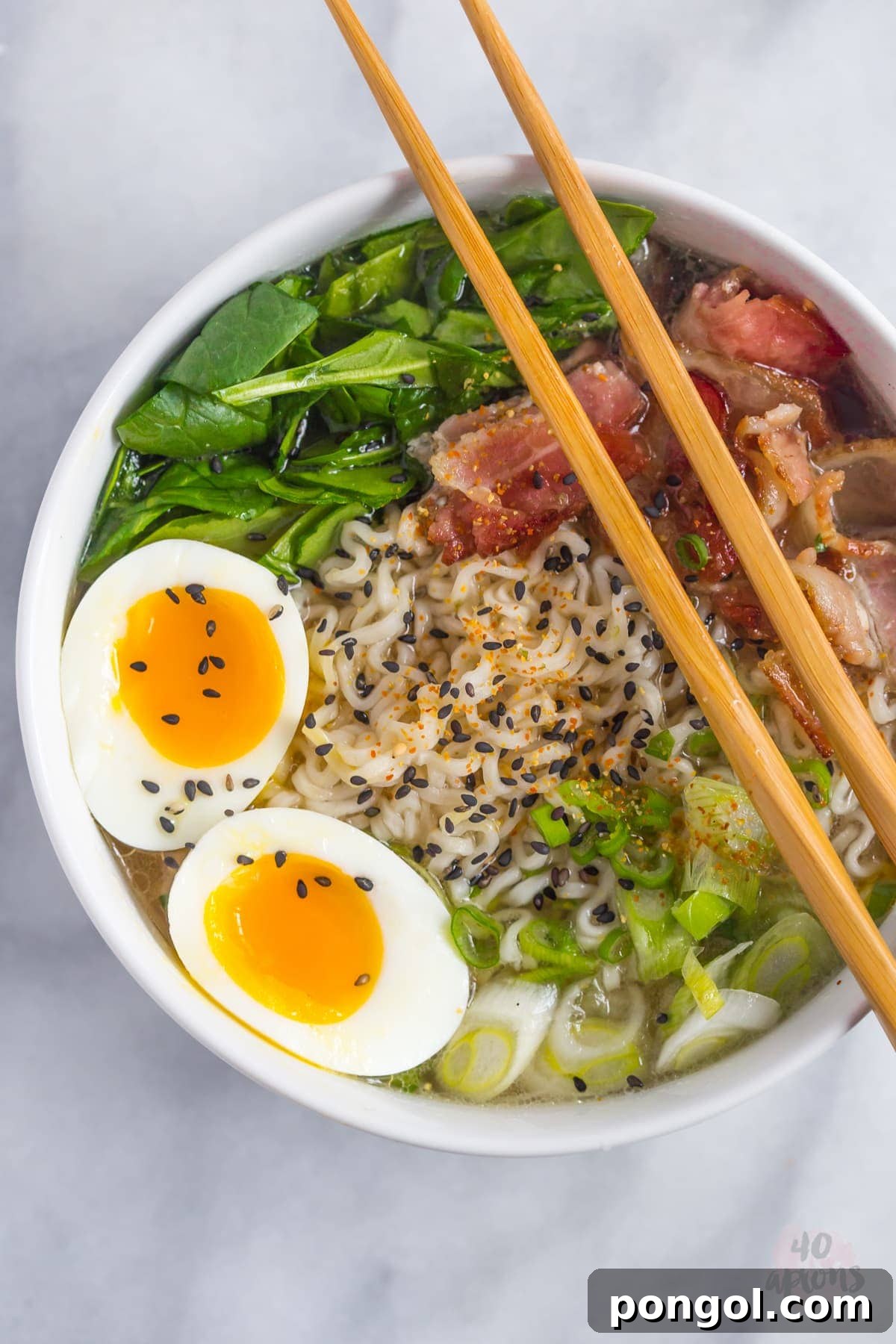
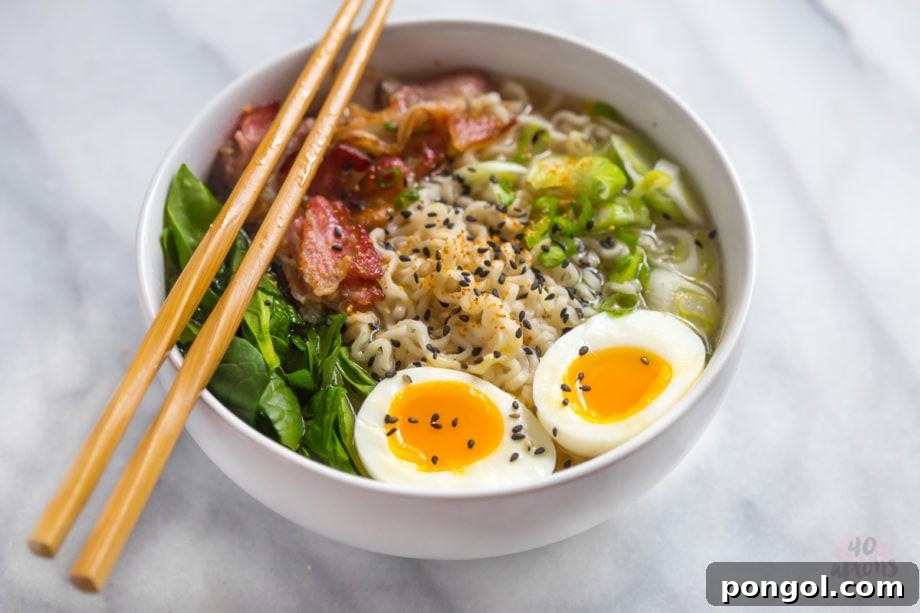
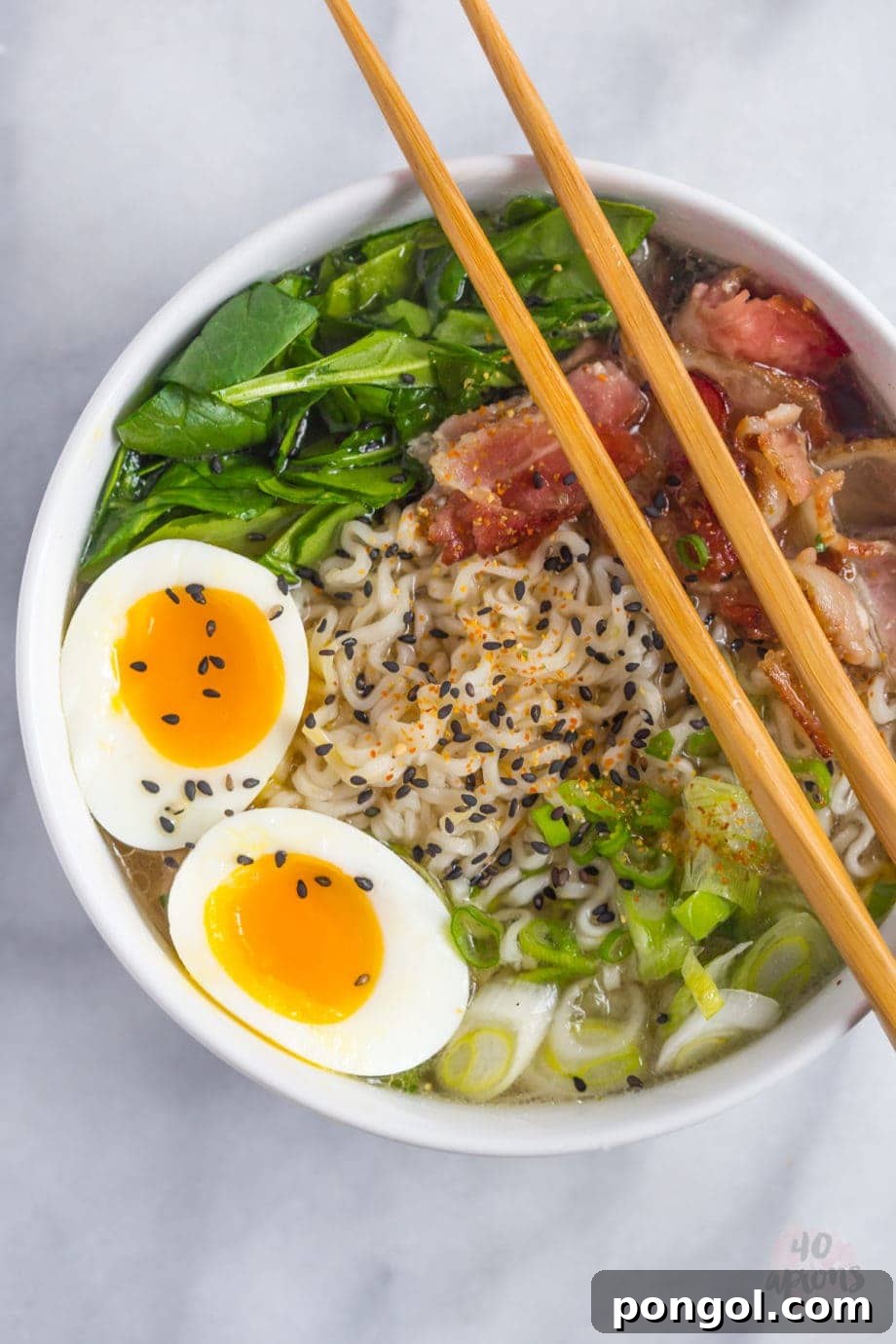
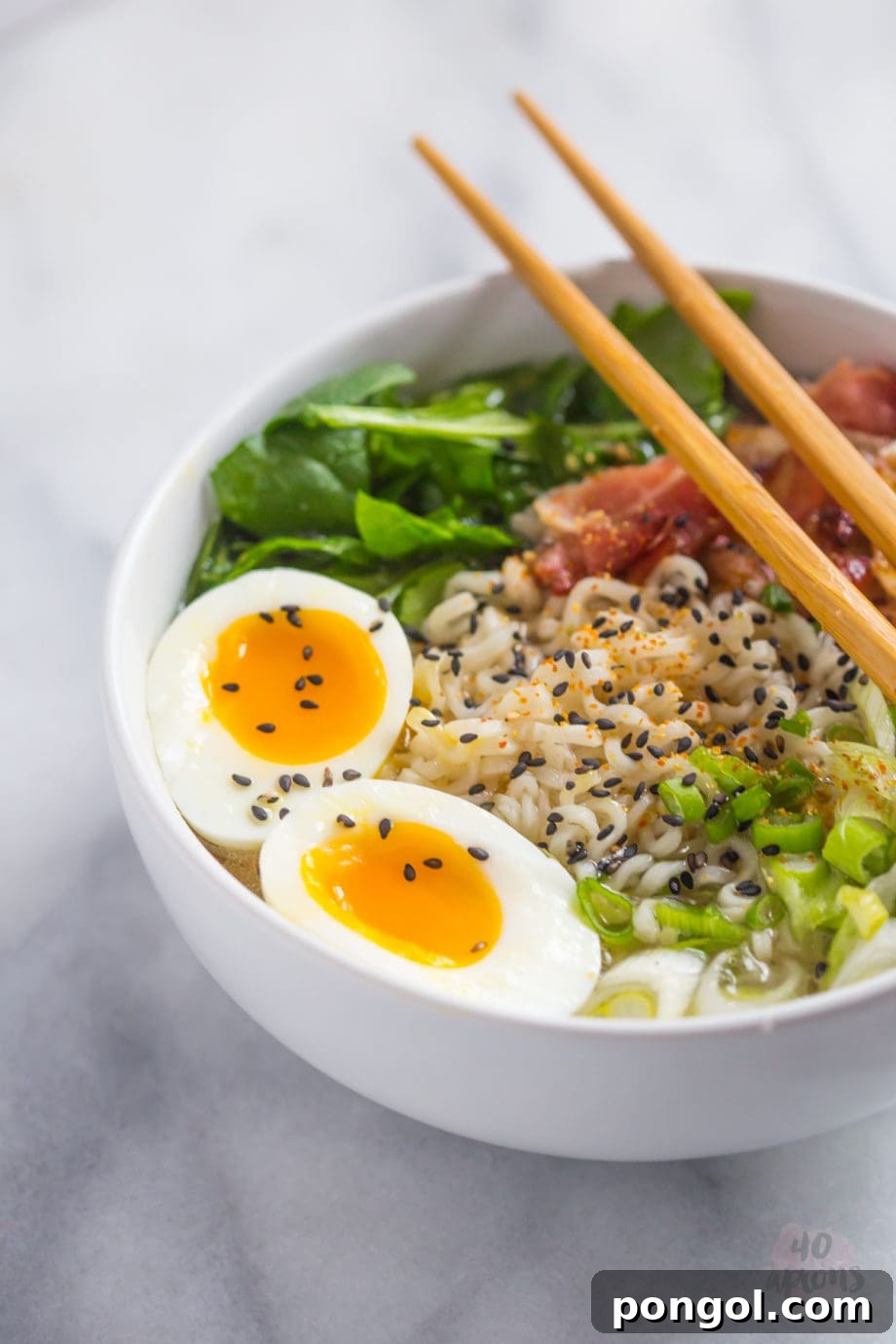
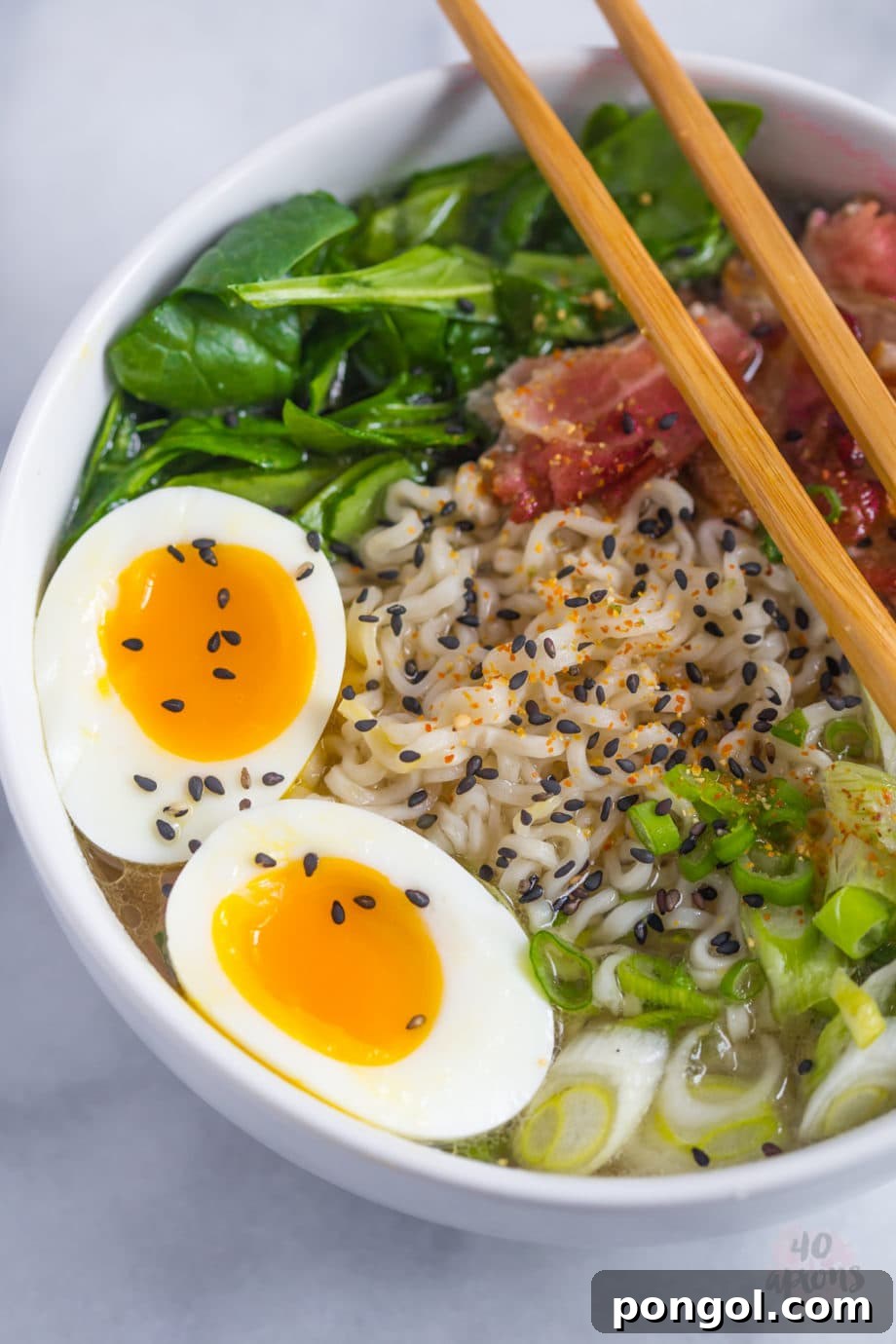
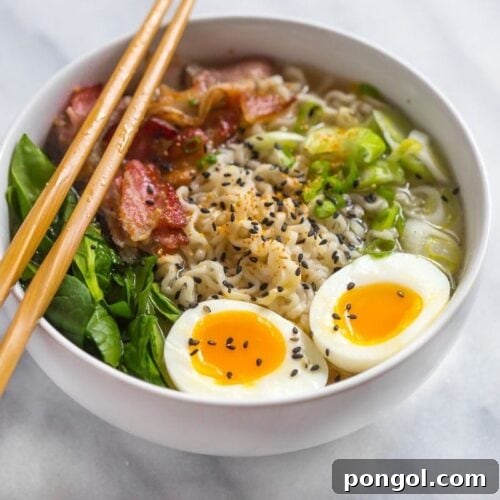
The resulting bacon broth is a revelation: deeply rich, wonderfully smoky, and perfectly salty, without any single profile overwhelming the others. Each strand of tender ramen noodle eagerly absorbs these complex flavors. The creamy, perfectly soft-boiled egg yolk adds an essential luxuriousness that truly elevates the experience. Even the “used” bacon, sautéed to a crisp after simmering in the broth, remains surprisingly tender and full of flavor, offering a delightful textural contrast. This recipe comes together incredibly quickly, delivering a satisfying meal that feels gourmet yet is utterly approachable. Don’t be concerned about it being “too bacony” – it’s a balanced, umami-rich broth that merely hints at its smoky origins. It’s the perfect canvas for customization, allowing you to load it up with your favorite toppings and transform it into a personalized culinary masterpiece.
Customizing Your Bacon Ramen Bowl: Toppings Galore
One of the true joys of ramen is the endless possibility for customization. This bacon ramen, with its versatile and savory broth, welcomes a plethora of additions. At our favorite ramen spots, I often find myself piling on kimchi for a tangy kick, fresh spinach for a touch of green, crunchy bamboo shoots, zesty pickled ginger, earthy shiitake mushrooms, and sweet corn kernels. When cooking at home, I love to add silken tofu for extra protein, more fresh mushrooms, and any other vibrant vegetables we have on hand – think bok choy, bean sprouts, or thinly sliced carrots. The beauty of this dish is its adaptability; feel free to experiment and create a bowl that perfectly suits your taste and whatever fresh ingredients you have available. Each topping adds its own layer of texture and flavor, contributing to a truly dynamic and satisfying meal experience.
Recipe By: Cheryl Malik
5 from 15 votes
Bacon Ramen
Prep Time: 5 minutes
Cook Time: 35 minutes
Total Time: 40 minutes
Rich, slightly smoky ramen broth with tender noodles that comes together so quickly.

Cheryl Malik
Pin Recipe
Ingredients (Serves 2)
- 4 cups water
- 2 cloves garlic, peeled and smashed
- 3 ¼ slices ginger, peeled
- 6 slices bacon
- 2-3 tablespoons oil for frying (vegetable, olive, or coconut)
- 2 tablespoons soy sauce
- 1 tablespoon mirin
- Salt to taste
- 2 packages ramen noodles (dry, fresh, or frozen), cooked according to package instructions
- Chopped fresh spinach, to serve
- Togarashi (Japanese spice blend), to serve
- Green onions, sliced, to serve
- Soft-boiled eggs, to serve
- Black sesame seeds, to serve
Instructions
- Combine water, garlic, ginger, and bacon in a medium saucepan over high heat. Bring to a boil, then reduce heat to a strong simmer/low boil. Let cook together for 30 minutes.
- Strain out the aromatics and bacon from the broth. Discard the ginger and garlic. Separate the boiled bacon. In a skillet over medium heat, add 2-3 tablespoons of oil (such as vegetable, olive, or coconut, ensuring it doesn’t have a strong competing taste) and fry the bacon until browned and crispy. Add a pinch of salt to re-flavor the bacon. Remove from heat and slice into bite-size pieces.
- Return the strained broth to the saucepan. Add soy sauce and mirin to the broth, then season with salt to taste. Place the cooked ramen noodles in individual serving bowls and ladle the rich bacon broth over them. Garnish generously with the crispy bacon pieces, chopped fresh spinach, a sprinkle of togarashi, sliced green onions, soft-boiled eggs, and black sesame seeds. Serve immediately and enjoy!
Notes:
- For perfectly soft-boiled eggs, I follow this method but cook for approximately 6 minutes instead of 9 for a jammy yolk.
Recipe yields approximately 2 servings. Actual number of servings will depend on your preferred portion sizes.
Nutritional values shown are general guidelines and reflect information for 1 serving out of 2 using the ingredients listed. Actual macros may vary slightly depending on specific brands and types of ingredients used.
To determine the weight of one serving, prepare the recipe as instructed. Weigh the finished recipe (not including the weight of the container the food is in), then divide that weight by 2. The result will be the approximate weight of one serving.
Approximate Nutritional Information for One Serving
- Serving Size: 1 serving
- Calories: 782 cal
- Protein: 26 g
- Fat: 48 g
- Saturated Fat: 15 g
- Trans Fat: 1 g
- Cholesterol: 232 mg
- Sodium: 3548 mg
- Potassium: 279 mg
- Total Carbs: 61 g
- Fiber: 2 g
- Sugar: 4 g
- Net Carbs: 59 g
- Vitamin A: 271 IU
- Vitamin C: 1 mg
- Calcium: 73 mg
- Iron: 6 mg
Nutrition Disclaimers
Number of total servings shown is approximate. Actual number of servings will depend on your preferred portion sizes.
Nutritional values shown are general guidelines and reflect information for 1 serving using the ingredients listed, not including any optional ingredients. Actual macros may vary slightly depending on specific brands and types of ingredients used.
To determine the weight of one serving, prepare the recipe as instructed. Weigh the finished recipe, then divide the weight of the finished recipe (not including the weight of the container the food is in) by the desired number of servings. Result will be the weight of one serving.
Did You Make This Indulgent Ramen?
We’d love to see your creations! Tag @40aprons on Instagram and be sure to leave a review on the blog post!
Tag @40Aprons on Instagram