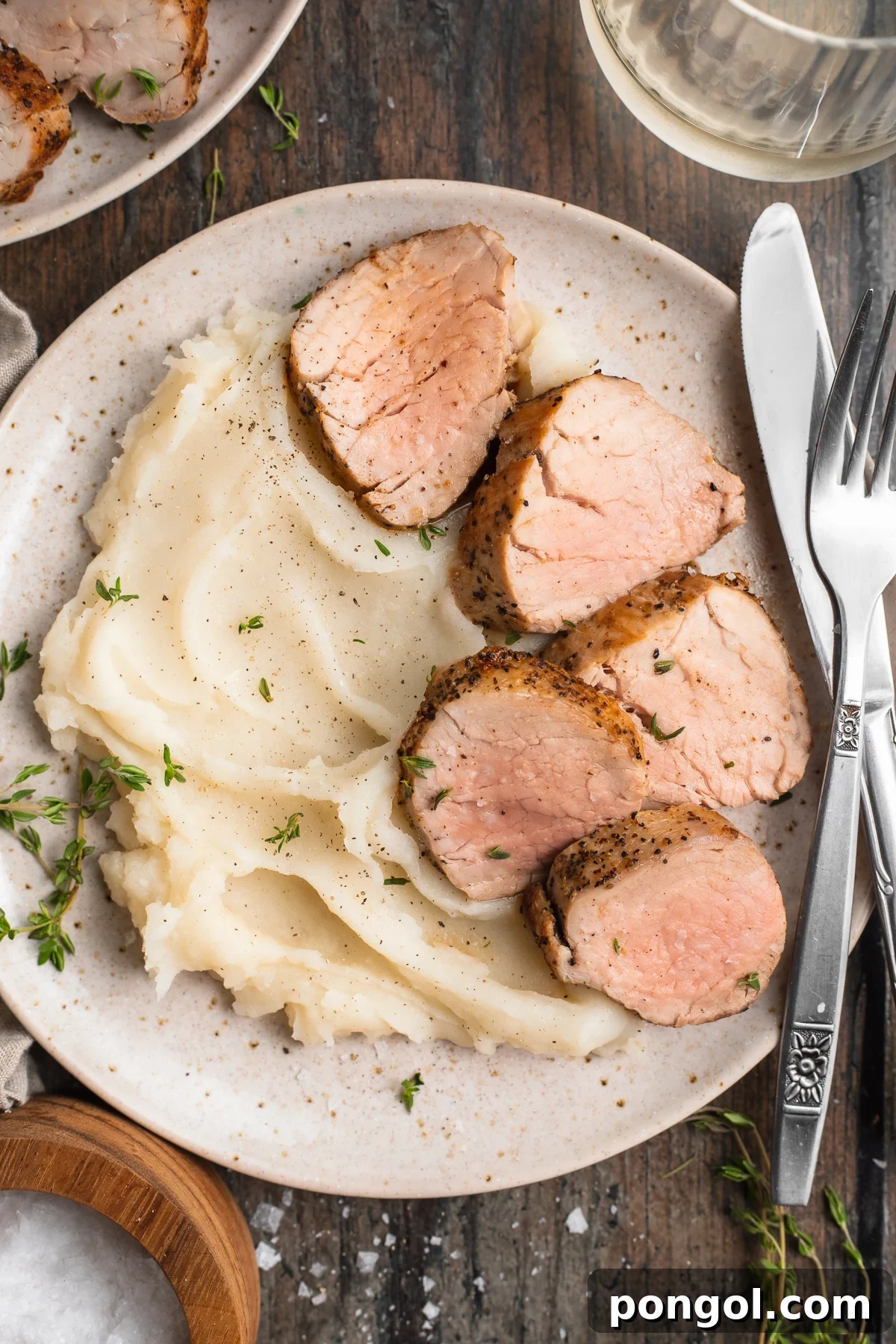
Welcome to the ultimate guide for creating perfectly cooked pork tenderloin, where culinary dreams of succulent, fall-apart meat become a delicious reality. Forget everything you thought you knew about cooking pork tenderloin; the sous vide method is here to revolutionize your kitchen experience. Imagine a pork tenderloin that is unbelievably tender, incredibly juicy, and cooked to absolute perfection from edge to edge, all thanks to the precise temperature control of a heat-regulated water bath. This slow-cooking technique guarantees an even, thorough cook every single time, eliminating the guesswork and the risk of dry, overcooked meat. Our simple yet effective seasoning enhances the natural flavors of the tenderloin, creating a foundation for a truly memorable meal. We then elevate this culinary masterpiece with a quick, high-heat sear in a pan of rich, melted butter, developing a gorgeous golden crust and a slight crispness that is simply irresistible. This is more than just a recipe; it’s a passport to perfectly cooked pork tenderloin, every single time.
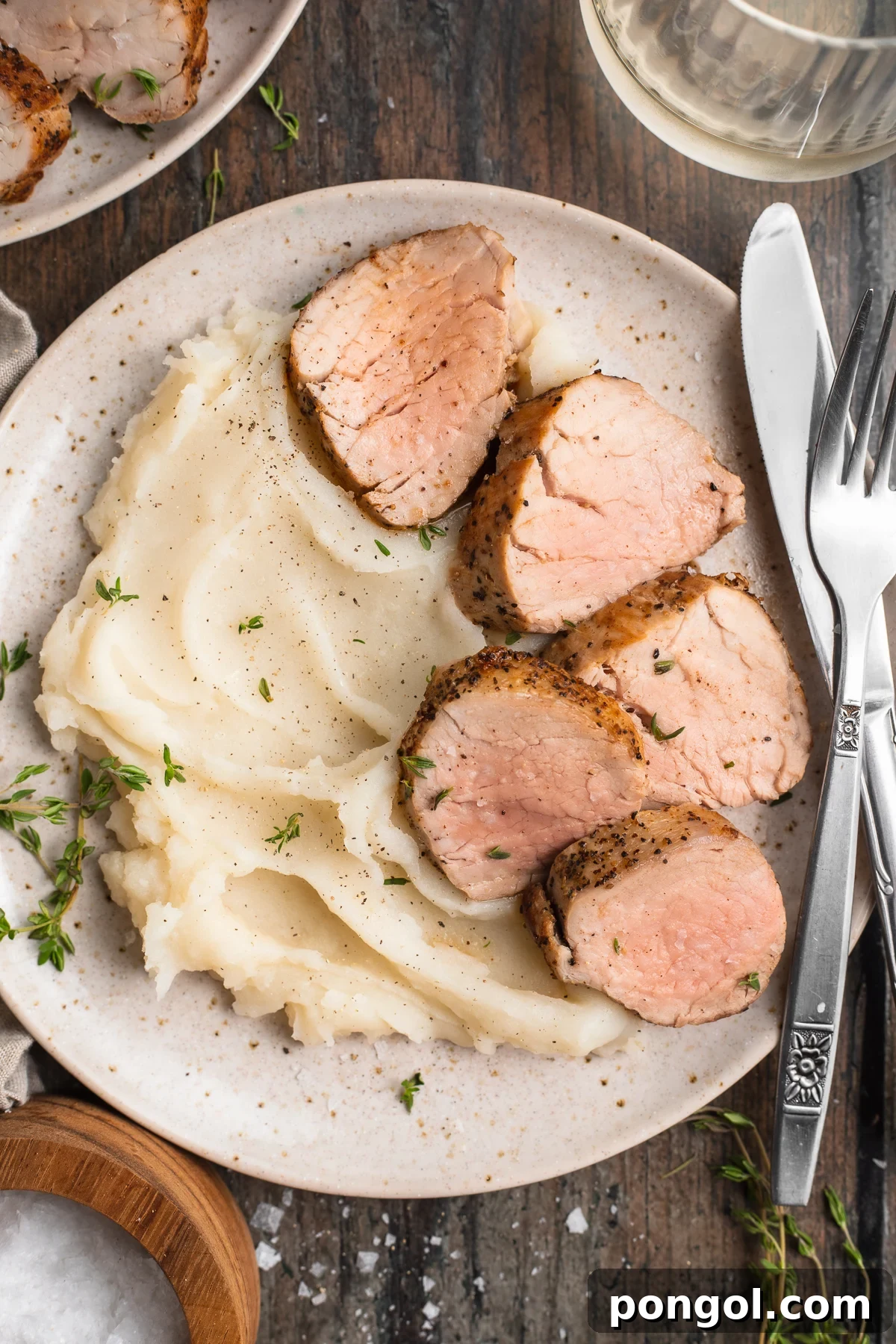
Unlocking Perfection: Why This Sous Vide Pork Tenderloin Recipe Stands Out
There are countless ways to prepare pork tenderloin, but none quite compare to the consistent excellence delivered by the sous vide method. This technique isn’t just a trend; it’s a game-changer for home cooks and seasoned chefs alike, ensuring a meal that is consistently tender, juicy, and packed with flavor.
The Secret to Unrivaled Tenderness and Juiciness
If you’ve ever struggled with dry or unevenly cooked pork tenderloin, prepare to be amazed. Our sous vide recipe guarantees results you might not believe until you taste them. The magic lies in how the tenderloin is cooked: sealed in a vacuum-sealed bag and submerged in a precisely temperature-controlled water bath. This environment ensures:
- Even Cooking from Edge to Edge: Unlike traditional cooking methods where the exterior cooks faster than the interior, sous vide heats the pork gently and uniformly. Every millimeter of the tenderloin reaches your desired internal temperature, resulting in a perfectly cooked texture throughout, without any grey, overcooked bands.
- Moisture Lock-In: Because the pork is cooked in a sealed bag, its natural juices and flavors are completely locked in during the entire cooking process. There’s virtually no risk of moisture escaping, meaning your pork tenderloin emerges incredibly moist and succulent, never dry or tough. This gentle cooking process breaks down connective tissues without dehydrating the meat, creating an unparalleled tenderness that melts in your mouth.
The Irresistible Golden Crust and Flavor Boost
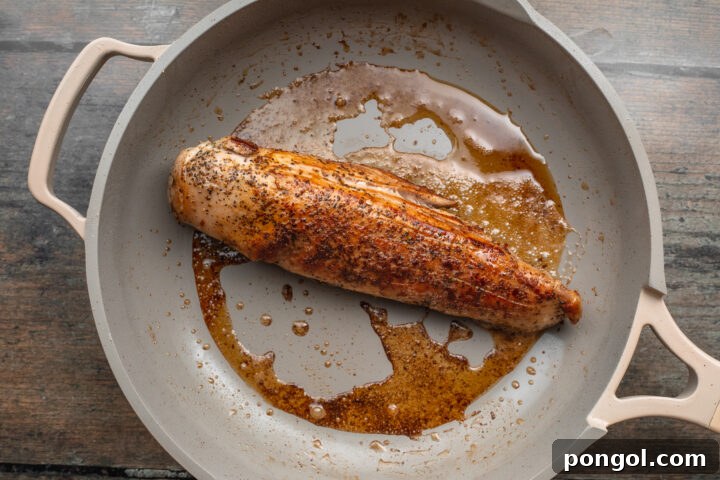
While sous vide delivers internal perfection, a quick post-sous vide sear is essential to achieve culinary excellence. We finish our tenderloin with a swift sear in a pan of hot, melted butter (or a neutral oil for a lighter touch). This crucial step:
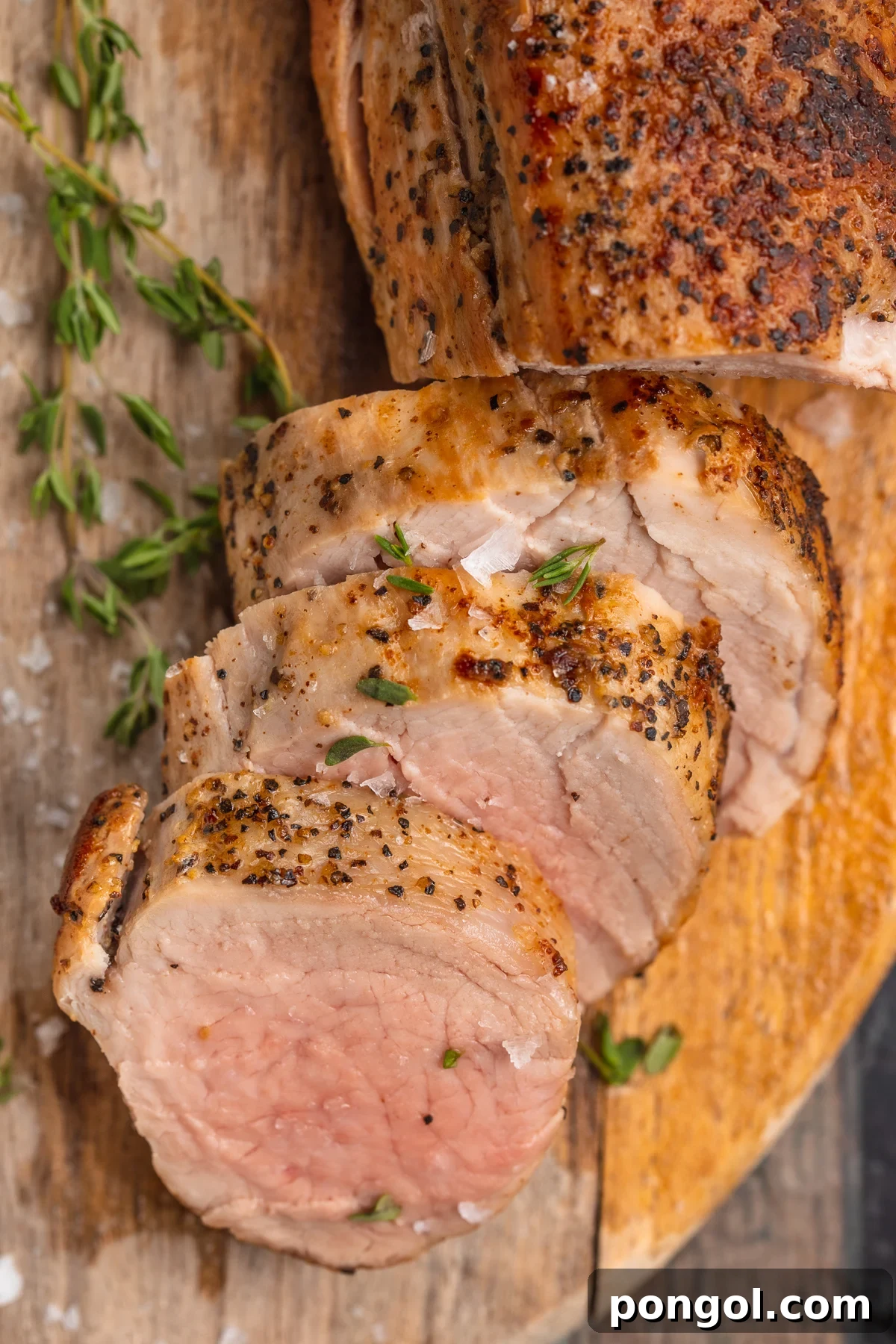
- Develops a Rich, Golden Brown Color: High heat searing promotes the Maillard reaction, a chemical process that creates hundreds of new flavor compounds and gives the pork a beautiful, caramelized exterior. This golden-brown crust isn’t just visually appealing; it’s a testament to the layers of flavor developed on the surface.
- Adds a Delightful Crisp Texture: The sear provides a delicate, slightly crisp skin that contrasts wonderfully with the tender interior. This textural interplay elevates the dish, making each bite more engaging and satisfying. It also helps to further seal in any remaining juices, contributing to the overall moistness.
- Enhances Overall Flavor: The butter, combined with the caramelized surface, infuses the tenderloin with a depth of flavor that complements its inherent richness. It’s the perfect savory complement to the delicate pork.
A Wholesome and Versatile Protein Choice
For those mindful of their dietary intake, pork tenderloin is an exceptional choice. It is renowned as the **leanest and most tender cut of pork**, comparable in leanness to skinless chicken breast. This makes it a fantastic source of low-fat protein, ideal for supporting muscle growth and satiety without excess calories. Beyond its protein content, pork tenderloin is rich in essential vitamins and minerals, including:
- B Vitamins: Crucial for energy metabolism and nervous system health.
- Selenium: An antioxidant that supports immune function.
- Phosphorus: Important for bone health and energy production.
- Zinc: Essential for immune function and wound healing.
Its mild flavor and lean profile also make it incredibly versatile, easily adapting to a wide range of seasonings and cuisines.
Chef’s Expert Tips for Sous Vide Pork Tenderloin Mastery
Achieving restaurant-quality sous vide pork tenderloin is remarkably easy, but a few expert tips can elevate your results from great to truly exceptional. These insights will help you customize your flavors, ensure perfect doneness, and guarantee maximum juiciness.
Unleash Your Inner Chef: Customizing Your Flavors
We’ve kept the base seasoning for this recipe beautifully simple – a touch of salt, freshly cracked black pepper, a few sprigs of fresh herbs, and some smashed garlic. This minimalist approach allows the natural flavor of the pork to shine. However, the sous vide method is incredibly forgiving and encourages culinary creativity. Feel free to:
- Experiment with Herbs: Beyond thyme, rosemary, and oregano, consider sage for a more earthy profile, or even a blend of Italian herbs.
- Explore Spice Rubs: Transform your tenderloin with a generous rub of Cajun seasoning for a spicy kick, a smoky paprika blend, or a fragrant Moroccan spice mix.
- Add Aromatics to the Bag: Toss in some thinly sliced onions, shallots, or even citrus zest (lemon or orange) into the sous vide bag. The gentle cooking will infuse these aromatics directly into the pork.
- Sweet & Savory Glazes: Before searing, consider brushing the tenderloin with a touch of honey, maple syrup, or a Dijon mustard blend for a delightful sweet and savory crust.
- Garlic Lover’s Dream: Don’t limit yourself to just smashed garlic; finely minced garlic or garlic powder can also be added for a more intense garlic flavor.
The beauty of sous vide is that the flavors you add to the bag are thoroughly absorbed, creating a deeply infused and aromatic dish.
Precision in Doneness: Master the Meat Thermometer
While sous vide cook times are reliable, a meat thermometer is your best friend for absolute precision, especially if you’re aiming for a specific doneness. There’s nothing worse than an undercooked or overcooked tenderloin after all your effort. Unlike chicken, pork tenderloin can be enjoyed at various levels of doneness, much like a steak:
- Medium-Rare (140°-150°F / 60°-65.5°C): The pork will be slightly pink in the center, incredibly tender, and very juicy. This is often preferred for maximum succulence.
- Medium (150°-155°F / 65.5°-68.3°C): A little less pink than medium-rare, but still wonderfully tender and juicy.
- Medium-Well (155°-160°F / 68.3°-71°C): Only a hint of pink remains, offering a firmer texture while still retaining moisture.
We generally **do not recommend rare or well-done** for pork tenderloin. Rare can be unappetizingly soft, and well-done, despite the sous vide method’s advantages, can still lean towards dryness due to the nature of this lean cut. In our experience, the real sweet spot for optimal texture and juiciness is between **145°-150°F (63°-65.5°C)**. Always check the thickest part of the tenderloin with your thermometer before slicing.
The Critical Rest Period: Patience for Juiciness
This tip is non-negotiable if you desire a truly juicy and tender pork tenderloin. Seriously, **do not skip the rest time!** Letting the meat rest before slicing is a crucial step in all meat cookery, and it’s particularly important here:
- Juice Redistribution: When meat cooks, the muscle fibers contract, pushing the juices towards the center. If you slice into the meat immediately, these concentrated juices will simply pour out onto your cutting board, leaving you with a drier piece of meat.
- Reabsorption by Muscle Fibers: Resting allows the muscle fibers to relax and reabsorb these juices, distributing them evenly throughout the tenderloin. This process locks the moisture back into the meat, ensuring every slice is as juicy and tender as possible.
Even after a precise sous vide cook, a 10-minute rest after searing makes all the difference. Have patience, we beg of you – your taste buds will thank you!
Perfect Pairings: Sides That Complement Your Sous Vide Pork Tenderloin
A beautifully cooked sous vide pork tenderloin deserves equally delightful companions. Its mild yet rich flavor profile makes it incredibly versatile, pairing well with a wide array of side dishes. Here are some of our top recommendations to create a complete and unforgettable meal:
- Creamy Corn Souffle: The delicate sweetness and airy texture of a corn souffle provide a lovely contrast to the savory pork. Its richness makes it a comforting and satisfying choice.
- Simple Sautéed Cabbage: For a lighter, healthier option, sautéed cabbage offers a tender-crisp texture and a subtly sweet, earthy flavor. It’s quick to prepare and adds a vibrant green to your plate.
- Decadent Cauliflower Au Gratin: If you’re looking for something more indulgent, a creamy, cheesy cauliflower au gratin is an excellent choice. The richness of the cheese sauce and the tender cauliflower perfectly complement the pork.
- Crispy Air Fryer Potato Wedges: For a satisfying and slightly crispy starch, air fryer potato wedges are a fantastic option. They offer a golden exterior and fluffy interior, seasoned simply to let the pork shine.
- Elegant Hasselback Sweet Potatoes: These visually impressive sweet potatoes are not only beautiful but also delicious. Their natural sweetness and tender texture, with crispy edges, make a wonderful pairing.
- Fluffy Mashed Potatoes: A classic for a reason. Creamy, buttery mashed potatoes are perfect for soaking up any delicious juices or pan sauce.
- Roasted Asparagus or Green Beans: Simple, elegant, and healthy, roasted green vegetables add a fresh, vibrant element to the meal.
- Apple Sauce or Chutney: The traditional pairing of pork and apples works beautifully. A homemade apple sauce or a spiced apple chutney adds a delightful sweet and tangy counterpoint.
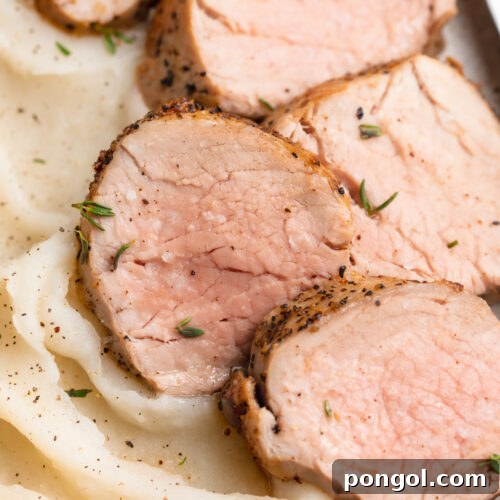
Sous Vide Pork Tenderloin
 Sam Guarnieri
Equipment
-
Large pot
-
Sous vide immersion circulator
-
Cutting board
-
Large food-safe vacuum sealing bags or large sealable food-safe plastic bag
-
Vacuum sealer optional, see Notes for alternative
-
Paper towels
-
Large skillet
-
Tongs
-
Meat thermometer optional but highly recommended
-
Sharp knife
Ingredients
- 1 whole pork tenderloin approximately 1-1 ½ pounds (about 450-680 grams)
- Salt to taste (we recommend a generous amount)
- Freshly cracked black pepper to taste
- 2-4 sprigs fresh herbs of choice such as thyme, rosemary, or oregano
- 1-2 cloves garlic peeled and lightly smashed
- 2 tablespoons butter or neutral oil for searing, see Notes for dietary options
Instructions
-
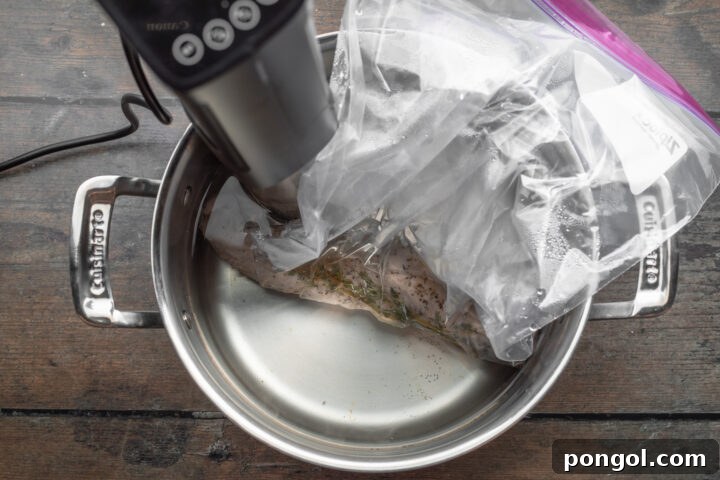
1. Prepare the Water Bath: Fill a large pot or any other heat-resistant container with water. Ensure the pot is deep enough for the water level to fall between the minimum and maximum indicators on your sous vide immersion circulator. Insert the circulator and set the temperature to 140°F (60°C). Allow the water to preheat completely before proceeding.
-
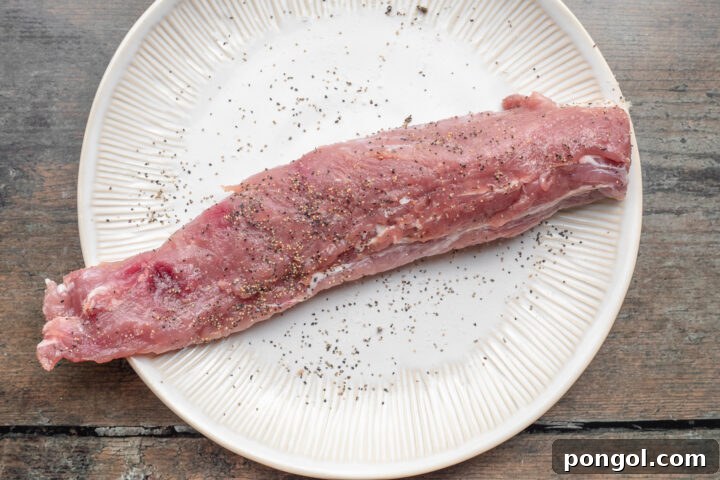
2. Season the Tenderloin: Place the whole pork tenderloin on a clean cutting board. Generously season all sides of the tenderloin with salt and freshly cracked black pepper. Don’t be shy with the seasoning; it forms the foundation of flavor. Ensure every surface is evenly coated.

-
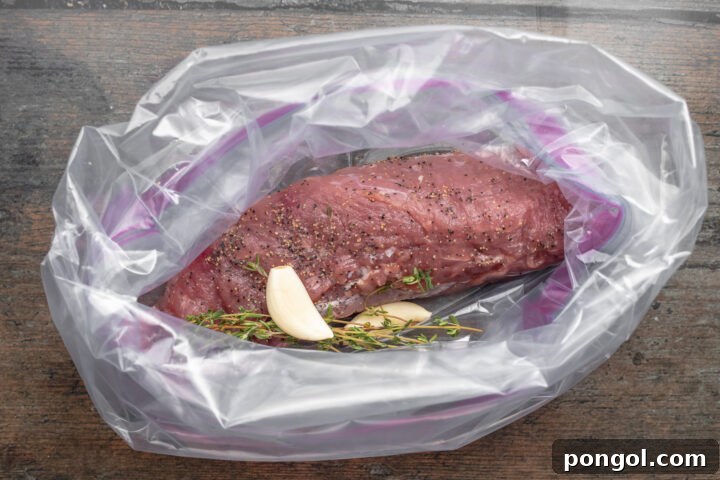
3. Bag and Seal: Carefully transfer the seasoned pork tenderloin into a large, food-safe vacuum sealing bag. Add the fresh herb sprigs and the smashed garlic cloves to the bag alongside the pork. Remove as much air from the bag as possible using a vacuum sealer. If you don’t have a vacuum sealer, use the water displacement method (detailed in the Notes section below) to remove air and then securely seal the bag shut.
-
4. Sous Vide Cook: Once the water bath has reached its preheated temperature of 140°F (60°C), carefully place the sealed bag containing the pork tenderloin into the pot. It is crucial that the tenderloin is entirely submerged in the water for proper cooking. If needed, weigh the bag down using specialized sous vide weights, a heavy spoon, or even silverware attached to the bottom of the bag to ensure it remains fully submerged throughout the cooking process.
-
5. Cook to Desired Doneness: Cook the tenderloin in the water bath for 1 to 2 hours, depending on your desired level of doneness. Refer to the Notes section for specific cooking times and internal temperature guidelines to achieve medium-rare, medium, or medium-well results.
-
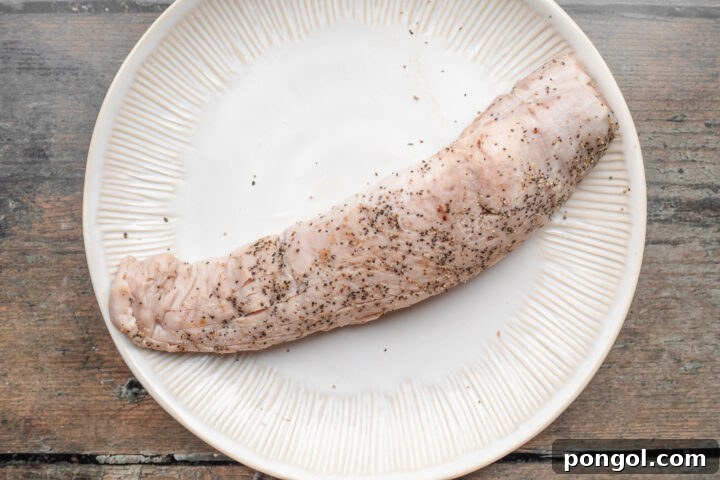
6. Remove and Pat Dry: Once the preferred cook time is complete, carefully remove the bag from the water bath. Extract the pork tenderloin from the bag and use paper towels to thoroughly pat the entire surface of the tenderloin completely dry. This step is essential for achieving a good sear later. Set the tenderloin aside on a clean surface.
-
7. Prepare for Searing: Heat a large skillet on your stove over medium-high heat. Allow the pan to get sufficiently warm, then add the butter (or neutral oil). Let the butter melt completely, swirling the pan periodically to ensure the entire bottom of the skillet is coated. You want the butter to be hot and slightly frothy, but not smoking.
-
8. Achieve the Perfect Sear: When the butter is melted and hot, carefully add the dried pork tenderloin to the skillet. Sear the tenderloin for 3 to 4 minutes on one side, aiming for a beautiful golden-brown crust. Using tongs, flip the tenderloin over and sear the other side for another 3 to 4 minutes. Continue rotating and searing all sides until the pork tenderloin is uniformly golden brown and has a slight crispness on all surfaces.
-
9. Rest and Serve: Transfer the seared tenderloin to a clean cutting board and allow it to rest, untouched, for a full 10 minutes. This resting period is critical for the juices to redistribute, ensuring a tender and moist final product. After 10 minutes, slice the tenderloin into medallions or desired portions with a sharp knife and serve immediately with your favorite chosen sides. Enjoy!
Helpful Notes & Tips:
- Water Displacement Method (No Vacuum Sealer? No Problem!): If you don’t own a vacuum sealer, you can effectively remove air from your food-safe bag using this simple method. Place your ingredients (in this case, the seasoned pork tenderloin, herbs, and garlic) into an appropriately-sized sealable food-safe plastic bag (like a Ziploc freezer bag) and seal the bag almost all the way across the top, leaving a small corner open. Heat the water with the sous vide immersion circulator as instructed. Then, slowly lower the half-sealed bag into the heated water, allowing the water pressure to push the air out. You should see the plastic cling tightly to the food. Once the food is entirely submerged and all visible air has been forced out, seal the bag completely shut at the remaining open corner and continue with the cooking.
- Dietary Adaptations:
- Make it Paleo: For a Paleo-friendly option, use ghee (clarified butter) or a neutral cooking oil such as avocado oil or olive oil instead of traditional butter for the searing step.
- Make it Dairy-Free: Similarly, to make this recipe dairy-free, simply substitute regular butter with a plant-based butter alternative or a neutral cooking oil like grapeseed, avocado, or refined coconut oil.
Sous Vide Cook Times & Desired Results (at 140°F / 60°C):
- For Medium-Rare Pork Tenderloin: Cook at 140°F (60°C) for 1 hour. The pork should reach an internal temperature of 140-150°F (60-65.5°C) after searing and resting. It will be slightly pink and incredibly tender.
- For Medium Pork Tenderloin: Cook at 140°F (60°C) for 1 ½ hours. The pork should reach an internal temperature of 150-155°F (65.5-68.3°C) after searing and resting. It will have a subtle pink hue in the center and be very juicy.
- For Medium-Well Pork Tenderloin: Cook at 140°F (60°C) for 2 hours. The pork should reach an internal temperature of 155-160°F (68.3-71°C) after searing and resting. Only a faint pink will remain, offering a firmer texture while still moist.
We generally do not recommend cooking pork tenderloin beyond medium-well for this recipe. Pork tenderloin is a very lean cut of meat, and cooking it for too long, even with sous vide, can still lead to it becoming dry and tough, diminishing the desirable texture.
Approximate Nutritional Information for One Serving
Nutrition Disclaimers
Number of total servings shown is approximate. Actual number of servings will depend on your preferred portion sizes.
Nutritional values shown are general guidelines and reflect information for 1 serving using the ingredients listed, not including any optional ingredients. Actual macros may vary slightly depending on specific brands and types of ingredients used.
To determine the weight of one serving, prepare the recipe as instructed. Weigh the finished recipe, then divide the weight of the finished recipe (not including the weight of the container the food is in) by the desired number of servings. Result will be the weight of one serving.
Did You Make This Recipe?
We’d love to see your creations and hear your thoughts! Tag @40aprons on Instagram and be sure to leave a review on this blog post to share your experience!
Tag @40Aprons on Instagram