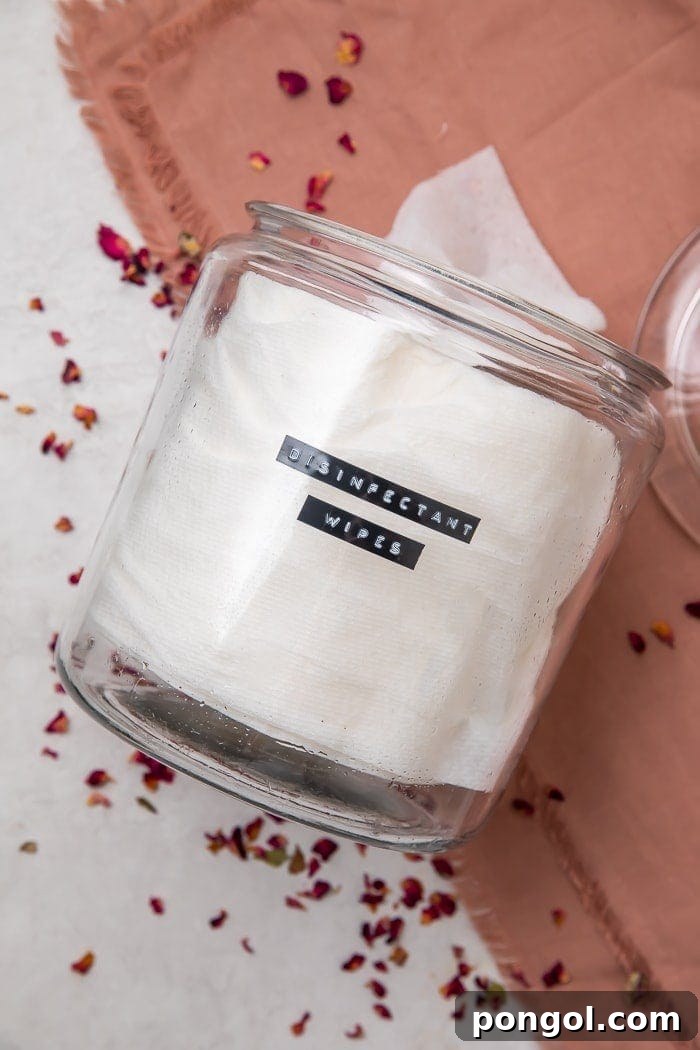
Welcome to the ultimate guide for crafting your own highly effective and budget-friendly disinfectant wipes right at home. In an era where cleanliness is paramount, having a reliable method to sanitize surfaces is essential. Forget the struggle of finding expensive commercial brands like Lysol or Clorox wipes, or worrying about their ingredient lists. With a few simple, powerful antiviral ingredients, you can easily create these DIY wipes to keep your home hygienically clean and smelling fantastic. This comprehensive guide will walk you through every step, from understanding the science behind disinfection to mixing your potent solution and assembling your wipes, ensuring your household stays safe and spotless.
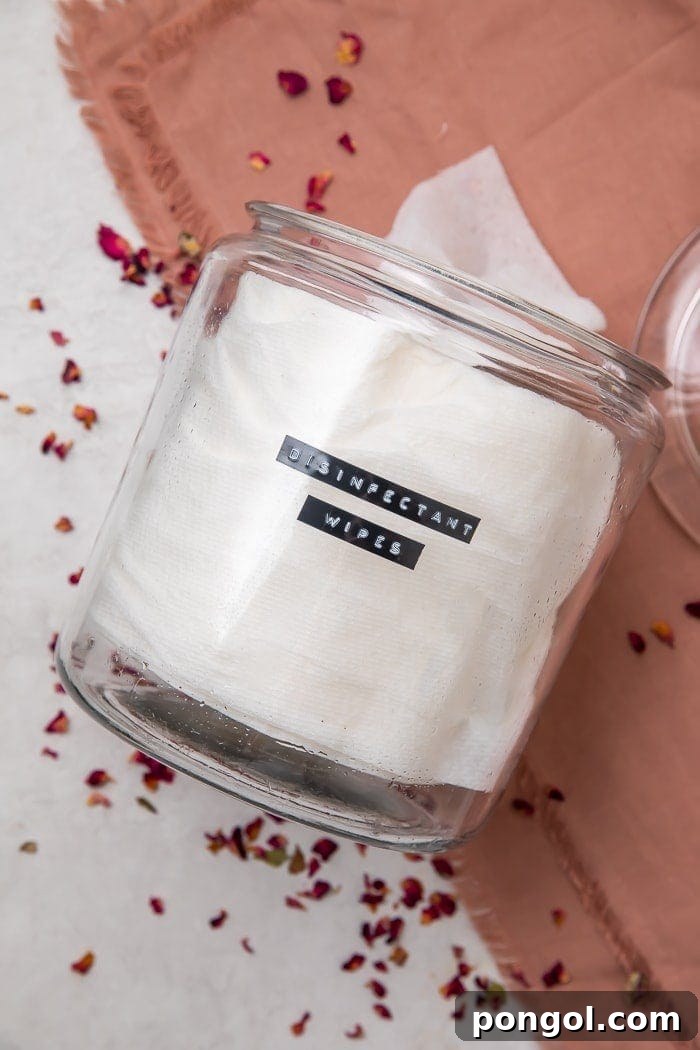
Disclaimer: We are not medical professionals, chemists, or pharmacists. The information provided herein is for educational purposes only and is based on commonly accepted scientific principles regarding disinfection. This content should not be considered medical advice. Always use caution when handling chemicals, and consult a professional for specific health concerns. Use these DIY disinfectant wipes at your own risk.
Crucial Efficacy Note: To ensure your DIY disinfectant wipes are effective against germs, it is imperative to use a solution containing at least 60% alcohol by volume. Studies, such as those published in the Journal of Hospital Infection, consistently show that a minimum concentration of 62% alcohol is required for optimal antiviral and antibacterial action. We strongly recommend aiming for this minimum for reliable germ-killing power.
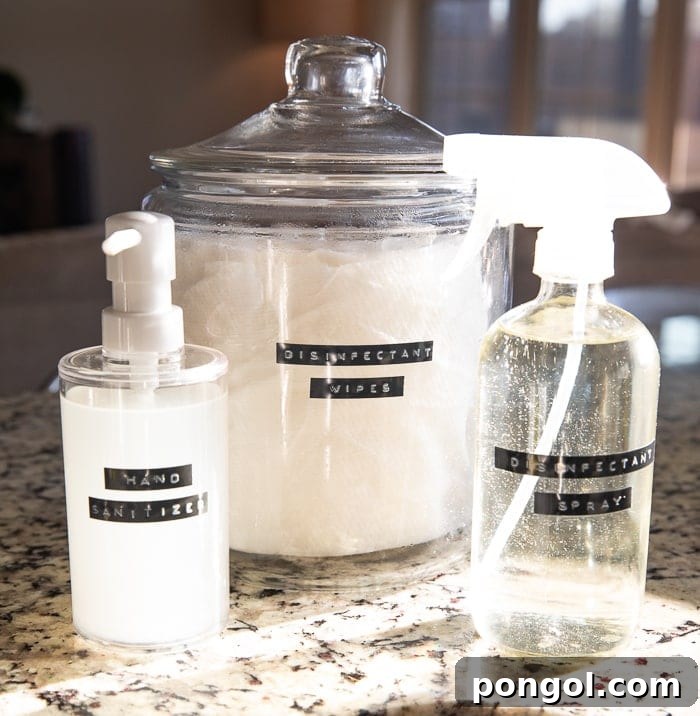
Once you master these wipes, explore our other essential DIY cleaning solutions: our homemade disinfectant spray and DIY hand sanitizer. Expand your arsenal of natural and effective cleaning products!
Why You Should Embrace DIY Disinfectant Wipes for a Cleaner Home
Creating your own disinfectant wipes offers a multitude of benefits, making it a smart and sustainable choice for any household:
- Unparalleled Effectiveness (When Done Right): When formulated correctly with at least 60-71% alcohol, these homemade wipes are incredibly effective at inactivating a wide range of viruses and bacteria. We delve deeper into the science of alcohol concentration below, but rest assured, a properly made batch offers powerful germ-fighting capabilities comparable to commercial options.
- Remarkable Cost Savings: Commercial disinfectant wipes can be surprisingly expensive, especially with frequent use. The primary active ingredient, isopropyl alcohol, can often be purchased in bulk for a fraction of the cost per ounce. Imagine finding a 16 oz bottle of 91% isopropyl alcohol for less than a dollar! Over time, these savings truly add up, making DIY wipes an economically savvy choice.
- Customizable and Delightful Scents: One of the best perks of making your own wipes is the ability to personalize the aroma. Many commercial wipes come with harsh chemical smells or artificial fragrances. With essential oils, you can choose scents that not only smell amazing but also offer additional cleaning and antiviral properties. Our favorite blend of lemon and tea tree creates a refreshing, clean aroma that will leave your home smelling fantastic.
- Leveraging the Power of Hydrogen Peroxide: Beyond alcohol, hydrogen peroxide is a crucial ingredient that significantly enhances the germ-killing power of these wipes. It works by oxidizing and breaking down the cell walls of pathogens, providing an extra layer of defense against unwanted microbes.
- Reduced Chemical Exposure: By making your own wipes, you gain full control over the ingredients. This means you can avoid many of the harsh, synthetic chemicals, dyes, and artificial fragrances often found in store-bought options, creating a cleaner and potentially safer environment for your family and pets.
- Environmentally Conscious Choice: While the recipe calls for paper towels, you can easily adapt this method to use reusable microfiber cloths or old cotton t-shirts cut into squares. This significantly reduces waste, making your cleaning routine more eco-friendly and sustainable. Simply wash and re-soak your cloths!
Ideal Surfaces for Your Homemade Disinfectant Wipes
These powerful wipes are designed for surface disinfection, not for personal use. They are highly effective on most hard, non-porous surfaces that see frequent contact in your home. Always remember, no matter how messy your children (or pets!) get, these wipes are not for use on skin or direct contact with living beings.
Focus on high-touch areas where germs tend to accumulate. Excellent candidates for cleaning with your DIY wipes include:
- Kitchen Surfaces: Sink handles, refrigerator handles, microwave touchpads, countertops (especially after food preparation), appliance buttons.
- Bathroom Surfaces: Faucet handles, toilet flush levers, light switches, vanity tops.
- Living Areas: Doorknobs, light switches, remote controls, phone cases, keyboards, gaming controllers.
- Entryways: Handrails, shoe racks, entry tables.
Important Caution: Before using these wipes extensively on any furniture with a delicate finish, painted surfaces, varnished wood, or electronics, we strongly recommend performing a small patch test in an inconspicuous area. This will help ensure that the solution does not cause discoloration, damage, or strip away finishes. Wipe gently and allow to dry completely before proceeding with larger areas.
Essential Ingredients for Your DIY Disinfectant Wipes
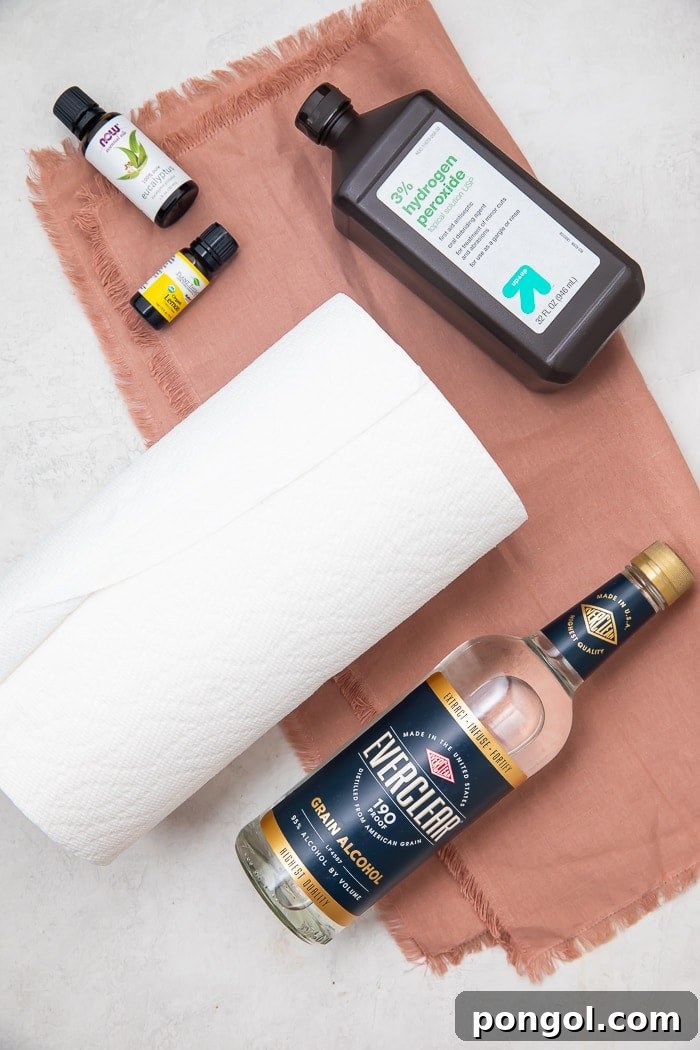
Despite their powerful disinfecting abilities, these homemade wipes require only a handful of simple and accessible ingredients. Each component plays a vital role in creating an effective cleaning solution:
- Alcohol (Ethanol or Isopropyl): The primary germ-killing agent. We will discuss the differences and optimal percentages in detail below.
- Distilled Water: Essential for diluting the alcohol to its most effective concentration and preventing mineral buildup.
- Hydrogen Peroxide: A powerful oxidizer that boosts the sanitizing action.
- Essential Oils: For natural scent customization and added antimicrobial benefits.
- Paper Towels or Reusable Cloths: The vehicle for your disinfecting solution.
Step-by-Step Guide: Crafting Your Own Disinfectant Wipes
Making your own disinfectant wipes is a straightforward process that takes mere minutes. Follow these simple steps for a fresh batch of germ-fighting power:
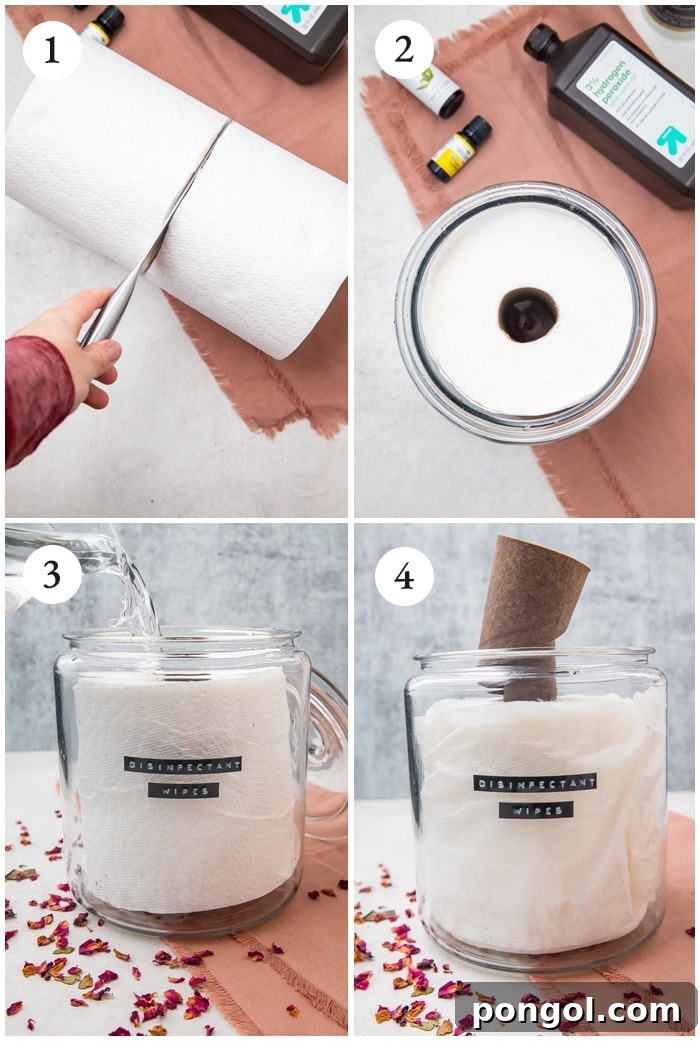
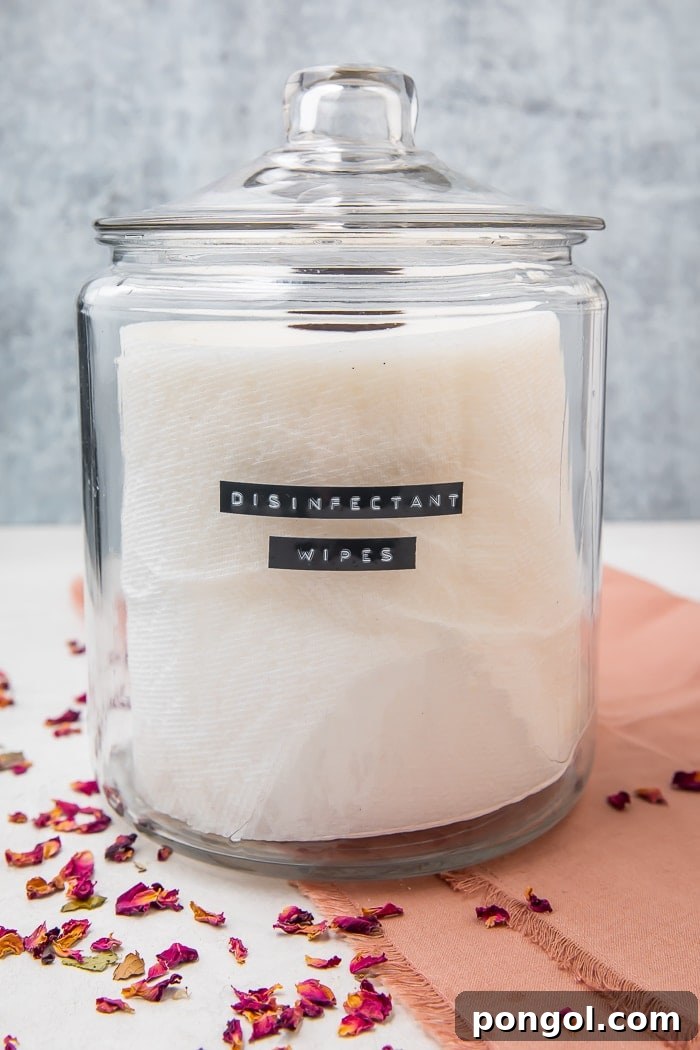
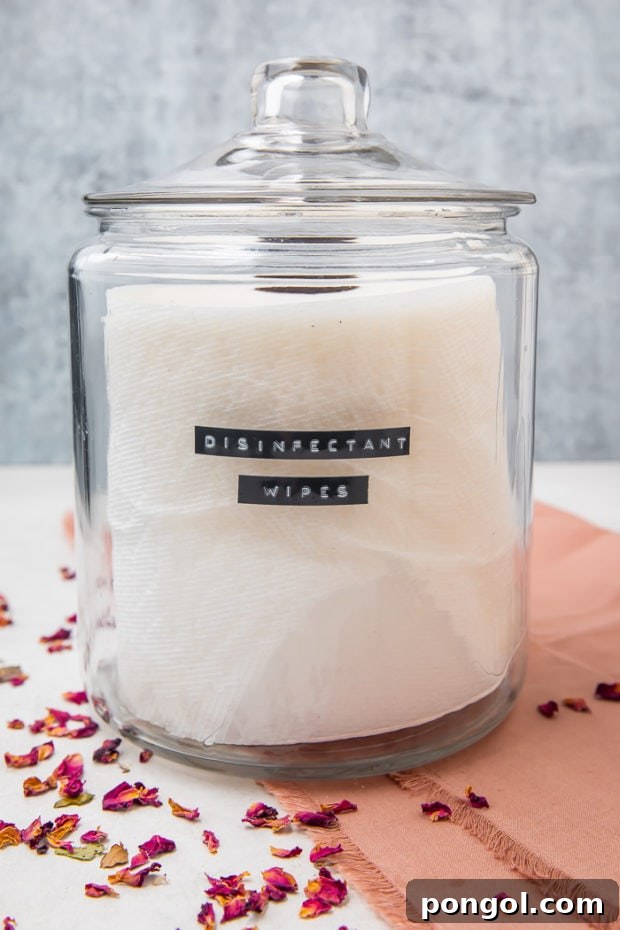
- Prepare Your Container: Select a suitable airtight container. A 1-gallon glass jar with a lid (like an Anchor Hocking jar) works perfectly, allowing ample space for the paper towel roll without excessive compression. Alternatively, a large plastic container with a secure lid will also suffice.
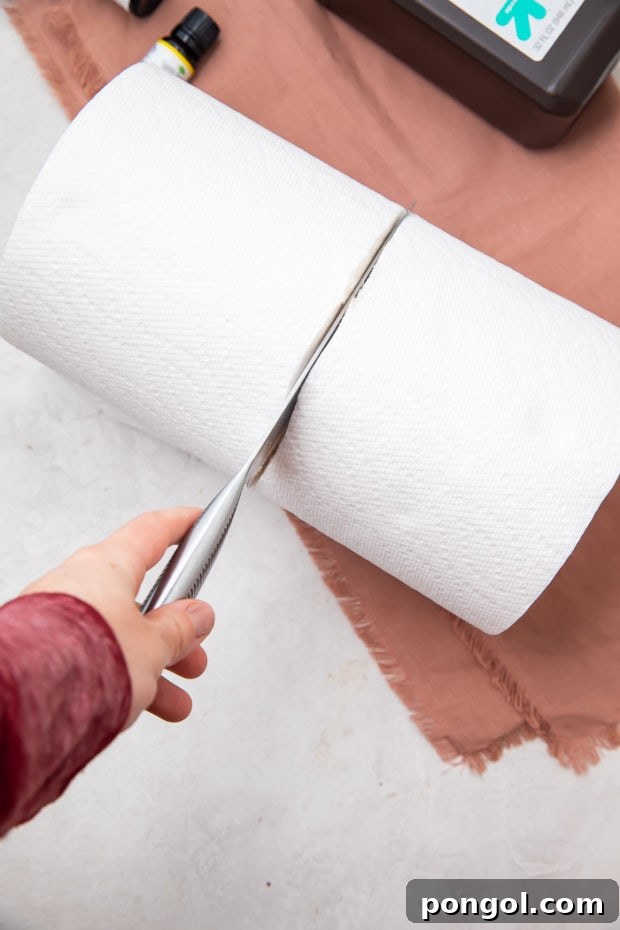
- Cut the Paper Towel Roll: For perfectly sized wipes, use a roll of select-a-size paper towels. Lay the roll on a cutting surface and carefully slice it in half using a sharp, non-serrated knife. A serrated knife can tear the paper, making it difficult to pull out individual wipes. Cut all the way around the circumference of the roll, then gently separate the two halves and cut through the inner cardboard core.
- Place Paper Towels in the Container: Take one half of the cut paper towel roll and gently place it into your chosen jar or container. It should fit snugly but not be overly compressed, allowing the liquid to soak in evenly.
- Mix the Disinfecting Solution: In a separate spouted measuring cup, bowl, or pitcher, combine all the liquid ingredients: alcohol (ethanol or isopropyl), distilled water, hydrogen peroxide, and your chosen essential oils. For a wonderful aroma and enhanced cleaning properties, we recommend a blend of 30 drops of lemon essential oil and 15 drops of tea tree oil. Stir thoroughly to ensure all ingredients are well combined.
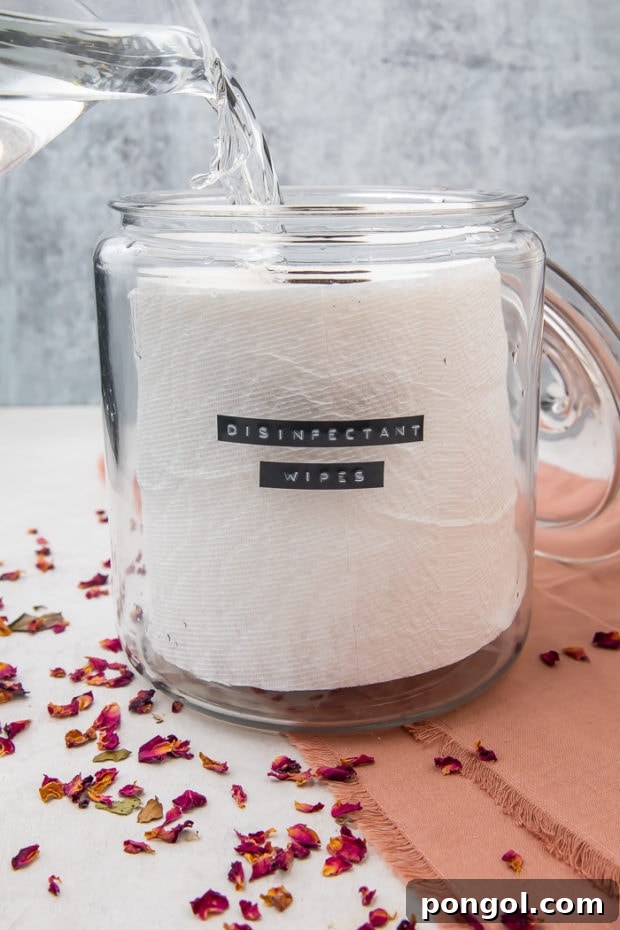
- Saturate the Paper Towels: Carefully pour the mixed disinfecting solution over the paper towel roll in the container. Allow the liquid several minutes to fully absorb into all layers of the paper towels.
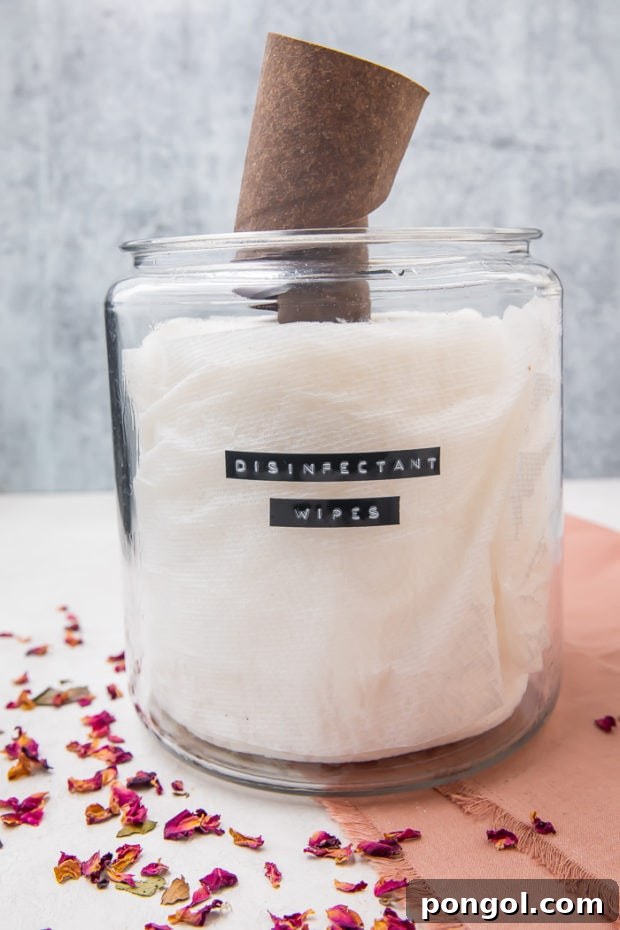
- Remove the Cardboard Insert: Once the paper towels are thoroughly saturated, gently grasp the inner cardboard tube and pull it out. This creates a convenient opening in the center, allowing you to pull wipes from the middle.
- Optional: Ensure Even Saturation: If your container allows, you may carefully flip the paper towel roll over after the initial soaking to help gravity distribute the liquid more evenly. This can be particularly helpful if you notice any dry spots. If your roll fits very tightly, this step might not be necessary or easy to perform.
- Prepare for Easy Dispensing: Finally, pull the very center paper towel sheet up and out just a bit, creating a starting point for easy removal. This “center-pull” method makes dispensing individual wipes simple and efficient.
Understanding Your Alcohol: Isopropyl vs. Ethanol
When selecting the alcohol for your DIY disinfectant wipes, you’ll primarily encounter two types: isopropyl alcohol and ethanol. Both are highly effective germicides, but they have subtle differences that might influence your choice:
- Isopropyl Alcohol (Rubbing Alcohol): This is the most common type of alcohol found in home first-aid kits and is frequently used for skin sterilization before injections. It’s the active ingredient in many hand sanitizers and medical alcohol wipes. Isopropyl alcohol is particularly known for its strong bactericidal (bacteria-killing) properties.
- Ethanol (Ethyl Alcohol): Often referred to as grain alcohol, ethanol is the type of alcohol found in alcoholic beverages (like Everclear, which is a common choice for DIY cleaning due to its high proof). Ethanol is highly effective against viruses, making it an excellent choice for broad-spectrum disinfection.
So, which one should you choose? It largely depends on your specific focus. For comprehensive germ-killing, both are excellent. Research suggests that while isopropyl alcohol excels at killing bacteria, ethanol is particularly potent against viruses. For general household disinfection, either will provide robust protection, as long as the correct concentration is achieved.
A critical reminder: Regardless of your choice, the final solution for your wipes must contain an alcohol concentration of 62-71% for proven effectiveness against germs. Using a lower concentration will significantly reduce its disinfecting power.
The Surprising Role of Water in Disinfection
It might seem counterintuitive, but using pure, undiluted alcohol for disinfection is actually less effective than using an alcohol-water mixture. Why? The answer lies in the science of protein denaturation.
According to research, “absolute ethyl alcohol, a dehydrating agent, is less bactericidal than mixtures of alcohol and water because proteins are denatured more quickly in the presence of water.” This means that 100% alcohol can rapidly coagulate the proteins on the outer membrane of bacteria and viruses, creating a protective layer that prevents the alcohol from penetrating and completely destroying the pathogen. Water, however, slows down this coagulation, allowing the alcohol to fully permeate the cell wall and effectively denature the entire protein structure, leading to complete destruction of the germ.
For this reason, our DIY disinfectant solution includes a precise amount of distilled water. This dilution creates the optimal environment for the alcohol to maximize its germ-killing potential, working in synergy with hydrogen peroxide and essential oils to create a potent, multi-faceted cleaning agent.
Harnessing the Power of Essential Oils
Essential oils are more than just pleasant fragrances; many possess significant antiviral, antibacterial, and antifungal properties that can enhance the effectiveness of your homemade disinfectant wipes. We incorporate essential oils into our cleaning formulas for two main reasons:
- Natural Scent Enhancement: They provide a refreshing and natural aroma, transforming your cleaning routine into a more enjoyable experience without the harsh chemical smells.
- Potent Antiviral and Cleaning Properties: Many essential oils contain compounds known for their ability to combat various pathogens, adding an extra layer of germ-fighting power to your wipes.
When selecting essential oils, opt for high-quality, pure, and organic varieties for the best results. You can find a wide selection of organic pure essential oils on Amazon.
Here’s a list of essential oils particularly valued for their antiviral or cleaning properties:
- Tea Tree Oil: Widely studied for its broad-spectrum antimicrobial properties.
- Eucalyptus Oil: Known for its potent antiviral and decongestant qualities.
- Thyme Oil: A powerful antiseptic and antiviral agent.
- Rosemary Oil: Offers antibacterial and invigorating properties.
- Cinnamon Oil: Recognized for its strong antiviral and antibacterial effects.
- Clove Oil: Highly antimicrobial and a natural disinfectant.
- Orange Oil: A natural degreaser and possesses antiviral compounds.
- Chamomile Oil: Known for its soothing properties, can also have mild antiseptic effects.
- Lemon Oil: An excellent natural degreaser, purifier, and provides an uplifting, clean scent. Studies have even shown it can be more effective at decreasing stress than lavender.
- Peppermint Oil: Invigorating and has some antimicrobial properties.
- Lavender Oil: Calming and has mild antiseptic qualities.
Specific essential oils like tea tree, eucalyptus, and thyme have been rigorously studied and validated for their significant antiviral capabilities. These are often our top choices for disinfectant blends due to their proven efficacy. Additionally, clove, orange, rosemary, and cinnamon are also well-regarded for their strong antiviral profiles, making them excellent additions to your homemade cleaning arsenal.
Lemon essential oil is a personal favorite for its incredibly fresh and clean aroma. Beyond its delightful scent, research indicates that lemon oil can effectively reduce stress, making your cleaning routine a more pleasant experience.
The Disinfecting Power of Hydrogen Peroxide
Hydrogen peroxide is a versatile and powerful disinfectant that complements alcohol in your DIY wipes. It works by releasing oxygen, which oxidizes and destroys the cell walls of bacteria, viruses, and fungi. This oxidative action makes it an excellent broad-spectrum antimicrobial agent.
Scientific studies have demonstrated that certain challenging viruses can be effectively inactivated by surface disinfection procedures using solutions like 62–71% ethanol, 0.5% hydrogen peroxide, or 0.1% sodium hypochlorite within a single minute. Our recipe incorporates hydrogen peroxide to harness this potent effect, providing an additional layer of disinfection and ensuring comprehensive germ-killing performance.
Accurately Calculating Your Alcohol Concentration
Ensuring the final alcohol concentration in your DIY wipes falls within the effective range of 60-71% can be trickier than simply mixing ingredients. Since you’re diluting concentrated alcohol with water and other liquids, the initial percentage of the alcohol you start with will change. Precision is key for maximum germ-killing power.
To help you with this crucial calculation, we sought the expertise of a mathematician. Our friend has provided a very clear and detailed explanation of how to calculate the desired final alcohol percentage in your solution. We highly recommend you check out his helpful guide here, which aims for an approximate 75% final alcohol percentage in its example.
Alternatively, you can utilize online tools designed for this purpose. This DIY Hand Sanitizer / Disinfectant Recipes calculator is an excellent resource. For reference, our recipe typically yields about 16 ounces (approximately 473 milliliters) of solution. While this calculator often suggests a final solution of 75% alcohol, our recipe uses slightly less hydrogen peroxide and targets a final alcohol content closer to the scientifically proven 62-71% range. You can adjust the water content in the calculator accordingly to achieve your desired percentage, always making sure to stay above the 60% minimum for effectiveness. Remember, any solution below 60% alcohol content will not be reliably effective against germs.
Don’t forget to check out our DIY disinfectant spray and DIY hand sanitizer!
DIY Disinfectant Wipes (Homemade Lysol or Clorox Wipes)
Kill germs on surfaces with these easy and affordable disinfectant wipes, made with simple but strong antiviral ingredients. A DIY version of Lysol or Clorox wipes!
- Keyword: antiviral, cleaning, disinfectant
- Prep Time: 2 minutes
- Soaking Time: 5 minutes
- Servings: 200 wipes
- Author: Cheryl Malik
- Cost: 3
Ingredients
- ½ roll select-a-size paper towels
- 18 ounces 95% ethanol (like Everclear) or 99% isopropyl alcohol
- 5 ounces distilled water
- 2 tablespoons hydrogen peroxide
- 45 drops essential oils
Instructions
-
Cut your roll of paper towels in half using a non-serrated knife. Gently squeeze one half of the paper towels into a large jar.

-
Mix all the liquid ingredients together in a spouted measuring cup, bowl, or pitcher and pour over the paper towels. Let the solution soak into the paper towels, and then pull out the cardboard insert.
-
Optional step: Flip the paper towels over to help the liquid absorb. If your roll of paper towels comes out easily from your container, we recommend this step to help with saturation. If not, don’t worry!
-
Pull the center paper towel out just a bit to help make the wipes easier to remove from the jar.
Video
Notes
Important to Remember
You must absolutely make sure your mixture is 60%+ alcohol, or it will not be effective.
My mathematician friend wrote an equation for calculating the desired final alcohol percentage, so check out his super helpful walk-through of this if you need assistance.
For other types of alcohol and dilutions, use this online calculator to help determine how much water to use. This calculator produces a final solution of 75% alcohol. While our recipe uses slightly different amounts of other ingredients, it is generally very helpful in understanding the approximate water-to-alcohol ratio needed.
Essential Oils
Recommended essential oils for their antiviral properties and pleasant scents:
- tea tree
- eucalyptus
- thyme
- rosemary
- cinnamon
- clove
- chamomile
- peppermint
- lavender
Tea tree, eucalyptus, and thyme have been specifically studied for their antiviral properties, making them excellent choices for disinfectant blends.
Disclaimer: We are NOT chemists, doctors, or medical professionals. We do not play them on the internet. We are simply sharing a recipe for an alcohol-based cleaning solution that we’ve used for years and hope others will find beneficial.
Continue to follow germ-fighting best practices as recommended by health organizations like the CDC, such as regular, proper hand-washing, coughing or sneezing into your elbow, and maintaining good hygiene. Visit their site for more comprehensive health information.
Nutrition
Net Carbs:
0
g