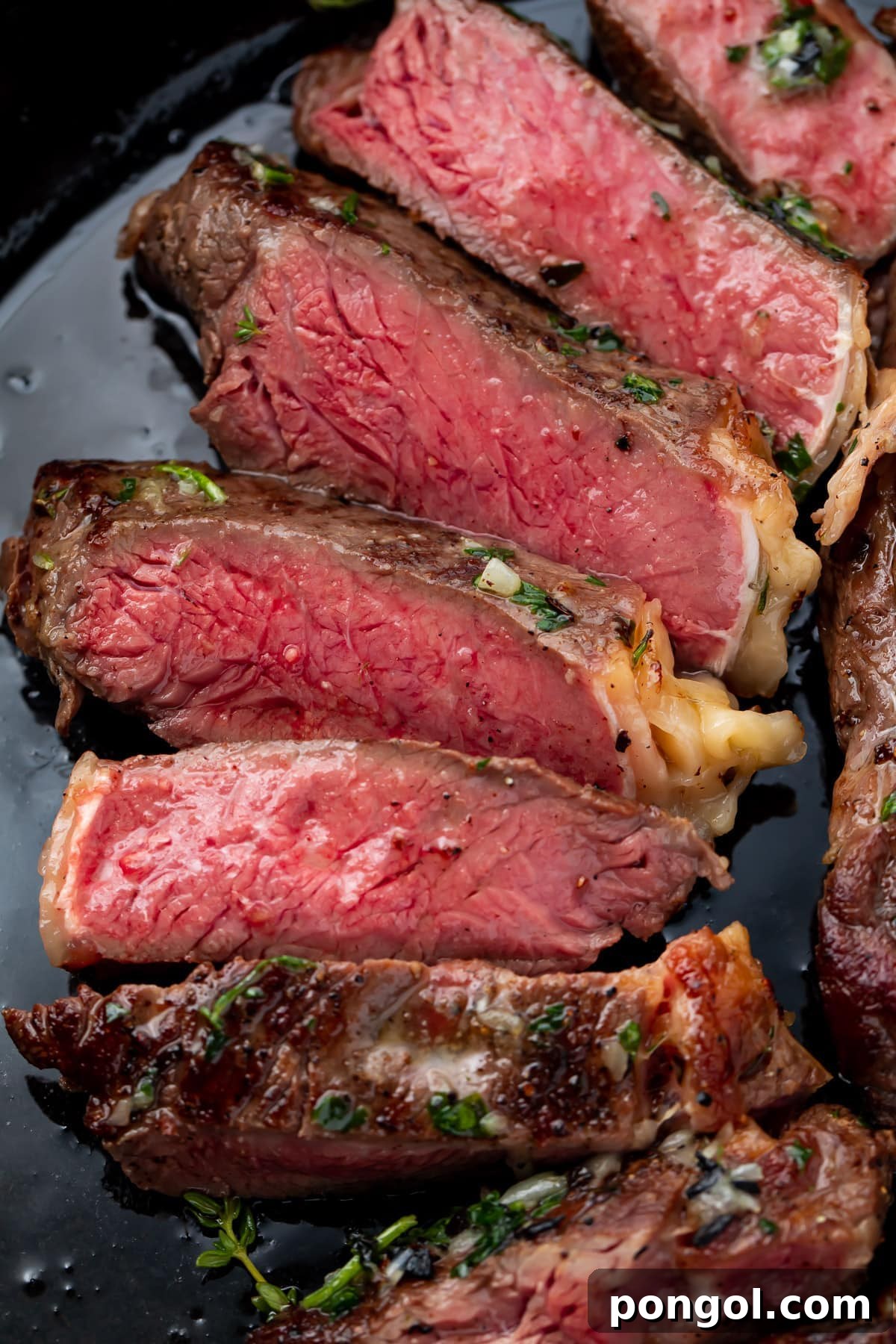
Perfect Sous Vide Ribeye Steak: Unbelievably Tender, Every Time
Prepare to transform your steak game with this ultimate guide to crafting the most unbelievably tender and perfectly cooked sous vide ribeye. This revolutionary method ensures your steak reaches an ideal medium-rare doneness from edge to edge, locking in natural flavors, and finishing with a show-stopping, crusty sear using a delectable homemade compound butter. Say goodbye to overcooked edges and dry centers – once you experience the perfection of sous vide ribeye, you’ll likely never cook it any other way!
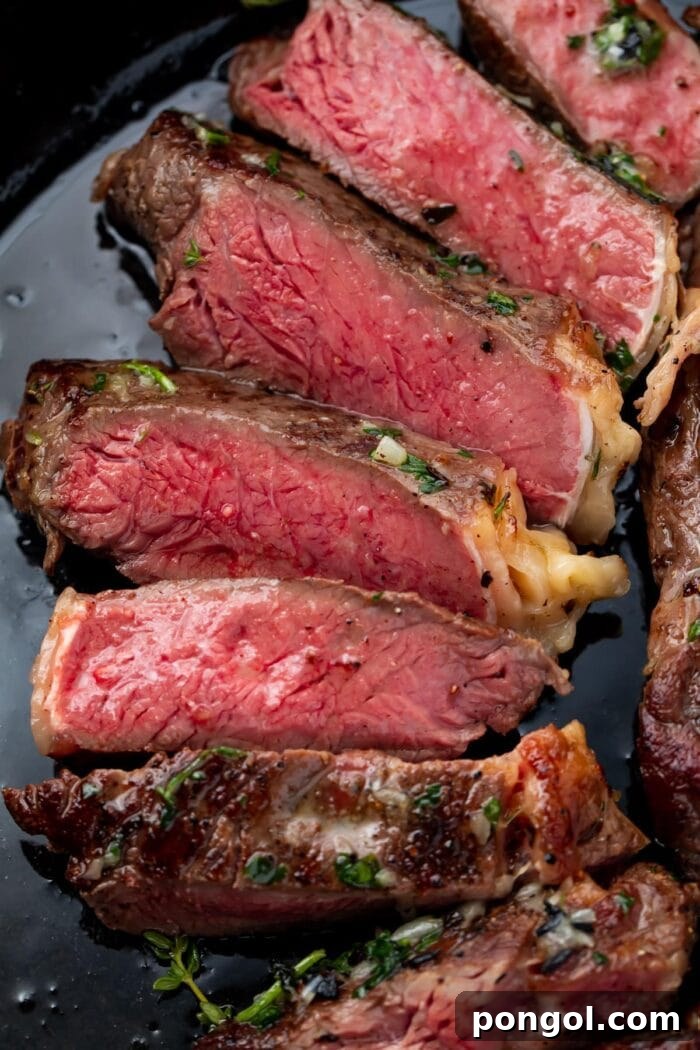
Why Sous Vide Ribeye is Your New Favorite Steak Method
The sous vide method isn’t just a cooking technique; it’s a culinary revelation, especially for premium cuts like ribeye. It offers unparalleled precision and consistency, guaranteeing restaurant-quality results right in your own kitchen. Here’s what makes this recipe truly exceptional and why it stands above traditional steak cooking methods:
- Unmatched Precision for Perfect Doneness: The core benefit of sous vide is its precise temperature control. By cooking your ribeye in a water bath maintained at an exact temperature, the meat cooks evenly from the inside out. This eliminates the common issue of overcooked edges and undercooked centers, giving you a steak that is perfectly medium-rare (or your preferred doneness) from one end to the other, every single time.
- Effortless and Hands-Off Cooking: Unlike grilling or pan-frying that demand constant attention and flipping, sous vide allows you to set it and essentially forget it. Once the steaks are sealed and submerged, your immersion circulator handles the rest, freeing you up to prepare delicious side dishes, relax, or simply enjoy your evening without the stress of perfectly timing your steak. It’s as convenient as a slow cooker but with far more precise results.
- Superior Tenderness and Juiciness: Cooking steaks in a vacuum-sealed bag allows them to simmer gently in their own juices, intensifying their natural flavor profile and ensuring every bite is incredibly moist and succulent. The extended, low-temperature cooking process also helps to gently break down tough connective tissues and render the marbling, resulting in a buttery-tender texture that literally melts in your mouth.
- A Perfect Canvas for Flavor Enhancements: While the beef flavor is king, the sous vide method allows for easy infusion of additional aromatics. Adding fresh herbs like thyme and smashed garlic cloves to the bag elevates the steak’s aromatic complexity without overpowering its natural richness. Finishing with a rich, homemade compound butter adds an extra layer of gourmet flavor, creating a luxurious sauce that complements the steak’s juicy interior and crispy crust.
- Diet-Friendly and Delicious: Ribeye steaks are naturally rich in flavor, high in healthy fats, and low in carbohydrates, making this sous vide ribeye an excellent choice for those following a ketogenic (keto) diet, low-carb lifestyle, or simply seeking a satisfying, protein-packed meal. It’s a hearty and fulfilling dinner option that doesn’t compromise on taste or dietary goals.
Key Ingredients for Your Exceptional Sous Vide Ribeye
While the sous vide method itself is sophisticated, the ingredients for a magnificent ribeye are surprisingly simple. The emphasis here is on quality, allowing the natural richness of the beef to truly shine.
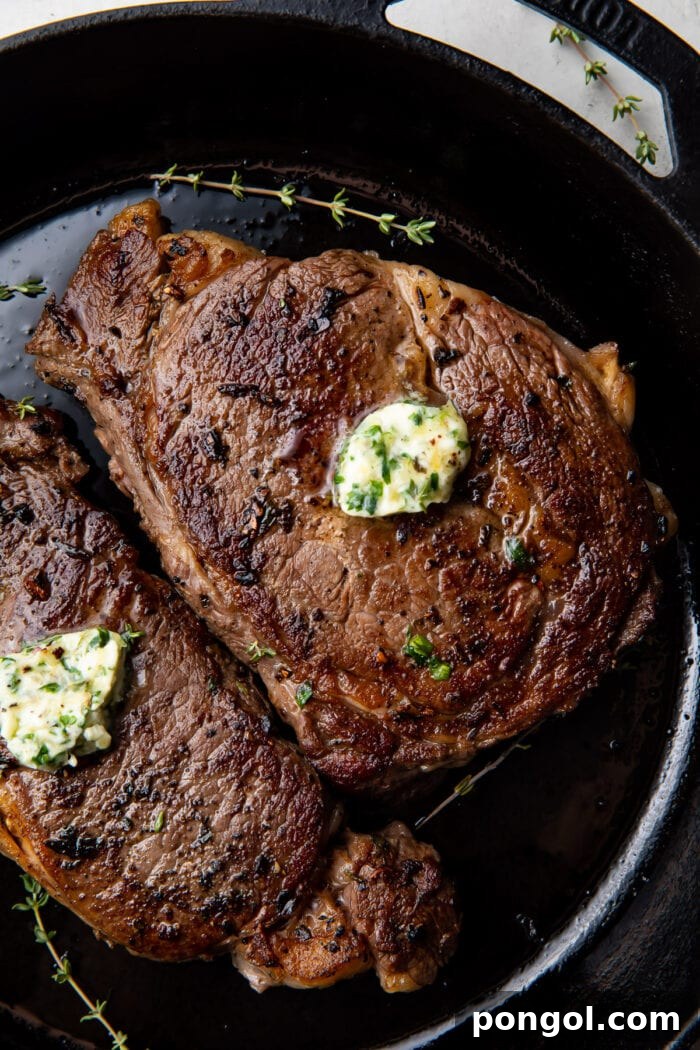
Choosing the Ideal Ribeye Cut
- Boneless Ribeye Steaks: Ribeye is revered for its exceptional marbling – the intramuscular fat that gracefully renders during the cooking process, imparting incredible flavor, moisture, and tenderness. When selecting your steaks, prioritize cuts that are at least 1 inch thick. Ideally, a thickness of 1.5 inches is perfect for sous vide, as thinner cuts (less than 1 inch) can heat through too quickly during the high-heat searing phase, potentially negating some of the precision benefits of sous vide. Look for USDA Prime or Choice grade for the best results, characterized by generous and evenly distributed marbling throughout the muscle.
- Fresh Aromatics (Thyme, Garlic): While optional, including fresh sprigs of thyme and lightly smashed garlic cloves in the vacuum-seal bag infuses the steak with subtle, herbaceous, and savory notes during the gentle, slow cooking process. These aromatics beautifully enhance the beef’s natural depth of flavor without ever overpowering it.
The Art of Seasoning: Salt and Pepper
Salt and freshly cracked black pepper are the tried-and-true foundational seasonings that universally elevate the natural taste of beef. However, with sous vide, the timing of your seasoning makes a significant difference.
A crucial tip: you’ll notice that we do not season the meat before sealing it in the bag for the initial sous vide cook. This is due to a scientific principle: the combination of salt and prolonged exposure to moisture during slow cooking can actively draw moisture out of the meat through osmosis, potentially leading to a slightly drier final texture. Furthermore, vacuum sealing salted meat can sometimes firm up the delicate fat within the steak, which might alter its desired melt-in-your-mouth texture. For sous vide, the optimal approach is to season generously *after* the water bath and *immediately before* the final high-heat sear. This method allows the salt and pepper to contribute to a delicious, flavor-packed crust without compromising the steak’s internal juiciness.
Mastering Sous Vide Temperatures & Cook Times for Ribeye Perfection
The true genius of sous vide lies in its absolute precision, allowing you to achieve your exact desired level of doneness, consistently and flawlessly, every single time. While this recipe is meticulously designed for a perfect medium-rare, here’s a comprehensive guide covering all preferences to help you customize your steak experience.
General Guideline: For ribeye steaks typically ranging from 1 to 2 inches thick, a cooking time of 1 to 4 hours is recommended. For substantially thicker steaks (approaching 2.5 inches or more), you might extend the cook time to 3-6 hours. It’s important to understand that within these recommended ranges, extended cooking primarily enhances the steak’s tenderness through enzymatic breakdown, rather than increasing its doneness, as the temperature is precisely controlled and cannot exceed the water bath setting.
- Rare: For those who appreciate a very cool, deep red center, set your water temperature from 120°F (49°C) to 128°F (53°C) and cook for 1 to 2.5 hours.
- Medium Rare (Highly Recommended): This is the ideal doneness for ribeye, offering a warm, perfectly red center with incredible juiciness. Set your water temperature from 129°F (54°C) to 134°F (57°C) and cook for 1 to 4 hours. This range delivers the gold standard for steakhouse-quality ribeye.
- Important Food Safety Note: When cooking at temperatures below 130°F (54°C), it is crucial for food safety reasons to limit the cooking time for your ribeyes to no more than 2.5 hours. At temperatures of 130°F and above, meat rapidly passes through the bacterial danger zone, allowing for longer cooking times to enhance tenderness without concern.
- Medium: If you prefer a warm, consistent pink center throughout your steak, set your water temperature from 135°F (57°C) to 144°F (62°C) and cook for 1 to 4 hours.
- Medium Well: For a steak with only a slight hint of pink in the center, set your water temperature from 145°F (63°C) to 155°F (68°C) and cook for 1 to 3.5 hours.
- Well Done: To achieve a fully cooked steak with no pink, set your water temperature to a minimum of 156°F (69°C) and cook for 1 to 3 hours.
The Critical Role of Searing After Sous Vide
Once your steak has achieved its flawless internal temperature via sous vide, the journey to perfection culminates with a crucial final step: searing. This rapid, high-heat cook is absolutely essential for developing that irresistible, rich, and flavorful crust (the Maillard reaction) that adds an incredible textural contrast and depth of flavor, marrying beautifully with the tender, juicy interior. Since the steak is already precisely cooked to your desired doneness, the sear must be quick and intense—typically 45-90 seconds per side—to create that golden-brown crust without significantly raising the internal temperature of the steak.
Chef’s Top Tips for Achieving Sous Vide Ribeye Perfection
Mastering sous vide cooking is incredibly rewarding and surprisingly simple with a few insider tricks. These expert tips will help you navigate common challenges and ensure your ribeye turns out flawlessly, with consistent, delicious results every single time.
- The Paramount Importance of a Dry Surface for Searing: When you retrieve your beautifully cooked ribeyes from the sous vide bath, they will be incredibly moist due to simmering in their own juices. For an exceptional, deep-brown, and crispy crust during the searing phase, it is absolutely paramount to dry the steaks very, very thoroughly with paper towels. Any lingering moisture on the surface will create steam when it hits the scorching hot pan, actively preventing the Maillard reaction—the magical chemical process responsible for that coveted browned flavor and crust—from occurring. Pat them dry with such diligence that you’re confident there’s no visible moisture remaining.
- Ensuring Full Submersion for Even Cooking: For optimal and even cooking, your vacuum-sealed ribeyes must remain fully submerged in the circulating water bath throughout the entire cooking process. If your sealed bags show a tendency to float, first meticulously double-check that every last bit of air has been expelled from the bag; sometimes, a small pocket can be stubborn. You may need to briefly open and reseal it. If floating persists, you can easily weigh the bag down. Common and effective methods include attaching a separate small, clean bag filled with marbles, pie weights, or even clean loose change to the bottom of your sous vide bag. For those who frequently use the technique, investing in specialized sous vide racks can provide a convenient and efficient way to keep multiple bags perfectly submerged and separated.
- Vacuum Sealing Without a Dedicated Sealer: The Water Displacement Method: Don’t own a specialized vacuum sealer? No need to worry! The water displacement method is a brilliant and highly effective alternative. To use it, place your prepped steaks (with aromatics) into an appropriately-sized, high-quality freezer-safe plastic bag (such as a gallon-sized Ziploc bag). Partially seal the bag, leaving an opening of about one inch at one corner. Slowly and gradually lower the bag into the preheated water bath. As you do so, the external water pressure will naturally force all the air out from around the food. As the air escapes, you’ll see the bag cling tightly to the steaks. Once the food is fully submerged and all air has been visibly expelled, completely seal the remaining opening of the bag. This ingenious method works perfectly for any sous vide recipe and can even be utilized for general long-term freezer storage.
- Selecting the Right Pot Size for Optimal Circulation: The size and depth of the pot or container you choose for your water bath are more critical than you might initially think. It needs to be sufficiently large to comfortably accommodate your steaks in a single layer without any overlapping, which is essential for ensuring consistent and uniform water circulation around each individual piece of meat. Crucially, it must also be deep enough so that the water level consistently falls within the minimum and maximum fill indicators specified on your sous vide immersion circulator. An adequate volume of water also plays a vital role in maintaining a stable and consistent temperature throughout the entire sous vide cooking process.
- Mastering the Searing Process for the Perfect Crust: A smoking hot cast iron skillet is your absolute best friend for achieving that perfect, flavor-packed crust. Heat the skillet over medium-high to high heat for at least 3-5 minutes, allowing it to become exceptionally hot (a drop of water should instantly sizzle and evaporate). Add a high smoke point oil (such as avocado or grapeseed oil) or a tablespoon of your prepared compound butter. Immediately place the sous vide ribeye steaks into the scorching hot skillet. Sear each side for approximately 45-90 seconds, flipping the steak frequently (every 15-20 seconds) to build an even, deep golden-brown crust. For an added layer of richness, tilt the pan during the final seconds and spoon the melted butter and pan juices over the steak to baste it.
- The Non-Negotiable Step: Resting Your Steak: After the intense searing process, resist the immediate urge to slice into your perfectly cooked steak! Transfer the seared ribeye to a clean cutting board and allow it to rest undisturbed for a minimum of 5-10 minutes. This vital resting period allows the steak’s internal juices, which have been temporarily driven towards the center by the searing heat, to gently redistribute throughout the entire cut of meat. The result is a steak that is uniformly juicy and flavorful in every single bite.
More Incredible Sous Vide Recipes to Explore
If you’ve fallen head over heels for the precision, ease, and culinary excellence of sous vide cooking, you’ll be delighted to know there’s a vast world of gastronomic delights waiting for you to explore. Expand your repertoire and discover new favorites with these fantastic sous vide recipes:
- 25 Sous Vide Recipes You’ll Love: A Comprehensive Collection
- Sous Vide Filet Mignon: Luxurious and Tender Beyond Compare
- Sous Vide Shrimp: Perfectly Cooked, Succulent Seafood Every Time
- Easy Sous Vide Chicken Breast: Unbelievably Juicy and Flavorful
Cheryl Malik
Sous Vide Ribeye Steak
15 minutes
2 hours 10 minutes
2 hours 25 minutes
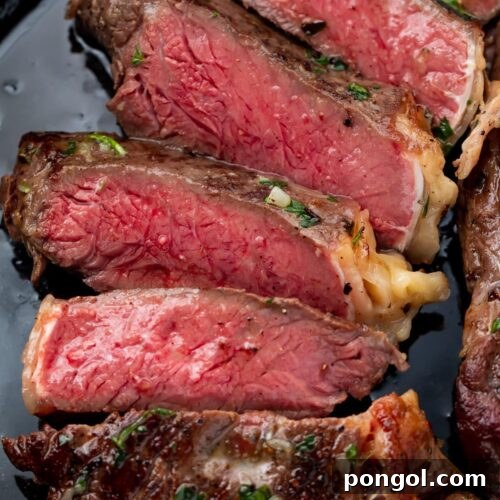
This sous vide ribeye is unbelievably tender, cooked perfectly medium-rare all the way through, seared with a delicious compound butter, and so easy to make. It’s the only way to achieve steakhouse-quality results at home!

Cheryl Malik
Pin Recipe
Equipment
- Food processor (for compound butter)
- Plastic wrap
- Plastic vacuum sealing bags (or high-quality freezer-safe Ziploc bags)
- Vacuum sealer (optional; water displacement method is an effective alternative)
- Large pot or other heat-resistant container (at least 6-8 quart capacity)
- Sous vide immersion circulator
- Cast-iron skillet (or other heavy-bottomed, high-heat pan for searing)
Ingredients
For the Garlic-Herb Compound Butter
- ½ cup unsalted butter, softened
- ¼ cup fresh parsley, roughly chopped
- 1 – 1 ½ teaspoons fresh garlic, roughly chopped
- 2 tablespoons shallots, roughly chopped
- 1 tablespoon fresh lemon juice
- ½ teaspoon sea salt
- ½ teaspoon freshly cracked black pepper
For the Ribeyes
- 2 boneless ribeye steaks, about 12 ounces each (ideally 1 to 1.5 inches thick)
- 4 sprigs fresh thyme (optional, for infusing flavor during sous vide)
- 2 cloves fresh garlic, smashed (optional, for infusing flavor during sous vide)
- Sea salt, to taste (for seasoning after sous vide, before searing)
- Freshly cracked black pepper, to taste (for seasoning after sous vide, before searing)
- 1-2 tablespoons high smoke point oil (e.g., avocado, grapeseed) or regular butter for searing
Instructions
- Prepare the Garlic-Herb Butter: In the bowl of a food processor, combine the softened unsalted butter, fresh parsley, chopped garlic, chopped shallots, fresh lemon juice, sea salt, and freshly cracked black pepper. Process these ingredients until the mixture is smooth and thoroughly combined. Spoon the compound butter onto a piece of plastic wrap, then roll it into a neat log shape. Chill the butter log in the refrigerator until it becomes firm, which usually takes approximately 1 hour. This compound butter can be prepared several days in advance.
- Prepare Steaks for Sous Vide: Take each boneless ribeye steak and place it into a separate, individual vacuum-sealable bag, ensuring the steak lies in a single, flat layer. Add 2 sprigs of fresh thyme and 1 smashed garlic clove to each bag, distributing them evenly on both sides of the steaks to maximize flavor infusion. Carefully seal the bags using either a vacuum sealer or the water displacement method (refer to the ‘Notes’ section below for detailed instructions on the water displacement technique).
- Preheat the Water Bath: Fill a large pot or a sturdy, heat-resistant container with water. Attach your sous vide immersion circulator securely to the side of the pot and set the desired temperature. For a perfect medium-rare ribeye, set the temperature to 129°F (54°C). Allow the water to circulate and reach the target temperature before proceeding.
- Begin Sous Vide Cook: Gently submerge the sealed steak bags fully into the preheated water bath. Ensure that the bags are completely covered by water and are not floating. Cook the steaks for a minimum of 2 hours for 1-inch thick steaks. For thicker steaks (1.5 inches or more), you can extend the cooking time up to 4 hours to enhance tenderness without altering the doneness.
- Remove and Thoroughly Dry Steaks: Once the sous vide cooking time is complete, carefully remove the bags from the water bath. Extract the steaks from their bags, discarding the cooked thyme and garlic. It is crucial to pat the ribeyes incredibly dry on all sides using paper towels. This step is absolutely essential for achieving a superior, crispy crust during the subsequent searing phase. Liberally season both sides of the dried steaks with sea salt and freshly cracked black pepper.
- Preheat Skillet for Searing: Place a large cast iron skillet (or another heavy-bottomed, high-heat pan) over medium-high to high heat. Allow it to preheat for at least 3-5 minutes, or until the skillet is smoking slightly. Add 1-2 tablespoons of a high smoke point oil (such as avocado or grapeseed oil) or a portion of the prepared compound butter (or regular unsalted butter) to the scorching hot skillet.
- Sear the Ribeyes: Carefully place the seasoned ribeye steaks into the smoking hot skillet. Sear, flipping the steak once, until a deep golden-brown, flavorful crust forms on both sides. This typically takes approximately 45 seconds to 1 minute per side. For an even more consistent and rich crust, consider flipping the steak every 15-20 seconds. During the last few seconds of searing, you can tilt the pan and use a spoon to baste the steak with the melted butter and pan juices for added flavor.
- Rest and Serve: Immediately remove the perfectly seared ribeyes from the pan and transfer them to a clean cutting board or a warm platter. Promptly top each hot ribeye with approximately 1 tablespoon of the chilled garlic-herb compound butter. Allow the steaks to rest undisturbed for 5-10 minutes. This vital resting period allows the compound butter to melt beautifully and for the steak’s internal juices to redistribute throughout the meat, ensuring maximum tenderness and flavor in every slice.
- Final Touches: Slice the rested steaks against the grain into your desired portions. For an extra flourish, garnish with an additional sprinkle of flaky sea salt if desired, then serve immediately with your favorite complementary side dishes.
Notes
- Water Displacement Method for Sealing: If you do not possess a vacuum sealer, you can achieve an effective seal for your ingredients using the water displacement method. Place your steaks (along with any aromatics) into a large, high-quality freezer-safe plastic bag (such as a Ziploc gallon-sized bag). Seal the bag almost entirely, leaving a small opening of about 1 inch at one corner. Slowly and gradually lower the bag into the preheated water bath. As the bag submerges, the external pressure from the water will naturally force all the air out from around the food. Once the food is fully submerged and all air has been visibly expelled, completely seal the remaining opening of the bag.
- Yield and Nutritional Considerations: This recipe is designed to yield approximately six 4-ounce servings when prepared with two 12-ounce ribeyes. Please note that the actual number of servings may naturally vary depending on the initial size of your chosen ribeyes and your personal preferred portion sizes.
Approximate Nutritional Information for One Serving
Calories: 301 cal
Protein: 16 g
Fat: 26 g
Saturated Fat: 14 g
Trans Fat: 1 g
Cholesterol: 87 mg
Sodium: 237 mg
Potassium: 249 mg
Total Carbs: 2 g
Fiber: 1 g
Sugar: 1 g
Net Carbs: 1 g
Vitamin A: 728 IU
Vitamin C: 6 mg
Calcium: 22 mg
Iron: 2 mg
Nutrition Disclaimers
The number of total servings shown is an approximation. The actual number of servings you achieve will depend on your preferred portion sizes.
The nutritional values presented are general guidelines and reflect information for 1 serving based on the ingredients listed in this recipe, excluding any optional ingredients. Please be aware that actual macronutrient values may vary slightly depending on the specific brands and types of ingredients you use.
To accurately determine the weight of one serving, prepare the recipe as instructed. Once the recipe is finished, weigh the entire prepared dish (excluding the weight of the container). Then, divide the total weight of the finished recipe by your desired number of servings. The result will provide the precise weight of one individual serving.
Did You Make This Perfectly Tender Sous Vide Ribeye?
We absolutely love seeing your culinary creations and hearing about your cooking experiences! If you tried this recipe, please tag @40aprons on Instagram and be sure to leave a review and your thoughts on this blog post. Your valuable feedback not only helps us grow but also inspires other home chefs in their cooking journeys!
Tag @40Aprons on Instagram