Imagine the sweet, succulent taste of sun-ripened peaches, not just in the peak of summer, but throughout the entire year. Learning how to freeze peaches is a culinary game-changer, allowing you to capture that fleeting summer sweetness and enjoy it whenever a craving strikes. This comprehensive guide will walk you through a simple, yet highly effective method to preserve your fresh peaches, ensuring they emerge from the freezer without clumping together or turning into a mushy disappointment. Prepare to unlock a world of year-round peachy deliciousness for smoothies, pies, cobblers, and more!
How to Freeze Peaches: Your Ultimate Guide to Year-Round Sweetness
There’s nothing quite like biting into a juicy, perfectly ripe peach during the summer months. But what if you could extend that joy, savoring the vibrant flavor and soft texture long after peach season has ended? Freezing peaches is the answer, offering a convenient and straightforward way to lock in that incredible taste. This guide provides an in-depth look at a foolproof method for freezing peaches that guarantees individual, non-mushy slices, ready for any recipe you can dream of.
Why This Freezing Method Is Simply the Best
While many methods exist for preserving fruit, our technique for freezing peaches stands out for several compelling reasons, making it the preferred choice for home cooks and bakers alike:
- Locks in Peak Summery Sweetness: This method is specifically designed to preserve the peaches at their prime ripeness. By quickly freezing them, you halt the enzymatic processes that lead to spoilage and loss of flavor, effectively capturing the essence of summer. You’ll be amazed at how fresh and flavorful these peaches remain, tasting almost as good as they did on the day they were picked.
- Incredibly Quick and Effortless: Don’t let the idea of preserving intimidate you. The hands-on preparation time for freezing peaches is surprisingly minimal. Most of the “work” is done by your freezer, making it an ideal project for even the busiest schedules. Once you’ve prepped your peaches, simply let the cold do its magic.
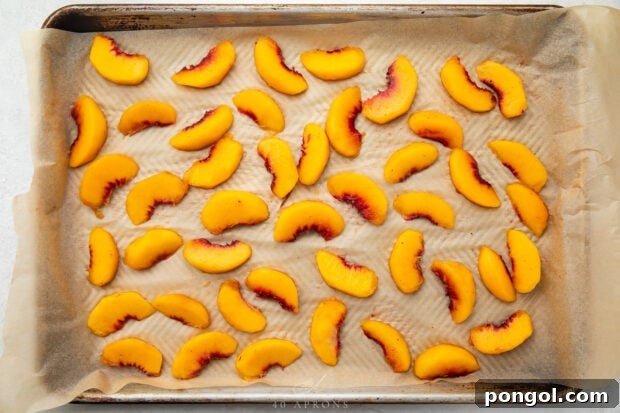
- Prevents Unwanted Clumping: The secret to easily usable frozen peaches lies in a crucial step: flash freezing on a sheet pan. By laying your peach slices in a single layer and freezing them solid before transferring to a bag, you prevent them from sticking together. This means no more wrestling with a giant block of ice-bound fruit; instead, you’ll have individual, easy-to-portion peach slices ready whenever inspiration strikes.
- Long-Lasting Freshness: When properly prepared and stored, your frozen peaches can maintain their quality for up to 6 months in the freezer. This extended shelf life allows you to enjoy the taste of summer well into the colder months, without worrying about waste or diminished flavor.
- Maintains Texture, Avoids Mushiness: Nobody wants mushy peaches. Our technique, particularly the flash freezing and proper handling, helps to preserve the structural integrity of the peach slices. This results in frozen peaches that hold their shape better when thawed, making them perfect for baking, blending, or even gently warming.
Choosing the Perfect Peaches for Freezing
The success of your frozen peaches begins with selecting the right fruit. The quality of your frozen product will directly reflect the quality of the fresh peaches you start with. Here’s what to look for:
- Ripeness is Key: Always choose peaches that are perfectly ripe. How can you tell? A ripe peach will be slightly soft to the touch, not hard like a rock, but not overly mushy either. Look for a vibrant, golden-yellow skin, often with a blush of red. Most importantly, give it a sniff! A ripe peach will have a wonderfully sweet, distinctively peachy aroma. If it smells like nothing, it’s not ready. Freezing under-ripe peaches will result in flavorless, disappointing frozen fruit.
- Freestone vs. Clingstone: This method works beautifully for both freestone and clingstone peaches. Freestone peaches, where the flesh easily separates from the pit, are generally easier to prepare for freezing, as removing the pit is much quicker. Clingstone peaches, where the flesh clings tightly to the pit, require a bit more effort to pit, but their flavor is often intense and worth the extra work. Choose your favorite variety or whatever is freshest and most available.
- Quantity: This method is highly scalable. Whether you have a small basket from the farmer’s market or a bumper crop from your own trees, you can freeze as few or as many peaches as you have freezer space for. Just ensure you have enough parchment paper and freezer bags!
Essential Ingredients for Perfect Frozen Peaches
- Fresh Peaches: As discussed above, the star of our show. Select the ripest, most aromatic peaches you can find. Remember, freezing preserves their current state, so starting with delicious peaches is paramount. Frozen peaches are incredibly versatile – they are fantastic blended into morning smoothies, baked into comforting muffins or pies, churned into homemade ice cream, or even simmered into a quick compote.
- Fresh Lemon Juice: This is truly the “magic ingredient” that makes all the difference. When peaches are exposed to air, they undergo oxidation, which causes their beautiful golden flesh to turn an unappetizing brown. Lemon juice, rich in ascorbic acid (Vitamin C), acts as a natural antioxidant, preventing this discoloration and helping to maintain the peaches’ vibrant color and fresh appearance. It’s an absolute must-have for visually appealing frozen peaches and contributes a subtle brightness to the flavor without making them overtly lemony.
Chef’s Expert Tips for Freezing Peaches Like a Pro
To ensure your frozen peaches are of the highest quality and last as long as possible, keep these professional tips in mind:
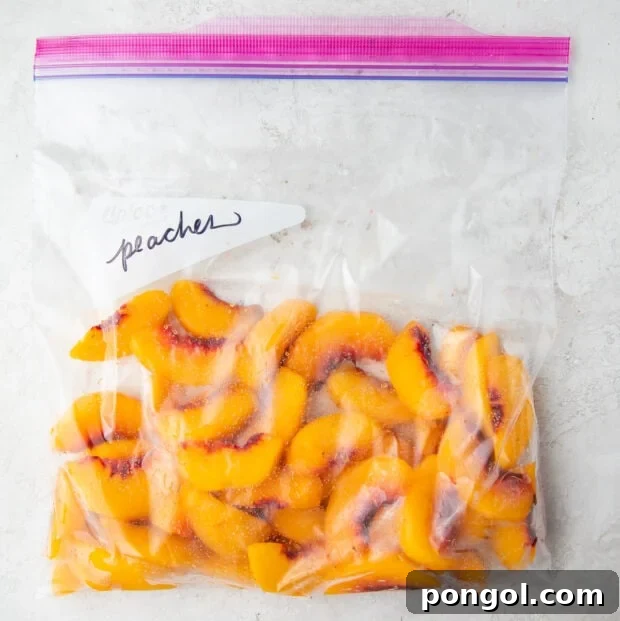
- Maximize Air Removal for Longevity: Air is the enemy of frozen food, leading to freezer burn and flavor degradation. After flash-freezing and transferring your peach slices to freezer bags, it’s crucial to remove as much air as possible. You can do this by pressing the bag flat, squeezing air out from the bottom up before sealing, or even using a straw to suck out residual air right before the final seal. For the ultimate protection, consider using a vacuum sealer if you have one. Less air means better flavor preservation and a longer freezer life for your fruit.
- To Peel or Not to Peel: Two Easy Peeling Methods: Peeling peaches before freezing is often a matter of personal preference and intended use. While the skin is perfectly edible, some find the texture undesirable after freezing and thawing, especially in baked goods.
- Manual Peeling: For those who prefer a hands-on approach, a vegetable peeler (like you’d use for an apple or potato) works well, especially for firm, ripe peaches. It requires a bit of dexterity but is very effective.
- Blanching Method: This is a classic and highly efficient way to remove peach skins. Bring a pot of water to a rolling boil. Carefully drop your peaches into the boiling water for a very brief period—no more than 15-30 seconds. We are not cooking them, just loosening the skin. Immediately transfer the blanched peaches into an ice bath (a bowl of ice water) to stop the cooking process. Once cooled, use a small paring knife to make a shallow “X” or slit in the skin at the bottom of the peach. The peel should then slip right off with ease.
If you plan to use the peaches in smoothies where the skin will be pulverized, or if you don’t mind the texture, skipping the peeling step is perfectly fine and saves time.
- Identifying Peak Ripeness: We touched on this earlier, but it bears repeating: only freeze truly ripe peaches. A ripe peach will give slightly when gently squeezed, indicating juicy tenderness. Its skin will often show a beautiful, slightly wrinkled golden-yellow hue, sometimes with a blush of red. And that unmistakable, sweet, floral peach aroma is the ultimate confirmation. A hard, scentless peach isn’t ready for freezing; let it ripen on the counter first.
Other Helpful How-Tos for Your Kitchen
- How to Roast Beets
- How to Boil Cabbage (Easy, Buttery Boiled Cabbage Recipe)
- Reheating Pizza in the Air Fryer
- How to Cook Bacon in the Oven
- How To Cut a Pineapple Easily
- Orange Zest – How to Make It and Ways to Use It
- How to Dice an Onion… the Easy Way!
- How to Freeze Zucchini (3 Ways)

Recipe By: Cheryl Malik
How to Freeze Peaches
Prep Time: 10 minutes
Cook Time: 0 minutes
Freeze Time: 4 hours
Total Time: 4 hours 10 minutes
Learning how to freeze peaches means delicious, ripe peaches all year round! Follow these simple steps for frozen peaches that don’t clump and aren’t mushy!

Cheryl Malik
Yield: 4 Servings
Equipment
- Peeler (optional)
- Knife
- Large bowl
- Baking sheet
- Parchment paper
- Food-safe, sealable freezer bags
Ingredients
- Fresh peaches (quantity as desired)
- Fresh lemon juice (quantity as needed for coating)
Instructions
-
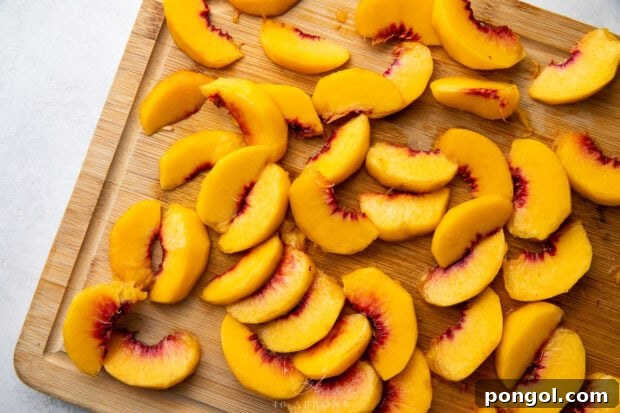
Peel peaches if desired (see Chef’s Tips above for methods), then cut each peach in half. Carefully remove the pit. Once pitted, cut the halves into uniform ¼-inch slices. Consistent slice size ensures even freezing.

-
Place the peach slices into a large bowl. Drizzle fresh lemon juice generously over the slices, then gently toss them to ensure every piece is coated. This step is critical for preventing browning and preserving color.
-
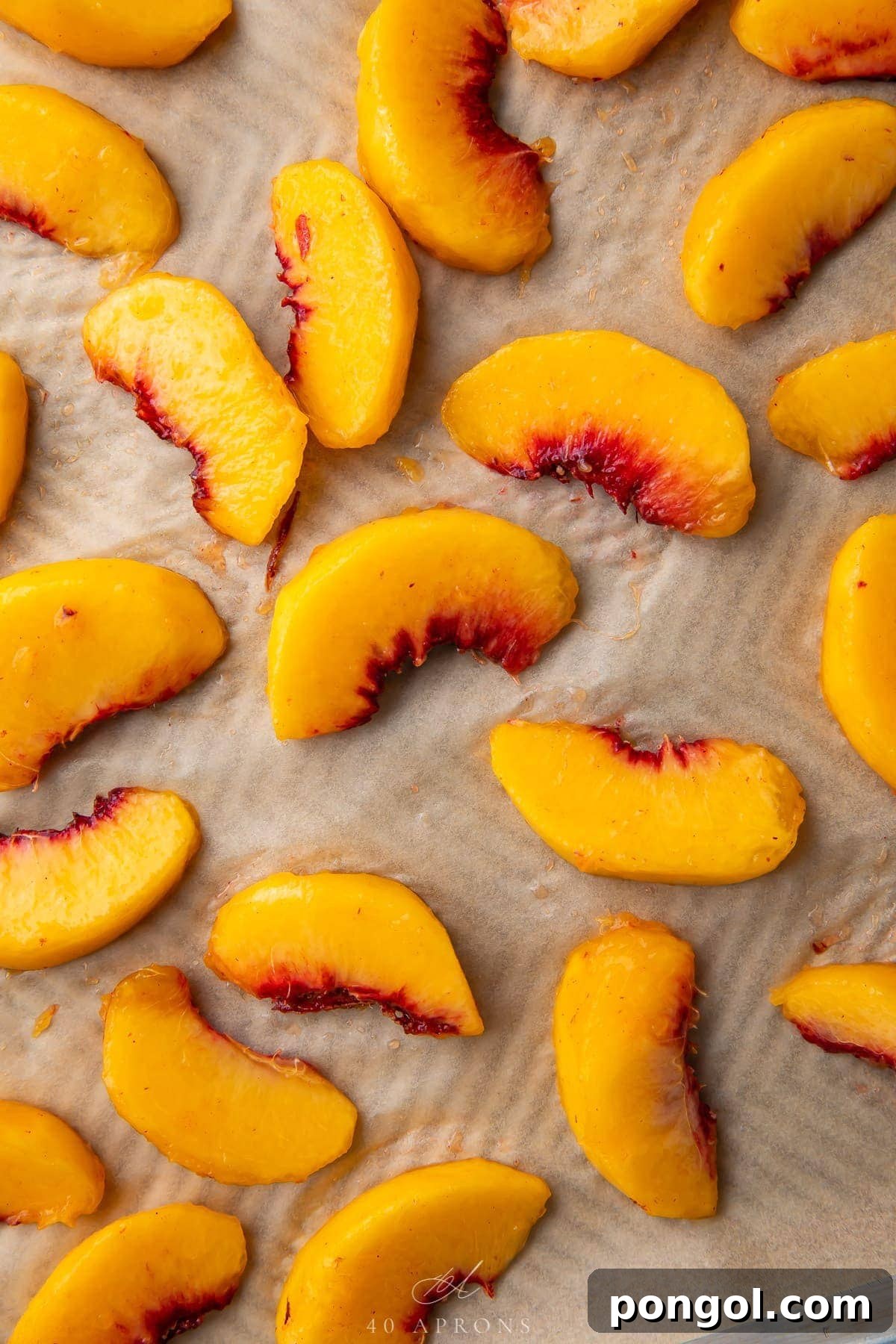
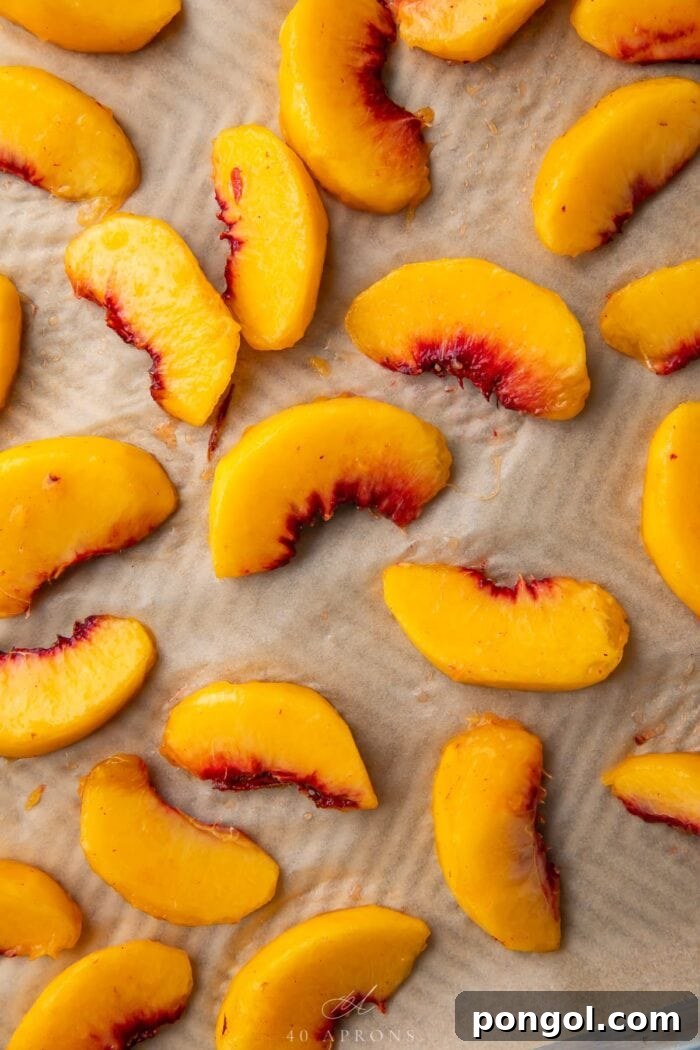
Line a baking sheet with parchment paper. Arrange the lemon-coated peach slices on the baking sheet in a single, flat layer. Ensure that no peach slices are touching or overlapping, as this is key to preventing them from freezing into one solid block.
-
Carefully place the baking sheet into the freezer. Freeze for at least 4 hours, or until all the peach slices are completely firm and frozen solid. This “flash-freezing” step is essential for preventing clumping.
-
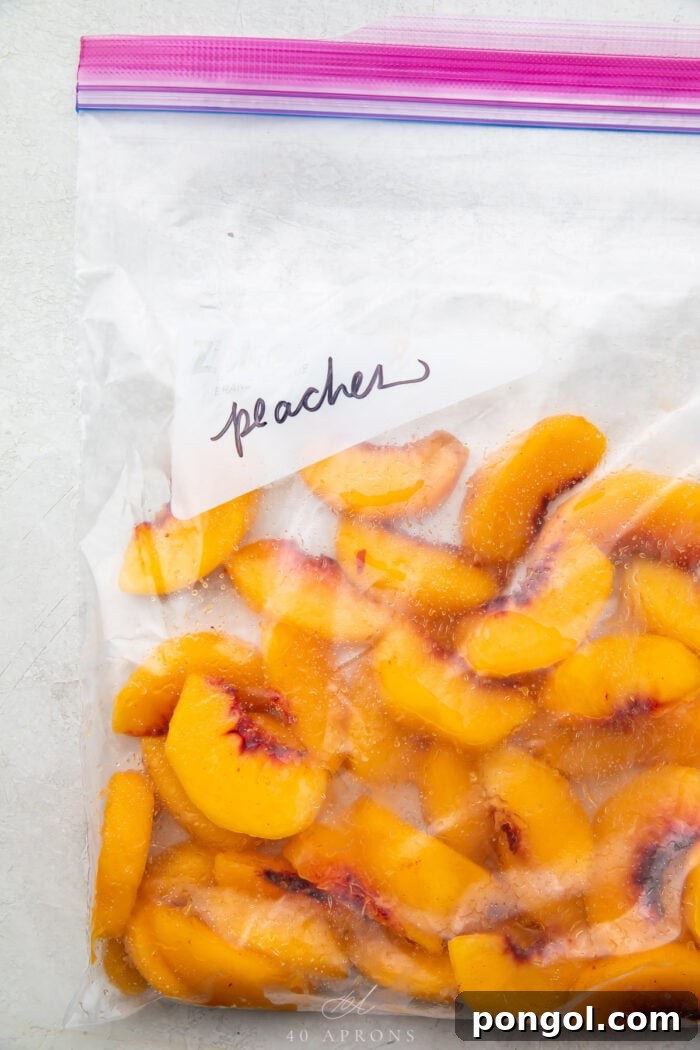
Once the peach slices are solid, transfer them from the baking sheet into food-safe, sealable freezer bags. Press out as much air as possible from the bag before sealing it tightly. Label the bag with the date. Store the frozen peach slices in the freezer for up to 6 months for optimal freshness and flavor.
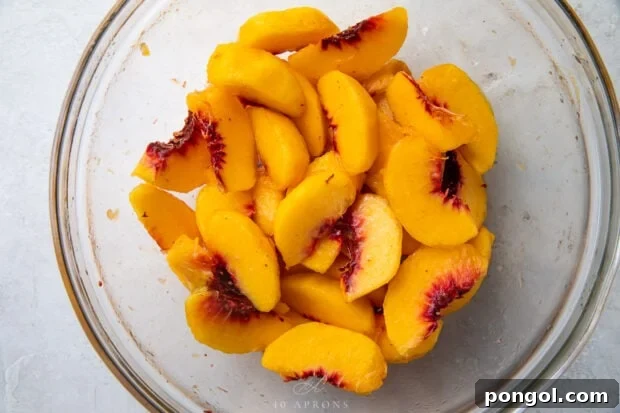
Recipe Notes: This versatile method can be adapted to freeze any quantity of peaches. Simply adjust the amount of fresh lemon juice to ensure all peach slices are adequately coated. Alternatively, you can submerge your peach slices in a lemon bath. For this method, use 1 tablespoon of fresh lemon juice per cup of water. If opting for a water bath, make sure to drain the peach slices thoroughly and pat them dry as much as possible before arranging them on the baking sheet for freezing. Excess water can lead to ice crystal formation and affect texture.
Approximate Nutrition Information for One Serving
- Serving Size:
- 1 peach
- Calories:
- 59 cal
- Protein:
- 1 g
- Fat:
- 1 g
- Saturated Fat:
- 1 g
- Sodium:
- 1 mg
- Potassium:
- 289 mg
- Total Carbs:
- 15 g
- Fiber:
- 2 g
- Sugar:
- 13 g
- Net Carbs:
- 13 g
- Vitamin A:
- 489 IU
- Vitamin C:
- 11 mg
- Calcium:
- 9 mg
- Iron:
- 1 mg
Nutrition Disclaimers
The number of total servings shown is approximate. Actual number of servings will depend on your preferred portion sizes.
Nutritional values shown are general guidelines and reflect information for 1 serving using the ingredients listed, not including any optional ingredients. Actual macros may vary slightly depending on specific brands and types of ingredients used.
To determine the weight of one serving, prepare the recipe as instructed. Weigh the finished recipe, then divide the weight of the finished recipe (not including the weight of the container the food is in) by the desired number of servings. The result will be the weight of one serving.
Using Your Delicious Frozen Peaches
Once you have a stash of beautifully frozen peach slices, the culinary possibilities are endless! Here are some popular and delightful ways to incorporate them into your cooking:
- Smoothies and Shakes: This is arguably one of the most popular uses for frozen peaches. Their icy texture helps create a thick, creamy smoothie without the need for extra ice, adding a burst of sweet flavor and essential nutrients. Combine with yogurt, milk (dairy or non-dairy), other fruits, and a touch of honey or maple syrup for a perfect breakfast or snack.
- Baked Goods: From pies and tarts to cobblers and crisps, frozen peaches are perfect for baking. You can often use them directly from the freezer in most recipes; just be aware that they might release a bit more liquid than fresh peaches, so some recipes may benefit from a slight increase in thickener (like cornstarch or flour). For best results in pies, a quick thaw and drain can prevent a watery filling.
- Sauces and Compotes: Simmer frozen peach slices with a little sugar, water, and spices like cinnamon or ginger to create a luscious peach compote. This makes a fantastic topping for pancakes, waffles, oatmeal, ice cream, or even as a flavorful accompaniment to pork or chicken.
- Homemade Ice Cream or Sorbet: Achieve a naturally sweet and refreshing dessert by blending frozen peaches into homemade ice cream or a simple sorbet. The concentrated flavor is a true treat.
- Cocktails and Mocktails: Add a summery twist to your beverages! Muddle frozen peach slices into cocktails or blend them into virgin daiquiris and margaritas for a vibrant, fruity kick.
When thawing, remember that the texture of frozen fruit is often softer than fresh due to ice crystal formation. For recipes where firm slices are preferred, a gentle thaw in the refrigerator is best. For blending or cooking, you can often use them straight from the freezer.
Frequently Asked Questions About Freezing Peaches
Even with a clear guide, you might have some lingering questions. Here are answers to common concerns about freezing peaches:
- Why did my peaches turn mushy? Mushiness usually occurs if peaches were overripe before freezing, if they were frozen too slowly (allowing large ice crystals to form), or if they were thawed improperly (e.g., microwaving too quickly). Flash-freezing on a sheet pan helps prevent this by freezing the water content rapidly into small crystals.
- Why did my peaches turn brown in the freezer? Browning is primarily due to oxidation. This means there wasn’t enough lemon juice (or other acidic agent) to coat the peaches, or too much air was left in the freezer bag, allowing oxygen to interact with the fruit. Always ensure a thorough lemon juice coating and remove as much air as possible from storage bags.
- Can I freeze whole peaches? While technically possible, it’s generally not recommended for most culinary uses. Whole frozen peaches are difficult to peel and pit once frozen, and their texture can become unpleasantly watery and mushy when thawed. For ease of use and best quality, slicing and flash-freezing is the superior method.
- How long do frozen peaches truly last? For optimal flavor and texture, frozen peaches are best used within 6 to 8 months. They will remain safe to eat beyond this time, but their quality (flavor, color, texture) may gradually decline. Always label your bags with the freezing date to keep track.
- Do I need to add sugar before freezing? Adding sugar is optional. If you plan to use your peaches in sweet desserts, a light toss with a tablespoon or two of sugar per pound of peaches can help preserve color and flavor, and some argue it helps with texture by reducing ice crystal formation. However, for versatility in smoothies or savory dishes, many prefer to freeze peaches without added sugar and sweeten them later as needed. Lemon juice is sufficient for color preservation.
Did You Make This Recipe?
Tag @40aprons on Instagram and be sure to leave a review on the blog post!
Tag @40Aprons on Instagram