This post has been sponsored by Carapelli®. All thoughts and opinions are my own.
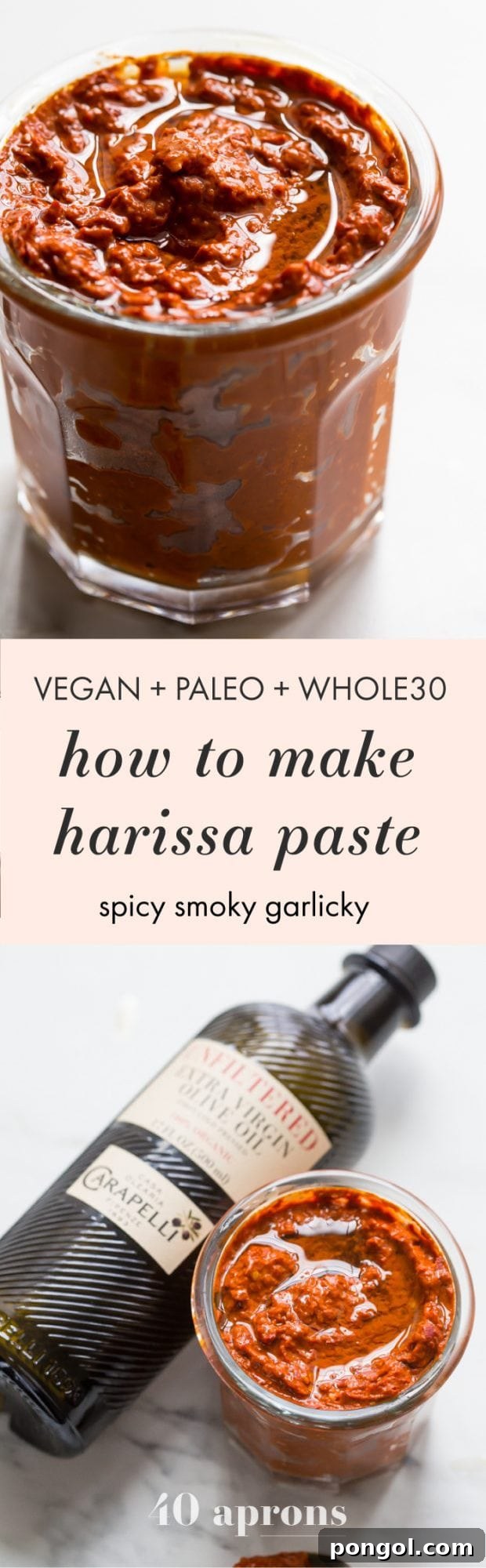
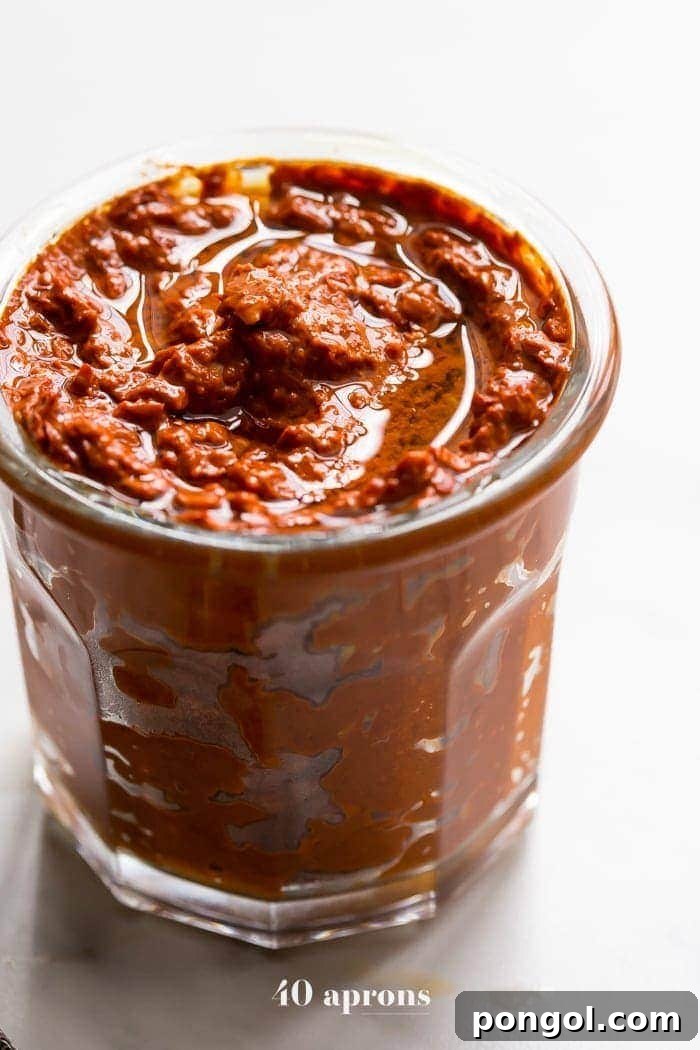
Embark on a culinary adventure and discover how to create a truly exceptional homemade harissa paste. This vibrant recipe delivers a symphony of spicy, smoky, and garlicky flavors, transforming everyday meals into extraordinary dining experiences. With just a few key ingredients, including the exquisite Carapelli® Olive Oil, mastering the art of harissa is surprisingly simple and incredibly rewarding. For visual guidance, make sure to check out the accompanying video tutorial!
There are certain flavors that captivate the palate and ignite the senses, leaving an indelible impression. While conventional wisdom points to sweet, salty, sour, and bitter as the foundational tastes, I believe a truly extraordinary dish often transcends these basics. For many, including myself, the trinity of spicy, smoky, and garlicky elevates food to an entirely new dimension.
If you’re someone who instinctively reaches for the spiciest barbecue sauce, who requests “Thai hot” with a knowing smile, or who believes a recipe’s garlic measurement is merely a suggestion to be doubled, then you understand this profound culinary craving. You are among the passionate food enthusiasts who seek out bold, assertive flavors that leave a lingering warmth and an unforgettable aroma.
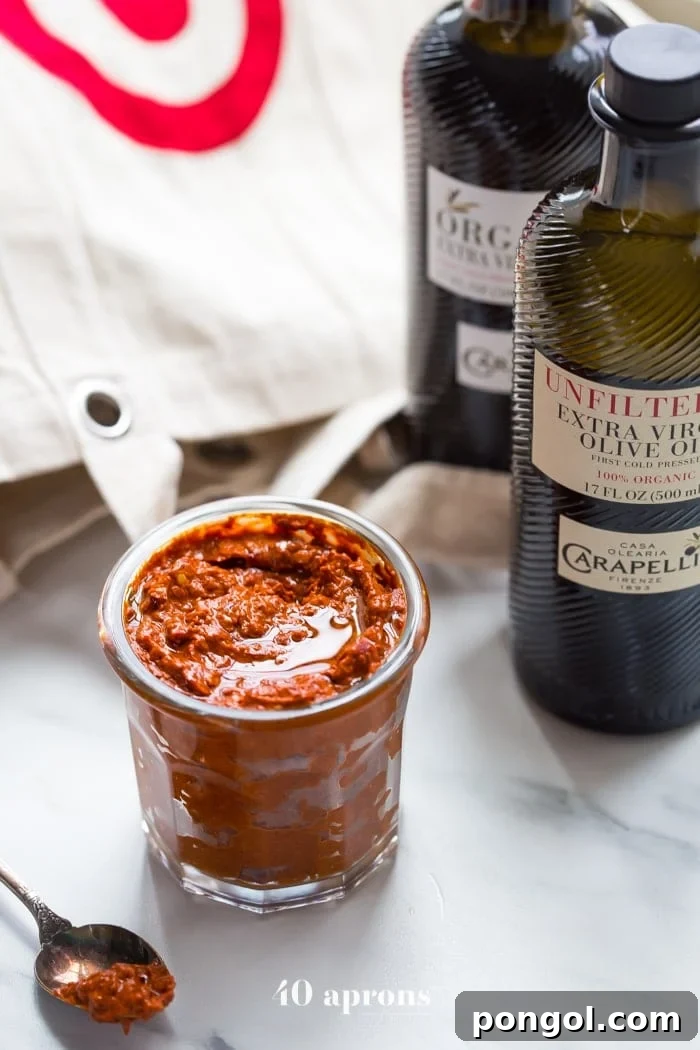
It was this inherent love for robust, layered tastes that led to my immediate infatuation with harissa when it gained widespread popularity. The concept of blending smoky dried chiles, generous amounts of fresh garlic, and luxurious Carapelli® olive oil resonated deeply. It promised a condiment that wasn’t just hot, but rich, complex, and utterly addictive.
What is Harissa, and What Spices Are in It?
Harissa is a revered Maghrebi hot chili pepper paste, a staple in the culinary traditions of Tunisia, Syria, Libya, and Morocco. More than just a simple chili paste, it represents a harmonious blend of flavors and textures that has been perfected over generations.
At its heart, harissa is a divine combination of deeply flavorful, softened smoky dried chiles, abundant fresh garlic, a freshly roasted red bell pepper for sweetness and depth, and a unique medley of aromatic spices including coriander, caraway seeds, and cumin. The final touch, and arguably one of the most crucial, is a high-quality, peppery olive oil, which binds the ingredients into a smooth, luxurious paste and infuses it with its characteristic richness.
Why You’ll Love This Homemade Harissa Recipe
- Unleash Culinary Versatility: Homemade harissa paste isn’t merely a condiment; it’s a flavor enhancer that elevates almost any dish. Once you start keeping a jar on hand, you’ll find yourself adding a spoonful to everything from roasted vegetables and scrambled eggs to creamy salad dressings, dips, and even the simplest weeknight dinners, transforming them into level-ten culinary masterpieces in mere seconds.
- Experience Unparalleled Flavor: While many grocery stores now offer ready-made harissa in tubes, cans, or jars, the difference in flavor when you make it from scratch is truly astonishing. Homemade harissa boasts a vibrant freshness, a nuanced depth, and a complexity that mass-produced versions simply cannot replicate. The act of freshly roasting and toasting ingredients unlocks their full aromatic potential, resulting in a paste that’s far more flavorful and authentic.
- Effortless and Enjoyable Process: You might be surprised to learn that making harissa at home is remarkably easy and immensely satisfying. The process, from softening chiles to blending spices, is straightforward and even therapeutic. Once you experience the joy of jazzing up your favorite foods with your homemade creation, you’ll likely find yourself whipping up a fresh batch every other week – it’s that good and that essential!
My profound obsession with North African and Middle Eastern flavors was truly formalized during a memorable trip with my mom last spring. To celebrate a pair of milestone birthdays, we embarked on a Viking River Cruise through Germany, Austria, and Hungary, an experience that broadened our culinary horizons in unexpected ways.
During a walking tour through a bustling Viennese farmer’s market with the ship’s chef, we were immersed in a kaleidoscope of local produce and traditional fare. Yet, amidst the familiar European offerings, our attention was continually drawn to stalls brimming with an array of spices, exotic oils, and sweets from distant cultures. It was a sensory feast, a vibrant tapestry of sights and smells that hinted at global culinary connections.

One particular spice stall completely captivated me. I found myself lingering, holding up our entire group as I delved into thousands of bags filled with intricate North African spice mixes. The intoxicating aromas and vibrant colors were so compelling that it inspired half our group to pick up a few bags themselves! From the complex notes of ras el hanout to the nutty crunch of dukkah, the rich warmth of baharat, and the tangy zest of za’atar, I meticulously stocked up on these little sacks of flavor, knowing I had found truly unique and worthy gifts for my family back home.
The intoxicating atmosphere of the stall, combined with the palpable excitement of integrating these new, exotic flavors into our home cooking, filled me with a powerful inspiration. It was a call to branch out, to reach beyond the culinary palette we typically explored. Upon returning home, harissa became one of the very first creations I tackled, quickly incorporating it into, well… practically everything. I meticulously combined my favorite elements from several recipes I discovered, ultimately crafting what I believe is the definitive guide on how to make harissa.
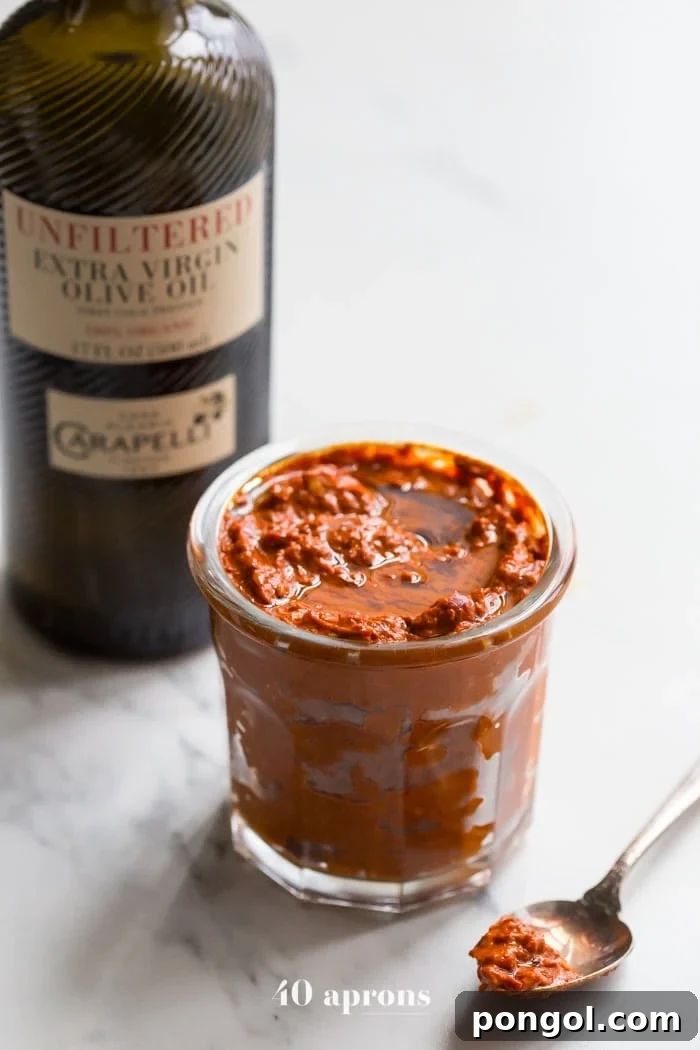
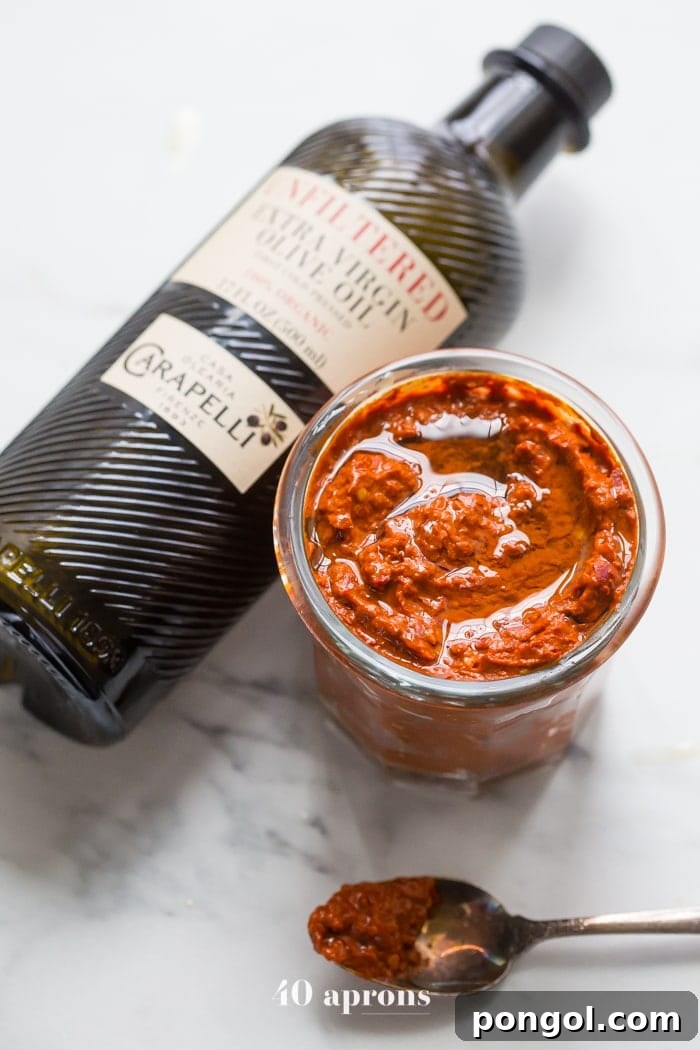
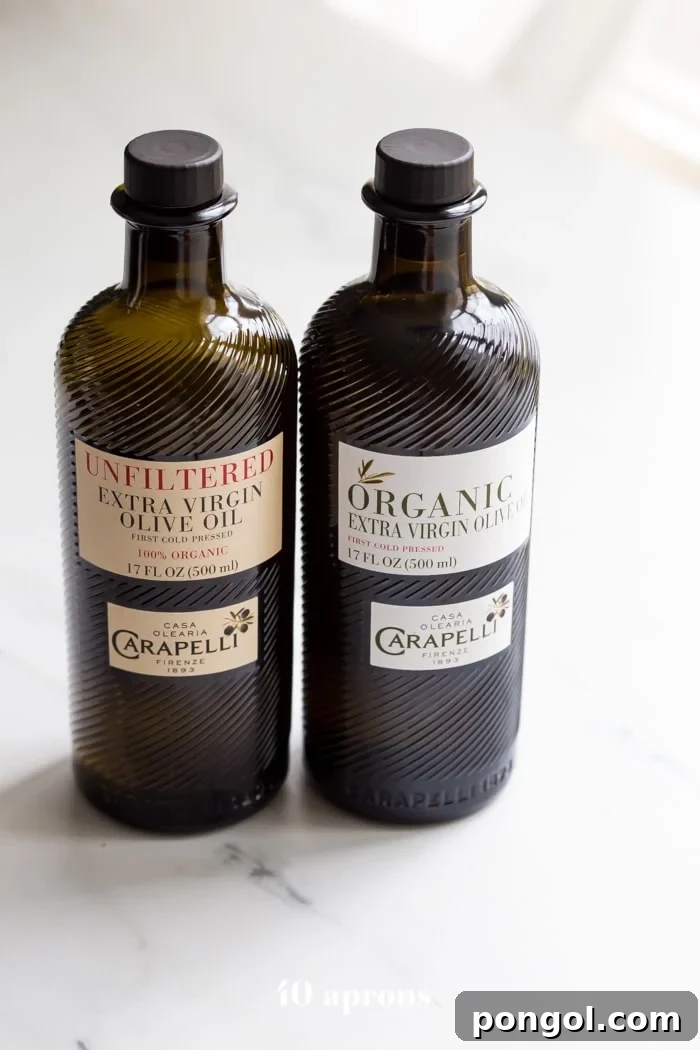
For this crucial recipe, I specifically chose Carapelli® Unfiltered Organic Extra Virgin Olive Oil, which I conveniently found at my local Target. My selection was deliberate: I needed a robust olive oil with distinct peppery and spicy undertones, one capable of standing up to and complementing the intense heat of the chiles and the smoky sweetness of the roasted red pepper. This particular Carapelli® olive oil imparts an unmatched richness and depth to the entire dish that I absolutely adore. Prioritizing a high-quality olive oil here truly makes all the difference. Furthermore, its organic and unfiltered nature ensures maximum freshness, a bolder flavor, and added health benefits, making it an absolute win-win for this recipe.
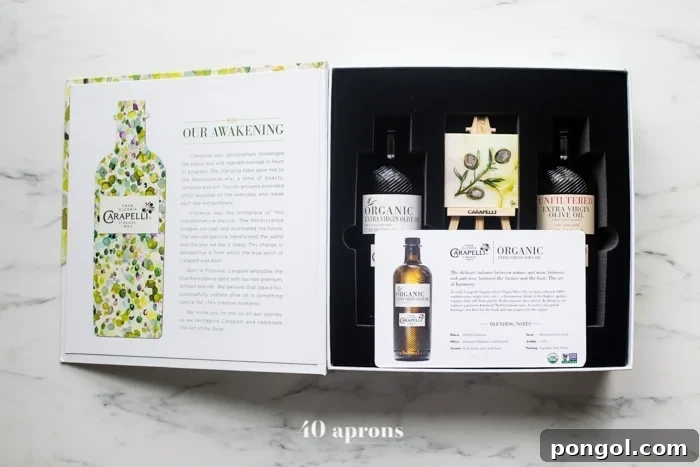
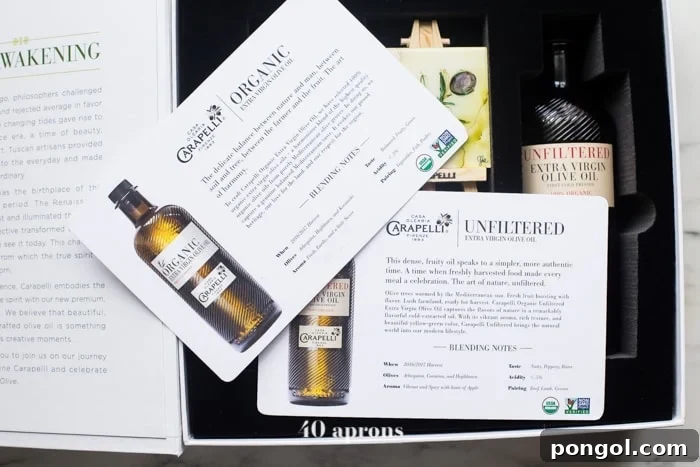
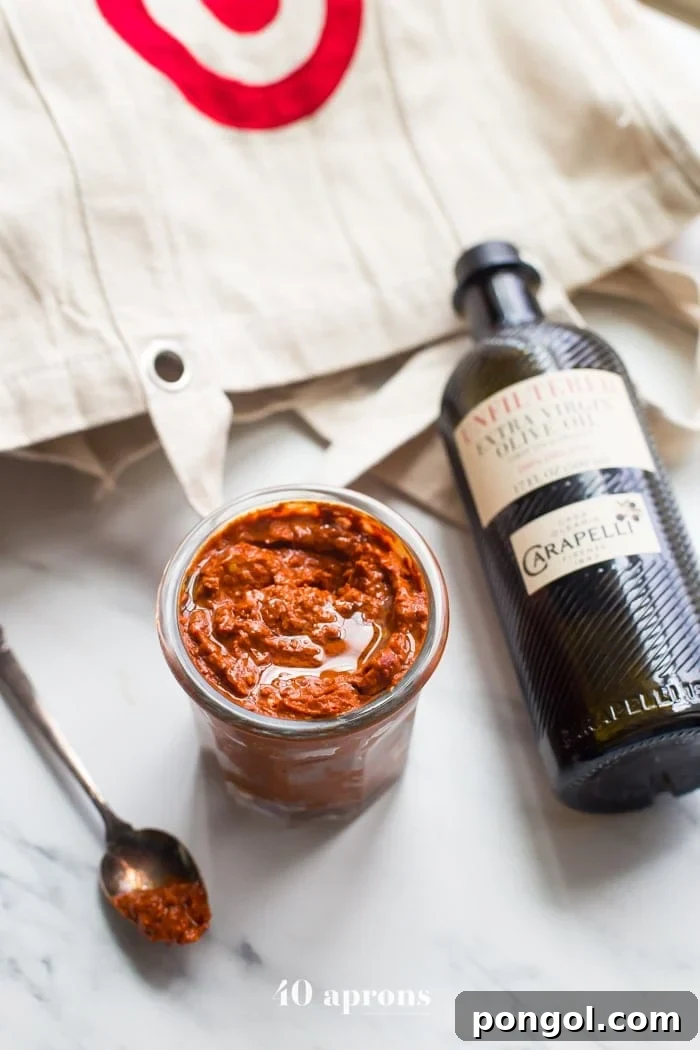
As many of you know, I have a long-standing appreciation for great deals, especially when it comes to high-quality pantry staples. Always be on the lookout for promotions, such as those often found on Carapelli® Extra Virgin Olive Oil, to ensure you’re getting the best value for this essential ingredient.
Expert Tips for Harissa Success
- Master the Roasted Red Bell Pepper: The sweetness and foundational smokiness that define a truly great homemade harissa are largely developed during the slow roasting of the red bell pepper. Take your time with this step, allowing the natural sugars to caramelize and the flesh to become deeply tender. This process contributes immensely to the paste’s overall depth and complexity.
- Perfect Your Roasting Technique: If you’re fortunate enough to have a gas stove, you can achieve an intensely smoky flavor by roasting the bell pepper directly over an open flame, turning it frequently with tongs until its skin is thoroughly blackened and blistered. Alternatively, following the broiling instructions will yield excellent results, focusing on even blackening and complete softening of the pepper’s interior.
- Effortless Peeling Trick: To simplify the peeling process significantly, immediately after roasting, transfer the hot red bell pepper to a bowl and cover it tightly with aluminum foil or place it in a paper bag. Allow it to cool completely in its own steam. This creates condensation that loosens the skin, making it incredibly easy to peel and discard.
- Tailor Your Heat and Smoke: The type of dried chiles you select profoundly impacts the final flavor profile of your harissa. For a moderately spicy paste, an excellent starting point is a blend of Guajillo and New Mexico chiles, offering a balanced warmth. If you crave intense heat, incorporate fiery Arbol or Puya chiles. To enhance smokiness, add Chipotle or Morita chiles. For a richer, deeper-hued harissa with complex undertones, consider using Ancho, Mulato, or Pasilla chiles.
Exciting Harissa Variations to Explore
- Experiment with Chile Varieties: Don’t hesitate to venture beyond the suggested chiles. Each type of chili brings its own unique characteristics. Depending on your choice, your homemade harissa can range from intensely spicy to subtly sweet, deeply smoky, earthy, or even bright and fruity. This experimentation is where the true fun of harissa making lies!
- Introduce Freshness and Zest: For an added layer of brightness, feel free to incorporate a generous squeeze of fresh lemon juice into your harissa. Alternatively, for a touch of traditional Moroccan flair, freshen things up with aromatic herbs like fresh mint, which pairs beautifully with the paste’s robust flavors.
- Craft a Mild Harissa: If you prefer a milder harissa that still retains its characteristic depth without overwhelming heat, simply substitute a greater proportion of roasted red bell peppers for some of the dried chiles. This adjustment allows you to enjoy the complex flavors with less intensity.
Frequently Asked Questions About Harissa
What Can I Use Harissa Paste For?
The most obvious applications for harissa are in traditional Tunisian and Moroccan dishes, where it serves as a foundational flavor. However, its versatility knows no bounds! Think of it as your new favorite “culinary ketchup,” but with far more depth and nutritional benefits. You can daringly spread it onto your pizza for a spicy kick, slather it on hot wings for an explosion of flavor, add it to sandwiches and wraps for a gourmet twist, or even incorporate it into burgers and tacos.
Beyond these bold uses, I particularly love drizzling homemade harissa onto roasted vegetables, transforming a simple side into a star dish. It’s fantastic stirred into scrambled eggs for a vibrant breakfast, dolloped onto baked potatoes for an instant upgrade, or whisked into creamy salad dressings, dips, or hummus to add an irresistible spicy and smoky dimension.
How Long Does Harissa Keep in the Fridge?
A tightly sealed jar of homemade harissa paste will maintain its freshness and robust flavor in the refrigerator for at least a month. However, trust me when I say that once you begin incorporating this addictive condiment into almost everything you cook, you’ll find it rarely lasts that long! Its irresistible taste ensures it becomes a fast favorite.
Now that you’re equipped with all the insights and the finest ingredients, let’s dive into the step-by-step process of making your very own harissa. Here’s the play-by-play guide on how to create this incredible paste. And don’t forget to watch the video for a helpful visual demonstration!
How to Make Homemade Harissa Paste: A Step-by-Step Guide
Yields: 2 cups
Prep Time: 35 minutes
Cook Time: 5 minutes
Total Time: 40 minutes
Ingredients:
- 1 large red bell pepper
- 4 ounces dried chiles (a mix like guajillo and arbol works well, found in international markets)
- 4-6 cloves fresh garlic, peeled
- ¼ cup Carapelli® Organic Unfiltered Extra Virgin Olive Oil, plus more for thinning and storage
- 1 ½ teaspoons coriander seeds
- 1 teaspoon caraway seeds
- 1 teaspoon cumin seeds
- 1 teaspoon coarse or kosher salt
Instructions:
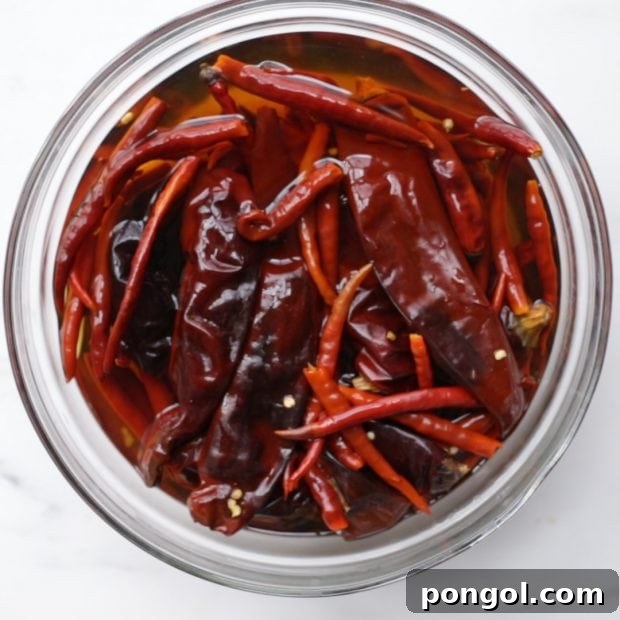
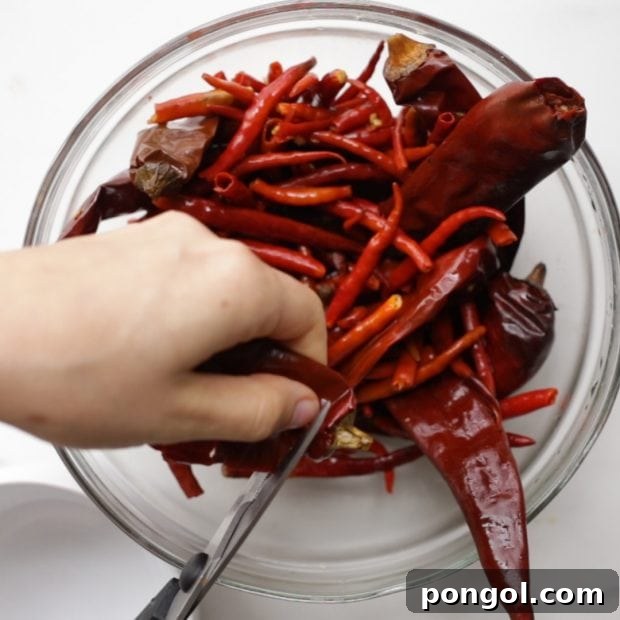
- Soften the Chiles: Begin by pouring boiling water over the 4 ounces of dried chiles (such as guajillo and arbol). Allow them to soak for at least 30 minutes, or until they are fully softened. Once softened, carefully drain the chiles. Trim off the stems and remove as many seeds as possible.
- Deseding the Chiles: After soaking, gently open the chiles and carefully remove the seeds. Focus on the larger chiles, as their seeds are easier to extract and contribute to more heat.
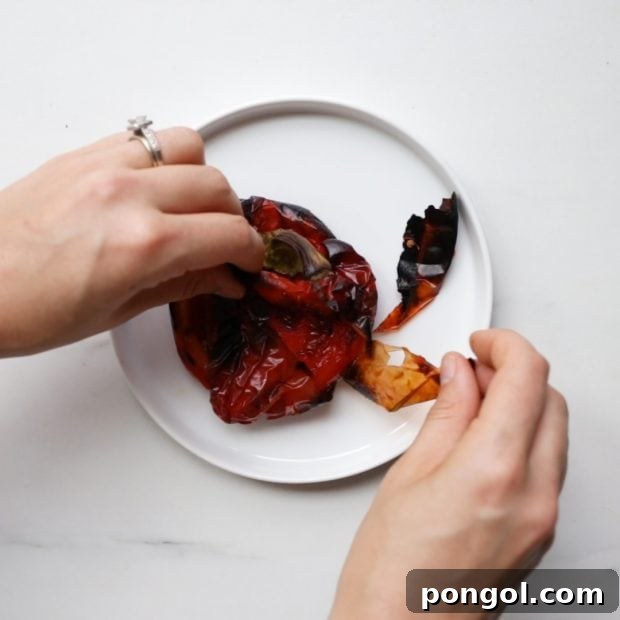
- Roast the Red Bell Pepper: Preheat your broiler to high. Place the large red bell pepper directly under the broiler, turning it regularly with tongs, until its skin is completely blackened and blistered on all sides. It’s crucial that the pepper’s flesh becomes very soft throughout, not just charred on the outside. If necessary, after blackening, you can transfer it to a 350ºF (175ºC) oven to bake until thoroughly tender. Remove from the oven, let it cool, then peel off the skin and discard it.
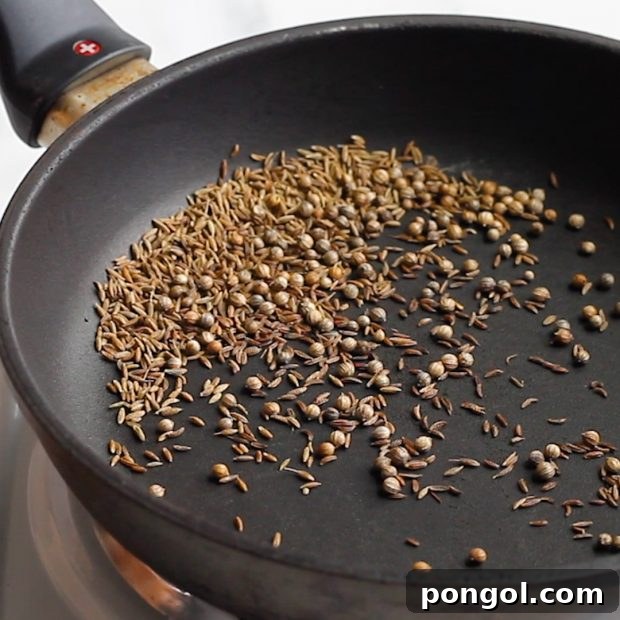
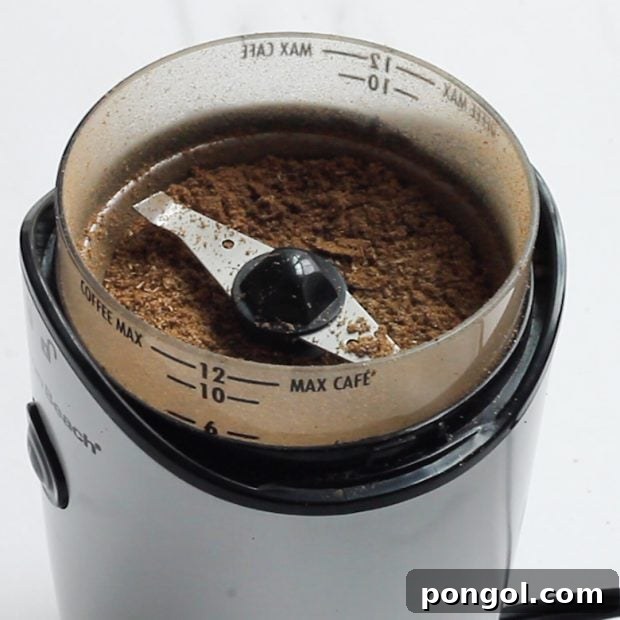
- Toast the Spices: Heat a dry skillet over low heat. Add the coriander seeds, caraway seeds, and cumin seeds to the skillet. Continuously shake the skillet to prevent burning, toasting the spices until they deepen in color and become wonderfully fragrant.
- Grind the Spices: Transfer the toasted spices to a spice grinder. Process them until they form a fine, aromatic powder.
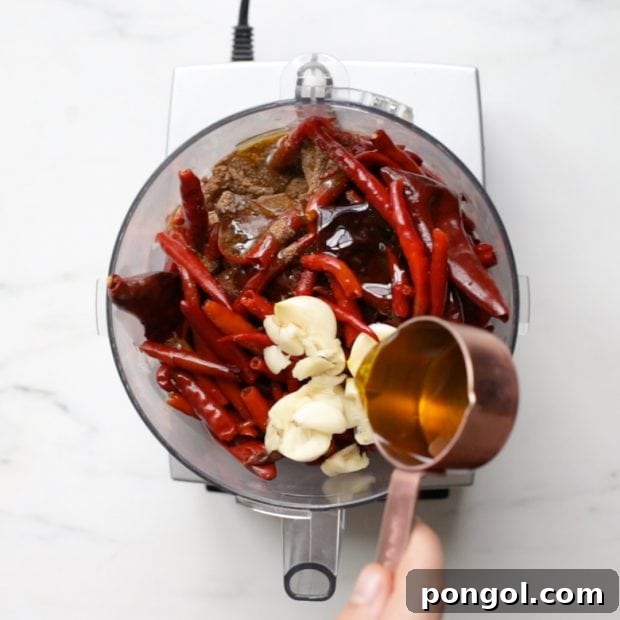
- Blend All Ingredients: In the bowl of a food processor, combine the softened chiles, roasted red bell pepper, ground spices, fresh garlic, salt, and ¼ cup of Carapelli® Unfiltered Organic Extra Virgin Olive Oil.
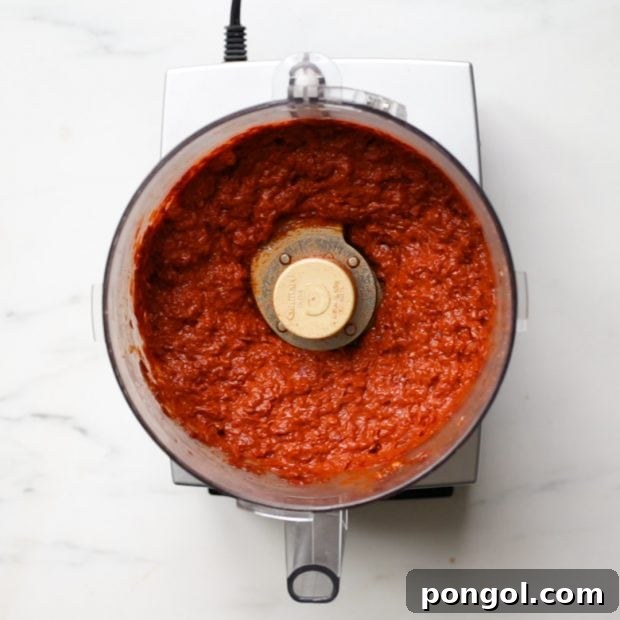
- Achieve Smoothness: Blend the mixture until it is very smooth and forms a uniform paste.
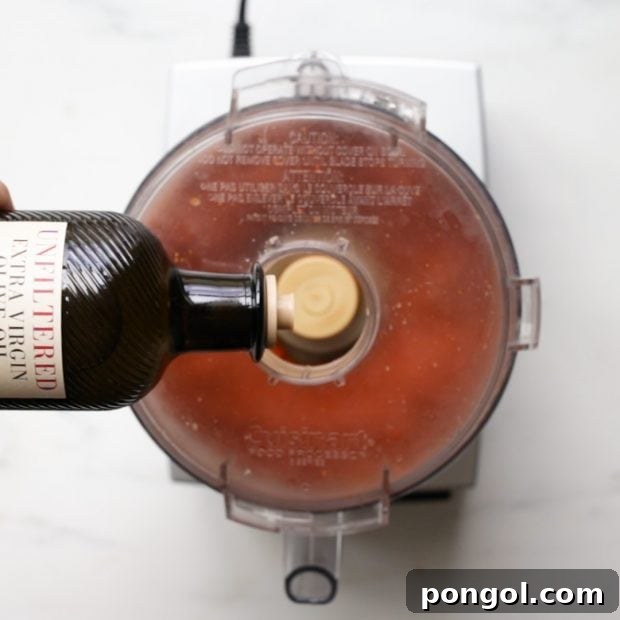
- Adjust Consistency: If needed, add more Carapelli® Organic Unfiltered Extra Virgin Olive Oil during processing, a tablespoon at a time, until your harissa reaches your desired smooth texture and consistency.
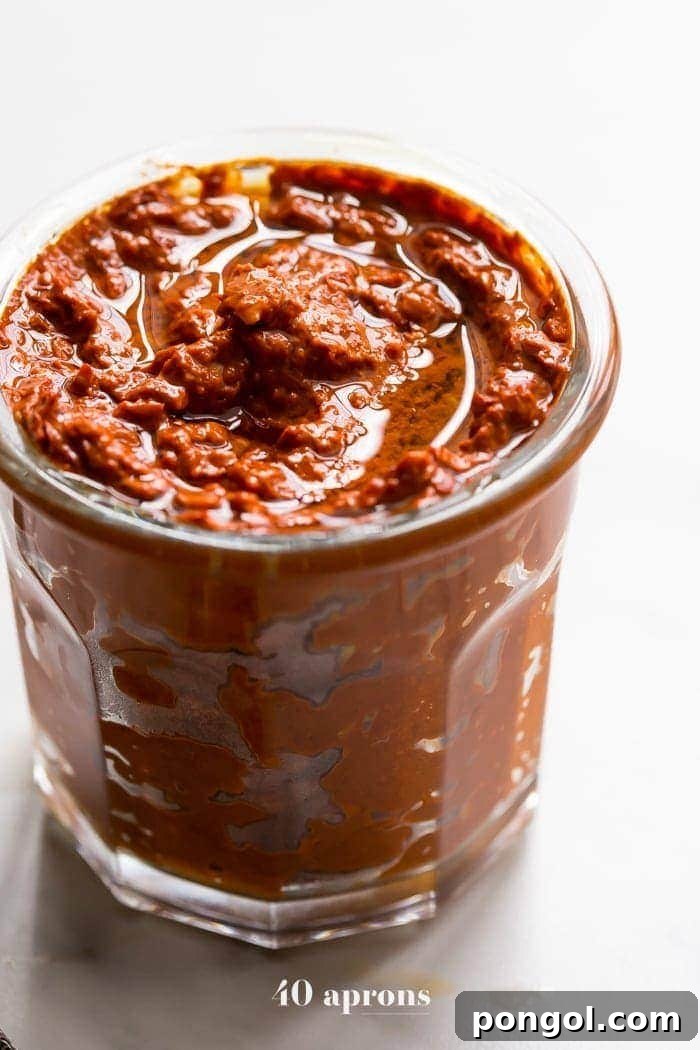
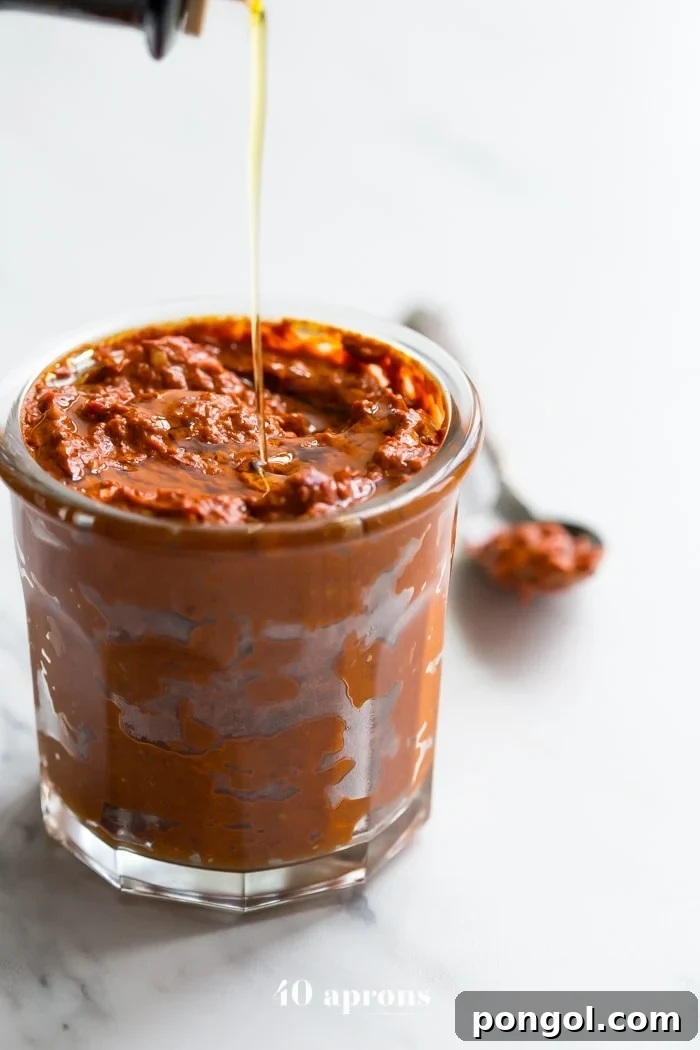
- Store Your Harissa: Transfer the finished harissa paste to a clean glass jar. To ensure optimal freshness and preservation during storage, pour a thin layer of olive oil over the surface of the paste before sealing.
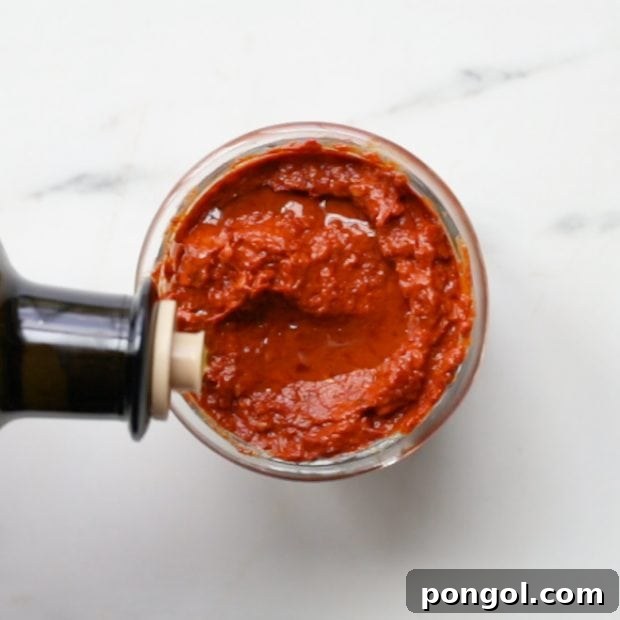
Video Guide:
For a complete visual walkthrough of each step, be sure to watch our detailed video on how to make harissa paste. It’s the perfect companion to this written recipe!
Notes:
If you do not have a spice grinder, you can substitute ground spices for the whole spices. Use approximately:
- ¾ teaspoon ground coriander
- ½ teaspoon ground caraway
- ½ teaspoon ground cumin
Approximate Nutrition Information for One Serving (2g):
Calories: 444 cal
Protein: 7g
Fat: 31g
Saturated Fat: 4g
Sodium: 1218mg
Potassium: 1121mg
Total Carbs: 44g
Fiber: 17g
Sugar: 24g
Net Carbs: 27g
Vitamin A: 15164 IU
Vitamin C: 26mg
Calcium: 63mg
Iron: 5mg
Nutrition Disclaimers:
The number of total servings shown is approximate. Actual number of servings will depend on your preferred portion sizes.
Nutritional values shown are general guidelines and reflect information for 1 serving using the ingredients listed, not including any optional ingredients. Actual macros may vary slightly depending on specific brands and types of ingredients used.
To determine the weight of one serving, prepare the recipe as instructed. Weigh the finished recipe, then divide the weight of the finished recipe (not including the weight of the container the food is in) by the desired number of servings. The result will be the weight of one serving.
Did You Make This Recipe?
We’d love to see your creations! Tag @40aprons on Instagram and be sure to leave a review here on the blog post to share your experience!