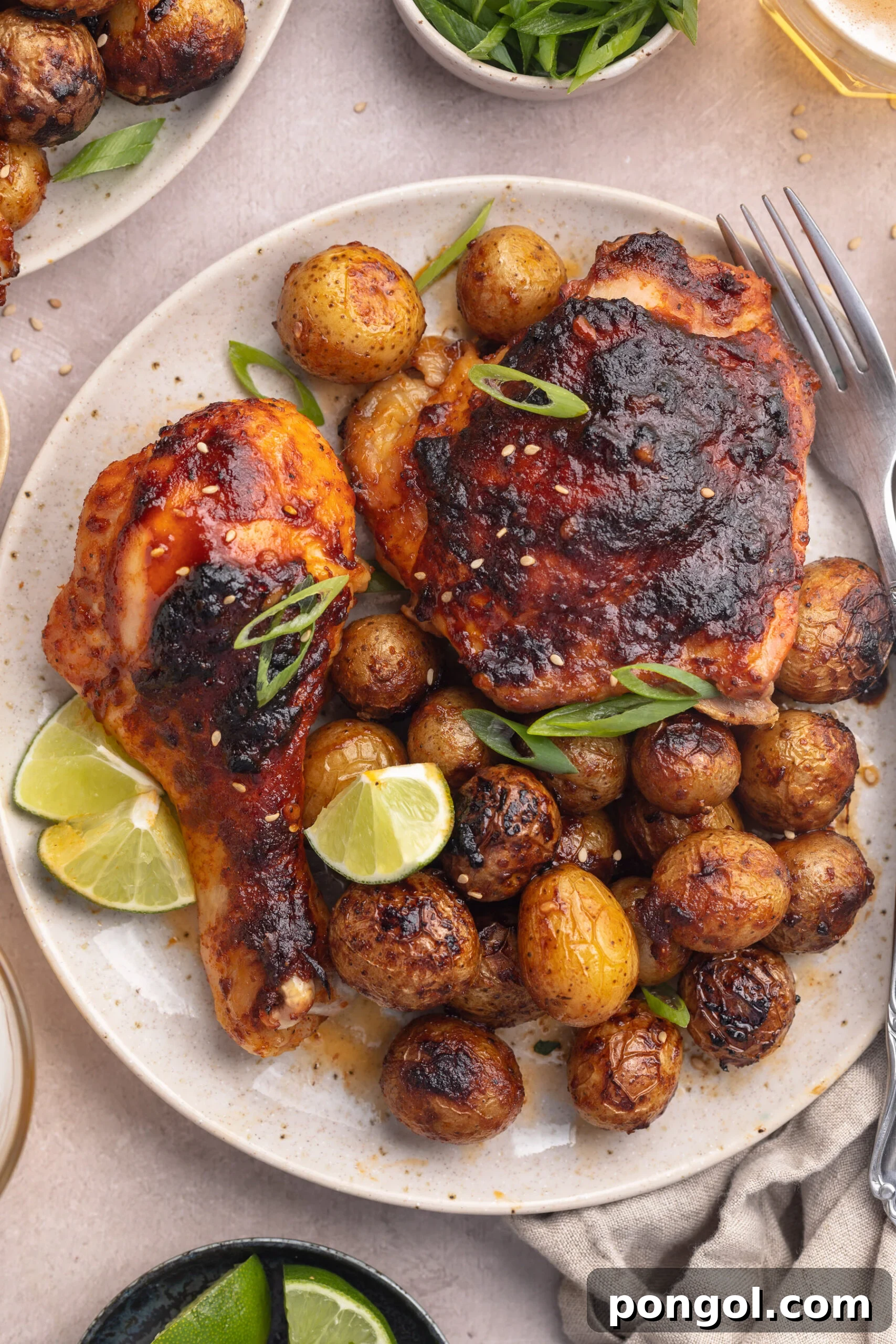
Embark on a culinary journey to Korea right from your kitchen with this incredibly flavorful and easy-to-make sheet-pan gochujang chicken. This dish masterfully blends a touch of heat with a symphony of savory notes, offering a simplified yet authentic Korean BBQ experience. At its core, a rich, umami-packed gochujang sauce elevates juicy chicken thighs and tender baby potatoes, all roasted together on a single pan to golden perfection. It’s an ideal recipe for busy weeknights, effortless entertaining, or whenever you crave a meal that truly excites the palate.
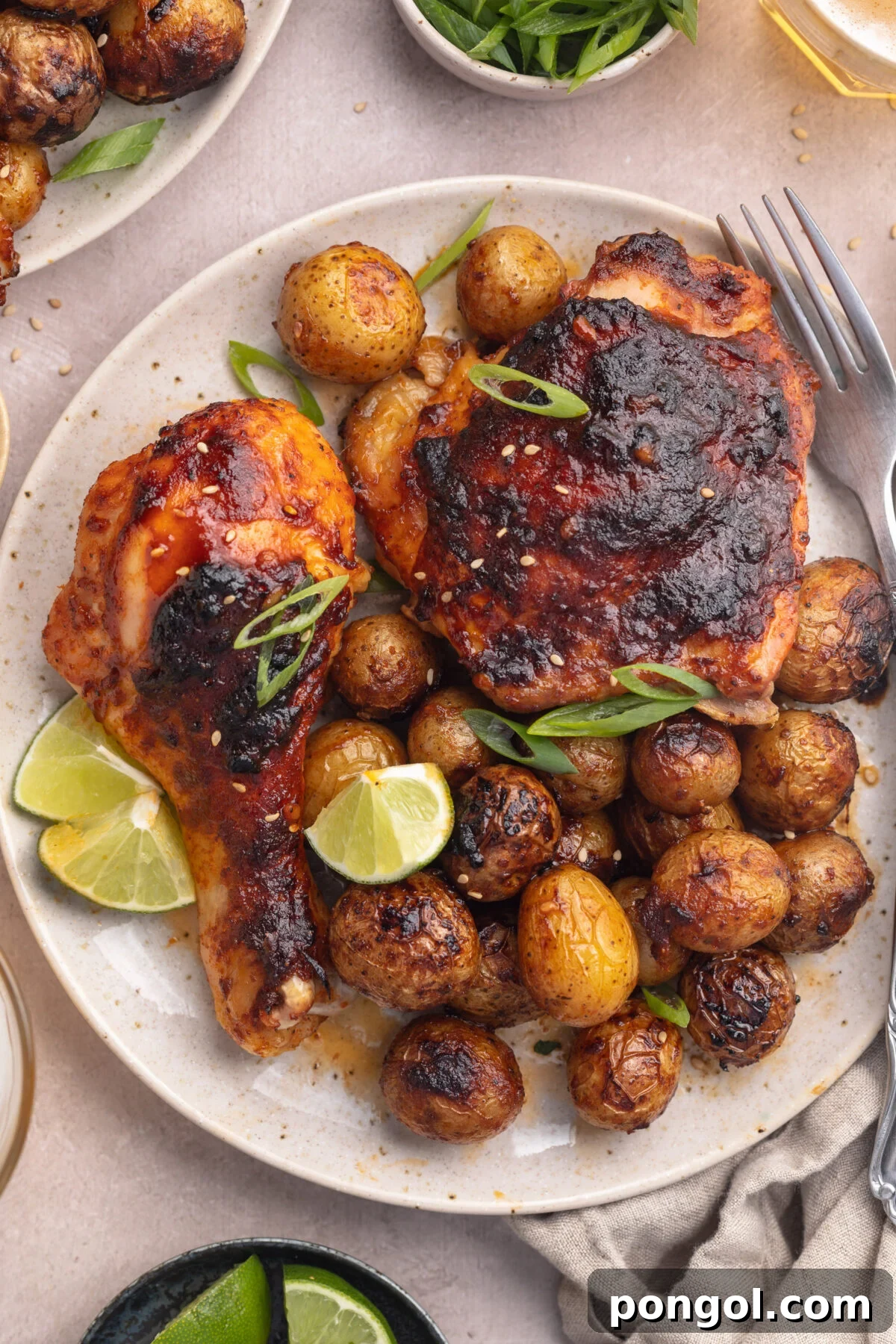
Sheet-Pan Gochujang Chicken: Your Ultimate Weeknight Korean BBQ
Korean cuisine is renowned for its bold flavors, and gochujang, a traditional fermented chili paste, stands as one of its most iconic ingredients. This sheet-pan rendition captures the essence of classic Korean BBQ with minimal fuss, making it accessible to home cooks of all skill levels. By utilizing the convenience of a single sheet pan, you can achieve deeply caramelized chicken and tender, flavorful potatoes without a mountain of dishes. This recipe is not just about ease; it’s about unlocking a world of complex, savory, and subtly sweet flavors that will have you coming back for more.
The Magic of Gochujang: A Flavor Deep Dive
Gochujang is more than just a chili paste; it’s a foundational element of Korean cooking, celebrated for its unique flavor profile that is spicy, savory, and subtly sweet. Typically a vibrant crimson color, this paste is made from finely ground Korean chili flakes (gochugaru), glutinous rice, fermented soybeans, and salt. The fermentation process is key, developing incredible depth of flavor – a powerful umami that is hard to replicate with other ingredients. If you’re new to gochujang, prepare to be amazed; it’s the secret weapon that transforms this simple chicken and potato dish into an extraordinary culinary experience.
When selecting gochujang, you’ll find varying levels of heat. If you prefer a milder spice, look for labels indicating “mild” or “순한 맛” (sunhan mat). For those who love a fiery kick, choose a “hot” or “매운 맛” (maeun mat) version. Its versatility extends beyond marinades; gochujang is fantastic in stews, dipping sauces, and even dressings, making it a must-have in any adventurous kitchen.
🌶️ Why You’ll Love This Easy Sheet-Pan Gochujang Chicken Recipe
- Unforgettable Gochujang Flavor: The star of this dish is undoubtedly the gochujang. Its beautiful crimson hue hints at the rich umami, spicy kick, and subtle sweetness that will awaken your taste buds. This authentic Korean ingredient delivers an unbelievable depth of flavor, transforming ordinary chicken and potatoes into a truly mouth-watering meal. It’s an introduction to a core Korean flavor that you won’t soon forget!
- Effortless Weeknight Meal & Cleanup: As a sheet-pan meal, this gochujang chicken is designed for ultimate convenience. Simply toss, bake, and enjoy! The entire cooking process, including prep, clocks in at under an hour, making it perfect for busy weeknights, unexpected cravings, or even spontaneous entertaining. Plus, with just one pan to clean, you can spend less time scrubbing and more time savoring your delicious creation. Say goodbye to piles of dirty dishes!
- Incredibly Versatile & Customizable: Don’t have baby potatoes? No problem! This recipe is incredibly adaptable. Feel free to swap them out for any of your favorite hearty vegetables like chopped carrots, broccoli florets, sweet potato chunks, or butternut squash – all absorb the gochujang sauce beautifully. You can also skip the veggies entirely and serve the succulent chicken thighs over a bed of fluffy white rice, tender noodles, or even in crisp lettuce cups for a lighter, refreshing twist (just remember to debone the chicken first).
👩🍳 Expert Tips for Perfect Gochujang Chicken
- Boost Flavor with a Marinade: For an even deeper, more infused flavor, consider marinating your chicken thighs. Simply double the gochujang sauce recipe and use half of it to coat the chicken. Let it marinate for at least 30 minutes in the refrigerator. If you have an hour or even overnight, the results will be even more spectacular, allowing the complex flavors of the gochujang to truly penetrate the chicken. Marinating in a glass mixing bowl with a lid or a food-safe sealable plastic bag works wonderfully.
- Fresh Ginger Makes a Difference: While store-bought grated ginger is convenient, I highly recommend using freshly grated ginger for an unparalleled burst of vibrant, zesty flavor. It’s surprisingly easy to prepare! Just use a vegetable peeler or the edge of a spoon to scrape away the thin, papery skin. Then, grate the peeled ginger using a handheld grater or the small holes on a cheese grater. Be mindful of your fingers near the blades to ensure a safe grating experience.
- A Squeeze of Fresh Lime for Brightness: Just before serving, I love to add a generous squeeze of fresh lime juice over the gochujang chicken and potatoes. This optional step truly brightens the dish, cutting through the richness and amplifying the savory notes in the gochujang sauce, making them even more pronounced. The vibrant green lime wedges also add a beautiful pop of color, enhancing the visual appeal of your final presentation.
- Ensure Even Cooking: When arranging your chicken and potatoes on the sheet pan, make sure they are in a single layer and not overcrowded. Overcrowding can lead to steaming instead of roasting, preventing that desirable crispy skin on the chicken and perfectly tender, slightly charred potatoes. If necessary, use two sheet pans to give everything enough space.
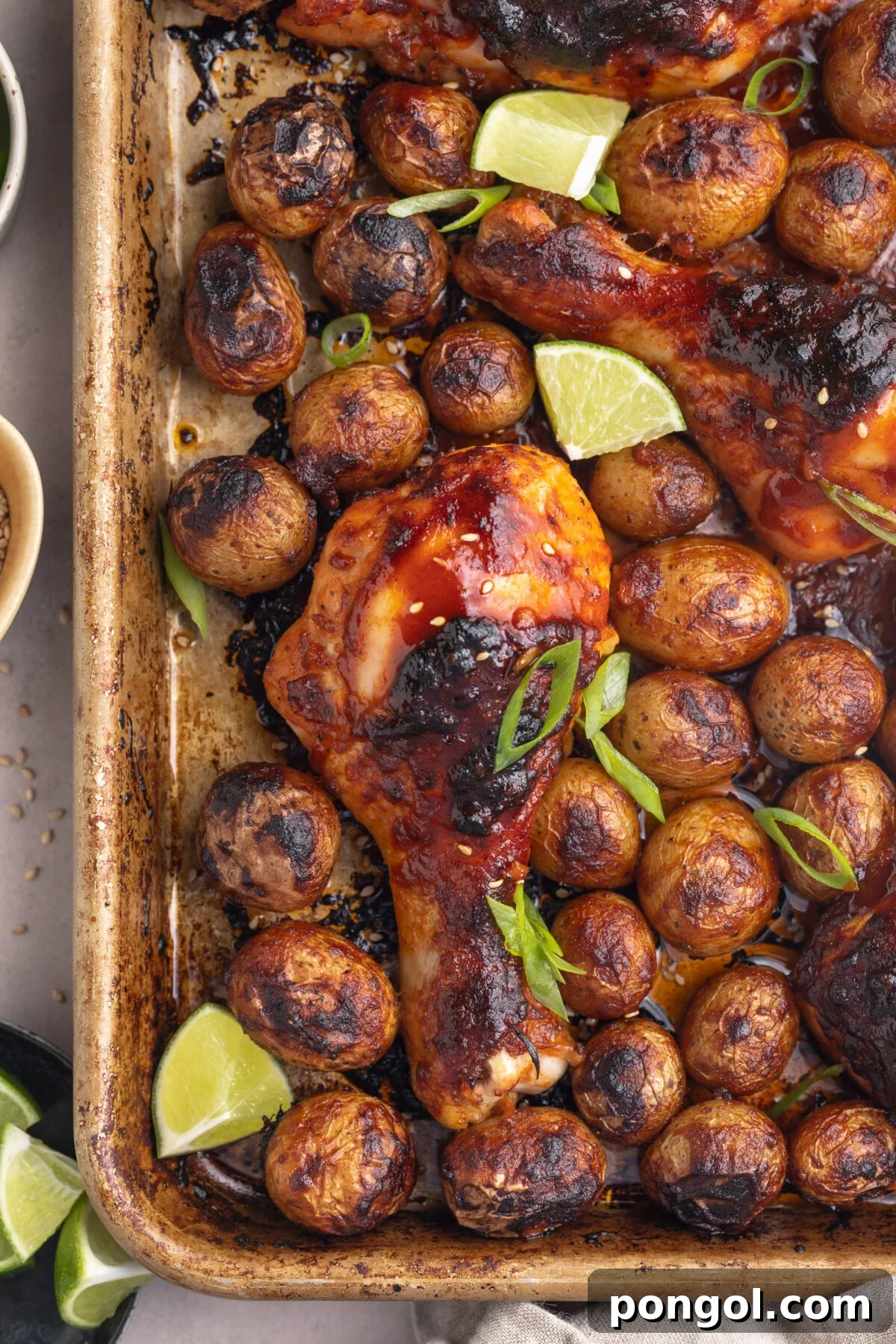
Customizing Your Sheet-Pan Feast: Variations & Swaps
This sheet-pan gochujang chicken recipe is a fantastic canvas for customization, allowing you to tailor it to your dietary needs or personal preferences.
- Protein Alternatives: If chicken thighs aren’t your preference, feel free to substitute. Boneless, skinless chicken breasts can be used, but remember to cut them into similar-sized pieces to the potatoes to ensure even cooking and prevent them from drying out. You could also try pork shoulder or even firm tofu for a vegetarian option. For tofu, press out excess water, cut into cubes, and marinate it alongside the potatoes.
- Vegetable Medley: Beyond baby potatoes, a host of vegetables pair wonderfully with gochujang. Consider adding bell peppers (red, yellow, or orange), sliced onions, asparagus spears, green beans, or even small florets of cauliflower. Add denser vegetables at the beginning of the cook time and softer ones about halfway through to ensure everything cooks to perfection.
- Spice Level Adjustment: Gochujang comes in various spice levels. If you prefer a milder dish, opt for a mild gochujang. For those who love extra heat, you can add a pinch of gochugaru (Korean chili flakes) to the sauce or a dash of your favorite chili oil when serving. Conversely, a touch of honey or maple syrup in the sauce can mellow out the spice for a sweeter profile.
Serving Suggestions & Perfect Pairings
This versatile gochujang chicken and potato dish shines on its own, but it truly comes to life with thoughtful pairings. For a complete and satisfying meal, consider these suggestions:
- Classic Rice or Noodles: A simple bowl of steamed white or brown rice is the perfect accompaniment, soaking up all the delicious gochujang sauce. Alternatively, serve it alongside some stir-fried noodles or Korean glass noodles (japchae) for an added textural dimension.
- Fresh & Crunchy Sides: A crisp green salad with a light vinaigrette, a vibrant kimchi slaw, or a quick cucumber salad can offer a refreshing contrast to the rich, savory chicken. Kimchi, the quintessential Korean fermented cabbage, is also a must-have side for its tangy, spicy kick that complements the gochujang beautifully.
- Garnishes for Flavor and Flair: Don’t underestimate the power of garnishes! Sliced scallions add a fresh, oniony bite and a splash of color. Toasted sesame seeds provide a nutty crunch, while a sprinkle of fresh cilantro or parsley can add an herbaceous note.
- Beverage Pairings: A cold beer (especially a light lager), makgeolli (Korean rice wine), or a crisp white wine like a Sauvignon Blanc can wonderfully complement the flavors. For non-alcoholic options, iced barley tea, sparkling water with a hint of lemon, or even a chilled green tea would be excellent choices.
🥘 More Delicious One-Pan Wonders!
- Honey Chipotle Salmon BBQ Nachos
- Sheet Pan Steak and Fries (with Microwave Béarnaise Sauce)
- Instant Pot Jambalaya
- Crispy Baked Hot Honey Chicken
- Burrito Suizo
- Chicken Egg Roll in a Bowl
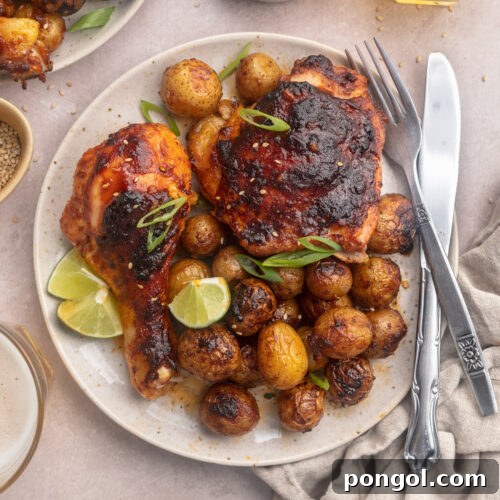
Recipe By: Sam Guarnieri
Sheet-Pan Gochujang Chicken
Prep Time: 15 minutes
Cook Time: 35 minutes
Total Time: 50 minutes
Beautifully roasted chicken and potatoes, covered in a savory Gochujang sauce. Baked in one pan, this dish is a perfect weeknight meal!

Sam Guarnieri
Pin Recipe
Save Recipe
Servings: 8 servings
Equipment
- Large sheet pan
- Neutral-flavored spray oil or butter, to grease pan
- Paper towels
- Medium mixing bowl
- Whisk or mixing spoon
- Large mixing bowl
- Basting brush or re-use mixing spoon
- Internal meat thermometer
Ingredients
For the Chicken
- 8 medium bone-in, skin-on chicken thighs (approximately 2-2 ½ pounds, see Notes for chicken breasts)
- Salt, to taste
- Black pepper, to taste
For the Gochujang Sauce
- ⅓ cup gochujang (see Notes for heat levels)
- ¼ cup olive oil
- 2 cloves garlic, grated
- 1 1-inch piece fresh ginger, peeled and grated
- 2 tablespoons soy sauce
- 1 tablespoon sesame oil
- 1 ½ pounds baby potatoes, rinsed, scrubbed, dried
Serving Suggestions (Optional)
- Sliced scallions
- Lime wedges
- Sesame seeds
Instructions
- Preheat your oven to 425° Fahrenheit (220°C). Adjust oven racks so your sheet pan will sit in the middle of the oven for even cooking. Lightly grease a large sheet pan with spray oil or butter to prevent sticking.
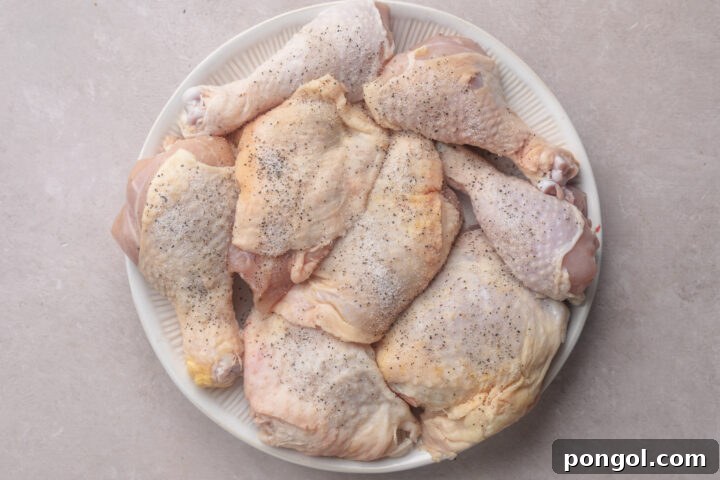
- Pat the chicken thighs completely dry with paper towels. This step is crucial for achieving crispy skin. Place the chicken on the prepared baking sheet. Generously season the tops of the chicken thighs with salt and black pepper, then flip them over and season the other side. Arrange the chicken thighs to ensure there is no overlapping or overcrowding, which helps them roast rather than steam. Set the baking sheet aside.

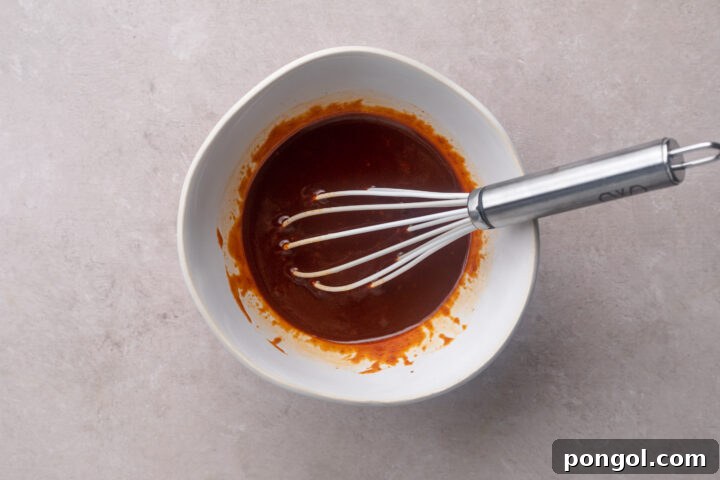
Properly seasoned chicken thighs ready for the sheet pan. - In a medium mixing bowl, combine the gochujang, olive oil, grated garlic, grated ginger, soy sauce, and sesame oil. Whisk or stir well until all ingredients are thoroughly combined, forming a smooth and vibrant sauce.
The savory gochujang sauce, perfectly mixed. - Place the rinsed and thoroughly dried baby potatoes in a large mixing bowl. Add ¼ cup of the prepared gochujang sauce to the potatoes, then toss them vigorously until they are fully and evenly coated in the rich sauce.
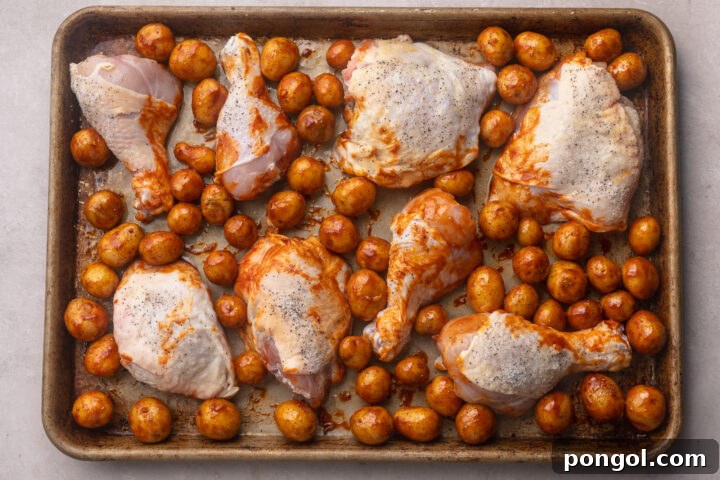
- Transfer the sauced potatoes to the baking sheet with the seasoned chicken thighs. Arrange the potatoes around the chicken, making sure no chicken pieces are covered, to ensure everything cooks evenly and gets beautifully roasted. Using a basting brush (or the mixing spoon), brush the tops of the chicken thighs with the remaining gochujang sauce, ensuring a generous coating.
Chicken and potatoes ready for the oven, coated in the delicious gochujang sauce. - Place the baking sheet in your preheated oven. Roast the chicken and potatoes for approximately 35 minutes. Begin checking for doneness by inserting an internal meat thermometer into the thickest part of the chicken thighs, avoiding the bone. Continue roasting as needed until the internal temperature reaches 160° Fahrenheit (71°C). The temperature will rise to the safe 165°F (74°C) as it rests.
- Once the chicken reaches the desired internal temperature, carefully remove the baking sheet from the oven and set it aside. Allow the chicken to rest for 5 minutes before slicing or serving. This allows the juices to redistribute, ensuring tender and moist chicken. Divide the chicken and potatoes into preferred servings, garnish with sliced scallions, and serve immediately.
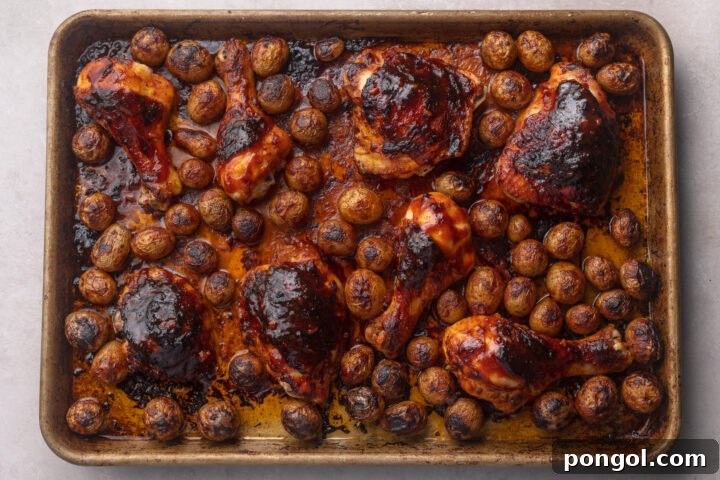
The finished sheet-pan gochujang chicken and potatoes, piping hot and ready to be served.
Recipe Notes
- Gochujang Varieties: This fermented chili paste comes in various heat levels. If you are sensitive to spice, ensure you choose a gochujang labeled as “mild.” The packaging usually indicates its intensity, so check before purchasing.
- Using Chicken Breasts: If you prefer chicken breasts, use 4 large chicken breasts and slice them horizontally to create 8 thinner cutlets. Be vigilant with cook time, removing them from the oven as soon as they reach an internal temperature of 160° Fahrenheit (71°C) to prevent them from drying out.
- Storage and Leftovers: Allow any leftover gochujang chicken and potatoes to cool completely to room temperature. Transfer them to an airtight container and refrigerate for up to 3 days. Reheat gently on the stovetop over medium heat or in the oven at 350°F (175°C) until just warmed through. Avoid overcooking during reheating to maintain moisture.
- Make it Meatless: For a delicious vegetarian option, swap the chicken thighs for baked tofu. Press extra-firm tofu to remove excess water, cube it, and toss it with the gochujang sauce before roasting alongside the potatoes. You can find a great baked tofu recipe here.
- Gluten-Free Adaptation: To make this recipe gluten-free, ensure your gochujang is gluten-free (some brands use wheat). Replace standard soy sauce with a certified gluten-free soy sauce, coconut aminos, or lite tamari. Always double-check ingredient labels.
Approximate Nutrition Information for One Serving
Calories: 421 cal
Protein: 22 g
Fat: 29 g
Saturated Fat: 7 g
Trans Fat: 0.1 g
Cholesterol: 118 mg
Sodium: 352 mg
Potassium: 663 mg
Total Carbs: 19 g
Fiber: 2 g
Sugar: 2 g
Net Carbs: 17 g
Vitamin A: 118 IU
Vitamin C: 19 mg
Calcium: 25 mg
Iron: 2 mg
Nutrition Disclaimers
Number of total servings shown is approximate. Actual number of servings will depend on your preferred portion sizes.
Nutritional values shown are general guidelines and reflect information for 1 serving using the ingredients listed, not including any optional ingredients. Actual macros may vary slightly depending on specific brands and types of ingredients used.
To determine the weight of one serving, prepare the recipe as instructed. Weigh the finished recipe, then divide the weight of the finished recipe (not including the weight of the container the food is in) by the desired number of servings. Result will be the weight of one serving.
Storage, Reheating, and Meal Prep Tips
Making a batch of sheet-pan gochujang chicken is excellent for meal prepping. The flavors tend to meld even more beautifully overnight, making leftovers a real treat.
- Cooling: Always allow your chicken and potatoes to cool completely to room temperature before storing them. This prevents condensation and keeps your food fresh longer.
- Storage: Transfer the cooled chicken and potatoes to an airtight container. They will keep well in the refrigerator for up to 3 days. For longer storage, you can freeze individual portions in freezer-safe containers for up to 2-3 months. Thaw overnight in the refrigerator before reheating.
- Reheating:
- Oven: For best results, reheat in the oven. Preheat to 350°F (175°C). Spread the chicken and potatoes on a baking sheet and heat for 10-15 minutes, or until warmed through and the chicken skin starts to crisp up again.
- Microwave: While convenient, the microwave can sometimes dry out chicken. Heat in short bursts (1-2 minutes) until warm, stirring the potatoes halfway through.
- Stovetop: Heat a skillet over medium heat with a little oil. Add the chicken and potatoes and sauté gently until warmed through. This method can help re-crisp the chicken skin.
- Meal Prep Idea: Divide the cooked chicken and potatoes into individual meal prep containers along with a side of rice or a fresh salad. You’ll have delicious, ready-to-eat Korean-inspired meals throughout the week!
Conclusion: Savor the Flavor!
This sheet-pan gochujang chicken and potatoes recipe offers a fantastic fusion of convenience and authentic Korean flavor. It demystifies the art of Korean BBQ, bringing bold, spicy, and savory tastes to your everyday cooking. Whether you’re a seasoned chef or a kitchen novice, this recipe is designed to deliver maximum flavor with minimal effort and cleanup. So, preheat your oven, gather your ingredients, and prepare to delight your senses with this vibrant, hearty, and utterly delicious dish. Enjoy the process, and most importantly, savor every incredible bite!
Did You Make This Recipe?
We’d love to see your culinary creations! Tag @40aprons on Instagram and be sure to leave a review and comments on the blog post. Your feedback helps us grow and inspires other home cooks!
Tag @40Aprons on Instagram