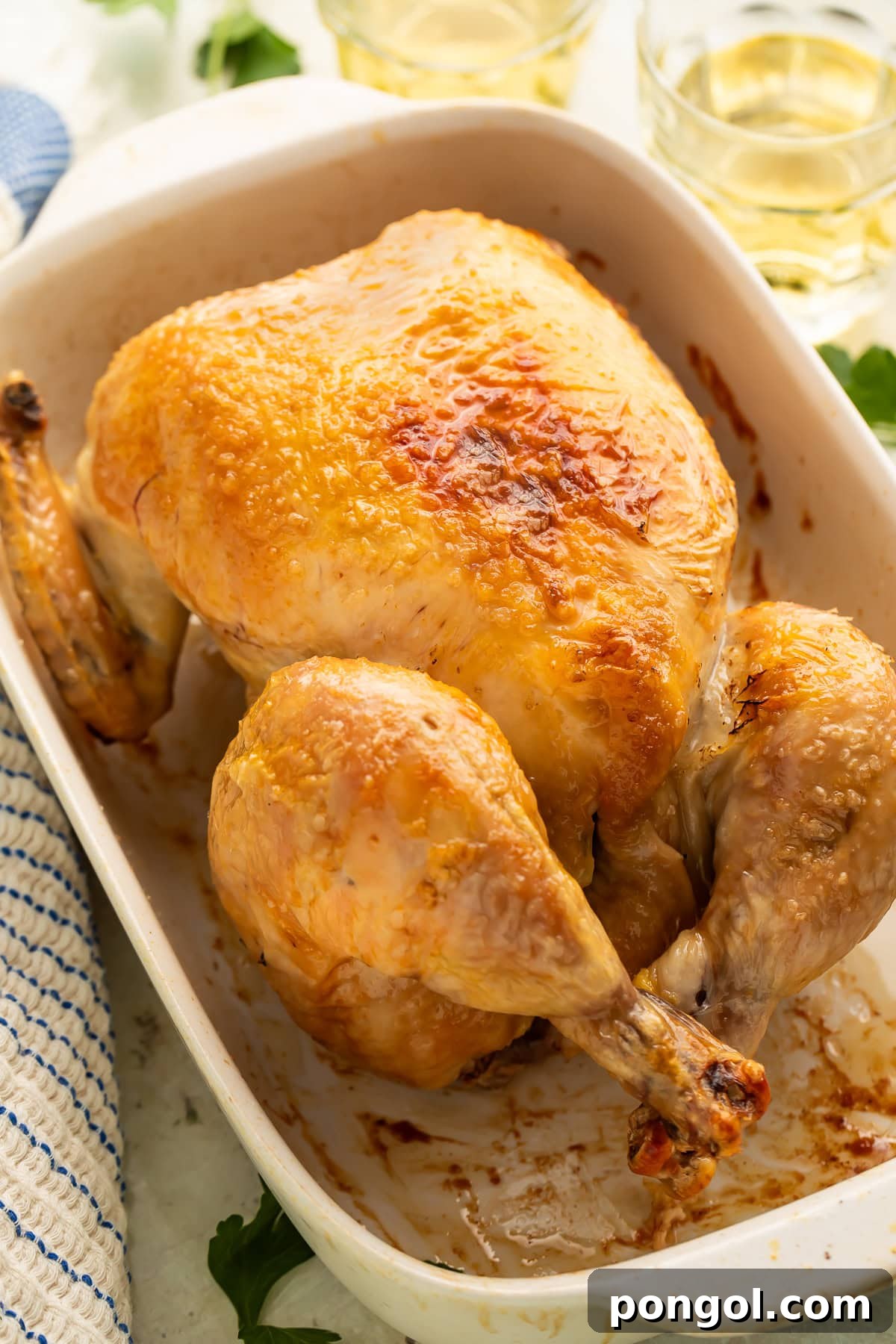
The Best Easy Roast Chicken Recipe with Homemade Gravy
Master the art of perfectly cooked whole roast chicken with this incredibly simple, high-heat method. Achieve impossibly crispy, golden-brown skin, incredibly tender, juicy meat, and a rich, savory homemade gravy that will make this dish a weekly family request. We also include options for a delicious Whole30, Paleo, and gluten-free gravy, ensuring everyone can enjoy this classic comfort food.

See the full recipe card below for detailed measurements, ingredients, and instructions.
Why This Roast Chicken Recipe Will Become Your New Favorite
Forget everything you thought you knew about roasting a whole chicken. This recipe isn’t just “good” – it’s revolutionary. Here’s why it stands head and shoulders above the rest:
- Unbelievably Fast & Simple: Traditional roast chicken often conjures images of hours in the kitchen. Not with this method! We’ve streamlined the process to just a few essential steps, delivering a magnificent whole roasted chicken with crispy skin and succulent meat in under an hour. It’s perfect for busy weeknights yet impressive enough for special occasions.
- Versatile Meal Prep Powerhouse: This isn’t just a dinner; it’s a foundation for countless delicious meals. Enjoy the perfectly roasted chicken straight from the oven, then easily shred the leftover meat for a myriad of other dishes. Imagine quick additions to Restaurant-Style Chicken Fried Rice, vibrant BBQ Chicken Salad, spicy Black Pepper Chicken, or comforting Mexican Chicken Soup. It’s an ideal way to ensure you always have pre-cooked, flavorful chicken ready for family lunches or spontaneous culinary creations.
- Maximizing Efficiency & Flavor: We embrace a “nose-to-tail” philosophy that makes this whole roast chicken incredibly efficient. We enjoy the chicken on the first night, then strip the remaining cooked meat for future recipes. Finally, the bones aren’t discarded – they become the base for a rich, nutritious Instant Pot bone broth. This approach minimizes waste, extracts maximum flavor, and provides nutrient-dense ingredients for your pantry.
Discover More Delicious Recipes
Ultimate Easter Guide: Brunch, Baskets, and Ideas for Everyone
Cottage Cheese Egg Bake
Cheesy Asparagus Casserole
Overnight Brioche French Toast Casserole
Essential Tips for the Best Roast Chicken
Before you even preheat your oven, understanding these crucial techniques will elevate your roast chicken from good to absolutely legendary. These are the secrets to achieving that coveted crispy skin and unbelievably tender, moist meat every single time.
- Master the Art of Trussing: This step is non-negotiable for a truly perfect whole roasted chicken. Trussing, or tying the chicken, ensures the bird cooks evenly, preventing the breast from drying out while the thighs finish cooking. It also tucks in the wings and legs, protecting them from over-browning and maintaining a compact, appealing shape. A properly trussed chicken creates a more uniform mass, allowing hot air to circulate optimally and resulting in a uniformly moist bird. It’s an absolute must-know technique for any home chef, and we’ll guide you through a simple method below.
- High Heat for Superior Results: The key to incredibly crispy skin and quick cooking lies in roasting at the right temperature. We opt for a high heat setting (450°F / 232°C) because it rapidly crisps the skin without overcooking the meat underneath. This intense heat seals in the juices, ensuring a tender interior while simultaneously developing that irresistible, deeply golden-brown crust. It’s a delicate balance that this recipe perfects.
- Your Best Friend: A Digital Meat Thermometer with a Probe: Take the guesswork out of cooking meat and poultry forever! Investing in a good quality digital thermometer with a probe is the single most important tool for consistently perfect results. Insert the probe into the thickest part of the thigh, away from the bone (which is typically the last part to cook). Set your desired internal temperature (161°F / 72°C), and the thermometer will alert you when it’s reached. This ensures your chicken is perfectly cooked—tender and juicy—without the risk of overcooking and drying out the delicate breast meat. It’s a small investment that guarantees perfection every time.
Chef’s Insight: Remember, meat cooks from the outside in. If you cook a chicken until the internal temperature near the bone is *too* high, the meat closer to the surface will be severely overcooked and dry. Our goal is to pull the chicken out just as the deepest part reaches the safe temperature (161°F / 72°C), allowing carryover cooking to bring it to a perfect 165°F (74°C) while resting. This ensures every bite is incredibly tender and moist.

A Simple Guide to Trussing Your Whole Chicken
Trussing may sound fancy, but it’s a straightforward technique that guarantees a beautifully cooked and presented bird. While there are several methods, I prefer a super easy approach that I can always remember. Here’s my foolproof way to truss a whole chicken for perfect results:
- Prepare Your String: Cut a piece of kitchen string (food-safe twine) about 1 meter (or 3 feet) long. Lay it centered in your cast-iron skillet or roasting pan, positioning it about two-thirds of the way up from the bottom of the pan. This means when you place the chicken, the string will be roughly where the top of the legs meet the body.
- Secure the Legs: Place your chicken, breast-side up, directly on top of the string in the pan. Bring the two ends of the string up, over the legs, and down along the crease where the leg meets the body. Cross the strings over each other firmly, then pull each side around the very ends of the legs, effectively crossing and pulling the legs together tightly. Tie the string together at the top of the crossed legs in a secure bow or knot. The legs should be snug against the body.
- Tuck the Wings: For the wings, there’s no need for extra string. Simply take each wing tip and pull it up and back, tucking it behind the body of the chicken. It should feel slightly awkward for the chicken (and maybe even for you!), but this position prevents the delicate wing tips from burning and helps maintain the chicken’s compact shape. Just push them back and secure them under the body.
If you’re more of a visual learner, Ronny from Primal Gourmet offers an excellent video demonstrating a very similar trussing method. It’s a fantastic resource if you need to see it in action!
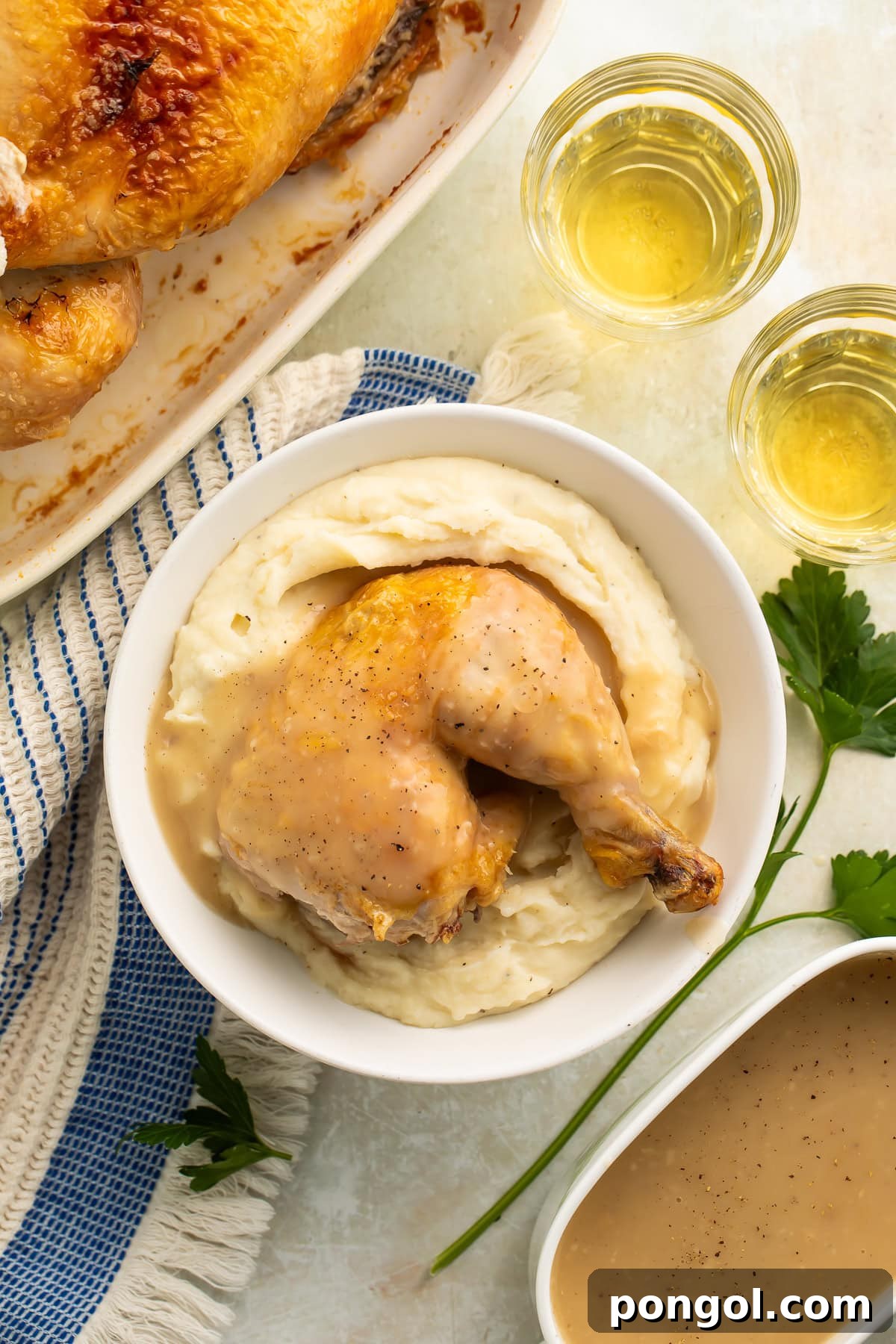
Frequently Asked Questions About Roast Chicken
Start by removing the giblets and neck from the chicken’s cavity. This is a crucial step! Next, pat the entire chicken thoroughly dry with paper towels. This is absolutely essential for achieving that coveted crispy skin. Season the cavity generously with salt, then proceed to truss the chicken using kitchen twine as described in our detailed guide above. Proper trussing ensures even cooking and keeps the meat incredibly moist and tender. Don’t skip these prep steps – they make all the difference!
For a 3 to 3.5-pound whole chicken roasted at 450°F (232°C), you’ll typically bake it for 50 minutes, or until the internal temperature reaches 161°F (72°C) in the thickest part of the thigh. Here’s a general guide for different chicken sizes, always remembering to verify with a thermometer:
- 2.5-3 lbs: 45-50 minutes
- 3-3.5 lbs: 50-55 minutes
- 3.5-4 lbs: 55-65 minutes
- 4-4.5 lbs: 65-75 minutes
I cannot emphasize enough: invest in and use a digital meat thermometer with a probe. It’s truly the only way to guarantee a perfectly cooked, juicy chicken every single time, removing all guesswork.
After removing your beautifully roasted chicken, your cast-iron skillet will hold incredible drippings – a flavor goldmine! Pour off all but about 3 tablespoons of these precious drippings. Then, whisk in your chosen thickener. For a traditional gravy, use 3 tablespoons of all-purpose flour and whisk until golden brown. For a Whole30, Paleo, or gluten-free gravy, use 4 tablespoons of arrowroot powder or 3 tablespoons of cassava flour. Cassava flour, in my experience, yields the best texture for grain-free gravy. Gradually whisk in 2½ cups of chicken stock until the mixture is smooth, then season with ½ teaspoon of salt and a pinch of dried thyme or sage if desired. Bring to a simmer, whisking constantly, until the gravy has thickened to your liking. Continuous whisking is key to a lump-free, silky gravy!
Achieving that perfectly crispy, golden-brown skin comes down to three fundamental principles, all perfectly executed in this roast chicken recipe:
- A Dry Environment: Before seasoning, thoroughly pat the entire chicken dry with paper towels. Any moisture on the skin will steam the chicken rather than crisp it.
- High Roasting Temperature: Our sweet spot is 450°F (232°C). This high heat aggressively renders the fat beneath the skin and rapidly dehydrates the skin itself, creating an incredibly crispy exterior without overcooking the meat.
- Generous Oil Application: Don’t be shy with avocado oil (or another high smoke point oil). Pour it generously over the entire chicken and rub it in thoroughly. The oil helps conduct heat, promoting even browning and crisping.
Follow these three steps diligently, and you’ll be rewarded with the crispiest roast chicken skin you’ve ever made at home!
I consistently roast whole chicken at 450°F (232°C). This high temperature is ideal because it creates a beautifully crispy skin while cooking the chicken quickly enough to retain maximum moisture and tenderness. While the temperature remains constant, the cooking time will vary based on the chicken’s size:
- Smaller chickens (2.5-3 lbs): 45-50 minutes at 450°F
- Standard chickens (3-3.5 lbs): 50-55 minutes at 450°F
- Larger chickens (4+ lbs): 60-75 minutes at 450°F
Always, always cook to an internal temperature of 161°F (72°C) in the thickest part of the thigh, ensuring it’s perfectly done and juicy without being dry.
While I often use arrowroot powder in my Whole30 recipes due to its common availability and ease of use, it can sometimes create a slightly gelatinous or shiny appearance in gravies. The taste and texture will still be good, but visually, it might seem a bit “gummy” when poured.
For the absolute best texture in a grain-free gravy, I highly recommend using 3 tablespoons of cassava flour instead of 4 tablespoons of arrowroot powder. Cassava flour, though sometimes a bit harder to find, behaves very similarly to all-purpose flour in thickening, resulting in a smoother, more traditional gravy consistency that is both paleo and Whole30-friendly.
Roasting your whole chicken in a cast-iron skillet offers several distinct advantages. For one, cast iron’s superior heat retention and distribution contribute significantly to a more golden-brown and crispy skin. It also provides an excellent surface for searing and developing flavor. Crucially, making your gravy directly in the same skillet after roasting is incredibly convenient. The skillet will be infused with all those amazing chicken drippings, which form the base of your rich, savory gravy. I personally love using a 12-inch cast-iron skillet not just for roast chicken, but for countless daily meals!
Properly stored, cooked roast chicken can be kept in an airtight container in the refrigerator at 40°F (4°C) or below for 3-4 days. For extended storage, you can freeze cooked chicken for up to 4 months. Ensure it’s cooled completely before refrigerating or freezing to maintain quality and safety.
Explore More Delicious Chicken Recipes
If you loved this roast chicken, you’ll surely enjoy these other fantastic chicken dishes from our collection:
- Whole30 Marry Me Chicken (Paleo, Dairy Free)
- Mississippi Chicken Pot Roast
- Creamy Ranch Chicken
- Cheesy Pesto Chicken
- Chicken Divan
- Buffalo Chicken Bowls
- Bruschetta Chicken
- Marry Me Chicken (Chicken in a Sun-Dried Tomato Cream Sauce)
- Greek Chicken Skillet with Orzo, Feta, and Spinach
- Honey Sriracha Chicken
- Creamy Cajun Chicken Skillet
- Baked Italian Dressing Chicken (Only 2 Ingredients!)
Please note: Making significant changes to a recipe can sometimes alter the intended outcome. Any substitutions or variations listed here are simple changes that I believe will work, but results are not guaranteed.
Cheryl Malik
Best Roast Chicken with Homemade Gravy
5 minutes
50 minutes
5 minutes
55 minutes

Cheryl Malik
Save
Equipment
-
12-inch cast-iron skillet
-
kitchen twine (about 3 feet/1 meter long for trussing)
-
Digital meat thermometer with probe
-
Large whisk
-
Cutting board
-
Sharp knife
Ingredients
For the Roast Chicken:
- 1 (3-3.5 pound) whole chicken, giblets and neck removed
- 2 tablespoons avocado oil (or other oil with a high smoke point)
- 1 teaspoon salt, plus more to taste
For the Classic Gravy:
- 3 tablespoons chicken drippings or fat of choice (like butter or oil)
- 3 tablespoons all-purpose flour
- 2 ½ cups chicken stock
- ½ teaspoon salt
- 1 pinch dried thyme or sage, if desired
For the Whole30/Paleo/Gluten-Free Gravy:
- 3 tablespoons chicken drippings or fat of choice (like ghee or avocado oil)
- 4 tablespoons arrowroot powder OR 3 tablespoons cassava flour (see note)
- 2 ½ cups chicken stock
- ½ teaspoon salt
- 1 pinch dried thyme or sage, if desired
Instructions
-
Preheat your oven to 450º F (232º C).
-
Remove the giblets and neck from the chicken cavity, then season the cavity generously with salt. Thoroughly pat the entire exterior of the chicken dry with paper towels.
-
Proceed to truss your chicken (see detailed instructions below).
Truss Your Chicken
-
Place a 1-meter (3-foot) piece of kitchen twine, centered, into your cast-iron skillet. Place the chicken on top, breast-side up, so the string is positioned where the legs meet the body. Bring the twine up and over the legs, along the crease where the leg meets the body. Run the twine underneath the ends of the legs, then pull the twine to meet, crossing the legs and pulling them very tight together. Tie a knot and finish with a bow. Next, take each wing tip and pull it up and behind the body of the chicken, tucking it securely to prevent burning. Refer to our detailed guide on How to Truss a Chicken if you need a visual aid.
-
Pour the avocado oil over the trussed chicken and rub it in thoroughly, ensuring the entire skin is coated. Sprinkle liberally with additional salt.
-
Carefully place the chicken in the preheated oven and roast for 50 minutes, or until the internal temperature reaches 161º F (72º C) in the thickest part of the thigh. Larger chickens will require slightly longer cooking times, which is why a digital meat thermometer with an internal probe is highly recommended for accurate results.
-
Once the internal temperature reaches 161º F (72º C), carefully remove the skillet from the oven. Transfer the roasted chicken to a clean cutting board and allow it to rest for at least 5-10 minutes. This resting period is vital for the juices to redistribute, ensuring an incredibly tender and moist chicken. The internal temperature will continue to rise to a safe 165°F (74°C) during this time.
Make the Homemade Gravy
-
Decide on your gravy type: If you are following a Whole30, Paleo, gluten-free, or grain-free diet, use the ingredients listed under the “Whole30/Paleo/Gluten-Free Gravy” heading. Otherwise, use the ingredients under the “Classic Gravy” heading.
-
Carefully place the cast-iron skillet (which contains the chicken drippings) onto your stovetop over medium heat. Always use a pot holder for the handle, as it will be very hot. Pour out all but 3 tablespoons of the drippings. Sprinkle in the chosen thickener (flour, cassava flour, or arrowroot powder). Whisk constantly until smooth and, if using flour, until it turns a light golden brown (a roux). Gradually pour in the chicken stock, whisking continuously until it is fully incorporated and smooth. Season the gravy with ½ teaspoon of salt and the optional pinch of dried thyme or sage. Bring the gravy to a gentle simmer and continue to whisk for a few minutes until it thickens slightly to your desired consistency.
-
Carve the rested chicken and serve immediately with generous amounts of the warm, savory homemade gravy. Enjoy!
Classic Gravy Option: For those without specific dietary restrictions, simply use 3 tablespoons of all-purpose flour for your gravy thickener.
Trussing Visual Aid: For a visual guide on how to truss your chicken effectively, click here to watch a super helpful video.
Keto/Low-Carb Gravy: If you require a low-carb or keto-friendly gravy, try this alternative recipe.
Approximate Nutritional Information for One Serving
Serving Size:
4g
Calories:
150cal
Protein:
6g
Fat:
10g
Saturated Fat:
4g
Trans Fat:
0.2g
Cholesterol:
15mg
Sodium:
1500mg
Potassium:
221mg
Total Carbs:
9g
Fiber:
1g
Sugar:
0.01g
Net Carbs:
8g
Vitamin A:
175IU
Vitamin C:
0.003mg
Calcium:
21mg
Iron:
0.5mg
Nutrition Disclaimers
Number of total servings shown is approximate. Actual number of servings will depend on your preferred portion sizes.
Nutritional values shown are general guidelines and reflect information for 1 serving using the ingredients listed, not including any optional ingredients. Actual macros may vary slightly depending on specific brands and types of ingredients used.
To determine the weight of one serving, prepare the recipe as instructed. Weigh the finished recipe, then divide the weight of the finished recipe (not including the weight of the container the food is in) by the desired number of servings. The result will be the weight of one serving.
Did You Make This Recipe?
We’d love to see your creations! Tag @40aprons on Instagram and be sure to leave a review on the blog post!
Tag @40Aprons on Instagram