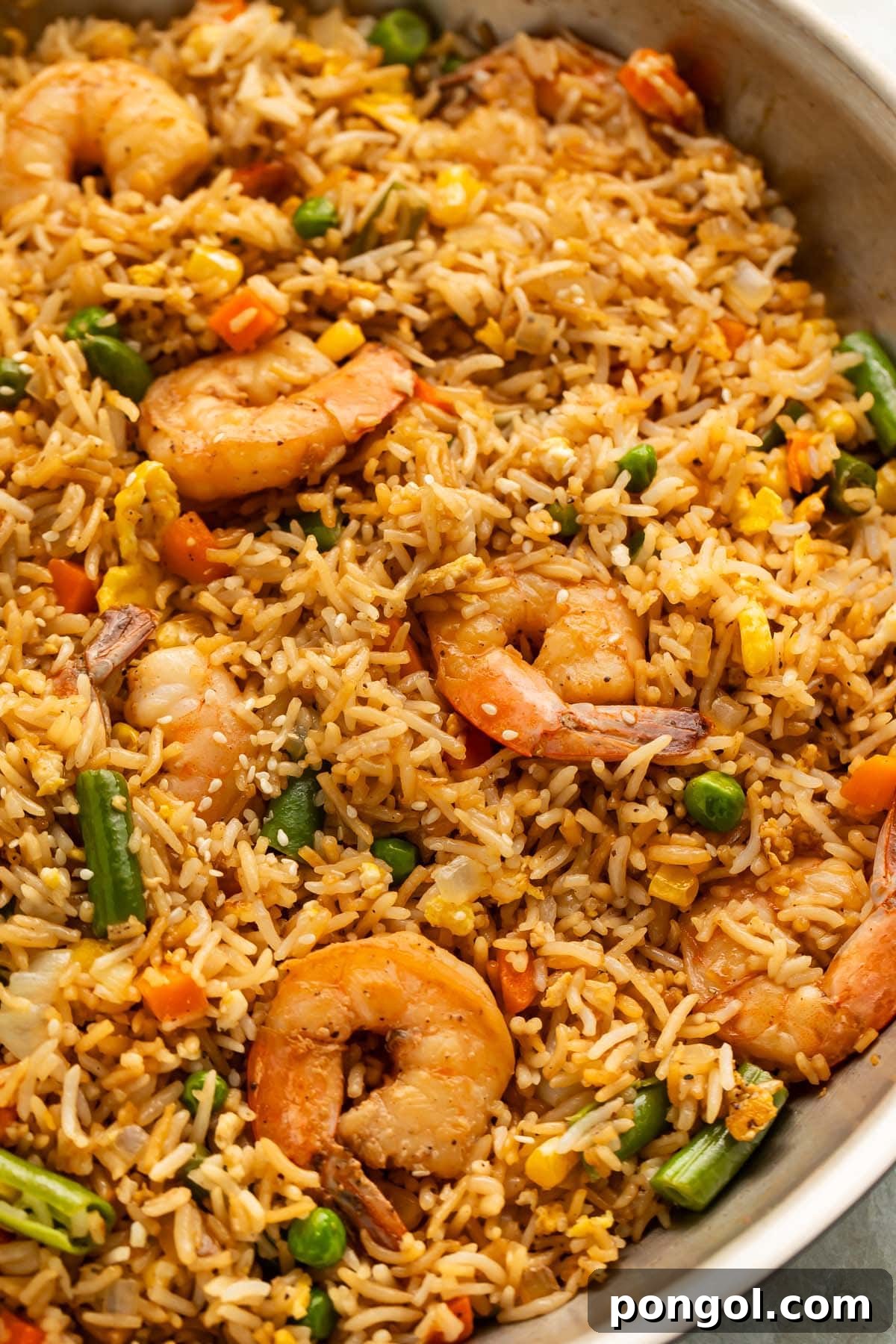
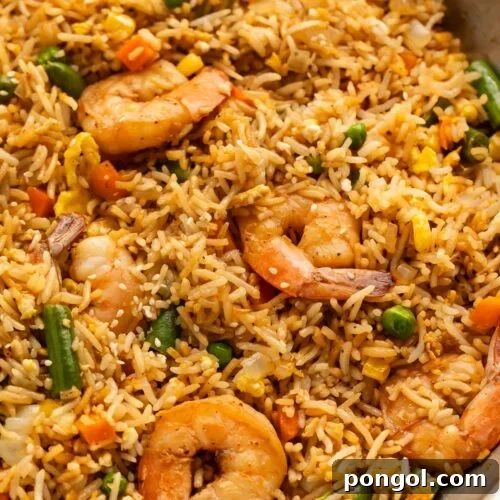
Craving that authentic, restaurant-quality shrimp fried rice but don’t want to leave your kitchen? Look no further! This incredible recipe delivers perfectly lush shrimp, tender grains of rice, fluffy scrambled eggs, and a delightful medley of fresh vegetables, all infused with an irresistible savory flavor that will transport your taste buds. Best of all, this entire skillet meal comes together in just about 30 minutes, making it an absolute game-changer for busy weeknights. Prepare for everyone at your table to ask for seconds – you’ve been warned!
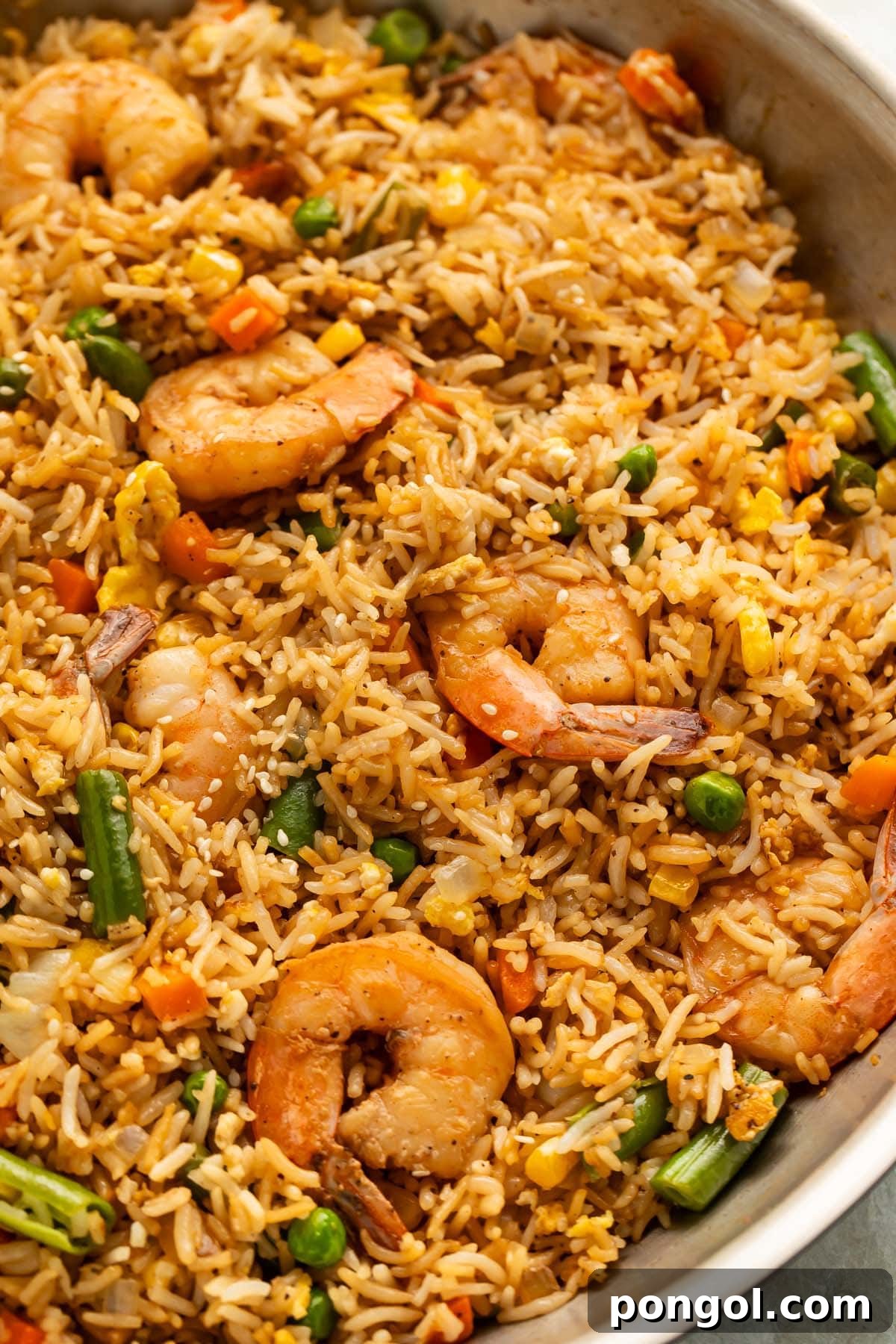
Essential Tips for Perfect Shrimp Fried Rice
Achieving that coveted restaurant-quality fried rice at home is simpler than you think, but a few key preparations and techniques can make all the difference. Follow these crucial tips to ensure your homemade shrimp fried rice turns out perfectly flavorful, with ideal texture every time.
- The Secret is Day-Old Rice: For the absolute best fried rice, this step is non-negotiable. Cook your rice (preferably long-grain white or brown rice for optimal texture and nutrition) the day before you plan to make this recipe. After cooking, spread it out on a baking sheet to cool completely, then transfer it to an airtight container and refrigerate it. Day-old rice is drier, which is essential for frying – it prevents the rice from clumping together and becoming mushy, allowing each grain to achieve a slightly crispy exterior and tender interior.
- Choose Your Shrimp Wisely: I highly recommend using 36/40 count shrimp (meaning 36 to 40 shrimp per pound) in my fried rice. This size provides an optimal shrimp-to-rice ratio, ensuring you get a succulent bite of shrimp with almost every forkful. However, feel free to use smaller shrimp if that’s what you have on hand or prefer; just be mindful of their even faster cooking time. Always ensure they are peeled and deveined for ease of eating.
- Don’t Overcook the Shrimp: One of the most common pitfalls in shrimp dishes is overcooking. Be extremely cautious not to overcook the shrimp! They cook incredibly quickly, often in just 1-2 minutes per side. If they are overcooked in the initial sauté, they will become tough and rubbery by the time the entire dish is finished. Look for them to turn opaque and form a gentle “C” shape; an “O” shape often indicates overcooked shrimp.
- Mind Your Sodium Intake: If you’re watching your sodium intake or simply prefer a less salty dish, opt for a low-sodium soy sauce. Also, remember to taste the fried rice before adding any additional salt, as soy sauce contributes significant salinity. You can always add more, but you can’t take it away!
- High Heat is Your Friend: Authentic fried rice thrives on high heat. Ensure your skillet or wok is properly preheated and screaming hot before adding ingredients. High heat promotes quick cooking and prevents ingredients from steaming instead of frying, which is vital for that signature slightly crispy, non-soggy fried rice texture. Work in batches if your pan isn’t large enough to prevent overcrowding.
- Mise en Place is Essential: This French culinary term means “everything in its place.” Have all your ingredients prepped, measured, and ready to go before you even turn on the stove. Fried rice cooks very quickly, so you won’t have time to chop vegetables or measure soy sauce in between steps. A little prep work goes a long way here to ensure a smooth and successful cooking process!
How to Craft This Irresistible Shrimp Fried Rice: A Step-by-Step Guide
For a comprehensive list of precise measurements, ingredients, and detailed instructions, please refer to the full recipe card below.
Step 1: Sauté the Shrimp to Perfection
Begin by heating your large skillet (or a traditional large wok if you own one) over medium-high heat. Add a blend of avocado oil and sesame oil to the pan. Once the oils are shimmering and hot, carefully arrange your peeled and deveined shrimp in a single layer. Allow them to sauté undisturbed for just 1 minute to achieve a beautiful sear and begin developing their sweet flavor. Then, introduce soy sauce, a pat of butter, a squeeze of fresh lemon juice, a pinch of salt, and a dash of freshly cracked white pepper. Stir everything quickly to coat the shrimp, and continue cooking for another 1-2 minutes, until the shrimp turns opaque, pink, and gently curled into a “C” shape. This precise, quick cook ensures they remain tender and juicy, not rubbery.
Step 2: Sauté the Aromatic Vegetables
Once the shrimp are perfectly cooked, promptly transfer them to a clean medium bowl and set them aside. It’s crucial not to leave them in the hot pan, as residual heat will continue to cook them. Next, quickly wipe out any remaining bits and excess oil from the skillet with a paper towel to prevent burning and ensure a clean cooking surface. Return the clean skillet to the hot burner and add a fresh drizzle of avocado oil. When this oil is hot and shimmering, toss in your finely diced white onion and the frozen mixed vegetables (such as peas, carrots, and green beans). Stir continuously, sautéing until the onions become nearly translucent and the vegetables are tender-crisp, typically about 3 minutes. The savory aroma filling your kitchen will signal the delicious foundation for your fried rice.
Step 3: Scramble the Eggs Directly in the Pan
To incorporate the eggs, create an empty space in your skillet by pushing the sautéed vegetables to one side. Crack your large eggs directly into this cleared area. Using your spatula, swiftly scramble the eggs until they are completely cooked through and no longer runny. Break them into smaller, fluffy pieces as they cook, aiming for a light and airy texture. This method allows the eggs to cook quickly without overcooking or steaming the vegetables, ensuring each component retains its ideal consistency.
Step 4: Fry the Rice to Perfection
Now, it’s time for the star of the show: the rice! Add your cooled, fully-cooked day-old rice to the pan. Along with the rice, add a few generous tablespoons of unsalted butter, which will add richness and help the rice crisp up. Vigorously stir all the ingredients together, ensuring the rice is well-mixed with the vegetables and eggs, and that the butter melts evenly, coating every grain. Fry the rice for about 5 minutes, stirring often. This crucial step helps to dry out any remaining moisture, slightly crisp the rice grains, and enhance their nutty, savory flavor. Finally, pour in the remaining soy sauce and gently fold in the previously cooked shrimp. The dish is almost complete, building layers of irresistible flavor!
Step 5: Serve, Garnish, and Enjoy!
Continue heating the entire dish for just a minute or two, stirring gently, only until the shrimp is warmed through. Remember, vigilance is key here to avoid overcooking the shrimp a second time; you want them juicy, not tough. Once everything is wonderfully hot and fragrant, transfer your delicious shrimp fried rice into serving bowls. For an extra touch of authenticity and flavor, garnish generously with a sprinkle of white sesame seeds and some thinly sliced green onions. These garnishes add a pop of color, texture, and fresh aroma. Now, gather your loved ones and dig into this incredible homemade fried rice – a truly satisfying meal that proves you don’t need takeout for amazing Asian flavors!
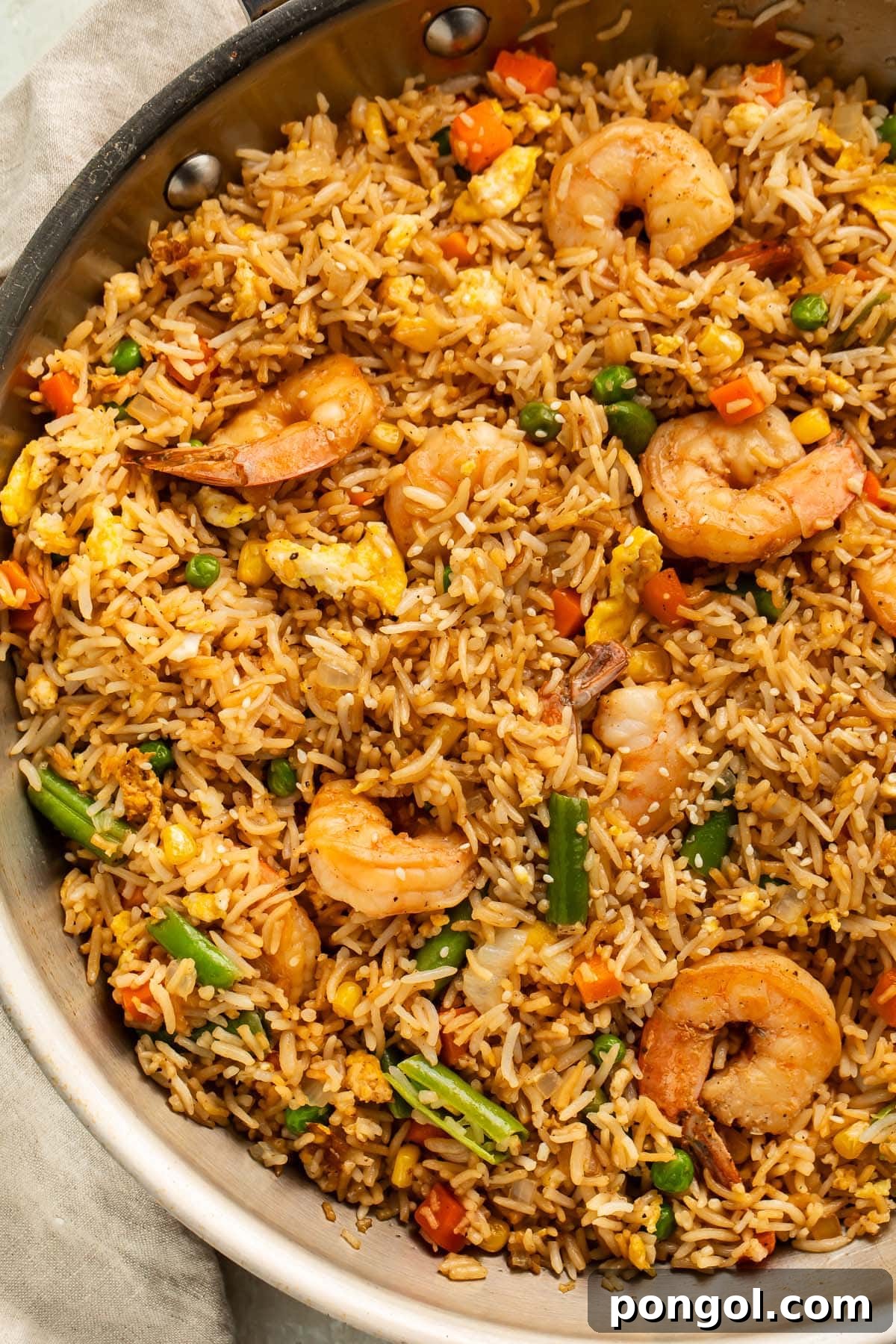
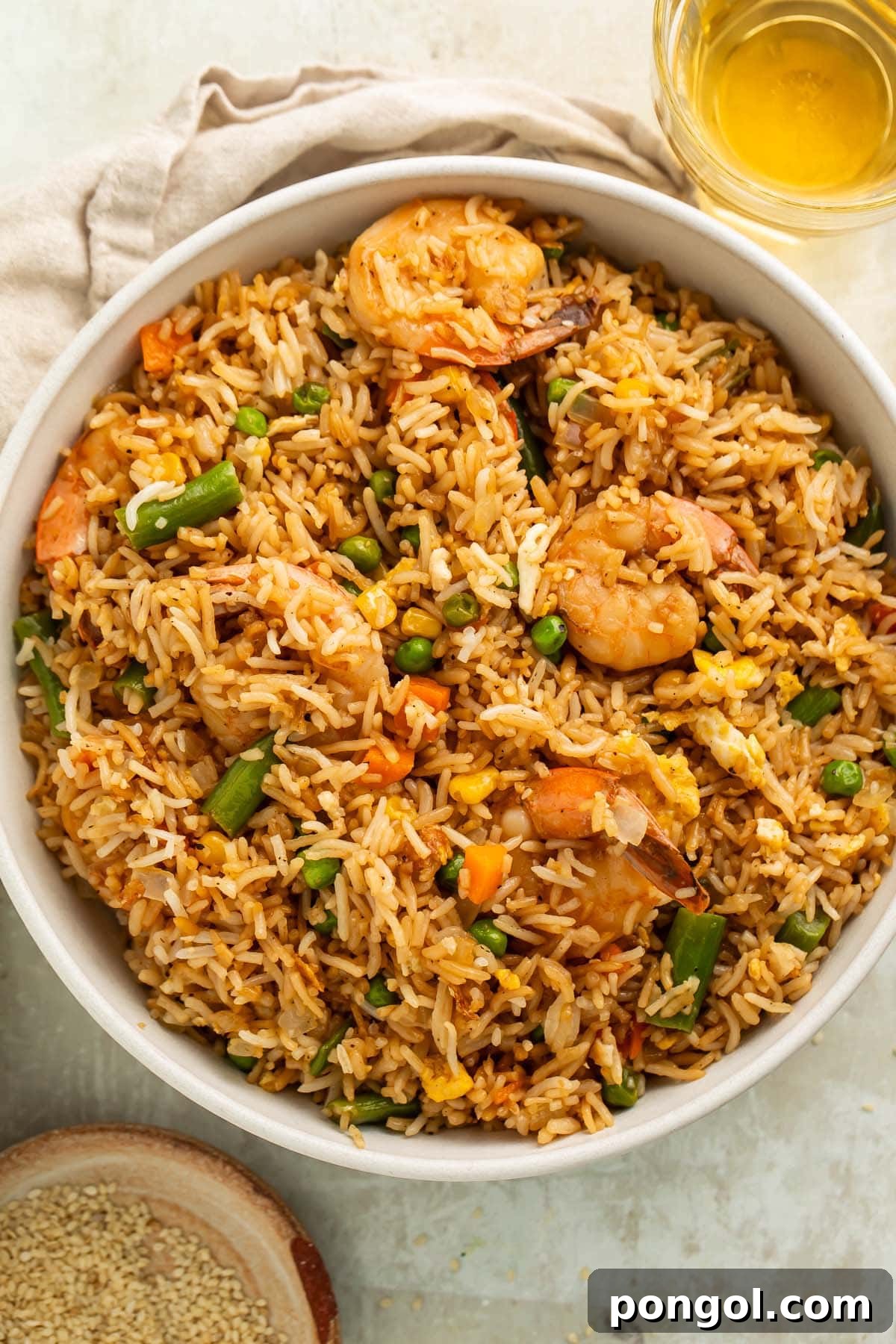
Why You’ll Adore This Easy Shrimp Fried Rice
This isn’t just another fried rice recipe; it’s a culinary experience designed for maximum flavor and minimal fuss. Here’s why this shrimp fried rice will quickly become a cherished favorite in your recipe repertoire, perfect for any occasion:
- Unbeatable Speed and Convenience: You might think classic chicken fried rice is an easy dish, but shrimp fried rice takes convenience to an entirely new level! Shrimp cooks in next to no time, making this an absolutely perfect recipe for those incredibly quick meals you need to whip up between kids’ practices, rehearsals, homework sessions, soccer games, recitals, bedtime routines, and all the other demands of a busy life. It’s truly a 30-minute miracle meal that doesn’t compromise on taste.
- Inspired by Hibachi Classics: If you’re a fan of the savory, umami-rich flavors found in hibachi cuisine, especially my popular hibachi shrimp recipe, then you are going to absolutely LOVE this shrimp fried rice! It brilliantly combines everything delightful from a classic hibachi meal – the perfectly cooked shrimp, the flavorful fried rice, and the tender sautéed vegetables – and transforms it into one simple, cohesive, and utterly delicious one-pan dish. This means less time cooking multiple components and, perhaps even better, significantly less cleanup afterward!
- A Nutritional Powerhouse: Beyond its incredible taste, shrimp is also a fantastic choice for your health. You can easily double the amount of shrimp you use for an even greater protein boost, which is excellent for muscle development and satiety. Furthermore, shrimp is a great source of essential nutrients. It’s naturally low in calories but rich in antioxidants, Omega-3 fatty acids, and vital minerals like iodine, calcium, potassium, and magnesium, contributing to overall well-being and a balanced diet.
- Restaurant-Quality Flavor at Home: The carefully selected combination of savory soy sauce, aromatic sesame oil, a hint of fresh lemon, and perfectly cooked ingredients creates a depth of flavor that truly rivals your favorite takeout spot. The high-heat cooking method ensures that distinctive fried rice char and texture that makes every bite memorable, making it a homemade dish that tastes authentically gourmet.
Creative Variations and Substitutions for Your Fried Rice
While this shrimp fried rice recipe is perfect as is, it’s also incredibly versatile! Feel free to get creative and customize it to your taste, dietary needs, or what you have on hand in your pantry and refrigerator.
- Change Up Your Protein: Shrimp fried rice is absolutely delish, but the protein options don’t end there! Classic chicken fried rice is always a hit, but you could also explore beef fried rice (using thinly sliced steak), savory pork fried rice, gourmet duck fried rice, luxurious lobster fried rice, or even make it a vegetarian delight with a hearty vegetable fried rice featuring pan-fried tofu or tempeh. Always cook your chosen protein separately first until nearly done, then add it back in at the end with the rice to warm through.
- Try Different Vegetables: The beauty of fried rice lies in its adaptability to various vegetables. Swap out the traditional peas and carrots for something different, or simply add to them for an even more vibrant dish! Chopped broccoli florets, fresh corn kernels, finely shredded cabbage, sliced mushrooms, crisp chopped asparagus, or tender snow peas would all be delicious additions to this recipe. Consider stir-frying tougher vegetables like broccoli, bell peppers, or carrots for a minute or two before adding the frozen mix to ensure even cooking and tender-crisp results.
- Add a Spicy Kick: If you love a bit of heat to awaken your palate, consider adding a dash of Sriracha sauce, a pinch of red pepper flakes, or a teaspoon of chili garlic sauce to the pan along with the soy sauce. You can also drizzle some chili oil over the finished dish.
- Aromatic Boosters: For an even deeper and more complex flavor profile, try adding a teaspoon of freshly grated ginger or minced garlic to the pan when sautéing the vegetables. These aromatics will infuse the entire dish with a wonderful fragrance and taste.
- Go Low-Carb: For a healthier, low-carb alternative that still satisfies those fried rice cravings, substitute traditional rice with riced cauliflower. Ensure the cauliflower rice is thoroughly drained and patted very dry before frying to prevent any sogginess and achieve a texture closer to grain rice.
- Experiment with Sauces: While soy sauce is standard, a touch of oyster sauce (if not strictly vegetarian), hoisin sauce, or even a tiny splash of fish sauce can add incredible umami depth. Adjust the amount of soy sauce if adding other salty components.
Please note: Making significant changes to a recipe can sometimes result in variations in taste or texture. Any substitutions or variations listed here are simple modifications that I believe will generally work well, but results are not guaranteed. Experimentation is part of the fun of cooking, so don’t be afraid to try new things!
Recipe By: Cheryl Malik
Shrimp Fried Rice
Prep Time: 15 minutes
Cook Time: 20 minutes
Total Time: 35 minutes
Classic hibachi-style fried rice featuring succulent, juicy shrimp, fluffy scrambled eggs, perfectly tender rice, and a generous mix of vibrant vegetables. A quick and satisfying meal for any day of the week, bursting with incredible savory flavor.

Cheryl Malik
Print Recipe
Pin Recipe
Yields: 4 servings
Equipment
- Large skillet (or large wok)
- Tongs
- Large wooden spoon (or silicone spatula)
- Medium bowl
- Paper towels
Ingredients
For the Shrimp
- 1 ½ teaspoons sesame oil
- 3 teaspoons avocado oil (or other neutral-flavored oil)
- 12 ounces medium-large shrimp (36/40 per pound; peeled, deveined)
- 2 tablespoons soy sauce (low-sodium if desired)
- 1 tablespoon unsalted butter (at room temperature)
- 2 teaspoons fresh lemon juice
- Salt to taste
- Freshly cracked white pepper to taste
For the Fried Rice
- 1 teaspoon avocado oil (or other neutral-flavored oil)
- ½ cup diced white onion (approximately 1 small onion)
- 1 cup frozen mixed vegetables (peas, carrots, green beans, etc.)
- 2 large eggs
- 4 cups cooked, cooled rice (day-old recommended)
- 3 tablespoons unsalted butter (at room temperature)
- 3 tablespoons soy sauce (low-sodium if desired)
- Salt optional, to taste
- Freshly cracked white pepper optional, to taste
Serving Suggestions (Optional)
- White sesame seeds
- Thinly sliced green onions
Instructions
- Place a large skillet or wok over medium-high heat. Add 1 ½ teaspoons sesame oil and 3 teaspoons avocado oil to the skillet. Continue heating until the oil is hot and shimmering, swirling the pan to distribute the oil evenly across the surface.
- Once the oil is hot, carefully place the 12 ounces of medium-large shrimp in a single layer in the skillet. Allow the shrimp to cook undisturbed for 1 minute to develop a good sear.
- After 1 minute, flip the shrimp over. Quickly add 2 tablespoons soy sauce, 1 tablespoon unsalted butter, 2 teaspoons fresh lemon juice, a pinch of salt, and a dash of freshly cracked white pepper to the skillet. Stir gently.
- Cook the shrimp for another 1 to 2 minutes, stirring only once or twice, until the shrimp is opaque, turns a vibrant pink, and curls into a loose “C” shape. Immediately remove from the heat and transfer the shrimp to a medium bowl; set aside.
- Wipe out the skillet thoroughly with paper towels to remove any residue and prevent burning, then return the clean skillet to the heat.
- Add 1 teaspoon avocado oil to the skillet. Heat over medium-high heat, swirling occasionally, until the oil is hot and shimmering again.
- Once the oil is hot, add ½ cup diced white onion and 1 cup frozen mixed vegetables to the skillet. Sauté the ingredients, stirring often, for approximately 3 minutes or until the onions become almost completely translucent and the vegetables are tender-crisp.
- When the onions are nearly translucent, push the vegetables to one side of the skillet to create an empty space. Crack 2 large eggs directly into this empty side. Scramble the eggs quickly with a spatula until they are fully cooked through and no longer runny. Break them into small pieces.
- Once the eggs are cooked, add the 4 cups of cooked, cooled rice and 3 tablespoons unsalted butter to the skillet.
- Stir vigorously to incorporate all ingredients – the rice, vegetables, and scrambled eggs – ensuring everything is well mixed and the butter is evenly distributed. Fry the mixture for 5 minutes, stirring frequently to prevent sticking and encourage a slight crispness on the rice grains.
- After 5 minutes, add the remaining 3 tablespoons soy sauce to the skillet and stir well to incorporate throughout the rice. Continue cooking the mixture for 1 minute more, allowing the flavors to meld.
- Taste the fried rice and adjust seasoning as desired with additional salt and freshly cracked white pepper if needed. Remember, soy sauce adds significant saltiness, so taste before adding more.
- Return the reserved cooked shrimp to the skillet and stir gently to incorporate with the rice and vegetables. Cook the entire mixture just until all ingredients are warmed through. Be very careful not to overcook the shrimp during this final warming step.
- Portion the shrimp fried rice into serving bowls. If desired, garnish generously with white sesame seeds and thinly sliced green onions for extra flavor and visual appeal. Serve warm and enjoy your homemade masterpiece!
Recipe Notes for Success
- Rice Type & Preparation: Fried rice is traditionally made with leftover, cold cooked rice because its dryness prevents the dish from becoming soggy and clumpy. For the best flavor and texture, cook your long-grain white or brown rice a day in advance and refrigerate it.
- High Heat is Key: Always cook fried rice over medium-high to high heat. This ensures ingredients fry and brown quickly, rather than steaming, which leads to a superior texture and characteristic fried rice flavor.
- Avoid Crowding the Pan: If making a larger batch, or if your skillet is not extra large, consider cooking the rice and vegetables in two smaller batches. Overcrowding the pan can lower the temperature and cause ingredients to steam instead of fry, resulting in a soggy outcome.
Approximate Nutrition Information for One Serving
(Based on 4 servings, using ingredients listed, excluding optional garnishes. Nutritional values are general guidelines and reflect information for 1 serving. Actual macros may vary slightly depending on specific brands and types of ingredients used.)
- Serving Size: 1 serving
- Calories: 518 cal
- Protein: 29 g
- Fat: 21 g
- Saturated Fat: 9 g
- Trans Fat: 0.5 g
- Cholesterol: 260 mg
- Sodium: 1419 mg
- Potassium: 494 mg
- Total Carbs: 54 g
- Fiber: 3 g
- Sugar: 1 g
- Net Carbs: 51 g
- Vitamin A: 2796 IU
- Vitamin C: 7 mg
- Calcium: 108 mg
- Iron: 2 mg
Nutrition Disclaimers
Number of total servings shown is approximate. Actual number of servings will depend on your preferred portion sizes.
Nutritional values shown are general guidelines and reflect information for 1 serving using the ingredients listed, not including any optional ingredients. Actual macros may vary slightly depending on specific brands and types of ingredients used.
To determine the weight of one serving, prepare the recipe as instructed. Weigh the finished recipe, then divide the weight of the finished recipe (not including the weight of the container the food is in) by the desired number of servings. Result will be the weight of one serving.
Made This Delicious Recipe? We’d Love to See It!
If you’ve whipped up this amazing Restaurant-Style Shrimp Fried Rice, we encourage you to share your culinary creation! Tag @40aprons on Instagram and be sure to leave a review right here on the blog post to let us know how it turned out! Your feedback helps other home cooks.
Tag @40Aprons on Instagram
Storage and Reheating Tips for Your Shrimp Fried Rice
Shrimp fried rice is fantastic for meal prep or enjoying as leftovers! Here’s how to properly store and reheat your dish to maintain its deliciousness and food safety:
- Storage: Allow the fried rice to cool completely to room temperature (no longer than 2 hours) before transferring it to an airtight container. Refrigerate promptly. Stored correctly, it will stay fresh and delicious in the refrigerator for up to 3-4 days.
- Freezing: While possible, freezing fried rice can sometimes alter the texture of the shrimp and rice slightly, making the shrimp a bit tougher and the rice softer. If you do choose to freeze, store it in an airtight, freezer-safe container for up to 1 month for best quality. Thaw the frozen fried rice in the refrigerator overnight before reheating.
- Reheating: For best results, reheat fried rice in a skillet over medium heat with a tiny bit of oil or water. Add a tablespoon or two of water or broth and cover the pan for a few minutes to create steam, which helps rehydrate the rice. Then uncover and stir-fry until heated through, stirring frequently to prevent sticking. You can also microwave it, but it might not retain the same desirable crispy texture. Always ensure the shrimp is fully warmed to an internal temperature of 165°F (74°C) before serving.
Frequently Asked Questions (FAQs) About Shrimp Fried Rice
Here are answers to some common questions about making delicious shrimp fried rice:
- Can I use fresh rice instead of day-old rice?
While technically possible, it is strongly advised against. Freshly cooked rice has too much moisture, which will make your fried rice soggy, mushy, and clumpy instead of fluffy and distinct. Day-old (or at least completely chilled for several hours) rice is absolutely key for achieving the correct texture that authentic fried rice is known for.
- What type of rice is best for fried rice?
Long-grain white rice, such as jasmine rice, is commonly preferred for fried rice due to its firm texture when cooked and its ability to separate easily, creating distinct grains. However, brown rice also works beautifully, adding a nutty flavor, a slightly chewier texture, and more fiber to the dish.
- How can I prevent the shrimp from becoming rubbery?
The trick is to cook the shrimp very quickly and in two stages. First, sear them for just 1-2 minutes per side until they are barely opaque and form a “C” shape, then immediately remove them from the pan. Reintroduce them only at the very end of cooking to warm through, cooking for no more than an additional minute. This minimizes their exposure to heat and keeps them tender and juicy.
- Can I make this recipe vegetarian or vegan?
Absolutely! To make it vegetarian, simply omit the shrimp and increase the amount of vegetables, or add a plant-based protein like firm tofu (pressed and cubed), tempeh, or edamame. For a vegan version, also swap the eggs for scrambled tofu and ensure your soy sauce and butter are plant-based (e.g., vegan butter). Cook tofu separately until golden before adding to the rice.
- Is it possible to add more flavor?
Yes! Besides the suggestions in the ‘Variations and Substitutions’ section (fresh ginger, minced garlic, chili flakes), you can also add a splash of oyster sauce (if not strictly vegetarian), a tiny bit of fish sauce for an extra umami boost, or a drizzle of dark soy sauce for richer color and flavor. Always taste and adjust seasonings as you go to achieve your preferred flavor profile.
- Can I prepare any components of the fried rice ahead of time?
Yes! The rice should ideally be cooked a day in advance and chilled. You can also chop your white onion and prepare your mixed vegetables ahead of time, storing them in airtight containers in the refrigerator. This “mise en place” approach makes the actual cooking process incredibly fast.
More Delicious Rice Dishes to Explore Next
If you loved this Restaurant-Style Shrimp Fried Rice, you’ll definitely want to try these other amazing and satisfying rice-centric recipes that are perfect for any meal:
- One Pan Chicken and Rice
- Dreamy Instant Pot Chicken and Rice
- Hibachi Steak with Fried Rice and Vegetables
- Chili with Rice
- Cheesy Chicken Broccoli Rice Casserole
- Italian Rice
- Instant Pot Mexican Rice
- Salmon Rice Bowl (TikTok Recipe)
- Shrimp Scampi with Rice
- Chimichurri Rice