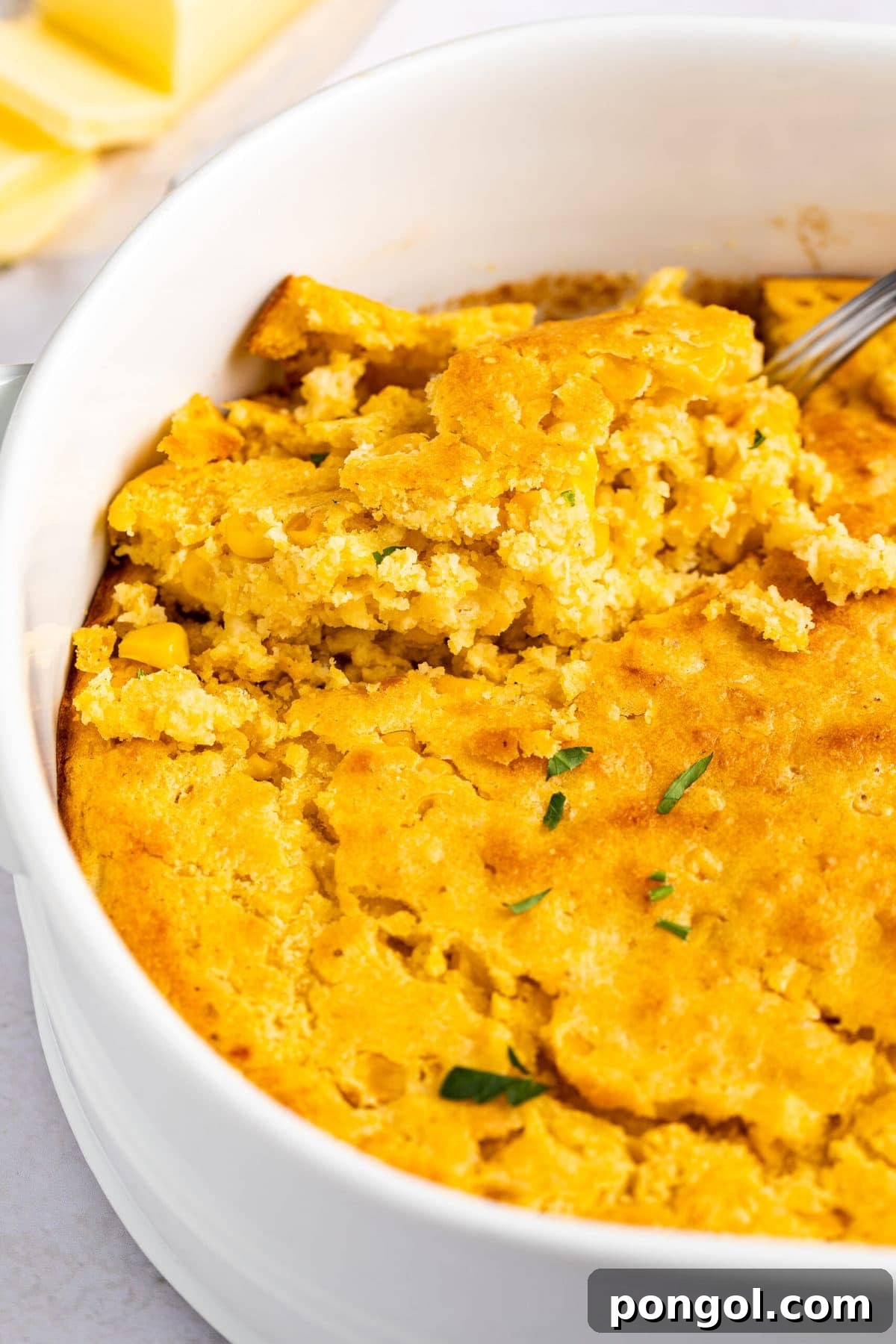
There’s nothing quite like a warm, golden-brown cornbread casserole fresh from the oven. This isn’t just any side dish; it’s a quintessential comfort food, beloved for its soft, fluffy interior and irresistibly crispy top. Our easy cornbread casserole recipe is designed to be jam-packed with the sweet, satisfying flavor of corn, making it a truly delicious and comforting addition to any meal. Whether you’re planning a lively summer barbecue, a festive holiday gathering, or simply craving a taste of home, this crowd-pleasing casserole is guaranteed to be a hit. It’s incredibly simple to prepare, yet delivers a rich, satisfying experience that will have everyone asking for seconds.
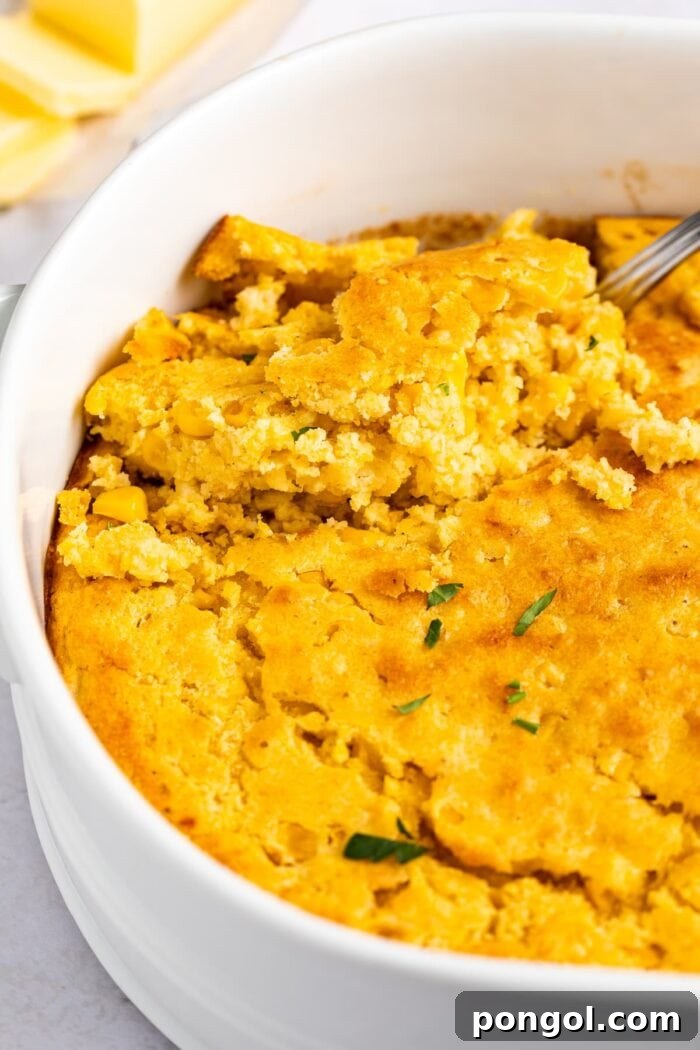
Why This Easy Cornbread Casserole Will Become Your Go-To Recipe
This cornbread casserole isn’t just a recipe; it’s a promise of culinary delight and convenience. Several factors combine to make it truly exceptional and a must-have in your recipe collection:
- Unrivaled Texture and Flavor: Prepare yourself for a casserole that is soft, fluffy, and almost cloud-like on the inside. The secret lies in the harmonious blend of rich cream-style corn and perfectly melted butter. These key ingredients work together to infuse the casserole with a moist, tender crumb and an unforgettable savory taste that beautifully complements the natural sweetness of the corn. The top bakes to a glorious golden brown, offering a delightful contrast in texture with every bite.
- Effortless Preparation: In today’s busy world, an easy recipe is a true gift. This cornbread casserole shines in its simplicity. You won’t need any complex techniques or fancy equipment. The process is straightforward: simply combine all the ingredients in a single bowl, pour the mixture into a baking dish, and let your oven do the rest. In under an hour, you’ll have a magnificent, homemade dish that tastes like it took hours of effort.
- A Celebration of Corn: Corn is a beloved vegetable, especially during the warmer months, and this casserole offers a wonderfully creative and enjoyable way to savor its unique qualities. By incorporating both cream-style and whole kernel corn, we create a dynamic texture profile – the creamy base provides depth, while the whole kernels burst with sweet juiciness, adding a delightful crunch. This balance ensures that the sweet notes of the corn are perfectly highlighted against the savory backdrop of the cornbread, making it an irresistible dish for any corn lover.
- Versatility for Any Occasion: From casual weeknight dinners to festive holiday spreads, this cornbread casserole fits seamlessly into any menu. It’s a fantastic side dish for barbecued ribs, grilled chicken, roasted turkey, or a hearty bowl of chili. Its comforting nature makes it perfect for cozy family meals, while its crowd-pleasing appeal ensures it’s a star at potlucks, picnics, and family reunions.
Essential Ingredients for the Perfect Cornbread Casserole
Crafting the ideal cornbread casserole begins with understanding the role of each ingredient. Here’s a closer look at what you’ll need and why it’s important:
Cornmeal: This is the heart of any cornbread dish, providing its signature flavor and granular texture. For this casserole, we combine cornmeal with all-purpose flour to achieve the perfect balance of density and fluffiness. When selecting cornmeal, opt for a medium grind, which offers a pleasant texture without being too coarse or too fine. It’s crucial to distinguish cornmeal from corn flour; corn flour is much finer, almost powdery, and will result in a denser, gummier casserole, which is not what we’re aiming for. Stick to cornmeal for that authentic, light crumb.
All-Purpose Flour: Working in conjunction with the cornmeal, all-purpose flour helps create structure and contributes to the casserole’s tender, fluffy texture. It prevents the dish from becoming overly crumbly and helps bind the ingredients together seamlessly.
Baking Powder: This leavening agent is critical for the casserole’s rise, giving it that airy, cloud-like interior. Ensure your baking powder is fresh for optimal results; expired baking powder can lead to a flat, dense casserole.
Salt: A fundamental seasoning, salt enhances all the other flavors in the casserole, balancing the sweetness of the corn and enriching the savory notes. Don’t skip it!
Egg: The egg acts as a binder, holding all the ingredients together and contributing to the casserole’s overall structure. It also adds a touch of richness and helps with the browning of the crust.
Milk: Dairy milk provides moisture and richness, helping to create a tender batter. Whole milk is often preferred for its creaminess, but 2% milk works just as well. For a dairy-free option, unsweetened almond milk or oat milk can be used.
Melted Butter: Butter is indispensable for both flavor and texture. It contributes a rich, savory depth and ensures a moist, tender crumb. Melting the butter before incorporating it into the batter allows for even distribution and helps create that desirable soft consistency.
Cream-Style Corn: This canned delight is a game-changer for the casserole’s texture. It consists of sweet corn kernels combined with a creamy residue derived from pulped corn. The natural creaminess and slight sweetness of cream-style corn are absolutely necessary to achieve the incredibly light and fluffy texture that makes this casserole so special. It adds a depth of flavor and moisture that other forms of corn simply cannot replicate.
Whole Kernel Corn: Complementing the cream-style corn, whole kernel corn (drained if canned) adds another dimension of both taste and texture. The distinct, slightly crunchy burst of whole kernels throughout the soft, moist cornbread creates an exciting textural contrast that makes each bite truly irresistible. You can use canned, frozen (thawed and drained), or even fresh corn cut from the cob for this component.
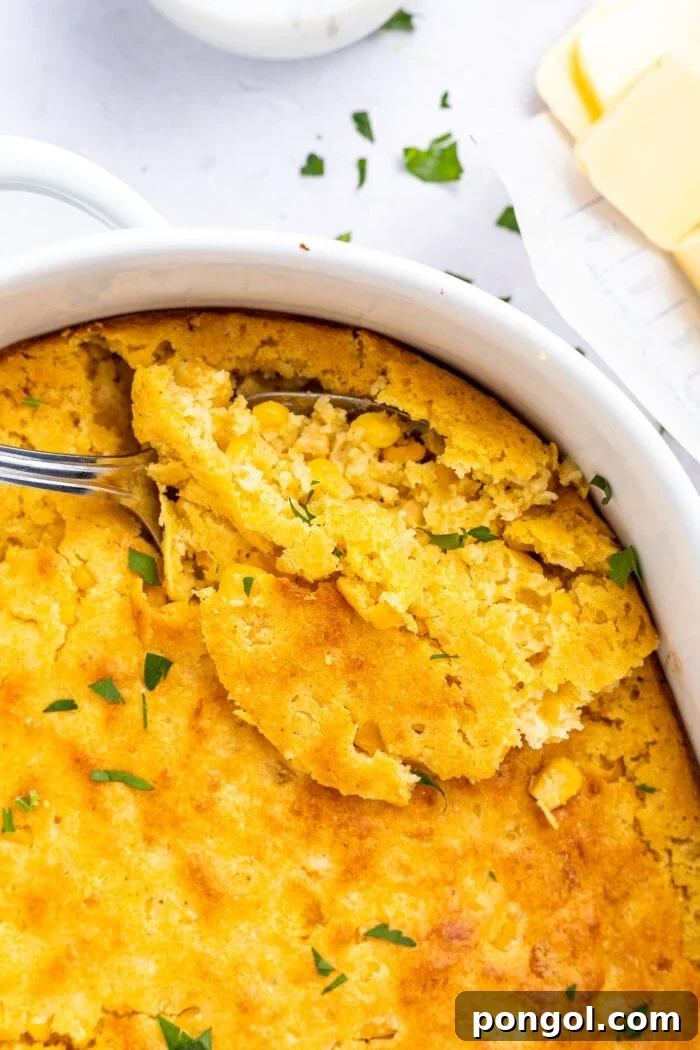
Chef’s Tips for a Flawless Cornbread Casserole
Achieving the perfect cornbread casserole is simple when you follow a few expert tips. These insights will help you avoid common pitfalls and elevate your dish to restaurant-quality status:
- Avoid Overmixing the Batter: This is perhaps the most crucial tip for any baked good, and cornbread casserole is no exception. Once you’ve added the wet ingredients to the dry, mix everything until just combined. You should stop mixing as soon as no pockets of dry flour remain. Overmixing develops the gluten in the flour, leading to a tough, dense, and chewy casserole – a texture we definitely want to avoid for this light and fluffy dish. A few small lumps are perfectly fine and often indicate you haven’t overmixed.
- Enhance with Cheese for a Cheesy Delight: For those who adore a richer, more indulgent casserole, consider adding a cup of shredded cheddar cheese to the batter – it’s absolutely delicious! Sharp cheddar, Monterey Jack, or even a spicy pepper jack can add a wonderful tang and gooey texture. If you choose to incorporate cheese, gently fold it into the batter after all other ingredients have been combined, usually in step 3 of the recipe, then proceed with baking as usual. The cheese will melt beautifully into the cornbread, creating pockets of savory goodness.
- Proper Storage and Reheating: To enjoy your leftover cornbread casserole, ensure it’s stored correctly. Allow the casserole to cool completely to room temperature. Then, cover the baking dish tightly with plastic wrap or transfer the leftovers to an airtight container. Refrigerate promptly for up to 4 days. When you’re ready to reheat, remove the plastic wrap (if applicable) and warm the casserole in a preheated 400° Fahrenheit (200°C) oven for about 5-10 minutes, or until thoroughly heated through and soft again. You can also microwave individual servings for a quicker reheat, though the oven method helps maintain a crispy top.
- Creative Add-ins: Don’t limit yourself! Beyond cheese, this casserole is incredibly versatile. Consider adding diced jalapeños (fresh or canned) for a spicy kick, cooked and crumbled bacon bits for a smoky, savory touch, or a can of drained green chiles for a mild, earthy flavor. A sprinkle of fresh chives or cilantro before serving can also brighten up the dish.
- Adjusting Sweetness: If you prefer a slightly sweeter cornbread, you can add 1-2 tablespoons of sugar to the dry ingredients. Conversely, if you prefer a more savory profile, you can omit any additional sugar and let the natural sweetness of the corn shine.
Frequently Asked Questions About Cornbread Casserole
Here are answers to some common questions that might arise when preparing this delightful dish:
Can I use fresh or frozen corn instead of canned?
Absolutely! If using fresh corn, you’ll need about 2-3 ears of corn to yield the equivalent of one 15-ounce can of whole kernel corn. Simply cut the kernels off the cob. If using frozen corn, ensure it’s thawed and well-drained before adding it to the batter to prevent excess moisture, which can make the casserole watery.
What’s the difference between cornmeal and corn flour?
As mentioned, cornmeal is coarser, made from dried and ground corn. It’s what gives cornbread its characteristic gritty, yet tender texture. Corn flour, on the other hand, is very finely ground and has a texture similar to all-purpose flour. Using corn flour instead of cornmeal will result in a denser, gummier casserole that lacks the desired texture. Always use cornmeal for this recipe.
Can I make this casserole gluten-free?
Yes, you can easily adapt this recipe to be gluten-free. Simply substitute the all-purpose flour with a 1:1 gluten-free all-purpose flour blend. Ensure your baking powder is also gluten-free, although most brands are. The cornmeal itself is naturally gluten-free.
How about a dairy-free version?
Making this casserole dairy-free is also straightforward. Replace cow’s milk with an unsweetened non-dairy milk alternative such as almond milk, soy milk, or oat milk. For the butter, use a vegan butter substitute. These swaps will maintain the delicious flavor and texture of the casserole.
What kind of baking dish should I use?
A standard 9×13-inch baking dish is perfect for this recipe. Glass, ceramic, or metal baking dishes will all work well. Just be sure to grease it thoroughly to prevent sticking.
How can I tell when the casserole is done?
The casserole is done when the top is beautifully golden brown, and the center is set. You can test for doneness by inserting a toothpick into the center; if it comes out clean or with just a few moist crumbs attached, it’s ready. The edges will also appear firm and slightly pulled away from the sides of the dish.
Other Delicious and Easy Casserole Recipes to Explore
If you love the convenience and comfort of casseroles, you’re in for a treat! There’s a whole world of delightful casserole recipes waiting to be discovered. Here are some fantastic options that are just as easy and satisfying:
- Cheesy Ham and Potato Casserole
- Asparagus Casserole
- Eggs Benedict Casserole
- Chicken Cordon Bleu Casserole
- Sweet Potato Casserole
- Pork Chop Casserole
- Mexican Chicken Casserole
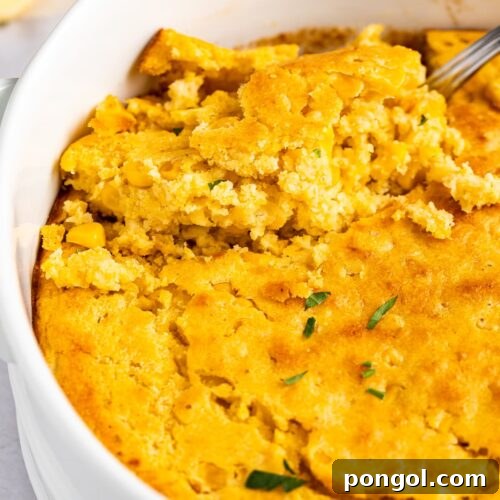
Cornbread Casserole
 Sam Guarnieri
Equipment
-
Large bowl
-
9×13 baking dish
Ingredients
- 1 cup cornmeal
- 1 cup all purpose flour
- 1 tablespoon baking powder
- ½ teaspoon salt
- 1 egg
- 1 cup milk
- ¼ cup butter melted
- 1 (15-ounce) can cream-style corn
- 1 (15-ounce) can whole kernel corn drained
Instructions
-
Preheat oven to 400° Fahrenheit (200°C) and generously grease a 9×13-inch baking dish to prevent sticking.
-
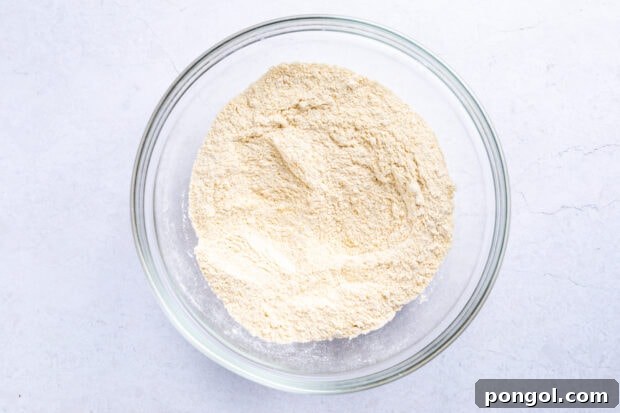
In a large mixing bowl, combine the dry ingredients: cornmeal, all-purpose flour, baking powder, and salt. Whisk them together until they are well incorporated.

-
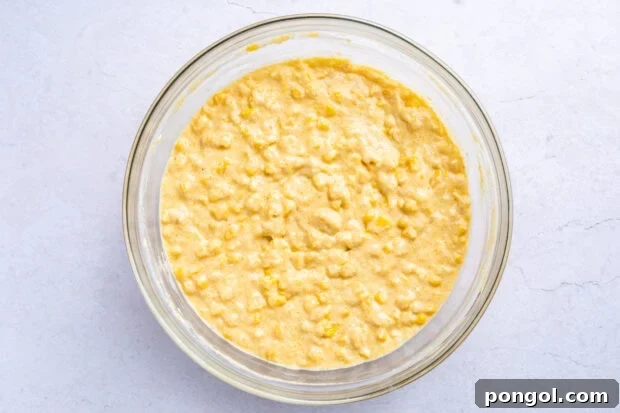
To the dry ingredients, add the wet ingredients: the egg, milk, melted butter, cream-style corn, and the drained whole kernel corn. Mix gently with a spoon or spatula until just combined. Be careful not to overmix; a few lumps are perfectly fine and ensure a tender casserole.
-
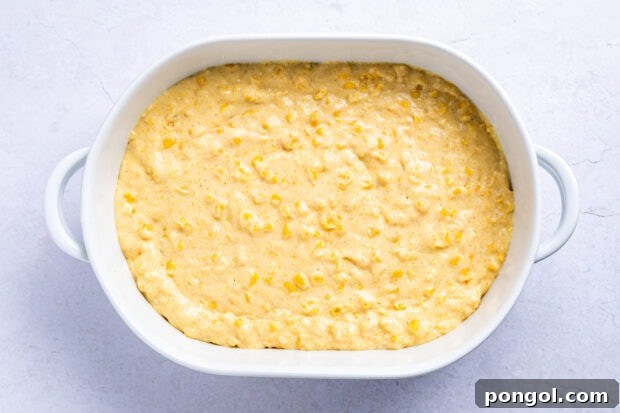
Pour the batter into the prepared baking dish and spread evenly. Bake in the preheated oven for 40-45 minutes, or until the top is golden brown and a toothpick inserted into the center comes out clean.
- Make it Gluten-Free: Use gluten-free all-purpose flour instead of regular all-purpose flour.
- Make it Dairy-Free: Use non-dairy milk instead of cow’s milk and vegan butter instead of regular butter.
Recipe yields approximately 8 servings. Nutritional values shown reflect information for one serving. Macros may vary slightly based on specific brands of ingredients used.
To determine the size of one serving, prepare the recipe as instructed, then weigh the entire recipe when finished. Divide the total weight (not including the weight of the container the food is in) by 8. Result will be the weight of one serving.
Approximate Information for One Serving
Calories: 289cal
Protein: 7g
Fat: 10g
Saturated Fat: 5g
Trans Fat: 1g
Cholesterol: 39mg
Sodium: 457mg
Potassium: 413mg
Total Carbs: 45g
Fiber: 3g
Sugar: 4g
Net Carbs: 42g
Vitamin A: 294IU
Vitamin C: 3mg
Calcium: 109mg
Iron: 2mg
Nutrition Disclaimers
Number of total servings shown is approximate. Actual number of servings will depend on your preferred portion sizes.
Nutritional values shown are general guidelines and reflect information for 1 serving using the ingredients listed, not including any optional ingredients. Actual macros may vary slightly depending on specific brands and types of ingredients used.
To determine the weight of one serving, prepare the recipe as instructed. Weigh the finished recipe, then divide the weight of the finished recipe (not including the weight of the container the food is in) by the desired number of servings. Result will be the weight of one serving.
Did You Make This Recipe?
Tag @40aprons on Instagram and be sure to leave a review on the blog post!
Tag @40Aprons on Instagram