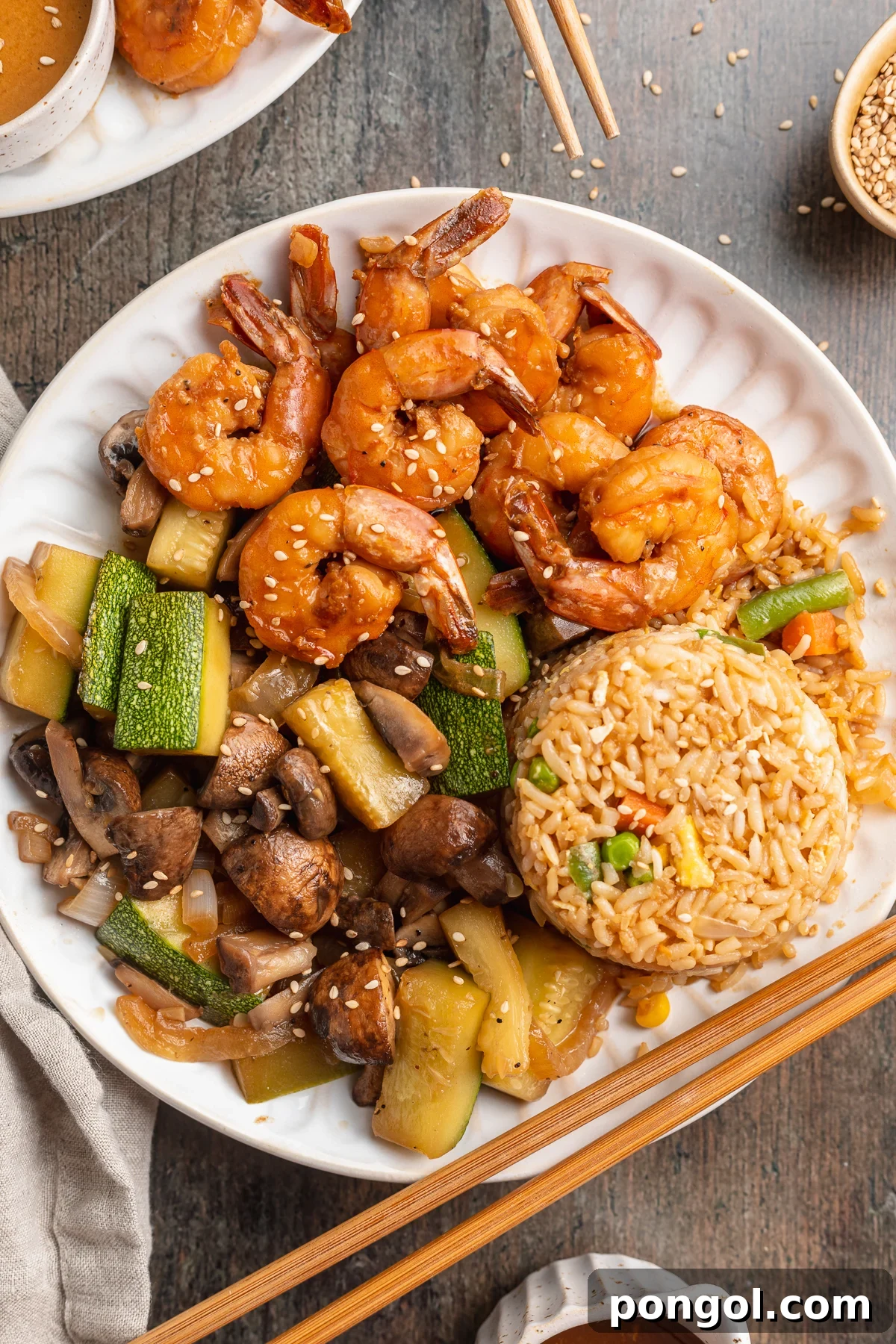
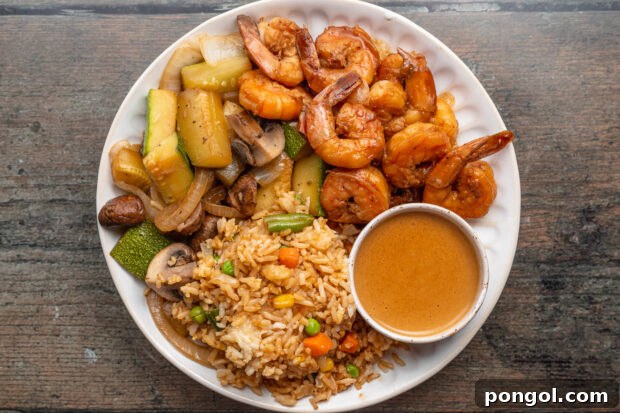
Craving the vibrant flavors and engaging experience of a hibachi dinner but prefer the comfort of your own home? Look no further! This comprehensive guide and recipe for homemade Hibachi Shrimp with Fried Rice and Vegetables brings the excitement of a Japanese steakhouse right to your kitchen. Imagine succulent, perfectly cooked shrimp, savory restaurant-style fried rice, and tender, sautéed zucchini and onions, all complemented by a irresistibly tangy mustard sauce. Prepare to transform your culinary space into your favorite hibachi spot – no flaming onion volcano required, but all the deliciousness guaranteed!
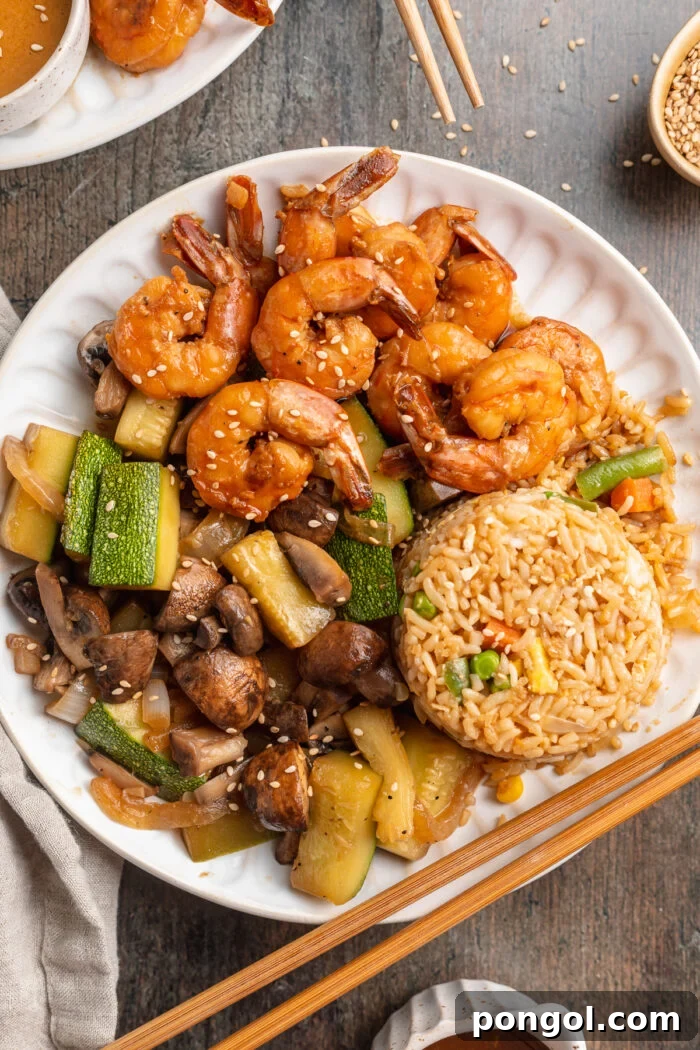
Why This Homemade Hibachi Shrimp is a Must-Try
- Just like our popular hibachi chicken and hibachi steak recipes, this shrimp version captures all the magic of your favorite Japanese restaurant dinner. We’ve distilled the complex flavors and cooking techniques into an easy-to-follow, delicious meal that allows you to enjoy that authentic hibachi experience without ever leaving your house. If you’re looking to cut down on dining out while still satisfying those cravings for your favorite Asian dishes, this recipe is your perfect solution.
- Our restaurant-style fried rice is an absolute game-changer. The secret lies in using day-old rice, which prevents it from becoming mushy and allows each grain to crisp up beautifully. Combined with fresh vegetables, savory soy sauce, fluffy scrambled eggs, and a touch of butter, you’ll achieve the most tender, flavorful, and authentic fried rice you’ve ever made at home. It’s truly a standout component of this complete meal.
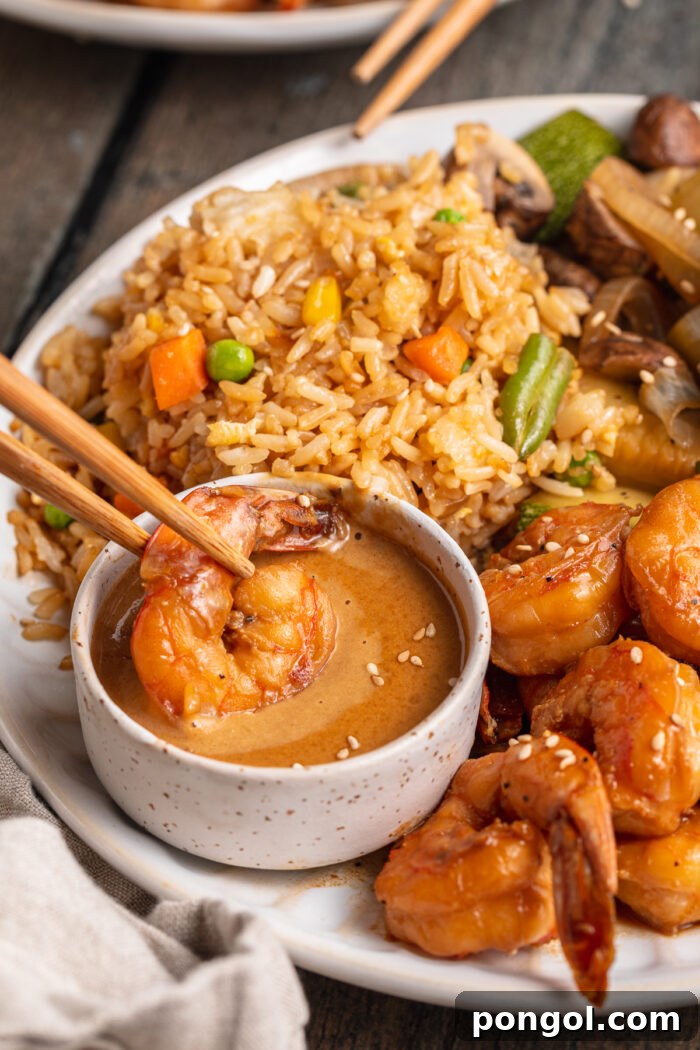
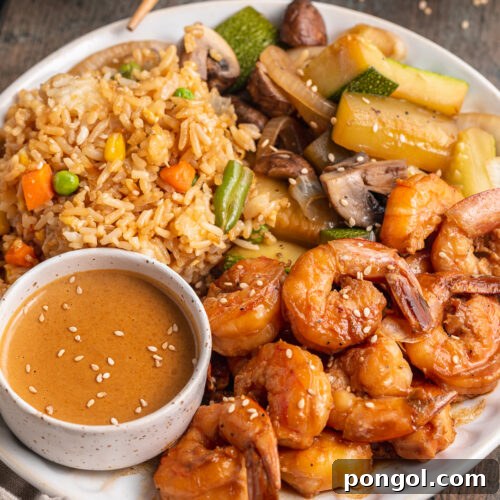
- The star of the show, beyond the main dish, is often the sauce. Our unique mustard sauce is what ties all the individual components of this hibachi feast together so beautifully. It offers a delightful tang that’s perfectly balanced by a hint of sweetness, creating an incredibly rich and complex flavor profile. It’s surprisingly easy to whip up and is not spicy at all, making it a versatile condiment you’ll want to drizzle over everything, from grilled meats to roasted vegetables.
Explore More Hibachi Delights You’ll Adore
If you’ve fallen in love with the art of homemade hibachi, we have even more fantastic recipes for you to try. Expand your Japanese steakhouse repertoire with these equally delicious and satisfying dishes, perfect for any weeknight or special occasion.
Hibachi Chicken with Fried Rice and Vegetables
Hibachi Steak with Fried Rice and Vegetables
Teriyaki Sesame Salmon Hibachi with Fried Rice and Vegetables
Whole30 Hibachi Chicken and Veggies with Cauliflower Fried Rice and Mustard Sauce
Chef’s Expert Tips for Perfect Hibachi at Home
- For truly exceptional fried rice that rivals your favorite takeout, the secret lies in the rice itself. It’s best to cook your rice a day or two in advance, or simply use store-bought, pre-cooked rice. The key is to allow the rice to cool and dry out slightly. This reduces its moisture content, preventing it from becoming soggy and ensuring each grain gets beautifully crisp and separate when stir-fried. While you *can* use freshly cooked rice, it simply won’t achieve that ideal restaurant-style texture.
- When preparing the tangy mustard sauce, I highly recommend taking an extra step to lightly toast the sesame seeds before blending them into the sauce. Toasting them briefly in a dry skillet until fragrant will significantly enhance their nutty flavor, adding a deeper, richer dimension to the sauce. This simple technique elevates the overall taste experience, but it is an optional step if you’re short on time.
- One of the best advantages of making hibachi at home is the complete freedom to customize your meal. While zucchini, mushrooms, and onion are classic choices, don’t hesitate to replace or supplement them with your favorite vegetables. Broccoli florets, crisp snap peas, thinly sliced carrots, bell peppers of any color, or yellow squash would all be fantastic additions. Adjust cooking times as needed to ensure your chosen vegetables reach a perfect crisp-tender consistency.
More Delicious Shrimp Recipes to Savor
If you’re a fan of shrimp, you’re in for a treat! This versatile seafood shines in a variety of dishes. Here are more mouth-watering shrimp recipes that are sure to become new favorites:
- Creamy Shrimp Dip
- Crispy Air Fryer Fried Shrimp with Sriracha Mayo
- Flavorful Blackened Shrimp Salad
- Authentic New Orleans BBQ Shrimp Po-Boy
- Decadent Creamy Shrimp Risotto with Parmesan
- Classic Shrimp Remoulade
Your Ultimate Homemade Hibachi Shrimp Recipe
Ready to create an unforgettable hibachi experience in your own kitchen? This recipe is designed to guide you through each step with ease, ensuring a perfect meal every time. Gather your ingredients, prepare your tools, and get ready for a burst of Japanese steakhouse flavors!
Sam Guarnieri
Hibachi Shrimp with Veggies and Fried Rice
20 minutes
30 minutes
50 minutes

Sam Guarnieri
Save
Saved!
6
servings
(toggle on to prevent screen dimming)
Equipment
-
2 large skillets or woks
-
rubber or silicone spatula
-
bowl with lid
or bowl and plate
-
standard blender
Ingredients
For the Fried Rice
-
2
tablespoons
avocado oil
-
½
cup
diced white onion -
1
cup
frozen vegetables
peas, carrots, etc. -
2
large
eggs -
4
cups
cooked rice
at room-temperature -
4
tablespoons
butter
or ghee -
4
tablespoons
soy sauce
or coconut aminos
For the Hibachi Shrimp
-
1 ½
teaspoons
sesame oil
-
1
tablespoon
avocado oil
-
12
ounces
shrimp
peeled, deveined -
3
tablespoons
soy sauce
or coconut aminos -
1
tablespoon
butter
or ghee -
2
teaspoons
fresh lemon juice -
salt
to taste -
freshly cracked black pepper
to taste
For the Hibachi Vegetables
-
1 ½
teaspoons
sesame oil
-
1
tablespoon
avocado oil
-
1
large
zucchini
quartered, cut into 2-inch pieces -
1
large
white onion
halved, cut into ½-inch pieces -
2
cups
baby bella mushrooms
approximately 8 ounces, quartered -
1
tablespoon
butter
or ghee -
1
tablespoon
soy sauce
or coconut aminos -
salt
to taste -
freshly cracked black pepper
to taste
For the Mustard Sauce
-
1
tablespoon
sesame seeds
lightly toasted if desired, plus more for garnish -
2
tablespoons
ground mustard -
2
teaspoons
honey
-
4
tablespoons
soy sauce
or coconut aminos -
½
cup
half and half -
1
tablespoon
hot water -
1
clove
garlic
minced
Instructions
For the Fried Rice
-
Heat a large skillet or wok over medium-high heat until it’s properly hot. Once the skillet is heated, add the avocado oil, allowing it to get hot and shimmering. This ensures your ingredients will sizzle and cook quickly, developing a delicious sear.
-
When the oil is hot and shimmering, carefully add the diced white onion and frozen mixed vegetables. Sauté these aromatics and veggies for approximately 3 minutes, stirring occasionally, until the onions become almost translucent and fragrant. Then, push the cooked vegetables to the edges of the skillet, creating an open, empty area in the center of the pan for the eggs.
-
Directly crack the eggs into the hot, open center of the skillet. Immediately begin scrambling the eggs with your spatula, breaking them into small pieces. Continue to scramble until the eggs are fully cooked through and fluffy, about 1-2 minutes.

-
Now, add the cooked, cooled rice and butter (or ghee) to the skillet, incorporating it with the scrambled eggs and vegetables. Cook for about 5 minutes, stirring frequently to ensure the butter melts and coats all the rice grains, and the ingredients are well combined. The rice should start to develop a slight crispness. Finally, pour in the soy sauce (or coconut aminos) and stir everything together vigorously for an additional minute, allowing the rice to absorb the rich, savory flavor.
-
Once your fried rice is ready, transfer it to a heat-safe bowl. For presentation and to keep it warm, you can pack the rice tightly into the bowl and then invert it onto a plate or simply cover the bowl with a lid. Wipe out the skillet thoroughly so it’s clean and ready to be used for the next component of your hibachi dinner.
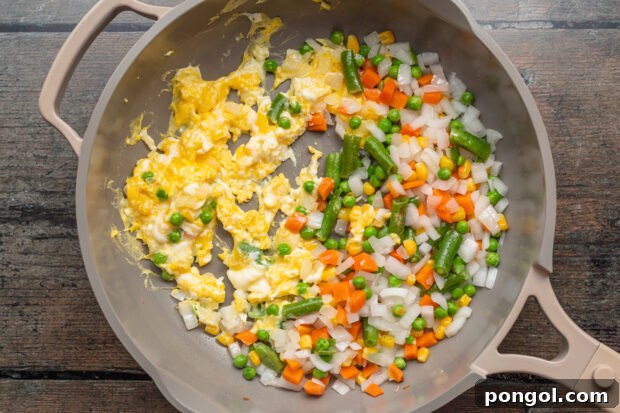
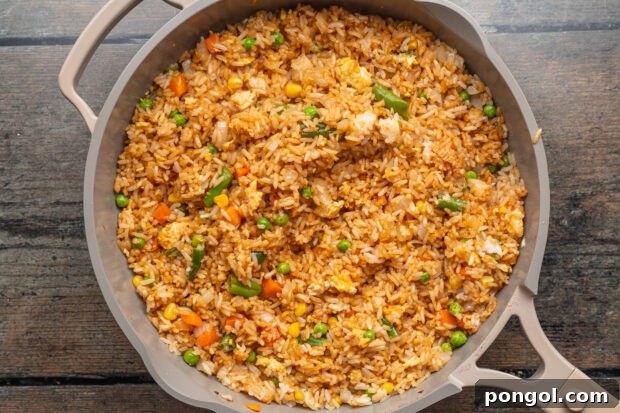
For the Hibachi Shrimp (Made Simultaneously with Vegetables)
-
Return the same large skillet (or wok) you used for the fried rice to medium-high heat. Add the sesame oil and avocado oil. Allow the oils to heat up until they are hot and shimmering, indicating they are ready for cooking.
-
Once the oil is hot, add the peeled and deveined shrimp to the skillet. Immediately follow with the soy sauce (or coconut aminos), butter (or ghee), fresh lemon juice, a pinch of salt, and a generous crack of black pepper. Stir gently to ensure all the shrimp are coated with the delicious seasonings. Cook for approximately 5 minutes, stirring occasionally, until the shrimp turn opaque pink, are slightly curled, and fully cooked through. Be careful not to overcook, as shrimp cooks very quickly and can become tough.
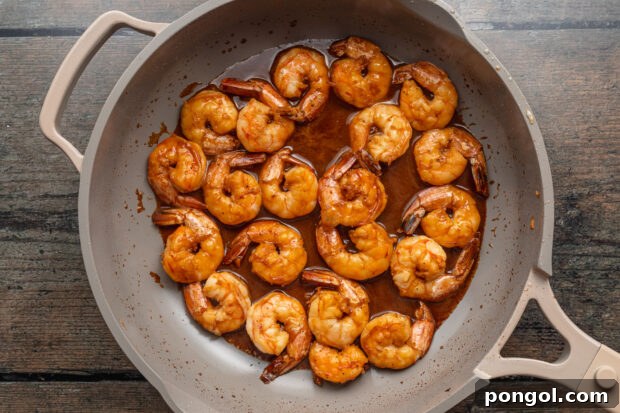
For the Hibachi Vegetables (Made Simultaneously with Shrimp)
-
While your shrimp is cooking in the first skillet, heat a second large skillet or wok over medium-high heat. Just as before, when the skillet is hot, add the sesame oil and avocado oil, allowing them to become hot and shimmering. Working simultaneously will help bring your whole hibachi meal together quickly.
-
Once the oils are hot and glistening, add the prepped zucchini, white onion, and baby bella mushrooms to the skillet. Add the butter (or ghee), soy sauce (or coconut aminos), salt, and pepper. Stir the vegetables thoroughly to incorporate all the seasonings. Sauté the vegetables for 6 to 8 minutes, or until they are tender-crisp and have a slight char, developing that characteristic hibachi flavor.
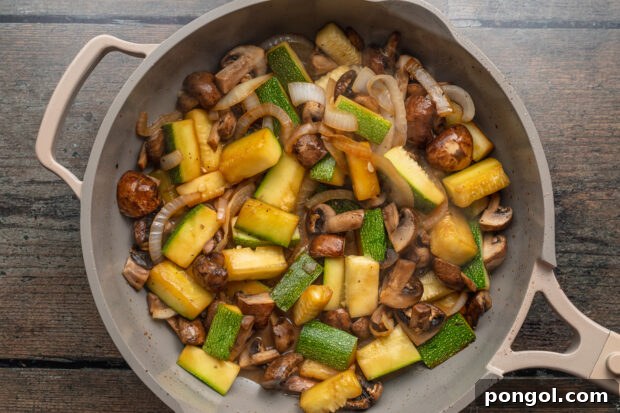
For the Mustard Sauce
-
Combine the sesame seeds (toasted, if desired), ground mustard, honey, soy sauce (or coconut aminos), half and half, hot water, and minced garlic in a standard blender. Blend all the ingredients until they are completely smooth and well combined, forming a creamy, tangy sauce. Once blended, transfer the sauce to individual ramekins or small bowls, ready for dipping.
To Serve
-
Once all components are prepared, evenly divide the fried rice, hibachi shrimp, and sautéed vegetables among 4 to 6 serving plates. Place a small bowl of the tangy mustard sauce on each plate for dipping. Garnish with additional sesame seeds, if desired, for an extra touch of flavor and visual appeal. Serve your spectacular homemade hibachi dinner immediately and enjoy the restaurant-quality flavors you created right in your own kitchen!
- Rice for Perfection: For the absolute best fried rice with individual, perfectly crisp grains, always use leftover or pre-cooked rice. Cooking your rice a day in advance and letting it cool in the refrigerator helps it dry out, which is crucial for achieving that authentic fried rice texture. If you use freshly cooked rice, it tends to be too moist and can become sticky and clumpy.
- Toasted Sesame Seeds: While optional, lightly toasting the sesame seeds for the mustard sauce can make a significant difference. A quick toast in a dry skillet over medium heat until they are fragrant and slightly golden will bring out a deeper, nuttier flavor that enhances the sauce’s complexity. Just be careful not to burn them!
- Make Ahead Sauce: The tangy mustard sauce is a fantastic make-ahead component! You can prepare it up to 3 days in advance. Simply store it in an airtight container in the refrigerator, and give it a good stir before serving to ensure all the flavors are perfectly combined. This helps streamline your meal prep on cooking day.
Approximate Information for One Serving
Serving Size:
1
serving of shrimp with fried rice, veggies, and mustard sauce
Calories:
534
cal
Protein:
24
g
Fat:
29
g
Saturated Fat:
11
g
Trans Fat:
0.5
g
Cholesterol:
190
mg
Sodium:
2228
mg
Potassium:
713
mg
Total Carbs:
46
g
Fiber:
4
g
Sugar:
7
g
Net Carbs:
42
g
Vitamin A:
2161
IU
Vitamin C:
17
mg
Calcium:
138
mg
Iron:
3
mg
Nutrition Disclaimers
Number of total servings shown is approximate. Actual number of servings will depend on your preferred portion sizes.
Nutritional values shown are general guidelines and reflect information for 1 serving using the ingredients listed, not including any optional ingredients. Actual macros may vary slightly depending on specific brands and types of ingredients used.
To determine the weight of one serving, prepare the recipe as instructed. Weigh the finished recipe, then divide the weight of the finished recipe (not including the weight of the container the food is in) by the desired number of servings. Result will be the weight of one serving.
Did You Make This Recipe? We’d Love to Hear From You!
If you tried this delicious homemade hibachi shrimp, fried rice, and vegetable recipe, we’d be thrilled to see your culinary creations! Tag @40aprons on Instagram and be sure to leave a glowing review and share your thoughts on the blog post. Your feedback helps our community of home cooks, and we love celebrating your kitchen triumphs!
Tag @40Aprons on Instagram