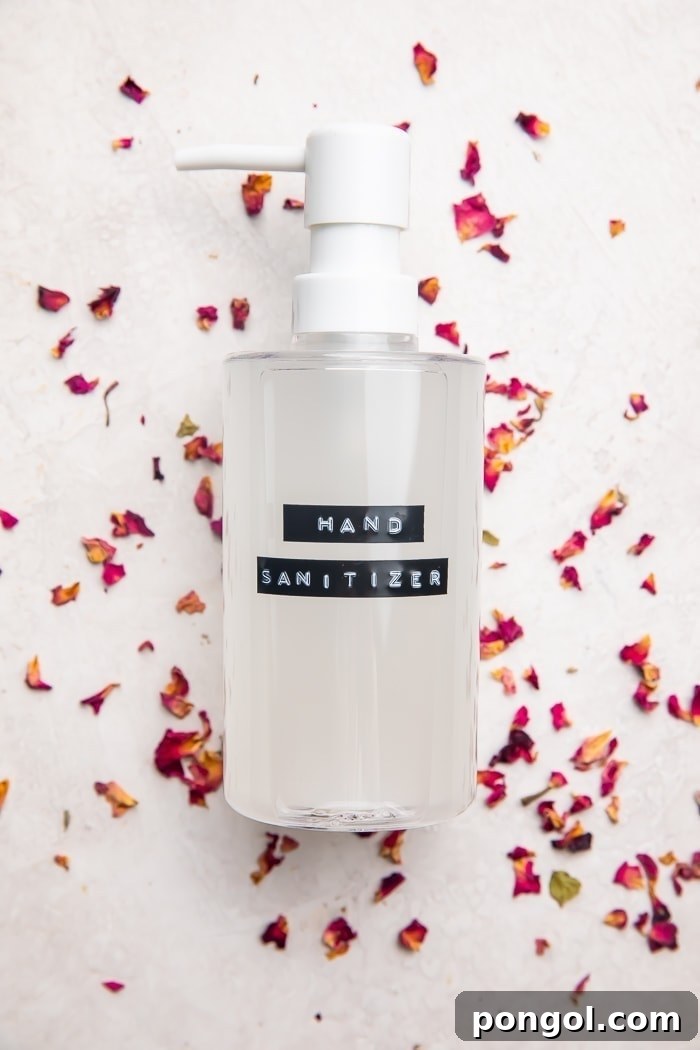
In a world where germ prevention is paramount, knowing how to create your own effective hand sanitizer offers both peace of mind and significant savings. This comprehensive guide will walk you through crafting a powerful DIY hand sanitizer using simple, accessible ingredients. Not only is this homemade solution incredibly cost-effective, often costing around just $1 per 12 ounces, but it also allows for personalization with your favorite essential oils, transforming a functional product into a sensory experience.
Important Health & Safety Disclaimer: While this DIY hand sanitizer utilizes high-concentration alcohol to combat many surface germs, it is crucial to remember that washing your hands thoroughly for at least 20 seconds with soap and water remains the gold standard for preventing germ spread. Hand sanitizer serves as an excellent alternative when soap and water are unavailable, but it is not a substitute for proper handwashing and will not eliminate all types of germs. For efficacy, your homemade hand sanitizer must contain at least 60% alcohol, preferably 70% or higher. We are not medical professionals, chemists, or pharmacists; this information is for educational purposes only and should not be considered medical advice. Use this recipe at your own risk. Always consult official health guidelines from organizations like the CDC for the most accurate and up-to-date recommendations.
The overwhelming positive response to my DIY hand sanitizer recipe on Instagram motivated me to share this official, detailed guide on the blog. This comes shortly after sharing my DIY Disinfectant Spray recipe, which offers a budget-friendly, effective alternative to commercial sprays like Lysol, featuring pronounceable ingredients and the added benefit of essential oils. Don’t let the natural additions fool you; this hand sanitizer is formulated with powerful, high-proof alcohol to effectively combat germs, ensuring robust protection without harsh chemical scents.
Why Choose to Make Your Own Hand Sanitizer?
Crafting your hand sanitizer offers numerous advantages, blending practicality with personalization. Beyond the immediate satisfaction of a DIY project, there are compelling reasons to opt for a homemade solution:
- Unquestionably Effective: Our formulation achieves an alcohol concentration of approximately 85%, combined with hydrogen peroxide, distilled water, and select essential oils known for their antimicrobial properties. Each ingredient plays a vital role, working in synergy to create a potent germ-fighting solution.
- Remarkably Economical: Forget expensive store-bought options. This recipe allows you to produce approximately 12 ounces of high-quality hand sanitizer for around $1, offering substantial savings over time, especially with frequent use.
- Simple, Transparent Ingredients: This DIY hand sanitizer is composed of readily available, straightforward ingredients: high-proof isopropyl alcohol, distilled water, aloe vera gel, hydrogen peroxide, and essential oils. You’ll know exactly what you’re putting on your skin.
- Fully Customizable Scent: One of the most enjoyable aspects is the freedom to choose your essential oils. Whether you prefer invigorating citrus, calming lavender, or potent immune-boosting blends, you can tailor the scent to your liking. However, remember that while essential oils offer pleasant aromas and potential benefits, they are not a substitute for the high alcohol content required for germ efficacy. The alcohol percentage must remain at least 60%, ideally stronger, to be effective.
While this formulation may not possess the thick, “jelly-like” consistency of some commercial hand sanitizers due to its high alcohol content, distilled water, and hydrogen peroxide, it delivers a surprisingly luxurious and quick-drying feel upon application.
When to Reach for Hand Sanitizer: Adhering to CDC Guidelines
The Centers for Disease Control and Prevention (CDC) consistently emphasizes that washing hands with soap and water is superior for eliminating all types of germs, particularly when hands are visibly dirty or greasy, or after using the restroom. However, we all encounter situations where traditional handwashing facilities are simply unavailable. Think about grocery shopping carts, public transportation, meeting rooms, or during travel—it’s in these moments that an effective hand sanitizer becomes an invaluable tool for reducing microbes on the skin.
Hand sanitizers are particularly useful for reducing bacterial counts, but it’s important to note they are not effective against all types of germs, such as Cryptosporidium, Norovirus, or Clostridium difficile (C. diff). For more detailed information on the appropriate use of hand sanitizer, including specific scenarios and limitations, always consult the CDC’s comprehensive guidelines.
Essential Ingredients for Your Homemade Hand Sanitizer
Each component in this DIY formula is carefully selected for its role in creating a potent, yet skin-friendly, germ-fighting product. Here’s a closer look at the key ingredients:
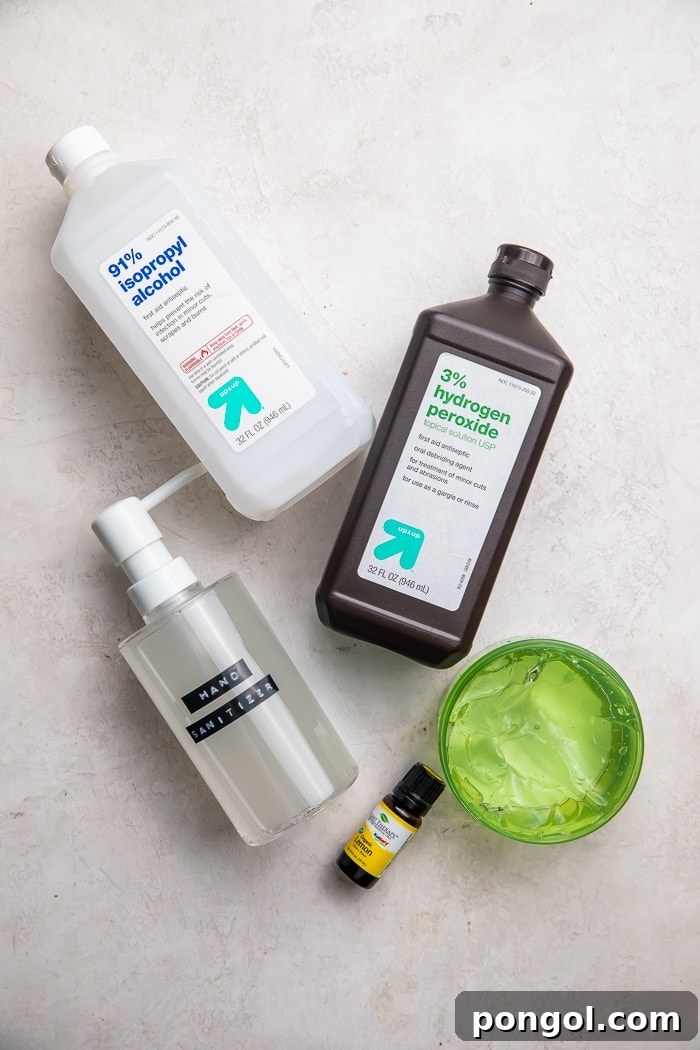
- High-Proof Alcohol: The primary germ-killing agent. We recommend 91% (or higher) isopropyl alcohol (rubbing alcohol) or 95% (or higher) ethanol (like Everclear). The high concentration is critical for effectiveness.
- Distilled Water: Paradoxically, a small amount of water enhances alcohol’s germ-killing properties by facilitating protein denaturation. It also helps achieve the ideal concentration and prevents excessive skin dryness.
- Aloe Vera Gel: This vital ingredient combats the drying effects of alcohol, moisturizing and soothing your hands to prevent cracking and irritation from frequent use.
- Hydrogen Peroxide: Included in a small concentration, hydrogen peroxide helps inactivate bacterial spores and other contaminants that might be present in the ingredients or containers, further safeguarding the efficacy and safety of your sanitizer.
- Essential Oils: Primarily for fragrance and their perceived antiviral/antimicrobial properties, these oils add a customizable and pleasant aroma.
Isopropyl Alcohol vs. Ethanol: Which to Choose?
When it comes to selecting your high-proof alcohol, you have two primary options: isopropyl alcohol or ethanol. Both are effective at killing germs, but they have distinct characteristics and uses.
- Ethanol (Ethyl Alcohol): This is the alcohol found in alcoholic beverages (like Everclear, high-proof vodka). It is generally considered safe for consumption, but in high concentrations, it is also an effective disinfectant. Some research suggests ethanol may be particularly effective against viruses. In my DIY disinfectant spray, I often use ethanol.
- Isopropyl Alcohol (Rubbing Alcohol): Commonly found in pharmacies and grocery stores, isopropyl alcohol is designed for topical use. It’s the alcohol typically used in medical settings for sanitizing skin before injections and is a standard ingredient in commercial hand sanitizers. Research indicates isopropyl alcohol is particularly potent against bacteria.
Ultimately, the choice depends on your preference and availability. Both are excellent germicides when used at the correct concentration. For an all-purpose DIY hand sanitizer, isopropyl alcohol is often easier to source and is widely recognized for topical safety. Interestingly, according to a WHO-based calculator, if you use 95% ethanol (180 proof Everclear), you generally won’t need to significantly alter the proportions of the other ingredients compared to using 91% isopropyl alcohol.
The Surprising Role of Water
While it might seem counterintuitive to add water to an alcohol-based sanitizer, it’s a crucial component for optimal efficacy. As some research indicates, “absolute ethyl alcohol, a dehydrating agent, is less bactericidal than mixtures of alcohol and water because proteins are denatured more quickly in the presence of water.” This means that a small amount of water actually helps the alcohol to penetrate germ cell walls more effectively, leading to a more efficient kill. For this reason, just as in our DIY Disinfectant Spray, we incorporate a precise amount of distilled water into our hand sanitizer recipe, alongside aloe vera gel for skin moisture, a touch of hydrogen peroxide, and essential oils for fragrance and added benefits.
Aloe Vera Gel: Your Skin’s Best Friend
In a recipe dominated by germ-killing agents, aloe vera gel stands out as the unsung hero for your skin. Its primary purpose is to counteract the harsh, drying effects that high-concentration alcohol can have on your hands. Without aloe vera, regularly using an alcohol-water-hydrogen peroxide-essential oil mixture would likely lead to dry, cracked, and irritated skin. Aloe vera, a natural moisturizer and skin soother, ensures that your hands remain soft and hydrated, even with frequent sanitization, making the experience much more pleasant and sustainable for daily use.
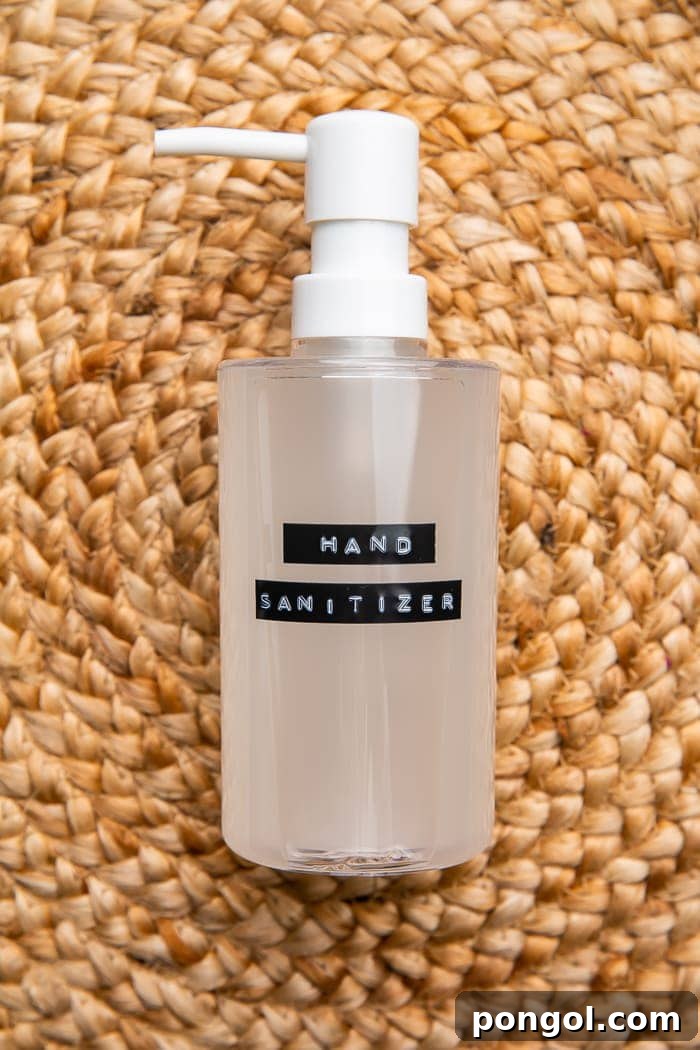
Essential Oils: Beyond Just Scent
Integrating essential oils into your homemade hand sanitizer serves a dual purpose: enhancing the user experience and potentially boosting the product’s germ-fighting capabilities. They help mask the strong alcohol smell, making sanitization more pleasant, and many essential oils are recognized for their inherent antiviral, antibacterial, or antifungal properties.
While I’m not an “oily” guru, I appreciate the power of pure, organic essential oils. I often source mine from trusted online retailers like Amazon, selecting varieties known for their benefits in antiviral or skincare applications. When choosing essential oils, always opt for high-quality, pure grades and be mindful of skin sensitivities.
Here’s a list of essential oils often favored for their potential antiviral or antimicrobial properties, or simply for their delightful fragrance:
- Tea Tree Oil (Melaleuca alternifolia): Widely studied for its broad-spectrum antimicrobial activity.
- Eucalyptus Oil (Eucalyptus globulus): Known for respiratory benefits and powerful antiseptic qualities.
- Thyme Oil (Thymus vulgaris): A potent antimicrobial agent, often used in cleaning.
- Rosemary Oil (Rosmarinus officinalis): Offers antiseptic and invigorating properties.
- Cinnamon Oil (Cinnamomum zeylanicum): Strong antimicrobial properties, but use sparingly due to potential skin sensitivity.
- Clove Oil (Syzygium aromaticum): Another powerful antimicrobial, also requires careful dilution.
- Orange Oil (Citrus sinensis): Uplifting scent with some antimicrobial activity.
- Chamomile Oil (Matricaria chamomilla): Soothing and anti-inflammatory, good for sensitive skin.
- Lemon Oil (Citrus limon): Refreshing scent, antiseptic properties, and has been studied for its stress-reducing effects.
- Peppermint Oil (Mentha piperita): Invigorating and has some antiseptic qualities.
- Lavender Oil (Lavandula angustifolia): Calming scent, known for its antiseptic and healing properties.
It’s worth noting that tea tree, eucalyptus, and thyme oils have indeed been subjects of studies concerning their antiviral properties, making them excellent choices for disinfectant blends. Similarly, clove, orange, and rosemary, along with cinnamon, are also recognized for their potential antiviral benefits. Personally, I often gravitate towards lemon and a touch of tea tree or eucalyptus in my hand sanitizer for their incredibly fresh aroma. Beyond the delightful scent, a study even suggested lemon oil was more effective at reducing stress than lavender.
Hydrogen Peroxide: A Silent Guardian
You might wonder why hydrogen peroxide is included in this hand sanitizer recipe, especially since it’s in such a small quantity. The reason is rooted in its ability to provide an extra layer of protection against certain pathogens. Research has demonstrated that some viruses “can be efficiently inactivated by surface disinfection procedures with 62–71% ethanol, 0.5% hydrogen peroxide or 0.1% sodium hypochlorite within 1 minute.”
In our recipe, hydrogen peroxide acts as an antiseptic, primarily helping to inactivate bacterial spores and other potential contaminants that might be present in the ingredients or the bottles you use. While its concentration here is low, it contributes to the overall safety and broad-spectrum efficacy of your homemade hand sanitizer, mirroring its role in my DIY Lysol Spray recipe.
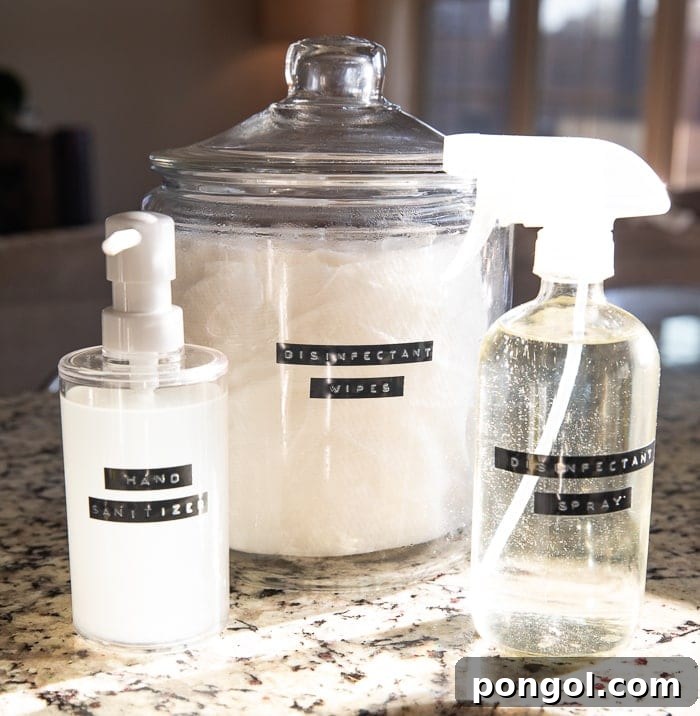
Ensuring Efficacy: The Critical Alcohol Concentration
This is arguably the most crucial aspect of making your DIY hand sanitizer effective: you must ensure the final alcohol concentration is at least 60%, and ideally 70% or higher. Falling below this threshold will render your sanitizer ineffective at killing germs, making your efforts futile. Calculating the precise final alcohol percentage can be more complex than simply mixing ingredients, especially when starting with different initial alcohol concentrations.
To assist with this, I leveraged the expertise of a mathematician friend who provided a clear, detailed explanation of the necessary calculations. I highly recommend you review his insightful guide to understand how to achieve the desired final alcohol percentage (his basic calculation aims for about 75% final alcohol percentage for a 16 oz batch). For those who prefer an automated approach, an excellent online calculator based on the World Health Organization (WHO) recipe for alcohol-based hand rub solution is available:
DIY Hand Sanitizer / Disinfectant Recipes Calculator
While our recipe might use slightly different ingredient ratios than the WHO standard, this calculator is an invaluable tool for accurately determining how much water (or other diluents) to use, especially if you’re working with different types or concentrations of alcohol. Always prioritize achieving that crucial 60-70%+ alcohol content.
The Importance of Curing Time: Let It Sit
After you’ve mixed your ingredients and carefully poured your homemade hand sanitizer into a 12-ounce pump bottle or several smaller squirt bottles, there’s one final, yet critical, step: patience. It is highly recommended to let your newly made hand sanitizer rest for at least 72 hours before use. This “curing” period serves a vital purpose: it allows the hydrogen peroxide within the mixture to effectively kill any potential bacterial spores that might be present in your mixing container or storage bottles, ensuring the product is as sterile and safe as possible before it touches your hands.
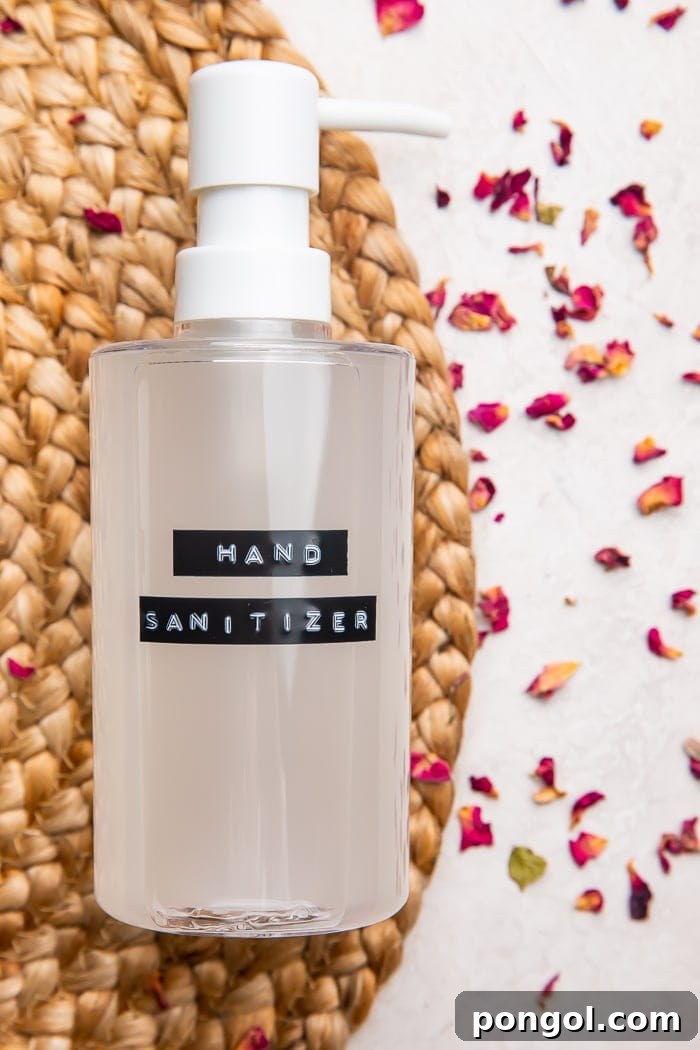
Final Reminders for Safe and Effective Use
As emphasized throughout this guide, it’s paramount to approach DIY hand sanitizer creation with caution and adherence to scientific guidelines. Remember, I am not a chemist or medical professional; therefore, when in doubt, always err on the side of caution and strength when it comes to alcohol concentration. To confidently verify the efficacy of your homemade hand sanitizer—as well as other DIY cleaning solutions like disinfectant spray or wipes—I highly recommend investing in a 0-200 proof alcohol hydrometer. This simple tool allows you to accurately test the alcohol percentage of your solutions.
Once more, a critical takeaway: your homemade hand sanitizer MUST contain at least 60% alcohol, and preferably 70% or more, to be truly effective against germs. Do not compromise on this percentage. Utilize the provided online calculator as a reliable resource to assist you in determining the correct alcohol content. Always know the precise alcohol percentage and type (e.g., 91% isopropyl alcohol or 95% ethyl alcohol like Everclear) of your starting ingredients before mixing. Stay informed, stay safe, and practice responsible hygiene.
Absolutely! For a powerful and cost-effective cleaning solution, explore our detailed DIY disinfectant spray recipe, which works similarly to Lysol but with simpler, customizable ingredients.
While essential oils are highly recommended for their pleasant scent and potential additional antimicrobial properties, they are not strictly essential for the hand sanitizer’s primary germ-killing function (which comes from the alcohol). You can choose to omit them if you prefer an unscented version or don’t have any on hand. Some people also use a small amount of lemon juice for scent, though its antimicrobial contribution is minimal compared to alcohol.
When formulated correctly with the recommended alcohol concentration (60-70%+), homemade hand sanitizer can be just as effective as many commercial products. The primary advantages of DIY are cost savings, control over ingredients, and customizable scents. However, store-bought sanitizers are often lab-tested and may contain specific gelling agents or emollients that provide a different texture or feel.
For best results, use opaque or amber-colored plastic or glass bottles to protect the ingredients (especially hydrogen peroxide) from light degradation. Pump bottles are convenient for dispensing, while smaller squirt bottles are ideal for travel or personal use. Ensure the bottles are clean and dry before filling.
Print Recipe
Pin Recipe
Average Rating: 5 from 2 votes
DIY Hand Sanitizer Recipe: The Ultimate Homemade Solution
This DIY hand sanitizer is incredibly easy and affordable to make, offering an effective solution for killing many surface germs when traditional soap and water washing is not available. Crafted with simple, skin-moisturizing ingredients and customizable with essential oils, it’s a practical addition to your hygiene routine.
Keyword: antiviral, homemade, hand sanitizer, DIY, essential oils, isopropyl alcohol, ethanol
Cook Time: 1 minute
Total Time: 1 minute (plus 72 hours rest)
Servings: 12 ounces
Author: Cheryl Malik
Estimated Cost: $1
Ingredients
- 10 ounces 91% isopropyl alcohol (rubbing alcohol) or 95% ethanol (Everclear) (See Note for guidance on other alcohol types/concentrations)
- 2 teaspoons distilled water
- 1 teaspoon hydrogen peroxide
- ¼ cup pure aloe vera gel
- 30-40 drops essential oils as desired (Refer to Notes for recommended essential oils with potential benefits)
- Pump or squirt bottles (12-ounce pump bottle or multiple smaller squirt bottles)
Instructions
-
In a medium-sized bowl, carefully combine all the measured ingredients: high-proof alcohol, distilled water, hydrogen peroxide, pure aloe vera gel, and your chosen essential oils. Use a whisk to mix thoroughly until all ingredients are well combined and the mixture is uniform.
-
Once mixed, carefully pour the hand sanitizer into your chosen storage containers—either a single 12-ounce pump bottle or distribute it among multiple smaller squirt bottles for convenience.
-
For optimal safety and efficacy, allow the mixture to rest undisturbed for a minimum of 72 hours. This crucial curing period helps to destroy any lingering bacterial spores within the container, ensuring your homemade hand sanitizer is fully ready for use.
-
After the resting period, use on your hands whenever soap and water are not readily available. Remember, while effective, soap and water remain the best defense against germs!
Notes for Optimal Results & Safety
Crucial Alcohol Concentration:
It is absolutely imperative that your final hand sanitizer mixture contains at least 60% alcohol to be effective against germs. Preferably, aim for 70% or higher. Using a lower concentration will render your sanitizer ineffective.
For precise calculations, especially if using different alcohol percentages, consult my mathematician friend’s detailed explanation on calculating desired final alcohol percentages. Alternatively, this online calculator, based on the WHO recipe, is a very helpful tool to guide you on appropriate water amounts, ensuring you meet the critical alcohol concentration, typically producing around a 75% alcohol solution.
Essential Oil Selection:
Consider adding these essential oils, many of which are known for their potential antimicrobial properties and pleasant scents:
- Tea Tree
- Eucalyptus
- Thyme
- Rosemary
- Cinnamon (use sparingly, can be irritating)
- Clove (use sparingly, can be irritating)
- Orange
- Chamomile
- Lemon
- Peppermint
- Lavender
Studies have highlighted the antiviral properties of tea tree, eucalyptus, and thyme, making them excellent choices for germ-fighting blends.
General Disclaimer:
We are neither chemists, doctors, nor medical professionals. This recipe is shared as a homemade alternative that we have successfully used ourselves. Always adhere to best practices for germ prevention as recommended by health authorities like the CDC, including diligent hand-washing, proper cough and sneeze etiquette, and seeking professional medical advice when needed. Visit the CDC’s website for comprehensive health information.
Nutrition Information (Approximate)
Net Carbs: 0g (Approximate, as ingredients are not significant sources of carbohydrates)