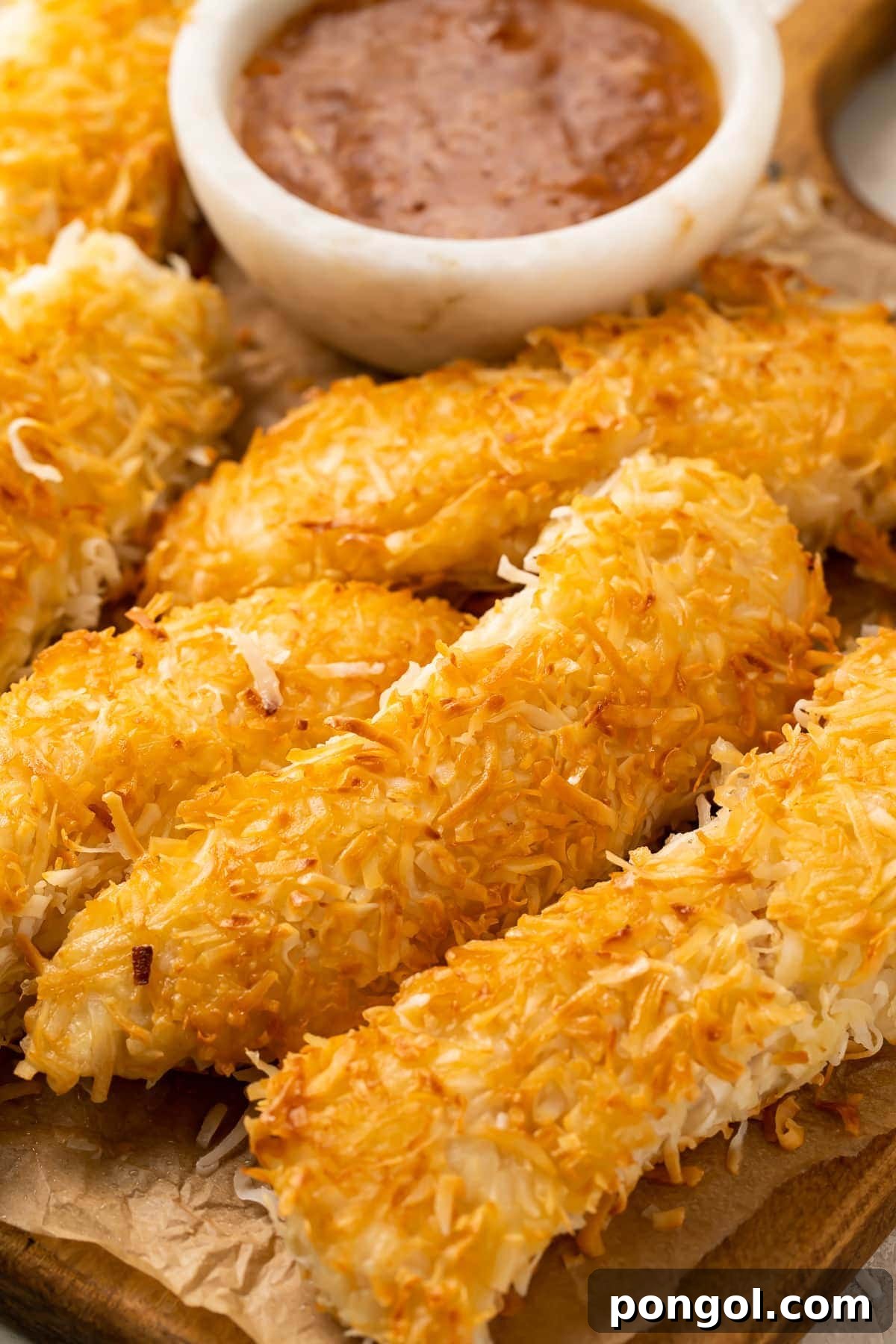
Irresistibly Crispy Coconut Chicken with Zesty Orange-Horseradish Sauce
Prepare your taste buds for an unforgettable culinary journey with our incredibly delicious crispy coconut chicken recipe. This dish transforms ordinary chicken breast strips into a gourmet experience, featuring a light and airy beer batter that ensures tender, juicy interiors. Each strip is then generously coated in flaked coconut and pan-fried to achieve a gloriously golden and crispy exterior. But the magic doesn’t stop there. We pair these irresistible chicken strips with a vibrant, flavor-packed orange marmalade-horseradish sauce, creating a perfect balance of sweet, tangy, and subtly spicy notes. This isn’t just a recipe; it’s a staple in our kitchen, guaranteed to become one of your all-time favorites!
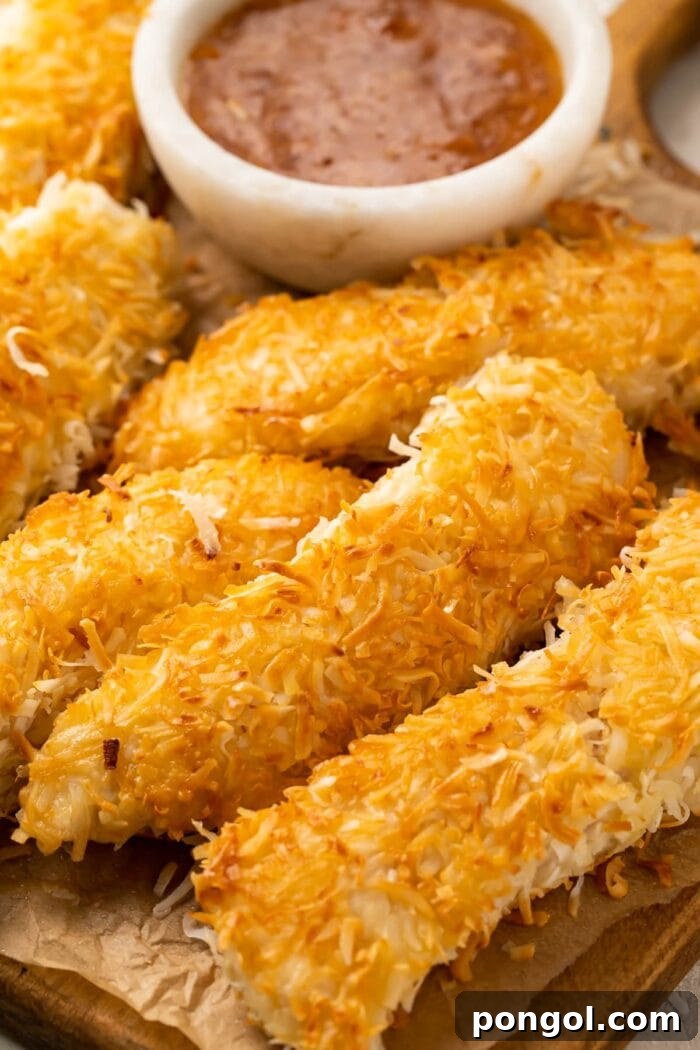
Why This Crispy Coconut Chicken Recipe Is a Must-Try
-
Unforgettable Flavor Fusion
Our beer-battered coconut chicken strips offer an explosion of flavors that will quickly make them your new go-to recipe. The secret lies in the harmonious blend of ingredients: the tropical sweetness and delicate crunch of flaked coconut, the distinct, savory depth imparted by the beer batter, and the bright, tangy kick from the orange-horseradish sauce. Every bite delivers a symphony of tastes that is both exotic and comforting, making this dish truly delightful.
-
Exquisite Crispy Texture, Perfectly Tender Inside
Achieving the perfect texture is paramount, and these coconut chicken strips deliver on all fronts. The ingenious “double breading” method, involving both a seasoned flour base and a generous coating of coconut flakes, creates a phenomenal crust that becomes incredibly crispy when pan-fried. This golden-brown exterior provides a satisfying crunch, while the chicken breast inside remains remarkably tender and juicy, never dry. It’s a textural masterpiece that will impress even the most discerning palates.
-
Surprisingly Simple to Prepare
While the final dish might look like it requires extensive culinary expertise, you’ll be pleasantly surprised by how straightforward these chicken strips are to make. The process is broken down into easy-to-follow steps. Once you establish a rhythm with the dredging and frying, you’ll find yourself efficiently preparing batches of beautifully breaded, crispy chicken. It’s a rewarding cooking experience that doesn’t demand hours in the kitchen.
-
An Excellent Freezer Meal Option
Planning ahead has never been easier with this versatile recipe. These coconut chicken strips are an ideal candidate for meal prepping and freezing. After you’ve dredged the chicken through the flour, batter, and coconut, simply arrange the battered strips on a baking sheet and pop them straight into the freezer. Let them chill for 1-2 hours, or until they are completely frozen solid. Once frozen, transfer them to a freezer-safe sealable bag or an airtight container. They’ll maintain their quality in the freezer for several months, making weeknight meals a breeze! You can also freeze fully-cooked chicken strips; just allow them to cool completely before following the same freezing method.
Essential Ingredients for Your Crispy Coconut Chicken
Crafting this incredible dish relies on a few key ingredients. Here’s a closer look at what you’ll need and some tips for making the best choices:
Flaked Coconut
The star of our crispy coating! You have the flexibility to use either sweetened or unsweetened flaked coconut, depending on your personal preference for sweetness. Sweetened coconut will add a touch more tropical indulgence, while unsweetened will let the savory and spicy notes shine through more. If you prefer a finer texture, shredded coconut can also be used, though flaked coconut typically provides a more pronounced crunch and visual appeal.
Beer for the Batter
The type of beer you choose for your batter significantly influences the final flavor and texture. For a light, crisp batter, pilsners and lagers are popular choices due to their effervescence, which helps keep the batter airy. If you’re looking for a more robust flavor, an amber ale or even a stout can add wonderful complexity. Don’t worry if you prefer to avoid alcohol; you can easily replace the beer with apple cider vinegar or club soda. The carbonation in club soda mimics the bubbles in beer, ensuring a light batter, while apple cider vinegar provides a tangy lift. Be aware that the flavor profile will differ based on your liquid choice.
Chicken Breasts
For convenience and consistent results, boneless, skinless chicken breasts cut into uniform strips are ideal. You can also opt for store-bought, pre-cut chicken tenders to save on prep time. Just ensure they are raw and unbreaded. If you’re using frozen chicken, it’s crucial to thaw it completely before starting the recipe to ensure even cooking and proper batter adhesion.
Mastering the Crispy Coconut Chicken Technique: Chef’s Tips
-
Optimize Coconut Flake Size
For the best coating and crunch, the size of your coconut flakes matters. If your flaked coconut appears quite large, consider giving it a quick pulse in a food processor or high-speed blender for just a few seconds. This helps break down larger pieces, allowing them to adhere more effectively to the chicken. However, be cautious not to over-process them into a fine powder, as this can prevent the desired crispy texture from forming during frying.
-
The Secret to Maximum Crispiness: Pan-Fry and Bake
To achieve the absolute crispiest coconut chicken imaginable, we highly recommend a two-step cooking process: an initial pan-fry followed by a finish in the oven. Pan-frying creates that initial golden-brown crust and locks in moisture, while baking ensures the chicken is cooked through evenly and continues to crisp up the coating without burning. If you prefer not to fry, you can certainly bake the chicken strips from raw, but note that the breading may not reach the same level of ultimate crispiness.
-
Crucial Oil Temperature Management
Proper oil temperature is critical for successful frying. If the oil isn’t hot enough, the breading will absorb too much oil, resulting in a greasy, soggy chicken. Conversely, if the oil is too hot, the coating will burn before the chicken has a chance to cook through. Aim for an oil temperature between 350°F and 375°F (175°C-190°C). The most accurate way to monitor this is with a deep-frying thermometer. If you don’t have one, a simple trick is to dip the handle of a wooden spoon into the hot oil. If steady, gentle bubbles form around the spoon handle, your oil is at the right temperature; violent bubbling means it’s too hot, and no bubbling means it’s not hot enough.
-
The Power of Cold Beer in Your Batter
For a lighter, crispier batter, always use cold beer. The cold temperature helps to minimize gluten development in the flour, resulting in a more tender and less chewy coating. Additionally, the temperature contrast between the cold batter and hot oil contributes to a fantastic crunch. If your batter appears too thick, you can gradually add a little more cold beer until it reaches a consistency that thinly coats the chicken strips. A thinner batter creates a lighter coating, which is ideal for allowing the coconut to shine through, but ensure it’s thick enough for the coconut to adhere properly.
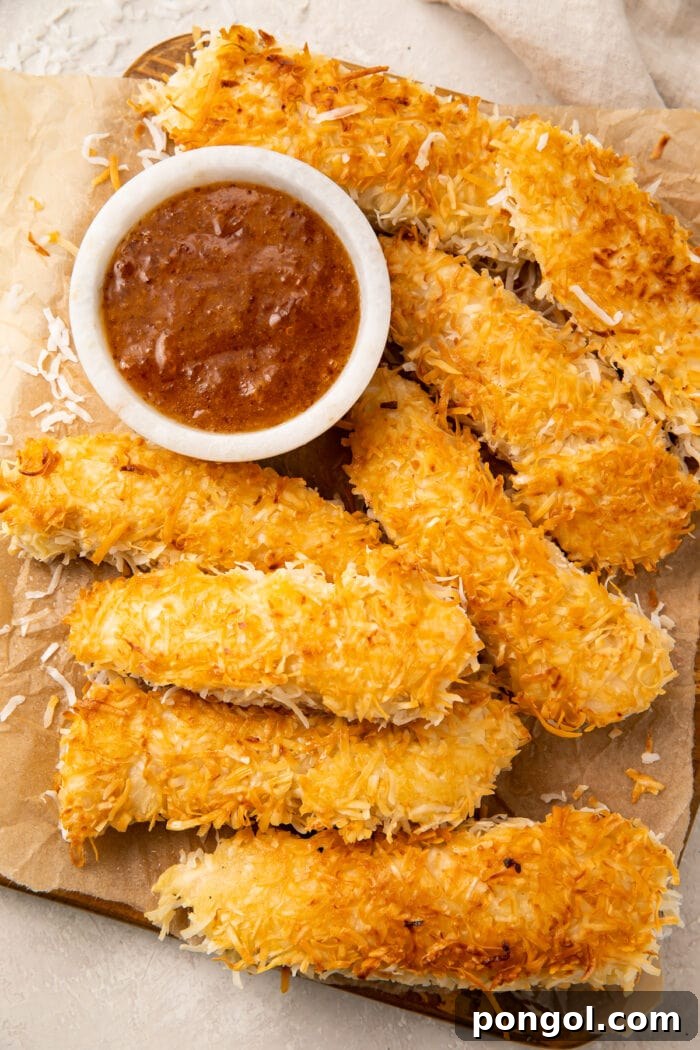
Perfect Pairings and Serving Suggestions
This crispy coconut chicken is fantastic on its own, but it also pairs wonderfully with a variety of sides. Consider serving it with a light green salad, fluffy white rice, or even some roasted vegetables to complete the meal. The orange-horseradish sauce is absolutely essential for dipping, offering a bright contrast to the richness of the chicken. For a casual gathering, these chicken strips make an excellent appetizer or finger food that’s sure to be a crowd-pleaser. Don’t be afraid to experiment with other dipping sauces if you’re looking for variety, but we highly recommend giving our signature sauce a try first!
Explore More Delicious Recipes!
If you loved this recipe, you might enjoy discovering other culinary delights from our collection:
- Creamy Beer Cheese Dip
- Perfectly Crispy Gluten-Free Fried Chicken
- Zesty Texas Caviar (aka Cowboy Caviar)
- Authentic Hawaiian Shoyu Chicken
- Tender Sous Vide Tri Tip with Easy Chimichurri Sauce
- Rich and Creamy Coconut Chicken with Lime
- Southern-Style Cheese Grits (Stone-Ground & Quick Options)
- Flavorful Buffalo Burger with an Easy Burger Sauce

Recipe By: Cheryl Malik
Beer-Battered Coconut Chicken with Orange-Horseradish Sauce
Prep Time: 25 minutes
Cook Time: 20 minutes
Chill Time (For Sauce): 30 minutes
Total Time: 1 hour 15 minutes
This crispy coconut chicken is absolutely delicious. A simple beer batter tenderizes chicken breast strips, then they’re rolled in coconut and pan-fried to crispy perfection. Dipped in an orange marmalade-horseradish sauce that’s loaded with flavor, this is one of our all-time favorite recipes!

Cheryl Malik
Yields: 4 Servings
Equipment
- Oven & stove
- Small bowl (for sauce)
- Medium bowls (3 for breading station)
- Large skillet (for frying)
- Tongs
- Baking sheet
Ingredients
For the Orange-Horseradish Sauce
- ¾ cup orange marmalade
- 1 tablespoon stoneground mustard
- 1 ⅓ teaspoon prepared horseradish
- 1 big pinch salt
For the Coconut Chicken Strips
- 1 large egg
- 1 cup all-purpose flour (divided, see Notes)
- 1 teaspoon salt
- ⅔ cup cold beer of choice
- 1 ½ teaspoons baking powder
- 1 (5-ounce) bag flaked coconut (about 2 ½ cups)
- 1 ½ pounds boneless, skinless chicken breasts (cut into strips)
- Neutral oil for frying
Instructions
For the Orange-Horseradish Sauce
-
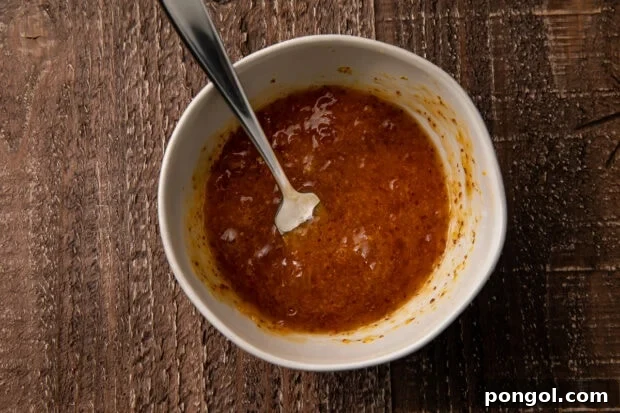
Combine all sauce ingredients in a small bowl and stir until thoroughly mixed. Chill in the refrigerator for at least 30 minutes, or until you are ready to serve.

The tangy orange-horseradish sauce, a perfect accompaniment to the chicken.
For the Coconut Chicken Strips
-
Preheat your oven to 375° Fahrenheit (190°C).
-
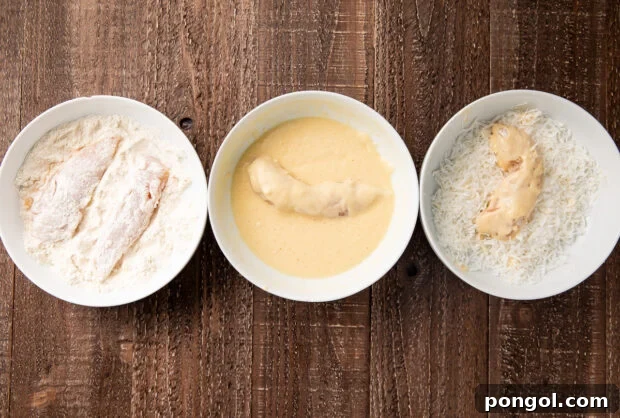
Set up your breading station: In the first medium bowl, place ½ cup of plain all-purpose flour. In the second medium bowl, whisk together the egg, remaining ½ cup flour, 1 teaspoon salt, cold beer, and baking powder to create the batter. In the third medium bowl, place the flaked coconut.
Your organized breading station, ready for action. -
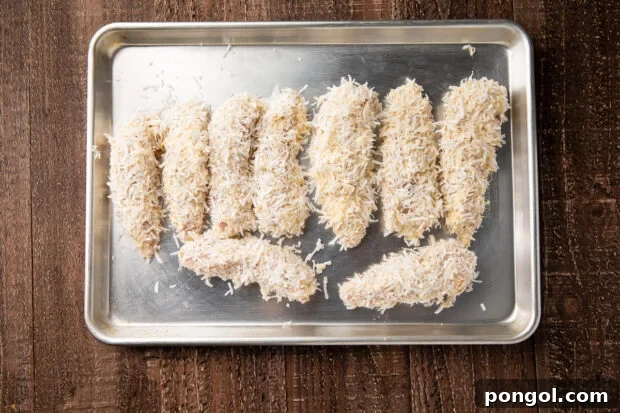
Begin breading the chicken: First, dredge each chicken strip in the plain flour, shaking off any excess. Next, dip the floured chicken strips into the beer batter, holding them over the bowl for a moment to allow any excess batter to drip off. Finally, roll the battered strips generously in the flaked coconut, pressing gently to ensure a good coating. Place the breaded chicken strips on a clean plate or baking sheet and repeat until all chicken strips are coated.
Freshly coated chicken strips, perfectly prepped for frying. -
Heat a layer of neutral oil (enough to cover about half the thickness of the chicken strips) in a large skillet over medium heat. Once the oil is hot (refer to chef’s tips for temperature guidance), carefully add chicken strips to the skillet in batches, making sure not to overcrowd the pan. Overcrowding can lower the oil temperature and lead to soggy chicken.
-
Fry the chicken for about 2 minutes per side, or until the crust turns a beautiful golden brown. The chicken will not be cooked through at this stage. Transfer the pan-fried chicken to a baking sheet. Continue this process until all chicken strips have been pan-fried.
The first stage of cooking, creating that essential crispy crust. -
Place the baking sheet with the pan-fried chicken in the preheated oven. Bake for an additional 7 to 10 minutes, or until the chicken is fully cooked through and reaches an internal temperature of 165°F (74°C). Serve immediately with the chilled orange-horseradish sauce.

Recipe Notes & Variations
- Beer Alternatives: While beer provides a unique flavor, feel free to experiment. For a non-alcoholic option, simply replace the beer in the batter with an equal amount of apple cider vinegar or club soda. Both options will still help create a light and airy batter, though the flavor will be distinct from a beer-based one.
- Gluten-Free Version: To make this recipe gluten-free, substitute the all-purpose flour with an equal amount of your preferred gluten-free all-purpose flour blend. Additionally, ensure you select a certified gluten-free beer for the batter.
- Paleo Adaptation: For a Paleo-friendly version, replace the all-purpose flour with an equal amount of cassava flour. Swap the beer for apple cider vinegar or club soda. For the sauce, you will need to find a compliant orange marmalade or prepare a different Paleo-friendly dipping sauce altogether, as traditional marmalade often contains refined sugars.
This recipe is designed to yield approximately 4 servings of delicious coconut chicken strips and sauce. Please note that the actual number of servings can vary based on your preferred portion sizes.
Nutritional values provided are general guidelines based on the ingredients listed for one serving. Actual macros may vary slightly depending on the specific brands and types of ingredients you use.
To accurately determine the weight of one serving, prepare the recipe as instructed. Once the dish is finished, weigh the total cooked recipe (excluding the weight of the container). Divide this total weight by 4 to find the approximate weight of a single serving.
Approximate Nutrition Information for One Serving
Serving Size: 1 serving of chicken strips with sauce
Calories: 496 cal
Protein: 41 g
Fat: 6 g
Saturated Fat: 2 g
Trans Fat: 1 g
Cholesterol: 155 mg
Sodium: 1138 mg
Potassium: 724 mg
Total Carbs: 66 g
Fiber: 1 g
Sugar: 36 g
Net Carbs: 65 g
Vitamin A: 158 IU
Vitamin C: 5 mg
Calcium: 136 mg
Iron: 3 mg
Nutrition Disclaimers
The number of total servings shown is approximate. Actual number of servings will depend on your preferred portion sizes.
Nutritional values shown are general guidelines and reflect information for 1 serving using the ingredients listed, not including any optional ingredients. Actual macros may vary slightly depending on specific brands and types of ingredients used.
To determine the weight of one serving, prepare the recipe as instructed. Weigh the finished recipe, then divide the weight of the finished recipe (not including the weight of the container the food is in) by the desired number of servings. The result will be the weight of one serving.