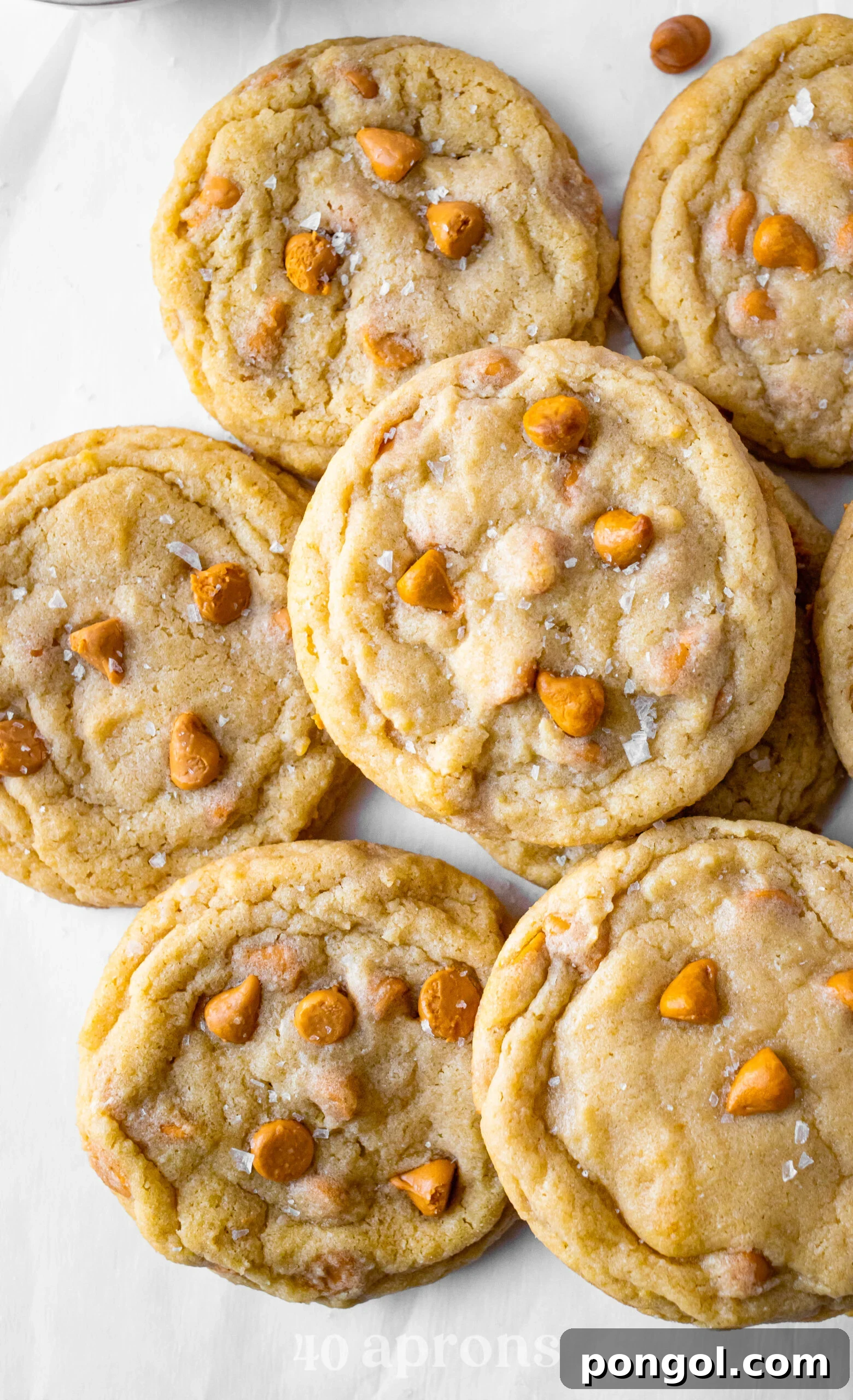
The Best Soft & Chewy Butterscotch Cookies: Your Ultimate Foolproof Recipe
Prepare to fall in love with these unbelievably soft, wonderfully chewy, and intensely rich butterscotch cookies. This foolproof recipe guarantees a perfect batch every single time, loaded with warm brown sugar notes, sweet vanilla, and irresistible caramelly butterscotch chips. Whether you bake them fresh for an instant treat or prepare the dough in advance for cookies-on-demand, these classic delights are destined to become a beloved staple in your kitchen. They’re simply a dream, perfect for any season, bringing comfort and joy with every bite.
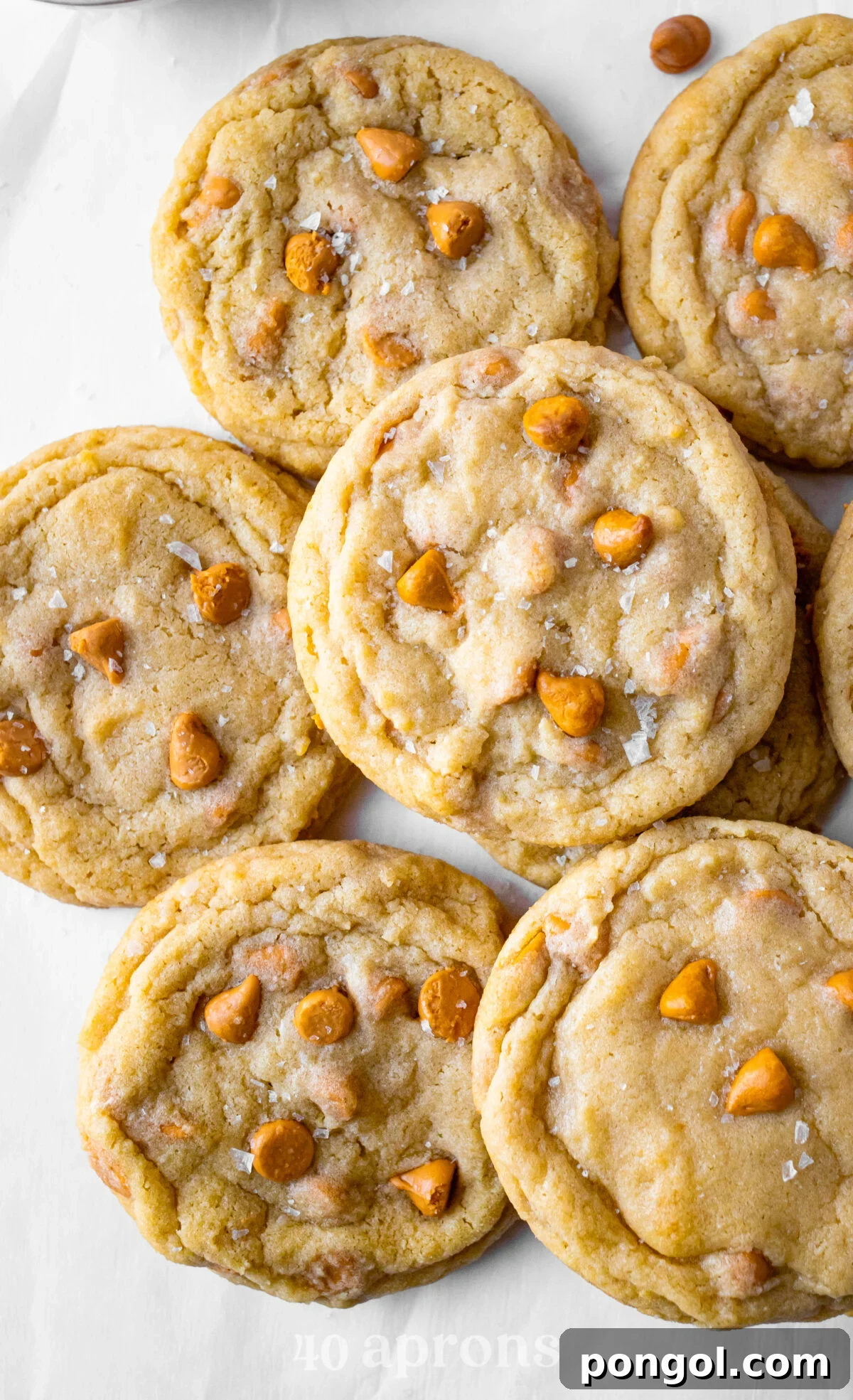
Why These Butterscotch Cookies Are Irresistible
Move over, chocolate chip cookies – there’s a new favorite in town, and it’s these incredible butterscotch delights. Here’s what makes this recipe stand out and why you’ll be making them again and again:
- Unforgettable Flavor Profile: Each bite delivers a harmonious blend of warm, rich brown sugar, hints of sweet vanilla, and the distinct, deeply satisfying caramelly goodness of butterscotch. They offer a comforting warmth that makes them particularly appealing during the cooler months, but their delightful taste is equally welcome year-round. These cookies are so exceptionally good, they might just earn you extra goodwill – perhaps even from Santa himself, should you leave a plate out on Christmas Eve!
- Effortlessly Simple & Foolproof: Don’t let the detailed recipe instructions intimidate you; this is genuinely a very straightforward baking process. We’ve meticulously broken down every step into clear, easy-to-follow instructions designed to guarantee perfectly soft and chewy cookies with unwavering confidence, even for novice bakers. This recipe is engineered for consistent success, ensuring your cookies turn out beautifully every single time.
- Fantastic for Make-Ahead Baking: The inherent beauty of these butterscotch cookies lies in their incredible versatility and convenience. While absolutely divine when enjoyed warm, fresh from the oven, they maintain their remarkable texture and full flavor for days afterward. Baked butterscotch cookies can be stored in an airtight container at room temperature for up to two weeks. For even greater convenience, you can prepare the dough up to 36 hours in advance, keeping it covered and refrigerated until you’re ready to bake.
- Ultimate Convenience with Frozen Dough: For the ultimate make-ahead solution, this cookie dough freezes exceptionally well. Simply prepare the dough as written, scoop it into individual balls, and freeze them on a baking sheet until firm. Once solid, transfer them to a freezer-safe bag or airtight container. These ready-to-bake butterscotch cookie dough balls can be stored in the freezer for up to three months! The best part? You don’t even need to thaw them before baking, allowing you to enjoy warm, fresh cookies on demand whenever a craving strikes.
Expert Tips for Baking Success
Achieving bakery-quality butterscotch cookies at home is easier than you think with these professional tips and tricks:
- Mastering the Chewiness: The delightful interplay of brown sugar and white sugar is precisely what grants these cookies their signature, unbelievably chewy texture. For an even deeper, more complex flavor and an amplified chewiness, we highly recommend opting for dark brown sugar instead of light. The higher molasses content in dark brown sugar not only adds richness but also contributes to a moister, more tender crumb.
- The Critical Role of Chilling Dough: Chilled cookie dough is an essential step for achieving superior texture and preventing excessive spreading during baking. Cold dough holds its shape significantly better in the oven, resulting in thicker, softer, and more appealing cookies. If, however, your preference leans towards a thinner, flatter cookie, you have the option to skip the chilling process entirely or allow the chilled dough to come closer to room temperature before placing it in the oven. A word of caution: do not let the dough get too warm; if the butter becomes liquid or melts, the cookies will likely spread too much and could end up greasy.
- Perfect Creaming Technique: When you combine butter and sugars, the goal is to create a light and fluffy mixture. This process, known as creaming, incorporates crucial air into the mixture, which is vital for the cookies’ tender, melt-in-your-mouth texture. It’s important to avoid overmixing at this stage, as too much agitation can develop the gluten in the flour excessively, leading to tough cookies. Additionally, overmixing can cause the butter to become overly warm and greasy. Stop mixing once the mixture is just combined, light, and fluffy.
- Accurate Flour Measurement: For consistent and successful baking results, always measure your all-purpose flour accurately using the spoon and level method. Scooping flour directly from the bag can compact it significantly, leading to an excess of flour in your dough, which can result in dry, dense, and crumbly cookies. Instead, gently spoon the flour into your measuring cup until it overflows, then level it off with the back of a knife or a straight edge.
- The Art of Not Overbaking: One of the most important secrets to baking perfectly soft and chewy cookies is knowing precisely when to remove them from the oven. The cookies are ready when their edges are just lightly golden brown, but their centers still appear slightly soft and perhaps a touch underdone. Trust the process; the cookies will continue to bake and firm up subtly as they cool on the hot baking sheet. Overbaking is the quickest and most common culprit for producing dry, hard, and less enjoyable cookies.
Creative Variations to Elevate Your Butterscotch Cookies
While these butterscotch cookies are absolutely divine on their own, a few simple additions can transform them into an even more extraordinary treat. Don’t be afraid to experiment and customize them to your liking!
- White Chocolate Bliss: For an additional layer of sweetness and a delightful creamy contrast, consider folding in ½ cup of high-quality white chocolate chips along with the butterscotch chips. The creamy white chocolate perfectly complements the caramelly notes of the butterscotch, creating a harmonious and utterly irresistible flavor profile.
- Extra Butterscotch Crunch: To truly enhance the butterscotch experience, try this clever trick: before placing your scooped cookie dough balls onto the baking sheet, gently roll them in an extra ½ cup of butterscotch chips. Make sure the chips adhere well to the outside of the dough balls. As the dough slightly spreads during baking, you’ll achieve beautifully textured, gourmet-looking cookies, each bite bursting with intense butterscotch flavor.
- Salty-Sweet Perfection: For a sophisticated twist that elevates the flavor profile, immediately after removing the cookies from the oven, sprinkle a delicate pinch of flake salt or coarse sea salt over their warm surfaces. The subtle saltiness brilliantly enhances the rich sweetness of the butterscotch, providing a delightful and addictive salty-sweet contrast. Remember, a little goes a long way here – the goal is a hint of salt, not an overpowering flavor.
- Nutty Indulgence: Introduce a pleasing textural contrast and a complementary flavor by folding in ½ cup of finely chopped pecans or walnuts along with the butterscotch chips. For an even deeper, toastier flavor, lightly toast the nuts in a dry pan before adding them to the dough.
- Spiced Comfort: Infuse your cookies with a touch of warmth and aromatic spice by adding ¼ teaspoon of ground cinnamon or a pinch of nutmeg to your dry ingredients. These classic spices pair wonderfully with the rich, sweet notes of butterscotch, making these cookies even more comforting, especially during the autumn and winter months.
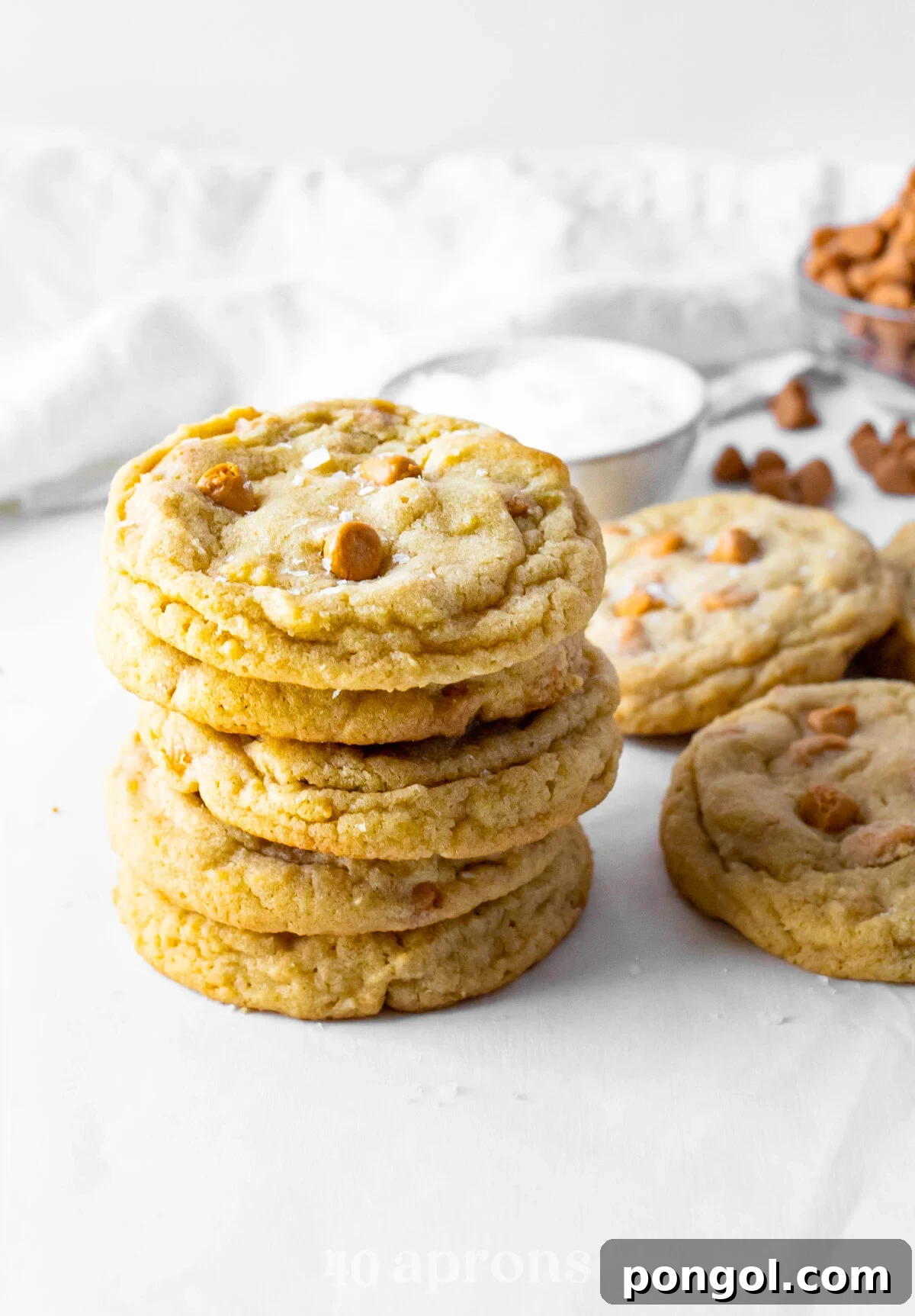
Soft & Chewy Butterscotch Cookies Recipe
Soft & Chewy Butterscotch Cookies
These butterscotch cookies are incredibly soft, deliciously chewy, and rich with hints of vanilla and brown sugar. A truly irresistible treat that’s easy to make!
Recipe By: Cheryl Malik
Prep Time: 15 minutes
Cook Time: 15 minutes
Chill Time: 2 hours
Total Time: 2 hours 30 minutes
Yields: 12 cookies
Cheryl Malik is the creative force behind this delightful recipe, sharing her passion for delicious and approachable baking.
Print Recipe | Pin Recipe
Equipment
- Large baking sheet (or 2-3 smaller baking sheets)
- Parchment paper (optional, for easier clean-up)
- Stand mixer bowl (or large mixing bowl)
- Stand mixer (or hand mixer)
- Flour sifter (optional, for a lighter texture)
- Silicone spatula
- Cookie scoop with release handle
- Refrigerator
- Oven
- Cookie spatula (optional, for easy transfer)
- Wire cooling rack
Ingredients
- ½ cup unsalted butter, cubed, at room temperature
- ½ packed cup brown sugar (light or dark, dark for chewier cookies)
- ½ cup white sugar
- 1 large egg
- 1 teaspoon pure vanilla extract
- 1 ½ cups all-purpose flour
- 1 teaspoon baking soda
- ¼ teaspoon table salt
- ½ cup butterscotch chips
Instructions
To Prepare Cookies
- Prepare your baking sheet: Line a large baking sheet with parchment paper. This step is optional but highly recommended for easy cleanup and to ensure consistent baking, preventing sticking. Set the prepared sheet aside.
- Cream the butter and sugars: In the bowl of a stand mixer fitted with the paddle attachment (or a large mixing bowl with a hand mixer), combine the softened, room-temperature unsalted butter with both the brown sugar and white sugar. Begin mixing on low speed for approximately 30 seconds to gently incorporate the ingredients. Then, increase the speed to medium and continue mixing for 2 to 5 minutes, until the mixture is thoroughly creamed, appearing light in color and fluffy in texture. Important note: Be careful not to overmix at this stage, as excessive mixing can make the mixture greasy and negatively impact the final cookie texture.
- Incorporate egg and vanilla: Once the butter and sugars are perfectly creamed, pause your mixer. Crack the large egg directly into the mixing bowl, then add the pure vanilla extract. Resume mixing on low speed, continuing only until these wet ingredients are just fully combined into the sugar mixture. Scrape down the sides of the bowl with a silicone spatula as needed to ensure everything is well-incorporated.
- Add dry ingredients: Using a flour sifter (optional, but recommended for a lighter texture), sift the all-purpose flour directly into the mixing bowl. Ensure any clumps of flour are broken up. Once all the flour has been sifted, add the baking soda and table salt to the bowl. Mix on low speed just until the dry ingredients are barely incorporated into the wet mixture. Avoid overmixing at this stage, as it can develop the gluten too much, leading to tough rather than chewy cookies.
- Fold in butterscotch chips: As soon as the cookie dough has formed and the dry ingredients are just combined, add the butterscotch chips to the mixing bowl. Using your silicone spatula, gently fold the chips into the dough mixture until they are evenly distributed. Again, be careful not to overmix, as this can crush the chips and alter the dough’s texture.
- Scoop and chill the dough: Use a cookie scoop with a release handle to portion the dough into equal-sized balls. The size can vary from 1 tablespoon for smaller cookies to 3 tablespoons for larger ones. Place these dough balls on your prepared baking sheet, ensuring they are spaced approximately 1 to 2 inches apart to allow for proper spreading during baking.
- Chill the dough: Place the baking sheet filled with cookie dough balls into the refrigerator. This chilling step is crucial for developing flavor and preventing excessive spreading in the oven. Chill the dough for a minimum of 2 hours and no more than 36 hours. If you plan to chill the dough for longer than 2 hours, cover the baking sheet tightly with plastic wrap before refrigerating to prevent the dough from drying out.
To Bake Cookies
- Preheat your oven: Preheat your oven to 375° Fahrenheit (190°C). Adjust your oven racks as needed to center the cookies in the oven. If you plan on baking multiple sheets of cookies at once, position the racks to divide the oven into equal thirds to ensure even heat distribution.
- Bake: Remove the chilled cookie dough from the refrigerator and place the baking sheet directly into the preheated oven. There’s no need to wait for the dough to come to room temperature.
- Monitor baking: Bake the cookies for 10 minutes. At this point, carefully check their doneness. Continue baking for an additional 1 to 4 minutes as needed. The cookies should be removed from the oven when their edges are lightly golden brown, but their centers still appear slightly soft and perhaps a touch underdone. The cookies will continue to finish baking and set as they cool outside of the oven. If baking multiple sheets of cookies simultaneously, rotate the baking sheets halfway through the cook time to ensure all cookies bake evenly.
- Cool and serve: When the cookies are ready, carefully remove the baking sheet from the oven. Set the sheet aside and allow the cookies to cool on the baking sheet for approximately 5 minutes; this allows them to firm up slightly without breaking. Then, using a cookie spatula, carefully transfer the cookies to a wire cooling rack to cool completely. Once fully cooled, serve these delightful butterscotch cookies as desired or transfer them to an airtight container for storage.
Recipe Notes & Storage
- For Flatter, Thinner Cookies: If your preference is for thinner, flatter cookies, you have the option to skip the chilling step for the dough entirely. Alternatively, you can let the chilled dough come closer to room temperature before baking. However, always ensure the butter doesn’t become liquid or entirely melted, as this will result in greasy, overly-spread cookies.
- Storing Leftover Baked Cookies: Store any leftover baked butterscotch cookies in an airtight container or a cookie jar at room temperature. When stored properly, they will maintain their delightful softness and chewiness for up to 2 weeks.
- Freezing Cookie Dough for Future Use: To prepare cookie dough for freezing, follow the recipe instructions for making the dough. Once the dough is ready, use a cookie scoop to portion it into individual balls. Arrange these unbaked dough balls on a baking sheet, ensuring they do not touch each other. Place the baking sheet in the freezer and freeze the dough balls for about 30 minutes, or until they are firm. Once firm, transfer the frozen dough balls to a freezer-safe bag or another airtight container. Return the dough to the freezer, where it can be stored for up to 3 months.
- Baking Frozen Dough: The best part about freezing dough is the convenience! There’s absolutely no need to defrost the cookie dough before baking. Simply place the frozen dough balls directly onto a parchment-lined baking sheet. Bake the frozen dough in a preheated oven at 375°F (190°C) for approximately 12 to 15 minutes. Begin checking for doneness after 10 minutes, looking for those characteristic lightly golden edges.
Approximate Nutrition Information (per serving)
Please note that nutritional values provided are approximate and may vary based on specific brands, exact measurements of ingredients used, and any optional additions. This information serves as a general guideline.
- Serving Size: 1 cookie
- Calories: 226 cal
- Protein: 2 g
- Fat: 8 g
- Saturated Fat: 5 g
- Trans Fat: 0.3 g
- Cholesterol: 36 mg
- Sodium: 237 mg
- Potassium: 38 mg
- Total Carbs: 36 g
- Fiber: 0.4 g
- Sugar: 23 g
- Net Carbs: 36 g
- Vitamin A: 266 IU
- Calcium: 15 mg
- Iron: 1 mg
The number of total servings shown is approximate. Actual number of servings will depend on your preferred portion sizes. Nutritional values shown are general guidelines and reflect information for 1 serving using the ingredients listed, not including any optional ingredients. To determine the precise weight of one serving, prepare the recipe as instructed. Weigh the finished recipe in its entirety (excluding the weight of the container), then divide the total weight by your desired number of servings. The result will be the approximate weight of one individual serving.
Frequently Asked Questions About Butterscotch Cookies
- Can I use salted butter instead of unsalted butter in this recipe?
- Yes, you can substitute salted butter for unsalted butter. However, if you do, it’s recommended to slightly reduce the amount of added salt in the recipe (for example, from ¼ teaspoon to ⅛ teaspoon) to prevent the cookies from becoming overly salty. Using unsalted butter typically gives you more control over the overall salt content in your baking.
- What if I don’t have a stand mixer? Can I still make these cookies?
- Absolutely! A hand mixer works perfectly well for this recipe. If you don’t have either, you can even cream the butter and sugars by hand with a sturdy whisk and a good deal of elbow grease. It will require a bit more effort and time to achieve that light and fluffy texture, but it is certainly doable.
- Why are my butterscotch cookies coming out flat?
- Flat cookies can be caused by several factors. The most common reasons include your butter being too warm or even melted when you creamed it with the sugars, the dough not being chilled long enough (or at all), or an imbalance in your leavening agents (like too much baking soda). Always ensure your butter is softened but not melted, and diligently chill your dough for the recommended time to help prevent spreading.
- Can I substitute the butterscotch chips with other types of chocolate chips?
- While this recipe celebrates butterscotch, you can definitely experiment with other mix-ins! Chocolate chips (milk, dark, or white), peanut butter chips, or even a delightful combination of different chip varieties would work wonderfully. Just ensure you keep the total quantity of chips the same as specified in the recipe to maintain the dough’s consistency.
- How do I prevent my cookies from becoming hard or dry?
- The most frequent reason for hard or dry cookies is overbaking. To keep them wonderfully soft and chewy, make sure to remove them from the oven when their edges are just lightly golden, and their centers still appear slightly soft and perhaps a bit underdone. They will continue to firm up as they cool. Additionally, storing your baked cookies in an airtight container helps to maintain their moisture and softness over time.
More Sweet Treats to Explore
If you’ve thoroughly enjoyed these delightful butterscotch cookies, we invite you to explore some of our other cherished dessert recipes. You might just discover your next favorite treat!
- Easy Cranberry Cake with White Chocolate Cream Cheese Frosting
- Christmas Confetti Cookies
- Perfect Paleo Brownies (Fudgy, Crackly Top, Gluten Free)
- Vanilla Bean Panna Cotta with Caramel Sauce
- Paleo Peppermint Hot Chocolate
- Homemade Fried Chicken Ice Cream
- S’mores Bars
- Cream Cheese Fruit Dip (No Marshmallow Fluff!)
- The Best Avocado Chocolate Mousse (Vegan, Dairy Free)
- Keto Peppermint Layer Brownies
- Gluten-Free Sugar Cookies (Cut-Out or Drop Cookies)
- Cookie Butter Creme Brulee
- 3-Ingredient Keto Caramel Sauce
- Gluten Free Ginger Snaps
- Lemon Crinkle Cookies
Did You Make This Recipe?
We absolutely love seeing your delicious creations! If you’ve baked these Soft & Chewy Butterscotch Cookies, please share your experience with us. Tag @40aprons on Instagram and be sure to leave a star rating and a review on this blog post. Your feedback helps other bakers!
Rate this Recipe | Tag @40Aprons on Instagram