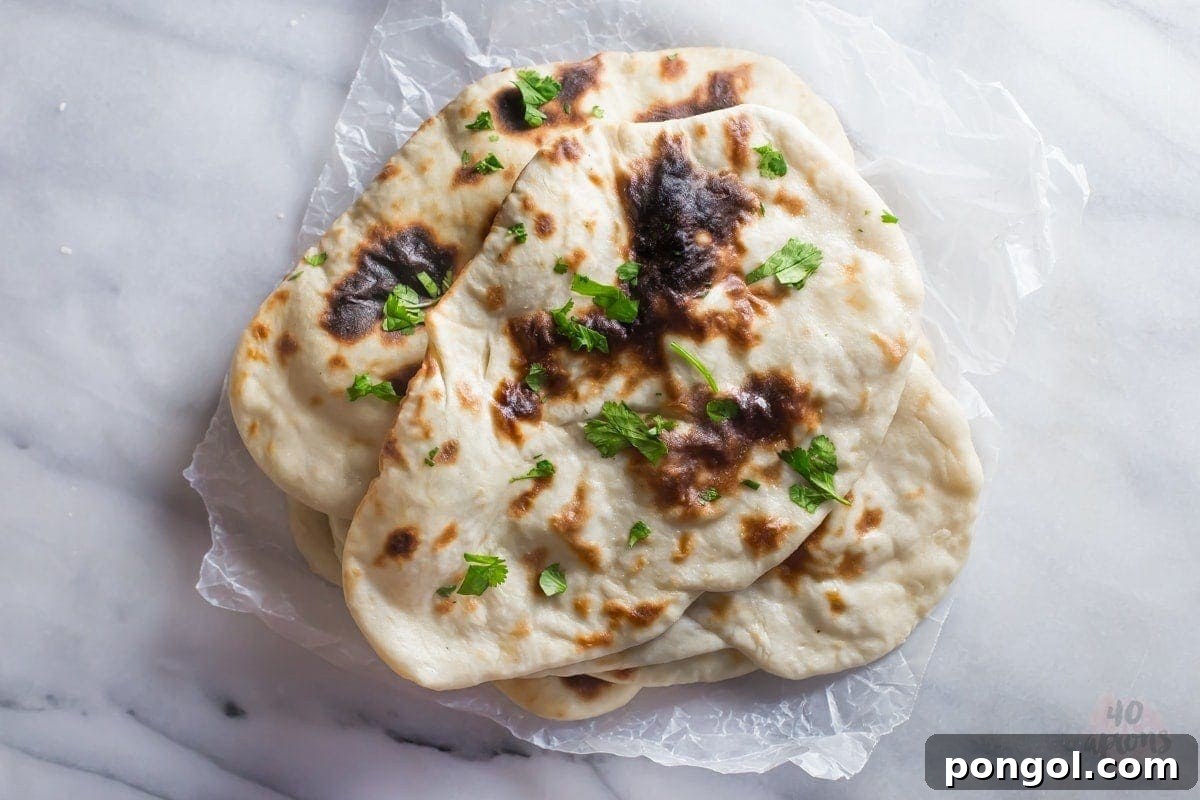
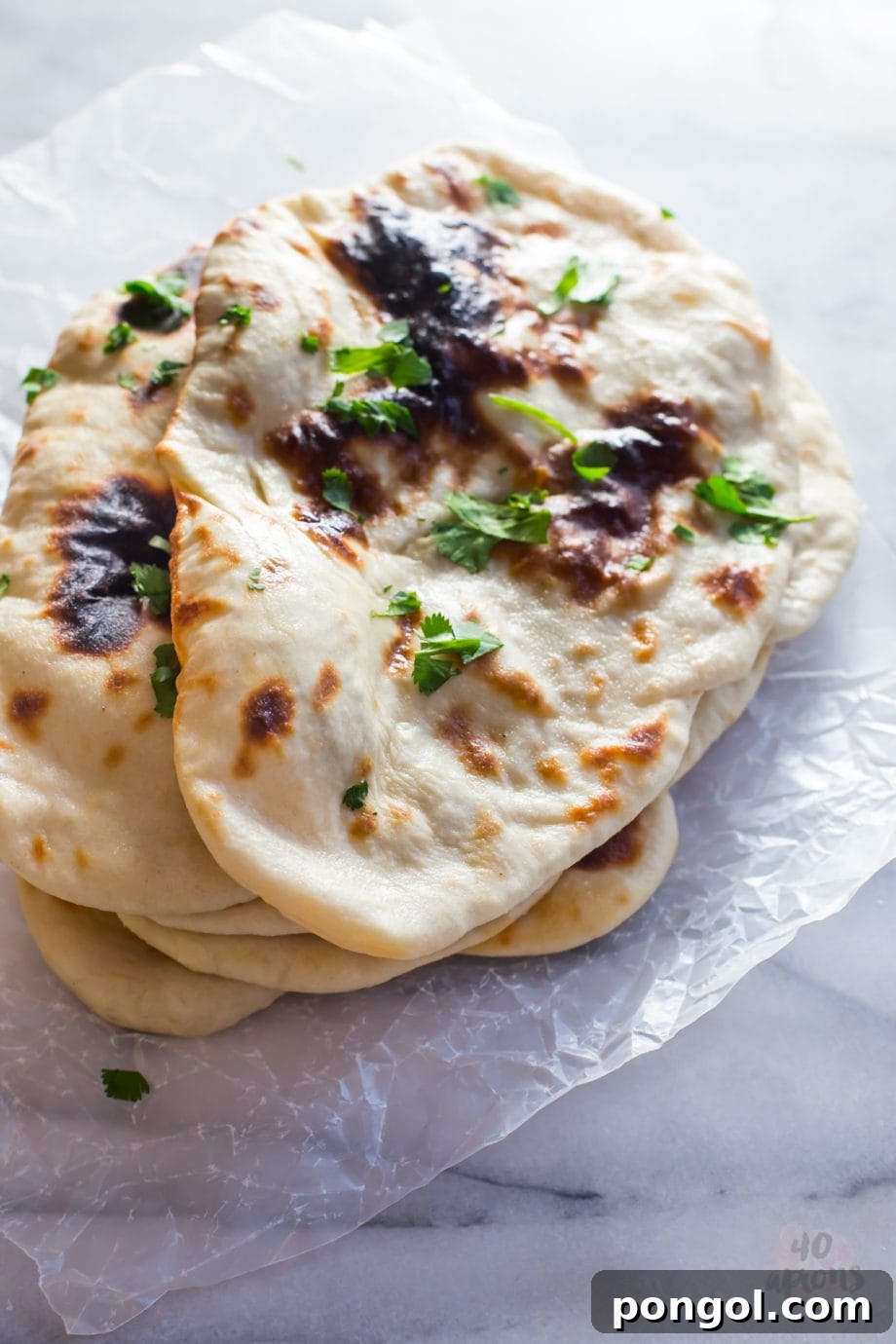
Oh, I know. I truly understand the anticipation. Last week, I tantalized you with a rich, velvety butter chicken recipe – a dish so profoundly flavorful it demands the perfect counterpart. And yet, I left you without the essential tool for savoring every last drop: fluffy, tender naan. How could I have expected you to scoop up those perfectly balanced bites of rice, chicken, and sauce, or tear off pieces to snack on while the curry simmers, or even sop up the destined-to-be-minimal remnants from your bowl, without this warm, spiced, and utterly necessary flatbread?
Life, as they say, happens. And sometimes, life with a little one means plans go awry. Lately, navigating the unpredictable waters of a four-month sleep regression combined with a “Wonder Weeks” cognitive leap has made even the simplest tasks feel like monumental challenges. My sweet baby, who once slept soundly, now frequently awakens, practicing newfound skills like rolling over or babbling in the dead of night. It’s a period of immense growth for them, fascinating to witness, but equally exhausting for us parents. Add to that the constant carrying, which led to a brief but concerning bout of “boob flu” (mastitis, to be precise), and the suspected arrival of teething, and you have a recipe for delightful chaos. So, if the naan was delayed, please know it was for reasons beyond my control, and perhaps a glass of wine might have been involved in the recovery process!
But enough about the trials of parenthood; let’s talk about the triumphant return of naan! You were absolutely right – it was an oversight to present such a magnificent curry without its ideal companion. I’ve shared naan recipes before, including a wholesome whole wheat version. However, for a recent family celebration, specifically my father-in-law’s birthday, I decided to revisit the classic. This time, I opted for a traditional, all-purpose flour recipe, focusing on a leavening method that delivers impeccable results without relying on yeast: pure, simple yogurt. This approach simplifies the process considerably, making it far more approachable for home cooks who might be intimidated by yeast-based doughs.
The Unbeatable Charm of Homemade Naan
There’s something uniquely satisfying about homemade bread, and naan is no exception. While it does require a bit of hands-on time – sectioning the dough, rolling each piece, and giving it the stovetop-and-oven treatment – the steps are straightforward, not complicated. And I assure you, the reward is immensely worth the effort. The aroma alone, as it cooks, is enough to transport you to an authentic Indian eatery.
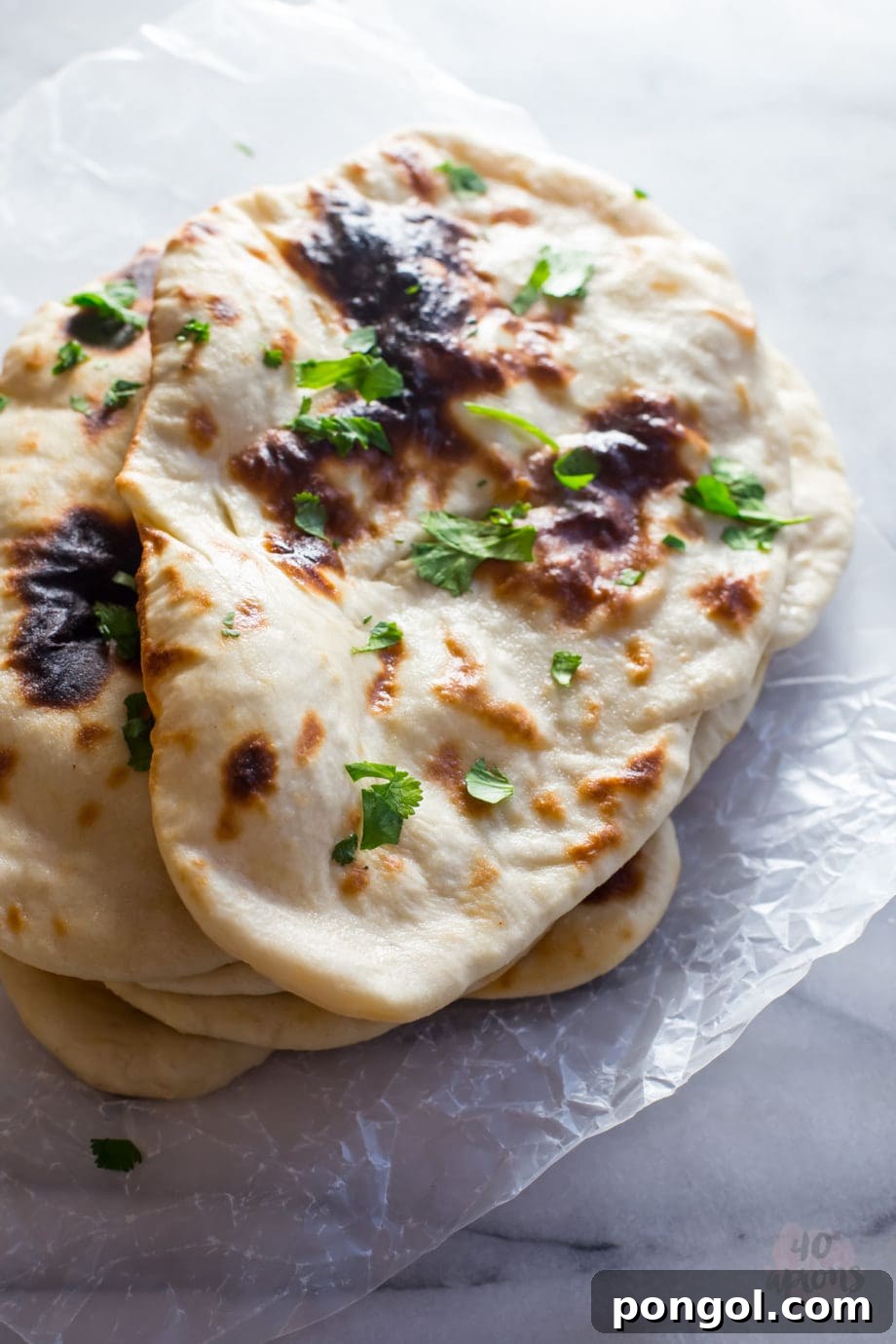
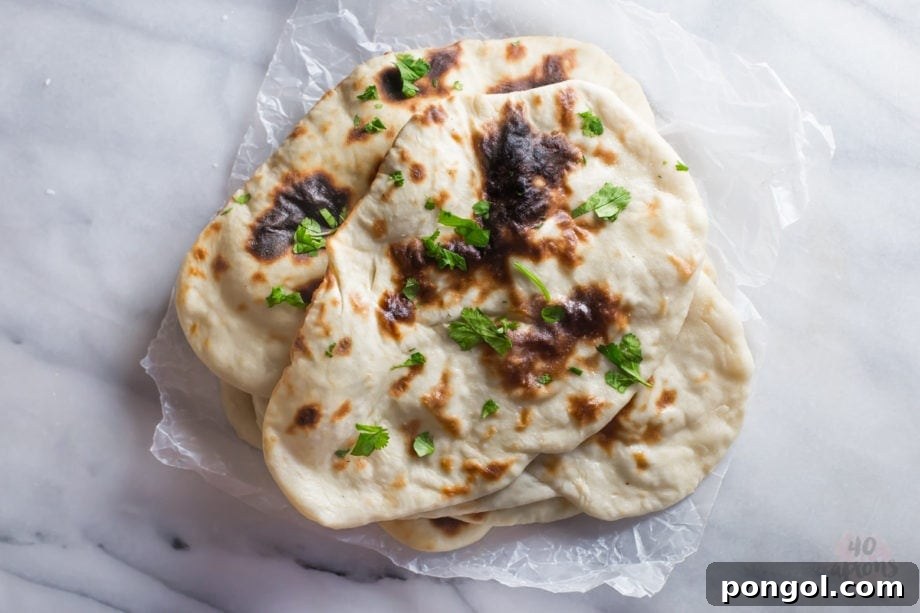
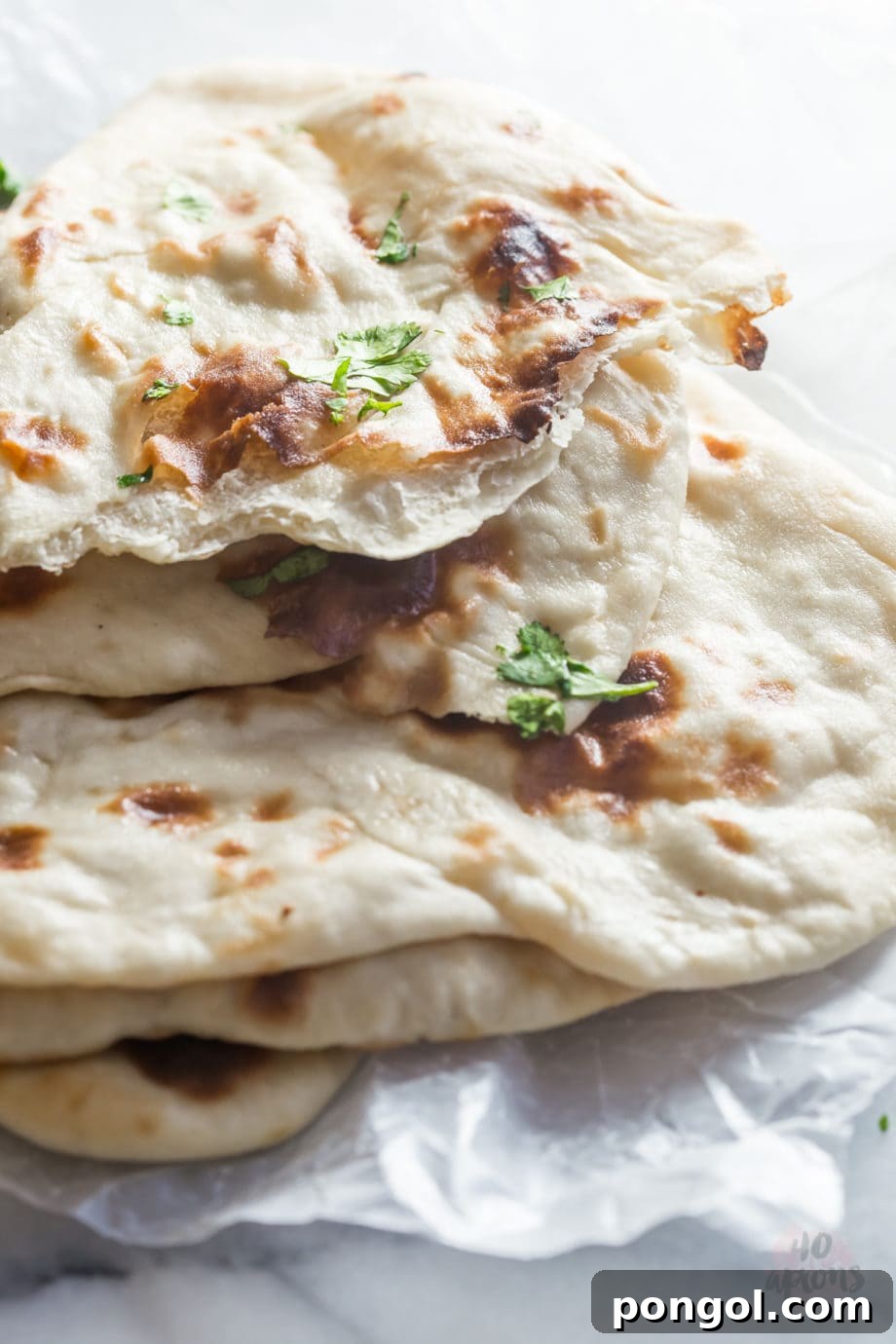
This particular recipe yields naan that is almost indistinguishable from what you’d find at your favorite Indian restaurant. And that, my friends, is saying a lot, especially since most of us don’t have a traditional tandoor oven in our backyard! It’s perfectly tender and wonderfully chewy, yet boasts those coveted crisp, slightly charred edges that come from cooking over high heat. Beyond its deliciousness, naan truly shines as a culinary utensil. At our dinner table, particularly when my father-in-law is present, not using naan to scoop up your meal is simply “not doing it right.” It’s an interactive, communal way of eating that enhances the entire dining experience.
The Secret Ingredient: Yogurt for Tender Leavening
Many traditional naan recipes call for yeast, which requires careful activation and proofing. However, this recipe harnesses the power of plain yogurt to achieve its incredible texture. Yogurt, with its natural acidity and milk solids, reacts with baking powder to create a beautiful lift and a wonderfully soft, tangy crumb. It also contributes to the dough’s elasticity and tenderness, resulting in that characteristic chewy texture that makes naan so irresistible. This method not only simplifies the process but also adds a subtle depth of flavor that complements rich Indian curries perfectly.
A Glimpse into Naan’s Rich History
Naan, a staple in many Central and South Asian cuisines, literally means “bread” in Persian. Its origins can be traced back thousands of years, with evidence of similar flatbreads being consumed in ancient Persia. Over centuries, it evolved and spread across various cultures, becoming an integral part of Mughal cuisine in India, and eventually, a global favorite. Historically, naan was cooked in a tandoor, a cylindrical clay oven, where the dough would be slapped onto the hot inner walls, cooking rapidly to create its distinctive puffed and slightly charred appearance. While we replicate this effect in a home kitchen using a hot griddle and oven, the essence of this ancient bread remains.
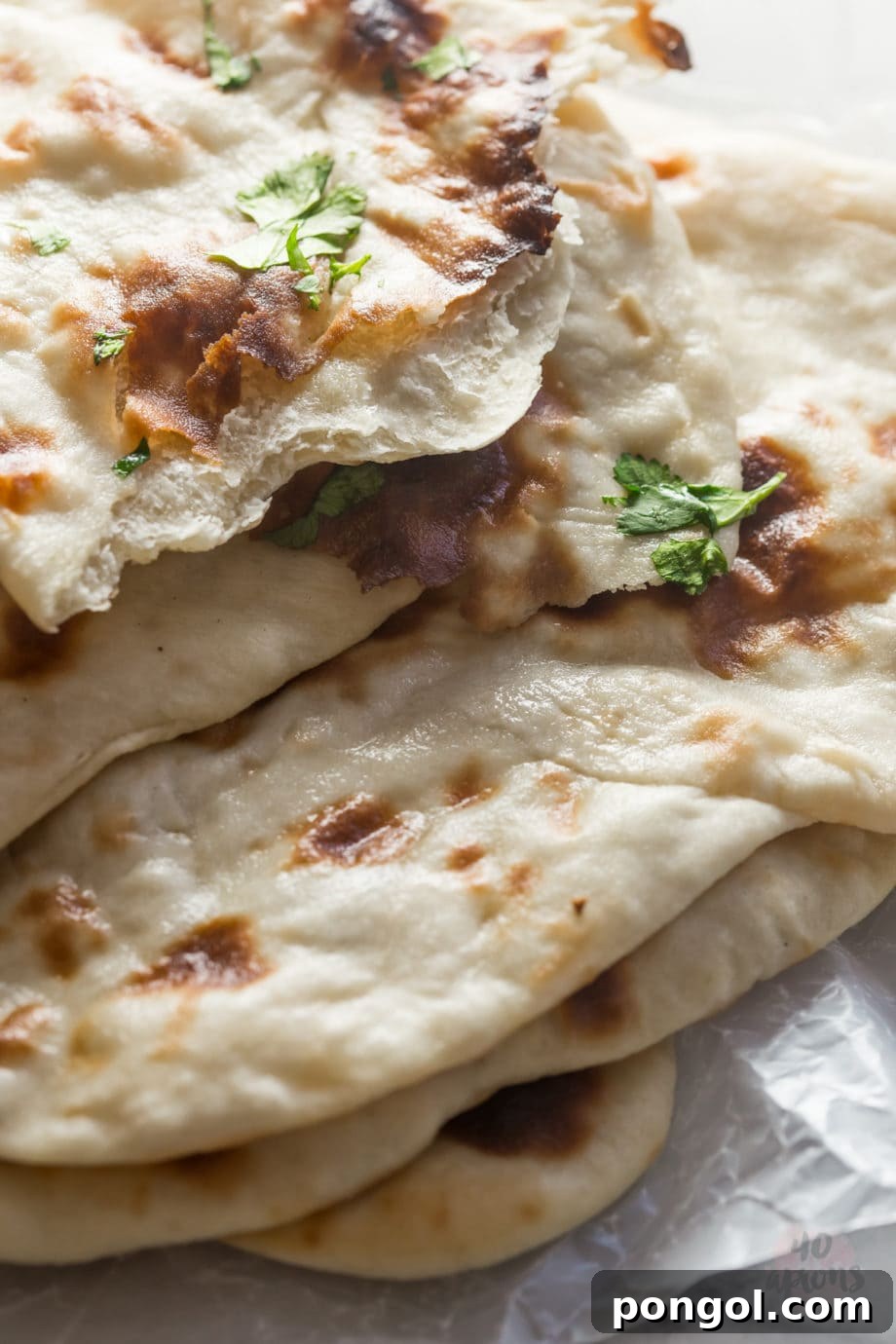
Mastering the Art of Homemade Naan: Tips for Success
Achieving perfect naan at home is simpler than you might think with a few key techniques:
- The Right Flour: While all-purpose flour works beautifully, ensure it’s fresh. Sifting it can also help create a lighter dough.
- Yogurt Quality: The recipe suggests using regular full-fat plain yogurt, and I stand by this recommendation. The extra fat content contributes to a richer flavor and a more tender crumb compared to low-fat alternatives.
- Kneading is Key: Don’t rush the kneading process. Five minutes of thorough kneading develops the gluten, resulting in that desired elastic and smooth dough texture. This elasticity is crucial for the naan to puff up beautifully during cooking.
- Resting the Dough: This step is non-negotiable. Allowing the dough to rest for at least an hour (or even longer) lets the gluten relax and the flavors meld. This makes the dough much easier to roll out and contributes significantly to the naan’s tenderness.
- High Heat is Your Friend: Naan thrives in high heat. A scorching hot frying pan or griddle (cast iron is excellent for retaining heat) and a preheated 500°F (260°C) oven or broiler are essential. The rapid heat causes the moisture in the dough to turn into steam, creating those signature pockets and puffy textures.
- Don’t Overcrowd the Pan: Cook one naan at a time to ensure consistent heat and proper cooking.
- The Stovetop-to-Oven Method: This two-step cooking process is the secret to achieving restaurant-quality naan without a tandoor. The stovetop creates the initial puff and char on the bottom, while a quick finish under the broiler or in a hot oven puffs it up completely and gives it a lovely golden top.
- Butter it Up: A light brush with melted butter or ghee immediately after cooking adds a luxurious finish and enhances the flavor.
Serving Suggestions and Delicious Variations
While plain naan is a dream with butter chicken, its versatility knows no bounds:
- Classic Pairings: Serve it alongside any creamy curry, hearty lentil dal, or spiced grilled meats. It’s perfect for dipping into sauces and gravies.
- Garlic Naan: Mince a few cloves of garlic and mix them with melted butter. Brush this mixture onto the naan immediately after it comes out of the oven for a fragrant twist.
- Cilantro Naan: Chop fresh cilantro finely and sprinkle it over the naan before or after brushing with butter for a burst of freshness.
- Cheese Naan: For a delightful treat, sprinkle a tablespoon of shredded mozzarella or paneer onto the rolled-out dough before cooking. Fold it over, seal the edges, and roll it out again gently before cooking.
- Mini Naan Pizzas: Use smaller naan pieces as a base for quick and easy personal pizzas.
Storage and Reheating for Later Enjoyment
Naan is undoubtedly best when served warm, straight from the cooking surface. However, leftovers are delicious and can be stored. Stack cooled naan breads in a napkin-lined basket to keep them warm for serving. For longer storage, wrap them tightly in aluminum foil or place them in an airtight container at room temperature for up to two days, or in the refrigerator for up to five days. To reheat, wrap naan in aluminum foil – in packets of 4 or 5 pieces – and warm them in a 400°F (200°C) oven for 10-15 minutes until soft and pliable. You can also quickly warm them in a dry skillet over medium heat. For long-term storage, cooled naan freezes beautifully. Wrap each piece individually in plastic wrap, then store in a freezer-safe bag for up to two months. Reheat directly from frozen using the oven method outlined above.
A Naan Worth Making
This recipe isn’t just about making bread; it’s about elevating your home cooking and bringing a piece of vibrant Indian culinary tradition into your kitchen. The satisfaction of pulling a warm, puffy naan from your oven, knowing you made it from scratch, is unparalleled. So, gather your ingredients, clear your schedule (at least for an hour or so of dough resting!), and prepare to create something truly special. Make this!

Recipe By: pattikay in LA
Rating: 4.84 from 6 votes
Perfect Naan
Prep Time: 1 hour 10 minutes
Cook Time: 30 minutes
Total Time: 1 hour 40 minutes
Tender, chewy naan. Just like the Indian restaurants–perfect with any saucy Indian dish.
Servings: 10 pieces
Ingredients
- 4 cups all-purpose flour
- 1 teaspoon baking powder
- 1 teaspoon salt
- 2 cups plain yogurt (full-fat recommended for best results)
Instructions
- Mix together the flour, baking powder, and salt in a large bowl. Gradually stir in the yogurt until the dough becomes too stiff to mix with a spoon. Continue to knead the dough in the bowl until it comes together well, adding a little more flour if the dough is too sticky. Turn the dough out onto a lightly floured surface and knead for about 5 minutes until it feels smooth and elastic. Form the dough into a ball, place it in an oiled bowl, cover it with a towel, and let it rest for at least an hour, or even longer.
- Once rested, take the dough out of the bowl and divide it into 10 equal pieces. Roll each piece into a smooth ball, then flatten each ball into a round disc.
- Prepare your cooking surface. Heat a large frying pan or griddle over medium-high heat. A seasoned cast iron pan or a good quality non-stick pan works best. Simultaneously, preheat your oven to about 500°F (260°C), or turn on your broiler.
- Take one piece of dough at a time. On a lightly floured surface, roll it out until it is approximately 8-10 inches across and less than 1/4 inch thick. Place the rolled naan onto the hot griddle. Cook for 4-5 minutes, or until the naan begins to puff up in places, or even entirely. You should see some beautiful blackish-brown spots forming on the bottom surface.
- Carefully slide a spatula under the cooked naan and transfer it directly to the oven rack (or under the broiler). Cook for just a minute or two, or until it fully puffs up like a balloon and begins to lightly color on top.
- Remove the naan from the oven. If desired, lightly brush with melted butter or ghee for added richness and flavor.
- Continue this process with the remaining dough pieces, stacking the finished naans in a napkin-lined basket to keep them warm. Serve the naan hot and fresh from the oven, or allow them to cool completely before wrapping them for later. To reheat, wrap cooled naans in aluminum foil (in packets of 4-5) and place in a 400°F (200°C) oven for 10-15 minutes.
Notes: Cooled naans can also be frozen and reheated with excellent results. Recipe adapted from Food.com.
Approximate Information for One Serving
Serving Size: 10g
Calories: 212cal
Protein: 7g
Fat: 2g
Saturated Fat: 1g
Cholesterol: 6mg
Sodium: 256mg
Potassium: 170mg
Total Carbs: 41g
Fiber: 1g
Sugar: 2g
Net Carbs: 40g
Vitamin A: 49IU
Vitamin C: 1mg
Calcium: 84mg
Iron: 2mg
Nutrition Disclaimers
Number of total servings shown is approximate. Actual number of servings will depend on your preferred portion sizes.
Nutritional values shown are general guidelines and reflect information for 1 serving using the ingredients listed, not including any optional ingredients. Actual macros may vary slightly depending on specific brands and types of ingredients used.
To determine the weight of one serving, prepare the recipe as instructed. Weigh the finished recipe, then divide the weight of the finished recipe (not including the weight of the container the food is in) by the desired number of servings. Result will be the weight of one serving.
Did You Make This Recipe?
We’d love to see your creations! Share your photos on Instagram and tag @40aprons. Don’t forget to leave a review and tell us what you thought!