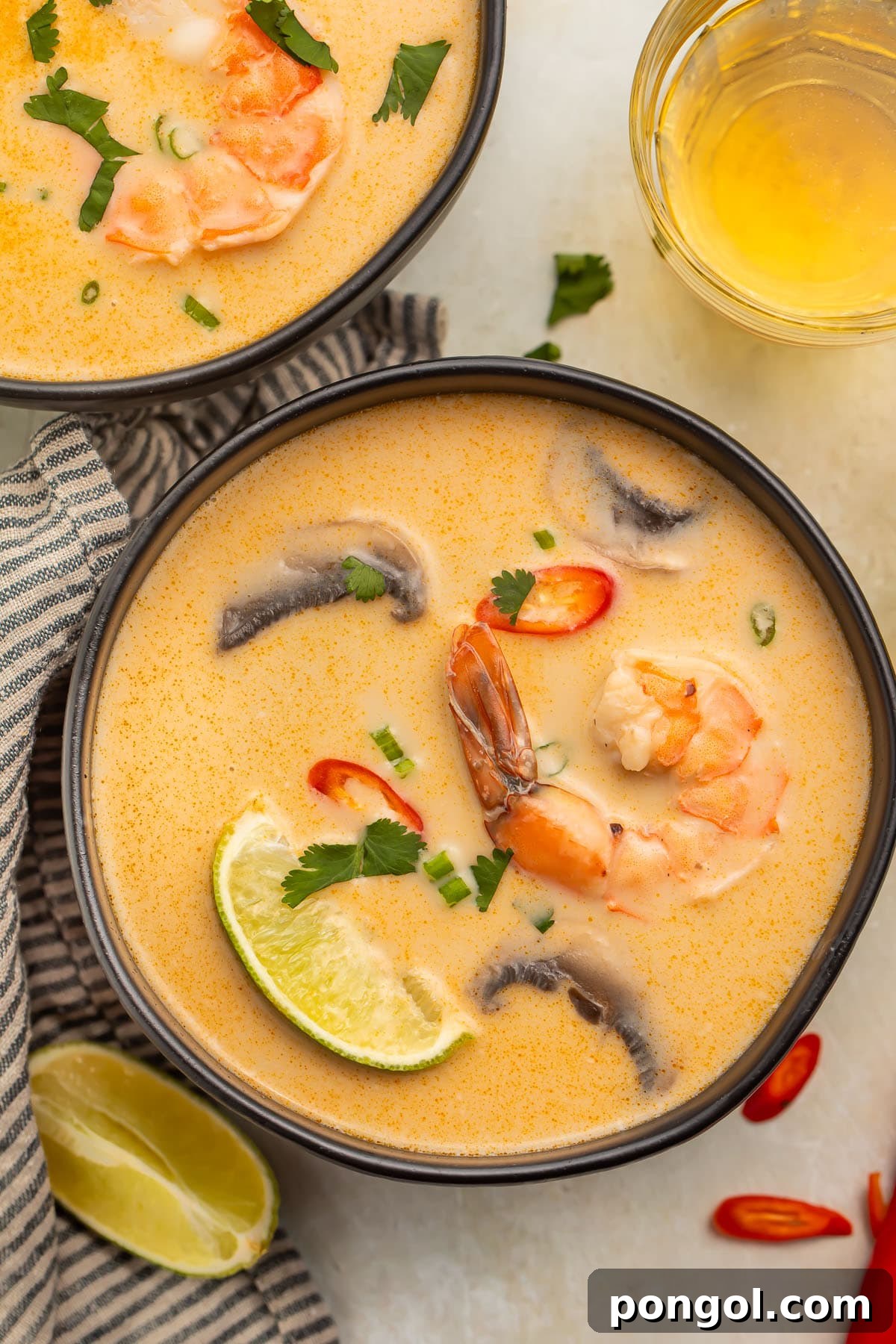
Authentic Tom Kha Goong: The Ultimate Thai Coconut Shrimp Soup Recipe
Embark on a culinary journey to the heart of Thailand with our exquisite Tom Kha Goong recipe. This beloved Thai coconut shrimp soup is a delightful seafood-based rendition of the classic Tom Kha Gai, offering a lighter yet equally profound flavor experience. It replaces chicken with succulent, tender shrimp, creating a soup that is both incredibly satisfying and remarkably fresh. Dive into a bowl brimming with the rich, tangy, and subtly spicy notes that define authentic Thai cuisine, featuring aromatic galangal, fragrant lemongrass, zesty lime, and a hint of heat from fresh jalapeño and red chilies, all harmoniously blended with creamy coconut milk.
Our Tom Kha Goong delivers restaurant-quality taste directly to your kitchen, yet it’s surprisingly simple to prepare. Whether you’re a seasoned chef or a home cook looking to explore new flavors, this recipe makes it effortless to create a nourishing and flavorful meal. Moreover, it’s incredibly versatile, with easy modifications to suit various dietary needs, including Whole30, Paleo, or Vegan lifestyles.
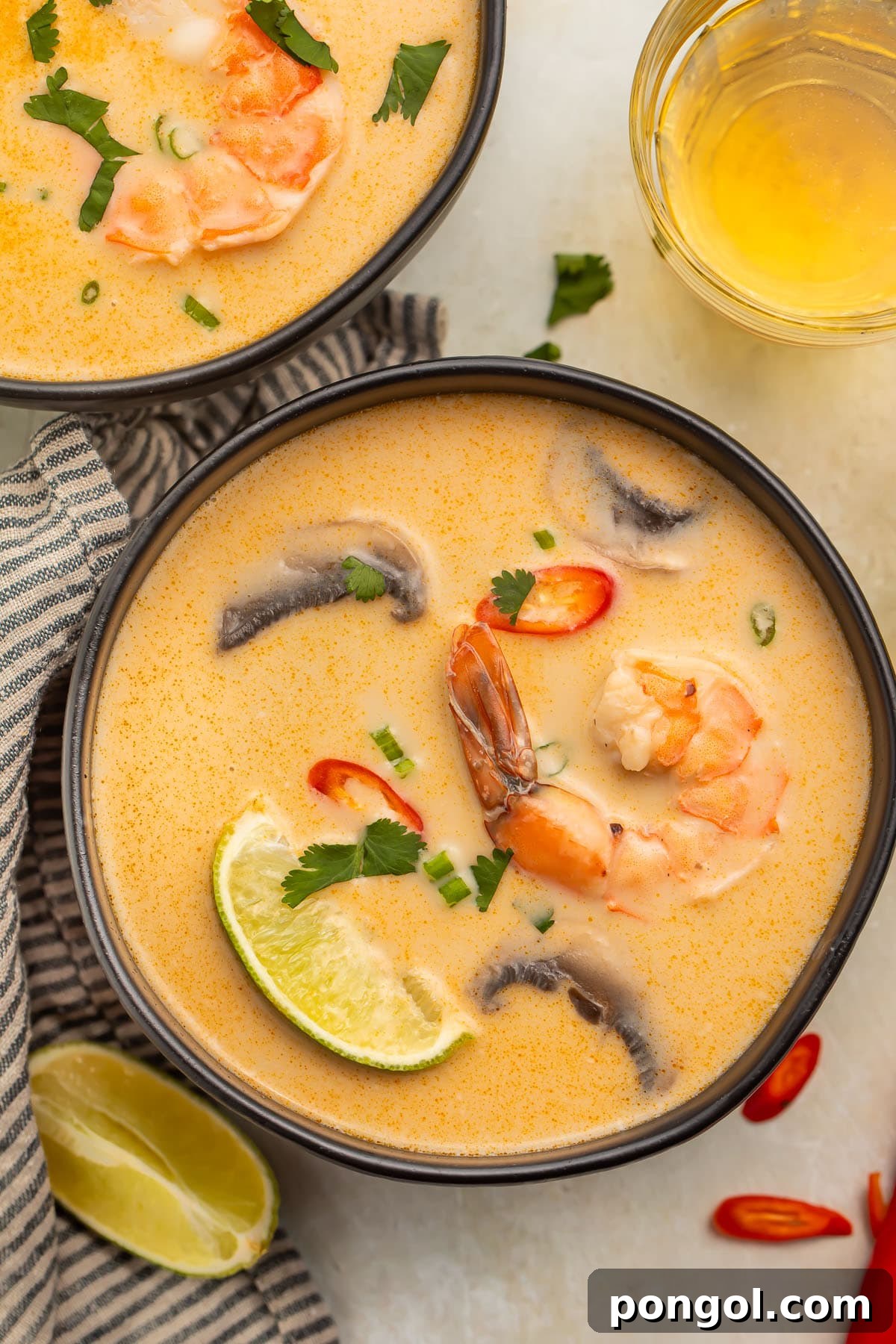
Why You’ll Love This Tom Kha Goong Recipe
- A Seafood Twist on a Beloved Classic: If you’re already a fan of our Best Ever Tom Kha Gai and have a soft spot for shrimp, then this Tom Kha Goong recipe is destined to be your new favorite. It captures all the rich, nuanced flavors and comforting textures that make Tom Kha so irresistible, but gracefully swaps the chicken for succulent shrimp. The result is a lighter, yet incredibly satisfying, and highly nutritious Thai coconut shrimp soup that delivers on all fronts.
- A Symphony of Authentic Thai Flavors: For those new to the magic of Tom Kha, prepare for an extraordinary culinary revelation. This soup boasts a luxurious base of chicken broth and creamy coconut milk, meticulously infused with slow-cooked aromatics. Experience the bright, zesty notes of pounded lemongrass and fresh lime juice, perfectly balanced by the subtle warmth from red jalapeño and pungent fresh galangal. A remarkable depth of umami is achieved through the addition of red Thai chili paste, savory onions, and a splash of fish sauce, with just a hint of sweetness from coconut sugar. The tender shrimp and earthy mushrooms absorb these incredible flavors, creating a harmonious blend that is utterly captivating.
- Effortless & Accessible Ingredients: Don’t let the exotic-sounding ingredient list intimidate you! The components needed to craft this magnificent Tom Kha Goong are surprisingly available at most well-stocked grocery stores. For those seeking more specialized or unique Thai ingredients, a visit to your nearest international market will surely yield all the authentic finds you need to elevate your soup to perfection. Our detailed guide ensures you’ll know exactly what to look for, making your ingredient hunt a breeze.
- Wholesome and Adaptable to Dietary Needs: Beyond its incredible taste, this Tom Kha Goong recipe shines in its versatility. It’s naturally wholesome, packed with lean protein from shrimp and nutrient-rich mushrooms. With simple adjustments, this soup can easily cater to various dietary preferences. We provide clear guidance for making it Whole30 compliant, suitable for a Paleo lifestyle, or transforming it into a delicious Vegan and Vegetarian dish, ensuring everyone can enjoy a bowl of this Thai comfort.
Essential Ingredients for Perfect Tom Kha Goong
Crafting an authentic Tom Kha Goong starts with understanding its key ingredients. Each component plays a vital role in building the soup’s distinctive flavor profile:
- Galangal: The Foundation of Flavor: Often mistaken for ginger, galangal is its more citrusy and piney cousin, providing the authentic, pungent base for Tom Kha. While fresh ginger can be a substitute in a pinch, galangal offers an unparalleled depth that is truly foundational to the soup’s character. Look for firm, fresh roots in Asian markets.
- Lemongrass: A Burst of Citrusy Aroma: This fragrant stalk imparts a bright, lemony, and slightly floral aroma that is irreplaceable. Proper preparation of lemongrass—pounding it to release its oils—is crucial for maximizing its flavor contribution.
- Creamy Coconut Milk: The Heart of the Soup: Opt for unsweetened, full-fat coconut milk from a can. This creates the rich, velvety texture and subtly sweet undertone that beautifully balances the other intense flavors. Avoid coconut creamers or light coconut milk, as they won’t provide the desired richness and consistency.
- Red Thai Curry Paste: The Spicy Kick: This paste is a blend of red chilies, lemongrass, galangal, kaffir lime zest, and other spices. It adds both color and a complex heat. The recipe uses red, which offers a moderate spice level. Adjusting to yellow (milder) or green (spicier) allows you to customize the heat.
- Fish Sauce & Lime Juice: The Tangy & Umami Finish: These two ingredients are non-negotiable for authentic Thai flavor. Fish sauce provides a salty, savory umami depth, while fresh lime juice adds a crucial bright tanginess that awakens all the flavors in the soup. Always add them at the end and adjust to taste.
- Succulent Shrimp & Earthy Mushrooms: Fresh or frozen shrimp (peeled and deveined) cook quickly and absorb the broth’s flavors beautifully. White mushroom caps add a wonderful earthy texture and soak up the rich broth, complementing the shrimp perfectly.
Expert Tips for Mastering Your Thai Coconut Shrimp Soup
- Perfecting Lemongrass Preparation: The secret to extracting maximum flavor from lemongrass is proper preparation. Begin by trimming off the tough base and the fibrous top leaves. Remove any dry outer layers. Place the remaining stalk on a cutting board and use the broad side of a chef’s knife or a meat mallet to firmly pound along the length of the stalk. This crucial step breaks open the fibers, allowing its aromatic oils to infuse into the soup more effectively. After pounding, slice the stalk into 2-inch pieces. If you’re using lemongrass paste as a substitute, remember it’s more concentrated; start with ½ to ¾ tablespoon and adjust to your taste after simmering.
- Customizing the Spice Level: While this recipe, using red Thai curry paste, is designed for a pleasant, moderate warmth, you have full control over the heat. If you’re sensitive to spice, consider reducing the amount of red chili paste or swapping it for a milder yellow curry paste. For those who crave an extra kick, a green curry paste will certainly deliver a more intense heat. Always taste and adjust as you go, finding the perfect balance for your palate.
- The Art of Simmering for Deep Flavor: The initial simmering of the aromatics in broth is key to developing the rich foundation of your Tom Kha Goong. Allow ample time for the galangal, lemongrass, onions, and garlic to slowly release their flavors into the chicken broth. This slow infusion ensures a complex and deeply aromatic base before the coconut milk and other ingredients are added. Don’t rush this step; it’s where the magic truly happens.
- Cooking Shrimp to Perfection: Shrimp cook very quickly, and overcooking can lead to a tough, rubbery texture. To ensure your shrimp remain tender and juicy, add them to the simmering soup only at the very end of the cooking process. They typically need just 1 to 2 minutes of simmering, or until they turn opaque, lightly pink, and curl into a gentle ‘C’ shape. Remove the soup from the heat as soon as they are cooked through.
- The Crucial Step of Taste and Adjust: Authentic Thai cooking is all about balance: sweet, sour, salty, and spicy. Before serving, taste your soup and don’t hesitate to adjust the seasonings. Add more fish sauce for umami depth, extra lime juice for brightness, or a touch more coconut sugar to enhance sweetness and round out the flavors. This final adjustment is what transforms a good soup into a truly exceptional one.
- Make-Ahead and Storage Tips: Tom Kha Goong is best enjoyed fresh, but leftovers can be stored. If making ahead, cook the soup base (without shrimp) and store it separately. When ready to serve, reheat the base gently and then add the fresh shrimp, cooking until just done. Store cooled soup in an airtight container in the refrigerator for up to 3 days. Reheat gently on the stovetop, being careful not to boil, which can cause the coconut milk to separate.
Frequently Asked Questions (FAQ) About Tom Kha Goong
- What is the difference between Tom Kha Gai and Tom Kha Goong?
The primary difference lies in the protein. Tom Kha Gai (“Gai” meaning chicken) features chicken as its main protein, while Tom Kha Goong (“Goong” meaning shrimp) uses shrimp. Both share the same signature creamy coconut milk base, infused with galangal, lemongrass, and lime, offering a balance of sweet, sour, and spicy flavors.
- Can I use ginger instead of galangal?
While galangal provides a distinct, more floral and pungent flavor unique to Tom Kha, fresh ginger can be used as a substitute if galangal is unavailable. However, note that ginger will impart a slightly different, more peppery flavor profile to the soup. Use an equal amount of sliced ginger root.
- How can I make this soup less spicy?
To reduce the spiciness, you can lessen the amount of red Thai curry paste used. Alternatively, opt for a yellow curry paste, which is generally milder than red or green varieties. You can also deseed the jalapeño peppers before slicing them, as most of the capsaicin (heat) is concentrated in the seeds and white membranes.
- What is the best type of coconut milk for Tom Kha Goong?
Always use unsweetened, full-fat coconut milk from a can, not a carton. Full-fat canned coconut milk provides the rich, creamy texture and robust flavor essential for an authentic Tom Kha. Avoid “light” coconut milk or other coconut products like “cream of coconut” or “coco lopez,” as their consistency and sugar content are unsuitable for this recipe.
- Can I add other vegetables to Tom Kha Goong?
Absolutely! Tom Kha Goong is highly versatile. Feel free to add other quick-cooking vegetables like bell peppers, bamboo shoots, snap peas, or baby corn during the last few minutes of simmering, along with the mushrooms and shrimp, to ensure they cook to a tender-crisp texture.
- How long does Tom Kha Goong last in the refrigerator?
When stored in an airtight container, Tom Kha Goong can last for up to 3 days in the refrigerator. If you’ve made a large batch and anticipate leftovers, it’s often best to add the shrimp only to the portion you plan to eat immediately, as reheated shrimp can sometimes become tougher.
- What should I serve with Tom Kha Goong?
Tom Kha Goong is often served on its own as a light meal, but it also pairs wonderfully with jasmine rice or brown rice, which can help absorb the flavorful broth. For a more substantial meal, consider serving it alongside a simple stir-fry or grilled chicken/fish.
More Delicious Asian-Inspired Meals We Love
- Wonton Egg Drop Soup
- Egg Roll in a Bowl with Creamy Chili Sauce
- Instant Pot Chicken Teriyaki
- Air Fryer Egg Rolls (Homemade or Frozen)
- Zuppa Toscana
- Mexican Soup
- Hibachi Chicken with Fried Rice and Vegetables
- She Crab Soup
- Duck Fried Rice
- Seafood Chili
- Air Fryer Chicken Katsu
Tom Kha Goong
 Cheryl Malik
Equipment
-
Large, heavy-bottomed pot or Dutch oven
-
Large wooden spoon
-
Slotted spoon
Ingredients
For the Tom Kha Goong
- 1 tablespoon refined coconut oil solid or liquid
- 1 cup thinly sliced white onion half of one medium onion, sliced; approximately 8–10 thin slices
- 2 cloves garlic peeled, chopped
- 2 tablespoons sliced red jalapeño pepper half of one red jalapeño pepper, sliced; or 1-3 Thai chiles, halved
- 3 ¼-inch-long slices fresh galangal
- 1 lemongrass stalk approximately 20g; pounded with side of knife, then cut into 2-inch long pieces
- 2 teaspoons red Thai curry paste plus more to taste
- 4 cups low-sodium chicken broth see Notes
- 4 cups unsweetened, full-fat coconut milk from can, not carton; see Notes
- 8 ounces white mushroom caps sliced
- 1 ½ tablespoons fish sauce more or less to taste, see Notes
- 1-2 tablespoons coconut sugar see Notes
- 2-3 tablespoons fresh lime juice see Notes
- 1 pound shrimp fresh or frozen; peeled, deveined
Serving Suggestions (All Optional)
- thinly sliced green onions
- chopped fresh cilantro
Instructions
-
Place large, heavy-bottomed pot on stovetop over medium heat. When pot is warm, add 1 tablespoon refined coconut oil and swirl or tilt pot as needed to distribute oil across entire surface. Continue heating pot until oil is melted, hot, and shimmery.
-
When oil is hot, add 1 cup thinly sliced white onion, 2 cloves garlic, 2 tablespoons sliced red jalapeño pepper, 3 ¼-inch-long slices fresh galangal, 1 lemongrass stalk, and 2 teaspoons red Thai curry paste to pot. Stir to incorporate, then sauté ingredients 5 minutes or until onions have softened. Stir ingredients frequently to prevent sticking or burning.
-
When onions have softened, pour 4 cups low-sodium chicken broth into pot and increase temperature under pot to medium-high. Stir to incorporate broth, making sure to scrape bottom of pot to loosen any ingredients that may have stuck during sauté.
-
Bring chicken broth to rolling boil. Once boiling, immediately reduce heat to medium-low. Simmer mixture, uncovered, 30 minutes, stirring occasionally.
-
After 30 minutes, use slotted spoon to remove large garlic pieces, onion slices (optional), lemongrass pieces, and slices of galangal. Discard aromatics.
-
Remove pot from heat and let mixture cool slightly. Pour 4 cups unsweetened, full-fat coconut milk into cooled mixture and stir to incorporate, then return pot to stovetop over medium-low heat.
-
Add 8 ounces white mushroom caps to pot. Stir to incorporate, then simmer mixture 3 to 5 minutes or until mushrooms have softened.
-
Add 1 ½ tablespoons fish sauce, 1-2 tablespoons coconut sugar, and 2-3 tablespoons fresh lime juice. Stir to incorporate additions, then simmer mixture 2 minutes. After 2 minutes, taste mixture and adjust fish sauce, coconut sugar, and lime juice as desired.
-
When satisfied with flavor of mixture, add 1 pound shrimp to pot. Stir gently to incorporate, then simmer 1 to 2 minutes or until shrimp are opaque, lightly pink, and curled into slight “J” shape.
-
When shrimp is cooked through, immediately portion soup into serving bowls. Garnish with thinly sliced green onions and chopped fresh cilantro if desired. Serve immediately.
- Galangal Root: If you can’t find galangal, you can replace it with an equal amount of fresh ginger root. The ginger will give the soup a different flavor, though, so keep that in mind.
- Coconut Milk: Be sure to use coconut cream or coconut milk. Coco lopez, cream of coconut, and coconut creamer are not the same as coconut cream or coconut milk and will not work in this recipe.
- Lime Juice: To replace the lime juice with lime leaves, cut the leaves into 2 pieces (cutting away the center vein), then stack all the leaf pieces on top of each other. Roll the leaves tightly, then slice the roll into very thin slices. Sprinkle the sliced leaves into the soup in place of the lime juice for a similar aromatic citrus note.
- Shrimp: For the classic chicken version of this soup, refer to our recipe for the best ever Tom Kha Gai.
- Make it Whole30: To ensure Whole30 compliance, use compliant chicken broth. Substitute the coconut sugar with 2 tablespoons of coconut aminos. For fish sauce, ensure you use Red Boat fish sauce, as it is one of the few brands typically compliant with Whole30 guidelines.
- Make it Vegan/Vegetarian: For a delicious plant-based version, replace chicken broth with vegetable stock (an Asian variety is preferred for deeper flavor). Instead of shrimp, use a 1-pound block of firm or extra-firm tofu (regular or silken), cut into bite-sized cubes. For a fully vegan option, substitute fish sauce with an equal amount of soy sauce (or tamari for a gluten-free option), adjusting to taste.
Approximate Information for One Serving
Calories: 509cal
Protein: 23g
Fat: 41g
Saturated Fat: 36g
Trans Fat: 0.003g
Cholesterol: 122mg
Sodium: 819mg
Potassium: 943mg
Total Carbs: 19g
Fiber: 5g
Sugar: 11g
Net Carbs: 14g
Vitamin A: 313IU
Vitamin C: 16mg
Calcium: 97mg
Iron: 4mg
Nutrition Disclaimers
Number of total servings shown is approximate. Actual number of servings will depend on your preferred portion sizes.
Nutritional values shown are general guidelines and reflect information for 1 serving using the ingredients listed, not including any optional ingredients. Actual macros may vary slightly depending on specific brands and types of ingredients used.
To determine the weight of one serving, prepare the recipe as instructed. Weigh the finished recipe, then divide the weight of the finished recipe (not including the weight of the container the food is in) by the desired number of servings. Result will be the weight of one serving.
Did You Make This Recipe?
Tag @40aprons on Instagram and be sure to leave a review on the blog post!
Tag @40Aprons on Instagram