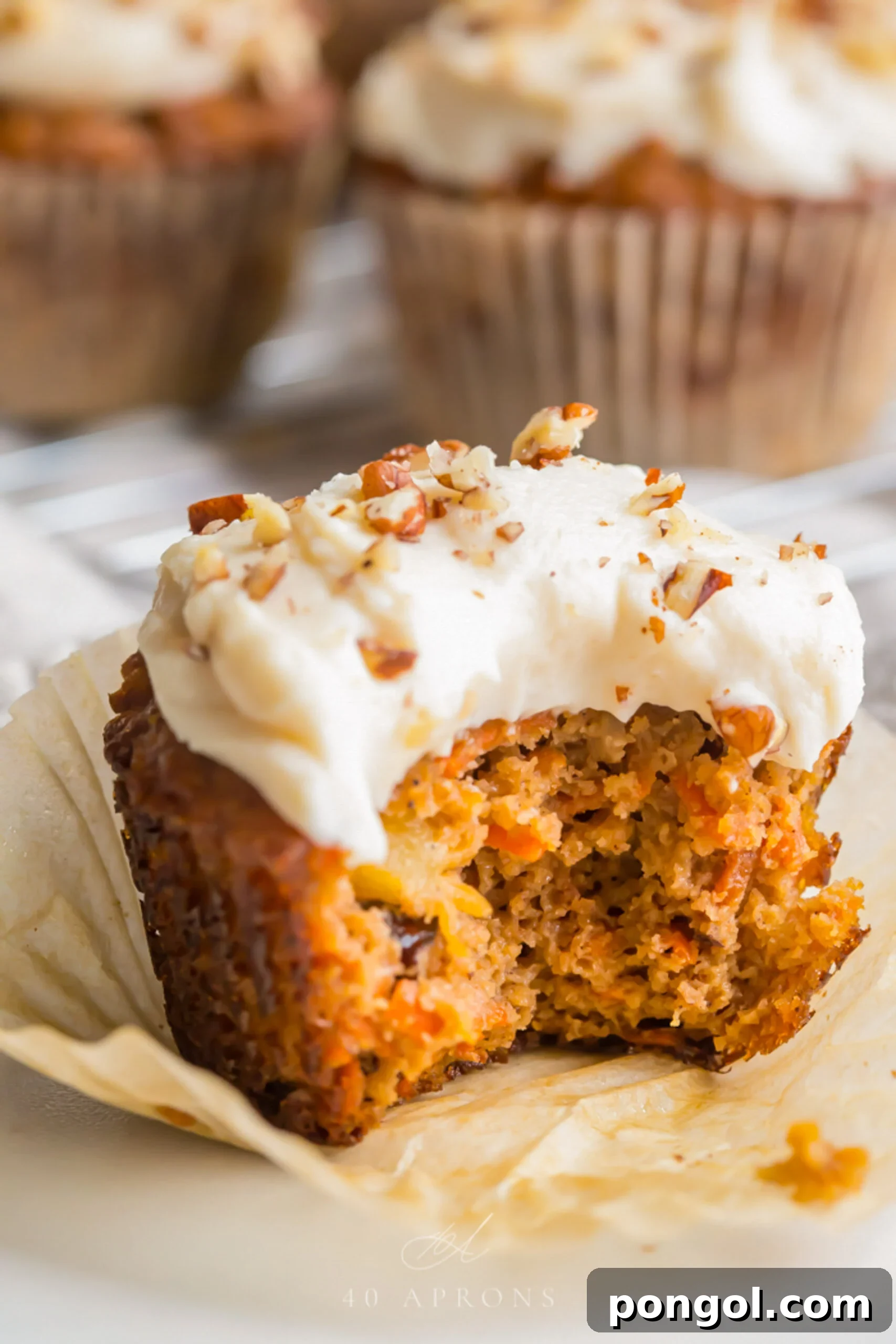
Welcome to the ultimate guide for crafting the most delightful Paleo Carrot Cake Cupcakes! Imagine biting into a dessert that’s incredibly moist, wonderfully tender, and perfectly spiced, yet completely free from gluten, grains, refined sugar, and dairy. This isn’t just a dream; it’s a reality with this meticulously designed recipe. Whether you’re planning for Easter, Mother’s Day, a baby shower, a casual potluck, or simply craving a healthier indulgence, these cupcakes are surprisingly easy to make and guaranteed to impress even the most discerning palates.
Traditional carrot cake is a beloved classic, but often comes with a hefty dose of refined ingredients. Our paleo version transforms this comfort food into a wholesome treat that doesn’t compromise on flavor or texture. We’ve thoughtfully selected ingredients that nourish your body while still delivering that iconic carrot cake experience. Get ready to bake a batch of cupcakes that are so good, no one will guess they’re a lighter, healthier alternative!
🥕 Why These Paleo Carrot Cake Cupcakes Are Simply Irresistible
There are countless reasons why this particular paleo carrot cake cupcake recipe stands out, making it a must-try for both seasoned bakers and beginners alike. We’ve spent time perfecting the balance of flavors and textures to ensure every bite is a delightful experience. Here’s what makes this recipe truly special:
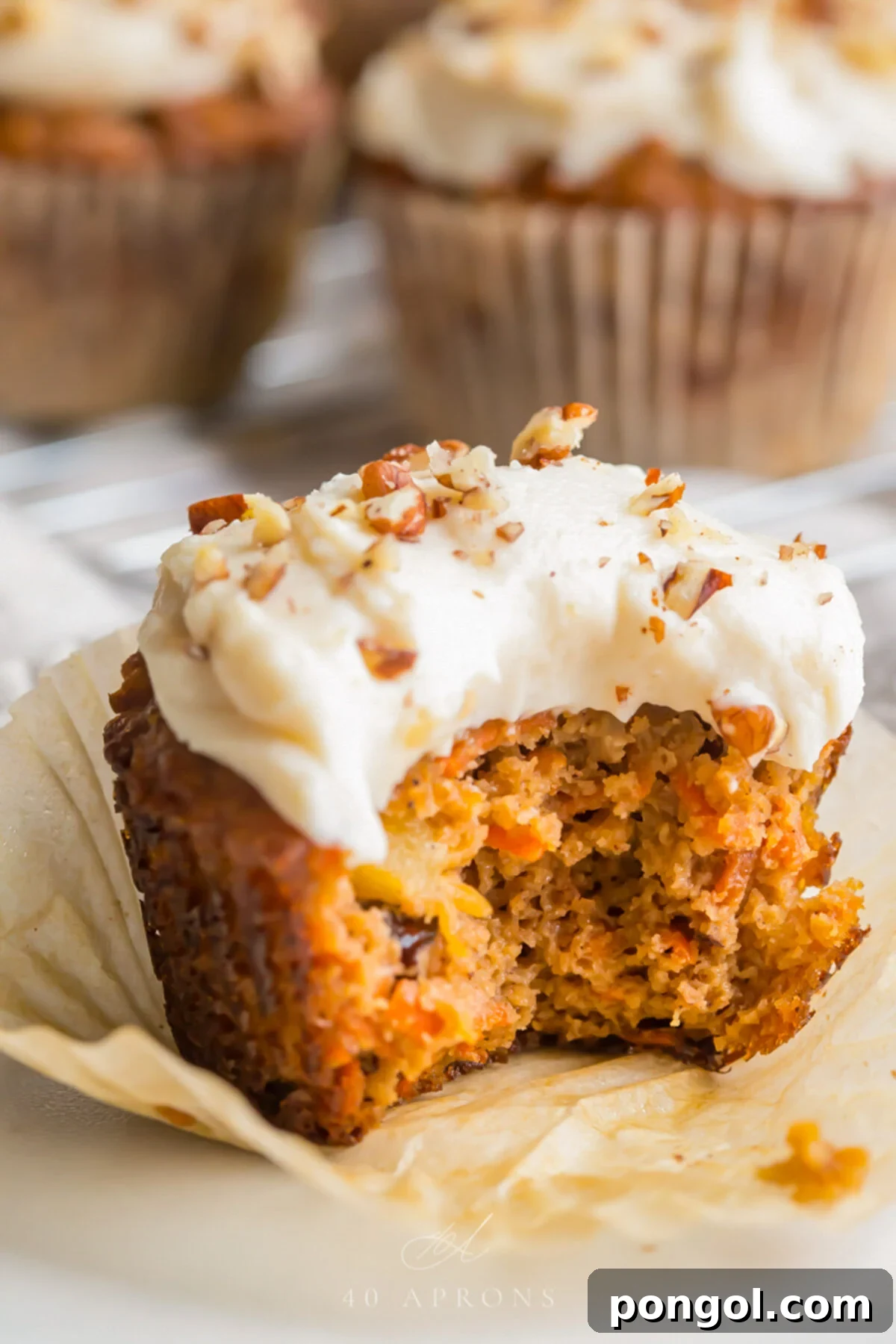
- Unmatched Taste and Texture: These aren’t just “good for being paleo” cupcakes; they are genuinely moist, fluffy, and perfectly spiced. The combination of fresh carrots, crushed pineapple, and warming spices like cinnamon and ginger creates a harmonious flavor profile that is both comforting and vibrant. The texture is so tender that it melts in your mouth, a testament to the careful balance of alternative flours and healthy fats.
- Dietary Inclusivity Without Compromise: What truly sets these cupcakes apart is their incredible adaptability. They are completely paleo, gluten-free, grain-free, refined sugar-free, and dairy-free. This makes them an ideal choice for a wide range of dietary needs and preferences, ensuring almost everyone at your gathering can enjoy a delicious dessert without feeling left out. Crucially, their exquisite taste means even those without dietary restrictions will adore them, often completely unaware they’re enjoying a healthier option.
- Effortless and Quick Preparation: Despite their gourmet appeal, this recipe is remarkably super easy and comes together surprisingly quickly. Even if you’re a novice baker, you’ll find these cupcakes foolproof. The straightforward steps and common ingredients mean less stress in the kitchen and more time to enjoy your culinary creation. It’s the perfect last-minute dessert when you need something impressive in a pinch for any spring event, from casual brunches to elegant showers.
- Versatile for Any Time of Day: While designed as a decadent dessert, these carrot cake cupcakes offer fantastic versatility. If you’re looking for a wholesome breakfast or a healthier snack, simply skip the cream cheese frosting altogether. Without the frosting, they transform into delicious paleo carrot cake muffins, packed with nourishing vegetables and fruits. Yes, we’ve even been known to enjoy them for breakfast – after all, they contain carrots AND pineapple!
🧁 Mastering the Frosting: Cream Cheese vs. Dairy-Free
The crown jewel of any carrot cake is its luscious cream cheese frosting. For these paleo cupcakes, we offer options to cater to various dietary needs without sacrificing that signature tangy-sweet creaminess. Understanding the nuances of each choice will help you create the perfect topping for your cupcakes.
If you are strictly paleo or avoiding all dairy, opting for a dairy-free cream cheese frosting is essential. The market has come a long way, offering excellent plant-based alternatives that truly mimic the flavor and texture of traditional cream cheese. Personally, I’ve found brands like Kite Hill and Miyoko’s to be superior choices, providing the closest experience to the real thing in terms of tang and richness. While the texture might not be *quite* as thick as conventional cream cheese due to the difference in fat and protein structure, it’s still wonderfully spreadable and undeniably delicious. The triumph here is achieving a completely dairy-free recipe that still delivers on classic carrot cake expectations.
However, if you can consume dairy and are not strictly paleo, I highly recommend using regular, organic cream cheese. Traditional cream cheese offers an unparalleled tang, thickness, and richness that dairy-free alternatives, however good, sometimes struggle to fully replicate. For the most authentic and robust flavor, full-fat organic cream cheese is the way to go.
For those who generally avoid dairy but aren’t overly strict, perhaps due to sensitivity rather than a full allergy, consider using a cultured cream cheese. Similar to yogurt, cultured dairy products undergo a fermentation process that breaks down lactose and makes them easier on digestion for many individuals. Nancy’s is an excellent brand to explore if you’re looking for a cultured cream cheese option that provides a lovely tang and creaminess with potentially fewer digestive issues than conventional cream cheese.
Regardless of your choice, ensure your cream cheese (dairy or dairy-free) is softened to room temperature before mixing. This is crucial for achieving a smooth, lump-free frosting that spreads beautifully over your tender carrot cake cupcakes.
👩🏼🍳 Expert Tips for Perfect Paleo Carrot Cake Cupcakes
Achieving bakery-quality paleo carrot cake cupcakes at home is entirely possible with a few insider tips and tricks. These suggestions will help you navigate common baking challenges and elevate your results, ensuring every batch is a success.
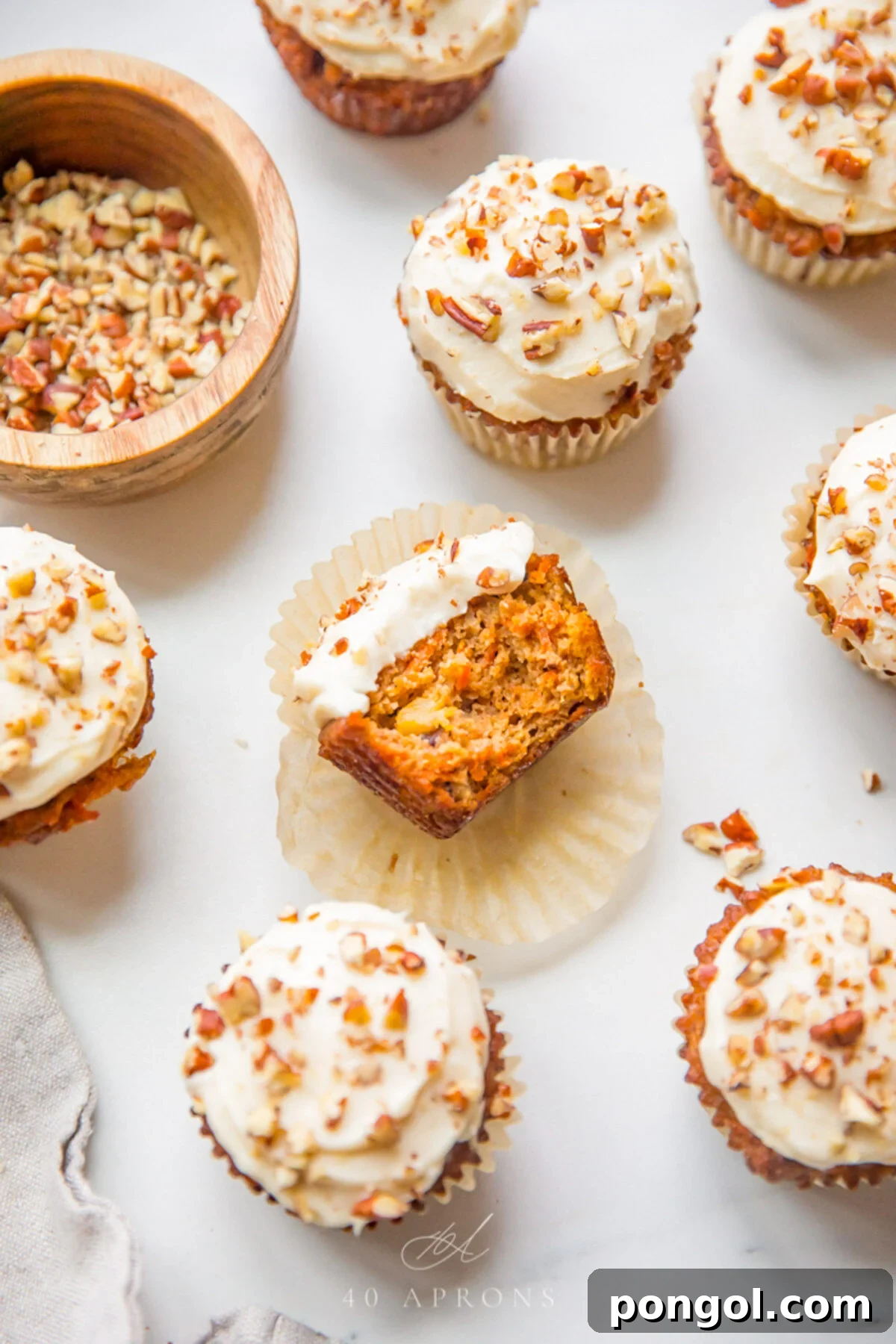
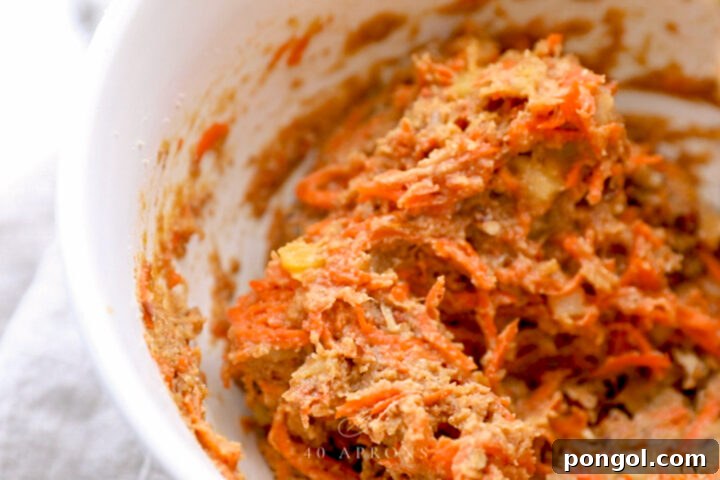
- Finely Grating Carrots for Ideal Texture: The texture of your carrots can significantly impact the final cupcake. If you prefer a very smooth, uniform crumb without noticeable strands of carrot, your food processor is your best friend. After manually grating your carrots, simply toss them into the food processor bowl and pulse them ever-so-slightly until they are very fine. The key here is not to overdo it. Over-processing will turn your carrots into a mushy, liquidy purée, which can throw off both the flavor and the delicate texture of your cupcakes, making them too dense or wet. If you don’t have a food processor or prefer a hands-on approach, you can achieve a similar result by finely chopping the grated carrots with a sharp kitchen knife.
- Pineapple or Applesauce: A Moisture Secret: Crushed pineapple is a secret weapon in carrot cake, contributing not only a subtle sweetness but also essential moisture that keeps the cupcakes incredibly tender. However, if you’re not a fan of pineapple or simply don’t have it on hand, you can easily replace the crushed pineapple with an equal amount of unsweetened applesauce. Like pineapple, applesauce works wonders in keeping your paleo carrot cake cupcakes beautifully moist and tender, while remaining perfectly paleo-friendly. Feel free to use good quality store-bought unsweetened applesauce or, for an even fresher taste, make your own ahead of time.
- The Non-Negotiable Flour Blend: Paleo baking often involves specific flour combinations, and this recipe is no exception. The blend of almond flour, coconut flour, and tapioca flour is carefully balanced to achieve the perfect crumb structure, moisture retention, and elasticity. Therefore, I do not recommend replacing the almond flour, coconut flour, or tapioca flour with any other flours. Each flour plays a unique and crucial role:
- Coconut flour is exceptionally absorbent, acting like a sponge. If you attempt to substitute almond flour with more coconut flour, it will soak up far too much liquid, resulting in cupcakes that are dry, dense, and crumbly.
- Tapioca flour (also known as tapioca starch) is vital for giving the cake that desirable spongy, slightly chewy texture that almond flour and coconut flour alone cannot provide. It contributes to the structural integrity and lightness of the cupcakes.
- Almond flour provides the bulk and a tender richness, working in harmony with the other flours.
Sticking to the specified flour blend is key to replicating the intended texture and deliciousness of these cupcakes. Trust the process, and you’ll be rewarded with perfect results!
- Room Temperature Ingredients Are Key: For both the cupcake batter and the frosting, ensuring your eggs, coconut oil (for frosting), and cream cheese (dairy or dairy-free) are at room temperature is crucial. This allows all ingredients to emulsify properly, creating a smooth, cohesive batter and a lump-free, fluffy frosting. Cold ingredients can cause the batter or frosting to curdle or become stiff and difficult to work with.
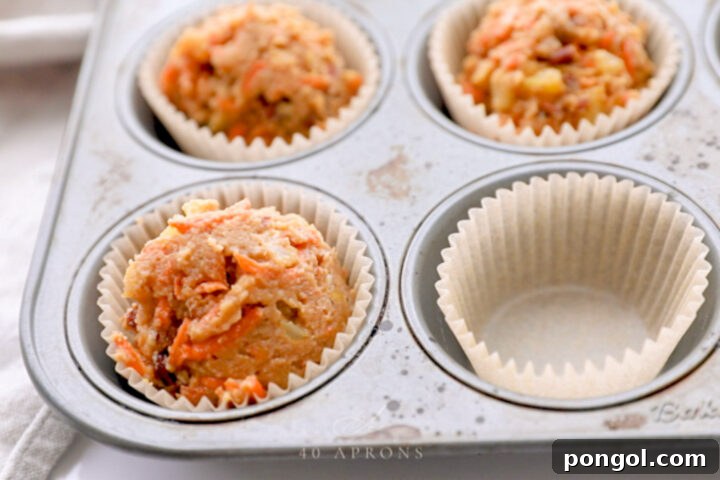
- Don’t Overfill Your Liners: To prevent cupcakes from spilling over or sinking in the middle, avoid overfilling the cupcake liners. Aim to fill each liner about two-thirds full. This leaves enough room for the cupcakes to rise beautifully without creating a mess or an uneven bake.
💬 Frequently Asked Questions About Paleo Carrot Cake Cupcakes
Yes, if they are frosted! Since the delicious cream cheese frosting (whether dairy or dairy-free) is made with perishable ingredients, it needs to be refrigerated to prevent spoilage. Always store frosted cupcakes in an airtight container in the refrigerator. Unfrosted paleo carrot cake muffins, however, do not contain any dairy ingredients in the base recipe, so they can be stored in an airtight container at room temperature for a couple of days, though refrigeration will extend their freshness.
It certainly sounds like it should be, doesn’t it? After all, it contains vegetables and fruit! Unfortunately, traditional carrot cakes often pack a significant amount of oil, cream cheese, refined sugar, and processed flour, outweighing the health benefits of the carrots themselves. This paleo carrot cake cupcake recipe, however, takes a different approach. We keep all the goodness of the carrots and replace those less-healthy ingredients with wholesome, nutrient-dense alternatives like coconut oil, coconut flour, almond flour, natural coconut sugar, and pure maple syrup. This transformation makes our version a much “healthier” indulgence while still delivering on flavor.
Several common issues can cause cupcakes to sink in the middle. Here are the most frequent culprits and how to avoid them:
- Opening the oven door too early or too often: This causes a sudden drop in temperature, making the rising batter collapse. Resist the urge to peek before the recommended baking time is almost up.
- Expired baking soda: Baking soda loses its potency over time. Always check the expiration date and ensure it’s fresh for optimal leavening.
- Using too much baking soda: While essential for rise, an excess of baking soda can cause cupcakes to rise too quickly and then collapse. Stick to the precise measurement in the recipe.
- Over-mixing the batter: Over-mixing develops the gluten (even in gluten-free flours, it can affect texture if over-processed) and incorporates too much air, which then escapes, leading to a sunken center. Mix just until combined.
- Letting the batter sit too long before baking: The leavening agents start working as soon as they’re mixed with wet ingredients. If the batter sits too long, it loses its rising power. Bake immediately after mixing.
- The oven being too hot: An oven that’s too hot can cause the outside of the cupcake to set before the inside is fully cooked. This leads to a hollow center that collapses. Ensure your oven temperature is accurate using an oven thermometer.
- Filling the liners with too much batter: Overfilled liners can lead to cupcakes rising too high and then sinking as they cool. Fill liners about two-thirds full.
More Paleo-Friendly Delights You’ll Love
If you’ve enjoyed these incredible paleo carrot cake cupcakes, you’ll be thrilled to discover other delicious recipes that fit a similar wholesome lifestyle. Here are some of our favorites:
- Best Chocolate Paleo Cupcakes Ever with Dark Chocolate Frosting
- Peach Ginger Paleo Muffins
- Paleo Carrot Cake with “Cream Cheese” Frosting (Gluten Free, Dairy Free)
- Perfect Paleo Brownies (Fudgy, Crackly Top, Gluten Free)
- Carrot Cake Paleo Breakfast Bake with “Cream Cheese” Glaze
- Paleo Pumpkin Chocolate Chip Muffins with Cream Cheese Frosting (Dairy-Free, GF)
- Paleo Pecan Pie
- Pumpkin Muffins with a Spiced Crumb Topping
- Paleo Lime Bars (Gluten Free, Dairy Free)
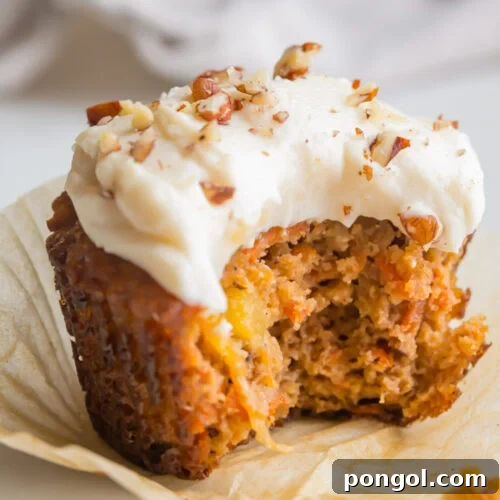
Carrot Cake Cupcakes with Cream Cheese Frosting (Paleo, Gluten Free, Dairy Free)
 Cheryl Malik
Equipment
-
Oven
-
Metal muffin pan with 12 full-size cupcake cavities
-
Cupcake liners paper or silicone
-
Large mixing bowl
-
Whisk
-
Silicone spatula
-
Cookie scoop with release handle optional
-
Toothpicks optional, to check doneness
-
Wire cooling rack
-
Medium mixing bowl or stand mixer bowl
-
Hand-held mixer or stand mixer
-
Offset spatula or butter knife, or piping bag and piping tips
Ingredients
For the Carrot Cake Cupcakes
- 2 large eggs at room temperature
- ½ cup coconut sugar
- ⅓ cup refined coconut oil liquid, or just melted if solid
- 2 teaspoons pure vanilla extract
- 1 8-ounce can organic crushed pineapple drained well, approximately 1 cup; see Notes
- 1 ½ cups grated carrots
- 1 ½ cups fine almond flour
- 2 tablespoons coconut flour
- 2 tablespoons tapioca flour
- 1 teaspoon fresh baking soda
- 1 pinch salt
- ½ teaspoon cinnamon
- ¼ teaspoon ground ginger
- ½ cup chopped pecans see Notes
For the Cream Cheese Frosting
- 8 ounces dairy-free cream cheese softened, see Notes
- ¼ cup pure maple syrup
- ¼ cup refined coconut oil softened, see Notes
- ½ teaspoon pure vanilla extract
- 1 pinch ground ginger
Suggested Garnish (Optional)
- finely chopped pecans
Instructions
For the Carrot Cake Cupcakes
-
Preheat oven to 350º Fahrenheit (175°C). Adjust oven racks as needed so the muffin pan will sit in the center of the oven. Line the cavities of the muffin pan with cupcake liners. Set the pan aside.
-
Crack eggs directly into a large mixing bowl. Whisk the eggs vigorously until well combined and slightly frothy. Be careful not to overmix at this stage.
-
Add coconut sugar, melted coconut oil, and pure vanilla extract to the bowl. Whisk or stir well until all ingredients are fully combined and the mixture is smooth.
-
Add the well-drained crushed pineapple, grated carrots, almond flour, coconut flour, tapioca flour, baking soda, salt, cinnamon, and ground ginger to the bowl. Stir gently with a silicone spatula until all dry ingredients are fully incorporated into the wet, forming a thick cupcake batter. It’s crucial not to over-stir, as this can lead to dense, tough cupcakes.

-
Once the batter is prepared, add the ½ cup of chopped pecans. Gently fold the pecans into the batter using your spatula to ensure even distribution.
-
Use a cookie scoop with a release handle or a spatula to portion the cupcake batter evenly into the prepared cupcake liners, filling each liner about two-thirds full.
-
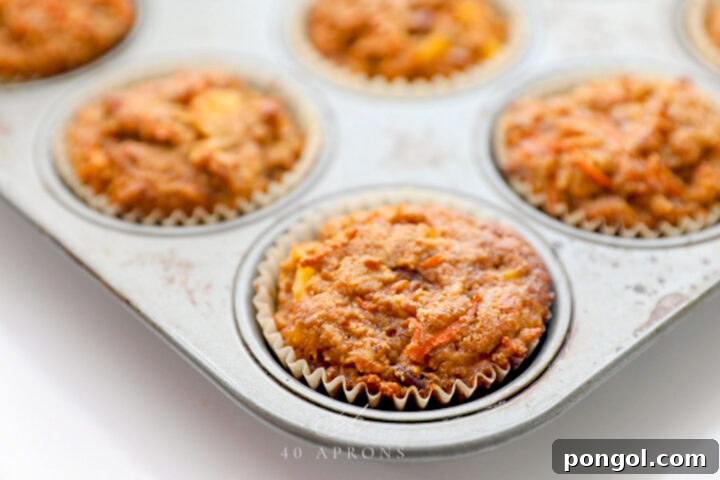
Place the filled muffin pan in the center of the preheated oven. Bake the cupcakes for approximately 20 minutes.
-
After 20 minutes, begin testing for doneness by inserting a toothpick into the center of a cupcake, then immediately removing the toothpick. Continue baking, checking doneness every 1 to 2 minutes, until the toothpick can be removed cleanly, with few or no moist crumbs stuck to it.
-
Once the cupcakes are fully baked, carefully remove the pan from the oven and set it aside on a heat-proof surface. Let the cupcakes rest in the pan for 5 minutes or until cool enough to handle, then transfer them from the pan to a wire cooling rack. Allow the cupcakes to cool completely before frosting. This is crucial for the frosting to set properly.
For the Cream Cheese Frosting
-
Add the softened cream cheese (dairy or dairy-free), pure maple syrup, softened coconut oil, pure vanilla extract, and a pinch of ground ginger to a medium mixing bowl or the bowl of a stand mixer.
-
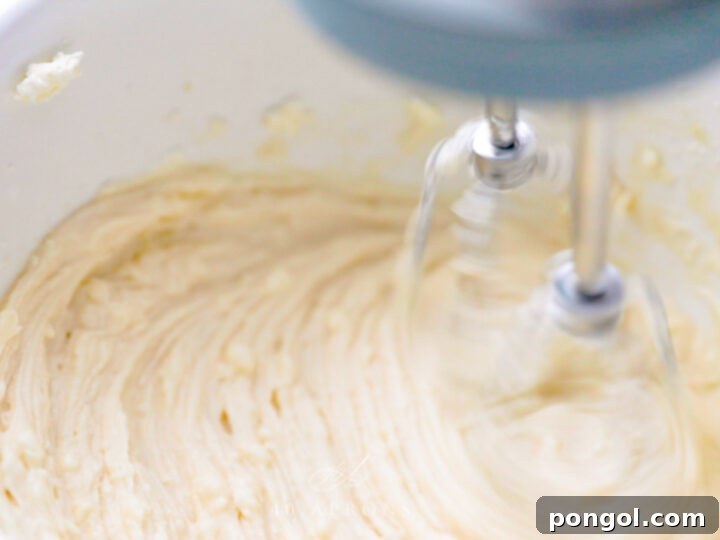
Use a hand mixer or stand mixer fitted with the paddle attachment to whip the ingredients together on medium-high speed until they are fully combined, and the mixture is smooth, light, and fluffy. Scrape down the sides of the bowl as needed to ensure everything is incorporated.
-
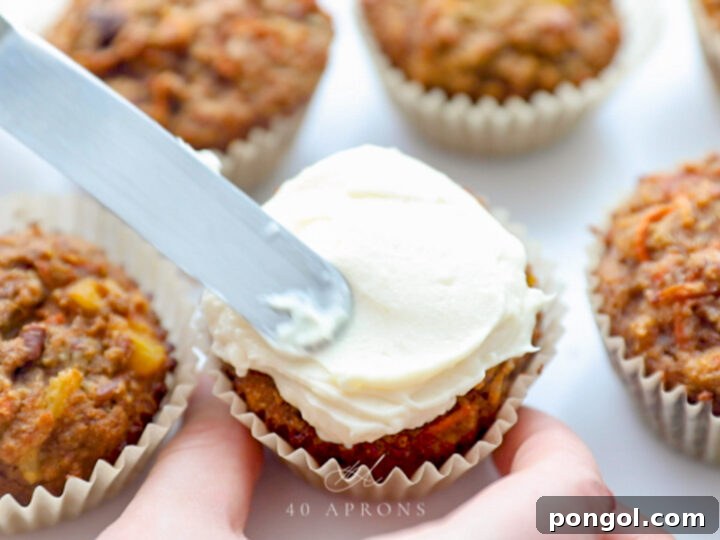
Once the cupcakes are completely cooled, use an offset spatula or a butter knife to dollop a generous amount of frosting onto the center of each cupcake top. Gently spread the dollop outwards to cover the top of the cupcake completely, creating a smooth, even layer. Repeat until all cupcakes have been frosted. Alternatively, for a more decorative finish, transfer the frosting to a piping bag fitted with your piping tip of choice, then pipe the frosting directly onto the cupcakes in a spiral or decorative motion.
-
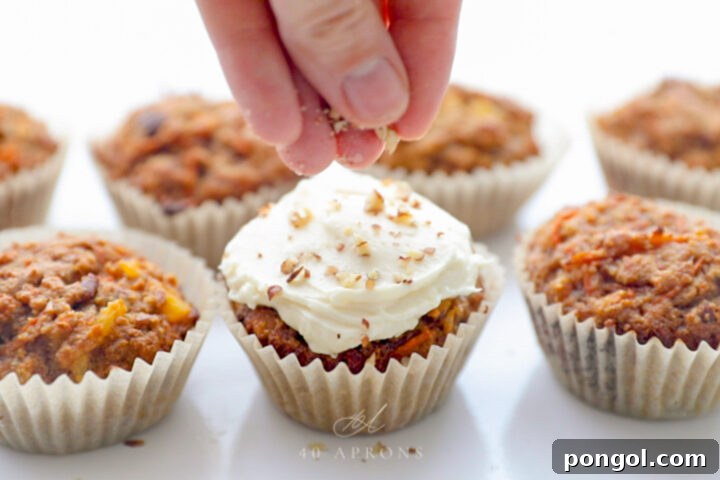
If desired, garnish the top of the frosting with additional finely chopped pecans for added texture and visual appeal. Serve immediately, or arrange the frosted cupcakes on a tray or platter and refrigerate until ready to serve.
Video
Chef’s Notes
- Cupcake Liners: While parchment paper liners are often great for non-stick baking, they tend not to cling well to these paleo cupcakes once cooled. For the best presentation and ease of handling, especially if you’re displaying them or want them to retain their cute liner aesthetic, I highly recommend using traditional regular paper liners or reusable silicone liners instead of parchment paper ones.
- Coconut Oil: It’s important to use refined coconut oil in this recipe if you prefer a neutral flavor profile. Unrefined coconut oil will impart a stronger, more distinct coconut scent and flavor, which might alter the classic carrot cake taste you’re aiming for. If your coconut oil is solid at room temperature, gently warm it just enough to melt it completely until it is liquid. Be careful not to overheat it to the point of being hot, as this can affect the texture of your batter.
- Pineapple: For the best quality and flavor, use organic crushed pineapple packed in organic pineapple juice, if possible. Always ensure that your crushed pineapple does not contain any added sugars, artificial sweeteners, or high-fructose corn syrup, as these would not be paleo-friendly. Make sure it’s very well drained to avoid excess moisture in your cupcakes.
- Pecans: Chopped pecans add a wonderful crunch and nutty flavor that complements the carrot cake beautifully. However, if you have a nut allergy or simply prefer to omit them, you can do so entirely. For variations, you can also replace the pecans in the batter with an equal amount of chopped walnuts or even unsweetened raisins for a different texture and taste.
- Frosting Consistency: To achieve a perfectly smooth and lump-free cream cheese frosting, the coconut oil used in the frosting needs to be quite soft, ideally at a spreadable, room-temperature consistency, or even melted completely if solid. If you melt the coconut oil, ensure you give the frosting mixture enough time to chill and firm up slightly before attempting to frost the cupcakes. This will allow it to thicken to a pipeable or spreadable consistency.
- Cream Cheese Selection: As discussed earlier, your choice of cream cheese depends on your dietary needs. If you are strictly paleo or dairy-free, dependable dairy-free cream cheese brands include Kite Hill, Miyoko’s, or Violife. These offer excellent plant-based alternatives. If dairy is not an issue for you, then traditional full-fat cream cheese will provide a tangier and richer flavor that many prefer.
- Storing Leftovers: Due to the cream cheese-based frosting, these cupcakes must be refrigerated. Store leftover frosted cupcakes in an airtight container in the refrigerator for up to 5 days. Storing them at room temperature is not recommended, as the frosting can spoil quickly. Unfrosted cupcakes (muffins) can be kept in an airtight container at room temperature for 2-3 days, but refrigeration is best for longer freshness.
Approximate Information for One Serving
Nutrition Disclaimers
Number of total servings shown is approximate. Actual number of servings will depend on your preferred portion sizes.
Nutritional values shown are general guidelines and reflect information for 1 serving using the ingredients listed, not including any optional ingredients. Actual macros may vary slightly depending on specific brands and types of ingredients used.
To determine the weight of one serving, prepare the recipe as instructed. Weigh the finished recipe, then divide the weight of the finished recipe (not including the weight of the container the food is in) by the desired number of servings. The result will be the weight of one serving.
Did You Make This Recipe?
Tag @40aprons on Instagram and be sure to leave a review on the blog post!
Tag @40Aprons on Instagram