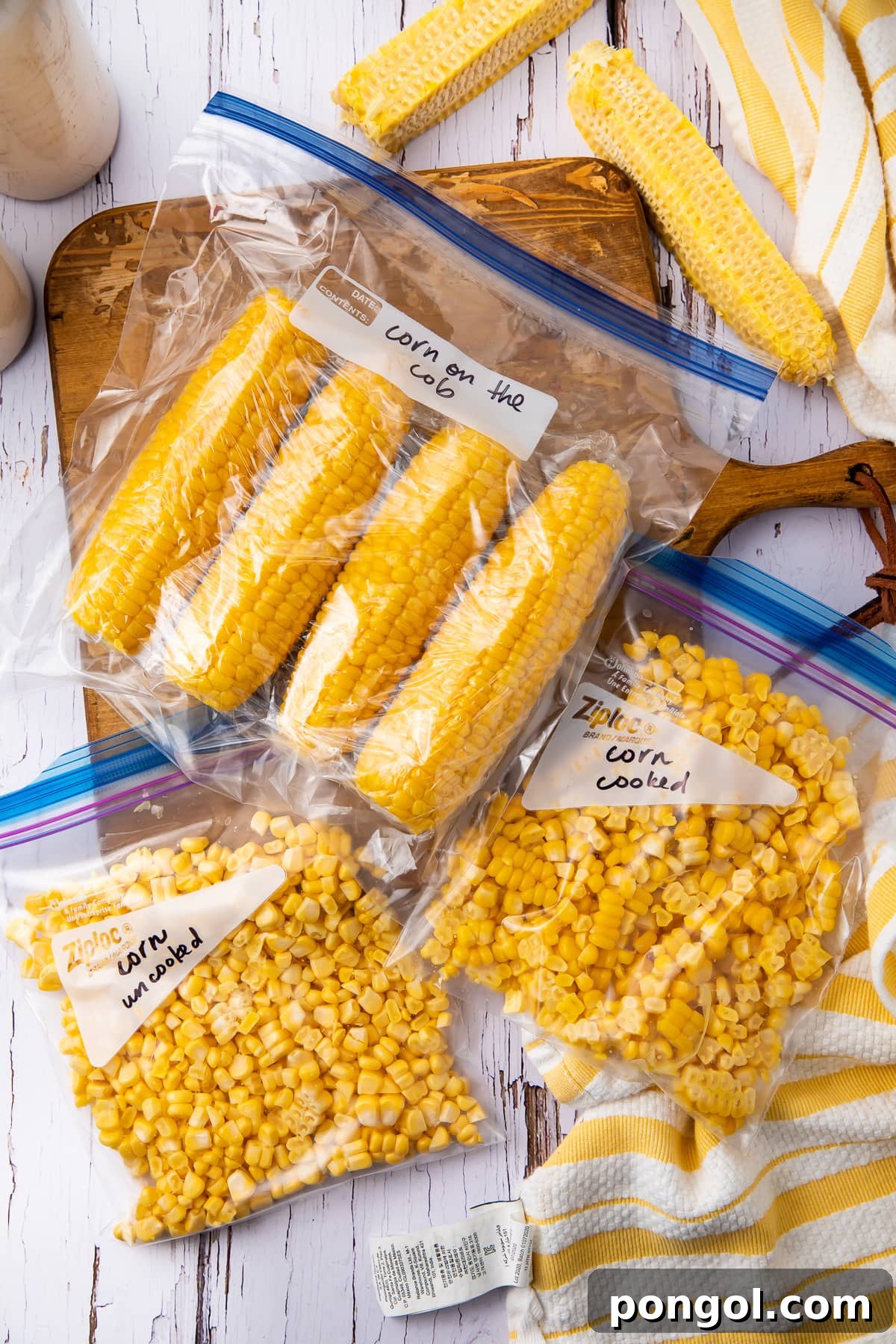
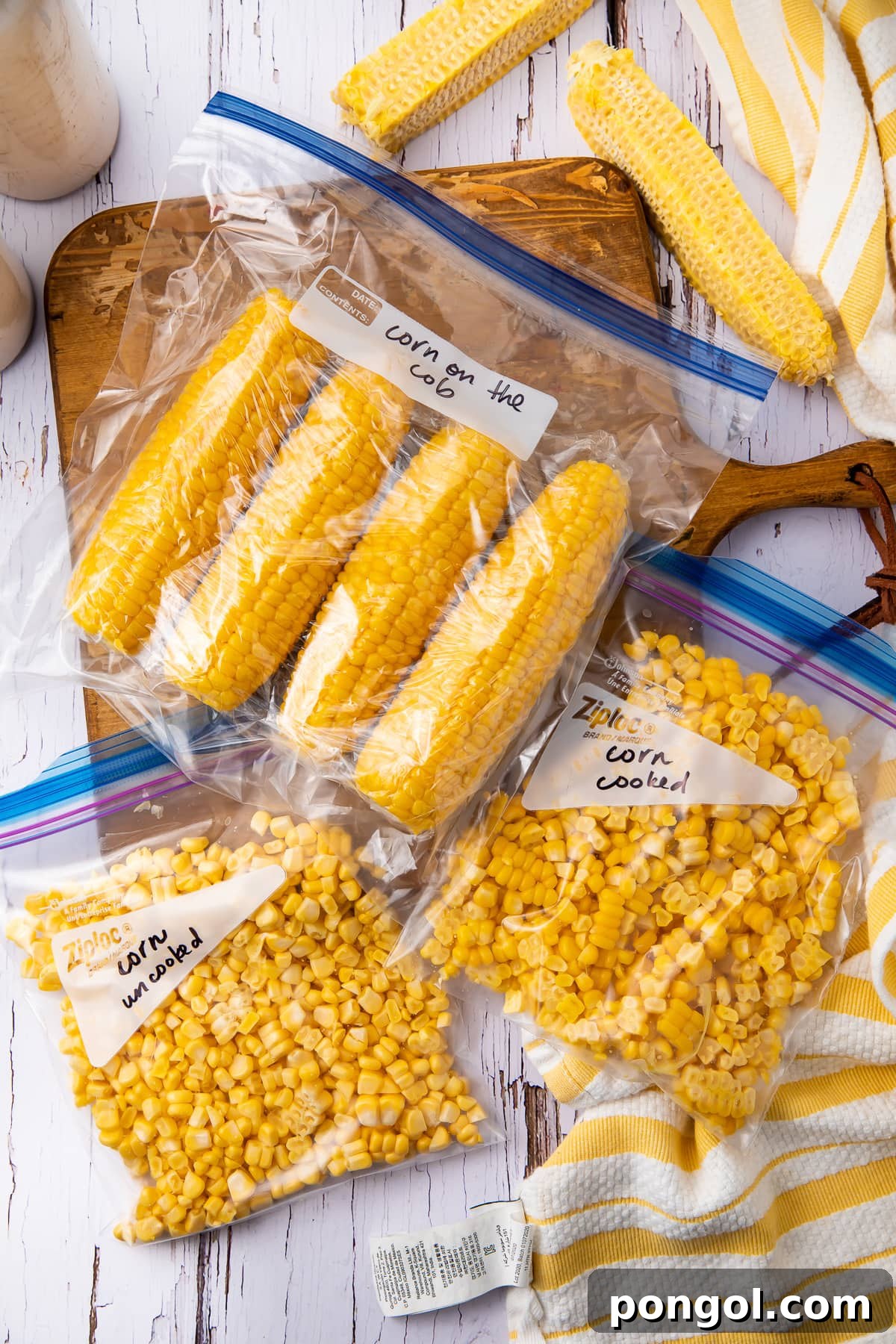
Imagine biting into a sweet, tender ear of corn in the middle of winter, tasting as fresh as if it were just picked from a sun-drenched summer field. This dream can become a delicious reality when you learn how to freeze corn effectively. Freezing fresh corn—both on the cob and as kernels—is an incredibly rewarding way to capture its peak flavor and enjoy it for months to come. This comprehensive guide provides simple, step-by-step methods for freezing corn on the cob, uncooked kernels, and blanched (cooked) kernels, preparing you for any culinary situation and ensuring you never miss that sweet summer taste.
🌽 Why Freezing Corn is a Must-Do for Every Home Cook
Freezing corn isn’t just a convenient hack; it’s a smart strategy for anyone who loves fresh produce. Here’s why you should make freezing corn a regular part of your summer routine:
- Savor Seasonal Sweetness Anytime: The most compelling reason to freeze corn is to extend the joy of fresh, sweet summer corn far beyond its growing season. By preserving it during its prime, you can easily pull out a bag in the dead of winter and enjoy its vibrant flavor in your favorite dishes. Properly frozen corn can maintain its quality for up to 12 months, as long as it’s protected from freezer burn.
- Effortless Preservation: You might think freezing vegetables is a complex task, but freezing corn is surprisingly straightforward. Each method outlined in this guide is designed to be super easy, requiring minimal equipment and time. Before you know it, you’ll have a substantial stockpile of fresh corn ready for any occasion. This simplicity makes it an ideal starting point for anyone new to home food preservation.
- Versatility in Preparation: One of the greatest advantages of freezing corn is the flexibility it offers. You can choose to freeze the corn cooked (blanched) or uncooked. Blanching, a quick dip in boiling water followed by an ice bath, helps preserve the corn’s flavor, texture, and nutritional value by stopping enzyme action. While it adds an extra step compared to simply cutting kernels off the cob and bagging them, many find that the improved quality of blanched corn is well worth the minor effort. We’ll cover both methods so you can choose what works best for you.
- Cost-Effective and Reduces Waste: When corn is in season, it’s often abundant and affordable. Freezing it allows you to buy in bulk during sales, saving money in the long run. It also helps reduce food waste by preventing fresh corn from spoiling before you can use it all.
- Nutritional Benefits: Freezing corn shortly after harvesting helps lock in its vitamins and minerals, making it a healthy addition to your diet even months later. It’s a great source of fiber, antioxidants, and essential nutrients.
👩🏼🍳 Expert Tips for Perfectly Frozen Corn
Achieving the best results when freezing corn involves a few simple yet crucial techniques. These expert tips will help ensure your frozen corn tastes as fresh as possible:
- Skip the Salt in Boiling Water: When blanching corn, resist the urge to add salt to the boiling water. While salt enhances flavor in many cooking applications, it can actually make corn tough during the blanching process. For tender, perfectly preserved corn, simply boil it in plain water. You can always season it to your liking once thawed and ready to eat.
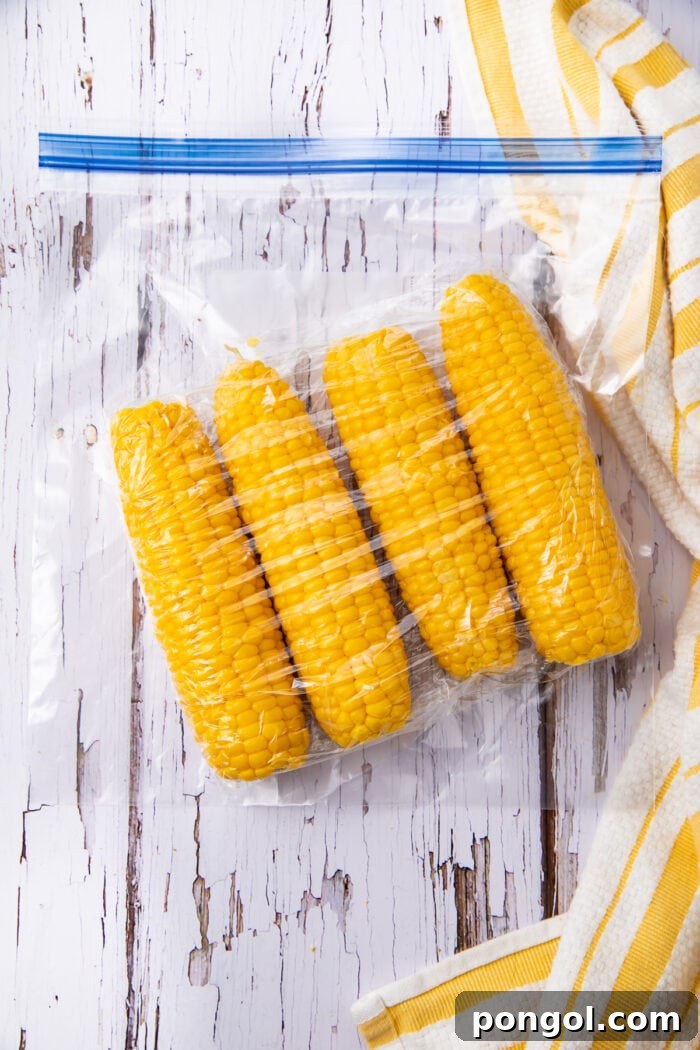
- Customize Corn on the Cob Size: If you’re freezing corn on the cob, consider cutting the ears into smaller, more manageable pieces before blanching and freezing. This is entirely optional but can be a huge space-saver in your freezer and make individual portions easier to store and reheat later. Cutting them in half or thirds won’t affect the blanching time or the quality of the frozen corn.
- Master Pre-Portioning for Convenience: To maximize convenience when using your frozen corn, pre-portion it into desired amounts. Whether you prefer half-cup, one-cup, or two-cup servings, simply measure out your corn into smaller sealable bags, like sandwich bags or quart-sized freezer bags. You can then gather these individually portioned bags into a larger gallon-sized freezer bag for organized storage. This method allows you to take out precisely what you need for a recipe without having to thaw and re-freeze a large batch, saving time and preventing waste.
- Prevent Freezer Burn: Air is the enemy of frozen food. Always ensure you remove as much air as possible from your freezer bags before sealing them. This prevents ice crystals from forming and helps maintain the corn’s texture and flavor.
- Choose the Freshest Corn: The quality of your frozen corn directly depends on the freshness of the corn you start with. Freeze corn as soon as possible after purchasing or harvesting for the best results. The sweeter and more tender it is fresh, the better it will be after freezing.
🥣 How To Use Your Delicious Frozen Corn
Now that you’ve mastered how to freeze corn, the culinary possibilities are endless! Frozen corn is incredibly versatile and can be used in almost any dish where you’d typically use fresh or canned corn. There’s no need to thaw kernels completely before cooking if you’re adding them to hot dishes like soups or stir-fries; simply toss them in directly. For recipes requiring thawed corn, like salads or salsas, let it thaw in the refrigerator overnight or run under cold water. Here are some of my favorite corn recipes that can be elevated with your home-frozen bounty:
- Corn Souffle
- Roasted Chili Corn Salsa (Chipotle Copycat)
- Corn Relish
- Mexican Street Corn Salad
- Instant Pot Corn on the Cob with Honey Butter
- Elote (Mexican Street Corn)
- Roasted Chili Corn Salsa
- Cornbread Salad
- Air Fryer Corn on the Cob
- Creamy Corn Soup
- Mexican Corn Dip
- Instant Pot Corn on the Cob with Honey Butter
Beyond these recipes, frozen corn is fantastic in stir-fries, casseroles, fajitas, rice dishes, and even simple side dishes with butter and herbs. Its natural sweetness makes it a wonderful addition to almost any meal.
📚 Other Essential “How To” Guides You’ll Love
Mastering food preservation and preparation techniques can transform your kitchen experience. Here are more helpful guides to expand your culinary skills:
- How to Cook Turkey Bacon in the Oven
- How To Roast Garlic
- 3 Ways to Freeze Zucchini
- How to Freeze Peaches
- Orange Zest – How to Make It and Ways to Use It
- How To Cut a Pineapple Easily
- All About Lemon Zest + 4 Ways to Zest a Lemon
- How to Dice an Onion… the Easy Way!
- How to Freeze Broccoli (with 3 Cooking Methods)
Recipe By: Cheryl Malik
5 from 2 votes
How to Freeze Corn (on the Cob and Kernels)
Prep Time: 30 minutes
Cook Time: 30 minutes
Total Time: 1 hour
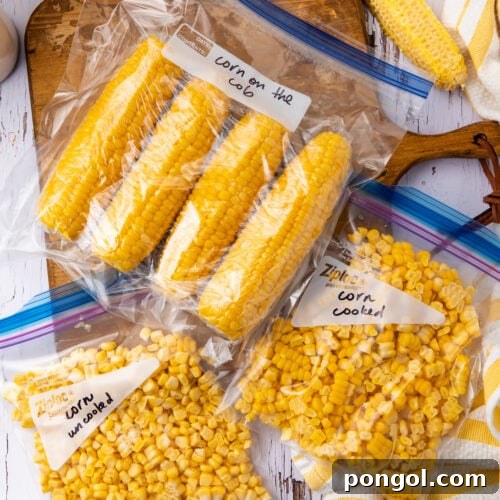
Learn how to freeze corn 3 different ways and stock up on this fresh summer produce for months to come.

Cheryl Malik
Pin Recipe
Save Recipe
Servings: 4 servings
Equipment
- Food-safe, sealable freezer bags
- Large pot (if cooking corn)
- Large bowl (for ice bath, if cooking corn)
- Tongs (if cooking corn)
- Baking sheet (if cooking corn)
- Plastic wrap (if cooking corn)
- Cutting board or large bowl (if cutting off kernels)
- Sharp knife (if cutting off kernels)
Ingredients
- Fresh ears of corn (any size)
- Ice (for ice bath)
- Water (for ice bath)
Instructions
To Freeze Corn on the Cob
- Remove corn husks and silks. Fill a large pot approximately half full with water and set over medium-high heat. Fill a large bowl with ice and water to create an ice bath and set aside.
- Once the water reaches a rolling boil, carefully add the peeled ears of corn. Cook for approximately 3 to 4 minutes, making sure to turn the corn every 1 to 2 minutes to ensure even cooking.
- Using tongs, promptly transfer the blanched corn from the boiling water directly into the prepared ice bath. Allow the corn to soak in the ice bath for approximately 4 to 5 minutes, or until completely cool to the touch. This step, known as shocking, stops the cooking process and preserves the corn’s texture and color.
- Remove the corn from the ice bath and pat each ear completely dry with a clean towel. Any residual moisture can lead to freezer burn. Place the dried corn in a single layer on a baking sheet, then transfer the baking sheet to the freezer for 1 to 2 hours, or until the corn is solid. This pre-freezing step prevents the ears from sticking together when packaged.
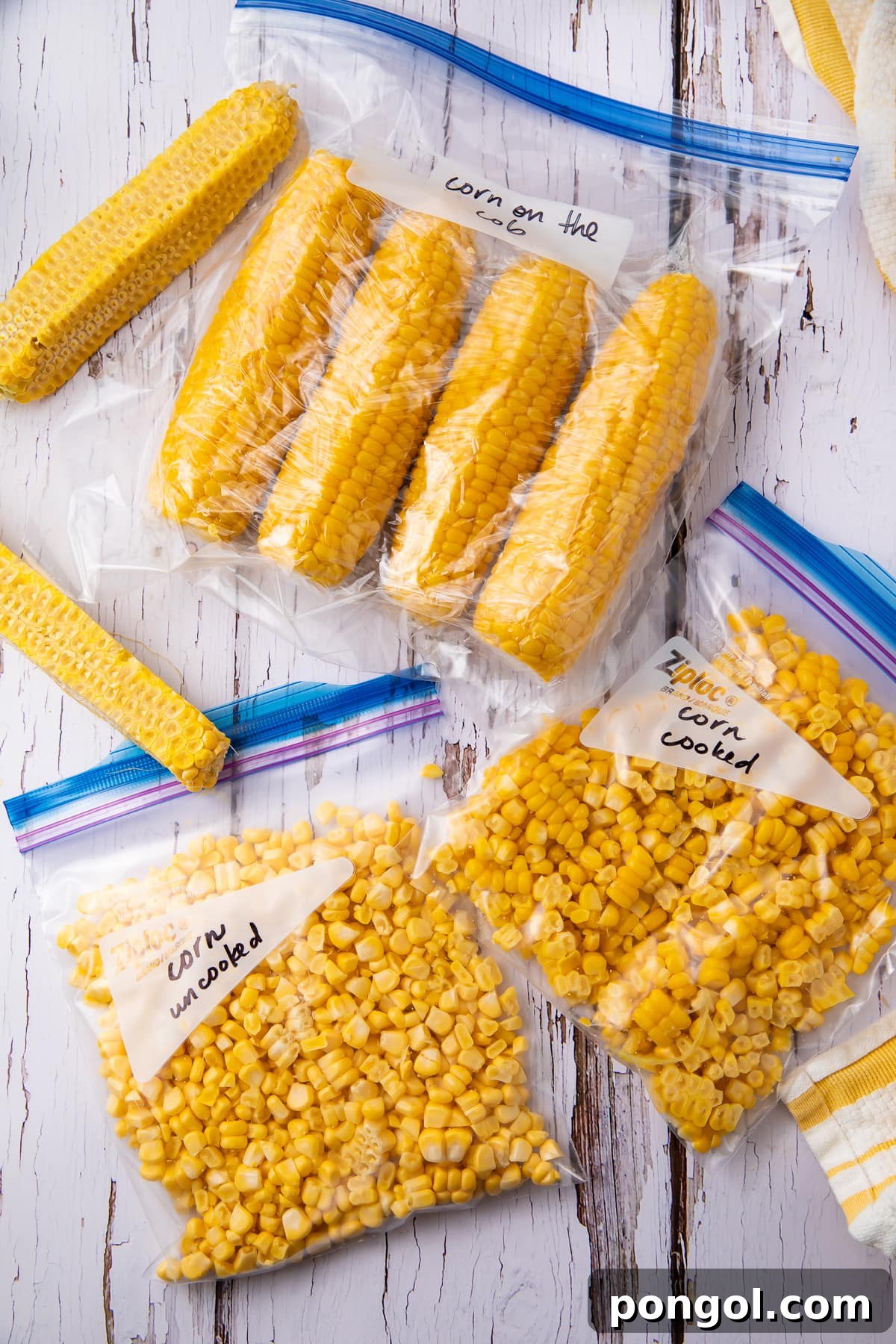
- Once frozen solid, remove the baking sheet from the freezer. Tightly wrap each individual ear of corn in plastic wrap. Place the wrapped corn into a sealable plastic freezer bag. Seal the bag almost completely, then press out as much air as possible before sealing it completely. Return the corn to the freezer for long-term storage.
To Freeze Uncooked Corn Kernels
- Remove corn husks and silks from the fresh ears of corn.
- Hold each ear of corn vertically, placing the bottom end against a cutting board or inside a large bowl to catch the kernels. Hold the top end firmly with your non-cutting hand. Using a sharp knife, carefully cut the raw kernels off the corn cob. Start at the top end, slicing as close to the cob as possible, and move downwards towards the cutting board or bowl. Rotate the cob and repeat until all kernels are removed.
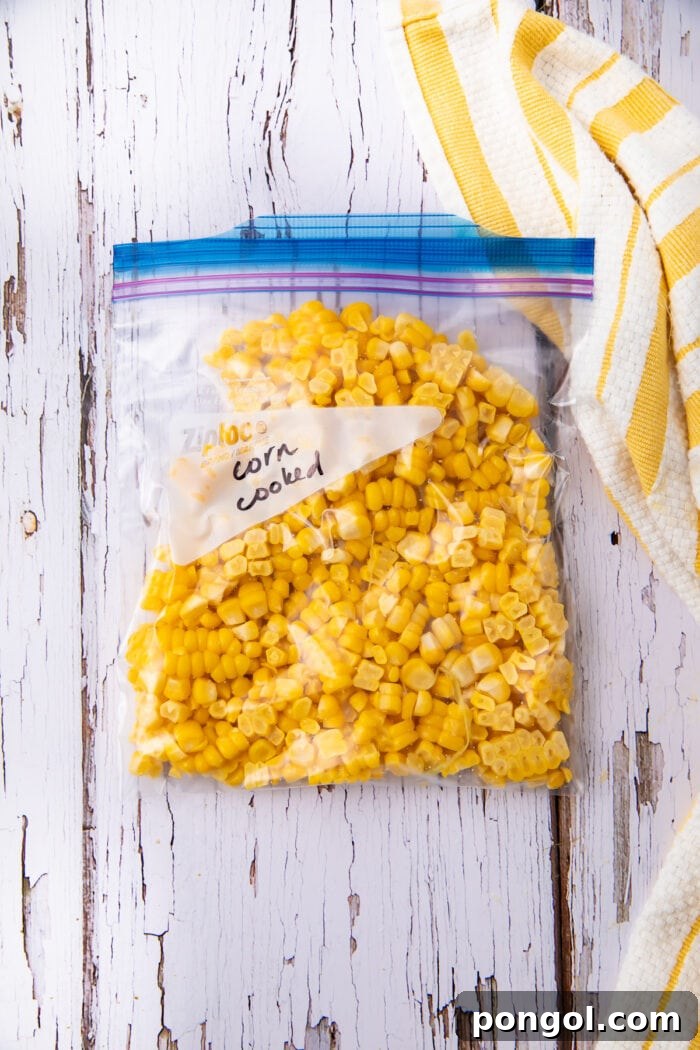
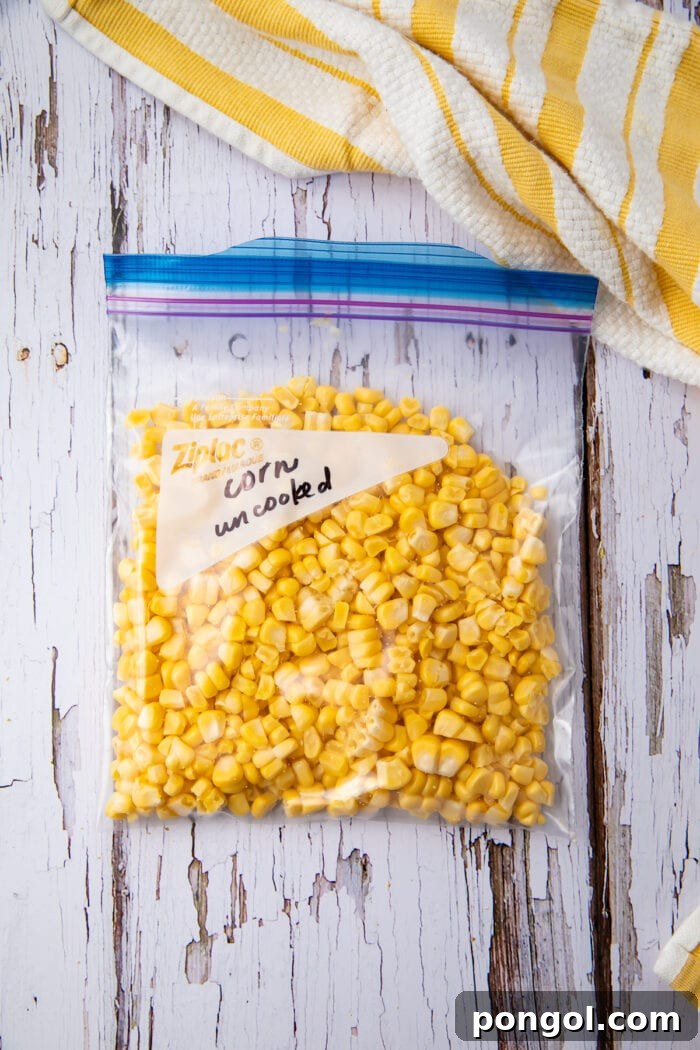
- Gently break up any large sections of kernels with your hands to separate them. Transfer the loose kernels into sealable freezer bags. Seal the bags almost completely, then flatten them and squeeze out as much air as possible to prevent freezer burn. Seal completely and place the bags flat in the freezer.
To Freeze Cooked (Blanched) Corn Kernels
- Remove corn husks and silks from the fresh ears of corn. Fill a large pot approximately half full with water and set over medium-high heat. Prepare a large bowl with ice and water to create an ice bath and set it aside.
- Once the water reaches a rolling boil, add the peeled ears of corn and cook for approximately 3 to 4 minutes, turning the corn every 1 to 2 minutes.
- Transfer the blanched corn from the boiling water to the ice bath using tongs. Let the corn soak in the ice bath for approximately 2 to 3 minutes, until it is cool enough to handle.
- Hold each ear of corn vertically, placing the bottom end against a cutting board or inside a large bowl. Hold the top end firmly with your non-cutting hand. Using a sharp knife, carefully cut the blanched kernels off the corn cob. Start at the top, slicing as close to the cob as possible, and move downwards. Rotate the cob and repeat until all kernels are removed.
- Gently break up any large sections of kernels with your hands. Transfer the loose kernels into sealable freezer bags. Seal the bags almost completely, then flatten them and squeeze out as much air as possible. Seal completely and place the bags flat in the freezer.
Notes
- To optimize freezer space, always store corn bags flat before they completely freeze. Once solid, you can stack them.
- Freezer Bags & Air Removal: Ensuring you remove as much air as possible from your freezer bags is paramount to prevent freezer burn, which can compromise the taste and texture of your corn. While vacuum seal bags offer superior protection, if you don’t have a vacuum sealer, you can effectively vacuum seal bags using the water displacement method:
- Place your corn (on the cob or kernels) into a high-quality freezer bag and seal it halfway, leaving a small opening.
- Slowly lower the bag into a large pot of water, allowing the water pressure to push the air out through the unsealed portion of the bag.
- Continue lowering the bag until the corn is almost entirely submerged and most of the air has been expelled.
- Carefully seal the remaining portion of the bag while it’s still partially submerged.
- Remove the perfectly sealed bag and transfer it to the freezer. This method creates a tight seal, mimicking a vacuum sealer and significantly extending the storage life of your corn.
Approximate Nutrition Information for One Serving
Serving Size: 1 ear of corn
Calories: 77 cal
Protein: 3 g
Fat: 1 g
Saturated Fat: 1 g
Trans Fat: 1 g
Sodium: 14 mg
Potassium: 243 mg
Total Carbs: 17 g
Fiber: 2 g
Sugar: 6 g
Net Carbs: 15 g
Vitamin A: 168 IU
Vitamin C: 6 mg
Calcium: 2 mg
Iron: 1 mg
Nutrition Disclaimers
Number of total servings shown is approximate. Actual number of servings will depend on your preferred portion sizes.
Nutritional values shown are general guidelines and reflect information for 1 serving using the ingredients listed, not including any optional ingredients. Actual macros may vary slightly depending on specific brands and types of ingredients used.
To determine the weight of one serving, prepare the recipe as instructed. Weigh the finished recipe, then divide the weight of the finished recipe (not including the weight of the container the food is in) by the desired number of servings. Result will be the weight of one serving.
Did You Make This Recipe?
We’d love to see your creations! Tag @40aprons on Instagram and be sure to leave a review on the blog post!
Tag @40Aprons on Instagram