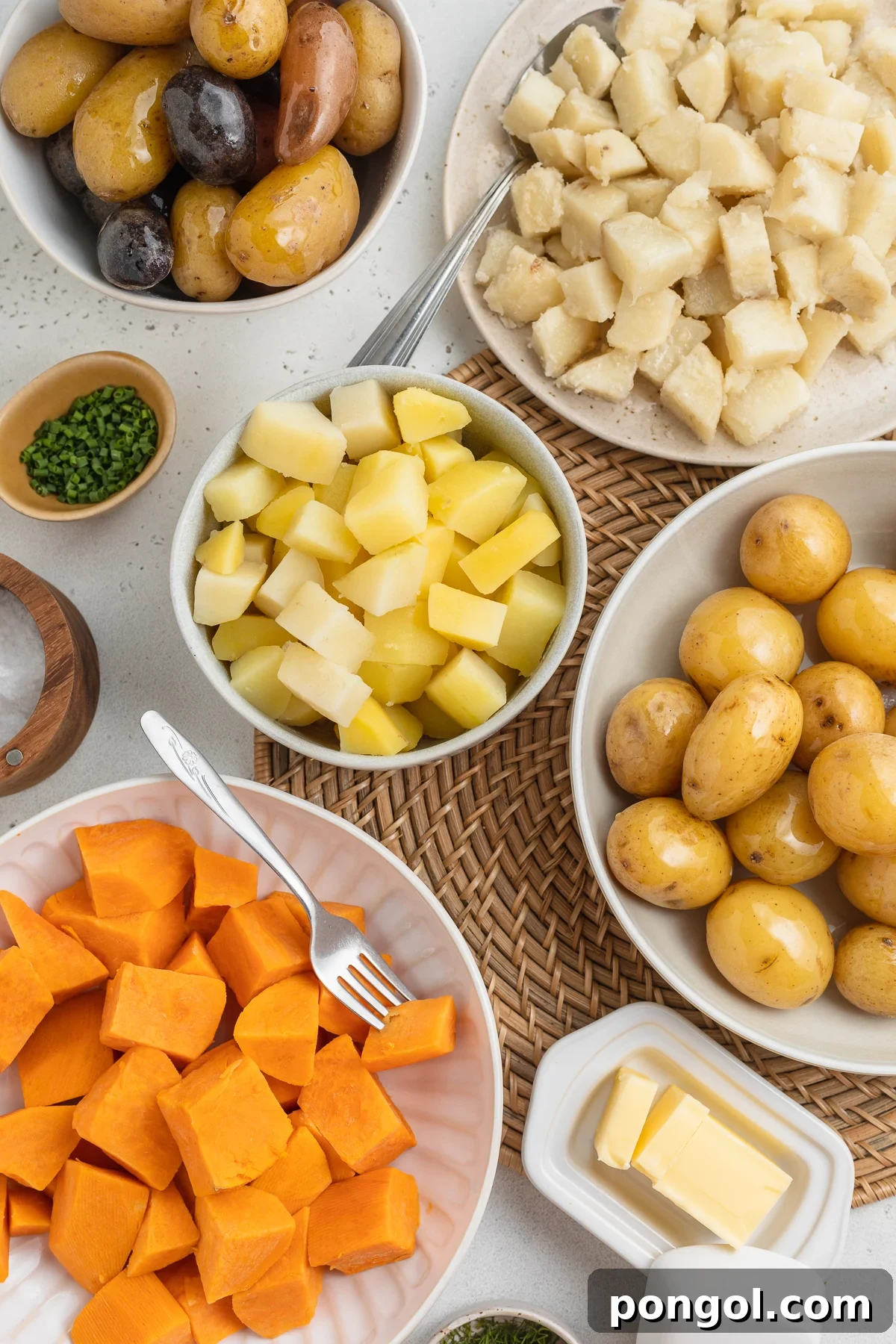
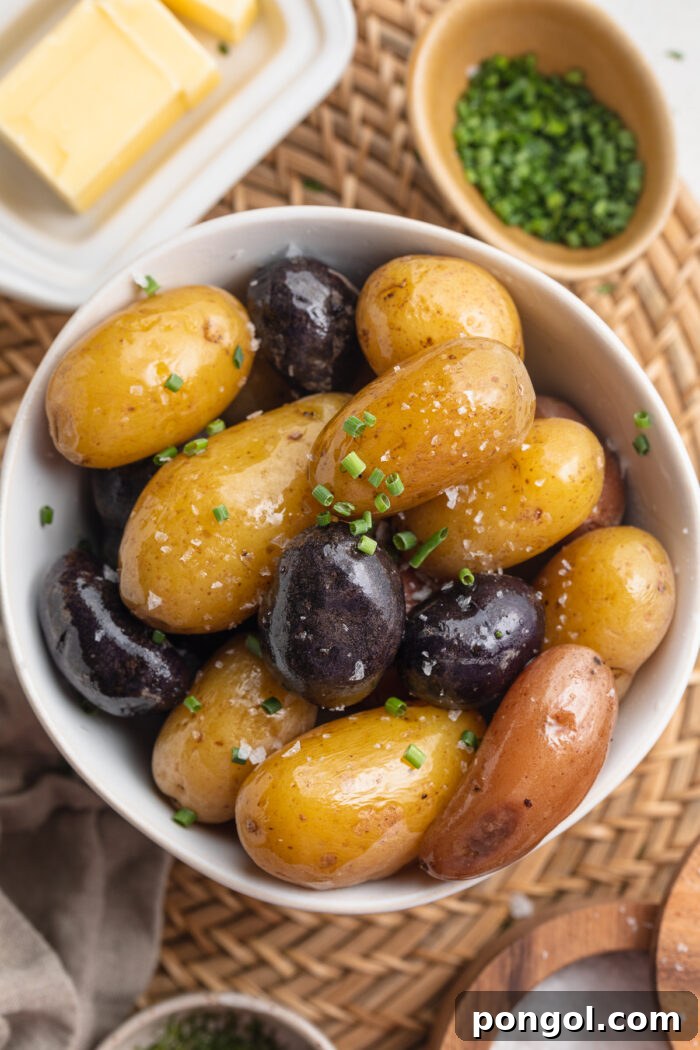
Mastering the humble art of boiling potatoes is one of the most fundamental yet valuable skills any home cook can acquire. Far from being a mere side dish, perfectly boiled potatoes are the versatile foundation for countless culinary creations. Whether you’re aiming for creamy, dreamy mashed potatoes, a vibrant, tangy potato salad, or simply want to enjoy them as a comforting standalone dish, understanding the nuances of boiling can elevate your cooking to new heights. This comprehensive guide will transform you into a potato-boiling maestro, covering everything from baby potatoes and Russets to fingerlings, sweet potatoes, and the beloved yellow, gold, and red varieties.
Why Mastering This Essential Kitchen Technique Matters
While boiling potatoes might seem straightforward, many common questions arise that can impact the final texture and flavor of your dish. Do you peel them or keep the skin on? Should they be whole or cut? What’s the ideal cooking time for different varieties? And perhaps most crucially, do you add them to cold or already boiling water? This guide answers all these questions and more, ensuring you achieve simple, foolproof, and perfectly boiled potatoes every single time, regardless of the type you’re cooking.
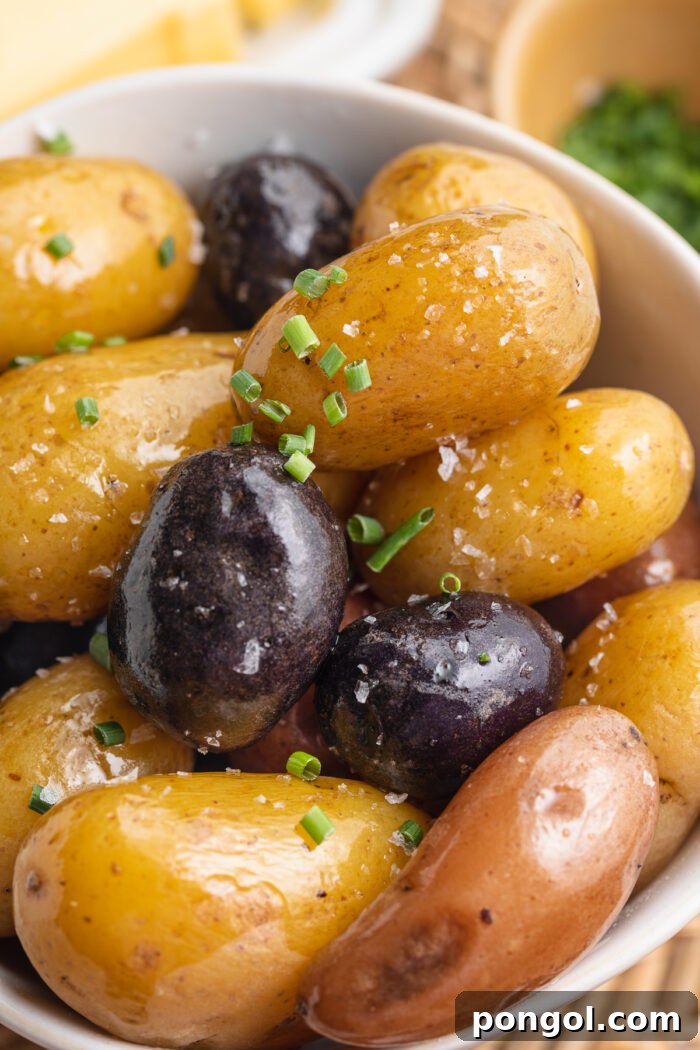
Potatoes hold a special place in cuisines worldwide, celebrated for their comforting texture and ability to absorb flavors. Boiled potatoes are particularly cherished because they serve as the indispensable base for some of the most iconic and beloved potato recipes. Imagine a holiday feast without a mountain of fluffy mashed potatoes, a summer barbecue missing a classic red potato salad, or a brunch without a hearty sweet potato hash. Beyond these foundational recipes, boiled potatoes can also be a delightful meal on their own, simply dressed with a pat of butter, a sprinkle of fresh herbs, and a pinch of salt.
Despite their popularity, potatoes sometimes receive an unfair reputation due to their starch and carbohydrate content. It’s true that some potato varieties can have a higher glycemic index than table sugar, which can be a concern for individuals managing blood sugar levels. However, it’s important to remember that potatoes are also packed with essential nutrients. They are a rich source of Vitamin C, Vitamin B6, potassium, and dietary fiber, especially when consumed with their skins. Different potato varieties offer slightly different nutritional profiles and can be a healthy, energy-rich component of a balanced diet when prepared thoughtfully.
Choosing the Right Potato for Your Boiling Needs
The vast world of potatoes offers an incredible array of textures and flavors, each best suited for specific culinary applications. Understanding the characteristics of different types will help you choose the ideal potato for your boiling project and ensure the best results.
- Russet Potatoes: Also known as baking potatoes, Russets are high in starch and have a thick, earthy skin. When boiled, they become very fluffy and fall apart easily, making them perfect for light, airy mashed potatoes or any dish where a soft, crumbly texture is desired. Their fluffy nature also makes them excellent for absorbing gravies and sauces.
- Yukon Gold & Other Yellow Potatoes: These medium-starch potatoes are celebrated for their naturally buttery flavor and creamy texture. Their skin is thinner and more delicate than Russets. When boiled, they hold their shape better than Russets but still yield a smooth, rich interior, making them incredibly versatile for mashing, roasting, or in potato salads where you want a creamy bite.
- Red Potatoes: With their thin, vibrant red skins and waxy, low-starch flesh, red potatoes hold their shape exceptionally well after boiling. This characteristic makes them ideal for potato salads, stews, or any dish where you need intact potato pieces with a firm yet tender texture. Their appealing color also adds visual interest to dishes.
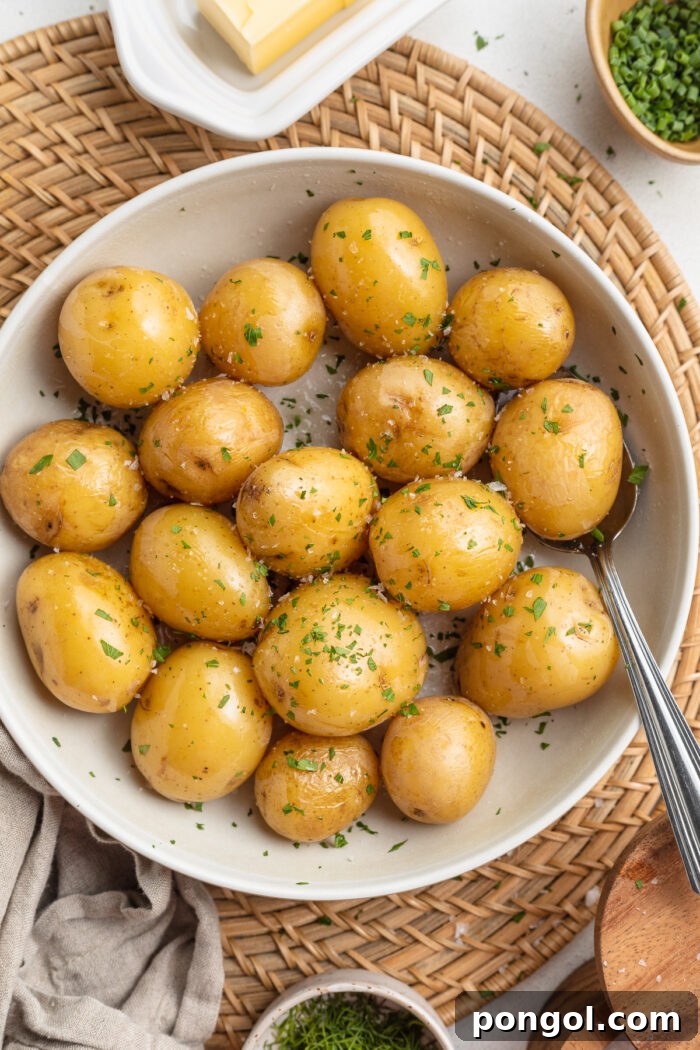
- Baby Potatoes & Fingerlings: These small, young potatoes, often sold in mixed bags, boast very thin skins and waxy flesh. They cook relatively quickly and maintain their shape beautifully, offering a slightly sweet, earthy flavor. They are fantastic boiled whole, then tossed with herbs, butter, or olive oil for an elegant side dish. Fingerlings, with their elongated shape, are particularly prized for their delicate texture.
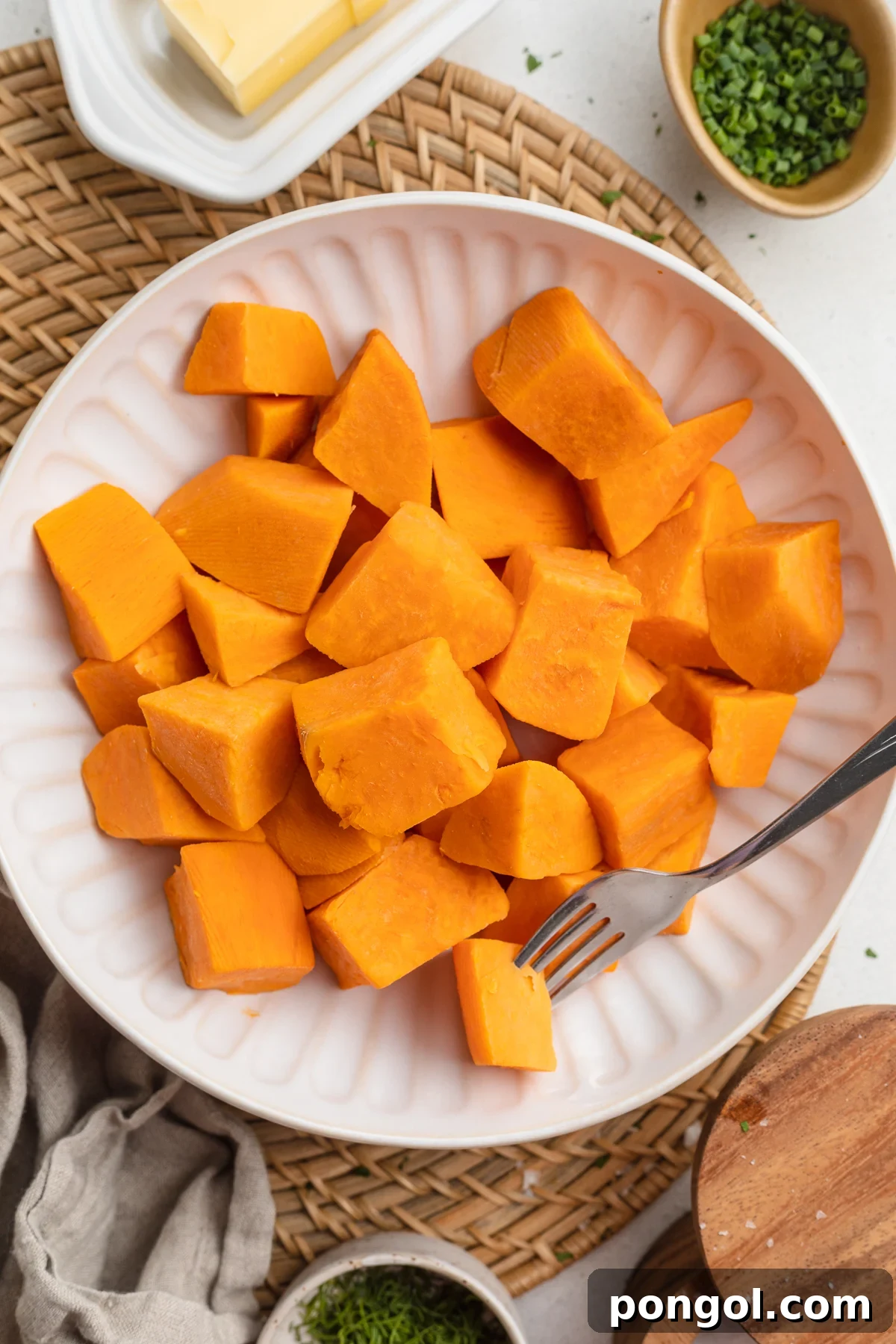
- Sweet Potatoes: Distinct from white potatoes, sweet potatoes are rich in beta-carotene and have a naturally sweet flavor profile. Their flesh is denser and can be orange, purple, or white. When boiled, they become wonderfully tender and slightly mushy, making them excellent for purees, sweet potato casseroles, or as a nutritious, flavorful side dish.
Essential Chef’s Tips for Perfectly Boiled Potatoes
Achieving perfectly boiled potatoes every time comes down to a few key techniques. Follow these expert tips to ensure your potatoes are consistently tender, evenly cooked, and bursting with flavor.
- Thorough Washing is Key: No matter the potato variety, always begin by washing and scrubbing them thoroughly under cold running water. Potatoes grow underground, so they often come coated in soil and can harbor bacteria or residual pesticides. A stiff vegetable scrub brush or even a clean dish towel works wonders for removing dirt and debris. While some grocery stores offer pre-washed potatoes, washing them yourself just before cooking is always the best practice for freshness and safety.
- To Peel or Not to Peel: The decision to peel your potatoes is largely a matter of personal preference and the recipe’s requirements. Baby potatoes and fingerlings have very thin, delicate skins that are delicious and nutritious to eat, so peeling them is rarely necessary. Russet and sweet potatoes have tougher skins, which are commonly peeled for dishes like mashed potatoes, but the skins are perfectly edible and contain beneficial fiber and nutrients. If you opt to keep the skins on, ensure they are meticulously scrubbed clean.
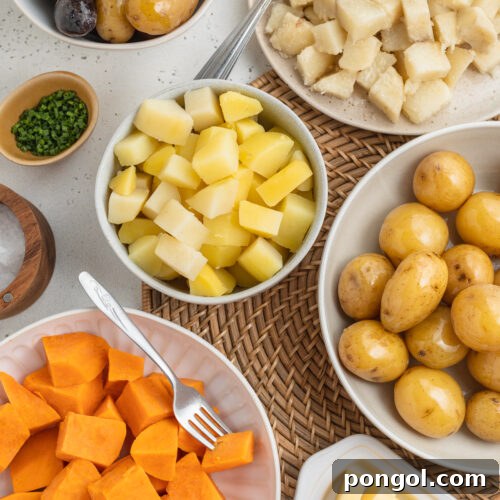
- The Art of Cutting for Evenness: Deciding whether to boil potatoes whole or cut them is also up to you, but consider this: larger, denser potatoes (like big Russets or sweet potatoes) benefit greatly from being halved, quartered, or even cubed. Cutting them into roughly uniform 1.5 to 2-inch pieces ensures they cook much faster and, more importantly, cook evenly throughout. Boiling a large, whole potato can result in overcooked exteriors and undercooked centers. Smaller varieties, such as baby or fingerling potatoes, are perfectly fine to boil whole due to their size and consistent density.
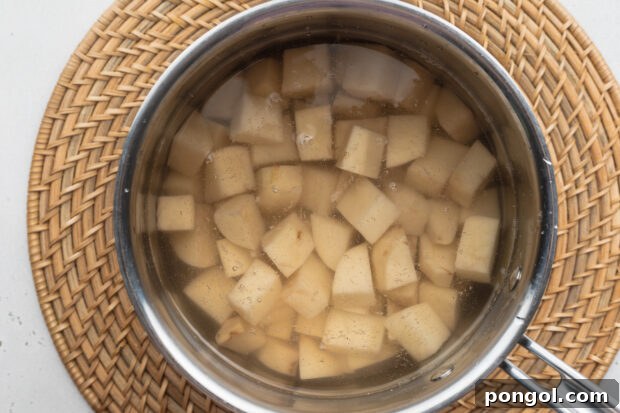
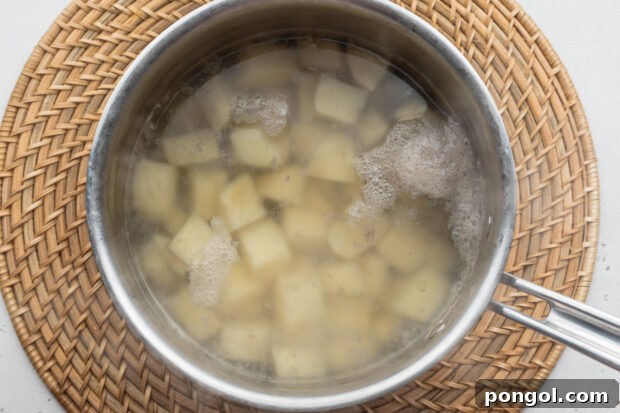
- Always Start with Cold Water: This is perhaps the most crucial tip for even cooking. Always place your potatoes in a pot and then add cold water to cover them by at least an inch. If you add potatoes to already boiling water, the outside layers will cook much faster than the inside, leading to unevenly cooked potatoes – mushy on the outside, firm in the center. By bringing the water to a boil with the potatoes already in it, everything heats up gradually and uniformly, ensuring a tender texture from edge to core.
- Don’t Forget to Salt the Water: Just as with pasta, salting the water is essential for seasoning potatoes from the inside out. A generous pinch of salt added to the cold water before heating will infuse the potatoes with flavor as they cook, rather than just coating the surface later. Aim for roughly 1-2 teaspoons of salt per liter of water.
- How to Tell When They’re Done: The simplest and most reliable way to check for doneness is the “fork test.” Gently poke a potato (or a potato cube) with a fork, a toothpick, or a thin skewer. If the utensil slides easily through the skin and into the center with minimal resistance, your potatoes are perfectly boiled and ready. Avoid overcooking, which can lead to a watery, mushy texture.
Boiled Potatoes for Meal Prep: Smart & Simple
Absolutely! Boiled potatoes are a fantastic ingredient for meal prepping, offering incredible convenience for quick weeknight dinners or healthy lunches. They refrigerate and reheat beautifully, and cooking a large batch at once is incredibly efficient. This simple preparation makes it easy to incorporate healthy, whole foods into your diet throughout the week.
Once your potatoes are perfectly boiled and cooled, you have several options for storage. Portion them into individual meal prep containers for grab-and-go meals, or store them all together in one large airtight container. They will maintain their quality in the refrigerator for up to 5 days. For longer storage, you can easily freeze them. Ensure they are completely cool before transferring them to an airtight freezer-safe container or freezer bags. Boiled potatoes can be frozen for up to 3 months.
Reheating is just as simple. For a quick refresh, pop them in the microwave until warmed through. For a more satisfying texture, especially if you prefer a slightly crispy exterior, try roasting them in the oven or air fryer. Spread the cooled, boiled potatoes on a baking sheet, drizzle with a little olive oil, season with salt, pepper, and your favorite herbs (like rosemary or thyme), and bake at 375°F (190°C) for 15-20 minutes, or until golden and heated through. You can also pan-fry them in a little butter or oil for a delicious crispy side.
Creative Culinary Uses for Your Perfectly Boiled Potatoes
Did you get a little too enthusiastic and boil more potatoes than you planned? No problem! Boiled potatoes are incredibly versatile and can be transformed into a variety of delicious dishes. While some recipes might not explicitly call for already-boiled potatoes, they can often be adapted to save you precious cooking time.
- Creamy Mashed Potatoes: The quintessential use! Boil Russet or Yukon Gold potatoes until super tender, then mash with butter, milk (or dairy-free alternative), salt, and pepper for an unbeatable classic.
- Sweet Potato Salad: Tender boiled sweet potatoes are the perfect base for a vibrant, healthy salad. Combine them with fresh herbs, a light vinaigrette, and other colorful vegetables for a delicious twist on traditional potato salad.
- Classic Red Potato Salad: Waxy red potatoes, once boiled and chilled, hold their shape beautifully in a creamy or tangy dressing. This is a picnic and BBQ staple, made even faster with pre-boiled potatoes.
- Sweet Potato Hashbrowns: Instead of shredding raw sweet potatoes, use roughly mashed boiled sweet potatoes. Pan-fry them with onions and spices for a quick and flavorful breakfast hash.
- Vegan Potato Soup and Whole30 Potato Soup: Using already-boiled potatoes significantly cuts down the cooking time for these comforting stovetop soups. You can jump straight to blending or mashing them with other ingredients.
- Sweet Potato Soup: Ideal for boiled sweet potatoes! Since everything gets puréed, your pre-boiled potatoes make this rich, smooth soup come together much faster. Simply add them towards the end of the cooking process to heat through and blend.
- Sweet Potato Pancakes: Many recipes for these delicious pancakes start with fully-cooked, mashed sweet potatoes. Your batch of boiled sweet potatoes is a perfect head start for this sweet or savory treat.
- Mashed Potato Pancakes: Similar to the sweet potato version, these savory pancakes are an ingenious way to use up leftover boiled or mashed potatoes. Serve them for breakfast with an egg, or as a dinner side.
- Instant Pot Potato Salad: While the original recipe uses an Instant Pot for boiling, your pre-boiled Yukon Gold potatoes mean you can skip that step entirely and go straight to mixing your soft, creamy potatoes with the dressing and other ingredients.
- Mashed Potato Soup with Tarragon: This classic recipe beautifully utilizes leftover mashed potatoes as its base. Just add rich seasonings and creamy milk for an unbelievably decadent potato soup.
- Sweet Potato Whole30 Breakfast Bowl: Boiled sweet potatoes are an incredible addition to a hearty breakfast bowl. Just ensure they are reheated and hot if you plan to cook eggs directly in the bowl with them.
- Stewed Potatoes: Freshly boiled potatoes are excellent for stews, but leftover ones work too! Simply reduce the stew’s cooking time since the potatoes are already tender.
- Loaded Baked Potato Dip: While some versions are potato-free, you can easily create a true “loaded baked potato dip” by mashing your boiled potatoes until smooth and then mixing in all the delicious toppings and seasonings. Serve it warm or chilled!
- Irish Potato Soup: Achieve a silky smooth soup texture by blending boiled potatoes with ingredients like celery, onion, butter, and chicken stock. Finish with a touch of heavy cream and your favorite toppings like chives, bacon, and cheddar.
- Crispy Smashed Potatoes: Boil small potatoes (like baby or red) until tender, then gently “smash” them with the back of a glass or fork. Drizzle with olive oil, salt, and pepper, and roast in a hot oven or air fryer until crispy and golden.
- Potato Gnocchi: High-starch boiled potatoes like Russets are essential for making delicate homemade gnocchi. Mash them thoroughly and combine with flour and egg for a light, pillowy pasta.
- Add to Curries or Stews: For a heartier meal, add cubed boiled potatoes to your favorite curry or stew towards the end of cooking, allowing them to absorb the rich flavors without becoming overly mushy.
Beyond Boiling: Other Essential Kitchen Skills You Should Know
Expanding your culinary repertoire often involves mastering foundational techniques. Here are a few more guides to essential kitchen skills that can further enhance your cooking prowess:
- The Easiest Way to Dice an Onion (with Video!): Perfecting your knife skills is always a worthwhile endeavor.
- 4 Ways to Cook Beets: Discover different methods to prepare this nutritious and vibrant root vegetable.
- 3 Different Ways to Freeze Corn: Preserve the freshness of corn to enjoy year-round.
- How To Boil Cabbage: Another simple boiling technique for a versatile vegetable.
- How To Cook Turkey Bacon In The Oven: A foolproof method for crispy, delicious turkey bacon.
Sam Guarnieri
How To Boil Potatoes (7 Different Types!)
15 minutes
20 minutes
35 minutes

Sam Guarnieri
6 servings
Equipment
-
vegetable scrub brush or dish towel, optional
-
Cutting board and sharp knife optional
-
potato peeler optional
-
Large pot no lid needed
-
Fork
-
colander
-
Slotted spoon optional, see Notes
Ingredients
For Baby Potatoes
- 1 pound baby potatoes whole or halved
- cold water enough to cover potatoes in pot
- 1 large pinch salt to taste
For Fingerling Potatoes
- 1 pound fingerling potatoes whole or halved
- cold water enough to cover potatoes in pot
- 1 large pinch salt to taste
For Yellow, Yukon Gold, and Red Potatoes
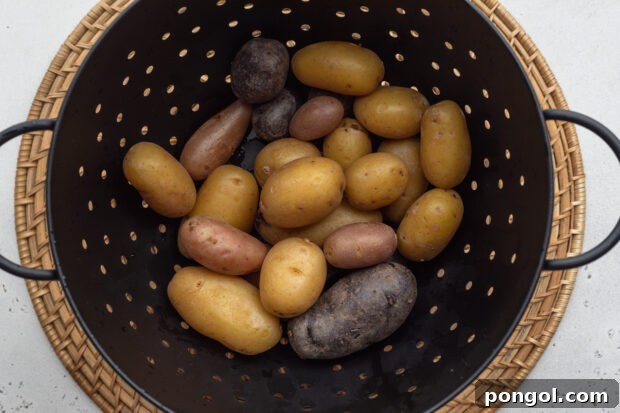
- 1 pound yellow, gold, or red potatoes
- cold water enough to cover potatoes in pot
- 1 large pinch salt to taste
For Russet Potatoes
- 2-3 large russet potatoes approximately 2-3 pounds
- cold water enough to cover potatoes in pot
- 1 large pinch salt to taste
For Sweet Potatoes
- 2-3 large sweet potatoes approximately 1-1 ½ pounds
- cold water enough to cover potatoes in pot
- 1 large pinch salt to taste
Instructions
-
Regardless of potato type, begin by washing potatoes well under running water and scrubbing potatoes with scrub brush, dish towel, or hands to remove any dirt.
For Baby Potatoes
-
If desired, use a sharp knife to halve baby potatoes. There’s no need to peel their thin skins.
-
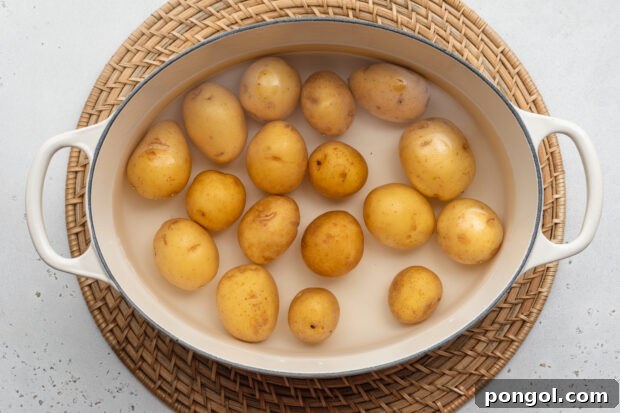
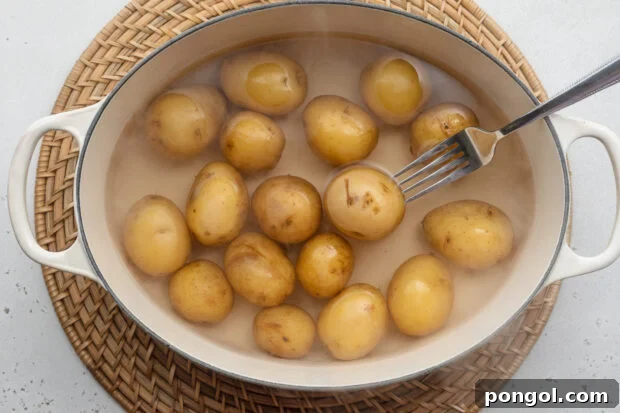
Add the whole or halved baby potatoes to a large pot. Cover them completely with cold water, then add 1 large pinch of salt.

-
Heat the pot over medium-high heat. Once the water begins to boil, reduce the heat to low and simmer, uncovered, for about 10 minutes, or until the baby potatoes can be easily pierced with the tines of a fork.
-
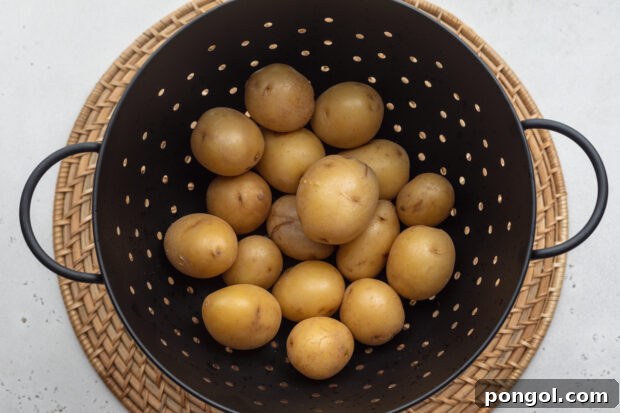
Carefully remove the pot from heat. Pour the water and potatoes into a colander to drain thoroughly. Serve the boiled baby potatoes as-is, tossed with herbs, or use them in your recipe of choice.
For Fingerling Potatoes
-
If desired, use a sharp knife to halve fingerling potatoes. Their skins are thin and edible, so no peeling is required.
-
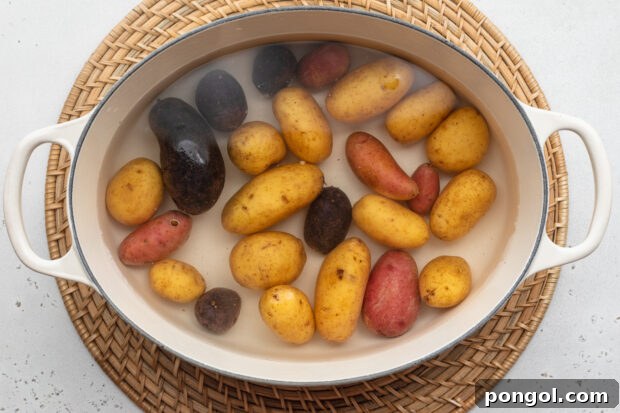
Place whole or halved fingerling potatoes in a large pot. Add cold water to fully cover the potatoes, then season with 1 large pinch of salt.
-
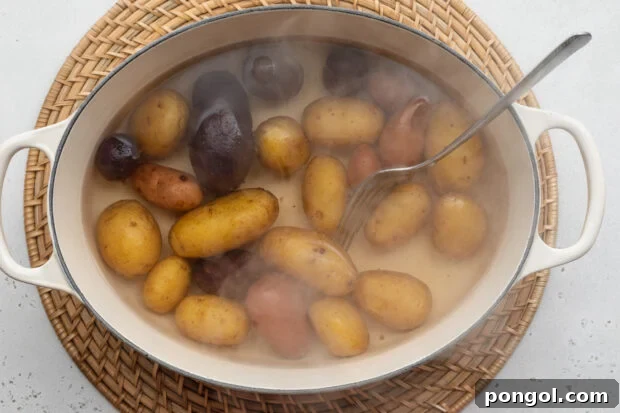
Heat the pot over medium-high heat. Once the water reaches a rolling boil, reduce heat to low and simmer, uncovered, for approximately 15 minutes, or until a fork easily pierces the potatoes.
-
Carefully remove the pot from the heat. Drain the water and potatoes using a colander. Serve boiled fingerling potatoes as a delightful side or incorporate them into your desired recipe.
For Yellow, Yukon Gold or Red Potatoes
-
If you prefer, use a potato peeler to carefully remove the skins from yellow, gold, or red potatoes. Chop the peeled or unpeeled potatoes into uniform 2-inch cubes for even cooking.
-
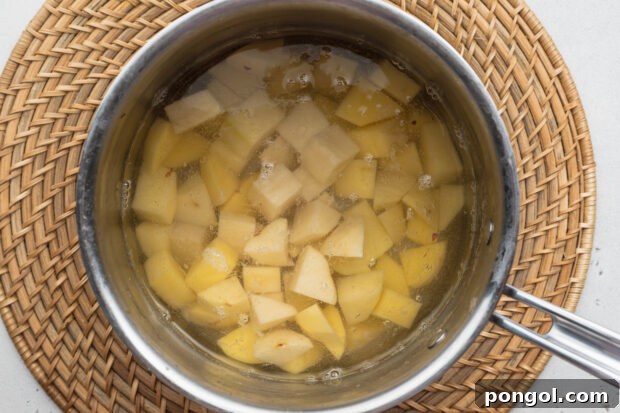
Add the cubed potatoes to a large pot. Pour in enough cold water to fully submerge the potatoes, then add 1 large pinch of salt.
-
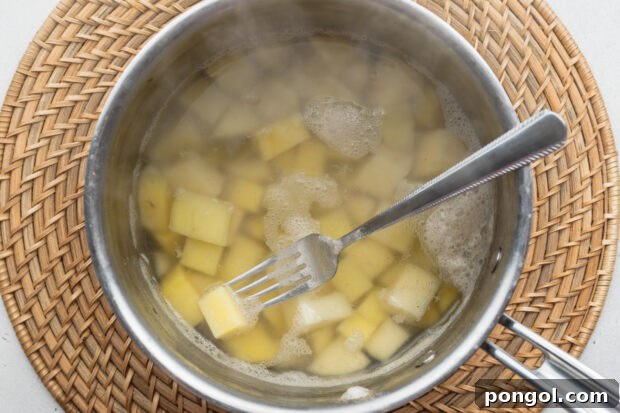
Place the pot over medium-high heat. Once the water comes to a boil, reduce the heat to low. Simmer, uncovered, for 10 to 12 minutes, or until the cubed potatoes are easily pierced with a fork.
-
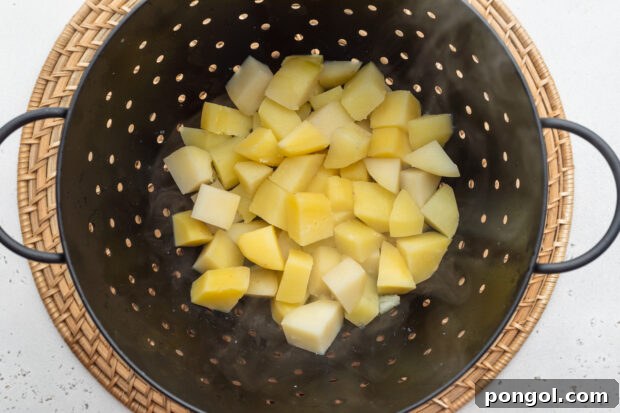
Carefully remove the pot from heat and drain the potatoes in a colander. Your perfectly boiled yellow, gold, or red potatoes are ready to be served or used in your favorite recipes.
For Russet Potatoes
-
If you prefer, use a potato peeler to carefully peel russet potatoes. Chop the peeled or unpeeled potatoes into uniform 2-inch cubes.
-
Add the cubed russet potatoes to a large pot. Cover them completely with cold water, then add 1 large pinch of salt.
-
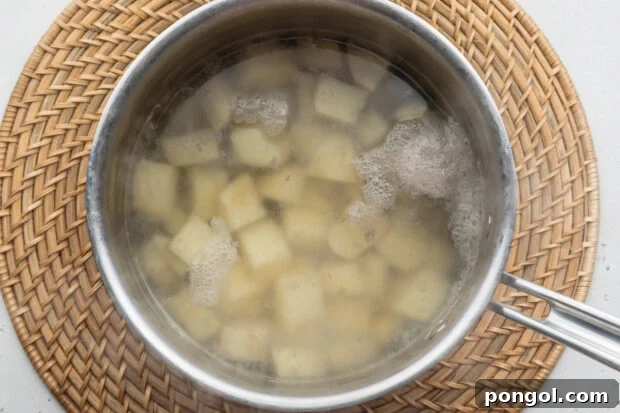
Heat the pot over medium-high heat. Once the water begins to boil, reduce the heat to low and simmer, uncovered, for approximately 15 minutes, or until the cubed potatoes are easily pierced with the tines of a fork.
-
Carefully remove the pot from heat. Drain the water and potatoes into a colander. Serve your boiled russet potatoes as-is or prepare them for mashing or other recipes.
For Sweet Potatoes
-
If desired, use a potato peeler to carefully peel the sweet potatoes. Chop the peeled or unpeeled potatoes into uniform 2-inch cubes.
-
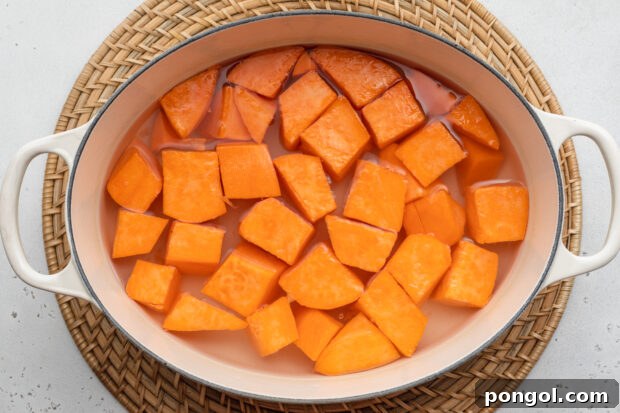
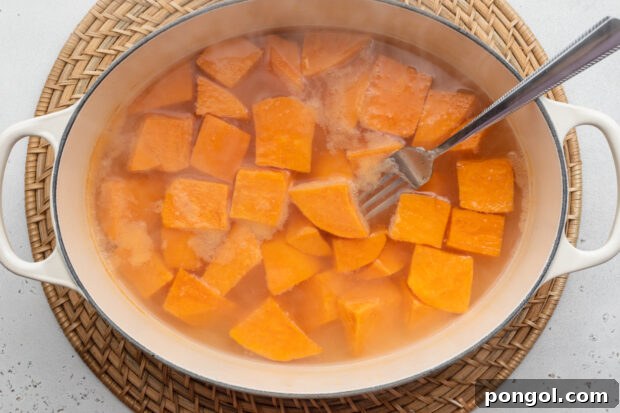
Add the cubed sweet potatoes to a large pot. Cover them completely with cold water, then add 1 large pinch of salt.
-
Heat the pot over medium-high heat. Once the water begins to boil, reduce the heat to low and simmer, uncovered, for 15 to 20 minutes, or until the cubed sweet potatoes are very tender and easily pierced with a fork.
-
Carefully remove the pot from heat. Drain the water and potatoes into a colander. Serve your boiled sweet potatoes as-is, mash them, or use them in your recipe of choice.
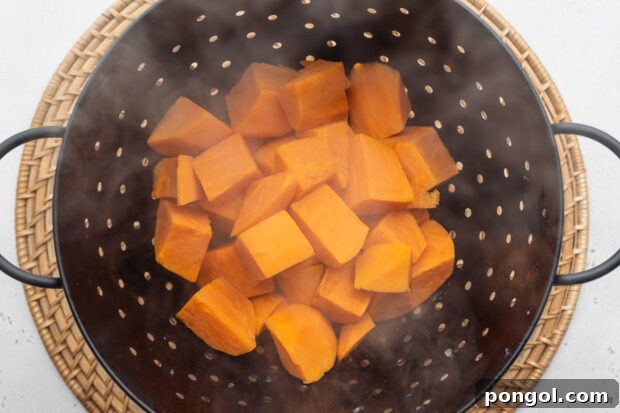
- If your pot is too full or heavy for you to comfortably pour the water and potatoes into a colander, use a slotted spoon to carefully remove the potatoes from the pot instead.
Approximate Information for One Serving
Serving Size: 1serving of baby potatoes
Calories: 58cal
Protein: 2g
Fat: 0.1g
Saturated Fat: 0.02g
Sodium: 11mg
Potassium: 318mg
Total Carbs: 13g
Fiber: 2g
Sugar: 1g
Net Carbs: 11g
Vitamin A: 2IU
Vitamin C: 15mg
Calcium: 9mg
Iron: 1mg
Nutrition Disclaimers
Number of total servings shown is approximate. Actual number of servings will depend on your preferred portion sizes.
Nutritional values shown are general guidelines and reflect information for 1 serving using the ingredients listed, not including any optional ingredients. Actual macros may vary slightly depending on specific brands and types of ingredients used.
To determine the weight of one serving, prepare the recipe as instructed. Weigh the finished recipe, then divide the weight of the finished recipe (not including the weight of the container the food is in) by the desired number of servings. Result will be the weight of one serving.
Did You Make This Recipe?
Tag @40aprons on Instagram and be sure to leave a review on the blog post!
Tag @40Aprons on Instagram