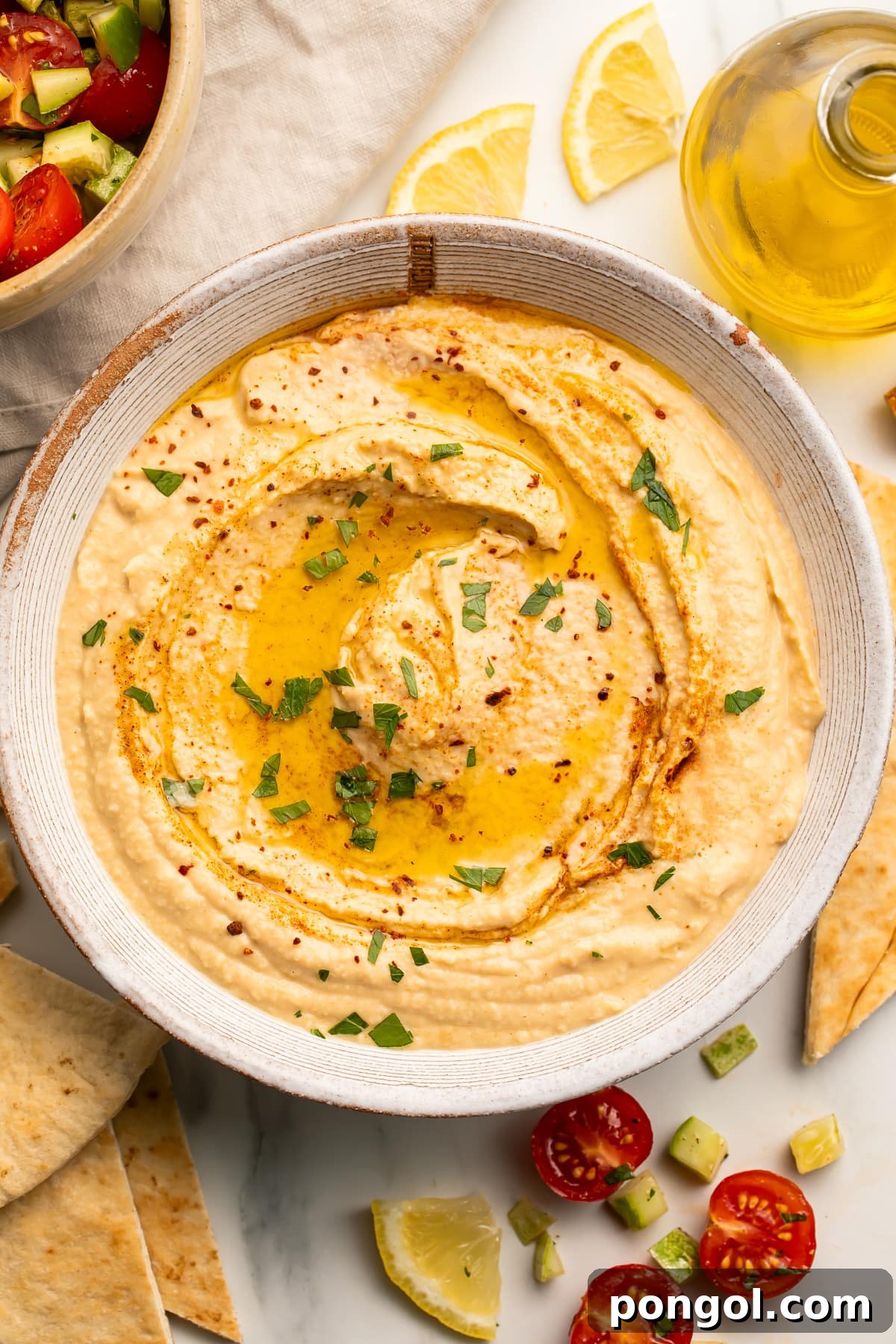
Craving a rich, creamy, and irresistibly flavorful hummus but don’t have tahini on hand, or prefer to avoid it? Look no further! This remarkable 5-ingredient recipe for homemade hummus without tahini delivers all the deliciousness you expect from traditional hummus, without a drop of sesame paste. It’s incredibly easy to make, coming together in a matter of minutes, and is naturally gluten-free, dairy-free, vegetarian, and vegan. Made with just chickpeas, high-quality olive oil, fresh lemon, aromatic garlic, and warm cumin, it’s so rich and satisfying, you won’t even miss the tahini!
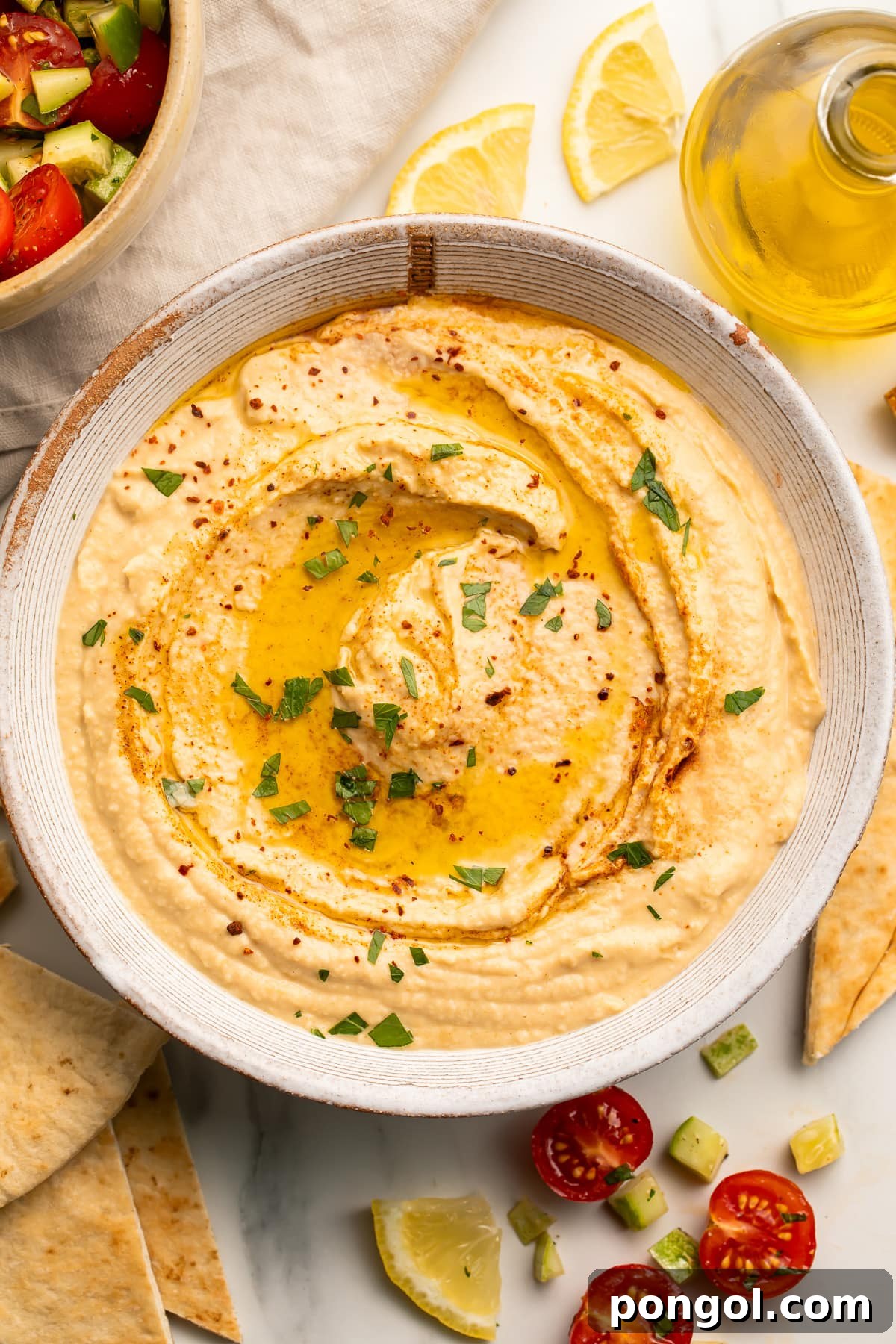
Creamy & Flavorful Hummus Without Tahini: Your Easy 5-Ingredient Recipe
Hummus is a beloved Middle Eastern dip that has gained immense popularity worldwide for its creamy texture, versatile flavor, and nutritional benefits. Traditionally, tahini is a key ingredient, contributing to its characteristic nutty taste and silky consistency. However, for various reasons, many seek a delicious alternative. This recipe is designed to be the ultimate solution for anyone wanting to enjoy a fantastic hummus experience, completely tahini-free.
🤔 What is Tahini? And Why Make Hummus Without It?
Tahini is a paste or butter made from ground sesame seeds, often mixed with a bit of oil. It’s a staple in Middle Eastern and Mediterranean cuisine, celebrated for its unique earthy, nutty, and slightly bitter flavor profile. While it’s relatively easy to find in most well-stocked grocery stores today, and can even be made at home from scratch, it’s not always an option for everyone.
Tahini plays a significant role in many savory and sweet dishes. Beyond hummus, it’s used in salad dressings, sauces for falafel or shawarma, and adds moisture and a rich, deep flavor to baked goods like cookies and breads. Its presence is often considered essential for authentic hummus. So, why would we intentionally omit such a foundational ingredient from our hummus recipe?
- Sesame Allergies: One of the most critical reasons to avoid tahini is due to sesame allergies. Sesame is a common allergen, and for those who suffer from it, consuming sesame seeds, sesame oil, or tahini can lead to severe reactions. This recipe provides a safe and delicious option for individuals with sesame sensitivities.
- Ingredient Availability: We’ve all been there – you’re in the mood to whip up a batch of homemade hummus, you have chickpeas, lemon, garlic, and olive oil, but a quick check reveals you’re completely out of tahini. This recipe ensures that a missing ingredient won’t derail your snack plans.
- Budget-Friendly Cooking: Tahini can sometimes be a pricier ingredient, especially if you only need a few tablespoons for a single recipe. Opting for a tahini-free version can make homemade hummus more economical, saving you from purchasing a large jar that might sit in your pantry for months.
- Flavor Preference: Believe it or not, some people simply don’t enjoy the distinct flavor of tahini. Its earthy, sometimes slightly bitter notes, can be an acquired taste. For those who prefer a cleaner, brighter chickpea flavor to shine through, or a different kind of richness, a tahini-free hummus is a fantastic alternative. Good news – it is absolutely possible to create a wonderfully delicious and satisfying hummus without it!
🫒 What Makes This Tahini-Free Hummus Recipe So Irresistible?
This hummus recipe stands out for its incredible balance of flavor and texture, proving that tahini isn’t always necessary for a sensational dip. It offers all the creamy consistency and rich taste you desire, making it a perfect addition to any meal or snack spread.
- Unbelievably Creamy Texture & Rich Flavor: Despite the absence of tahini, this hummus achieves a wonderfully smooth and velvety texture. The careful balance of chickpeas, olive oil, and a touch of reserved chickpea liquid creates a luxurious mouthfeel that is incredibly satisfying. The robust flavors of fresh lemon, pungent garlic, and earthy cumin meld together beautifully, offering a vibrant and complex taste.
- Effortlessly Easy with Zero Cooking Required: This recipe is a dream for anyone looking for a quick and simple snack or appetizer. There is absolutely no cooking involved! All you need to do is combine the ingredients in a food processor and blend until silky smooth. It’s perfect for busy weeknights, impromptu gatherings, or when you just want a fresh, homemade dip without the fuss.
- Limitless Customization Options: One of the best aspects of this tahini-free hummus is its incredible versatility. It serves as a fantastic base for endless flavor variations, allowing you to tailor it to your exact preferences or whatever ingredients you have on hand.
- For a deeper, sweeter garlic note, roast your garlic before adding it to the food processor.
- Incorporate sun-dried tomatoes and a touch of their oil for a tangy, umami-rich twist.
- Spice things up with a pinch of cayenne pepper, or experiment with different spices like ginger, turmeric, and curry powder for an exotic flair.
- If you miss the nutty depth of tahini, a tablespoon of peanut butter or almond butter can provide a similar flavor and an even smoother texture.
- Boost its nutritional profile and flavor by blending in other vegetables or legumes such as sweet potatoes, beets, roasted red peppers, avocado, spinach, butternut squash, black beans, or even pumpkin purée. Each addition opens up a new world of taste and color!
👩🏼🍳 Chef’s Tips for the Smoothest Hummus Every Time
Achieving perfectly creamy, restaurant-quality hummus at home is surprisingly simple, especially with a few insider tricks. These tips will help you create an exceptional batch of tahini-free hummus every time.
- Utilize a Food Processor: While a blender might seem like an alternative, a food processor is truly your best friend when making homemade hummus. Its wider base and more powerful blade motion are ideal for breaking down the chickpeas into a consistently smooth paste. A blender, on the other hand, tends to struggle with the thicker consistency of hummus and may not yield the super creamy result you’re aiming for.
- Chill for Enhanced Flavor: While you *can* technically enjoy your tahini-free hummus as soon as it’s blended, I strongly recommend exercising a little patience. Letting it chill in the refrigerator for at least 30 minutes (or even a few hours) allows the ingredients time to “mingle and meld.” This resting period deepens and harmonizes the flavors, resulting in a much more pronounced and well-rounded taste experience. The cold also helps the hummus firm up slightly, improving its texture.
- Gradual Aquafaba Addition is Key: Aquafaba, the liquid from a can of chickpeas, is your secret weapon for adjusting consistency. However, a crucial tip is to NEVER add the aquafaba all at once! You likely won’t need to use the entire reserved liquid to thin out your hummus, and that’s perfectly fine. Start by adding it in very small increments (a tablespoon at a time) and process the mixture thoroughly after each addition. This allows you to control the thickness precisely. If you add too much too quickly, you risk ending up with a super runny, watery batch of hummus that might be difficult to salvage. Aim for a consistency that is thick but easily spreadable.
- Optional: Peel Your Chickpeas for Ultra-Smoothness: For the absolute smoothest hummus imaginable, some chefs swear by peeling the outer skins off the chickpeas. While this step is entirely optional and time-consuming, it can make a noticeable difference in achieving a velvety, almost ethereal texture. Simply pinch each chickpea to remove its delicate skin before blending.
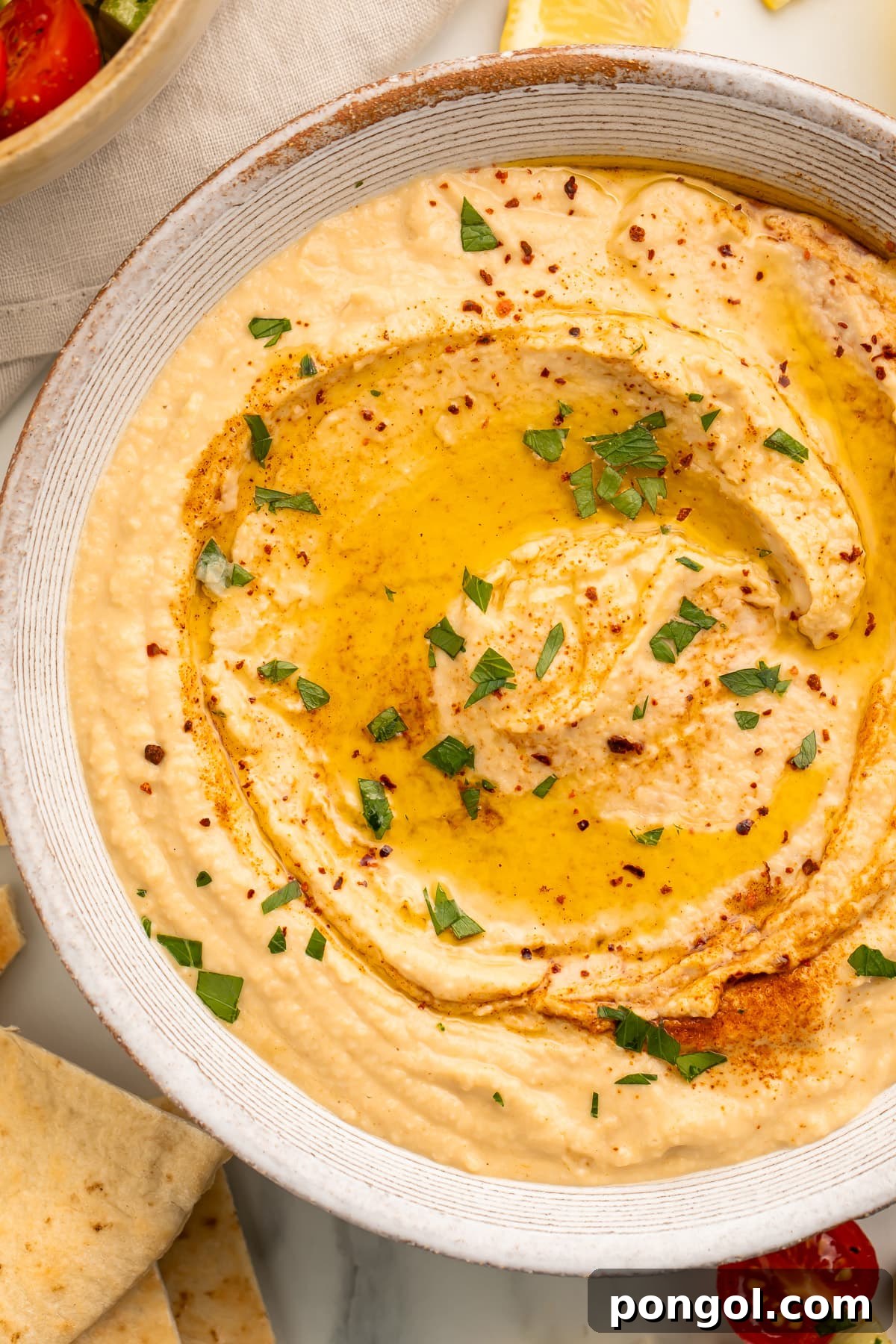
🌱 The Power of Simple Ingredients: Why This Hummus is So Good
The beauty of this hummus lies in its simplicity and the quality of its core components. Each of the five main ingredients plays a vital role in creating a dip that’s both healthy and incredibly delicious.
- Chickpeas (Garbanzo Beans): The foundation of any good hummus, chickpeas provide a creamy base and a wealth of plant-based protein and dietary fiber. They contribute to the hummus’s satisfying texture and make it a filling and nutritious snack.
- Olive Oil: A generous pour of good quality extra virgin olive oil not only adds a silky richness and smooth consistency but also imparts a fruity, peppery note that elevates the overall flavor. It’s also packed with healthy monounsaturated fats.
- Fresh Lemon Juice: The bright, zesty tang of fresh lemon juice is crucial. It cuts through the richness of the chickpeas and olive oil, adding a refreshing acidity that makes the hummus pop. It’s the secret to keeping the flavor vibrant and balanced.
- Garlic: Fresh garlic provides that characteristic pungent, aromatic kick that is essential to hummus. It adds depth and a savory warmth, transforming the simple ingredients into something truly special.
- Ground Cumin: This earthy spice is a signature flavor in hummus, offering a warm, slightly peppery, and subtly sweet undertone. It ties all the flavors together, giving the dip its distinctive Mediterranean aroma.
🥗 Health Benefits of This Tahini-Free Hummus
Beyond its delicious taste, this hummus recipe offers a host of health benefits, making it an excellent choice for a wholesome snack or meal component.
- Rich in Fiber: Chickpeas are an excellent source of dietary fiber, which is crucial for digestive health, helps regulate blood sugar levels, and contributes to a feeling of fullness, aiding in weight management.
- Plant-Based Protein: As a significant source of plant protein, this hummus is perfect for vegetarians, vegans, and anyone looking to increase their protein intake. Protein is essential for muscle repair, growth, and overall body function.
- Heart-Healthy Fats: Extra virgin olive oil is renowned for its monounsaturated fats, which are known to support heart health, lower bad cholesterol levels, and provide anti-inflammatory benefits.
- Packed with Vitamins and Minerals: Chickpeas are rich in iron, folate, phosphorus, and B vitamins, while garlic and lemon contribute vitamin C and other antioxidants, boosting your immune system and overall well-being.
- Naturally Gluten-Free and Dairy-Free: This recipe is naturally free from common allergens like gluten and dairy, making it suitable for a wide range of dietary needs and preferences.
🫕 More Delicious Dips and Spreads to Try!
If you love a good dip or spread, explore some of our other favorite recipes that are perfect for entertaining or everyday snacking:
- Baba Ganoush
- Crockpot Baked Brie Dip
- Loaded Baked Potato Dip
- Buffalo Hummus
- Everything Bagel Dip
- Creamy Hot Crab Dip (Low Carb, Keto, Gluten Free)
- Beer Cheese Dip
- Marry-Me 7 Layer Dip
- Crockpot Queso Dip
Cheryl Malik
Hummus Without Tahini
10
0
30
40

Cheryl Malik
12
servings
Equipment
-
Food processor
-
Silicone spatula
-
Serving bowl
-
Lid for serving bowl or plastic wrap to cover
Ingredients
For the Hummus
- 2 15-ounce cans garbanzo beans drained well, liquid reserved
- ¼ cup olive oil
- 4-5 tablespoons fresh lemon juice juice from approximately 2–3 medium lemons
- 3 cloves garlic pressed
- 1 teaspoon ground cumin
- salt to taste
- freshly cracked black pepper to taste
- reserved garbanzo bean liquid as needed
Serving Suggestions (All Optional)
- additional olive oil
- fresh vegetables celery sticks, carrot sticks, cucumber slices, etc.
- pita bread or pita chips
- tortilla chips or pretzels
- crostini
Instructions
-
Add 2 15-ounce cans garbanzo beans, ¼ cup olive oil, 4-5 tablespoons fresh lemon juice, 3 cloves garlic, 1 teaspoon ground cumin, salt, and freshly cracked black pepper to a food processor bowl.
-
Secure the lid on the food processor. Process ingredients until fully combined into a smooth mixture, pausing to scrape down the sides of the bowl as needed to ensure everything is incorporated.
-
Gradually add reserved garbanzo bean liquid in small amounts (1-2 tablespoons at a time) as needed to thin the mixture to your desired consistency. Be sure to process the mixture well after each addition to fully absorb the liquid and achieve optimal creaminess.
-
When satisfied with the consistency, remove the lid. Taste the hummus and adjust salt and pepper as needed. Add more lemon juice for extra brightness or cumin for more warmth, if desired.
-
Once satisfied with the flavor, transfer the hummus to a serving bowl. Cover the bowl with a lid or plastic wrap and refrigerate the hummus for at least 30 minutes. This chilling time is crucial for the flavors to fully develop and meld together.
-
Just before serving, remove the hummus from the refrigerator and uncover. If desired, garnish the hummus with a swirl of additional olive oil and a sprinkle of fresh herbs (like parsley or cilantro). Serve chilled with an assortment of fresh vegetables, pita bread, tortilla chips, crostini, or other dipping vessels of choice.
Important Notes:
- The flavors in the hummus will become much more pronounced as the hummus chills and rests in the refrigerator. Keep this in mind when adjusting the measurements of any of the ingredients, as the initial taste might be milder than the final product.
- Salt Adjustment: If your canned garbanzo beans are already salted, be cautious with adding additional salt. It’s best to blend all other ingredients together first, taste the hummus, and then add salt incrementally until it reaches your desired level of seasoning.
- Storage: Any leftover hummus should be transferred to an airtight container and refrigerated. It will maintain its freshness and delicious flavor for up to 5 days. A thin layer of olive oil on top can help prevent it from drying out.
Approximate Nutrition Information for One Serving
Serving Size: 1 serving
Calories: 159cal
Protein: 6g
Fat: 6g
Saturated Fat: 1g
Sodium: 6mg
Potassium: 217mg
Total Carbs: 20g
Fiber: 5g
Sugar: 4g
Net Carbs: 15g
Vitamin A: 22IU
Vitamin C: 3mg
Calcium: 38mg
Iron: 2mg
Nutrition Disclaimers
Number of total servings shown is approximate. Actual number of servings will depend on your preferred portion sizes.
Nutritional values shown are general guidelines and reflect information for 1 serving using the ingredients listed, not including any optional ingredients. Actual macros may vary slightly depending on specific brands and types of ingredients used.
To determine the weight of one serving, prepare the recipe as instructed. Weigh the finished recipe, then divide the weight of the finished recipe (not including the weight of the container the food is in) by the desired number of servings. The result will be the weight of one serving.
Did You Make This Recipe?
We’d love to see your creations! Tag @40aprons on Instagram and consider leaving a review on the blog post to share your experience!