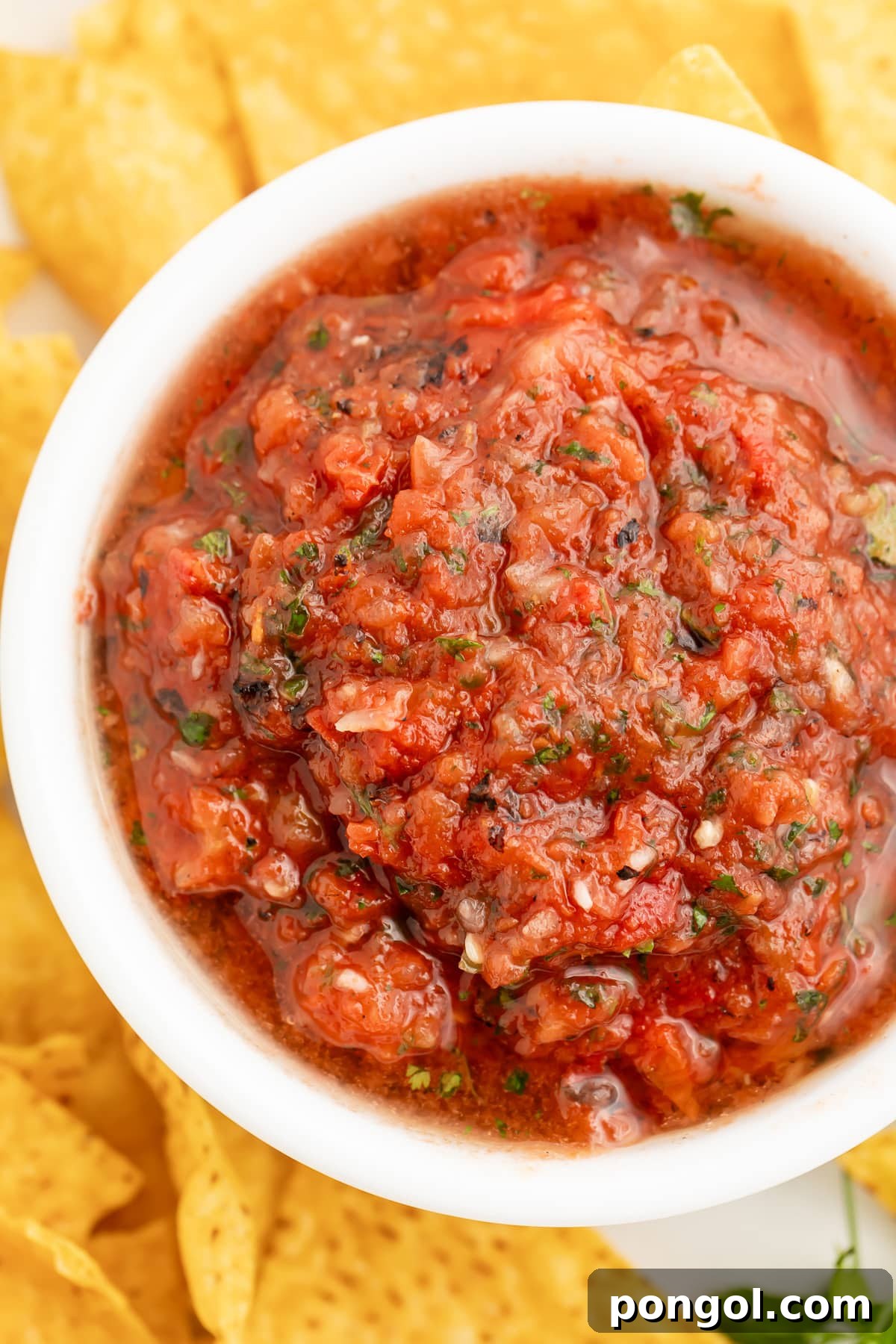
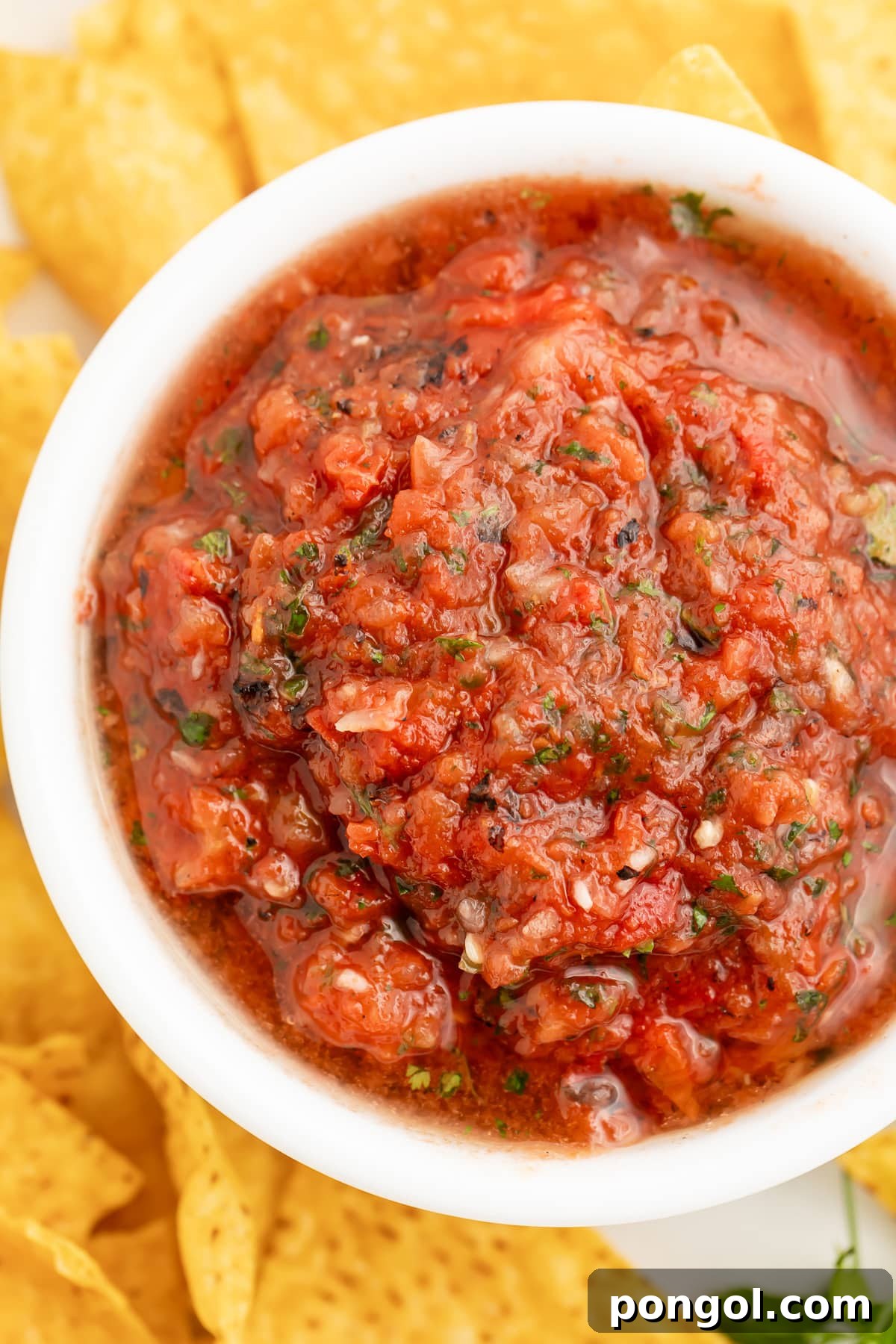
Welcome to the ultimate guide for crafting the most authentic and flavorful restaurant-style salsa right in your own kitchen! This isn’t just another salsa recipe; it’s the exact copycat of the vibrant, irresistible salsa served at my all-time favorite Mexican restaurant. For over a decade, this recipe has been a cornerstone, blending the freshest ingredients with a unique twist that sets it apart from any store-bought or ordinary homemade version. Imagine perfectly ripe tomatoes, pungent garlic, fresh cilantro, crisp onion, and the perfect kick from serrano peppers, all harmonizing into a dip so rich and flavorful, you’ll swear it came straight from a bustling taqueria.
Crafting Authentic Salsa: My Culinary Journey
My journey with this incredible salsa began more than a decade ago, back when I was navigating the rigorous halls of law school. In search of a creative escape from the academic intensity, I started a tiny online journal, then called Legally Eating. It was a place for culinary exploration, a vibrant contrast to the often dry and demanding legal world. While my path eventually diverged from law, my passion for cooking, and specifically for perfecting this restaurant-style salsa, only grew stronger.
This recipe holds a special place, being the very first one I ever shared on my blog. Its enduring popularity speaks volumes. Over the years, countless readers have discovered the magic of this particular blend, transforming their home dining into a true Mexican fiesta. It’s more than just a recipe; it’s a testament to the power of fresh ingredients and a simple, yet ingenious technique that delivers unparalleled flavor. This salsa isn’t just good; it’s a beloved staple that has stood the test of time, becoming a go-to for family gatherings, game nights, and quiet evenings alike.
The Secret Behind The Best Restaurant Style Salsa
What elevates this salsa from simply good to truly extraordinary? It’s a combination of authenticity, fresh ingredients, and a smart approach to flavor development. Forget watery, bland store-bought jars or complicated recipes filled with unnecessary additives. This is the real deal, a harmonious blend that captures the essence of a traditional Mexican taqueria.
Authenticity Unveiled: A True Copycat
I genuinely mean it when I say this is a restaurant-style salsa; it’s not just an inspiration, but an exact replica. The recipe originates directly from the woman who owned my favorite Mexican restaurant, a treasure discovered years ago through a now-defunct online culinary platform. This isn’t a guess or an approximation; it’s an authentic blueprint for rich, layered flavor. This direct lineage ensures that every bite transports you to the vibrant atmosphere of a genuine Mexican eatery, proving that the best flavors often come from time-honored traditions.
The Unique Tomato Blend: Fresh & Canned Perfection
One of the most significant differentiators of this recipe is its intelligent use of both fresh Roma tomatoes and cooked canned diced tomatoes. While many salsa recipes rely exclusively on one or the other, combining them creates a depth of flavor and a nuanced texture that is simply unmatched. Fresh Roma tomatoes bring a bright, vibrant acidity and a crisp, natural sweetness, contributing to the salsa’s immediate freshness. Canned diced tomatoes, having been cooked and preserved, offer a robust, concentrated umami and a foundational richness that grounds the salsa’s overall profile. This dual approach ensures a complex flavor that is simultaneously lively and deeply satisfying, providing a unique dimension that single-tomato salsas often lack. You won’t find any added sugar, liquid smoke, or vinegar here – just pure, unadulterated tomato goodness, allowing the natural flavors to truly shine.
Cost-Effective & Healthier Homemade Indulgence
Beyond its superior taste, making your own restaurant-style salsa is remarkably economical and often healthier. While complimentary chips and salsa are a welcome perk at Mexican restaurants, they implicitly encourage further spending. Jarred salsas, though convenient, can quickly add up, typically costing around $2-3 for a 16-ounce jar. This homemade version, however, yields at least twice that amount for approximately $4.50 in ingredients. Furthermore, preparing salsa at home gives you complete control over what goes into it, allowing you to avoid the excessive sodium, artificial preservatives, and added sugars often found in commercial products. Enjoying a fresh, vibrant, and wholesome dip that perfectly complements your favorite meals, all while saving money and benefiting your health, makes this recipe an undeniable win.
Expert Tips for Crafting Your Perfect Salsa
Achieving the Ideal Restaurant-Style Consistency
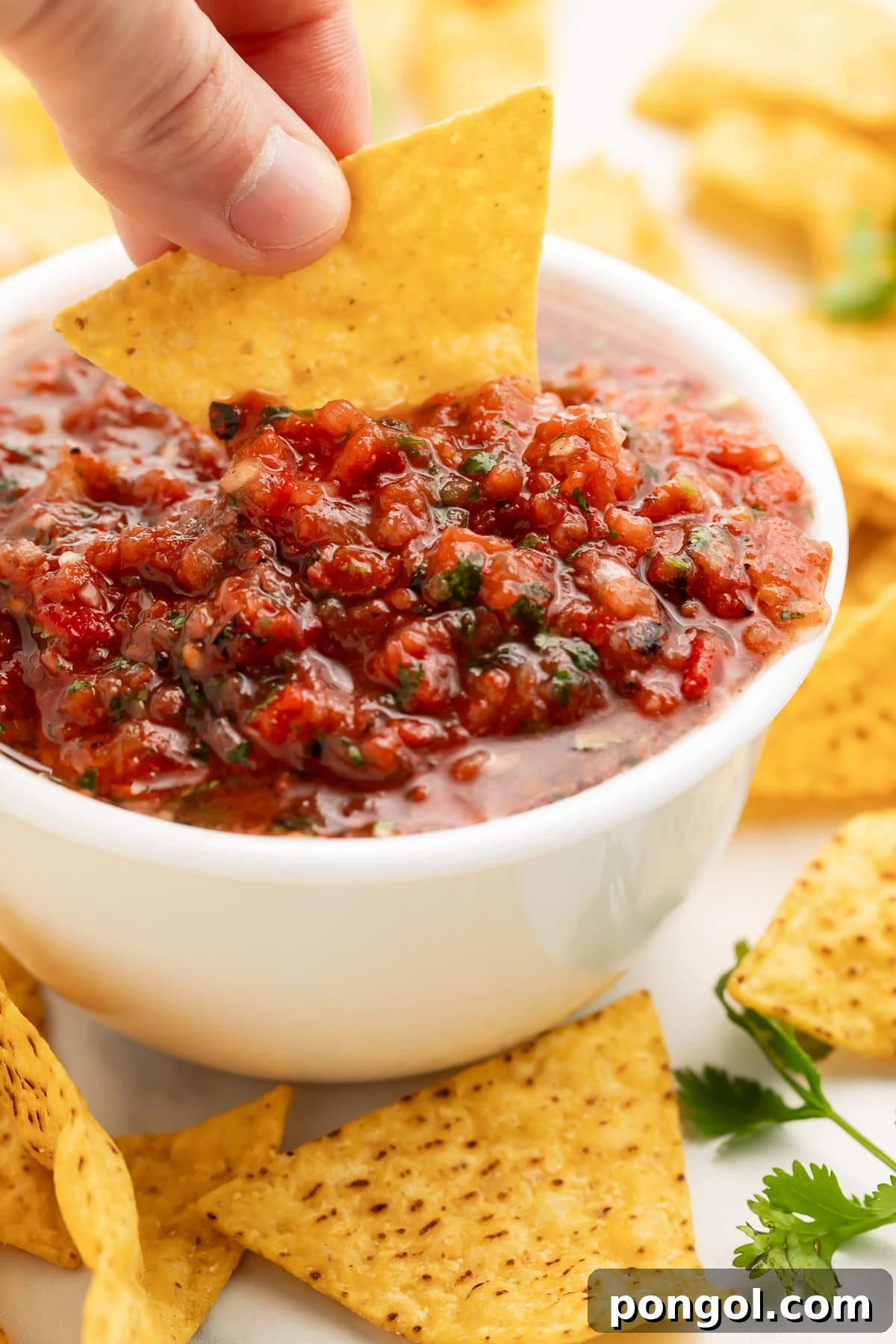
While some salsas are known for their chunky texture, authentic Mexican restaurant salsa typically boasts a smoother, more refined consistency with very fine, almost imperceptible pieces. To achieve this, resist the urge to leave large chunks of vegetables. Your food processor is your best friend here. Pulse the ingredients in stages, ensuring the garlic, peppers, and cilantro are finely minced before adding the onions, and then the tomatoes. The final texture should be fluid enough to scoop easily with a chip, yet still have a slight body from the finely processed vegetables. The liquid content will depend on the juiciness of your Roma tomatoes and how thoroughly you drain the canned tomatoes, allowing for some personal adjustment.
Mastering the Heat: From Mild to Fiery
The burning question for many salsa enthusiasts revolves around spice. Serranos are notably hotter than jalapeños, typically ranging from 10,000 to 23,000 Scoville Heat Units (SHUs), compared to jalapeños’ 2,500-8,000 SHUs. This offers significant control over your salsa’s intensity. For a milder salsa, begin with just one serrano pepper and remove all its seeds and white membranes, where most of the capsaicin (the heat compound) resides. For a medium heat, use one serrano with seeds, or two without. To elevate the spice, incorporate two or even three serrano peppers, leaving the seeds intact. Always taste as you go and adjust the pepper quantity to suit your personal preference, ensuring a delightful heat level for everyone.
The Art of Chilling: Flavor Melding for Maximum Impact
While it’s tempting to dive into your freshly made salsa immediately, patience truly pays off. Allowing your salsa to chill in the refrigerator for at least 30 minutes, or even better, a few hours, makes a dramatic difference in its flavor. During this resting period, the various ingredients—the sharp garlic, bright cilantro, piquant onion, and sweet tomatoes—mingle and meld. This process allows their individual flavors to deepen and harmonize, creating a more cohesive, complex, and overall more delicious salsa. The longer it chills, the more pronounced and well-rounded the flavors become, delivering that coveted restaurant-quality taste.
Why Homemade Salsa Reigns Supreme
Choosing to make your salsa from scratch offers a multitude of advantages over its store-bought counterparts. The most immediate and apparent benefit is the unparalleled freshness. Unlike commercial salsas that sit on shelves for months, often loaded with preservatives, homemade salsa uses ingredients at their peak, delivering vibrant, crisp flavors that simply cannot be replicated. This freshness also translates into a healthier product. You control every ingredient, eliminating unwanted sugars, excessive sodium, and artificial additives. This allows for customization, letting you tailor the spice level, texture, and flavor profile precisely to your liking. Furthermore, there’s a unique satisfaction in creating something delicious from scratch, transforming simple ingredients into a crowd-pleasing dip that reflects your personal touch. Homemade salsa is not just a snack; it’s a healthier, more flavorful, and more rewarding culinary experience.
Beyond the Chip: Creative Ways to Enjoy Your Salsa
While tortilla chips are the classic pairing, this versatile restaurant-style salsa can elevate a wide array of dishes. Don’t limit its potential to just a dip! Here are some fantastic ways to incorporate this flavorful salsa into your meals:
- Tacos and Burritos: A generous spoonful adds a burst of freshness and spice to any taco, burrito, or quesadilla.
- Eggs and Breakfast Dishes: Spoon it over scrambled eggs, omelets, huevos rancheros, or breakfast burritos for a lively start to your day.
- Grilled Meats and Fish: Use it as a vibrant topping for grilled chicken, steak, pork, or white fish like tilapia and cod.
- Bowls and Salads: Incorporate it into grain bowls, avocado toast, or as a dressing component for hearty salads.
- Nachos and Enchiladas: Take your loaded nachos or cheesy enchiladas to the next level with a fresh salsa layer.
- Stuffed Peppers: Mix it into the filling for stuffed bell peppers or use it as a sauce for baked potatoes.
Salsa Variations: Make It Your Own
This recipe provides a fantastic base, but don’t hesitate to experiment and make it your own! Here are a few ideas to inspire your culinary creativity:
- Smoky Flavor: For a subtle smoky note, consider roasting your Roma tomatoes and serrano peppers before blending. Halve them, drizzle with a little oil, and roast until slightly charred.
- Citrus Brightness: A squeeze of fresh lime juice at the very end can brighten all the flavors.
- Herb Additions: While cilantro is traditional, you could experiment with a tiny bit of fresh oregano or even a pinch of cumin for a different aromatic profile.
- Different Peppers: If serranos are too hot or hard to find, jalapeños are a common substitute, though they will yield a milder heat and a slightly different flavor. For an even bolder kick, a tiny sliver of habanero could be added, but use with extreme caution!
- Extra Veggies: Finely diced red bell pepper or a small amount of avocado can be stirred in after blending for added texture and nutrients.
Discover More Restaurant-Style Favorites
If you love recreating restaurant classics at home, you’re in the right place! Explore some of our other popular copycat recipes:
- Asiago Tortelloni Alfredo With Grilled Chicken
- Texas Roadhouse Chili
- Restaurant-Style Chicken Fried Rice
- Chicken Savoy
- Chimichurri Flank Steak
- The Best Lobster Bisque (Ruth’s Chris Copycat Recipe)
- Hibachi Steak with Fried Rice and Vegetables
- McAlister’s Chicken Tortilla Soup Copycat
- Crusted Chicken Romano
- Oyster Brie Soup (from Hollywood Brown Derby)
- Texas Roadhouse Green Beans
- Strawberry Soup Recipe (from Disney World’s 1900 Park Fare)
The Best Restaurant Style Salsa Recipe
Recipe By: Cheryl Malik
5 from 1 vote
Prep Time: 10 minutes
Cook Time: 0 minutes
Total Time: 10 minutes
Want to recreate a restaurant-quality salsa recipe at home? Grab some fresh tomatoes, serrano peppers, garlic, onion, plenty of cilantro, and your trusty food processor. You’ll be enjoying vibrant Mexican-restaurant salsa in no time!

Cheryl Malik
Yields: 6 servings
Equipment
- Cutting board
- Sharp chef’s knife
- Food processor
- Serving bowl or airtight container
Ingredients
- 1-3 medium serrano chili peppers (approximately 4 ounces each, see Notes for heat levels)
- 4 cloves garlic, peeled
- ½ of one bunch cilantro (approximately ¾ cup loosely packed leaves)
- ½ of one medium yellow onion (or white onion, approximately 3 ounces)
- ¾ pound Roma tomatoes (approximately 6 medium tomatoes)
- 3 14.5-ounce cans diced tomatoes, drained (42 ounces diced tomatoes total, drained)
- 1 teaspoon salt (more or less to taste)
Instructions
To Prepare the Ingredients
- Using a sharp chef’s knife, remove stem(s) of 1-3 medium serrano chili peppers. Quarter each pepper, and remove seeds from pepper(s) if desired to reduce heat. Discard stems and seeds. Add quartered pepper(s) to food processor bowl.
- Slice ½ of one medium yellow onion into 1-inch long pieces. Set aside.
- Slice ¾ pound Roma tomatoes into 1-inch long pieces. Set aside.
To Make the Salsa
- Add 4 cloves garlic (peeled) and ½ of one bunch cilantro to the food processor with the peppers. Pulse peppers, garlic, and cilantro together until ingredients are minced and well combined.
- Add sliced onions to the food processor bowl. Pulse ingredients together until onions are finely chopped and the mixture is fairly smooth.
- Add sliced Roma tomatoes to the food processor bowl. Pulse ingredients together until no large chunks of tomato remain, achieving your desired consistency.
- Add 3 14.5-ounce cans diced tomatoes (well drained) and 1 teaspoon salt to the food processor. Pulse all ingredients together until the desired salsa consistency is achieved. Taste salsa and adjust salt if desired.
- When satisfied with the flavor, transfer the prepared salsa to a serving bowl and serve immediately with tortilla chips. Alternately, transfer the prepared salsa to an airtight container and refrigerate until ready to serve.
Notes
- Serrano Peppers: For a mild salsa, use 1 serrano chile with the seeds removed. For a medium salsa, use 1 serrano chile, including seeds. For a hot salsa, use 2 serrano chiles, including seeds. For fiery salsa, use 3 serrano peppers, including seeds. You can replace the serrano peppers with jalapeño peppers if you prefer them, but it will change the overall flavor slightly.
- Diced Tomatoes: Choose a brand without any added sugar for the best results.
- Consistency: This salsa is not intended to be super chunky. Ideally, the end consistency should be fairly smooth with some small, fine chunks, but you can adjust it to your preference.
- Leftovers: Refrigerate salsa in an airtight container. Properly stored, salsa will keep approximately 2 to 3 weeks.
Approximate Nutrition Information for One Serving
Serving Size: 1 serving
Calories: 69 cal
Protein: 3g
Fat: 1g
Saturated Fat: 0.1g
Sodium: 691mg
Potassium: 704mg
Total Carbs: 16g
Fiber: 5g
Sugar: 9g
Net Carbs: 11g
Vitamin A: 1291 IU
Vitamin C: 50mg
Calcium: 83mg
Iron: 3mg
Number of total servings shown is approximate. Actual number of servings will depend on your preferred portion sizes.
Nutritional values shown are general guidelines and reflect information for 1 serving using the ingredients listed, not including any optional ingredients. Actual macros may vary slightly depending on specific brands and types of ingredients used.
To determine the weight of one serving, prepare the recipe as instructed. Weigh the finished recipe, then divide the weight of the finished recipe (not including the weight of the container the food is in) by the desired number of servings. Result will be the weight of one serving.
Frequently Asked Questions About Homemade Salsa
Q: Can I use a blender instead of a food processor?
A: Yes, a blender can be used, but you’ll need to be extra careful to avoid over-blending. A food processor typically offers more control for achieving that ideal restaurant-style consistency with fine chunks. If using a blender, work in small batches and use short pulses to prevent the salsa from becoming too watery or pureed.
Q: Do I have to drain the canned tomatoes?
A: Yes, it is highly recommended to drain the canned tomatoes thoroughly. This prevents the salsa from becoming too liquidy and ensures a richer, more concentrated tomato flavor. Excess liquid can also dilute the other fresh flavors, impacting the overall balance.
Q: How long does homemade salsa last?
A: When stored in an airtight container in the refrigerator, this homemade salsa will stay fresh for approximately 2 to 3 weeks. Always check for any signs of spoilage, such as off-smell or mold, before consuming.
Q: Can I freeze this salsa?
A: While you can freeze salsa, the texture of the fresh tomatoes may change slightly upon thawing, becoming a bit softer. It will still be delicious for cooking purposes, such as in chili or stews, but might not retain the same fresh, vibrant texture for dipping. Store in freezer-safe bags or containers for up to 3 months.
Q: What if my salsa is too bland?
A: If your salsa tastes bland, consider adding a bit more salt, which is a powerful flavor enhancer. A squeeze of fresh lime juice can also brighten the flavors considerably. You might also need to increase the amount of garlic or serrano peppers for a more robust profile.
Did You Make This Recipe?
We’d love to see your creations! Tag @40aprons on Instagram and be sure to leave a review on the blog post!
Tag @40Aprons on Instagram