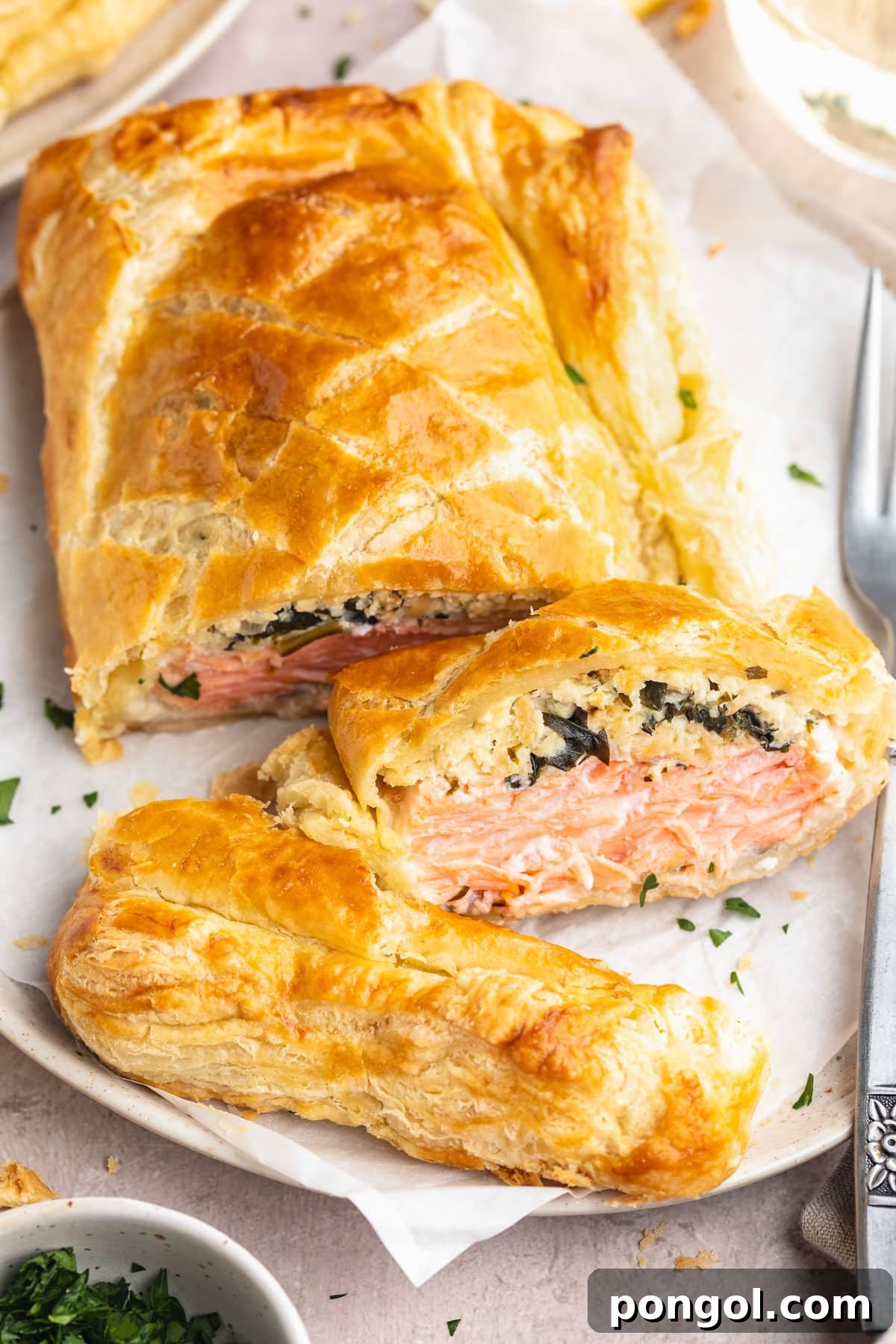
Indulge in an exquisite culinary experience with this truly impressive yet surprisingly simple Salmon Wellington recipe. This gourmet dish transforms tender salmon fillets into a masterpiece, encasing them in a golden, flaky puff pastry shell. Inside, a luscious and savory filling awaits, crafted from a rich blend of cream cheese, vibrant spinach, aromatic garlic, and crunchy breadcrumbs. Perfect for elevating any special occasion, from an intimate date night to a festive dinner party, this restaurant-quality Salmon Wellington is guaranteed to captivate and delight every palate at your table. Its elegant presentation belies its straightforward preparation, making it an ideal choice for home cooks looking to impress without spending hours in the kitchen. Prepare to receive rave reviews when you serve this magnificent seafood centerpiece.
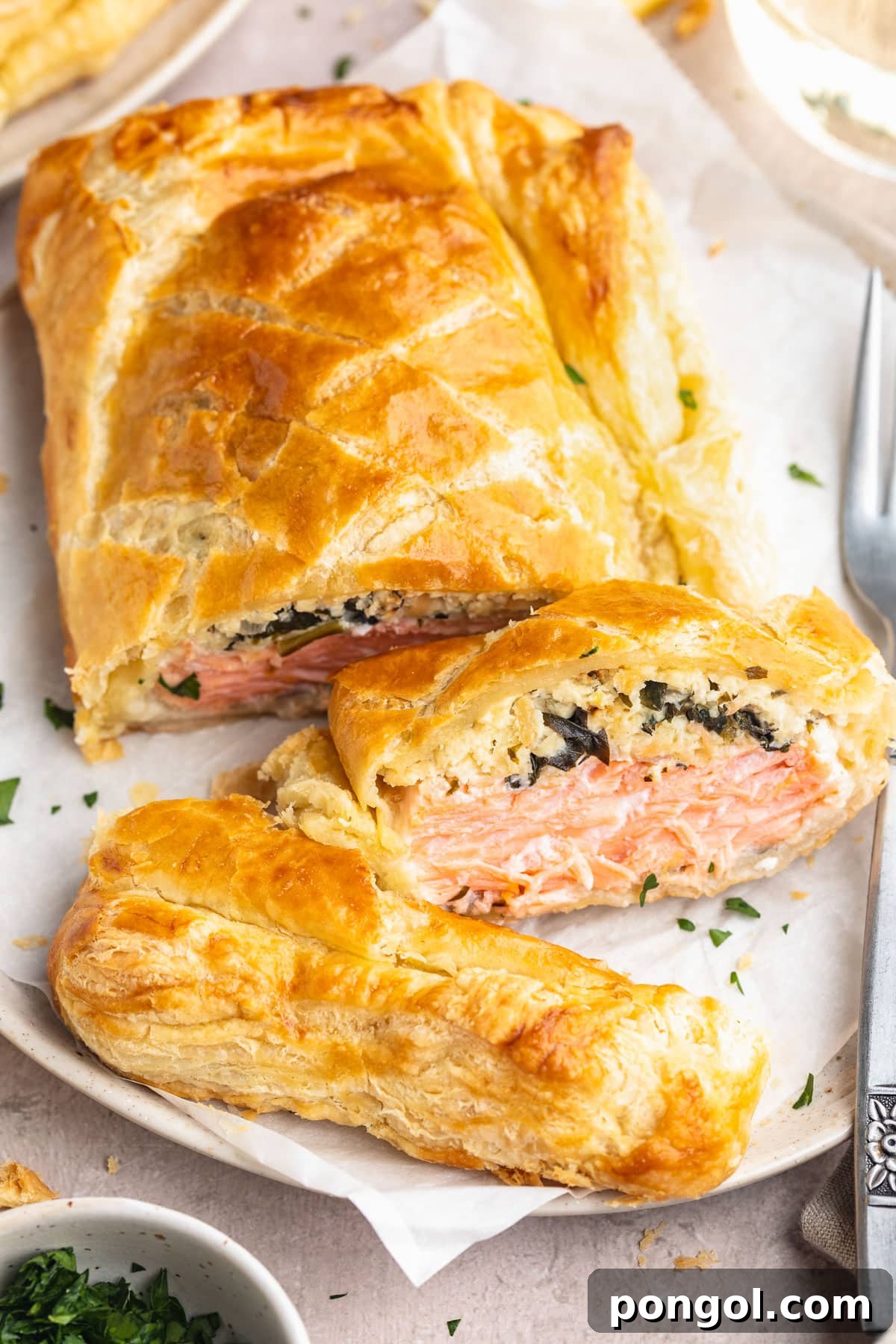
Why This Salmon Wellington Recipe Is So Good
-
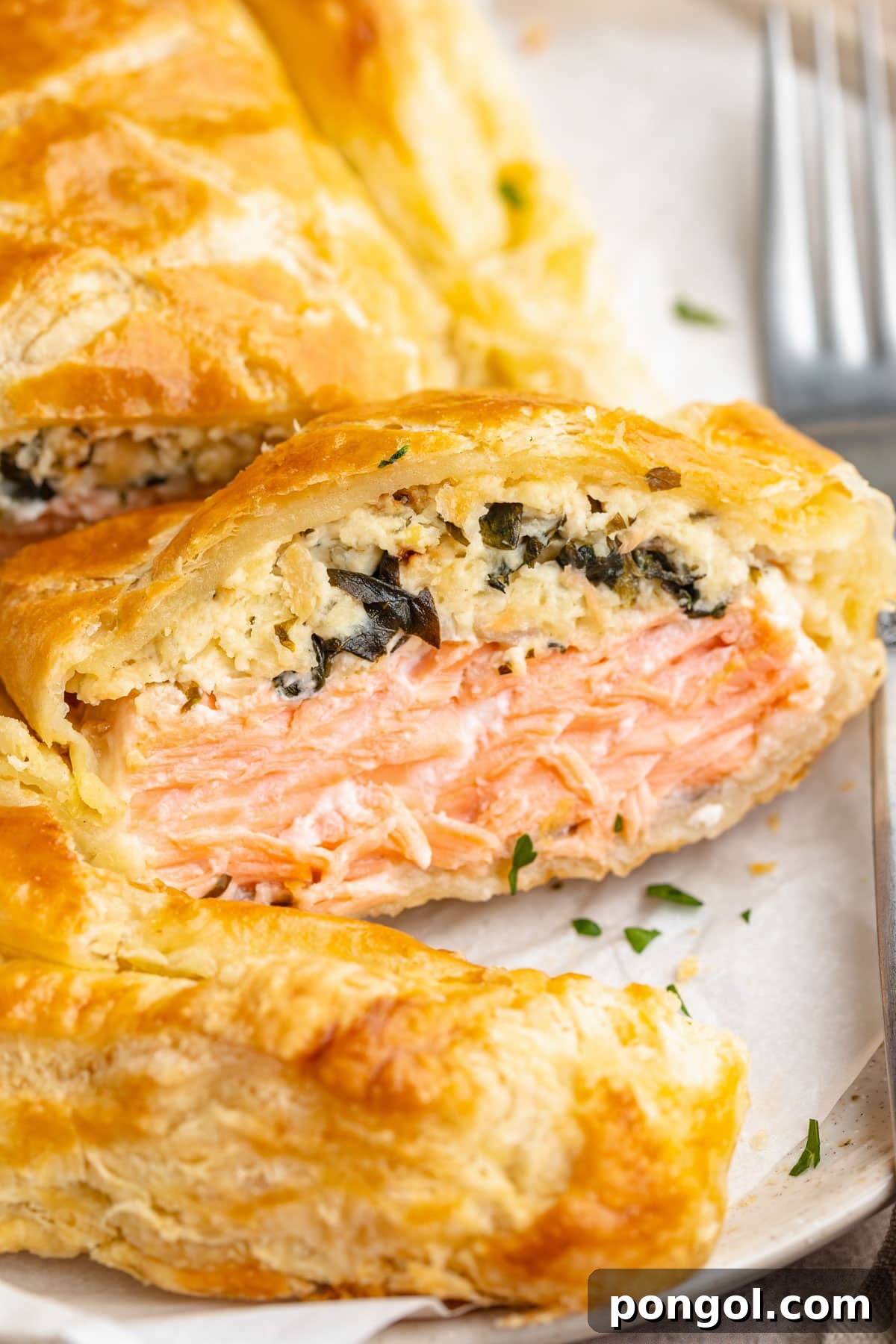
Bursting with Incredible Flavor: This Salmon Wellington is not just a dish; it’s a flavor sensation. Each bite delivers a harmonious blend of tender, flaky salmon and a creamy, herbaceous filling. The vibrant spinach, savory cream cheese, sweet shallots, and pungent garlic create a stuffing that perfectly complements the rich salmon. Once you taste salmon prepared this way, wrapped in its buttery, savory embrace, you might find yourself never wanting to eat it any other way again. The interplay of textures – the crisp pastry, the tender fish, the creamy filling – makes for an unforgettable dining experience that truly excites the taste buds.
-
Impressive Yet Surprisingly Easy to Master: Don’t let the elegant appearance fool you; Salmon Wellington is much simpler to prepare than it looks. It’s the ultimate showstopper meal for a romantic date night, a holiday gathering, or any occasion where you want to serve something truly special. It boasts the sophisticated look and gourmet taste typically found in high-end restaurants, but is entirely achievable in your own kitchen. Elevate your meal even further by pairing it with classic culinary companions. Imagine serving it alongside a luxurious creamy risotto, nutritious roasted kale, innovative hasselback sweet potatoes, or beautifully seasoned Italian green beans for a complete, well-rounded meal that will leave your guests utterly impressed.
-
Packed with Wholesome Nutrients: Beyond its incredible taste and presentation, Salmon Wellington also delivers a powerful nutritional punch. Salmon is renowned for being an excellent source of essential omega-3 fatty acids, which are crucial for heart health and brain function. It’s also incredibly rich in high-quality protein, vital for muscle repair and growth, and abundant in various vitamins and minerals, including Vitamin D and B vitamins. The addition of fresh spinach further boosts the nutritional profile, providing generous amounts of Vitamin E, Vitamin K, and magnesium, all of which play a significant role in supporting a robust immune system and overall well-being. This dish proves that healthy eating can be both delicious and supremely satisfying.
Chef’s Tips for a Perfect Salmon Wellington
-
Preventing a Soggy Bottom and Ensuring Crispness: A common pitfall when baking dishes in pastry is a soggy bottom, which can detract from the overall experience. To prevent this, it is absolutely crucial to pat your salmon fillets completely dry with paper towels before placing them on the puff pastry sheets. Any excess moisture on the salmon will release during baking, creating steam that gets trapped under the pastry, leading to a soft, undesirable crust. Furthermore, scoring the top of your Wellington loaves with a sharp paring knife serves a vital purpose. These delicate crosshatch cuts act as small vents, allowing steam to escape from the rich filling and the cooking salmon, which not only helps maintain a crispy, golden-brown pastry but also ensures that the salmon cooks evenly without overcooking its exterior. This step is key to achieving that perfectly crisp, golden exterior.
-
Mastering the Perfect Bake Time for Salmon and Pastry: The secret to a perfectly cooked Salmon Wellington lies in synchronizing the cooking times of both the delicate salmon and the flaky puff pastry. To achieve this, always keep your salmon fillets refrigerated until the very moment you are ready to assemble the Wellington loaves. Placing cold salmon fillets into a hot oven ensures that the fish begins cooking gradually alongside the pastry. If the salmon is at room temperature when it enters the oven, it will cook significantly faster than the puff pastry. This often results in overcooked, dry salmon by the time the pastry achieves its desired golden-brown, crispy perfection. Maintaining the salmon’s chill ensures an even cook, yielding moist, tender fish encapsulated in a beautifully baked crust.
-
Adjusting Puff Pastry Sheets for Optimal Coverage: Puff pastry sheets come in standard sizes, but salmon fillets can vary significantly in their dimensions. Depending on the thickness and length of your salmon, you may need to gently roll out the puff pastry sheets into larger rectangles. The goal is to ensure you have ample pastry to fully enclose each salmon fillet and its filling. Aim for approximately 2 to 3 inches of excess pastry on three sides of the salmon fillet to allow for proper sealing and aesthetic folding. If you find yourself needing to use a rolling pin, remember to lightly flour both the rolling pin and your work surface. This simple step is crucial for preventing the delicate pastry from sticking, tearing, or becoming difficult to handle, ensuring a smooth and successful wrapping process for your elegant Salmon Wellington.
More Restaurant-Quality Recipes We Love
- Chicken Spiedini with Herb Butter Sauce
- Oyster Brie Soup (from Hollywood Brown Derby)
- Chicken Costoletta
- Tonga Toast French Toast Casserole
- Stuffed Ziti Fritta
- Salmon Piccata
- Firebirds’ Chicken Pasta Copycat Recipe
- The Best Lobster Bisque (Ruth’s Chris Copycat Recipe)
- Chicken Bryan
- Olive Garden Capellini Primavera

Sam Guarnieri
Salmon Wellington
15 minutes
45 minutes
1 hour
A savory, rich, restaurant-quality seafood dish that’s guaranteed to please everyone at your dinner table. Pair it with your favorite veggie side dish for an easy yet elegant meal.

Sam Guarnieri
6
servings
Equipment
-
Oven
-
Large sheet pan
-
Butter or neutral cooking spray
-
Stovetop
-
Medium skillet
-
Silicone spatula
-
Clean, flat work surface
-
Paper towels
-
Small bowl
-
Whisk
-
Paring knife
-
Pastry brush
-
Internal meat thermometer
Ingredients
For the Spinach Filling
- 1 tablespoon unsalted butter
- 1 medium shallot finely chopped, approximately ¼ cup
- 2 cloves garlic minced
- 2 cups spinach leaves
- 1 pinch salt
- ¼ cup plain breadcrumbs
- 2 tablespoons chopped fresh parsley
- 1 tablespoon fresh lemon juice juice from approximately 1 small lemon
- 4 ounces full-fat cream cheese at room temperature, cut into small pieces
For the Salmon Wellington
- 2 full sheets frozen puff pastry at room temperature
- 2 6-ounce boneless, skinless salmon fillets 1 ½-2 inches thick, see Notes
- salt to taste
- freshly cracked black pepper to taste
- 1 large egg at room temperature
Instructions
-
Preheat oven to 425° Fahrenheit. Lightly grease a large sheet pan with butter or neutral cooking spray. Set pan aside.
For the Spinach Filling
-
Place a medium skillet on the stovetop over medium heat. Add 1 tablespoon unsalted butter and heat pan until butter is melted, swirling and tilting pan occasionally to distribute butter evenly across the surface.
-
Once butter is melted, add 1 medium shallot and 2 cloves garlic. Stir to incorporate, then sauté aromatics for 3 to 5 minutes, stirring occasionally, until shallot pieces have softened and become translucent.
-
When softened, add 2 cups spinach leaves and 1 pinch salt. Gently stir ingredients together and cook for 2 minutes, stirring occasionally, until the spinach has wilted down considerably.

-
Add ¼ cup plain breadcrumbs, 2 tablespoons chopped fresh parsley, and 1 tablespoon fresh lemon juice to the skillet. Stir thoroughly to incorporate all ingredients and ensure an even mixture.
-
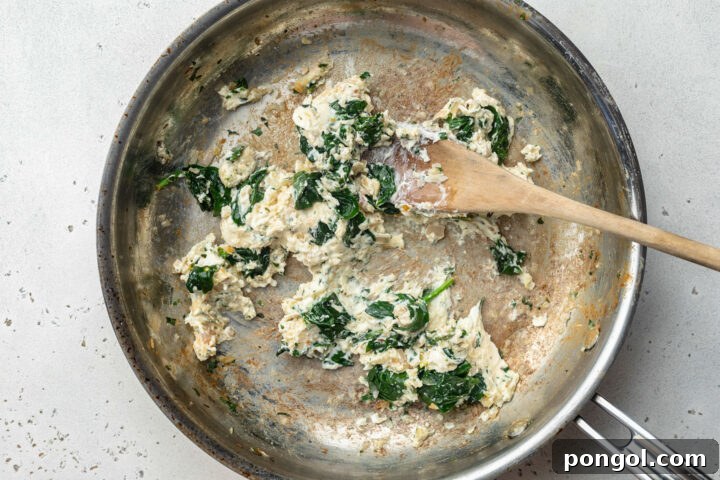
Remove skillet from heat and let the mixture cool slightly for a few minutes. Then, add 4 ounces full-fat cream cheese (at room temperature for easier blending). Stir until the cream cheese has completely melted and all ingredients are fully combined into a smooth, creamy filling. Set the skillet aside on a cool burner to cool further.

To Assemble the Salmon Wellington
-
Spread 2 full sheets frozen puff pastry out on a clean, lightly floured flat work surface. Ensure you leave ample room between the sheets to work with each one individually without crowding.
-
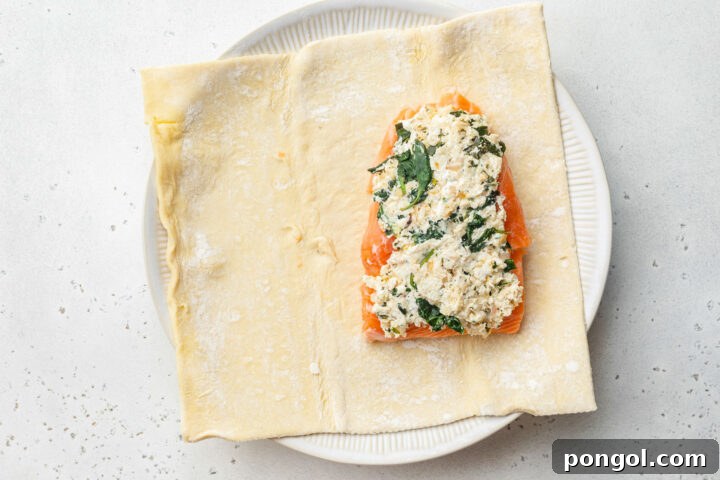
Remove 2 6-ounce boneless, skinless salmon fillets from the refrigerator. Thoroughly pat both fillets completely dry on all sides with paper towels; this is essential to prevent a soggy crust. Then, place 1 fillet off-center on each pastry sheet, leaving approximately 2 to 3 inches of pastry exposed above, below, and to one side of each salmon fillet.
-
Season the top of each salmon fillet generously with salt and freshly cracked black pepper to taste. Spoon half of the prepared spinach filling on top of each salmon fillet, carefully spreading the filling out to cover the fillet as evenly as possible.
-
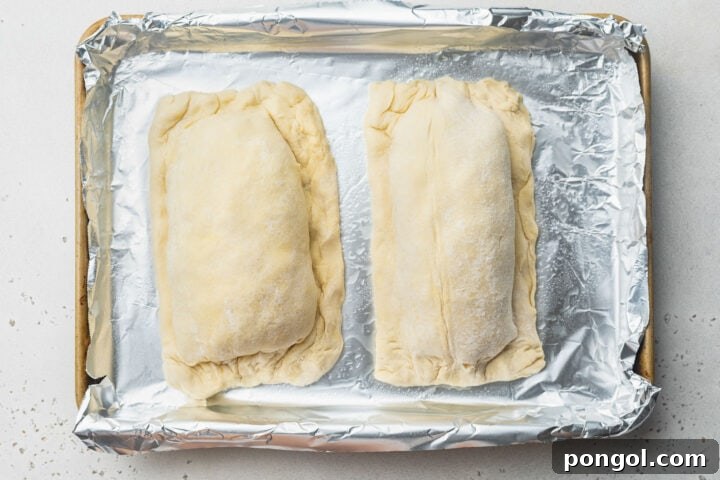
Take the edge of the puff pastry opposite the salmon fillet and fold the pastry over to completely cover the salmon, much like closing a book. Carefully pinch, crimp, or roll the edges of the puff pastry together to ensure it is completely sealed, fully encasing the salmon and filling within the pastry sheet. Repeat this wrapping and sealing process with the remaining pastry sheet and salmon fillet.
-
Once each puff pastry sheet is securely wrapped and sealed around its respective salmon fillet, carefully transfer both assembled Wellingtons to the prepared baking sheet. Ensure you leave sufficient room between each Salmon Wellington to allow for adequate heat circulation and any pastry expansion during baking.
-
Crack 1 large egg into a small bowl. Whisk the egg vigorously until it is well beaten and no streaks of egg white remain. This creates a smooth egg wash.
-
Use a sharp paring knife to lightly score the tops of each Wellington in an attractive crosshatch pattern. Be careful not to cut completely through the pastry sheet and into the filling, as this can cause leaks. Once the pastries are scored, lightly brush the tops and sides of the pastries with the beaten egg wash using a pastry brush; this will give them a beautiful golden-brown sheen.
To Bake the Salmon Wellington
-
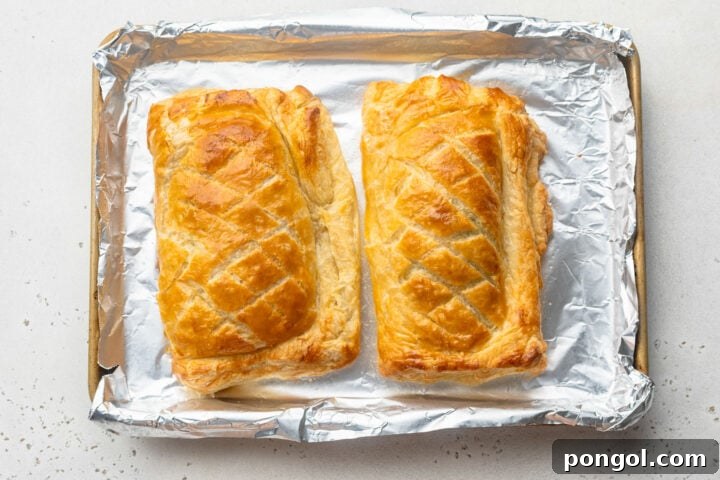
Place the baking sheet with the Salmon Wellingtons in the preheated oven. Bake for 20 to 25 minutes, or until the pastry is a rich golden brown and the internal temperature of the salmon reaches 145°F (63°C) when checked with an internal meat thermometer.
-
When the pastry is beautifully golden and the salmon is cooked through, carefully remove the baking sheet from the oven and set it aside on a wire rack. Let the Wellington rest for 5 minutes before slicing; this allows the juices to redistribute for maximum flavor and moisture. Then, slice into your desired number of pieces and serve warm with your preferred side dishes.
Recipe Notes & Expert Tips
-
Preventing a Soggy Bottom: It cannot be stressed enough – pat the salmon fillets dry with paper towels on all sides before assembling. This crucial step removes excess moisture that would otherwise steam the bottom pastry, resulting in an unpleasantly soggy crust. A dry salmon surface also helps the filling adhere better to the fish.
-
Salmon Fillets Selection and Preparation: For the best results, choose high-quality, fresh boneless and skinless salmon fillets. Aim for fillets that are approximately 1 ½ to 2 inches thick and as uniform in size as possible. Uniform thickness ensures that both fillets cook evenly and reach perfection at the same time. Remember to keep them refrigerated until the last possible moment before assembly; this cold start is vital for achieving the ideal cooking balance between the salmon and the puff pastry.
-
Puff Pastry Sheets Handling: We recommend using readily available frozen puff pastry sheets, such as Pepperidge Farm, which typically come two to a box. Ensure they are fully thawed but still cold enough to handle. While often they are the perfect size, if your salmon fillets are particularly large, you might need to gently roll out the pastry sheets a bit larger. Lightly flour your work surface and rolling pin to prevent sticking and tearing of the delicate pastry. The goal is to have enough pastry to fully enclose the salmon with a slight overlap for a secure seal.
-
Storing and Reheating Leftovers: Any leftover Salmon Wellington can be stored in an airtight container in the refrigerator for up to 2 days. To reheat, place the slices on a baking sheet and warm them in a preheated oven at 350° Fahrenheit (175°C) until thoroughly heated through and the pastry regains some of its crispness, usually about 10-15 minutes. Avoid using a microwave, as it will make the pastry soggy.
-
Make-Ahead Option for Convenience: This recipe is excellent for making ahead, saving you time on the day of your event. Follow all the instructions up to the point where you score the pastries and brush them with the egg wash. Instead of baking, carefully place the assembled Wellingtons in an airtight container and refrigerate for no more than 24 hours. When ready to bake, remove from the fridge, perform the scoring if you hadn’t already, brush with the beaten egg, and then bake as directed. This preparation allows the flavors to meld beautifully.
-
Freezer-Meal Option for Long-Term Storage: For an even more convenient meal solution, you can freeze Salmon Wellington for later. Follow all the instructions above, up to the step where you would typically brush the pastries with egg. Instead, wrap each assembled and scored Wellington tightly first in plastic wrap, then in a layer of aluminum foil. Place the foil-wrapped Wellingtons into sealable food-safe freezer bags, removing as much air as possible before sealing completely. They can be stored in the freezer for up to 1 month. To bake from frozen, simply remove the Wellington from the freezer, unwrap, brush the tops with a fresh beaten egg, and bake directly from frozen in a preheated oven at 425°F (220°C) for approximately 35-45 minutes, or until the pastry is golden brown and the salmon is cooked through.
Approximate Nutrition Information for One Serving
Serving Size: 1 serving
Calories: 525 cal
Protein: 21 g
Fat: 33 g
Saturated Fat: 16 g
Trans Fat: 0.1 g
Cholesterol: 87 mg
Sodium: 439 mg
Potassium: 421 mg
Total Carbs: 39 g
Fiber: 3 g
Sugar: 3 g
Net Carbs: 36 g
Vitamin A: 1177 IU
Vitamin C: 7 mg
Calcium: 51 mg
Iron: 3 mg
Nutrition Disclaimers
Number of total servings shown is approximate. Actual number of servings will depend on your preferred portion sizes.
Nutritional values shown are general guidelines and reflect information for 1 serving using the ingredients listed, not including any optional ingredients. Actual macros may vary slightly depending on specific brands and types of ingredients used.
To determine the weight of one serving, prepare the recipe as instructed. Weigh the finished recipe, then divide the weight of the finished recipe (not including the weight of the container the food is in) by the desired number of servings. Result will be the weight of one serving.
Did You Make This Recipe?
We’d love to see your creations! Tag @40aprons on Instagram and be sure to leave a review on the blog post to share your experience with other home cooks!
Tag @40Aprons on Instagram