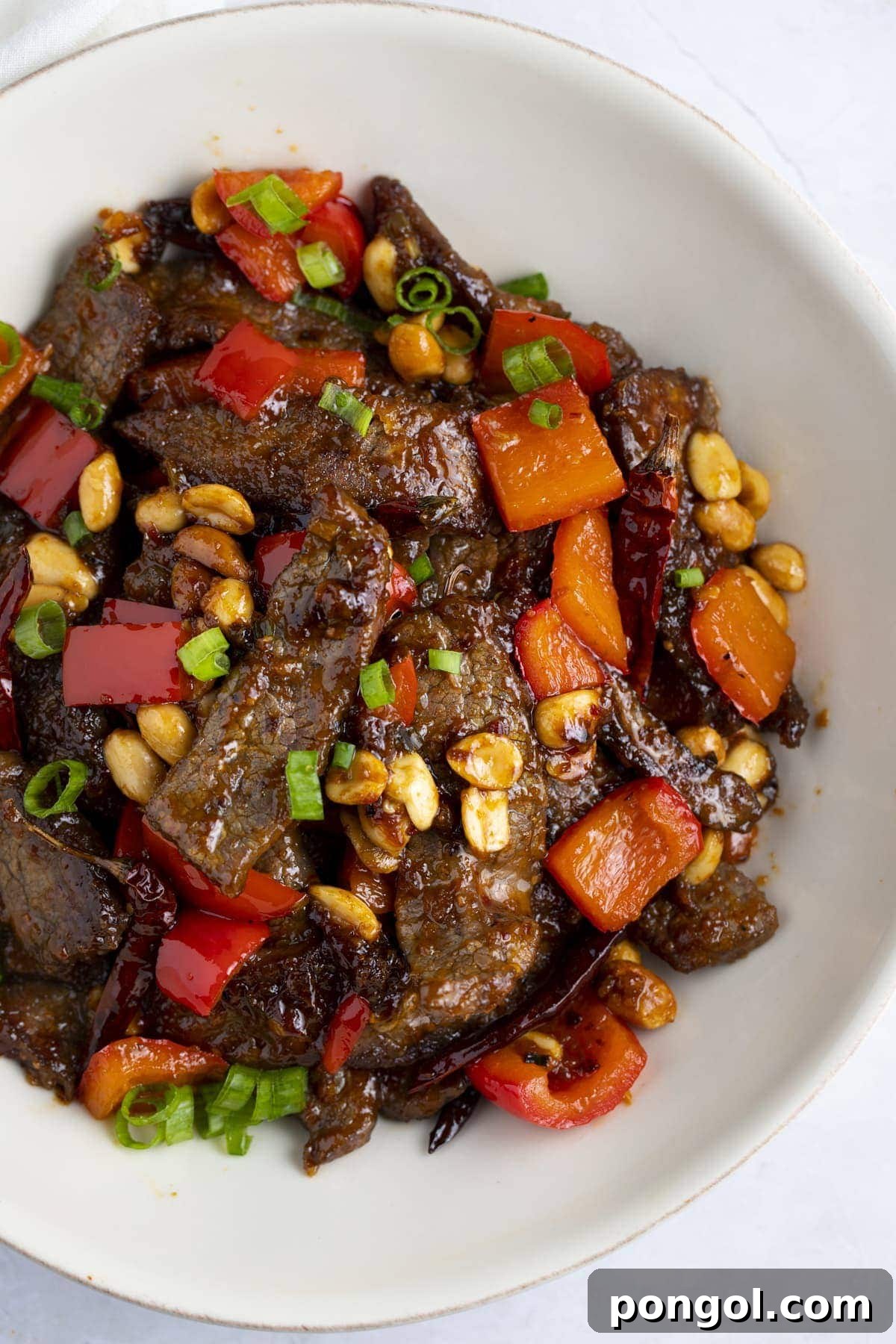
Welcome to your new favorite homemade stir-fry: Easy Kung Pao Beef! This recipe brings the vibrant, spicy, and savory flavors of a classic Chinese takeout dish right into your kitchen. Imagine tender, juicy flank steak, perfectly cooked in a rich, glossy sauce, complemented by crisp bell peppers, aromatic ginger and garlic, and a delightful crunch from roasted peanuts. It’s a symphony of textures and tastes that will make you forget about ordering in. Whether you’re a stir-fry novice or a seasoned chef, this simplified version of Kung Pao Beef is designed for ease, flavor, and ultimate satisfaction. Serve it on its own for a hearty meal, or pair it with your favorite rice or noodles for a complete and utterly delicious dining experience.
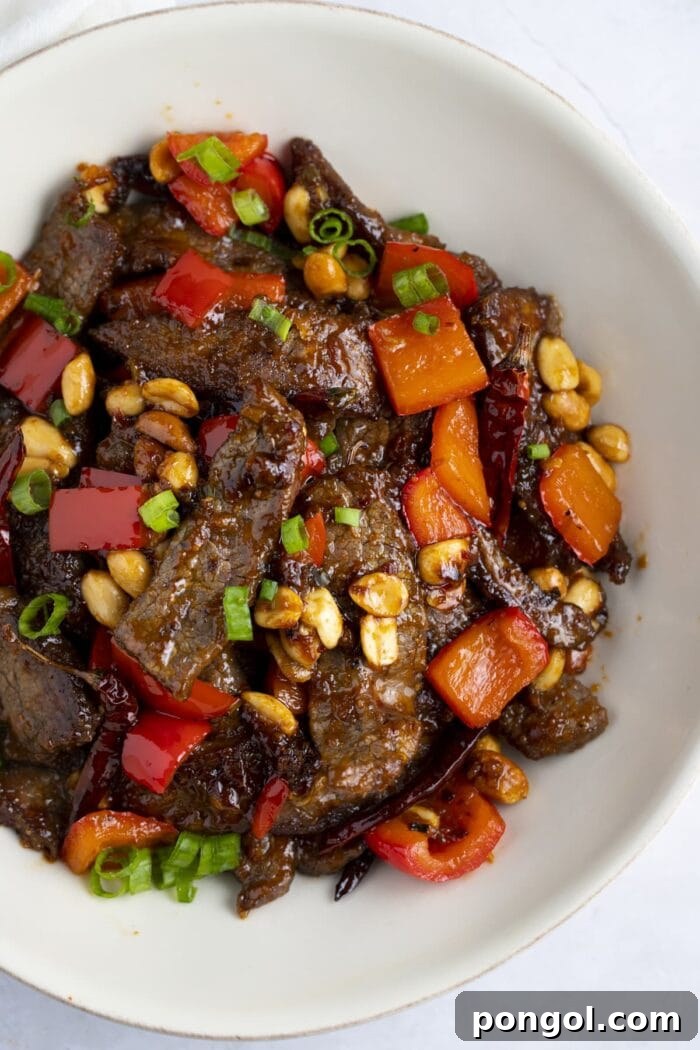
Why This Kung Pao Beef Recipe is a Must-Try
- Unforgettable, Layered Flavors: This Kung Pao Beef isn’t just spicy; it’s a complex blend of “ma la” (numbing and spicy) from Sichuan peppercorns and dried red Thai chiles, perfectly balanced with the sweetness of sugar, the tang of black vinegar, and the savory depth of soy sauce. Each bite offers an exciting journey for your taste buds, hitting all the right notes of sweet, sour, salty, and umami, with a thrilling kick of heat that is wonderfully addictive.
- Effortless to Master & Customize: One of the greatest joys of cooking at home is the ability to tailor dishes to your exact preferences. This recipe makes that easy! You can adjust the spice level by adding more or fewer chiles, experiment with different vegetables, or even swap out the protein. It’s a versatile foundation for a delicious meal, allowing you to recreate a takeout favorite with complete control over the ingredients and their proportions. While not every ingredient aligns with traditional authentic Kung Pao, this version is a fantastic, accessible, and utterly delicious homemade rendition.
- Versatile Serving Options: This flavorful beef stir-fry is incredibly adaptable to any dining preference. Enjoy it as a standalone, protein-packed dish, or make it a fuller meal with simple side dishes. It pairs wonderfully with classic white rice, fragrant fried rice, or your favorite noodles. For those mindful of carbohydrate intake, consider serving it over cauliflower fried rice, a bed of palmini pasta, or even zucchini noodles for a lighter, equally satisfying option.
- Perfect for Meal Prepping: Save time during busy weeknights by preparing this Kung Pao Beef ahead of time. It’s an excellent candidate for weekly meal prep! Leftovers store beautifully in an airtight container in the refrigerator for up to 5 days, making it a convenient and healthy option to grab and go. Reheating is a breeze; simply warm it gently in a large skillet over low heat until it’s warmed through, preserving its delightful flavors and textures.
Essential Ingredients for Authentic Flavor
Crafting exceptional Kung Pao Beef starts with understanding the key components that give this dish its distinctive character. Here’s a closer look at the stars of our recipe:
Flank Steak: Flank steak is a fantastic choice for stir-fries due to its lean texture and robust beefy flavor. The secret to achieving incredibly tender, melt-in-your-mouth steak in your Kung Pao Beef lies in a simple yet crucial step: cornstarch. Coating the thinly sliced flank steak in cornstarch serves a dual purpose. Firstly, it acts as a tenderizer, helping to break down some of the meat fibers. Secondly, it creates a protective barrier around each strip of beef, shielding it from the direct, intense heat of the skillet. This “velveting” technique ensures your steak remains wonderfully tender and juicy, rather than becoming tough and chewy. Do not skip this essential step!
Chinese Black Vinegar: This unique ingredient is a cornerstone of authentic Chinese cooking, lending a distinctive depth to the sauce. Chinese black vinegar, often labeled Chinkiang vinegar or Zhenjiang vinegar, is an inky, dark vinegar known for its complex flavor profile—a delicate balance of sweet, savory, and slightly smoky notes with a rich, malty undertone. You can often find it in Asian grocery stores, international markets, or purchase it conveniently online. When selecting, be sure to look for an unsweetened variety. If Chinese black vinegar is unavailable, you can substitute it with an equal amount of rice wine vinegar for a lighter tang, or even plain white vinegar for acidity, though the resulting flavor will not be quite as deep or authentic. For a last-minute substitute, a good quality balsamic vinegar (not syrupy or overly sweet) can offer a decent approximation in a pinch.
Dried Red Thai Chiles: These small, potent chiles are responsible for the delightful heat in Kung Pao Beef. They provide a clean, sharp spice that awakens the palate. If you are particularly sensitive to heat, you have a couple of options to control the intensity. You can reduce the number of chiles from the suggested 6 down to 3 or 4. Alternatively, you can cook with the chiles to infuse their flavor into the oil and the dish, but then remove them from the stir-fry mixture just before serving. This allows you to enjoy their aromatic essence without the full impact of eating the actual pepper. Experiment to find your perfect balance of spice!
Sichuan Peppercorns: While not explicitly detailed as a “key ingredient” in the original text, Sichuan peppercorns are quintessential to Kung Pao flavor. These unique peppercorns don’t provide heat in the traditional sense, but rather a distinctive “ma la” (numbing and tingling) sensation that is characteristic of Sichuan cuisine. They add an aromatic, citrusy note and a fascinating textural experience. Toasting them briefly at the start of the stir-fry helps to release their full fragrant potential. If you can’t find them, the dish will still be delicious, but you’ll miss out on that iconic numbing spice.
Chef’s Expert Tips for Perfect Kung Pao Beef
Achieving restaurant-quality Kung Pao Beef at home is easier than you think with a few strategic tips:
- Master the Art of Cutting Steak: The tenderness of your flank steak is paramount. Always use a very sharp knife to slice the steak thinly against the grain. This means cutting perpendicularly to the visible muscle fibers running through the meat. Cutting against the grain shortens these fibers, preventing the steak from becoming tough and chewy. A helpful trick is to partially freeze the flank steak for 15-20 minutes before slicing; the firmer texture makes it much easier to achieve uniformly thin strips.
- Embrace Vegetable Versatility: While bell peppers are a classic choice, don’t hesitate to personalize your stir-fry with other vegetables. Snap peas add a delightful crunch and sweetness, broccoli florets absorb the sauce beautifully, sliced onions provide a pungent aromatic base, and even asparagus spears can offer a unique textural contrast. Feel free to use what you have on hand or what you prefer, ensuring they are cut into similar-sized pieces for even cooking.
- Explore Protein Alternatives: If beef isn’t your preferred protein, this recipe is incredibly adaptable! You can easily swap out the flank steak for chicken breast or thighs, thinly sliced, to create a delicious homemade Kung Pao Chicken. Shrimp or even firm tofu (pressed and cubed) can also be used for equally flavorful results, adjusting cooking times as needed for each protein.
- Prioritize Mise en Place for Stir-Frying: Stir-fries cook incredibly quickly over high heat, so preparation is key. Ensure all your ingredients are prepped, measured, and ready to go before you even turn on the stove. This means slicing your beef, chopping vegetables, mincing garlic and ginger, and mixing your sauce ahead of time. Once the cooking begins, you’ll be constantly stirring and adding ingredients, so you won’t have time to stop and prep. I always recommend starting any accompanying sides, like rice or noodles, beforehand so they are ready to serve as soon as your hot and fresh Kung Pao Beef is done.
- Achieve the Perfect Sauce Consistency: The cornstarch in the sauce mixture is essential for creating that signature glossy, thick coating that clings beautifully to the beef and vegetables. When you add the sauce to the hot skillet at the end, it will quickly thicken. Keep stirring until it reaches your desired consistency – not too watery, not overly gloopy. This ensures every component of the dish is enveloped in rich flavor.
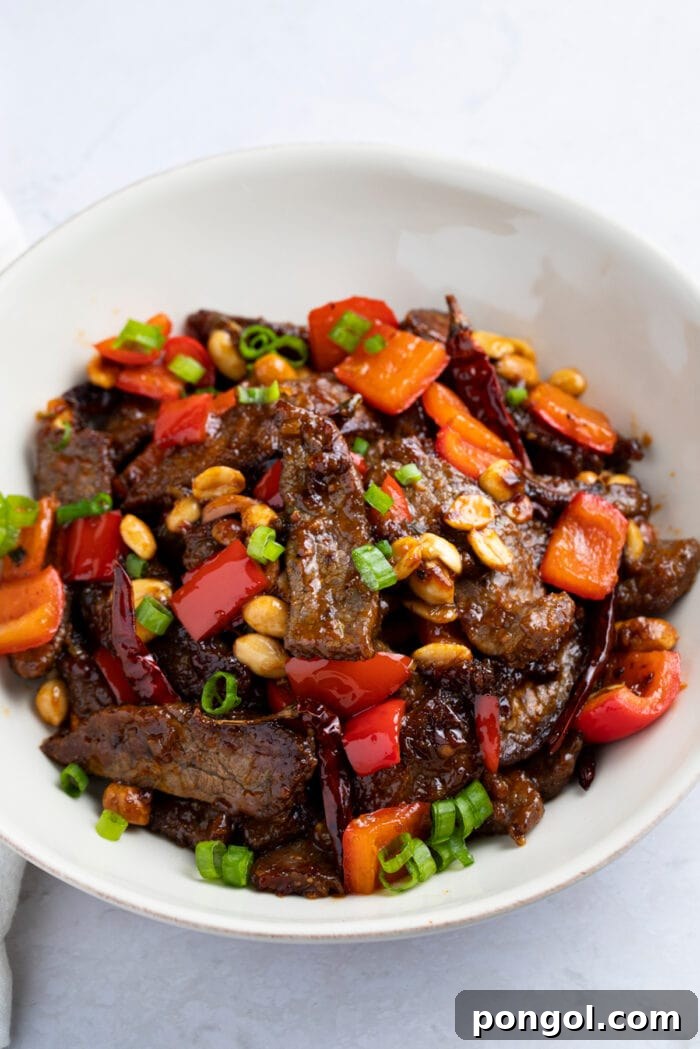
Other Asian-Inspired Recipes You’ll Love
- Miso Salmon
- Beef Negimaki
- Chicken Chop Suey
- Asian Salad Dressing
- Keto Ramen
- Slow Cooker Tom Kha Soup (Thai Coconut Chicken Soup)
- Beef Chow Mein
- Japanese Curry in the Instant Pot
- Hunan Beef
- Beef Lo Mein
Kung Pao Beef Recipe
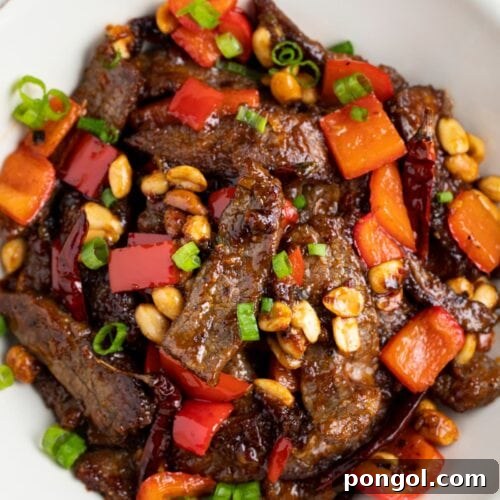
This easy Kung Pao Beef is a simple, homemade version of a classic take-out dish. The juicy flank steak is cooked in a rich and savory sauce with crisp bell peppers and crunchy roasted peanuts for an incredible blend of flavors. Serve this delicious meat and veggie stir fry on its own or with a side of rice or noodles for a total meal.
Preparation and Cooking Time
- Prep Time: 15 minutes
- Cook Time: 10 minutes
- Total Time: 25 minutes
Equipment
- Large bowl
- Medium bowl
- Large skillet
Ingredients
- 1 pound flank steak, thinly sliced
- 3 tablespoons cornstarch
- Salt and pepper, to taste
For the Sauce
- 3 tablespoons soy sauce
- 2 tablespoons chili sauce
- 1 tablespoon granulated sugar
- 2 tablespoons Chinese black vinegar
- 1 tablespoon rice wine vinegar
- 1 teaspoon cornstarch
For the Stir Fry
- 3 tablespoons neutral cooking oil
- 6 dried red Thai chiles
- ½ teaspoon Sichuan peppercorns
- 4 scallions, white and green parts divided, chopped
- 3 cloves garlic, minced
- 1 1-inch piece fresh ginger, grated
- 1 bell pepper, core and seeds removed, chopped
- ½ cup roasted peanuts
Instructions
-
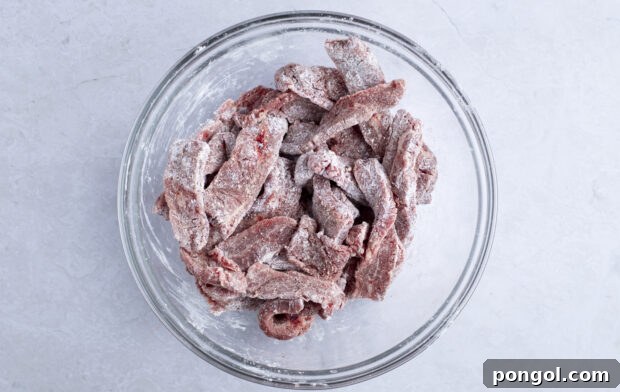
Place the thinly sliced beef in a large bowl. Add 3 tablespoons of cornstarch, along with salt and pepper to taste. Toss or stir thoroughly to ensure the beef strips are completely coated. This “velveting” step is crucial for tenderizing the meat.

-
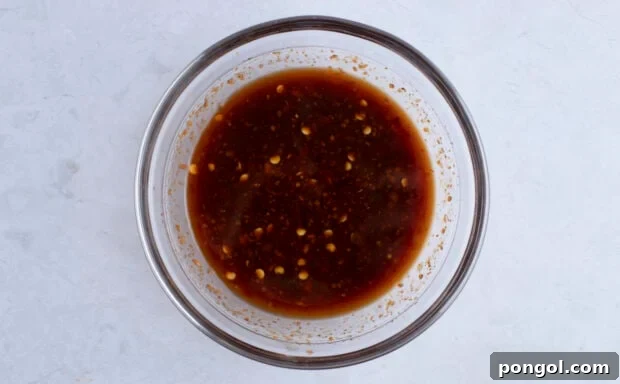
In a separate medium bowl, combine all the sauce ingredients: soy sauce, chili sauce, granulated sugar, Chinese black vinegar, rice wine vinegar, and 1 teaspoon of cornstarch. Whisk until well combined and set aside. The cornstarch here will help thicken the sauce later.
-
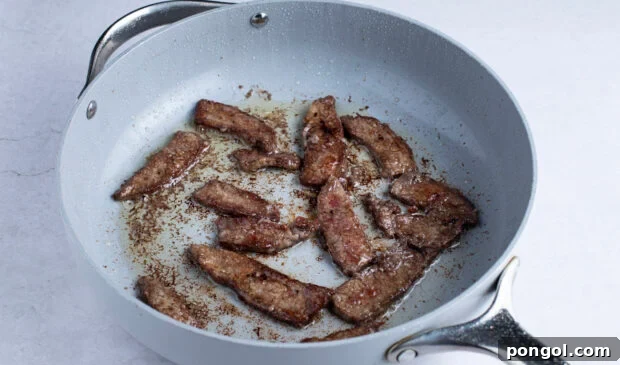
Heat a large skillet or wok over medium-high heat. Add the cornstarch-coated beef and cook for 2 to 3 minutes, stirring occasionally, until the beef is browned and mostly cooked through. Be careful not to overcrowd the pan; cook in batches if necessary.
-
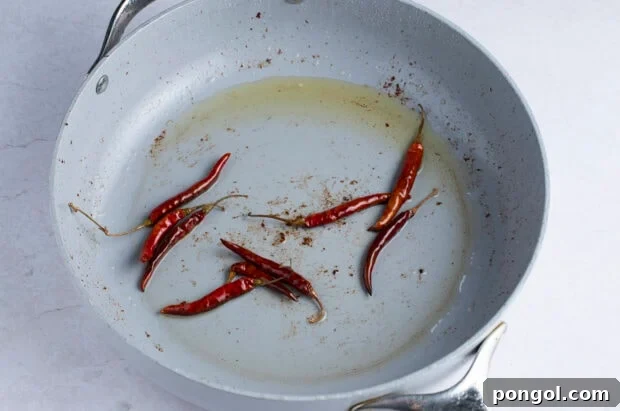
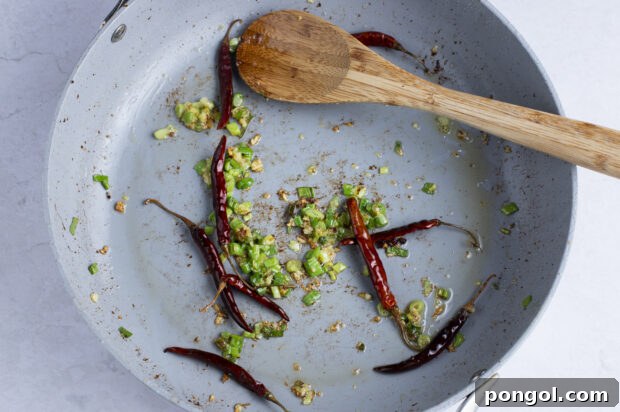
Transfer the cooked beef to a plate or bowl and set aside. Add the neutral cooking oil to the same skillet and allow it to heat up. Once the oil is hot and shimmering, add the dried red Thai chiles and Sichuan peppercorns. Cook for approximately 1 minute, stirring continuously, until fragrant. Be cautious as the chiles can release spicy fumes.
-
Add the white parts of the chopped scallions, minced garlic, and grated ginger to the skillet. Sauté until fragrant, about 1 to 2 minutes, stirring constantly to prevent burning.
-
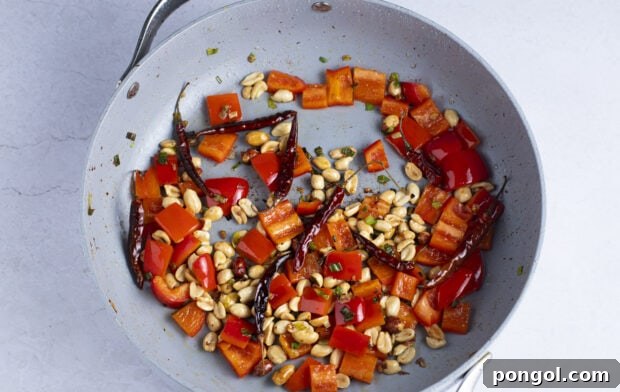
Stir in the chopped bell pepper and roasted peanuts. Continue to cook for 1 additional minute, allowing the vegetables to crisp slightly while retaining some bite.
-
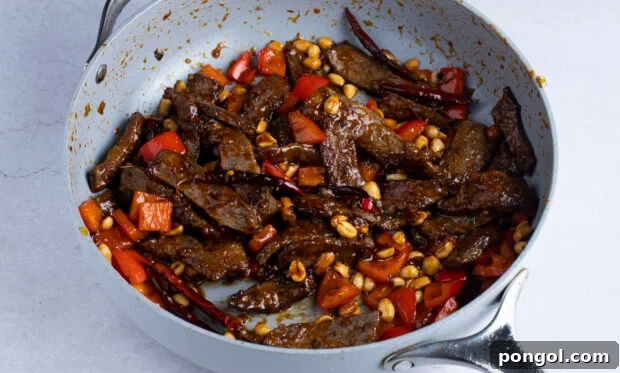
Return the cooked beef to the skillet with the vegetables and aromatics. Give the prepared sauce mixture a quick whisk one more time, then pour it over everything in the skillet. Cook, stirring constantly, until the sauce thickens and coats all the ingredients beautifully, which should only take a couple of minutes. Garnish with the green parts of the scallions before serving immediately.
Recipe Notes
- Soy Sauce: For a healthier option, consider using low-sodium soy sauce to manage your sodium intake without compromising flavor.
- Chinese Black Vinegar: It’s important to use unsweetened Chinese black vinegar (Chinkiang or Zhenjiang). If unavailable, rice wine vinegar or plain white vinegar can be used as a substitute, but expect a slight difference in the depth of flavor. A non-syrupy balsamic vinegar can also work in a pinch.
- Dried Red Thai Chiles: To adjust the heat, reduce the number of chiles from 6 to 3 or 4. For flavor with less intensity, cook the chiles as instructed, then remove them before serving.
- Serving Suggestions: Enjoy your Kung Pao Beef on its own, or enhance your meal with sides like fluffy white rice, savory cauliflower fried rice, or your favorite stir-fry noodles.
- Added-Sugar Free Option: For those avoiding refined sugar, substitute the granulated sugar in the sauce with an equal amount of granular Swerve or another preferred sugar alternative.
This recipe yields approximately 4 servings. The actual number of servings may vary based on your preferred portion sizes. Nutritional values provided are general guidelines for 1 serving (out of 4) using the listed ingredients. Actual macros might differ slightly depending on specific brands and types of ingredients used.
To determine the weight of one serving, prepare the recipe as instructed. Weigh the entire finished dish (excluding the container), then divide that weight by 4. The result will be the approximate weight of a single serving.
Approximate Nutritional Information for One Serving
Serving Size: 1 serving
Calories: 427 cal
Protein: 32 g
Fat: 25 g
Saturated Fat: 5 g
Trans Fat: 1 g
Cholesterol: 68 mg
Sodium: 998 mg
Potassium: 706 mg
Total Carbs: 18 g
Fiber: 3 g
Sugar: 6 g
Net Carbs: 15 g
Vitamin A: 1155 IU
Vitamin C: 53 mg
Calcium: 63 mg
Iron: 3 mg
Nutrition Disclaimers
Number of total servings shown is approximate. Actual number of servings will depend on your preferred portion sizes.
Nutritional values shown are general guidelines and reflect information for 1 serving using the ingredients listed, not including any optional ingredients. Actual macros may vary slightly depending on specific brands and types of ingredients used.
To determine the weight of one serving, prepare the recipe as instructed. Weigh the finished recipe, then divide the weight of the finished recipe (not including the weight of the container the food is in) by the desired number of servings. Result will be the weight of one serving.
Did You Make This Recipe?
We’d love to see your creations! Tag @40aprons on Instagram and be sure to leave a review on the blog post!