Mastering Your Whole30 Journey: The Ultimate Compliant Food List & Comprehensive Guide
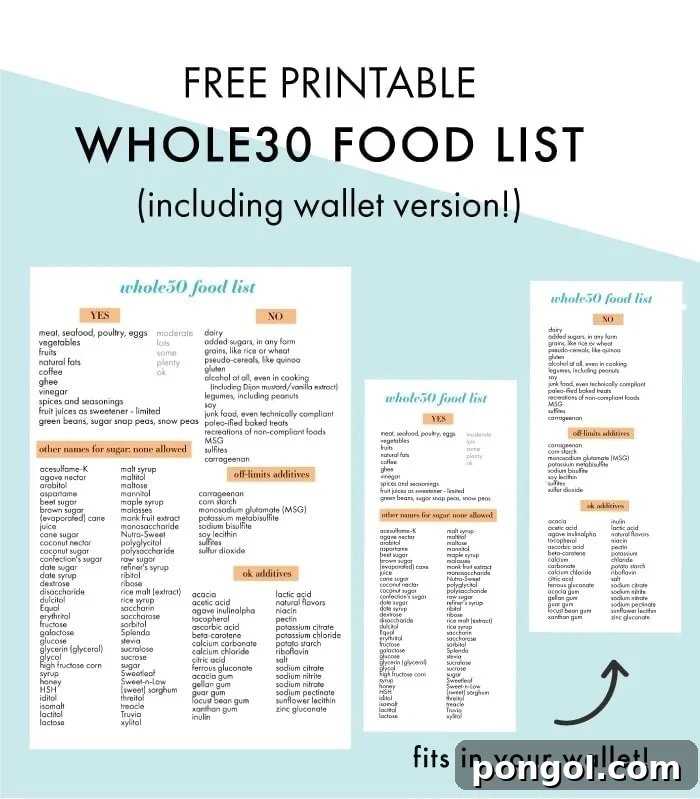
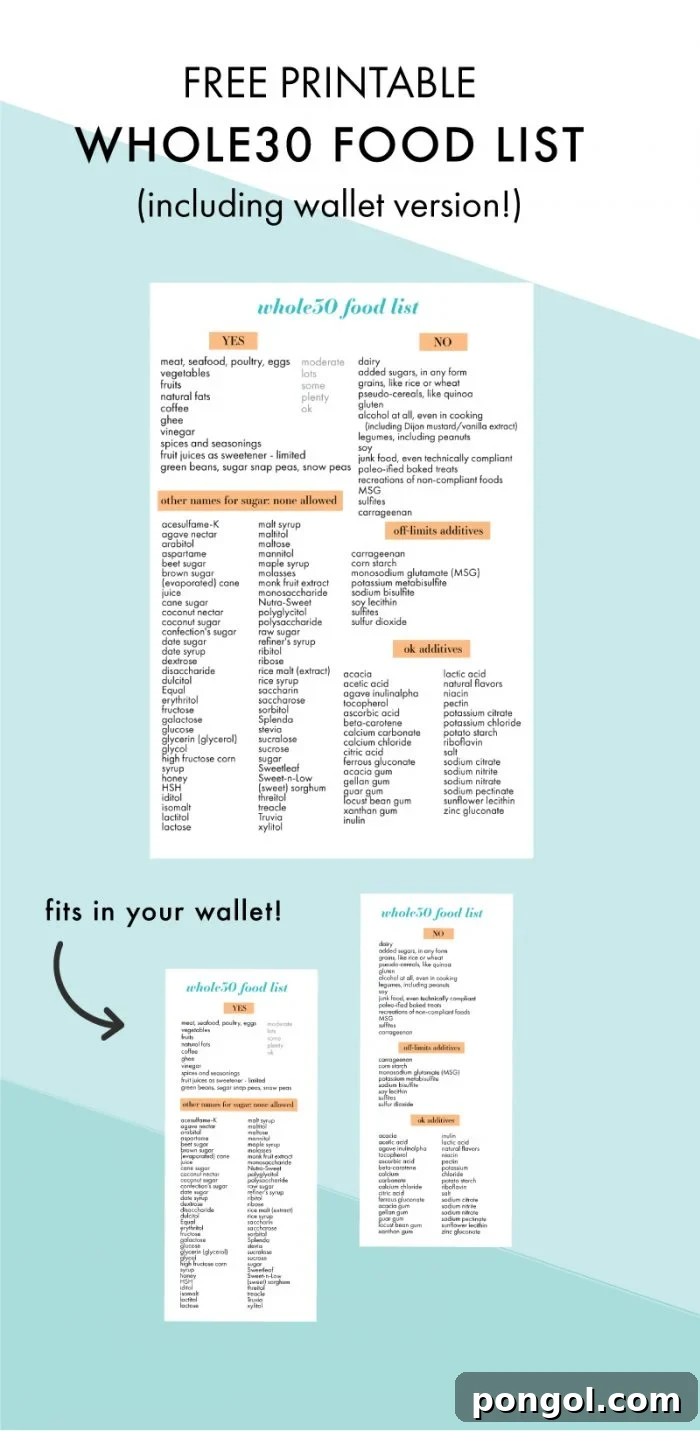
Embarking on a Whole30 program is a transformative step towards understanding your body and achieving true food freedom. However, navigating the intricate world of compliant and non-compliant foods can often feel overwhelming, especially for newcomers. That’s why we’ve created this ultimate, easy-to-follow Whole30 food list and comprehensive guide. Designed to cut through the confusion and simplify your 30-day reset, this resource ensures you know exactly what to eat on Whole30 and what to avoid. For quick reference, download our free printable Whole30 chart – perfect for your fridge, wallet, or phone, ready for those moments of grocery store uncertainty.
Demystifying Whole30 Compliance: Your Essential Guide
The question, “Is it Whole30 compliant?” is one I hear constantly. As an active moderator of a Whole30 support group on Facebook, I witness firsthand the common struggles people face. The modern food landscape is rife with hidden additives, sneaky sugars, and confusing ingredient lists, making it incredibly challenging to keep track of what fits the Whole30 rules. Even seasoned participants, myself included, can sometimes second-guess whether a particular ingredient is truly acceptable. This complexity often leads to frantic grocery store searches for answers, like “is xanthan gum Whole30 compliant?” (Spoiler: it is!).
This widespread confusion is precisely why this comprehensive Whole30 food list was born. My goal is to empower you with clear, concise information, so you can confidently navigate your 30-day journey. Before we dive into the specific foods, let’s solidify our understanding of what the Whole30 program truly entails.
What Exactly is Whole30? A Deep Dive into the Program
Whole30 is much more than just a diet; it’s a 30-day nutritional reset that transforms your relationship with food. At its core, Whole30 is an elimination program designed to overhaul your eating habits by focusing exclusively on nutrient-dense, unprocessed whole foods. For 30 consecutive days, you meticulously cut out a list of common problematic foods – including sugar, grains, dairy, legumes, and alcohol – that are known to potentially cause inflammation, gut issues, hormonal imbalances, and energy crashes.
The fundamental principle behind Whole30 is simple yet profound: by removing these potentially allergenic and nutrient-poor foods for a full month, you give your body a chance to heal, reset, and rid itself of any lingering effects these foods might have. This “clean slate” allows you to truly identify how different foods impact your physical and mental well-being. After the initial 30 days, you embark on a systematic reintroduction phase, bringing back each eliminated food group one at a time. This careful process allows you to observe and note any adverse reactions, empowering you to make informed decisions about your long-term eating habits. This isn’t about calorie counting, restrictive points systems, or measuring portions; it’s entirely about listening to your body and understanding how food truly makes you feel.
Many participants discover, much like I did, that after experiencing the profound benefits of Whole30, they naturally gravitate towards continuing a diet rich in whole, unprocessed foods. The improved sleep, boundless energy, clearer skin, and absence of chronic pains become compelling reasons to maintain a mindful approach to eating, often leading to a sustained avoidance of grains, gluten, and dairy because, quite simply, it just makes you feel incredibly good.
If you’re contemplating a Whole30, don’t miss our essential guide on How to Prepare for a Whole30 for invaluable preparation tips.
Dispelling Myths: What You CAN Eat on Whole30
The terms “elimination” and “cutting out” often evoke a sense of deprivation, making the Whole30 food list seem dauntingly restrictive. I can relate; it took me years to finally try Whole30 because I feared I’d be suffering through bland meals. But let me assure you, this couldn’t be further from the truth! Whole30 is not a punishment; it’s an opportunity to discover incredible, flavorful, and satisfying food. We don’t suffer; we feast on delicious dishes like perfectly seared flat-iron steak with homemade béarnaise sauce, savory bacon-wrapped dates, and vibrant salads loaded with fresh ingredients. The culinary possibilities are endless and exciting.
Before Whole30, I considered myself a “healthy” eater. For decades, I cycled through vegetarian and vegan diets, prioritizing “real food” like whole wheat tortillas and shunning obvious processed junk. Yet, nothing truly prepared me for the intense feeling of wellness that washed over me around day 14 of my first Whole30. My chronic jaw pain vanished completely. I slept more soundly than I had since my teenage years. My persistent headaches disappeared, and I even shed 7 pounds effortlessly.
If you’re still hesitant, I urge you to just try it. It’s only 30 days – a mere blip in the grand scheme of your health journey. You have absolutely nothing to lose, except perhaps that nagging tired, sluggish, and overall “blah” feeling. My personal experience has shown me that once you truly cut the cord and experience the benefits, you often won’t even miss the non-compliant foods.
The Golden Rule: No Treats, No Cheat Meals, No Slipping Up
This is where Whole30 truly distinguishes itself from typical diets: there are absolutely no treats or cheat meals allowed. Whole30 is designed as a complete 30-day metabolic reset and a psychological reprogramming of your eating habits. For it to be truly effective, it demands a strict, unbroken 30-day commitment without any deviations. This means no “just a little bit” and no “once in a while” indulgences. Even “paleo-fied” or “Whole30 desserts” – dishes made from entirely compliant ingredients but mimicking non-compliant treats – are strictly off-limits.
You might be asking, “Wait, why can’t I have a dessert made from Whole30 ingredients?” The answer lies in the program’s core philosophy: changing your psychological relationship with food, especially sugar cravings. When your brain signals a craving for sugar or a comforting “treat,” it doesn’t differentiate between a traditional cake and a “Whole30 cake” made from dates and nuts. It simply recognizes that you’re indulging in a treat. By allowing these “healthy” versions of junk food, you inadvertently reinforce old habits and cravings, undermining the very purpose of the reset. The goal is to slay the “Sugar Dragon,” not just find new ways to placate it.
So, enjoy a banana, but don’t transform it into banana “pancakes.” Embrace whole, natural foods in their simplest forms and allow your palate and brain to reset their expectations of what truly satisfies.
Your Comprehensive Compliant Whole30 Food List
Get ready to embrace an abundance of delicious, nourishing foods for the next 30 days! Here’s what you can enjoy:
- Meat, Seafood, Poultry, and Eggs: These are your protein powerhouses! Enjoy a wide variety, from grass-fed beef and pastured pork to wild-caught salmon and organic chicken. Eggs are also a fantastic, versatile, and budget-friendly protein source. While essential, remember Whole30 is about balance; it’s not an excuse to consume excessive amounts, like a cowboy ribeye for every single meal for 30 days. Focus on moderate, satisfying portions.
- Vegetables: Load up on these! Vegetables are incredibly nutrient-dense, rich in essential vitamins, minerals, antioxidants, and fiber. They should form a significant portion of every meal. Think leafy greens like spinach and kale, cruciferous veggies like broccoli and cauliflower, root vegetables like carrots and sweet potatoes, and all sorts of colorful peppers, onions, and squash. The more variety, the better!
- Fruits: While fruits are compliant, they should be enjoyed in moderation and not become the cornerstone of your diet. Their natural sugar content, even though healthy, can sometimes fuel the “Sugar Dragon” and hinder your body’s ability to truly reset from sugar cravings. Opt for berries, apples, and citrus, but be mindful of portion sizes.
- Natural Fats: Don’t shy away from healthy fats! They are crucial for satiety, energy, hormone production, and nutrient absorption. Incorporate plenty of good fats like ghee (clarified butter), avocados and avocado oil, coconut oil, olive oil, tallow, lard, and chicken fat. If you find yourself constantly hungry during Whole30, often the culprit is insufficient healthy fat intake. Boost your fat consumption, and you’ll likely feel much more satisfied. Bone broth is also a fantastic, nourishing addition.
- Coffee: Good news for coffee lovers – your daily brew is permitted in moderation! Just ensure you use compliant creamers. Options include unsweetened coconut cream, Nutpods (many flavors are compliant), or Califia Farms Unsweetened Creamer. Avoid any added sugars or non-compliant milk.
- Ghee (Clarified Butter): This is the single exception to the strict “no dairy” rule. Ghee is essentially butter with the milk solids and lactose removed, making it free of the potentially allergenic dairy proteins. It’s a fantastic fat for cooking and adds a wonderful flavor.
- Vinegar: Almost all vinegars are allowed, provided they don’t contain added sugar (which some rice wine vinegars might). Even vinegars with non-compliant ingredients in their names, such as white wine vinegar or rice wine vinegar, are generally fine because the alcohol or grain components are removed during the fermentation process. Always double-check labels for hidden sugars.
- Spices and Seasonings: Feel free to use a wide array of spices and herbs to flavor your dishes generously! The only caveat is to ensure your spice blends don’t contain non-compliant additives like anti-caking agents, preservatives, or hidden sugars. Single-ingredient spices are always a safe bet.
- Fruit Juices as a Sweetener: On a very limited basis, a small amount of fruit juice can be used as a liquid in recipes (e.g., lime juice in a marinade). However, it should never be used to sweeten a dish or recreate a non-compliant food.
- Green Beans, Sugar Snap Peas, Snow Peas: These are the unique exceptions to the “no legumes” rule. While technically legumes, their nutritional profile is more similar to vegetables, making them compliant on Whole30.
Whole30-Compliant Additives: What’s Okay?
Many additives are non-compliant, but a select few are deemed acceptable. If you spot these on an ingredient list, your item is likely Whole30-friendly:
- Acacia (gum acacia)
- Acetic acid
- Agave inulin
- Alpha-tocopherol (Vitamin E)
- Ascorbic acid (Vitamin C)
- Beta-carotene
- Calcium carbonate
- Calcium chloride
- Citric acid
- Ferrous gluconate
- Gellan gum
- Guar gum
- Locust bean gum
- Xanthan gum
- Inulin (chicory root fiber, etc.)
- Lactic acid
- Natural flavors (ensure no hidden non-compliant ingredients, best to stick to reputable brands or research specific products)
- Niacin (Vitamin B3)
- Pectin
- Potassium chloride
- Potato starch
- Riboflavin (Vitamin B2)
- Salt (sodium chloride)
- Sodium citrate
- Sodium nitrite
- Sodium nitrate
- Sodium pectinate
- Sunflower lecithin (note: soy lecithin is NOT compliant)
- Zinc gluconate
The Non-Compliant Whole30 Food List: What to Avoid
Now that we’ve covered the delicious foods you can enjoy, let’s explicitly outline what you must avoid for the 30-day program. This list is crucial for a successful reset.
- Dairy: This is a major category to eliminate. All forms of dairy are out, including milk, cheese, yogurt, kefir, sour cream, and cream. Even cultured dairy is not allowed. Remember, Ghee is the only exception due to the removal of lactose and milk proteins.
- Added Sugars, in Any Form: This is arguably the most challenging component for many, as sugar is ubiquitous in processed foods. You must become a vigilant label reader, as sugar hides under countless aliases. I once found fructose in jarred minced ginger – a surprising and frustrating discovery! Absolutely no added sugar is allowed, whether it’s granular sugar, honey, maple syrup, agave nectar, coconut sugar, or any form of dextrose.
- Grains: All grains are strictly prohibited. This includes wheat, rice, corn, oats, barley, quinoa (even though it’s a pseudo-cereal, it falls into this category), millet, bulgur, and all products derived from them (breads, pastas, tortillas, cereals, etc.).
- Pseudo-cereals: While nutritionally distinct, pseudo-cereals like quinoa, buckwheat, and amaranth are also excluded for the 30-day period as they can trigger similar digestive responses to grains in sensitive individuals.
- Gluten: By eliminating grains, you naturally eliminate gluten. This is a significant benefit for many, as gluten can be a major inflammatory trigger.
- Alcohol (in all forms, even for cooking): This is a strict rule with no exceptions. Even trace amounts of alcohol, such as those found in cooking wines, many vinegars, or vanilla extract, are off-limits. This extends to things like Dijon mustard, which often contains white wine. While intense, this rule helps reset your body’s response and relationship with alcohol. There are a few alcohol-free Dijon options, such as Annie’s Naturals Organic Dijon Mustard, but always check the label.
- Legumes (most types): Generally, legumes are out. This includes beans (black beans, pinto beans, kidney beans, cannellini beans), lentils, chickpeas (meaning no hummus!), and peanuts (including peanut butter). As mentioned earlier, green beans, sugar snap peas, and snow peas are the only exceptions.
- Soy: All forms of soy are non-compliant, even fermented varieties. This includes soy milk, tofu, tempeh, edamame, and soy sauce. Be aware of hidden soy in processed foods.
- Junk Food (even if technically compliant): This goes back to the “no treats” rule. While you could technically make “fries” out of sweet potatoes cooked in compliant oil, the intention of Whole30 is not to recreate unhealthy eating habits with compliant ingredients. Focus on whole, unprocessed foods.
- Paleo-ified Baked Treats or Recreations of Non-Compliant Foods: Absolutely no “pancakes,” “muffins,” “brownies,” or “cookies” – even if they are made entirely from Whole30 compliant ingredients like eggs, bananas, and pumpkin. The psychological aspect of indulging in these “treats” prevents the fundamental habit change Whole30 aims to achieve.
- MSG (Monosodium Glutamate): This flavor enhancer is a common additive in many processed foods and is not compliant.
- Sulfites: Often used as preservatives, sulfites are non-compliant.
- Carrageenan: An emulsifier and thickener derived from seaweed, carrageenan is a common gut irritant and is therefore non-compliant.
Whole30 Non-Compliant Sugars: The Sneaky List
Sugar has many names. Becoming an expert label reader is essential. None of the following are compliant on Whole30:
- Acesulfame-K
- Agave nectar
- Arabitol
- Aspartame
- Beet sugar
- Brown sugar
- (Evaporated) cane juice
- Cane sugar
- Coconut nectar
- Coconut sugar
- Confection’s sugar
- Date sugar
- Date syrup
- Dextrose
- Disaccharide
- Dulcitol
- Equal (artificial sweetener)
- Erythritol
- Fructose
- Galactose
- Glucose
- Glycerin (glycerol)
- Glycol
- High fructose corn syrup (HFCS)
- Honey
- HSH (Hydrogenated Starch Hydrolysates)
- Iditol
- Isomalt
- Lactitol
- Lactose
- Malt syrup
- Maltitol
- Maltose
- Mannitol
- Maple syrup
- Molasses
- Monk fruit extract (while natural, falls under the “no treats” rule)
- Monosaccharide
- Nutra-Sweet (artificial sweetener)
- Polyglycitol
- Polysaccharide
- Raw sugar
- Refiner’s syrup
- Ribitol
- Ribose
- Rice malt (extract)
- Rice syrup
- Saccharin
- Saccharose
- Sorbitol
- Splenda (artificial sweetener)
- Stevia (while natural, falls under the “no treats” rule)
- Sucralose
- Sucrose
- Sugar (generic term)
- Sweetleaf (stevia blend)
- Sweet-n-Low (artificial sweetener)
- (Sweet) sorghum
- Threitol
- Treacle
- Truvia (stevia blend)
- Xylitol
Whole30 Non-Compliant Additives: The “No-Go” List
Beyond sugars, certain additives are definitively non-compliant due to their potential impact on gut health, inflammation, or their highly processed nature:
- Carrageenan
- Corn starch
- Monosodium glutamate (MSG)
- Potassium metabisulfite
- Sodium bisulfite
- Soy lecithin
- Sulfites (as general category)
- Sulfur dioxide
Embrace Your Whole30 Journey with Confidence!
There you have it – a comprehensive, easy-to-digest Whole30 food list that clearly outlines exactly what you *can* eat and what you *can’t* eat on your Whole30 journey. Armed with this knowledge, you’re well-equipped to navigate grocery aisles, plan your meals, and successfully complete your 30-day reset. Remember, this program is about discovery, healing, and transforming your relationship with food for lasting health. You absolutely got this!
For additional support, tips, tricks, and a thriving community, be sure to join my Whole30 Support Group on Facebook. We’re here to cheer you on every step of the way.
Essential Tools for Your Whole30 Success
To further empower your Whole30 journey, explore these valuable resources and guides:
- The Whole30 Diet: What It Is & Everything You Need to Rock It
- Printable Whole30 Food List (Free Download!)
- Understanding the Core Whole30 Rules
- How to Prepare for a Successful Whole30
- Your 30-Day Whole30 Meal Plan for Easy Eating
- Delicious Whole30 Dinner Recipes
- 65 Delicious Whole30 Recipes to Inspire You