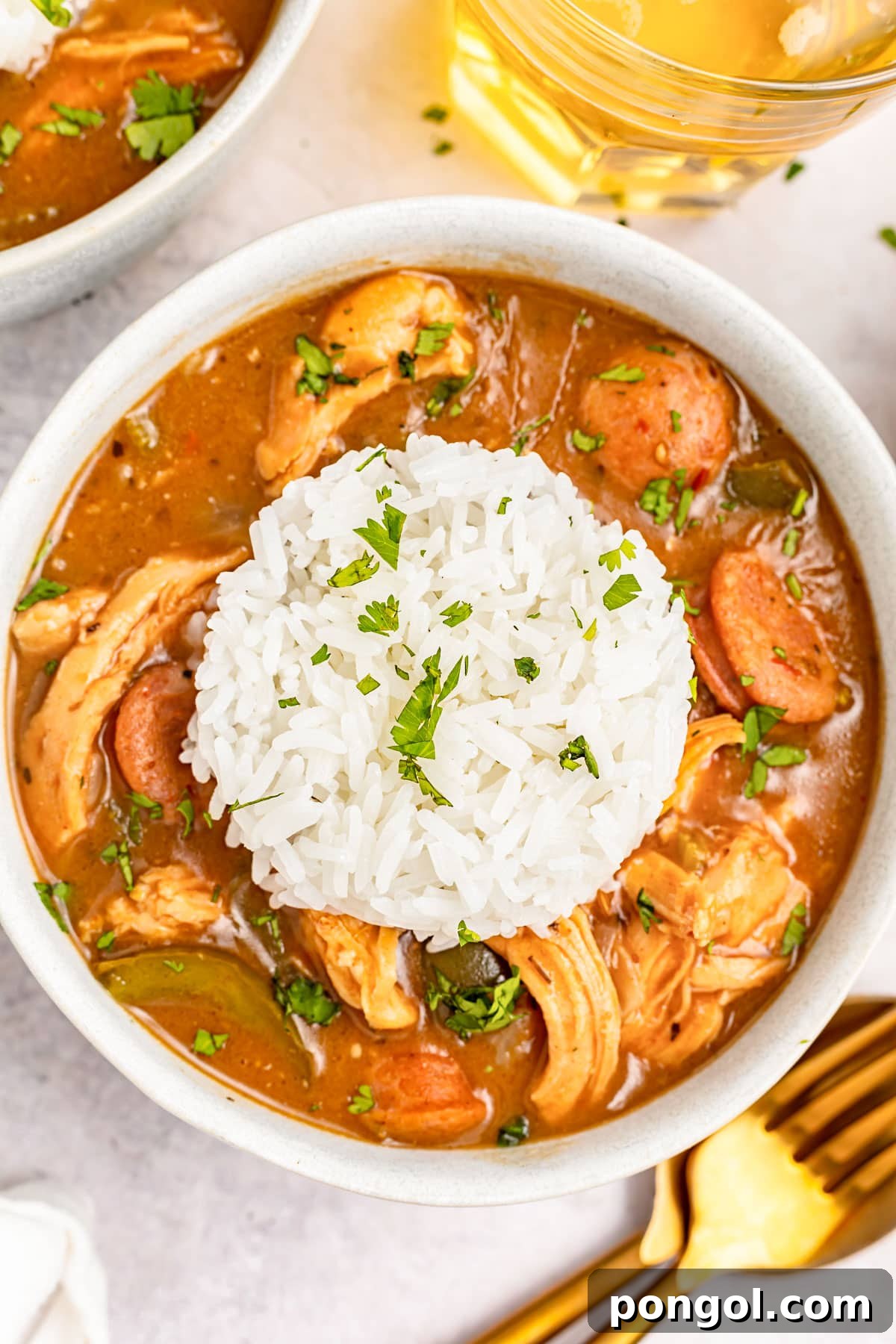
Authentic Chicken and Sausage Gumbo: A Taste of Louisiana Tradition
Immerse yourself in the rich, soulful flavors of Louisiana with our definitive recipe for Chicken and Sausage Gumbo. This isn’t just a meal; it’s a culinary journey, a heartwarming embrace in a bowl, crafted with the essential components of true Creole and Cajun cooking. Featuring succulent chicken, smoky Andouille sausage, a deeply browned roux, the aromatic “Holy Trinity” of vegetables, and a carefully balanced blend of spices, this one-pot wonder embodies comfort and tradition. Perfect for a cozy evening, a festive gathering, or anytime you crave a taste of the South, our gumbo promises an experience that is both authentic and incredibly satisfying.
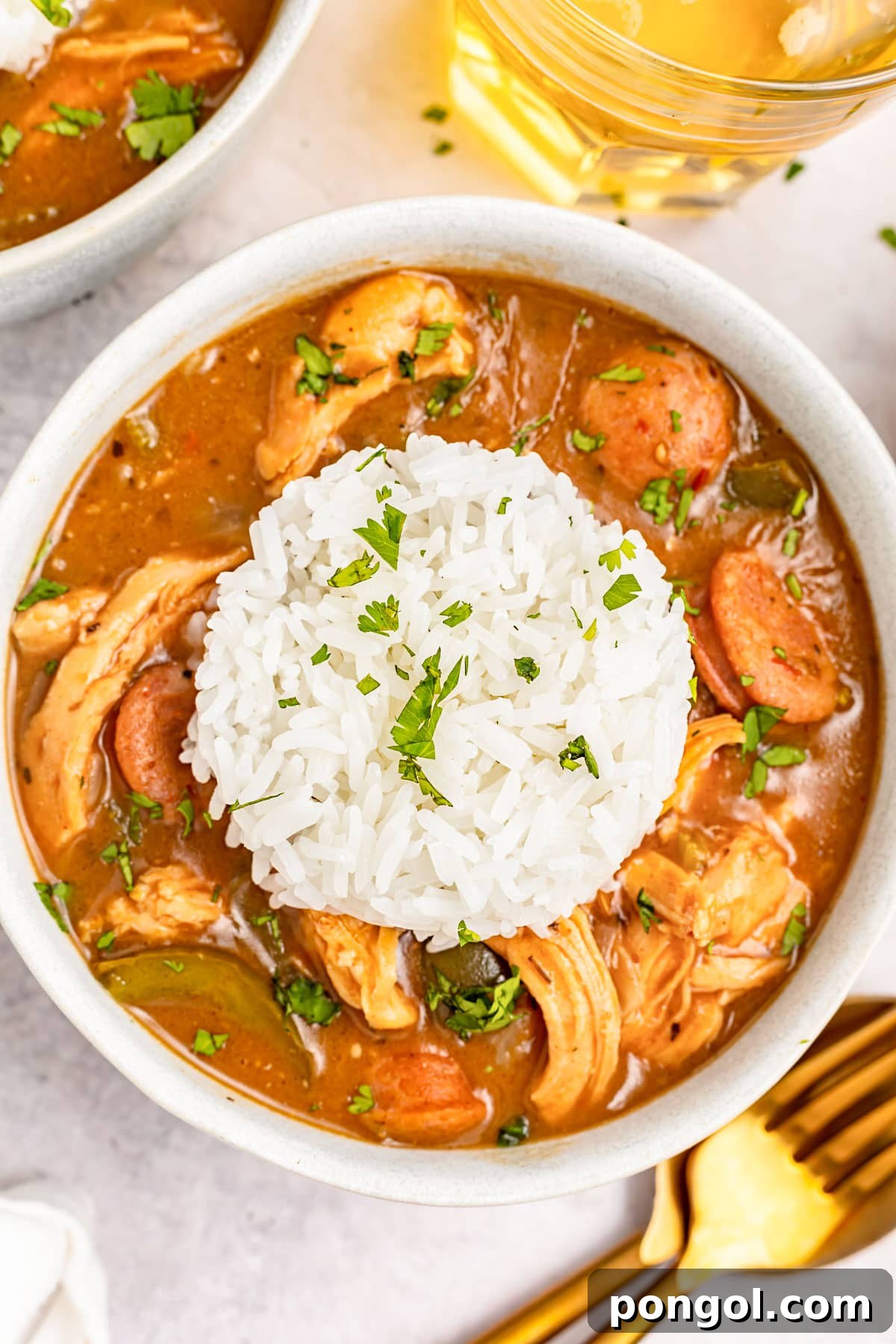
What is Gumbo? A Culinary Staple of Louisiana
Gumbo is more than just a soup or stew; it’s a foundational dish of Louisiana cuisine, steeped in centuries of cultural fusion. Its origins trace back to the diverse culinary traditions of West Africa, France, Spain, and indigenous Choctaw people, all converging in the vibrant melting pot of New Orleans and the surrounding Bayou country. The name “gumbo” itself is thought to derive from the West African word for okra, “kombo,” highlighting one of its traditional thickeners. This hearty stew typically features a rich, dark roux, the “Holy Trinity” of vegetables (onions, celery, and bell peppers), and various meats or seafood, all simmered together to create an unparalleled depth of flavor. Whether it’s a Cajun country-style gumbo with a darker roux and more assertive flavors, or a Creole city-style gumbo often featuring tomatoes and a lighter roux, each rendition tells a story of heritage and culinary artistry. Our Chicken and Sausage Gumbo falls into the heartier, more rustic tradition, focusing on the deep flavors developed from a long-cooked roux and savory meats.
Why This Chicken and Sausage Gumbo Recipe Is a Must-Try
Our Chicken and Sausage Gumbo stands out as a beloved classic for several compelling reasons, making it an indispensable addition to your recipe collection:
- Unforgettable, Layered Flavors: This gumbo is a symphony of tastes! From the smoky notes of Andouille sausage and the savory depth of shredded chicken to the complex richness of the dark roux and a perfectly balanced blend of spices, every spoonful is an experience. We’ve meticulously chosen each ingredient and spice to ensure an incredibly robust and authentic flavor profile that will transport your taste buds straight to the heart of Louisiana.
- Authentic Taste, Accessible Ingredients: While this recipe delivers all the incredible flavor you’d expect from a traditional New Orleans gumbo, it’s designed to be made conveniently in your own kitchen. You won’t need to hunt for obscure specialty ingredients; everything on our list is readily available at most standard grocery stores. Enjoy the genuine taste of Louisiana without the need for a trip to the bayou!
- Effortless One-Pot Cooking: We love recipes that simplify cleanup without sacrificing flavor, and this gumbo is a prime example. The entire process, from preparing the roux to simmering the final dish, unfolds in a single pot. This not only minimizes dishwashing but also allows the flavors to meld beautifully, creating a harmonious and deeply integrated stew. The patient cooking method, particularly the extended simmer, is key to developing its renowned richness and thickness, making it truly irresistible.
Key Ingredients for an Outstanding Gumbo
Crafting a truly memorable gumbo relies on understanding and appreciating its core components:
The Roux: The Soul of Gumbo
A roux, a mixture of fat and flour cooked together, is the fundamental building block of gumbo. It serves not only as a thickening agent but, more importantly, as the primary flavor foundation. For this chicken and sausage gumbo, we aim for a dark, peanut-butter-colored roux. This deep brown color signifies a rich, nutty flavor that imparts incredible depth and a characteristic aroma to the final dish. The darker the roux, the more flavor it contributes and the less it thickens, requiring patience and constant stirring to prevent burning.
The Holy Trinity: The Aromatic Heart
No gumbo is complete without the “Holy Trinity” of Cajun and Creole cooking: diced onions, celery, and green bell peppers. Sautéed after the roux, these aromatics soften and release their sweet, pungent, and earthy flavors, building another layer of complexity into the stew. They are essential for that unmistakable Louisiana taste.
Andouille Sausage: Smoky and Spicy
Andouille is a smoked, spicy pork sausage that is a signature ingredient in Louisiana cuisine. Its robust flavor, often infused with garlic and cayenne, perfectly complements the richness of the gumbo. Browning the sausage before adding it to the pot is crucial; it renders out some fat and creates a delicious sear that adds another layer of texture and taste.
Tender Chicken
For this recipe, we use cooked, shredded chicken, which adds a tender, hearty element to the gumbo. You can use leftover roast chicken, rotisserie chicken, or simply boil and shred chicken breasts or thighs specifically for the recipe. Adding it towards the end of the cooking process ensures it remains tender and doesn’t overcook.
A Blend of Classic Spices
Our spice blend includes paprika, salt, garlic powder, onion powder, dried oregano, dried basil, and a touch of cayenne pepper. These spices are carefully chosen to enhance the natural flavors of the other ingredients, creating a warm, savory, and subtly spicy profile that defines traditional gumbo. Adjusting the salt and cayenne to your preference allows for a personalized touch.
Chef’s Secrets for the Perfect Gumbo
Achieving gumbo perfection often comes down to a few key techniques and considerations:
- Mastering the Roux Requires Patience: The roux is arguably the most critical component of a good gumbo. It’s not a step to rush. You’ll need to cook vegetable oil and flour together until it reaches a dark, rich, peanut-butter brown color. This process can take anywhere from 10 to 20 minutes (or even longer for a truly dark roux) over medium-low heat. The key is to whisk the mixture constantly to prevent it from burning, as a burnt roux will impart a bitter taste that can ruin the entire dish. Embrace the meditative aspect of roux-making; your patience will be rewarded with incredible flavor.
- The Power of the Holy Trinity: Once your roux is perfect, adding the chopped yellow onion, green bell pepper, and celery (the Holy Trinity) helps to stop the roux from cooking further while infusing their foundational flavors. Sauté them until softened, typically 5-8 minutes, stirring frequently to ensure even cooking and maximum flavor extraction.
- Layering Flavors is Key: Gumbo is all about building layers of flavor. From browning the sausage, to developing the roux, softening the trinity, and then adding garlic and spices, each step contributes to the ultimate depth and complexity of the stew. Don’t skip any steps!
- Simmer for Depth: The final, long simmer (an hour or more) is essential. This is when all the individual flavors meld and deepen, transforming into a cohesive, rich gumbo. Simmering uncovered helps to slightly reduce the liquid, concentrating the flavors and allowing the gumbo to thicken naturally.
Serving Suggestions and Delicious Variations
While classic chicken and sausage gumbo is a meal in itself, there are many ways to enjoy and customize it:
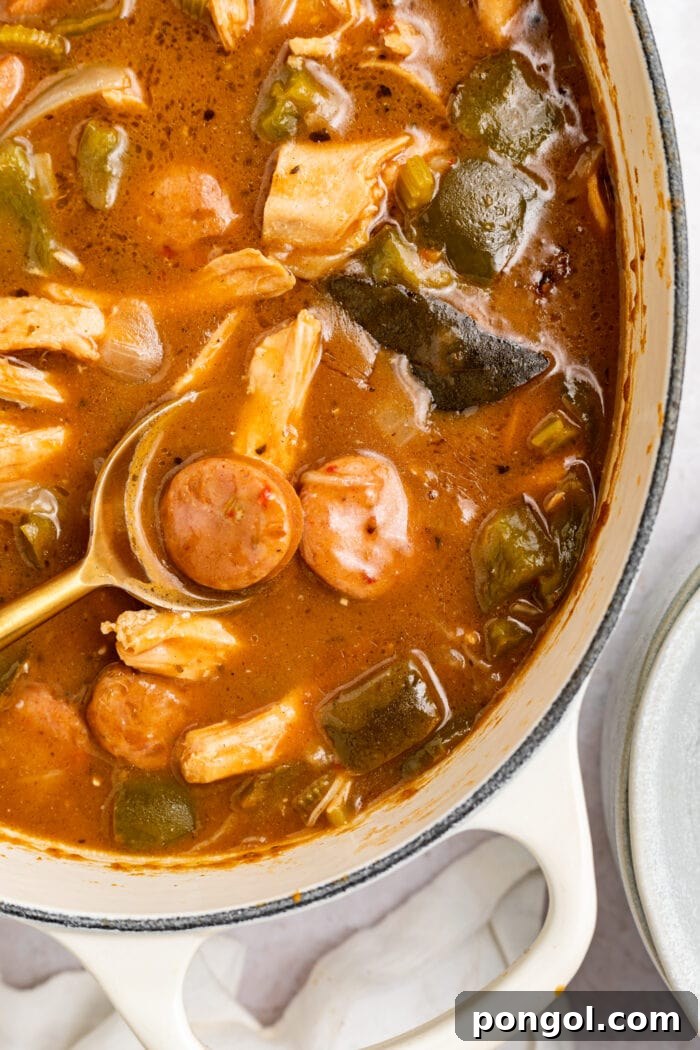
- Traditional Accompaniment: Gumbo is traditionally served with a scoop of fluffy white rice. The rice soaks up the rich, savory broth, creating a perfect balance of textures and flavors. It’s truly a match made in culinary heaven.
- Low-Carb Alternative: For those seeking a healthier or low-carb option, steamed cauliflower rice makes an excellent substitute for white rice. It absorbs the gumbo’s flavors beautifully without adding extra carbohydrates.
- Garnish for Freshness: A sprinkle of fresh, sliced green onions adds a vibrant color and a mild oniony bite that brightens the dish.
- Spice it Up: A dash of your favorite hot sauce, like Tabasco or Crystal, is a common addition for those who enjoy an extra kick.
- Cornbread Companion: Serve your gumbo with a side of warm, buttery cornbread. It’s perfect for soaking up every last drop of that delicious broth.
- Add Seafood: While this recipe focuses on chicken and sausage, gumbo is incredibly versatile. For a seafood twist, consider adding shrimp, crab, or oysters during the last 15-20 minutes of simmering. Be careful not to overcook seafood.
- Okra or Filé Powder: Traditionally, okra or filé powder (ground sassafras leaves) can be used as additional thickeners and flavor enhancers. Okra can be added with the Holy Trinity, while filé powder is typically stirred in at the very end, off the heat, or served on the side for individual diners to add. Our recipe achieves excellent thickness and flavor without them, but they are options for the adventurous cook.
Storage and Reheating Tips
Gumbo often tastes even better the next day as the flavors continue to meld and deepen. Here’s how to store and reheat it:
- Refrigeration: Store leftover gumbo in an airtight container in the refrigerator for up to 3-4 days.
- Freezing: Gumbo freezes exceptionally well. Allow it to cool completely, then transfer it to freezer-safe containers or heavy-duty freezer bags. It can be frozen for up to 3 months. Thaw overnight in the refrigerator before reheating.
- Reheating on the Stovetop: Gently reheat gumbo in a pot over medium-low heat, stirring occasionally, until heated through. If it’s too thick, you can add a splash of chicken broth or water to reach your desired consistency.
- Reheating in the Microwave: For individual servings, microwave on medium power, stirring every minute or so, until hot.
Frequently Asked Questions About Gumbo
Can I make the roux ahead of time?
Yes, you absolutely can! A well-made roux can be stored in an airtight container in the refrigerator for up to a week, or even frozen for several months. This can be a real time-saver when preparing gumbo, as it’s often the most time-consuming step.
What type of chicken is best for gumbo?
While any cooked, shredded chicken works, dark meat chicken (like thighs) tends to stay more moist and flavorful after simmering in the gumbo. Rotisserie chicken is a fantastic shortcut for both dark and white meat.
Is filé powder necessary?
Filé powder is a traditional gumbo thickener and flavor enhancer, particularly in older Creole recipes. However, many modern gumbos, including ours, achieve excellent thickness and flavor from the roux alone. It’s completely optional; if you use it, add it a few minutes before serving or directly to individual bowls, never during the main cooking process, as it can become stringy.
More Louisiana-Inspired Recipes to Explore
If you’ve fallen in love with the vibrant flavors of Louisiana through this gumbo recipe, you’ll be thrilled to discover more culinary treasures from the region. From spicy seafood dishes to comforting stews, these recipes offer a deeper dive into the rich tapestry of Cajun and Creole cooking. Expand your Southern kitchen repertoire with these delectable options:
- Cajun Shrimp: Quick, spicy, and bursting with flavor.
- Gumbo Roux (Dark Cajun Roux): A dedicated guide to mastering the foundation of any great gumbo.
- Creamy Cajun Chicken Pasta Soup: A comforting fusion dish with a Southern kick.
- Shrimp Etouffee: A classic, rich, and flavorful seafood stew.
- Quick & Easy Blackened Shrimp: Simple yet impactful, perfect for a fast meal.
- Cajun Shrimp Bisque: A creamy, luxurious soup showcasing Cajun spices.
- Keto Gumbo: A low-carb friendly version of the classic.
- Cajun Chicken Salad with Cajun Ranch Dressing: A vibrant and zesty salad for a lighter option.
- Instant Pot Jambalaya: A simplified version of another Louisiana favorite, made easy in a pressure cooker.
- New Orleans BBQ Shrimp Po-Boy: A classic sandwich with succulent, tangy shrimp.
- Instant Pot Cajun Chicken Pasta Soup: Another quick and delicious Instant Pot meal with a Cajun twist.
Sam Guarnieri
Chicken and Sausage Gumbo
30 minutes
2 hours
2 hours 30 minutes
 Sam Guarnieri
Save
Saved!
8
servings
Equipment
-
Large pot
-
Whisk
-
Large wooden spoon
Ingredients
For the Chicken & Sausage Gumbo
- 1 cup unsalted butter or neutral oil
- 1 cup all-purpose flour
- 2 cups chopped yellow onion
- 1 cup chopped green bell pepper
- 1 cup chopped celery
- 1 pound andouille sausage sliced into ½-inch-thick discs, browned
- 2 cloves garlic minced
- 6 cups low-sodium chicken broth
- 1 bay leaf
- 2 teaspoons paprika
- 1 teaspoon salt more or less to taste
- 1 teaspoon garlic powder
- 1 teaspoon onion powder
- 1 teaspoon dried oregano
- ½ teaspoon dried basil
- ¼ teaspoon cayenne pepper
- 5 cups cooked, shredded chicken
To Serve
- cooked white rice
- sliced green onions
- hot sauce optional
Instructions
-
Place a large, heavy-bottomed pot or Dutch oven on the stovetop over medium-low heat. Add 1 cup unsalted butter or neutral oil to the pot and allow it to melt completely, moving the butter around periodically to fully coat the surface.
-
Once the butter has fully melted and is shimmering (or oil is hot), gradually sprinkle in 1 cup all-purpose flour. Whisk constantly to combine the flour and fat into a smooth paste, forming your roux. Continue to cook the roux, whisking without interruption, for 10 to 20 minutes, or until the roux achieves a deep peanut-butter brown color. This slow, steady browning is crucial for developing the rich, nutty flavor of the gumbo. Do not burn it!
-
Once your roux has reached the desired dark brown color, increase the heat under the pot to medium. Add 2 cups chopped yellow onion, 1 cup chopped green bell pepper, and 1 cup chopped celery (the Holy Trinity). Stir well to incorporate the vegetables into the roux. Cook the trinity, stirring frequently, for 5 to 8 minutes, or until the vegetables have softened and become aromatic.
-
When the vegetables have softened, add the browned 1 pound andouille sausage and 2 cloves minced garlic. Stir to combine all ingredients, then continue to cook for 2 to 3 minutes, or until the garlic becomes fragrant. Ensure you continue stirring frequently to prevent sticking and burning.
-
While stirring constantly, slowly pour in 6 cups low-sodium chicken broth. Continue to stir vigorously until all ingredients are fully incorporated and the mixture begins to smooth out. If any aromatics or roux have stuck to the bottom of the pot, use your wooden spoon to scrape them loose, integrating all that flavorful goodness into the broth.
-
Now, add 1 bay leaf, 2 teaspoons paprika, 1 teaspoon salt, 1 teaspoon garlic powder, 1 teaspoon onion powder, 1 teaspoon dried oregano, ½ teaspoon dried basil, and ¼ teaspoon cayenne pepper to the pot. Stir thoroughly to ensure all the spices are fully incorporated and distributed evenly throughout the gumbo base.
-
Increase the heat under the pot to medium-high and bring the mixture to a rolling boil. Once the liquid begins to boil, immediately reduce the heat to low. Allow the gumbo to simmer gently, uncovered, for 30 minutes. Stir the gumbo occasionally during this time to prevent anything from sticking to the bottom of the pot and to ensure even cooking and flavor development.
-
After the initial 30 minutes of simmering, add the 5 cups cooked, shredded chicken to the pot. Stir gently to incorporate the chicken into the gumbo. At this point, taste the gumbo and adjust any seasonings as desired – you might want a little more salt, cayenne, or other spices to suit your palate. Continue simmering the gumbo, uncovered, for an additional 60 minutes, stirring occasionally. This longer simmer allows the flavors to deepen and mature, resulting in a truly rich and harmonious stew.
-
After the full 60 minutes of the final simmer, your chicken and sausage gumbo is ready. Carefully divide the hot gumbo into individual serving bowls. Top each bowl with a generous scoop of cooked white rice. For an extra touch of freshness and flavor, garnish with sliced green onions and a dash of hot sauce if desired. Serve warm and enjoy this comforting taste of Louisiana!
- Andouille Sausage Preparation: Before you begin making the gumbo, slice the andouille sausage into ½-inch-thick discs. In a separate skillet, sauté these sausage discs over medium heat until they are nicely browned on both sides. This step enhances their smoky flavor and adds a delicious texture before they are incorporated into the gumbo.
- Gluten-Free Option: To make this recipe suitable for a gluten-free diet, simply substitute the all-purpose flour with an equal amount (1 cup) of a good quality gluten-free all-purpose flour blend or rice flour. Ensure your chicken broth is also certified gluten-free.
Approximate Information for One Serving
Calories: 633cal
Protein: 38g
Fat: 45g
Saturated Fat: 21g
Trans Fat: 1g
Cholesterol: 175mg
Sodium: 1217mg
Potassium: 689mg
Total Carbs: 20g
Fiber: 2g
Sugar: 3g
Net Carbs: 18g
Vitamin A: 1172IU
Vitamin C: 19mg
Calcium: 58mg
Iron: 3mg
Nutrition Disclaimers
Number of total servings shown is approximate. Actual number of servings will depend on your preferred portion sizes.
Nutritional values shown are general guidelines and reflect information for 1 serving using the ingredients listed, not including any optional ingredients. Actual macros may vary slightly depending on specific brands and types of ingredients used.
To determine the weight of one serving, prepare the recipe as instructed. Weigh the finished recipe, then divide the weight of the finished recipe (not including the weight of the container the food is in) by the desired number of servings. Result will be the weight of one serving.
Did You Make This Recipe?
We’d love to see your creations! Tag @40aprons on Instagram and share your culinary masterpiece. Don’t forget to leave a review on this blog post to let us know how you enjoyed this authentic Chicken and Sausage Gumbo!
Tag @40Aprons on Instagram