
Ultimate Vegan Raspberry-Filled Cronuts: A Parisian Dream Reimagined
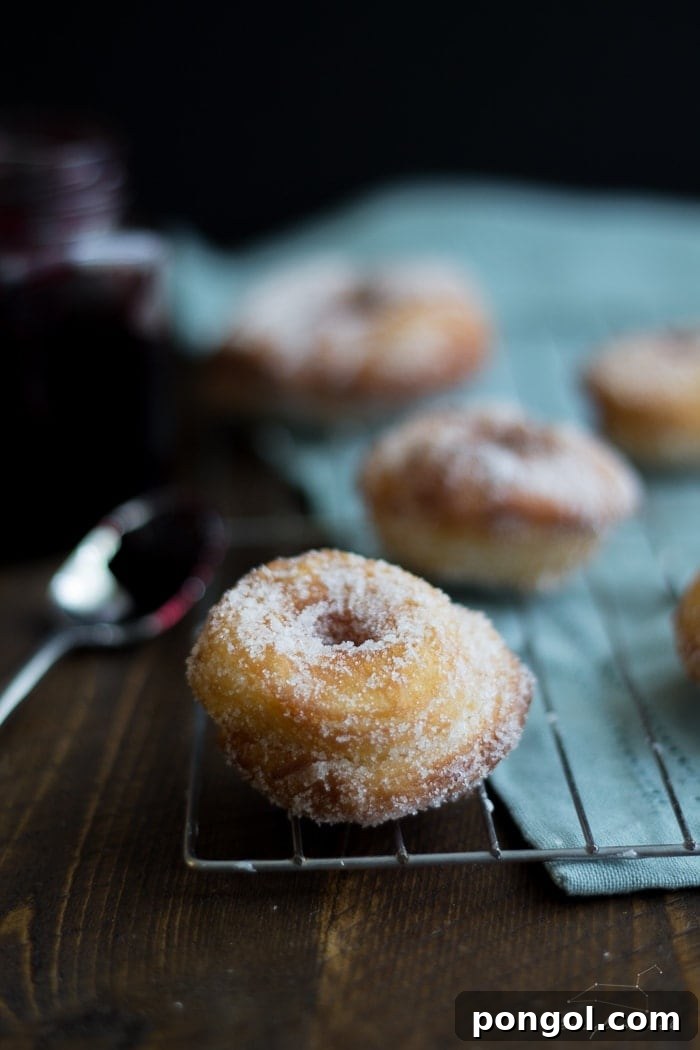
Many moons ago, during my time living in the enchanting city of Paris, I cultivated a delightful routine. After almost every class at the Sorbonne, I’d find myself drawn to a charming, unassuming pâtisserie nestled nearby. Was it for their legendary macarons, delicate and vibrant? Or perhaps their rich, deeply satisfying pain aux raisins? The answer, surprisingly, was neither.
My heart, or rather, my sweet tooth, yearned for their extraordinary jelly donuts.
Now, before you question my Parisian culinary choices, allow me to elaborate. This particular donut was the quintessential after-lunch-dessert dessert. You see, I could never resist a flaky croissant d’amandes picked up en route to class, but that was merely an appetizer for the true indulgence. The jelly donut from this Parisian gem was unlike anything I had ever tasted, a true revelation that left an indelible mark on my memory. Years later, even during our honeymoon trip to Paris, I eagerly led my husband, O, back to its location, only to find, to my dismay, that it was no longer there. The magic, it seemed, had vanished. So, what made this humble jelly donut so unforgettable?
The Unforgettable Parisian Jelly Donut: A Sweet Memory
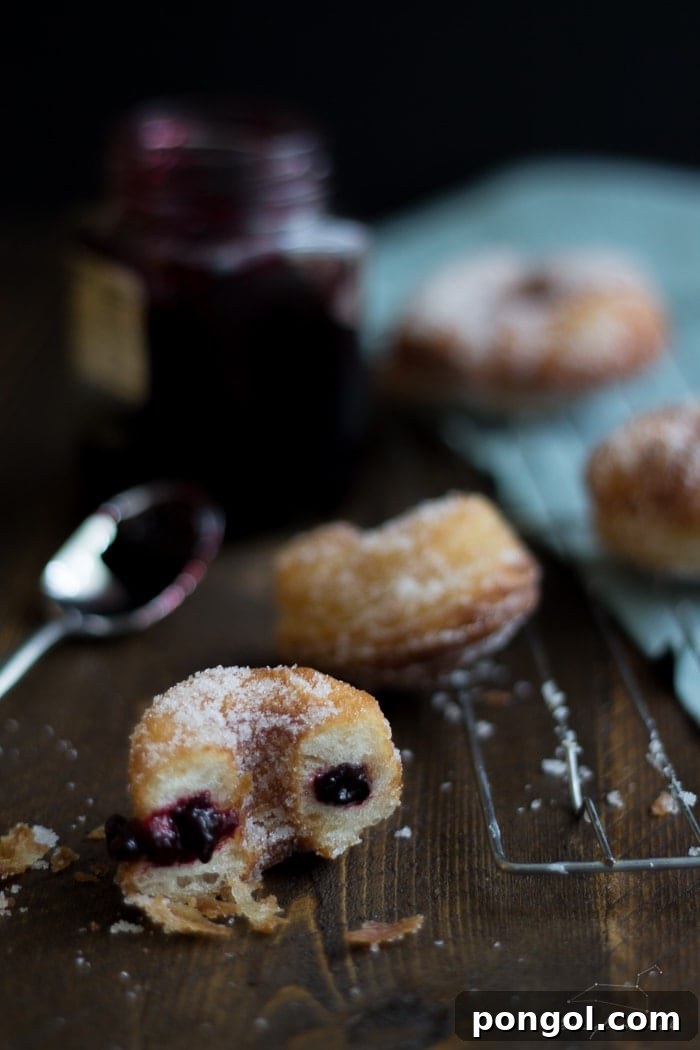
Unlike the often artificially doughy and overly airy versions frequently found elsewhere, these Parisian jelly donuts struck a perfect balance. They were dense, yet exquisitely tender, with a sweetness that was perfectly calibrated, never cloying. Each donut was expertly fried, achieving a glorious golden-brown crust that was just a shade deeper than what we typically see in the States, yielding an incredible caramelized exterior. But the true star was the filling: an honest-to-goodness, vibrant raspberry jam, generously slathered across the middle, almost like a sweet donut sandwich, and then rolled in coarse white sugar, providing a delightful textural contrast. The mere thought of them still makes my senses reel! It was a masterpiece of simplicity and execution, a true testament to the artistry of French baking.
For years, I’ve chased that elusive flavor, that perfect texture. Have I finally managed to recreate that exact glory at home to share with you all? Honestly, no. Not precisely. The original remains a cherished, irreplaceable memory.
Introducing the Vegan Cronut: A Modern Masterpiece
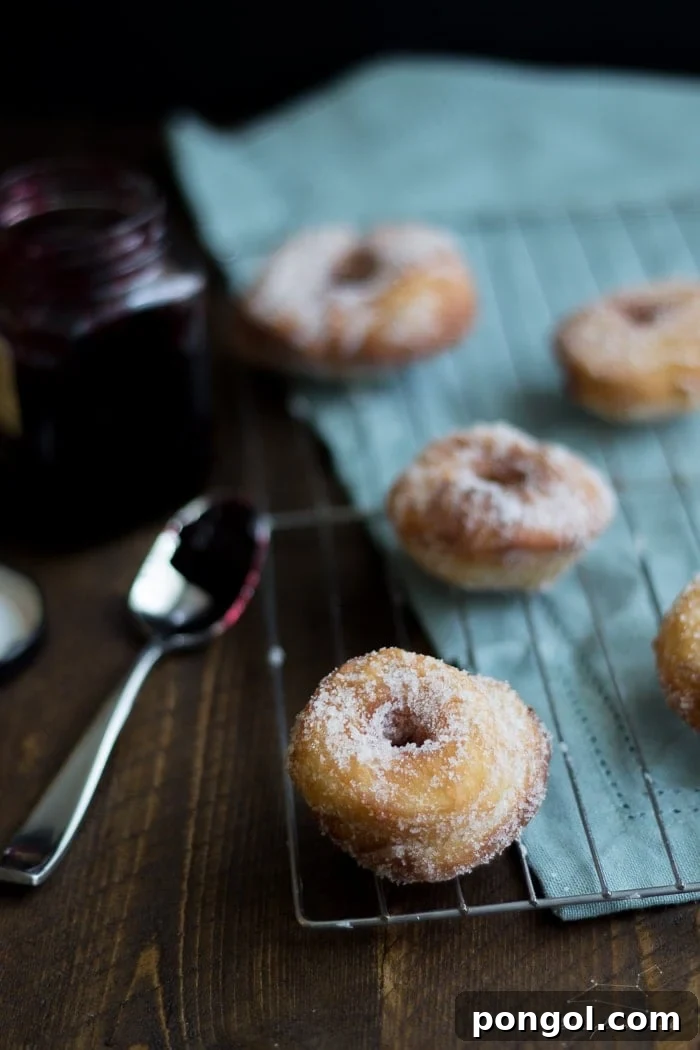
However, what I have created might just be something even better: the vegan cronut. This creation, perhaps even more overtly “French” in its hybrid nature than my beloved Parisian donut, is a magnificent fusion of delicate, flaky croissant layers and the comforting, yeasty embrace of a deep-fried donut. Each one is generously rolled in that coarse white sugar I adore and then injected with a high-quality, luscious raspberry jam.
For those who might have been living under a culinary rock for the past decade, a cronut is indeed a brilliant pastry innovation that combines the best characteristics of a croissant and a donut. It first made waves in a famous New York bakery, drawing lines of eager patrons stretching for blocks, all clamoring for a taste of this novel treat. The original cronuts were, of course, absolutely brimming with butter and countless other decadent ingredients. My mission, naturally, became to “veganize” this celebrated pastry, proving that plant-based ingredients can deliver all the indulgence without compromise.
The Vegan Cronut Revolution: Flaky, Buttery & Guilt-Free
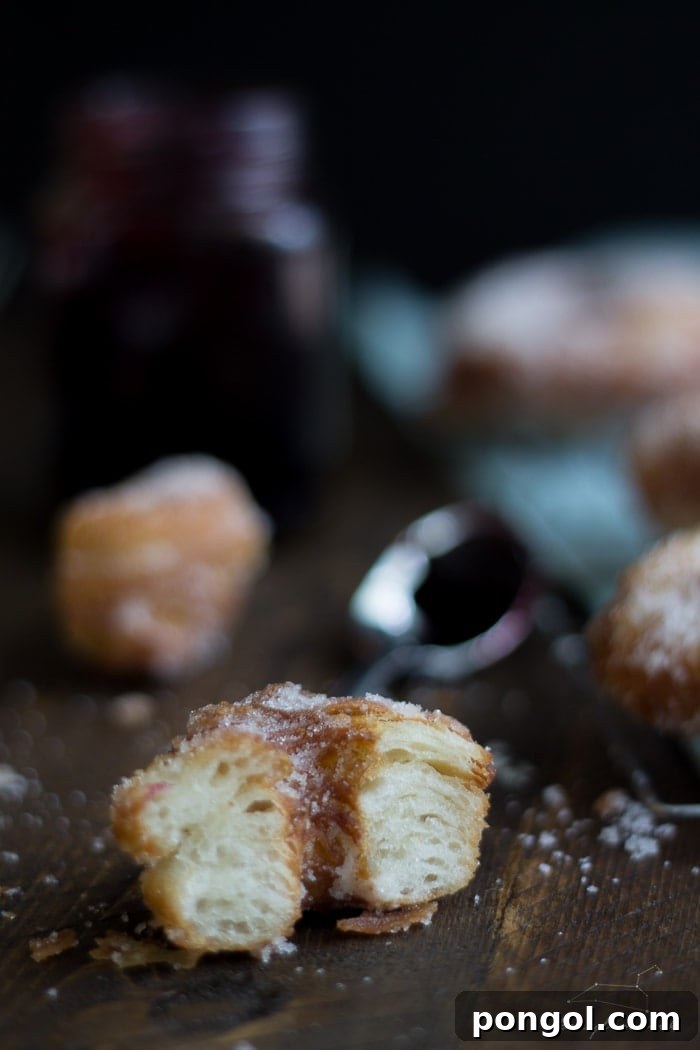
You might recall a previous cronut recipe I shared – a blackberry cream cheese cronut with a bright lemon glaze, developed for Tofutti. While that recipe holds a special place, I truly believe you’ll adore this latest creation just as much, if not more. This vegan raspberry-filled cronut serves as a delectable homage to the classic diner jelly donut, elevated with gourmet flair and a plant-based twist. The vibrant tartness of the raspberry jam beautifully cuts through the richness of the incredibly buttery, flaky layers, creating a harmonious flavor profile that keeps you coming back for more. The coarse sugar coating adds a perfect, satisfying texture to the pillowy-soft dough, making every bite an experience. And yes, I dare say it… this might just be superior to my famed French jelly donut. It’s a bold claim, but one I stand by with conviction.
Crafting a vegan cronut, particularly one with the signature flaky layers, presents a unique challenge, primarily due to the nature of vegan butter. While you could certainly use traditional dairy butter in this recipe, the beauty of this version lies in its plant-based credentials. Vegan butter, such as Earth Balance, tends to melt more quickly than its dairy counterpart, requiring a few extra precautions and a keen eye on temperatures during the lamination process. However, with these small adjustments and a bit of patience, the result is so remarkably close to the original that most wouldn’t even detect the difference. The joy of creating such a luxurious, ethical treat in your own kitchen is unparalleled.
Mastering the Art of Vegan Lamination
Creating the signature flaky layers of a cronut, or any laminated pastry, relies on a technique called lamination – repeatedly folding and rolling butter into dough. For vegan cronuts, this process is particularly delicate. The key to success is keeping your vegan butter, which is naturally softer, perfectly chilled but pliable enough to work with. This means precise timing and sometimes a few extra trips to the freezer to prevent the butter from melting into the dough, which would result in a dense, rather than airy, texture. But don’t let this deter you; the reward of biting into a perfectly layered, crispy, yet tender cronut is absolutely worth the effort. Think of each fold as building anticipation for the delicious outcome.
The journey from simple ingredients to these magnificent pastries is a rewarding one. It transforms basic flour, sugar, and vegan butter into a complex symphony of textures and flavors. Each step, from activating the yeast to the final frying and filling, contributes to the cronut’s unique character. This recipe isn’t just about baking; it’s about crafting an experience, a moment of pure, plant-based indulgence that pays homage to classic patisserie techniques while embracing modern dietary choices.

Recipe By: Cheryl Malik
Rated 5 out of 5 stars by 3 votes.
Vegan Raspberry-Filled Cronut
Cook Time: 5 hours 10 minutes
Total Time: 5 hours 10 minutes
Flaky layers mixed with a pillowy yeasty donut, injected with tart raspberry jam, and rolled in coarse white sugar. Yes… that was a choir of angels you just heard.
Pin Recipe
Save Recipe
Yields: 12 servings
Ingredients
-
For the Cream Cheese Filling (Optional – for a different flavor profile):
-
For the Lemon Glaze (Optional – for a different topping):
Instructions
-
In a small microwave-safe bowl, gently heat the alt-milk and water for a few seconds in the microwave until it reaches a lukewarm temperature (around 105-115°F or 40-46°C). Whisk in the dry active yeast, ensuring it dissolves well, then let the mixture stand for approximately 5 minutes, or until small bubbles begin to form on the surface, indicating the yeast is active. This is crucial for a properly risen dough.
-
Into the bowl of a stand mixer, add the all-purpose flour, sugar, salt, 1 ½ tablespoons of softened vegan butter, and the activated yeast mixture. Using a paddle attachment, mix on low speed until the ingredients are just combined and a shaggy dough begins to form, typically taking about 30 seconds to a minute. Scrape down the sides of the bowl with a spatula, gathering any stray flour, and continue to mix for another minute until the dough comes together. Form the dough into a smooth ball and place it in a lightly greased bowl. Cover the bowl with a damp, clean towel or plastic wrap and place it in a warm, draft-free spot. Allow the dough to rise until it has visibly doubled in size, which usually takes about 45 minutes to an hour. Once risen, gently punch down the dough to release the air, wrap it tightly in plastic wrap, and chill it in the refrigerator for at least an hour. This step is essential for making the dough easier to handle during lamination.
-
While the dough is chilling, prepare your butter block. Place the 1 cup of vegan butter (ensure it’s pliable but still cool) between two pieces of wax or parchment paper. Using a rolling pin, flatten and shape the butter into an even 8-by-8-inch square. If the vegan butter becomes too soft and mushy during this process, place it in the freezer for about 10-15 minutes to firm it up slightly. This firm but flexible consistency is vital for proper lamination.
-
Lightly flour your work surface and roll out the chilled dough into a 12-by-12-inch square. Carefully place the prepared 8-by-8-inch butter square on top of the dough square, orienting it so that the corners of the butter square point towards the middle of each side of the larger dough square, resembling a diamond shape on a square base.
-

Fold the corners of the dough over the butter block, bringing them to meet precisely in the center. Pinch the edges of the dough firmly together to create a sealed seam, ensuring the butter block is completely enclosed and sealed within the dough. This creates your initial butter-enclosed packet, forming the base for the flaky layers. -
If at this stage the dough feels excessively soft or the vegan butter seems very mushy, transfer the dough to a plate, cover it tightly with plastic wrap, and place it in the freezer for about 15-20 minutes to firm up. Once adequately chilled, roll out the dough into a long 20-by-8-inch rectangle. Carefully brush off any excess flour from the surface. Then, fold the dough into thirds, much like folding a letter, creating three distinct layers. This completes the first “turn” of lamination. -
Cover the folded dough tightly with plastic wrap and chill it in the refrigerator for 45 minutes, then transfer it to the freezer for an additional 15 minutes. This two-step chilling process helps the vegan butter firm up quickly but not become brittle. Repeat the rolling, folding into thirds, chilling, and freezing process two more times. This rigorous folding, chilling, and rolling is precisely what creates those hundreds of deliciously flaky layers that define a perfect cronut. Each turn develops the intricate texture. -
After the dough’s final fold, chilling, and freezing cycle, lightly flour your work surface once more and roll out the dough into a 6-by-18-inch rectangle. Using a sharp dough cutter or pizza cutter, divide the rectangle into three 6-by-6-inch squares. Carefully stack these three squares directly on top of each other. If the vegan butter begins to feel too warm and mushy during this process, give it a quick 10-minute freeze. Now, roll out this stacked dough into a thicker 6-by-8-inch rectangle. This final rolling and stacking ensures maximum flakiness and structure in your cronuts. Trust in the process – all these precise folding, rolling, stacking, and chilling steps are essential for achieving those delightfully flaky layers!
-
Finally, it’s time to shape your cronuts. Using donut ring cutters, or a 3-inch (7.5 cm) diameter circle mold/cookie cutter for the outer shape and a 1-inch (2.5 cm) diameter mold for the “hole,” cut out 12 donut shapes from the rolled dough. Place these cut cronut shapes onto a baking sheet lined with parchment paper or wax paper. Loosely cover the donuts with plastic wrap and let them rise in a warm spot for about 30 minutes, allowing them to puff up slightly. Afterwards, transfer the baking sheet to the freezer and chill the donuts for approximately 10 to 15 minutes. This brief chill helps them hold their shape better during frying.
-
While the donuts are chilling, prepare your frying oil and fillings. Preheat at least 2 inches (5 cm) of oil in a large, heavy-bottomed pot or a very large cast-iron skillet to 350°F (175°C). For the luscious raspberry filling (or the optional cream cheese filling as described in the ingredient list), combine your chosen ingredients in a blender, food processor, or mix vigorously by hand until it achieves a very smooth, pipeable consistency. Transfer the filling mixture into a piping bag fitted with a long, thin tip, or into an injector. Now, prepare your glaze: in a small bowl, whisk together all the glaze ingredients – powdered sugar, lemon juice, and lemon zest – with a fork until smooth. Cover the glaze with plastic wrap to prevent it from drying out and set it aside.
-
Once your cronut dough has sufficiently risen and your frying oil has reached 350°F (175°C), carefully begin to fry the cronuts in batches. It’s crucial not to overcrowd the pot, as this will lower the oil temperature and result in greasy donuts. Fry for about 1-2 minutes per side, or until they achieve a beautiful, deep golden brown. Using a slotted spoon or spider, transfer the fried cronuts to a paper-towel-lined plate to drain excess oil and cool slightly.
-
With your cronuts cooled enough to handle, it’s time for the final magical step: filling and glazing! Insert the long, thin piping tip or injector into the side of each cronut and gently pipe in a small amount of your prepared raspberry jam filling. Repeat this process three more times at regular intervals around the cronut, ensuring it is generously “filled” with that delicious jam. Continue with the remaining cronuts. Finally, glaze your cronuts: you can either elegantly drizzle the glaze over the filled cronuts with a fork for a rustic look, or for a more classic finish, dip the tops of the cronuts directly into a shallow bowl of glaze, then place them on a cooling rack to allow any excess glaze to drip off and dry. Now, the best part – devour these incredible vegan raspberry-filled cronuts and savor every single flaky, sweet, and tart bite!



For a beautiful finish, dip the tops of your cooled cronuts into the prepared glaze, then let them dry on a cooling rack before enjoying every glorious bite!
Approximate Nutrition Information for One Serving
Calories: 368 cal
Protein: 5 g
Fat: 18 g
Saturated Fat: 5 g
Cholesterol: 10 mg
Sodium: 471 mg
Potassium: 71 mg
Total Carbs: 46 g
Fiber: 1 g
Sugar: 13 g
Net Carbs: 45 g
Vitamin A: 913 IU
Vitamin C: 2 mg
Calcium: 28 mg
Iron: 2 mg
Nutrition Disclaimers
The number of total servings shown is approximate. Actual number of servings will depend on your preferred portion sizes and how accurately the dough is divided.
Nutritional values provided are general guidelines and reflect information for one serving using the ingredients listed, not including any optional ingredients or variations. Actual macros may vary slightly depending on specific brands and types of ingredients used. For precise nutritional data, it is recommended to calculate based on the exact products you use.
To determine the weight of one serving accurately, prepare the recipe as instructed. Weigh the total finished recipe (excluding the weight of the container the food is in), then divide that total weight by the desired number of servings. The result will be the approximate weight of one serving.
Did You Make This Recipe?
We’d love to see your creations! Tag @40aprons on Instagram and be sure to leave a review and star rating on this blog post to share your experience!
Tag @40Aprons on Instagram