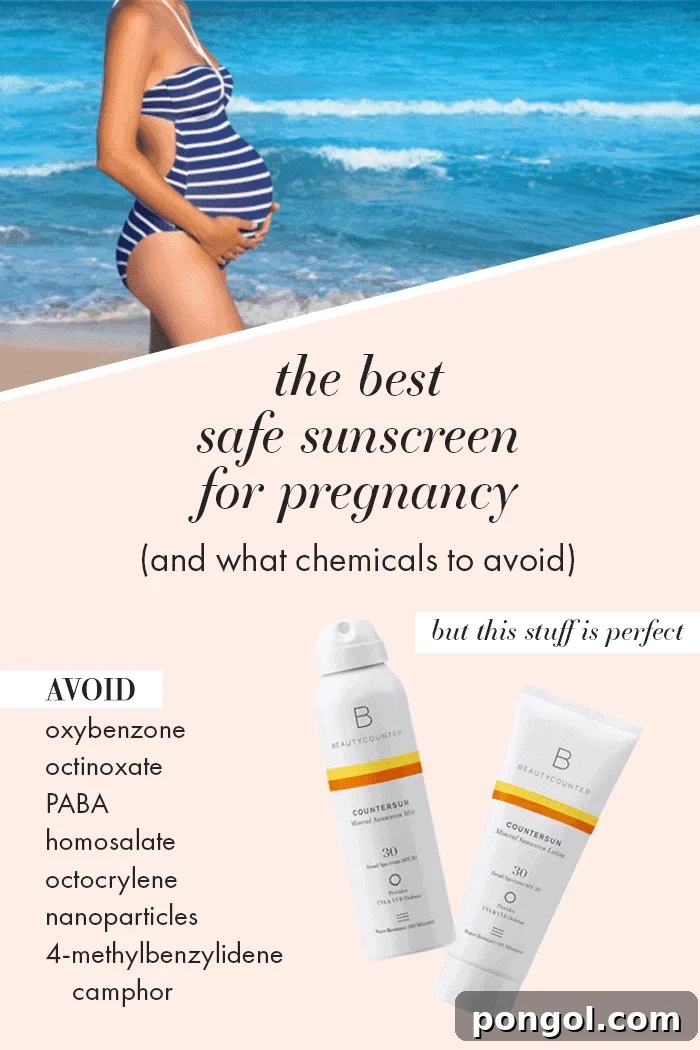
Navigating pregnancy brings a heightened awareness to every choice we make, especially concerning what we put on our bodies. Protecting your skin from the sun’s harmful rays is crucial, but it’s equally important to ensure the products you use are safe for both you and your developing baby. This comprehensive guide will illuminate the essential chemicals to avoid in sunscreens during pregnancy and unveil the best safe sunscreen options, focusing on mineral-based formulas. We’ll delve into why these choices matter, empowering you to make informed decisions for a healthy, radiant pregnancy.
And if you’re preparing for your little one’s arrival, you might also find our ultimate baby registry guide incredibly helpful!
Embracing Summer Safely: Sun Protection During Pregnancy
Summer during pregnancy can be a unique experience. While the warmth and longer days offer opportunities for relaxation, being significantly pregnant in the hottest months often comes with its own set of challenges, from increased body temperature to general discomfort. Yet, the desire to enjoy the season, perhaps by a pool or ocean, remains strong. For many, like myself, who are fair-skinned or have a family history of skin cancer, sun protection isn’t just a preference—it’s a critical health imperative. My own grandfather’s battle with melanoma instilled in me a deep respect for sun safety, a lesson I carry forward, especially during pregnancy.
However, the journey to effective sun protection isn’t always straightforward. A significant concern lies in the ingredients found in many conventional sunscreens. Our skin, being the largest organ, is remarkably efficient at absorbing substances applied to it. This absorbency can be a double-edged sword: while beneficial for moisturizing and nourishing, it can also allow potentially harmful chemicals to enter our bloodstream. During pregnancy, these chemicals can easily cross the placental barrier, reaching your developing baby. This awareness transforms sunscreen selection from a simple purchase into a crucial health decision.
The alarm bells truly sound when we consider studies revealing an average of over 200 chemicals in newborn cord blood. Imagine, these babies, who have never taken a breath of air, are already exposed to a cocktail of chemicals. For a developing fetus, whose delicate organ systems are not yet mature enough to efficiently detoxify such compounds, this environmental contamination poses a significant risk. The stakes are undeniably high, making the choice of safe sunscreen for pregnancy paramount.
Understanding Sunscreen Types: Mineral vs. Chemical
Before diving into specific ingredients, it’s essential to understand the two main types of sunscreens: chemical and mineral (or physical). Each works differently to protect your skin, and their mechanisms directly impact their safety profile, especially for pregnant women.
Chemical Sunscreens: How They Work and Why They Pose Risks
Chemical sunscreens absorb into the skin and work by absorbing UV rays, converting them into heat, and then releasing that heat from the skin. Common active ingredients include oxybenzone, octinoxate, avobenzone, octisalate, and homosalate. While effective at blocking UV radiation, the concern with chemical sunscreens, particularly during pregnancy, stems from these ingredients being absorbed into the bloodstream. Studies have detected these chemicals in breast milk and urine samples, indicating systemic absorption. Many of these chemicals are also known or suspected endocrine disruptors, meaning they can interfere with the body’s hormonal systems. For a pregnant woman and a developing fetus, whose hormonal balance is exquisitely delicate and crucial for healthy development, this interference is a serious concern.
Mineral Sunscreens: The Safer Alternative for Pregnancy
Mineral sunscreens, on the other hand, create a physical barrier on the skin’s surface. They contain active ingredients like zinc oxide and titanium dioxide, which are naturally occurring minerals. Instead of absorbing UV rays, these minerals sit on top of the skin and physically block and reflect both UVA and UVB rays away from the body. Because they are not absorbed into the bloodstream, mineral sunscreens are widely recommended by dermatologists and health organizations like the Environmental Working Group (EWG) as the safest choice for everyone, especially pregnant women and children. They are typically less irritating for sensitive skin and begin protecting immediately upon application.
Crucial Sunscreen Chemicals to Avoid During Pregnancy
The scientific community has increasingly linked certain sunscreen chemicals to adverse pregnancy outcomes and potential harm to infants. These chemicals, often referred to as endocrine disruptors, can mimic or block hormones, leading to a cascade of developmental issues. Studies have even found sunscreen chemicals in breast milk, highlighting ongoing exposure for nursing infants. Knowing these ingredients empowers you to make healthier choices for your family. Here are the primary sunscreen chemicals to avoid:
Oxybenzone (EWG Toxicity Scale: 8)
Oxybenzone is arguably the most notorious chemical sunscreen ingredient, present in over 65% of non-mineral formulations. Its high EWG toxicity rating of 8 is well-deserved. Research indicates that exposure to oxybenzone can lead to altered birth weights, a critical indicator of fetal health. Beyond pregnancy, studies have correlated higher oxybenzone levels with significantly lower testosterone in adolescent boys. Functioning as a weak estrogen and moderate anti-androgen, oxybenzone can profoundly disrupt hormonal balance—a process absolutely vital during pregnancy for both mother and baby. Furthermore, its environmental impact is devastating; oxybenzone is a primary contributor to the bleaching and collapse of coral reefs worldwide, underscoring its broad-reaching negative effects.
Octinoxate (EWG Toxicity Scale: 8)
Another prevalent chemical in commercial sunscreens, octinoxate, also earns an EWG rating of 8 and is a known endocrine disruptor. This chemical has been specifically implicated in affecting reproductive health, making its avoidance critical during pregnancy. Like oxybenzone, octinoxate is a significant factor in the degradation of global coral reefs. Its presence in waterways contributes to ecological damage, reinforcing the importance of choosing reef-safe alternatives.
4-Methylbenzylidene Camphor (EWG Toxicity Scale: 7)
Ranked at 7 on the EWG’s Toxicity Scale, 4-Methylbenzylidene Camphor is another potent endocrine disruptor. Disturbingly, studies have demonstrated developmental effects even at low doses of exposure. Its demonstrated danger, as evaluated by the EWG, places it just behind oxybenzone in terms of concern. This is a chemical to meticulously avoid at all times, with an amplified urgency during the delicate period of pregnancy.
PABA (Para-Amino-Benzoic Acid) (EWG Toxicity Scale: 6)
While less common in modern sunscreens, PABA is a chemical with a disturbing history. It is actually banned in Canada due to sufficient evidence of human toxicity. Despite this, it remains legal in the U.S. “Clinical Dermatology” reports that topical application of PABA can cause various skin abnormalities, from discoloration to, most alarmingly, cancer. Ironically, while PABA offers some protection against carcinoma, it fails to protect against melanoma—the very type of skin cancer that claimed my grandfather’s life. Furthermore, PABA encourages the release of oxygenated free radicals, which can independently promote cancer development, even unrelated to sun exposure. The idea of a sunscreen ingredient actively contributing to cancer risk is a definitive reason to steer clear.
Homosalate (EWG Toxicity Scale: 4)
Homosalate, yet another endocrine disruptor, has faced restrictions in countries like Japan due to lingering uncertainties regarding its safety. Given the heightened vulnerability of both mother and baby during pregnancy, it is prudent to err on the side of caution and completely bypass products containing homosalate.
Octocrylene (EWG Toxicity Scale: 3)
While octocrylene possesses a relatively lower toxicity rating (EWG 3) compared to some other chemical filters, concerns are amplified during pregnancy. Research suggests octocrylene can interfere with cellular signaling, potentially leading to cell death and cellular mutations. During a period when your body is meticulously constructing a new human life, any substance that could disrupt cellular integrity is best avoided.
Nanoparticles
While not a chemical, nanoparticles are microscopic particles often found in mineral sunscreens to reduce the white cast. The concern arises not from skin absorption—as these particles are generally too large to penetrate the skin—but from inhalation. When applied as sprays or powders, nanoparticles can become airborne, posing potential respiratory risks if inhaled. Therefore, opting for non-nano mineral sunscreens, especially in spray or powder form, is a safer choice to avoid this potential hazard.
The Superior Choice: Mineral Sunscreens Powered by Zinc Oxide and Titanium Dioxide
Given the array of chemicals to avoid, the solution becomes clear: embrace mineral sunscreens. The Environmental Working Group (EWG), a leading authority on product safety, consistently recommends sunscreens formulated with non-nano zinc oxide and titanium dioxide as the safest and most effective sun protection. These two active ingredients work synergistically to create a broad-spectrum physical barrier, defending against both UVA and UVB rays without being absorbed into your bloodstream. They are generally well-tolerated by sensitive skin, are immediately effective upon application, and are environmentally friendly, particularly reef-safe formulations.
The Best Safe Sunscreen for Pregnancy: Our Top Recommendation
When it comes to the gold standard for safe sun protection during pregnancy and beyond, there is truly no comparison: Beautycounter’s Countersun Mineral Sunscreen line stands in a league of its own. My personal journey, navigating pregnancy as a fair-skinned individual with a strong family history of skin cancer, has led me to meticulously research and rely on products that prioritize safety and efficacy. Beautycounter perfectly aligns with these values.
What sets Beautycounter apart is their unwavering commitment to safety, embodied by their rigorous “Never List”—a comprehensive roster of over 2,800 questionable or harmful chemicals they meticulously screen out of their products. This commitment means that every Beautycounter Sun Protection product is powered exclusively by safe, non-nano minerals and is entirely free of the unsafe or potentially unsafe chemicals discussed earlier. This transparency and dedication provide an unparalleled peace of mind. I trust their mission and formulation process so implicitly that I don’t even need to scrutinize the ingredient list before ordering, knowing it meets the highest standards for both me and my family.
Beyond safety, the performance of Beautycounter’s sunscreens is exceptional. I’ve found their products to be as good as, if not superior to, conventional cosmetics and skincare I’ve used previously. This is a critical factor for long-term adherence; effectiveness and user experience are key. With Beautycounter, there’s no compromise—no chalky white cast often associated with mineral sunscreens, and no feeling of discomfort. It’s a pure love fest of effective, clean, and genuinely enjoyable sun protection. After years of searching for truly effective and safe skincare, Beautycounter has delivered.
Featured Beautycounter Countersun Mineral Sunscreen Products (SPF 30)
Beautycounter’s Countersun line offers a variety of application methods, each designed for maximum effectiveness and ease of use, making them ideal choices for safe sun protection during pregnancy.
Countersun Mineral Sunscreen Mist (SPF 30)
The Countersun Mineral Sunscreen Mist is a game-changer for me and my family, especially at the beach. Available in convenient sizes, this mist is air-powered, not aerosol, ensuring a safer application without harmful propellants. It’s also reef-safe and formulated without nanoparticles, addressing both environmental and health concerns related to inhalation. This means I can enjoy the water, feeling confident that I’m protecting myself and the environment without compromise.
Its broad-spectrum formula provides robust protection against UVA, UVB, and even blue light, which is an increasingly important consideration in our digital age. The mist utilizes non-nano zinc oxide, and Beautycounter meticulously evaluates particle sizes to eliminate any potential risk of respiratory irritation during spraying, ensuring the minerals remain on the skin’s surface and do not enter the bloodstream. This thoughtful formulation is particularly reassuring during pregnancy.
For pregnant individuals, especially with a growing bump, applying lotion can be a challenge. The mist format simplifies coverage, making it incredibly easy to protect your entire body, even those hard-to-reach areas, without constant hands-on effort. It’s truly a must-have for convenient and safe sun protection.
Click here to learn more about the Countersun Mineral Sunscreen Mist.
For those needing a compact option, this travel-friendly 3-ounce bottle is perfect for your purse or diaper bag.
Countersun Mineral Sunscreen Stick (SPF 30)
The Countersun Mineral Sunscreen Stick offers the same high level of effective, safe, and environmentally gentle protection as the mist. Its stick format is exceptionally convenient, making it an essential pick for targeted application, especially for sensitive areas like the face, ears, and neck. It’s also incredibly portable, easily slipping into a pocket or small bag for quick touch-ups throughout the day.
Infused with moisturizing cocoa butter, the formula glides on smoothly and leaves your skin feeling hydrated, not greasy. This makes it an excellent choice for applying to your growing belly, providing soothing moisture along with critical sun protection. For busy pregnant women or those on the go, this stick is an indispensable tool for maintaining continuous sun safety.
Click here to learn more about the Countersun Mineral Sunscreen Stick.
Countersun Mineral Sunscreen Lotion (30 SPF)
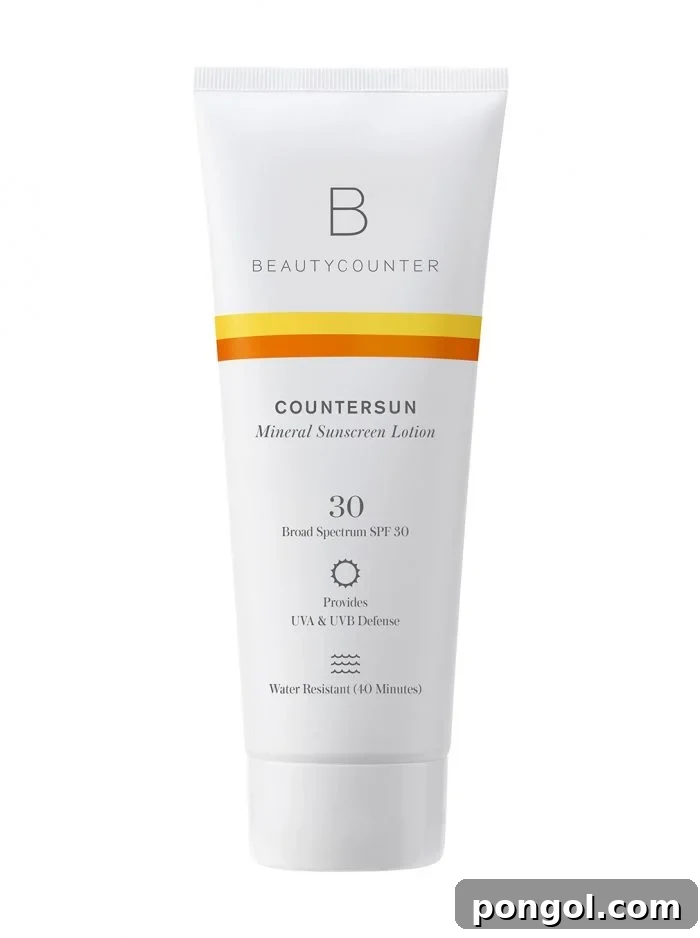
For those who prefer the familiar application of a traditional lotion, the Countersun Mineral Sunscreen Lotion delivers all the benefits of the Countersun line in a classic format. This lotion provides broad-spectrum mineral protection with non-nano zinc oxide and titanium dioxide, ensuring maximum safety for both mother and baby.
Housed in a generous 6.7-ounce tube, this lotion is an excellent value and pairs perfectly with the mist or stick for comprehensive sun care. Beautycounter consistently refines and improves its product lines, and the Countersun lotion is a testament to this commitment, offering enhanced efficacy and a luxurious feel. It’s a foundational product for any pregnancy-safe skincare regimen, delivering reliable, clean sun protection that feels great on the skin.
Click here to learn more about the Countersun Mineral Sunscreen Lotion.
Other Highly-Rated Safe Sunscreen Options for Pregnancy
While Beautycounter is our top recommendation for its comprehensive safety and exceptional performance, we understand that sometimes budget constraints or immediate availability might lead you to explore other options. The Environmental Working Group (EWG) provides an invaluable resource for identifying safe sunscreens that are more widely accessible and often more affordable. Many of these excellent mineral-based sunscreens can be found at popular retailers like Target, Whole Foods, or online. Remember, the key is to prioritize formulations with zinc oxide and titanium dioxide as active ingredients, and always check for “non-nano” where possible.
Here are some highly-rated, budget-friendly mineral sunscreens recommended by the EWG:
- Aveeno Baby Continuous Protection Zinc Oxide Mineral Sunscreen Lotion (SPF 50)
- Babyganics Mineral-Based Baby Sunscreen Lotion (SPF 50)
- Bare Republic Mineral Baby Sunscreen Lotion (50 SPF)
- Blue Lizard Australian Sunscreen, Baby Formula (30 SPF)
- CeraVe Baby Sunscreen (45 SPF)
- Goddess Garden Organics Facial Natural Sunscreen (30 SPF)
- Neutrogena Pure & Free Baby Mineral Sunscreen Broad Spectrum (50 SPF)
Making Informed Choices for a Healthy Pregnancy
Choosing the right sunscreen during pregnancy is more than just protecting your skin from sunburn; it’s about safeguarding the health and development of your baby. By understanding the distinction between chemical and mineral sunscreens and identifying the harmful ingredients to avoid, you empower yourself to make truly informed decisions.
Prioritizing mineral-based sunscreens, especially those utilizing non-nano zinc oxide and titanium dioxide, offers a safe and effective way to enjoy the sun responsibly. Whether you opt for the premium, meticulously formulated products from Beautycounter or select another highly-rated mineral sunscreen, the goal remains the same: provide the cleanest, safest environment for your little one to thrive, both in utero and beyond. Your skin is your largest organ, and during pregnancy, it’s an even more critical gateway. Choose wisely, stay protected, and cherish this special time.