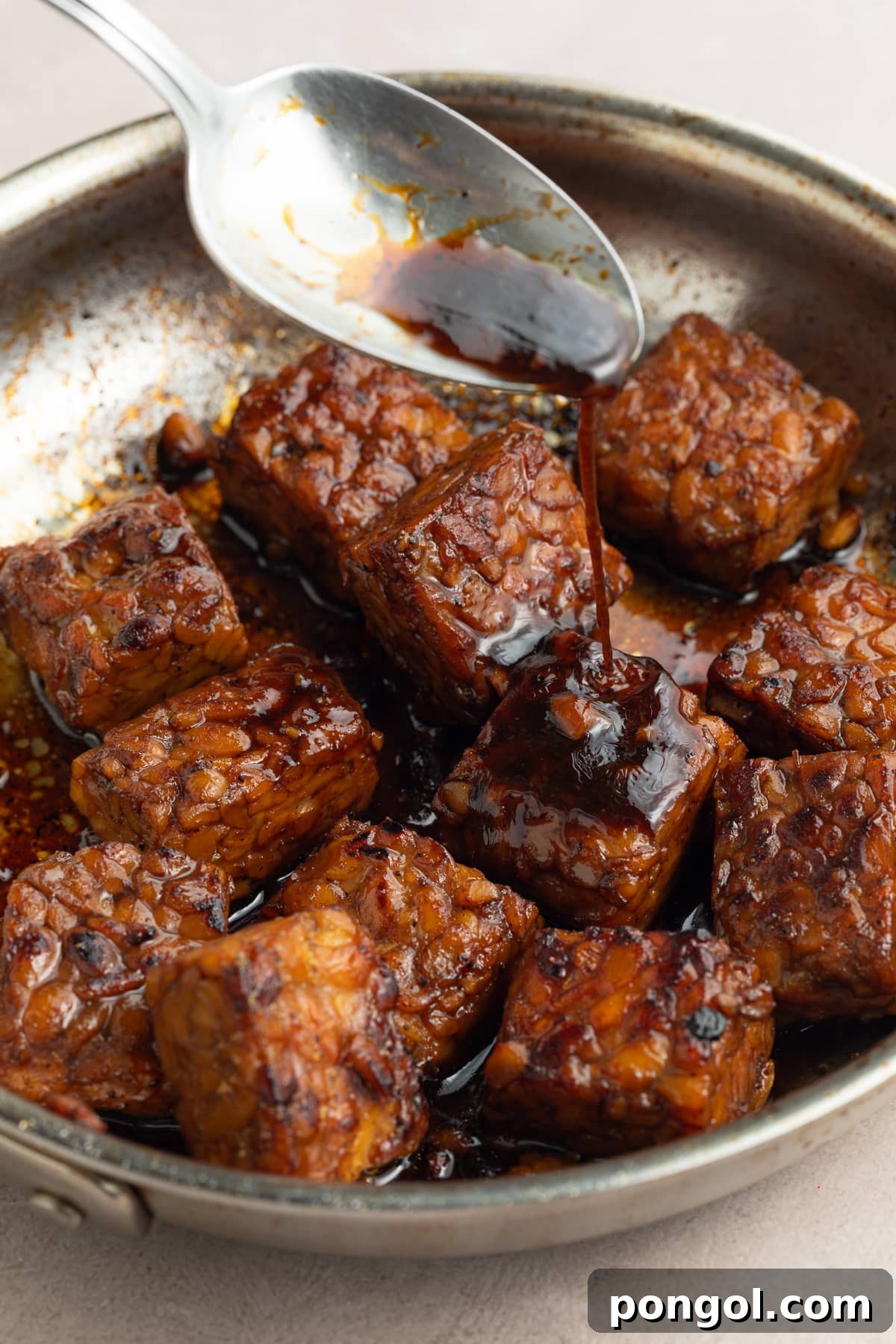
How to Cook Tempeh: The Ultimate Guide to Perfect, Flavorful Tempeh Every Time
Unlock the secrets to perfectly cooked tempeh with this comprehensive guide! Learn an easy method featuring a simple, customizable marinade and discover versatile cooking options like baking or sautéing. Prepare to elevate your plant-based meals!
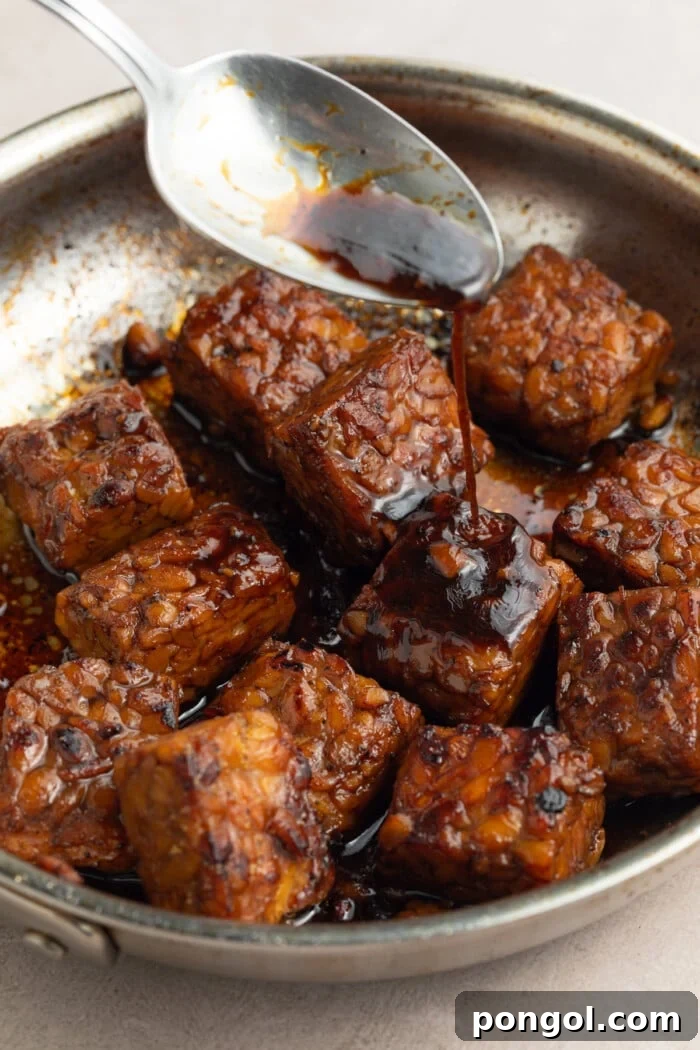
Why This Tempeh Recipe is a Must-Try
Tempeh has rapidly gained popularity as a fantastic plant-based protein source, but many find it intimidating to cook. This recipe demystifies the process, making it incredibly simple to achieve perfectly flavored and textured tempeh. Here’s why this method stands out:
- A Nutritional Powerhouse: Tempeh is not just a protein source; it’s a complete plant-based protein packed with essential amino acids. Beyond protein, it’s rich in fiber, iron, calcium, and often fortified with vitamin B12, making it an excellent addition to any vegan, vegetarian, or health-conscious diet. Its fermentation process also enhances digestibility and adds beneficial probiotics, supporting gut health.
- Unrivaled Flavor Absorption: Unlike tofu, tempeh has a firmer, meatier, and more porous texture that readily absorbs marinades. This recipe focuses on maximizing that absorption, ensuring every bite is bursting with flavor. Our base marinade is simple yet incredibly versatile, allowing you to easily adjust it to suit your palate – whether you prefer sweet, savory, spicy, or umami notes.
- Effortless Preparation: This method is designed for simplicity. With just three main steps – steaming, marinating, and cooking – you can prepare delicious tempeh with minimal fuss. Opting for the baking method makes it largely hands-off, freeing you to focus on other aspects of your meal preparation or simply relax while your tempeh cooks to crispy perfection.
- Versatile for Any Meal: Once cooked, this tempeh can be incorporated into a wide variety of dishes. From vibrant grain bowls and hearty salads to flavorful sandwiches and stir-fries, its robust texture and absorbed flavors make it a star ingredient that can easily replace meat in many recipes.
- Beginner-Friendly: If you’ve never cooked tempeh before, this recipe is the perfect starting point. It guides you through each step, ensuring success and confidence in preparing this wholesome ingredient. Even seasoned tempeh cooks will appreciate the nuanced tips for achieving optimal flavor and texture.
Mastering the Key Ingredients for Flavorful Tempeh
The magic of this tempeh recipe lies in a few simple, yet potent, ingredients. Understanding each one’s role will help you appreciate the balance of flavors and even inspire you to experiment with your own variations.
Tempeh: The Fermented Marvel
At its heart, tempeh is a traditional Indonesian food made from fermented soybeans. Whole soybeans are cooked, slightly dehulled, and then inoculated with a Rhizopus mold culture. This culture binds the soybeans into a compact, firm cake, often characterized by a white mycelium covering. Unlike tofu, which is made from coagulated soy milk, tempeh uses the whole soybean, retaining more fiber and giving it a distinct, chewy texture and a slightly nutty, earthy flavor. Sometimes, tempeh incorporates other grains like brown rice or barley, adding to its hearty texture and nutritional complexity. Its unique porous structure is what allows it to so wonderfully absorb the vibrant flavors of any marinade it’s introduced to, making it an incredibly versatile canvas for culinary creativity.
Beyond its culinary appeal, tempeh boasts an impressive nutritional profile. It’s a complete protein, meaning it contains all nine essential amino acids necessary for human health, making it an invaluable protein source for plant-based diets. It’s also rich in dietary fiber, contributing to digestive health and satiety. Furthermore, the fermentation process makes the nutrients in tempeh more bioavailable and reduces anti-nutrients found in raw soybeans, enhancing its health benefits. Many commercial tempeh brands are also fortified with vitamin B12, a crucial nutrient often lacking in strictly vegan diets.
Soy Sauce: The Umami Foundation
Soy sauce is more than just a seasoning; it’s a cornerstone of this marinade, providing a profound depth of savory, umami flavor. Tempeh, in its unseasoned state, can sometimes carry a subtle bitterness, which some find unpleasant. The rich, salty, and slightly tangy notes of soy sauce effectively counteract and mask this bitterness, transforming it into a delicious characteristic. It serves as the primary savory component, creating a robust flavor base that permeates the tempeh during marination.
For those avoiding gluten, tamari is an excellent gluten-free alternative that offers a similar umami punch. If you’re looking for a soy-free option, coconut aminos can be used, though you might need to adjust the other seasonings slightly as it is typically less salty and a bit sweeter than soy sauce.
Maple Syrup: The Sweet Counterbalance
The addition of maple syrup is critical for balancing the savory intensity of the soy sauce. Just a touch of sweetness can elevate the overall flavor profile, creating a harmonious blend that is both complex and incredibly satisfying. The natural sugars in maple syrup also play an important role during the cooking process; they caramelize beautifully, contributing to a golden-brown, slightly crispy exterior, especially when baking or sautéing the tempeh. This caramelization adds another layer of texture and flavor that makes the tempeh irresistible.
If maple syrup isn’t available or preferred, other liquid sweeteners like agave nectar can be used to maintain the vegan nature of the dish. For non-vegans, honey is a perfectly acceptable substitute that will yield similar delightful results.
Rice Vinegar: The Tangy Brightness
Rice vinegar adds a much-needed acidic component to the marinade, cutting through the richness and bitterness to brighten the flavors. Its mild tanginess not only enhances the overall taste but also helps tenderize the tempeh slightly, making it more receptive to the marinade. This acidity is key to a well-rounded and vibrant flavor profile.
Olive Oil: For Richness and Sizzle
A touch of olive oil in the marinade serves multiple purposes. It helps to carry the fat-soluble flavors into the tempeh, enriches the marinade with a subtle fruity note, and, most importantly, assists in achieving a beautiful sear and crisp texture during cooking. It also prevents sticking, whether you choose to bake or sauté your tempeh.
Black Pepper: The Subtle Kick
Black pepper provides a gentle warmth and a hint of spice, complementing the other flavors without overpowering them. Freshly ground black pepper will always offer the most aromatic and pungent flavor.
Chef’s Expert Tips for Perfect Tempeh Every Time
Achieving truly delicious tempeh goes beyond just mixing ingredients. These insider tips will help you master the art of cooking tempeh, ensuring it’s always flavorful, perfectly textured, and a joy to eat.
- Always Steam Your Tempeh First: This is arguably the most crucial step often overlooked by beginners. Steaming tempeh for about 10 minutes helps to remove any residual bitterness that some people find in raw tempeh. More importantly, it softens the dense cake-like structure and opens up its pores, allowing the tempeh to absorb the marinade much more effectively. This results in deeply flavored tempeh rather than just a surface coating of taste.
- Customize Your Marinade: While our base marinade is fantastic, feel free to make it your own! Consider adding:
- Aromatics: Garlic powder, onion powder, or grated fresh ginger for extra pungency.
- Spices: Smoked paprika for a smoky depth, chili flakes for heat, or a dash of cumin for an earthy note.
- Herbs: Fresh or dried herbs like oregano or thyme can introduce a different aromatic dimension.
- Sweetness: A little extra maple syrup or a pinch of brown sugar for a sweeter profile, or less if you prefer savory.
Don’t be afraid to experiment and discover your favorite flavor combinations!
- Uniformity in Cutting is Key: You can cut your tempeh into any shape that suits your dish – cubes for stir-fries, strips for sandwiches, triangles for wraps, or crumbles for tacos. The golden rule, however, is to ensure all pieces are as close to even in size as possible. This uniformity guarantees that every piece cooks evenly, preventing some from burning while others remain undercooked.
- Marination Time Matters: The longer you marinate the tempeh, the more intensely flavorful it will become. While 30 minutes is the minimum for a quick infusion of flavor, aiming for at least 1 hour will yield significantly better results. For the deepest, most complex flavors, plan to marinate your tempeh for 4-8 hours, or even overnight in the refrigerator. Just ensure it’s tightly covered to prevent drying out and to allow flavors to fully meld.
- Choose Your Cooking Method Wisely: Both baking and sautéing offer distinct advantages:
- Baking: Ideal for a hands-off approach and achieving a crispy exterior. It’s perfect when you’re preparing other components of a meal or making a larger batch. Line your baking sheet to prevent sticking and for easy cleanup.
- Sautéing: Provides quicker cooking and more control over the browning process, resulting in beautifully golden and slightly charred edges. Best for smaller batches and when you want that immediate, satisfying sizzle. Don’t overcrowd the pan to ensure even browning.
Consider trying both methods to see which texture and convenience you prefer for different applications.
- Don’t Waste the Leftover Marinade: After marinating, you can often simmer the remaining marinade for a few minutes until it thickens slightly (ensure it comes to a boil to kill any bacteria from the raw tempeh). This thickened sauce makes an excellent glaze or dipping sauce for your cooked tempeh, adding an extra layer of flavor.
- Serving Suggestions are Endless: Cooked tempeh is incredibly versatile. Use it to top salads or grain bowls, stuff it into pita bread or sandwiches, add it to curries or stir-fries, or crumble it into tacos or burritos. Its firm texture holds up well, making it a satisfying addition to almost any meal.
More Delicious Plant-Based Recipes You’ll Love
Expanding your plant-based repertoire is exciting! Here are some other fantastic recipes that complement a healthy, vegan lifestyle:
- Hearty Instant Pot Vegetable Soup
- Creamy Sweet Potato Soup
- Flaky Vegan Pie Crust
- Super Crispy Baked Tofu
- Zesty Texas Caviar
- 10-Minute Vegan Garlic Bread
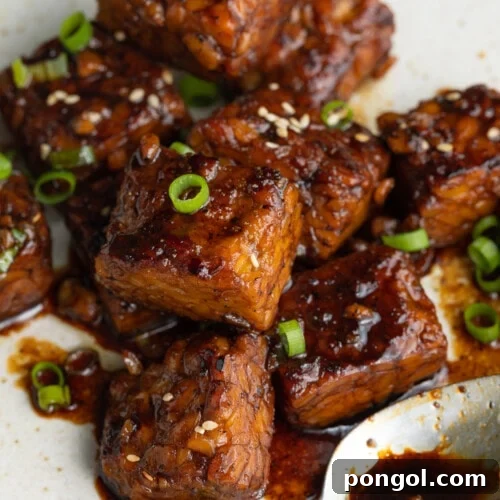
Recipe By: Sam Guarnieri
How to Cook Tempeh: Easy Marinated Recipe
- Prep Time: 5 minutes
- Cook Time: 20 minutes
- Total Time: 25 minutes
Discover the easiest way to cook perfect, delicious, and deeply flavorful tempeh. This recipe features a simple yet potent marinade and offers two versatile cooking options: baking for hands-off crispiness or sautéing for a quick, golden finish. A truly satisfying plant-based meal awaits!

Sam Guarnieri
Pin Recipe
Yields: 4 servings
Equipment
- Steamer basket
- Medium bowl
- Baking sheet (for baked tempeh)
- Large skillet (for sautéed tempeh)
Ingredients
- 8 ounces tempeh, cut into even-sized cubes
- ¼ cup soy sauce (or tamari for gluten-free)
- 3 tablespoons maple syrup (or honey for non-vegan)
- 2 tablespoons rice vinegar
- 1 tablespoon olive oil
- ¼ teaspoon black pepper
- Optional additions: ½ tsp garlic powder, ½ tsp smoked paprika, pinch of chili flakes
Instructions
-
Prepare the Tempeh: Place the tempeh cubes in a steamer basket. Bring a pot of water to a boil, then place the steamer basket over it. Steam the tempeh for 10 minutes. This crucial step reduces bitterness and allows the tempeh to absorb the marinade more effectively.
-
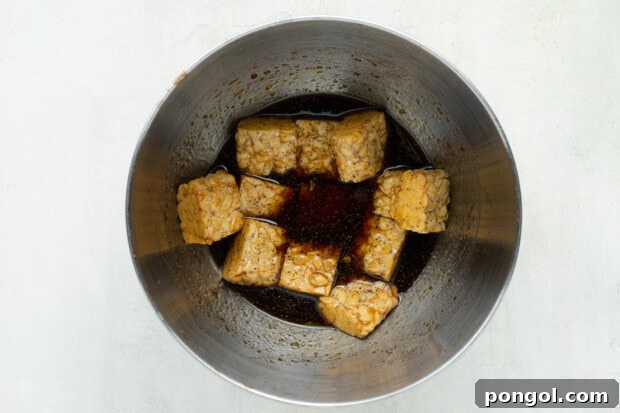
Marinate: In a medium bowl, whisk together the soy sauce, maple syrup, rice vinegar, olive oil, and black pepper until well combined. If using, add any optional spices like garlic powder or smoked paprika. Add the steamed tempeh to the bowl with the marinade, tossing gently to ensure all pieces are thoroughly coated. Cover the bowl and refrigerate for at least 30 minutes. For optimal flavor, marinate for 1 hour or up to 8 hours (or overnight).

Ensure every tempeh piece is well-coated for maximum flavor.
For Baked Tempeh (Hands-Off & Crispy)
-
Preheat Oven: Preheat your oven to 425°F (220°C). Line a baking sheet with parchment paper for easy cleanup and to prevent sticking.
-
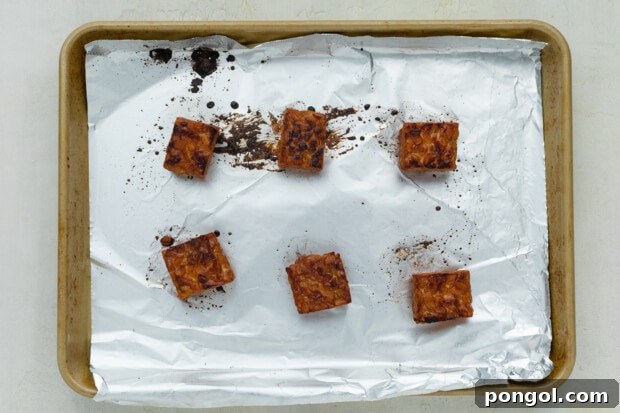
Bake: Arrange the marinated tempeh in a single layer on the prepared baking sheet, ensuring pieces are not overcrowded. Bake for 20 minutes, or until the tempeh is lightly golden-brown and crispy around the edges. For extra crispiness, you can flip the tempeh halfway through baking.
Baked to perfection, golden and ready to enjoy!
For Sautéed Tempeh (Quick & Golden)
-
Heat Skillet: Heat 1 tablespoon of olive oil in a large skillet over medium-high heat. Ensure the oil is hot but not smoking.
-
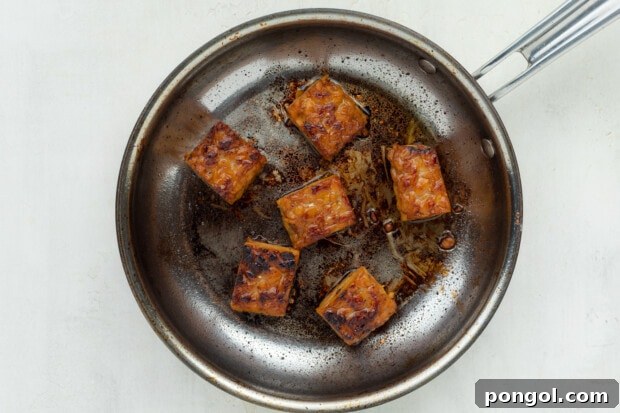
Sauté: Add the marinated tempeh to the hot skillet in a single layer, being careful not to overcrowd the pan. Sauté for 2-3 minutes per side, turning occasionally, until the tempeh is golden-brown and crispy. Work in batches if necessary to avoid steaming the tempeh instead of browning it.
Achieving that perfect sear for extra flavor and texture.
-
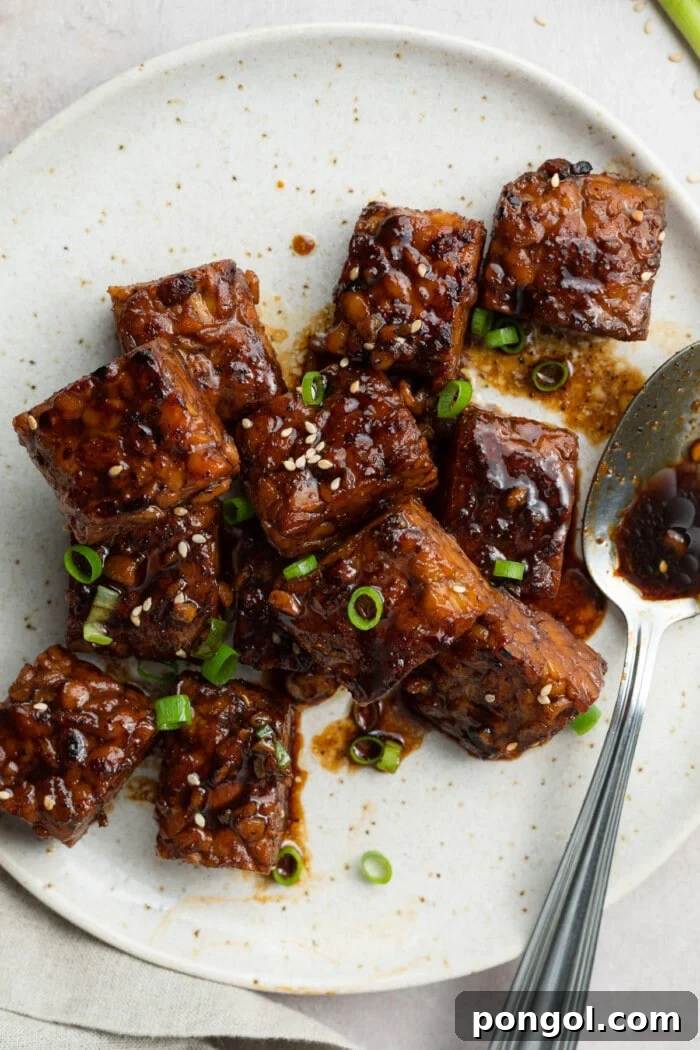
Serve: Once cooked (either baked or sautéed), toss the tempeh with any remaining marinade from the bowl (if desired, you can briefly simmer the leftover marinade to thicken it into a sauce). Serve immediately and enjoy your perfectly cooked, flavorful tempeh!
Approximate Nutrition Information for One Serving
Serving Size: 1 serving
Calories: 189 cal
Protein: 14 g
Fat: 7 g
Saturated Fat: 1 g
Trans Fat: 1 g
Cholesterol: 1 mg
Sodium: 812 mg
Potassium: 256 mg
Total Carbs: 19 g
Fiber: 4 g
Sugar: 9 g
Net Carbs: 15 g
Vitamin A: 1 IU
Calcium: 78 mg
Iron: 2 mg
Nutrition Disclaimers
Number of total servings shown is approximate. Actual number of servings will depend on your preferred portion sizes.
Nutritional values shown are general guidelines and reflect information for 1 serving using the ingredients listed, not including any optional ingredients. Actual macros may vary slightly depending on specific brands and types of ingredients used.
To determine the weight of one serving, prepare the recipe as instructed. Weigh the finished recipe, then divide the weight of the finished recipe (not including the weight of the container the food is in) by the desired number of servings. Result will be the weight of one serving.
Did You Make This Delicious Recipe?
We’d love to see your culinary creations! Tag @40aprons on Instagram and be sure to leave a star rating and review on this blog post. Your feedback helps us grow and inspires others!
Tag @40Aprons on Instagram