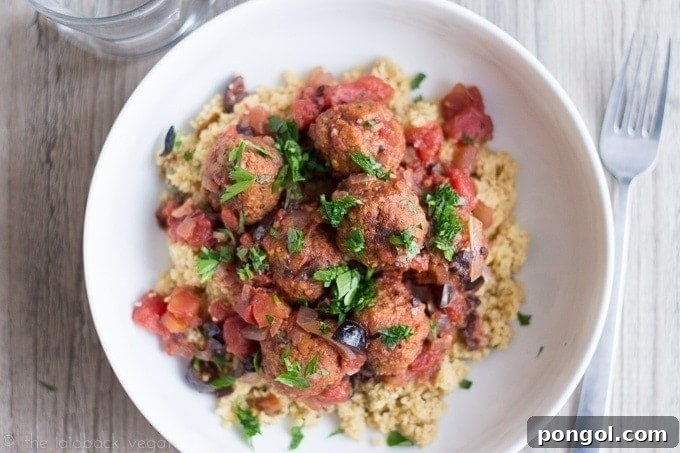
Experience the Culinary Magic of Vegan Moroccan Meatballs with Couscous
Welcome to a special edition of our “Yours & Mine” series, where we celebrate the joy of sharing incredible meals, regardless of dietary preferences. This culinary philosophy means crafting dishes that allow you to savor a delightful vegan rendition while simultaneously offering a beloved carnivore in your life a version complete with meat. Today, we’re diving into a recipe that embodies this spirit perfectly: our Vegan Moroccan Meatballs with fluffy couscous.
This isn’t just any recipe; it’s the plant-based transformation of a dish that truly blew us away. Imagine that rare moment when you try a new meal on a whim, perhaps drawn in by a few intriguing ingredients, and with the very first bite, you and your dining companion exchange a look of pure, unadulterated pleasure, a silent groan of “It’s soooo good!” That’s exactly the reaction these Moroccan meatballs inspire.
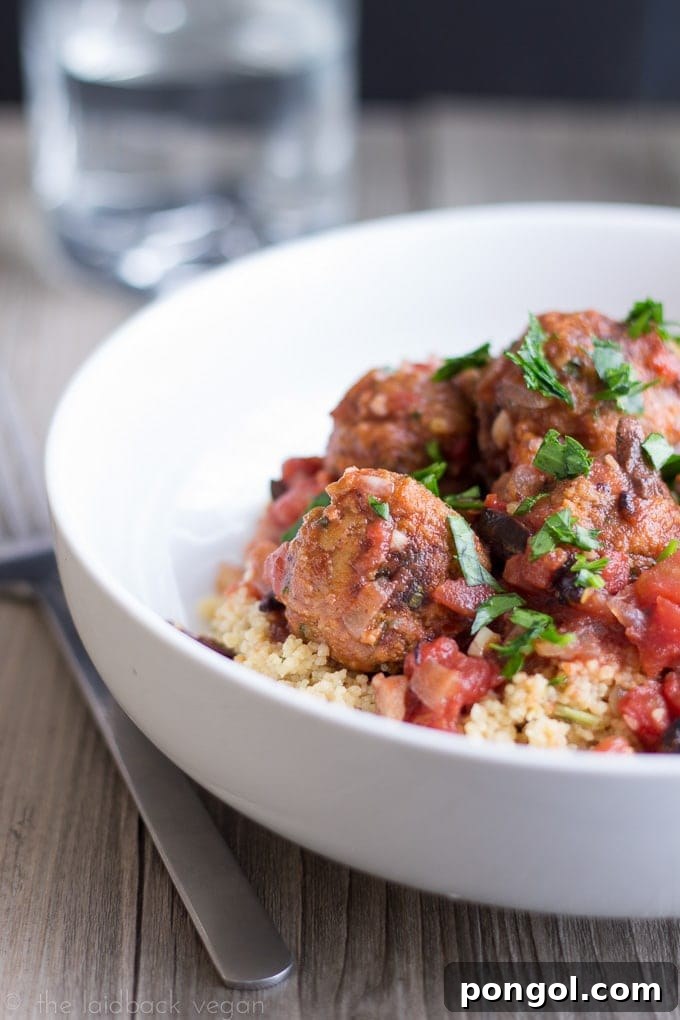
A Symphony of Flavors: Tender Meatballs in a Rich, Spiced Sauce
Picture this: exceptionally tender meatballs, bursting with the fresh, grassy notes of cilantro and the subtle warmth of ginger. They’re enrobed in a beautifully spiced tomato sauce – a rich, aromatic base that dances with hints of North African marketplaces. Dotted with briny Kalamata olives, this vibrant sauce provides the perfect counterpoint to the sweetness of plumped dates, all served over a bed of light and fluffy couscous. Each forkful is a complex interplay of savory, sweet, and aromatic sensations, leaving you craving more. As you stand over the simmering pot, the tantalizing aroma alone transports you to bustling Moroccan souks, promising a truly unforgettable meal.
The Art of Veganization: Crafting the Perfect Plant-Based Meatball
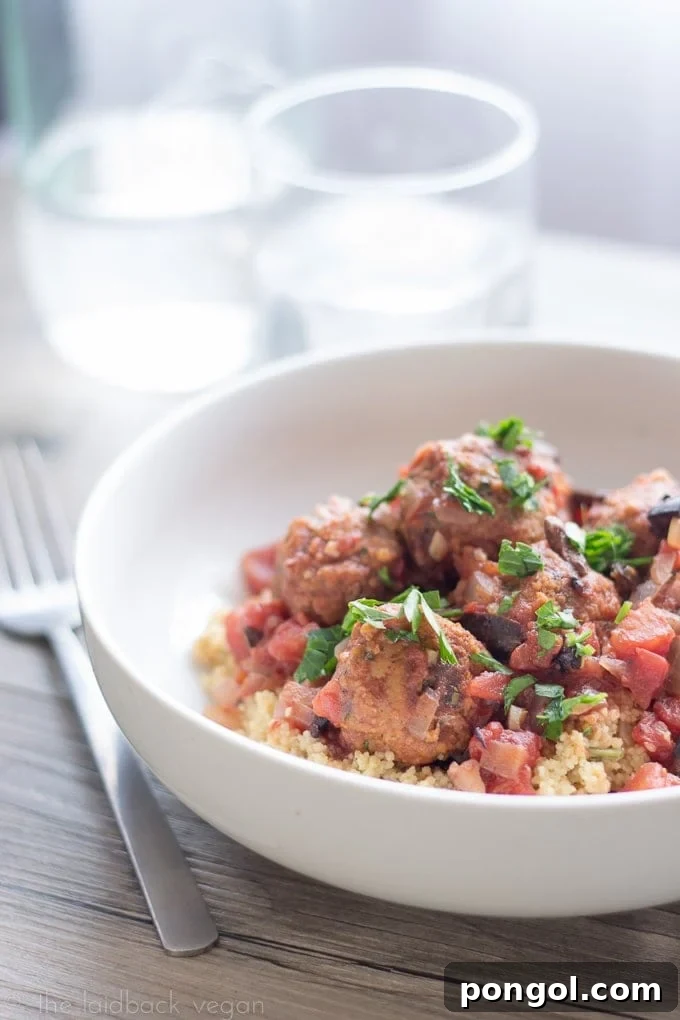
Once we committed to a vegan lifestyle, there was no question that this cherished Moroccan meatball recipe had to come with us. Giving it a 5-star veganization treatment became a passion project, and the results were nothing short of astonishing. Initially, I considered using textured vegetable protein (TVP) for the meatballs, but after a bit of research into its processed nature, I decided to seek a more wholesome alternative. This led me to seitan – a remarkable plant-based protein derived from vital wheat gluten.
Instead of relying on dry, processed pellets, I opted to whip up a batch of exceptionally tender seitan from scratch, which was then ground in a food processor. The transformation was incredible! The resulting texture was remarkably similar to that of ground beef, yet the flavor was arguably even better. Unlike traditional ground meat, seitan maintains its wonderfully tender consistency and nutty flavor throughout the cooking process, allowing the vibrant notes of cilantro and ginger to truly shine within each meatball. This choice not only elevates the texture but also enhances the overall depth and authenticity of the Moroccan spices, creating a truly superior plant-based experience.
Sharing the Joy: A Meal for Everyone at Your Table
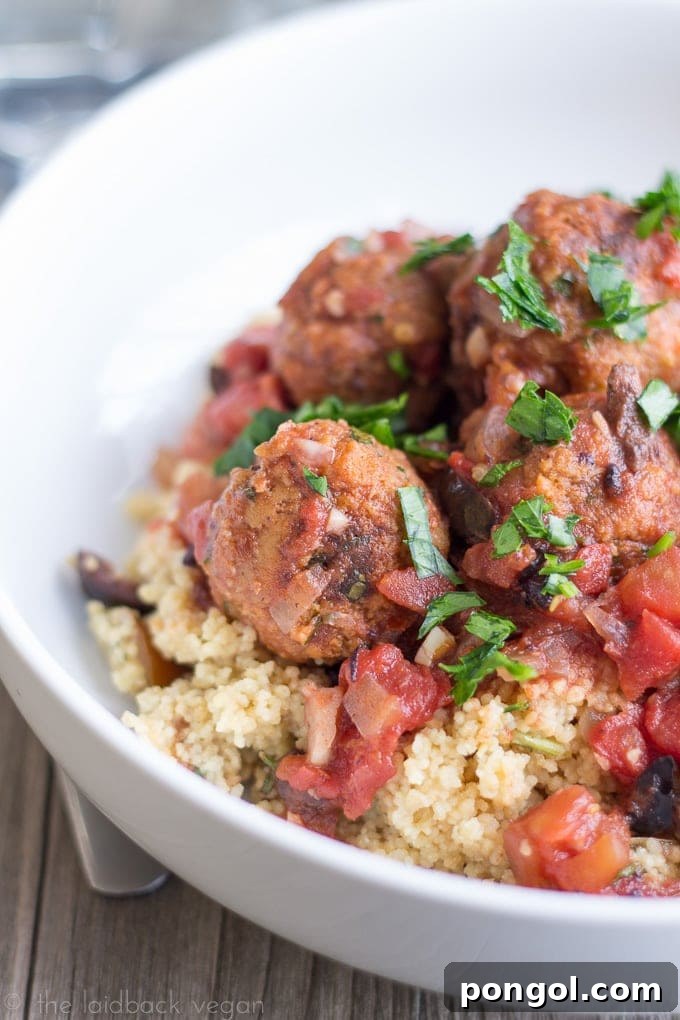
This recipe was born out of a desire to satisfy everyone at the dinner table, especially when diverse dietary needs are at play. My partner, O, consistently requested this dish, and I wanted to create a solution that appeased his traditional preferences while fully embracing my plant-based commitment. The “Yours & Mine” method is beautifully simple: prepare a generous batch of the flavorful Moroccan sauce for both parties. Then, create two separate batches of meatballs – one entirely plant-based using our exquisite seitan, and another with meat for those who prefer it. After baking, both batches of meatballs can be gently simmered in the shared aromatic sauce.
This approach worked perfectly for us, yielding positively delicious results for everyone. With just a little extra effort, you can cater to the meat-eater in your life while indulging in a healthy, wholesome, and utterly satisfying plant-based meal. Beyond the incredible taste, choosing a plant-forward dish like this contributes to a longer, healthier life, significantly lessens your environmental footprint, and provides sustained energy throughout your day. It’s a win-win for your palate, your health, and the planet.
Why Moroccan Cuisine Captivates
Moroccan cuisine is renowned for its vibrant colors, complex spice blends, and the beautiful harmony of sweet and savory flavors. Dishes often feature a delightful mix of warm spices like cumin, coriander, ginger, and cinnamon, alongside fresh herbs, fruits, and olives. The culinary heritage of Morocco is a rich tapestry woven from Berber, Arab, Andalusian, and Mediterranean influences, resulting in a unique and captivating gastronomic experience. This particular recipe captures the essence of that tradition, bringing the warmth and exotic allure of North Africa right into your kitchen.
The combination of savory meatballs, whether seitan or meat-based, with a tomato-rich sauce, briny olives, and sweet dates, is a classic Moroccan pairing. It’s a testament to the cuisine’s ability to create depth and balance using simple, high-quality ingredients. Serving it with fluffy couscous is a staple, providing the perfect vehicle to soak up all the delicious sauce and round out the meal.
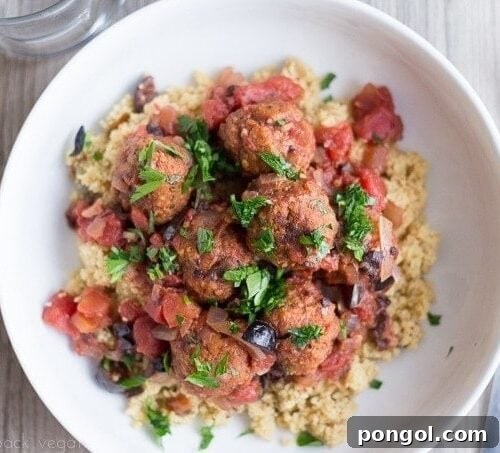
Vegan Moroccan Meatballs
Tender, flavorful vegan meatballs in a Moroccan-spiced sauce with Kalamata olives over a bed of fluffy couscous with dates. What’s not to love?
Ingredients
For the Sauce:
- 1 tablespoon olive oil
- ½ small onion, diced
- 2 cloves garlic, chopped
- 1 lemon, zested
- ½ cup pitted and chopped briny olives, like Kalamata
- ½ cup white wine
- ¼ cup veggie stock or broth
- 14 oz (14-ounce) can crushed or diced tomatoes, preferably crushed
- 1 teaspoon light brown sugar, or sweetener such as agave or maple for unprocessed eating
- ½ teaspoon dried red pepper flakes
- 1 pinch ground cinnamon
- Salt and freshly ground black pepper to taste
For the Vegan Meatballs:
- 1 tablespoon ground flaxseed meal
- 3 tablespoons water
- 2 tablespoons tomato paste
- 3 tablespoons finely chopped fresh cilantro leaves
- 1 tablespoon minced fresh ginger
- 1 teaspoon ground cumin
- 1 pinch ground cinnamon
- 2 cups ground seitan
- ⅓ cup finely ground rolled oats or fine bread crumbs
- Salt and freshly ground black pepper to taste
For the Couscous:
- 1 cup water
- 1 cup veggie stock or broth
- 1 tablespoon olive oil
- ¼ cup finely chopped dried dates
- 1 cup quick-cooking couscous, preferably whole wheat
- Salt and freshly ground black pepper to taste
- 1 tablespoon chopped fresh parsley, for garnish
Instructions
- Preheat the oven to 350ºF (175°C).
- Stir together 1 tablespoon flaxseed meal and 3 tablespoons water in a small bowl. Let it sit for about 10 minutes, or until it forms a gel-like consistency. This acts as your “flax egg.” For a quicker process, use slightly warm water.
- In a medium bowl, combine your flaxseed-water “egg” and tomato paste, stirring until smooth. Add the cilantro, ginger, cumin, and cinnamon, mixing until well blended. Gently stir in the ground seitan and ground oats, seasoning with salt and pepper to taste after each addition. Be careful not to overmix. Using your hands, roll the mixture into approximately 32 meatballs, about 1-inch in diameter. Place them on a foil-lined baking sheet.
- Bake the meatballs for about 15-20 minutes, or until they begin to brown slightly. While they bake, prepare your sauce.
- To make the sauce: In a large saucepan, heat the olive oil over medium heat. Sauté the diced onion and chopped garlic until soft but not browned, about 3 minutes. Add the lemon zest and olives, cooking for 1 more minute. Pour in the white wine to deglaze the pan, letting it reduce for 1 to 2 minutes. Stir in the veggie stock, crushed tomatoes, brown sugar, red pepper flakes, and a pinch of cinnamon. Simmer the sauce for about 7 minutes to allow the flavors to meld. Season with salt and pepper to taste.
- Once the meatballs are baked, gently transfer them to the saucepan with the simmering sauce. Let them simmer in the sauce for another 10 minutes. In the meantime, prepare your couscous.
- For the couscous: Bring the water, veggie stock, and olive oil to a boil in a small saucepan over medium heat. Add the finely chopped dates, followed by the quick-cooking couscous. Cover the pan tightly with a lid, remove it from the heat, and let it sit undisturbed for 5 minutes. Fluff the couscous with a fork and season with salt and pepper to taste.
- To serve: Divide the fluffy couscous into individual bowls. Spoon the tender meatballs and rich Moroccan sauce generously over the couscous. Garnish with fresh chopped parsley for a burst of color and freshness. Enjoy this delightful meal!
Approximate Information for One Serving
Calories: 796cal
Protein: 19g
Fat: 23g
Saturated Fat: 3g
Sodium: 1482mg
Potassium: 1177mg
Total Carbs: 123g
Fiber: 14g
Sugar: 27g
Net Carbs: 109g
Vitamin A: 3154IU
Vitamin C: 72mg
Calcium: 164mg
Iron: 5mg
Nutrition Disclaimers
Number of total servings shown is approximate. Actual number of servings will depend on your preferred portion sizes.
Nutritional values shown are general guidelines and reflect information for 1 serving using the ingredients listed, not including any optional ingredients. Actual macros may vary slightly depending on specific brands and types of ingredients used.
To determine the weight of one serving, prepare the recipe as instructed. Weigh the finished recipe, then divide the weight of the finished recipe (not including the weight of the container the food is in) by the desired number of servings. Result will be the weight of one serving.
Did You Make This Recipe?
Tag @40aprons on Instagram and be sure to leave a review on the blog post!
Tag @40Aprons on Instagram
Tips for Culinary Success
To ensure your Vegan Moroccan Meatballs turn out perfectly every time, here are a few tips:
- Seitan Preparation: If making seitan from scratch, ensure it’s kneaded sufficiently to develop its characteristic chewy texture. If using pre-made seitan, look for a brand with a firm yet tender consistency. Grinding it finely in a food processor is key to achieving that desirable “ground meat” texture.
- Flax Egg Consistency: Don’t rush the flax egg. Allowing the flaxseed meal and water to sit for the full 10 minutes (or using warm water) ensures it forms a proper gel, which is crucial for binding the meatballs.
- Don’t Overmix: When combining the meatball ingredients, mix just until everything is incorporated. Overmixing can lead to tougher meatballs.
- Sauce Depth: The simmering time for the sauce is important. It allows all the incredible Moroccan spices to meld and deepen their flavors, creating a rich and complex base for your meatballs.
- Perfect Couscous: The key to fluffy couscous is the correct water-to-couscous ratio and allowing it to steam off the heat. Resist the urge to peek or stir during the 5-minute resting period.
- Garnish Matters: Fresh parsley not only adds a beautiful pop of color but also a burst of fresh flavor that brightens the entire dish.
The Health and Environmental Advantages of Plant-Based Eating
Beyond the delightful taste, choosing plant-based meals like these Moroccan Meatballs offers numerous benefits. From a health perspective, a diet rich in plant-based foods is associated with a lower risk of chronic diseases, improved heart health, and better weight management. Seitan provides a significant protein boost without the saturated fats often found in animal products, while vegetables, olives, and dates contribute essential vitamins, minerals, and fiber.
Environmentally, opting for vegan meals has a profound impact. Producing plant-based proteins generally requires fewer resources – less land, less water, and generates fewer greenhouse gas emissions – compared to meat production. By choosing this recipe, you’re not just enjoying a delicious meal; you’re making a conscious choice to support your personal well-being and the health of our planet. It’s a flavorful step towards a more sustainable and vibrant future, proving that truly satisfying meals can be both plant-based and universally adored.