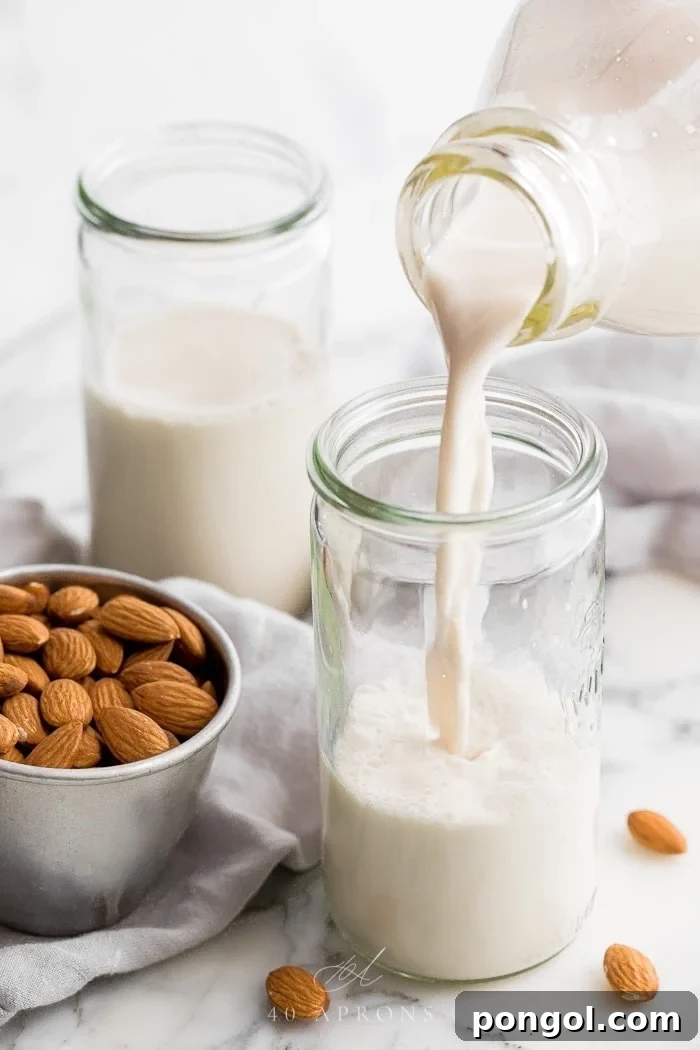
Craving the **richest, creamiest almond milk** you’ve ever tasted, made with wholesome ingredients and absolutely no fuss? Look no further! This comprehensive guide reveals **how to make almond milk** in a mere **5 minutes**, utilizing just a handful of simple ingredients and a high-speed blender. Say goodbye to store-bought cartons with their lengthy ingredient lists and embrace a homemade version that’s not only incredibly delicious but also perfectly aligned with vegan, Whole30, and paleo lifestyles.
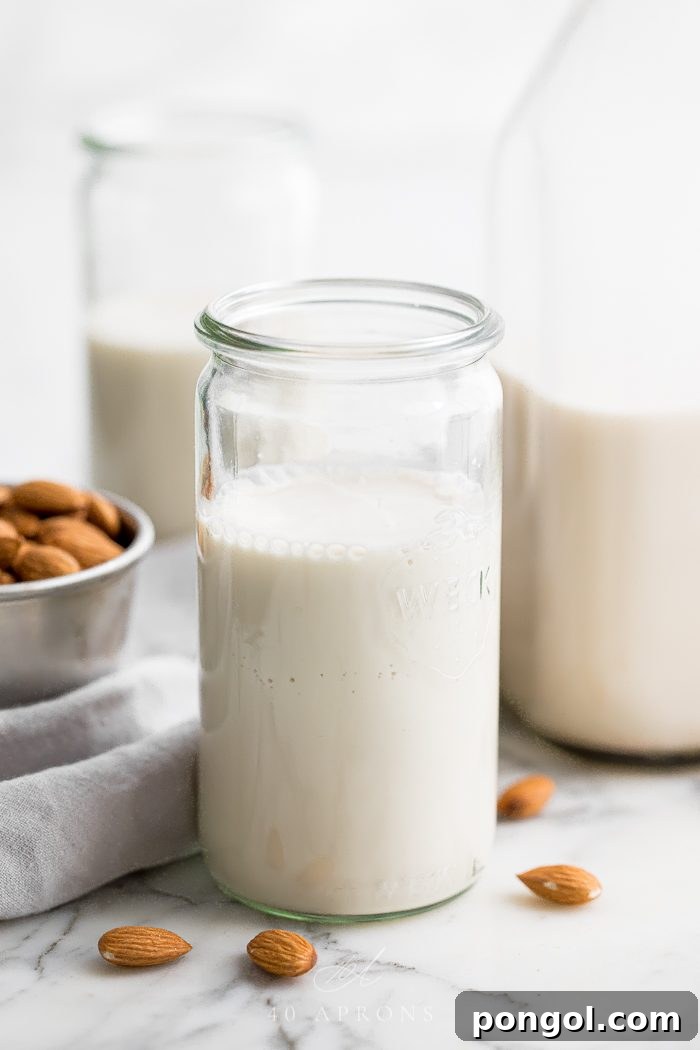
For many families, including mine, almond milk is a kitchen staple. We pour it into coffee, blend it into smoothies, and use it in countless recipes. However, the convenience of store-bought almond milk often comes with a compromise: a long list of additives, stabilizers, and artificial ingredients that detract from its natural goodness. Finding a truly clean and healthy option can be a challenge, and frankly, who has the time to decipher complicated labels?
That’s where this revolutionary **5-minute almond milk recipe** comes in. As someone who appreciates healthy alternatives but struggles with time-consuming preparations, I understand the need for simplicity. If a recipe demands extensive planning or overnight soaking, it often falls by the wayside. But this method is a game-changer. It’s incredibly fast, requires minimal effort, and yields a homemade almond milk that’s far superior in taste and texture to anything you’d find on supermarket shelves. Prepare yourself for a pure, delicious, and healthy dairy-free alternative that you can whip up whenever the craving strikes!
Why This Homemade Almond Milk Recipe Stands Out
When you learn how to make your own almond milk, you unlock a world of benefits that commercial brands simply can’t match. Here’s why this particular recipe will become your new favorite:
- Unbeatable Speed: From start to finish, you can have a fresh batch of creamy almond milk ready in just five minutes. This makes it perfect for busy mornings or last-minute needs.
- Superior Taste and Texture: Forget watery, thin store-bought versions. This recipe produces an incredibly rich, thick, and velvety almond milk that elevates your coffee, smoothies, and cereals. The difference in creaminess is truly remarkable.
- Minimal, Clean Ingredients: The beauty of homemade lies in its simplicity. For a basic plain almond milk, all you need are raw almonds and water. No questionable thickeners, emulsifiers, or hidden sugars! You control exactly what goes into your body.
- Customizable Flavors: While delicious plain, this recipe easily adapts to your preferences. Add pitted dates and a splash of vanilla extract for a subtly sweet, aromatic vanilla almond milk that’s healthier than most flavored options. You can also experiment with other natural sweeteners or spices.
- Health-Conscious Choice: Made with easily pronounceable, wholesome ingredients, this almond milk is a fantastic choice for those following specific dietary paths like vegan, Whole30, or paleo. It’s naturally dairy-free, gluten-free, and free from industrial additives.
- Cost-Effective: Over time, regularly purchasing almond milk can add up. Making your own at home can be significantly more economical, especially if you buy raw almonds in bulk.
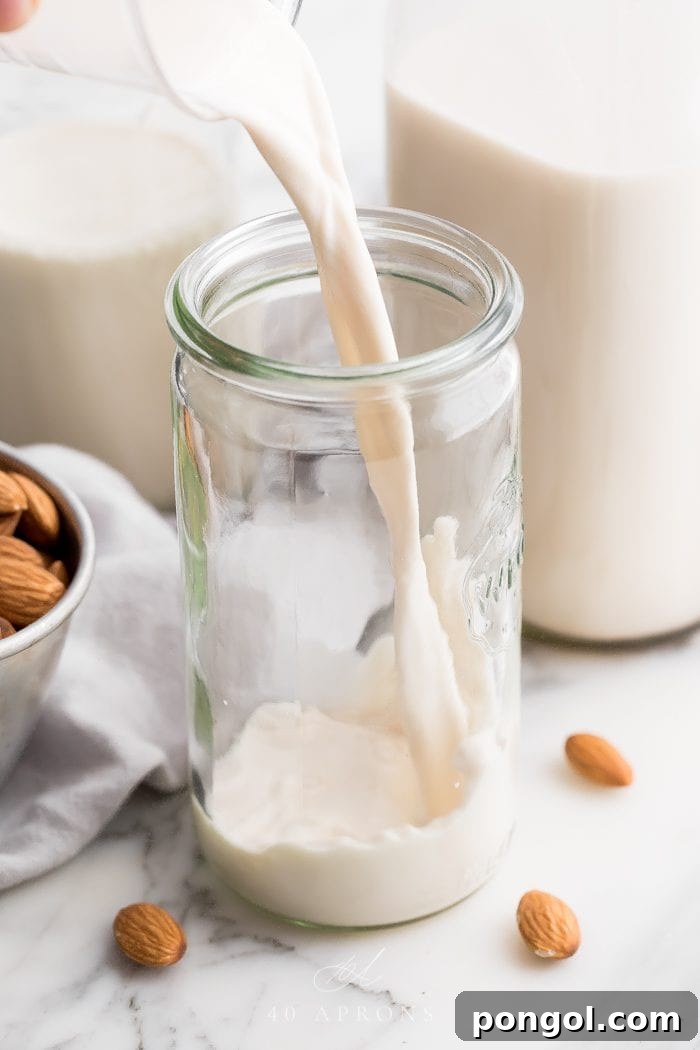
Do You Need to Soak Almonds for Homemade Almond Milk?
The short answer is: not always! If you own a powerful high-speed blender, such as a Vitamix or Blendtec, soaking your raw almonds beforehand is completely optional. These blenders are designed to pulverize ingredients so finely that soaking isn’t necessary to achieve a smooth, creamy texture. You’ll still want to ensure you use raw, unsalted almonds for the best results and blend for a sufficient amount of time.
However, if you’re using a standard or less powerful blender, soaking the almonds becomes a crucial step. Soaking softens the almonds, making them easier to break down and ensuring a smoother, less gritty final product. It also aids in digestibility by activating enzymes and neutralizing phytic acid.
How to Make Almond Milk: A Simple 2-Step Process
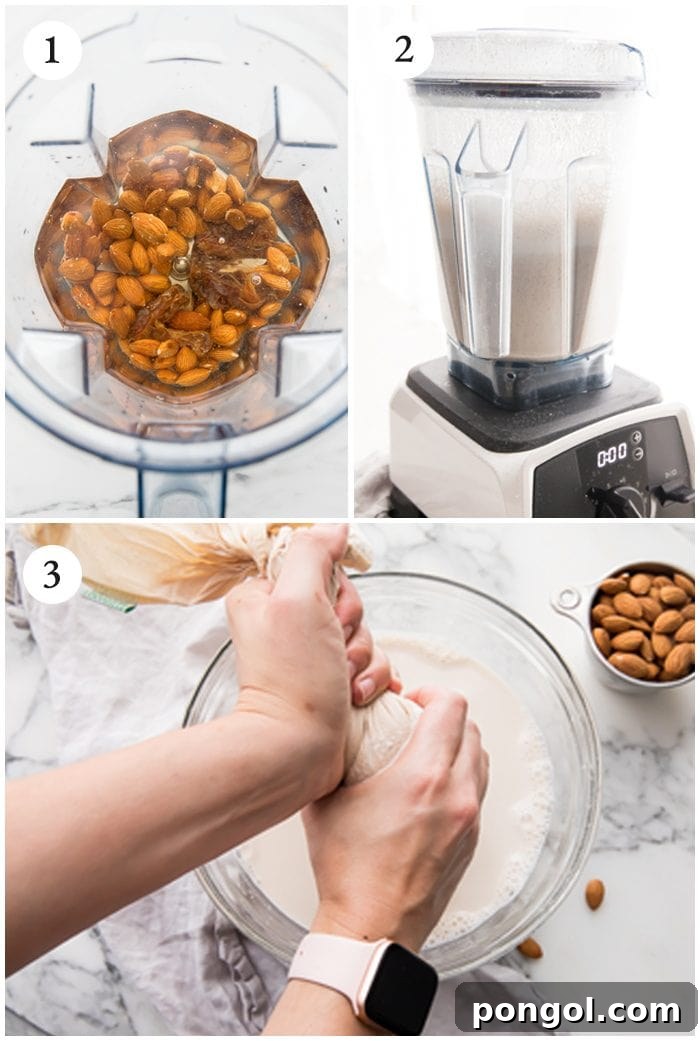
Ready to unlock the secret to homemade almond milk? It’s genuinely a super simple two-step process that anyone can master:
- Blend All Ingredients: Add your raw almonds, water (and any optional sweeteners or flavorings like dates and vanilla extract) into a high-speed blender. Start with the minimum amount of water, cover tightly, and blend on the highest setting for about two minutes. You want the mixture to be completely smooth and milky, with no large almond pieces remaining. If your blender struggles, you might need to blend for an extra minute or two.
- Strain the Liquid: Once blended, the mixture will be thick and foamy. Place a fine-mesh nut milk bag over a large bowl or pitcher. Carefully pour the almond mixture into the bag. Gather the top of the bag and gently but firmly squeeze the liquid through, extracting as much milky goodness as possible. The remaining solids in the bag are almond pulp.
And that’s it! You’ve just made fresh, wholesome almond milk. It’s truly that effortless.
Essential Ingredients for Perfect Almond Milk
One of the greatest advantages of making almond milk at home is the ability to control every single ingredient. For the purest and simplest almond milk, you only need two core items:
- Raw Almonds: Opt for raw, unsalted almonds. Blanched or roasted almonds will alter the flavor and texture significantly. Raw almonds provide the cleanest, most neutral base for your milk.
- Filtered Water: The quality of your water matters! Using filtered water ensures the purest taste, free from tap water impurities.
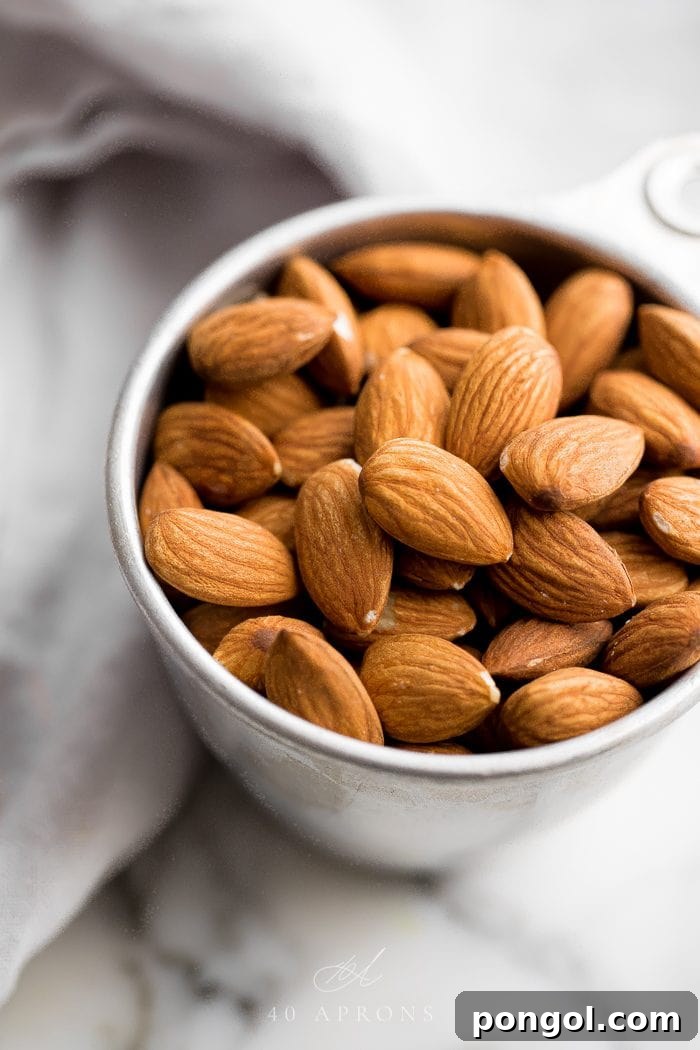
Yes, that truly is all you need for basic almond milk! However, if you’d like to elevate your homemade dairy-free experience with a touch of sweetness and vanilla, you can easily add:
- Pitted Dates: Medjool dates are ideal for their natural sweetness and soft texture, which blends easily. They provide a healthy, unrefined sweetener. Adjust the quantity to your preference.
- Vanilla Extract: A good quality vanilla extract adds a lovely aromatic depth to your almond milk, transforming it into a delightful vanilla-flavored treat.
- A Pinch of Sea Salt (Optional): A tiny pinch of fine sea salt can actually enhance the natural sweetness of the almonds and other added flavors, without making the milk taste salty.
With these few simple ingredients, you have full control over the quality, flavor, and health benefits of your homemade almond milk. It really couldn’t be simpler or more wholesome.
Can I Make Almond Milk with a Regular Blender?
Yes, you can absolutely make almond milk with a regular blender, but it requires one extra step: **soaking your almonds**. Without the high-speed power of blenders like Vitamix, raw almonds need to be softened to ensure they break down properly. For best results, soak your raw almonds in water for at least 4 hours, or ideally, overnight (8-12 hours). This process makes them much easier for a standard blender to pulverize, resulting in a smoother, less grainy texture.
After soaking, drain and rinse the almonds thoroughly before blending them with fresh water. The soaking water contains phytic acid and enzyme inhibitors, so it’s always best to discard it.
Do I Need a Nut Milk Bag for Straining?
A nut milk bag is highly recommended for straining your homemade almond milk because it’s incredibly efficient and yields the smoothest possible milk. Its fine mesh and durable design make the squeezing process quick and mess-free.
However, if you don’t have a nut milk bag, you can certainly use a couple of layers of **cheesecloth** as an effective alternative. Simply line a fine-mesh strainer with 2-3 layers of clean cheesecloth and place it over a large bowl or pitcher. Pour the blended almond mixture through the cheesecloth-lined strainer. Then, carefully gather the edges of the cheesecloth, twist them together, and firmly wring out as much liquid as possible. Be patient, as this might take a minute or two to extract all the milk.
Once you’ve squeezed out all the liquid, you’ll be left with almond pulp in the cheesecloth. This pulp can either be discarded or repurposed in other recipes (see below for ideas!).
What to Do with Almond Pulp
Don’t let that leftover almond pulp go to waste! It’s a versatile ingredient rich in fiber and flavor. Here are a few creative ways to repurpose it:
- Baking: Incorporate it into muffins, cookies, or bread recipes for added texture and nutrients.
- Crackers: Dry out the pulp in a low oven or dehydrator, then mix with herbs and spices to make savory almond pulp crackers.
- Smoothies: Add a tablespoon or two to your next smoothie for an extra boost of fiber.
- Energy Bites: Combine with dates, nuts, and seeds to create delicious no-bake energy bites.
- Face Mask: Believe it or not, almond pulp can even be used in homemade beauty treatments!
Storage Instructions for Homemade Almond Milk
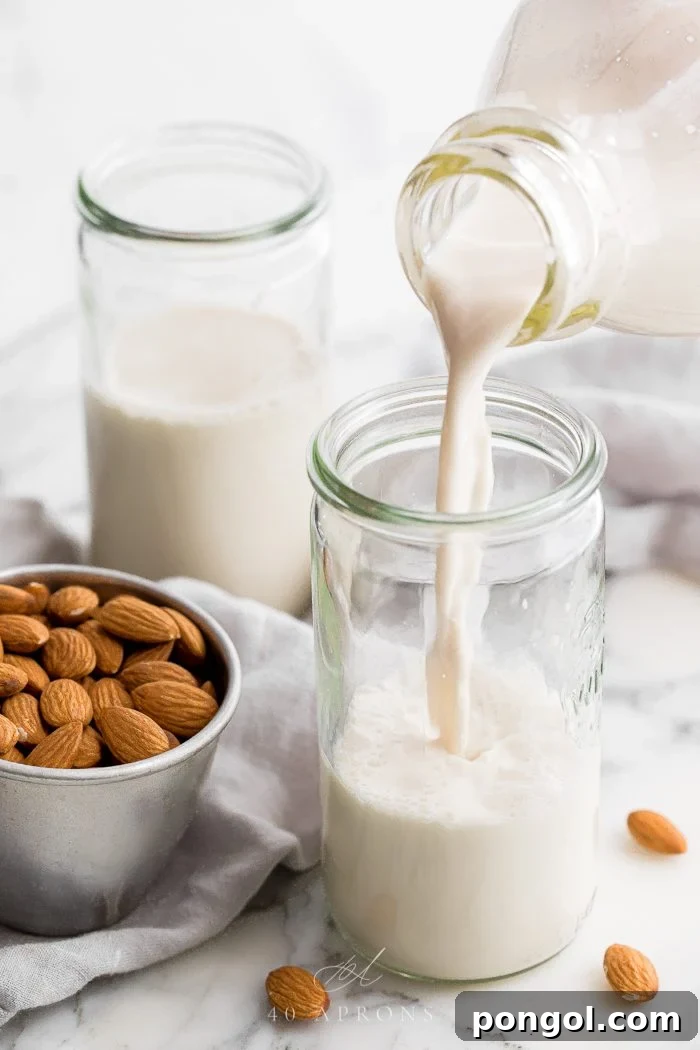
Now that you’ve mastered how to make almond milk, proper storage is key to keeping it fresh and delicious. Store your rich and creamy dairy-free milk in an airtight glass or metal container, preferably a bottle with a tight-fitting lid for easy pouring. This helps to prevent absorption of other fridge odors and keeps it fresher longer.
Homemade almond milk will typically last for 3-5 days in the refrigerator. It’s always best enjoyed fresh. Because it contains no stabilizers or emulsifiers, natural separation will occur; the heavier almond solids will settle at the bottom. This is perfectly normal! Just give it a good shake before each use to recombine everything and restore its creamy consistency.
Ways to Enjoy Your Homemade Almond Milk
The versatility of homemade almond milk is endless! Once you taste its superior creaminess and freshness, you’ll want to use it everywhere:
- Coffee & Tea: A perfect dairy-free creamer for your morning brew. For an extra rich creamer, use slightly less water in your recipe.
- Smoothies: The ideal base for any fruit, vegetable, or protein smoothie.
- Cereal & Oatmeal: Drench your favorite breakfast cereals or warm oatmeal for a nutritious start to the day.
- Baking: A fantastic substitute for dairy milk in cakes, muffins, pancakes, and waffles.
- Savory Dishes: Use it to lighten creamy soups, sauces, or even in mashed potatoes for a plant-based twist.
- Lattes & Hot Drinks: Create delicious homemade lattes, golden milk, or hot cocoa.
Nutritional Benefits of Homemade Almond Milk
Beyond its incredible taste and versatility, homemade almond milk offers a range of nutritional benefits:
- Rich in Vitamin E: Almonds are an excellent source of vitamin E, a powerful antioxidant that helps protect cells from oxidative damage.
- Healthy Fats: Almonds contain monounsaturated fats, which are considered heart-healthy and can help lower bad cholesterol levels.
- Low in Calories & Sugar: When made plain at home, almond milk is naturally low in calories and completely free of added sugars, making it a great choice for weight management or blood sugar control.
- Dairy-Free & Lactose-Free: It’s a perfect alternative for those with lactose intolerance or dairy allergies, or anyone following a vegan diet.
- Source of Magnesium: Almonds provide magnesium, important for muscle and nerve function, blood sugar control, and blood pressure regulation.
Recipe: How to Make Almond Milk (In 5 Minutes)
This quick and easy recipe yields super rich and creamy almond milk with healthy, pronounceable ingredients in just five minutes. Perfect for all your dairy-free needs!
Cheryl Malik
How to Make Almond Milk (In 5 Minutes)
5 minutes
5 minutes

Cheryl Malik
Yields:
4 cups
Equipment
-
High-speed blender
-
Nut milk bag or cheesecloth and strainer
-
Airtight glass or metal container
Ingredients
- 1 cup raw almonds
- 4-5 cups filtered water
For Vanilla Almond Milk (Optional)
- 1-2 dates pitted, to taste
- 1 teaspoon vanilla extract
- Pinch of sea salt
Instructions
-
Combine all ingredients (raw almonds, 4 cups water, and optional dates/vanilla if using) in a high-speed blender. Cover and blend on high for 2 minutes until the mixture is completely smooth and creamy. If desired, add the remaining 1 cup of water gradually to achieve your preferred consistency.
-
Place a nut milk bag or a strainer lined with 2-3 layers of cheesecloth over a large bowl or pitcher. Carefully pour the blended almond mixture into the bag/cheesecloth.
-
Gather the top of the nut milk bag or cheesecloth and firmly squeeze out all the liquid into the bowl. Continue squeezing until no more milk can be extracted from the almond pulp.
-
Discard the almond pulp or save it for another recipe. Transfer the fresh homemade almond milk to an airtight glass or metal container and store it in the refrigerator.
For a lightly sweetened vanilla almond milk: Use the almonds, water, 1-2 pitted dates (to taste), and 1 teaspoon vanilla extract.
For an extra rich almond creamer: Start with 2½ cups of water and gradually add more up to 3½-4 cups, depending on your desired thickness.
For Whole30 compliance: Omit dates and vanilla extract, as these are not Whole30 approved.
Approximate Nutrition Information for One Serving
Serving Size: 1 cup
Calories: 213 kcal
Protein: 8 g
Fat: 18 g
Saturated Fat: 1 g
Sodium: 13 mg
Potassium: 264 mg
Total Carbs: 9 g
Fiber: 5 g
Sugar: 3 g
Net Carbs: 4 g
Calcium: 102 mg
Iron: 1.3 mg
Nutrition Disclaimers
Number of total servings shown is approximate. Actual number of servings will depend on your preferred portion sizes.
Nutritional values shown are general guidelines and reflect information for 1 serving using the ingredients listed, not including any optional ingredients. Actual macros may vary slightly depending on specific brands and types of ingredients used.
To determine the weight of one serving, prepare the recipe as instructed. Weigh the finished recipe, then divide the weight of the finished recipe (not including the weight of the container the food is in) by the desired number of servings. Result will be the weight of one serving.
Did You Make This Recipe?
We’d love to see your creations! Tag @40aprons on Instagram and be sure to leave a review and comment on this blog post to share your experience!
Other Delicious Recipes You’ll Love:
- Iced Golden Milk Latte
- One Minute Whole30 Mayo
- Miracle Maca Latte Recipe
- Whole30 Ketchup Recipe