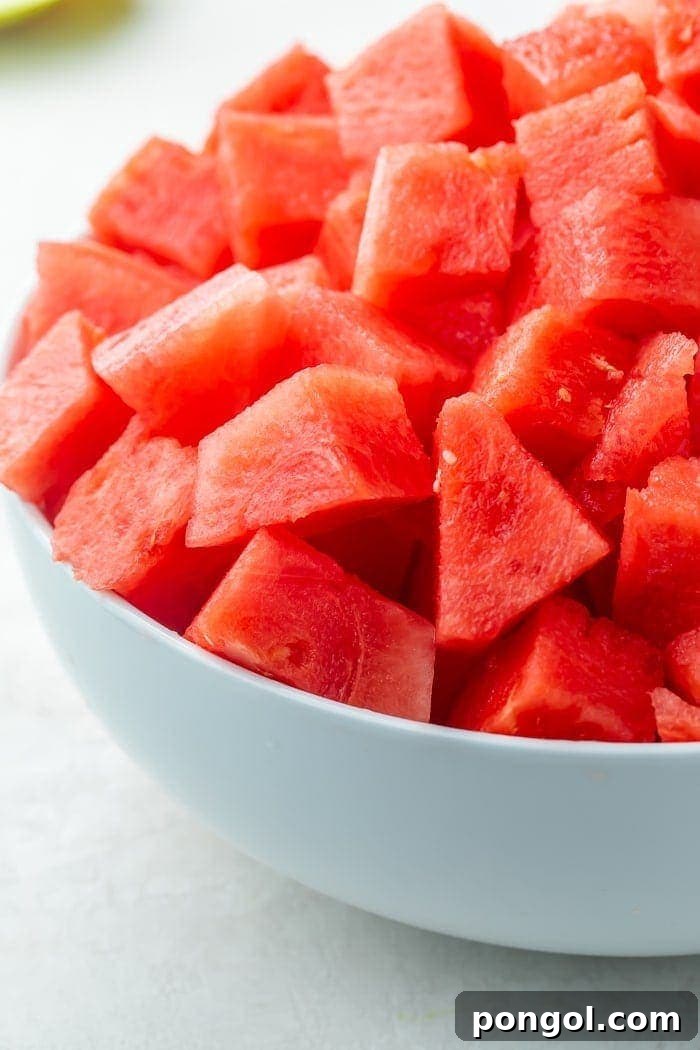
The Ultimate Guide to Effortless Watermelon Cutting (and How to Pick the Perfect One!)
There’s nothing quite like a juicy, refreshing slice of watermelon on a hot summer day. Yet, the sheer size and thick, green rind of this beloved fruit can often make the task of cutting it seem daunting, even for experienced home cooks. Many shy away from buying whole watermelons, opting for pre-cut versions that often lack freshness and come with a higher price tag. But what if we told you there’s a method that makes cutting a watermelon incredibly easy, safe, and efficient, ensuring you get perfect cubes or slices every single time? This comprehensive guide will demystify the process, transforming your watermelon-cutting experience from a dreaded chore into a simple, satisfying task. Get ready to enjoy this quintessential summer fruit with newfound confidence!
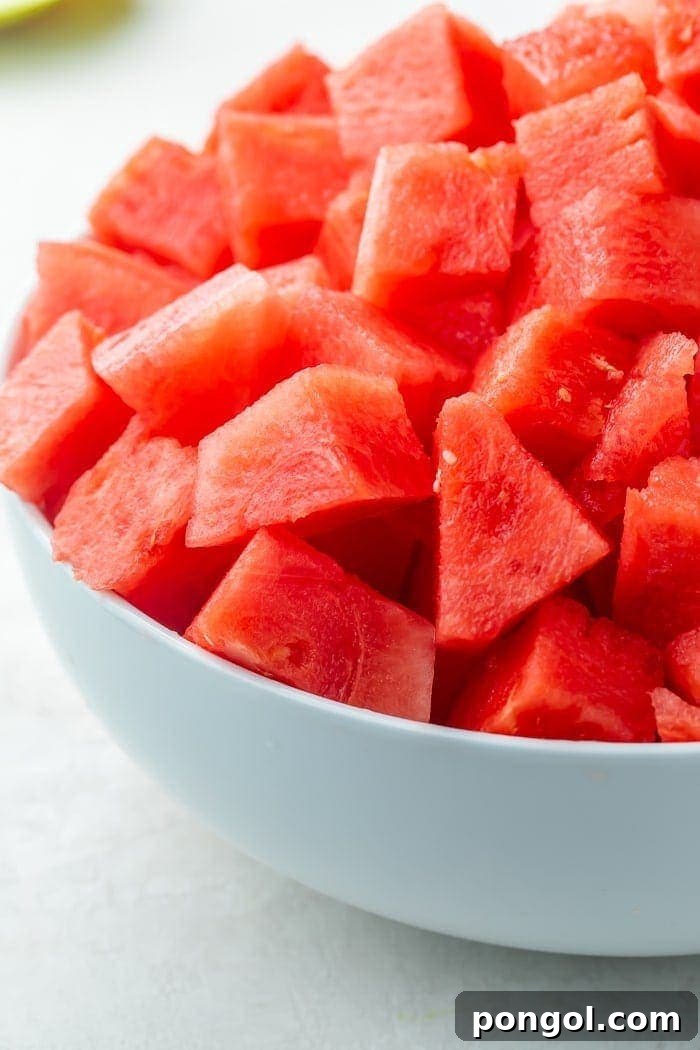
Step-by-Step: How to Cut a Watermelon Like a Pro
This method focuses on stability and efficiency, allowing you to remove the rind and cut the flesh into uniform pieces with minimal effort and maximum safety. Follow these steps, and you’ll be a watermelon-cutting expert in no time!
Step 1: Prepare Your Workspace and Stabilize the Watermelon
Before you begin, ensure you have a large, sturdy cutting board and a sharp chef’s knife. A dull knife is actually more dangerous as it requires more force and is prone to slipping. Place your watermelon on its side. For optimal stability, carefully slice off both ends of the watermelon. Aim for flat, even cuts, removing just enough rind to expose the pink flesh beneath. These flat surfaces will be crucial for keeping the watermelon steady during the subsequent steps, preventing it from rolling.
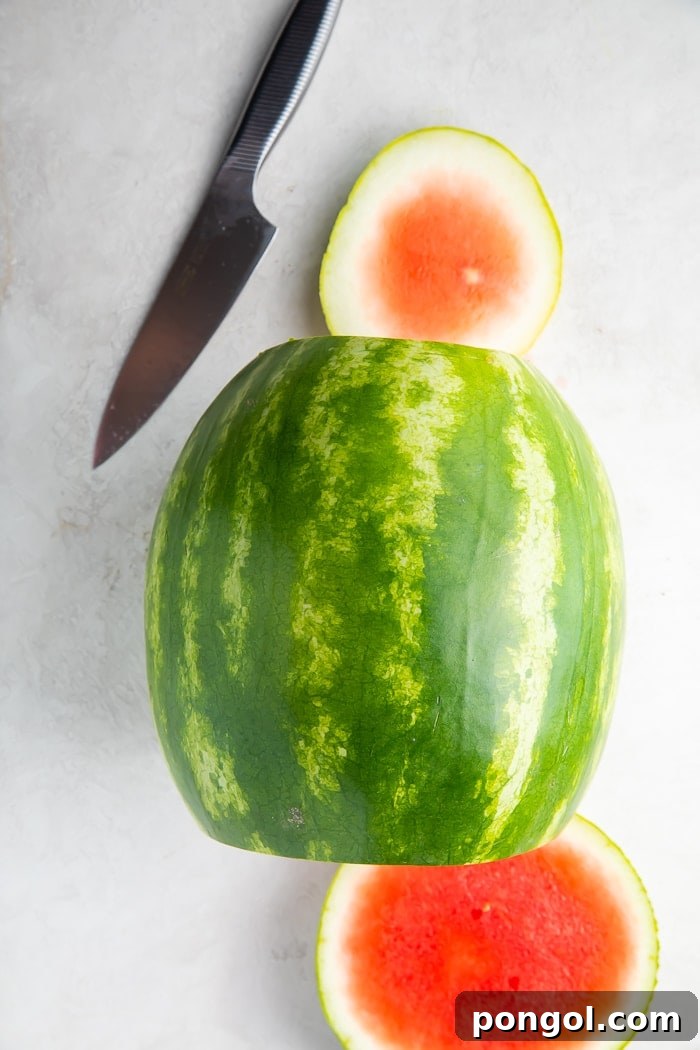
Step 2: Stand and Begin Rind Removal
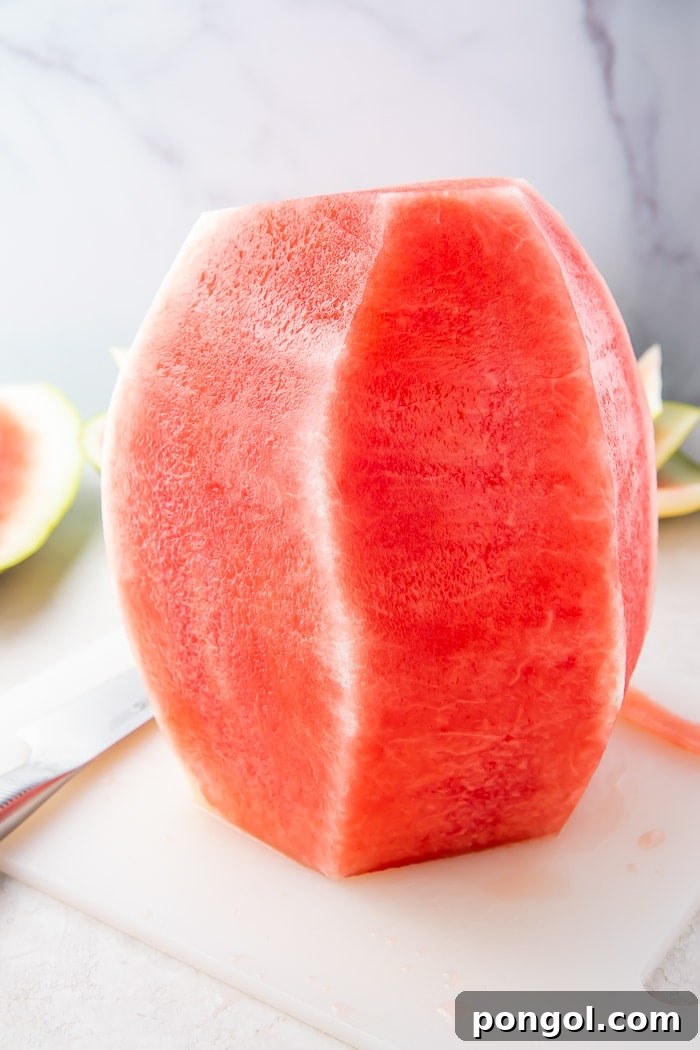
Once both ends are flat, stand the watermelon upright on one of the newly cut surfaces. This vertical position provides an incredibly stable base, making the next step much safer and easier. Holding the watermelon firmly, use your sharp knife to carefully cut downwards, following the natural curve where the green rind meets the pink flesh. Imagine you’re peeling a very large fruit like a pineapple or a large kiwi, guiding your knife along the curvature to remove strips of the green and white rind.
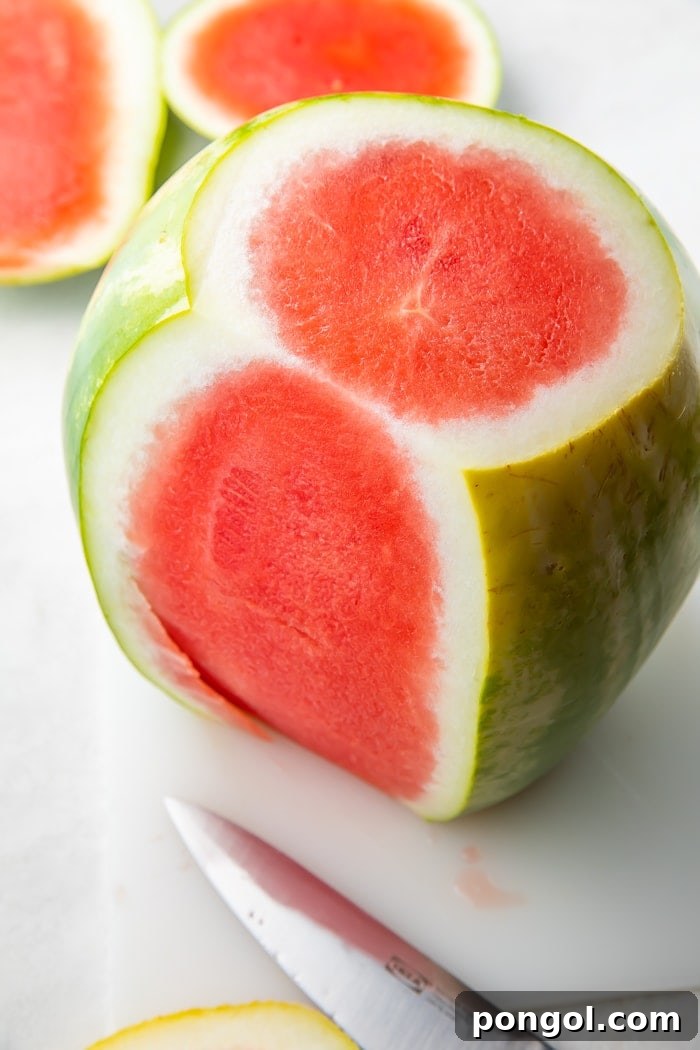
Step 3: Complete Rind Removal
Continue working your way around the entire watermelon, repeating the downward cutting motion until all the tough green rind has been removed. You’ll be left with a magnificent “naked” watermelon, showcasing its vibrant pink interior. Don’t worry if there are a few small white bits of the innermost rind clinging to the flesh – these are harmless and perfectly fine to consume or can be easily trimmed off with a paring knife if desired. The goal is to remove the majority of the hard, inedible green rind, leaving you with pure, delicious fruit.
Step 4: Slice into Uniform Sheets
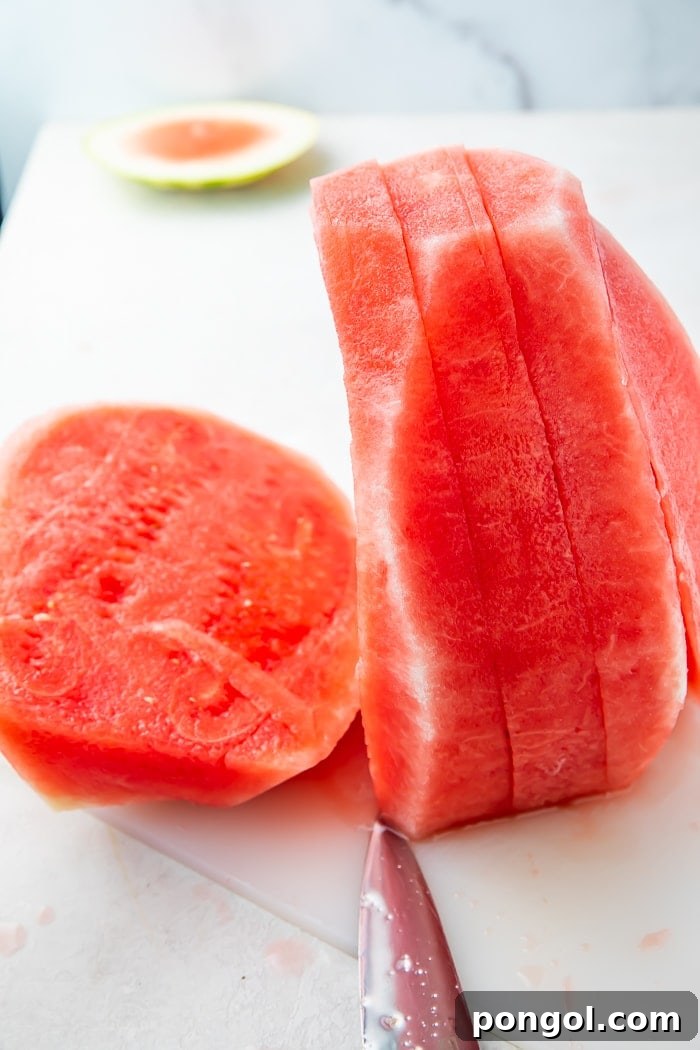
With the rind removed, lay the watermelon on its side on the cutting board. Now, slice the watermelon lengthwise into thick, uniform sheets. Aim for slices that are approximately 1 inch (2.5 cm) thick. Make sure your knife cuts all the way through the flesh. These consistent slices will be the foundation for creating perfectly sized cubes in the next step, ensuring even bites and an appealing presentation.
Step 5: Cube Your Watermelon with Precision
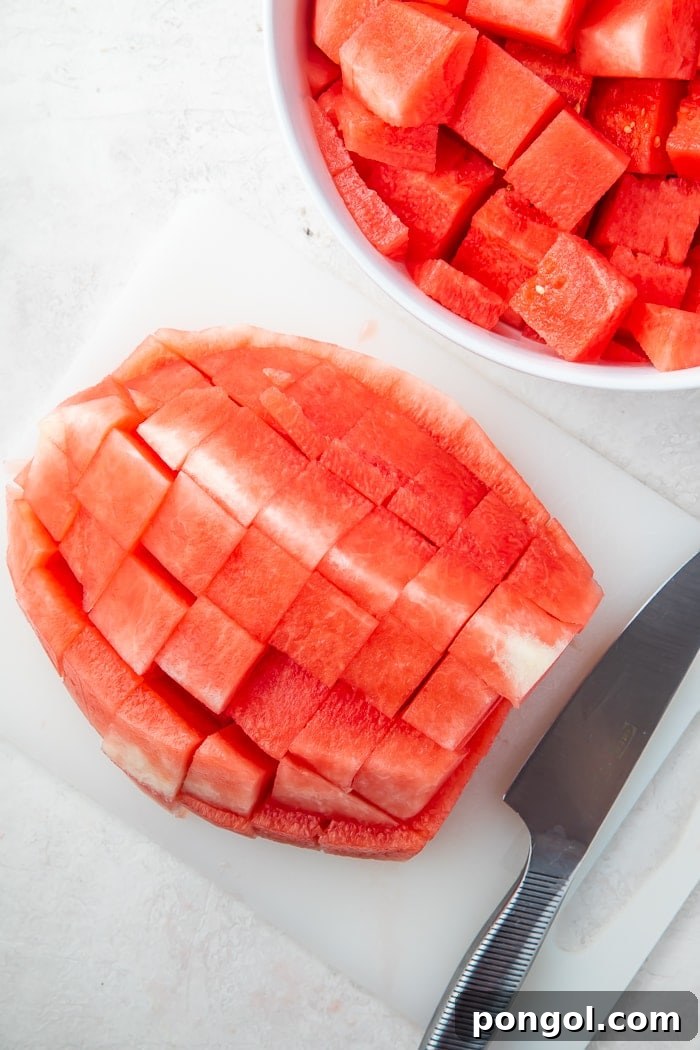
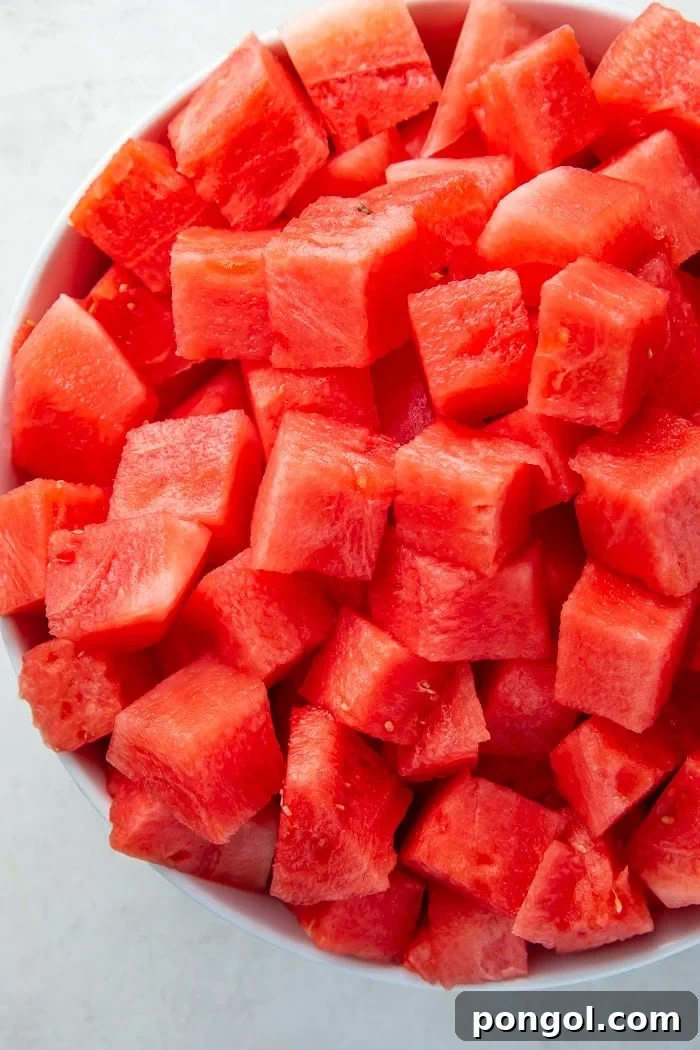
Now for the magic! Take half of the watermelon slices and stack them on top of each other. Place the stack with the broadest, most stable slice at the bottom (often the one closest to the center of the original melon). This helps maintain stability. Cut lengthwise down this stack, making parallel cuts about 1 inch (2.5 cm) apart. You’ll now have a series of long, thick sticks. Next, rotate the stack 90 degrees and make perpendicular cuts, again about 1 inch (2.5 cm) apart, creating a perfect grid pattern. This will yield beautiful, consistent 1-inch watermelon cubes. Transfer the cubed watermelon to a large bowl or airtight container. Repeat this cubing process with the remaining half of your watermelon slices. This method is incredibly efficient and results in perfectly portioned pieces ideal for snacking, salads, or fruit platters.
Top Tips For Cutting Watermelon Safely and Efficiently
Mastering the art of cutting watermelon goes beyond just following steps. Here are essential tips to ensure a safe, enjoyable, and efficient experience:
- Always Use a Large, Sharp Knife: This is paramount for safety and ease. A sharp knife glides through the thick rind and dense flesh of a watermelon with minimal effort. This means you’re less likely to exert excessive pressure, which reduces the risk of the knife slipping and causing injury. Conversely, a dull knife requires more force, increasing the chance of it veering off course or the tip snagging, leading to dangerous situations. A sharp blade also makes the entire process quicker and less tiring. Opt for a chef’s knife or a large utility knife with a blade length of at least 8-10 inches.
- Choose a Stable Cutting Surface: A large, non-slip cutting board is crucial. If your board tends to slide, place a damp paper towel or a non-slip mat underneath it to provide extra grip. This prevents the board (and your watermelon) from shifting during cuts, enhancing safety.
- Keep Your Fingers Tucked: When making cuts, always use the “claw” grip. Curl your fingertips inwards, holding the fruit with your knuckles pressed against the side of the knife blade. This protects your fingertips from accidental nicks.
- Consider Different Cuts: While cubes are popular, this method can also be adapted for other shapes. For sticks, simply perform the first set of lengthwise cuts (Step 5) and stop before the perpendicular cuts. For wedges, cut the peeled watermelon in half, then into quarters, and then slice each quarter into desired wedge sizes.
- Store Properly: Once cut, watermelon should be stored in an airtight container in the refrigerator. This helps maintain its freshness and prevents it from absorbing odors from other foods. It typically stays fresh for 3-5 days.
- Don’t Waste the Rind (Optional): The white part of the rind, while often discarded, is actually edible and nutritious. It can be pickled, stir-fried, or even juiced. While the green exterior is not typically eaten, the inner white layer offers a subtle crunch and unique flavor when prepared correctly.
How To Pick A Perfect, Sweet Watermelon Every Time
The secret to the best watermelon experience starts long before you pick up a knife. Choosing a ripe, sweet, and juicy watermelon is an art form, but these simple steps will guide you to success:
- Look for a Creamy Yellow “Field Spot”: This is the most reliable indicator of ripeness. The field spot is the part of the watermelon that rested on the ground as it ripened. A truly ripe watermelon will have a creamy, buttery yellow, or even an orange-yellow spot. If the spot is white or non-existent, the watermelon was likely picked too early and won’t be as sweet.
- Pick a Heavy Watermelon for Its Size: Heft is a good sign of juiciness. Regardless of whether you’re choosing a large or small watermelon, it should feel heavy relative to its size. A heavy watermelon indicates it’s full of water and perfectly ripe flesh, not hollow or dried out.
- Listen for a Deep, Hollow Sound: Give the watermelon a good tap or thump with your open palm. A ripe watermelon will produce a deep, hollow sound, almost like a drum. If it sounds dull, muted, or flat, it might be overripe or underripe. Practice on a few to get a feel for the right sound!
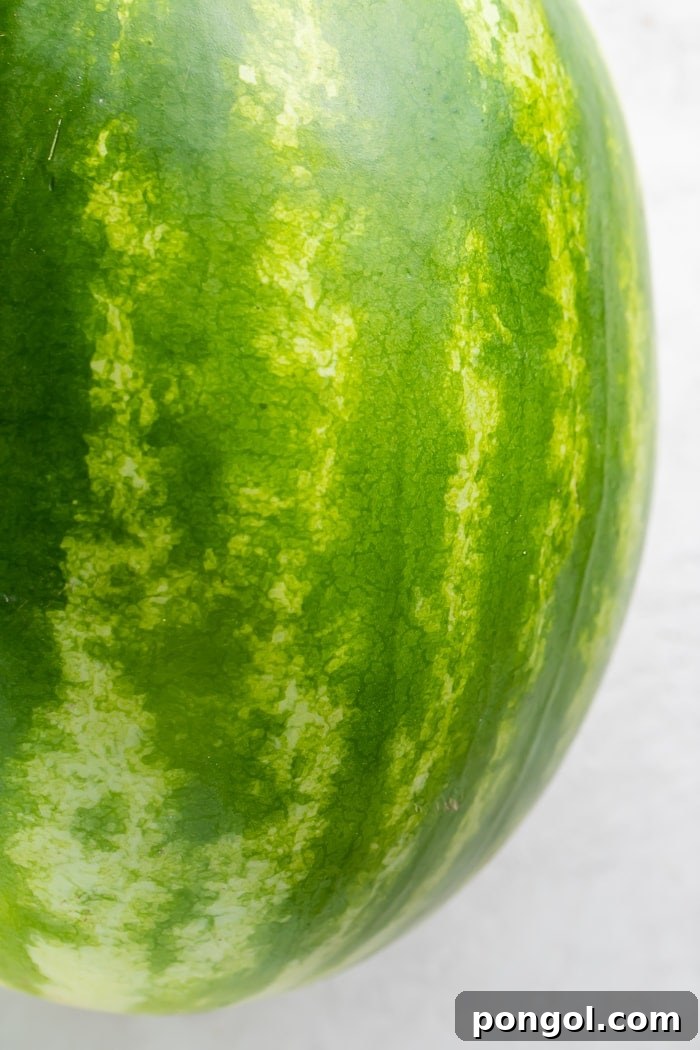
- Check for Dullness, Not Shininess: While a shiny watermelon might look appealing, it often indicates an underripe fruit. A ripe watermelon tends to have a dull appearance.
- Inspect the Stem: A dry, brown stem indicates that the watermelon naturally ripened and detached from the vine. A green stem might suggest it was picked prematurely.
- Feel for Symmetry: While not a direct indicator of sweetness, a symmetrical watermelon generally suggests it received consistent sunlight and water, leading to more even ripening.
The Wonderful Benefits of Watermelon
Beyond its incredible taste and refreshing qualities, watermelon is packed with nutritional benefits that make it a fantastic addition to any diet:
- Excellent Hydration: Comprising over 92% water, watermelon is incredibly hydrating, making it perfect for replenishing fluids, especially during hot weather or after exercise.
- Rich in Vitamins: It’s a great source of Vitamin C, which supports immune function and skin health, and Vitamin A, essential for vision.
- Loaded with Lycopene: Watermelon is one of the best dietary sources of lycopene, a powerful antioxidant that gives fruits and vegetables their red color. Lycopene is associated with heart health, bone health, and protection against certain types of cancer.
- Contains Electrolytes: Watermelon provides important electrolytes like potassium, which aids in nerve and muscle function and helps maintain fluid balance.
- Supports Digestion: The high water and fiber content in watermelon contribute to healthy digestion and can help prevent constipation.
- Low in Calories: Despite its sweet taste, watermelon is relatively low in calories, making it a guilt-free treat.
Frequently Asked Questions About Watermelon
- How long does cut watermelon last? Freshly cut watermelon, stored in an airtight container in the refrigerator, will typically last for 3 to 5 days. After that, it may start to lose its crispness and flavor.
- Can I freeze watermelon? Yes, you can! Watermelon can be frozen, though its texture will change once thawed, becoming softer and slightly mushier. It’s best used in smoothies, sorbets, or frozen cocktails after thawing. To freeze, cut into cubes, lay them on a baking sheet to freeze individually, then transfer to a freezer-safe bag for up to 6-8 months.
- What if my watermelon isn’t ripe? Unfortunately, watermelons do not continue to ripen significantly after being picked. If you’ve chosen an unripe one, it will remain mostly firm and lacking in sweetness. You can try to enhance its flavor by sprinkling a little salt or lime juice on it, or use it in savory dishes like salads with feta and mint.
- Is it okay to eat the white part of the rind? Absolutely! The pale green/white part of the rind is edible and quite nutritious. It has a mild flavor and a crunchy texture similar to a cucumber. It’s often used in pickling, stir-fries, or even blended into smoothies.
- How can I make seedless watermelon easier to eat? While the method described here works for both seeded and seedless varieties, seedless watermelons naturally make the eating process even easier as there’s no need to contend with seeds. If you have a seeded watermelon, cutting it into sticks or wedges can sometimes make it simpler to remove seeds as you eat.
More How-To Guides From Pongol
Looking to master more kitchen skills or simplify everyday tasks? Check out these helpful guides:
- How To Boil Corn to Perfection
- Discover How Much Juice is in One Lime
- Embrace a Digital Detox: Your Guide to Unplugging
- Maintaining a Healthy Lifestyle When You’re Stuck at Home
With this ultimate guide, you’re now equipped with all the knowledge to confidently select, cut, and enjoy watermelon all season long. Say goodbye to intimidation and hello to perfectly prepared, refreshing fruit. Happy cutting!