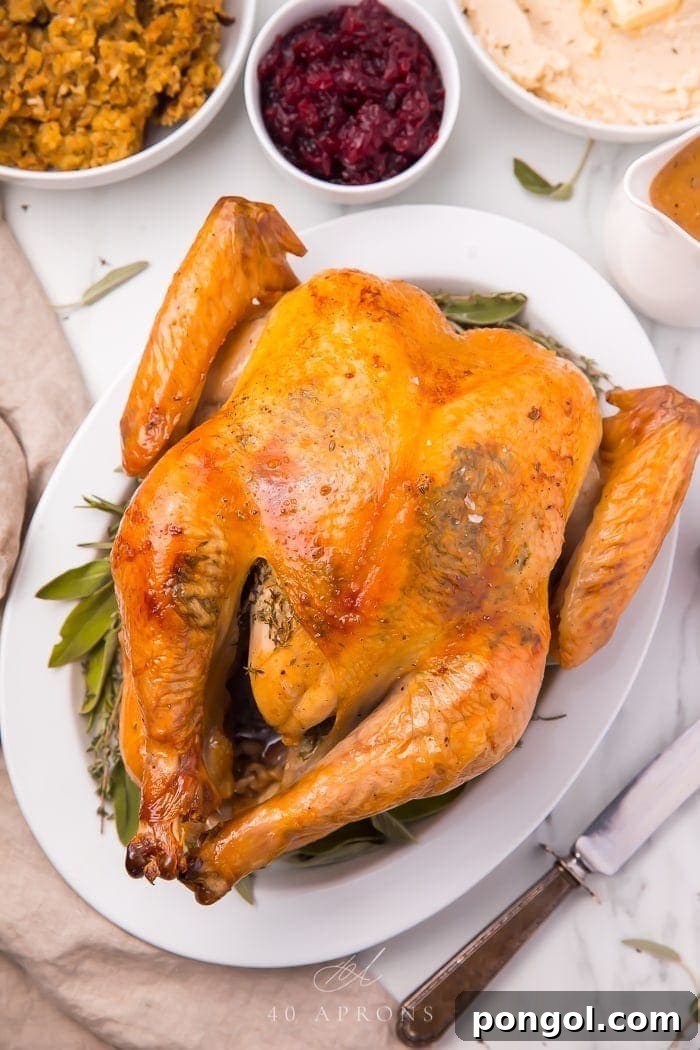
Unlock the secrets to preparing the most **perfectly roasted turkey** and crafting a luscious, velvety gravy that will elevate your holiday feast. This isn’t just another turkey recipe; it’s a meticulously developed guide using specific, proven techniques and ingredients designed to deliver an unbelievably **juicy, tender, and flavorful turkey** that your guests will rave about for years to come. Guaranteed to be the star of your Thanksgiving or Christmas dinner!
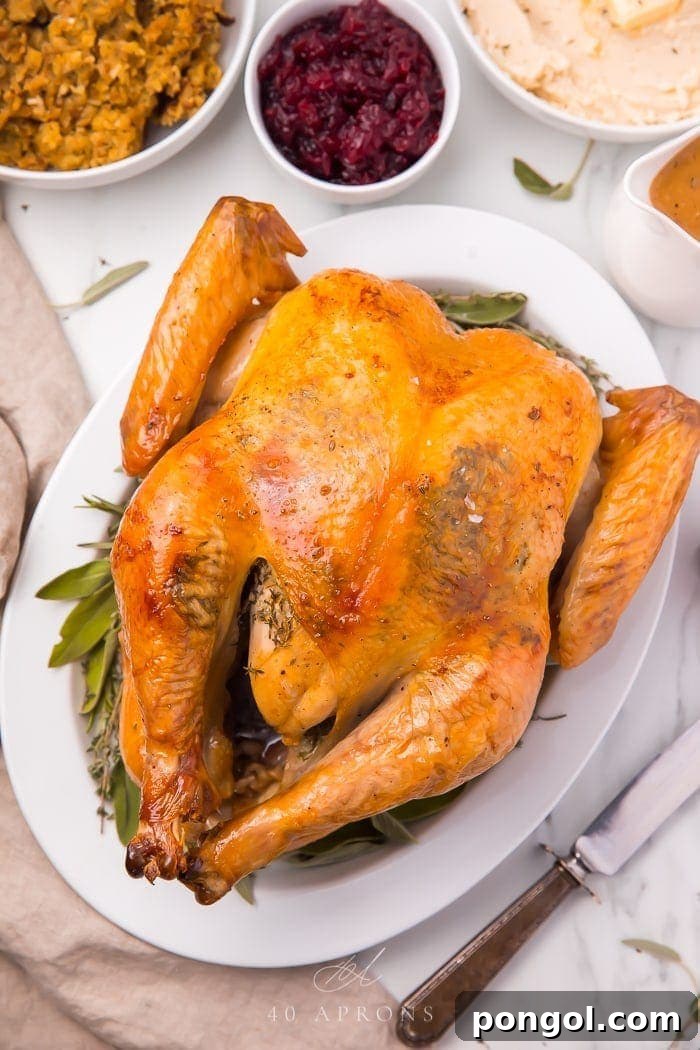
Planning your holiday meal and wondering how much turkey you’ll need to feed everyone? Ensuring you have enough delicious turkey for all your guests is crucial. For detailed guidance on serving sizes, you can find a helpful breakdown in this comprehensive post on how much turkey per person.
Why This Ultimate Holiday Turkey Recipe Stands Out
There’s a reason this turkey recipe has become a holiday favorite, transforming apprehensive home cooks into confident culinary masters. It’s not just about cooking a turkey; it’s about creating an unforgettable centerpiece that delights with every bite. Here’s why this method is simply the best for your festive table:
- This recipe doesn’t just promise a good turkey; it **guarantees a perfect turkey every single time**. You can expect a **succulent, incredibly flavorful** bird with crispy skin and tender meat, making it a genuine crowd-pleaser that will impress even the most discerning palates.
- The secret to its unparalleled moisture is a **12-hour brining process**. This crucial step infuses the turkey with flavor and ensures it remains wonderfully **juicy and moist**, preventing the dry, bland results often associated with roasted turkeys.
- Despite its gourmet results, this recipe calls for only a handful of **simple, accessible ingredients**. You don’t need exotic spices or complex preparations to achieve a remarkably tasty turkey; the magic lies in the technique.
- It’s the quintessential recipe for your most important holiday gatherings, making it the **perfect centerpiece for both Thanksgiving and Christmas** celebrations. Deliver a culinary experience that becomes a cherished tradition.
- Beyond the exceptional taste, this method simplifies the roasting process, breaking it down into manageable steps that even novice cooks can follow with confidence, leading to a stress-free holiday meal preparation.
- The complementary **rich, homemade gravy recipe** ensures no pan drippings go to waste, creating a savory accompaniment that perfectly complements the turkey, tying the entire meal together beautifully.
How to Achieve the Perfect Roast Turkey: A Step-by-Step Guide
Preparing a show-stopping turkey doesn’t have to be intimidating. By following these tried-and-true steps, you’ll be well on your way to a gorgeously golden, incredibly moist, and utterly delicious roast turkey. Let’s break down the process into its essential phases:
Brine for Unmatched Juiciness: The Day Before Roasting
Brining is the cornerstone of a moist turkey. This simple solution of salt and water infuses the meat with flavor and helps it retain moisture during the roasting process, preventing it from drying out.
- **Prepare the Brine (Morning of Day 1):** Start early on the day before you plan to roast your turkey. In a large container, thoroughly mix the specified amount of salt and water until the salt is completely dissolved. This creates the essential flavor-enhancing solution.
- **Submerge the Turkey:** Carefully place a large brining bag inside a sturdy 5-gallon bucket. Gently lower your turkey into the bag, breast-side down, ensuring it’s fully submerged in the brine. It’s crucial that no part of the bird is exposed to the air. Seal the brining bag securely, cover the bucket, and transfer it to the refrigerator. If refrigerator space is limited, a well-insulated cooler filled with ice can serve as an excellent alternative, maintaining a safe temperature.
- **Refrigerate for 12 Hours:** Allow the turkey to brine for a full 12 hours. This duration is optimal for maximum flavor penetration and moisture retention without making the turkey overly salty.
- **Rinse and Pat Dry:** After 12 hours, remove the turkey from the brine. Rinse it thoroughly under cold running water, both inside and out, to remove any excess salt from the surface. Pat the turkey completely dry with paper towels, paying special attention to the cavity. A truly dry surface is essential for achieving crispy skin.
Air-Dry for Crispy Skin: Overnight Prep
This often-overlooked step is critical for developing that coveted crispy, golden-brown skin. Air-drying overnight draws out surface moisture, creating the perfect canvas for roasting.
- **Overnight Air-Drying:** Once thoroughly dried, place the turkey back into the refrigerator, uncovered, in a large roasting pan. Allow it to air-dry overnight (or for at least 8 hours). This process dehydrates the skin, which is the key to achieving a beautifully crispy exterior during roasting.
Roast to Golden Perfection: The Big Day
The roasting process combines careful preparation with precise timing to yield a tender, juicy turkey with irresistible, golden skin.
- **Preheat Your Oven:** On the day of roasting, begin by preheating your oven to a consistent 350 degrees Fahrenheit (175 degrees Celsius). Accurate oven temperature is vital for even cooking.
- **Prepare the Herb Butter:** In a small bowl, combine softened unsalted butter with freshly minced garlic and chopped thyme. Mix until well combined and pliable. This aromatic butter will infuse incredible flavor directly into the turkey meat.
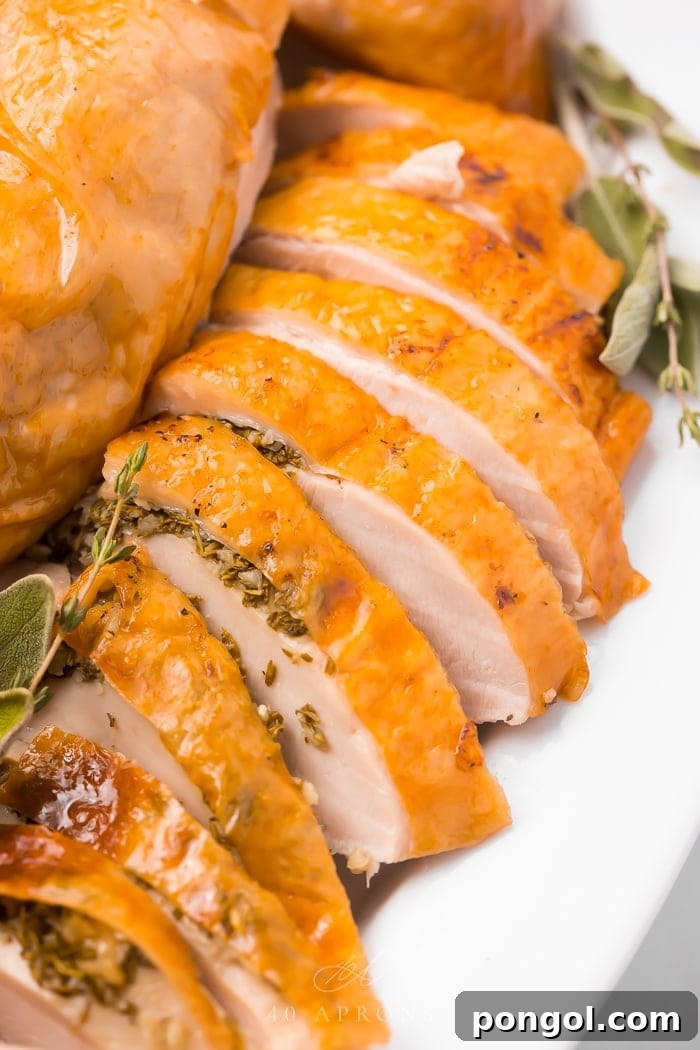
- **Flavor Under the Skin:** Gently, using your fingers, separate the skin from the turkey breast meat. Don’t be afraid if you break a small membrane; it’s perfectly normal. Carefully rub the fragrant butter mixture directly onto the turkey breast meat, beneath the skin. This ensures the white meat stays incredibly moist and flavorful.
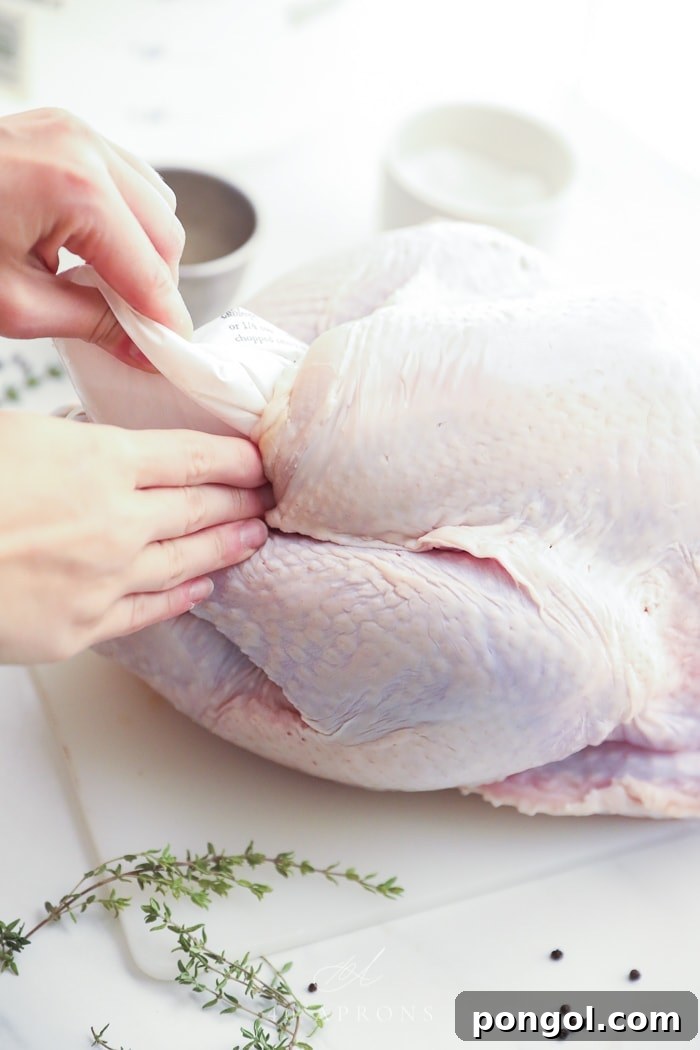
- **Truss for Even Cooking:** Securely truss the turkey using kitchen twine. This simple step helps the turkey cook more evenly and results in a more appealing presentation on your serving platter.
- **Season the Exterior:** Rub the outside of the turkey’s skin with a high-temperature neutral oil, such as avocado oil, and season generously with freshly ground black pepper. **Important:** Resist the urge to add more salt! Your turkey has already absorbed plenty of salt during the brining process, ensuring it’s perfectly seasoned from within.
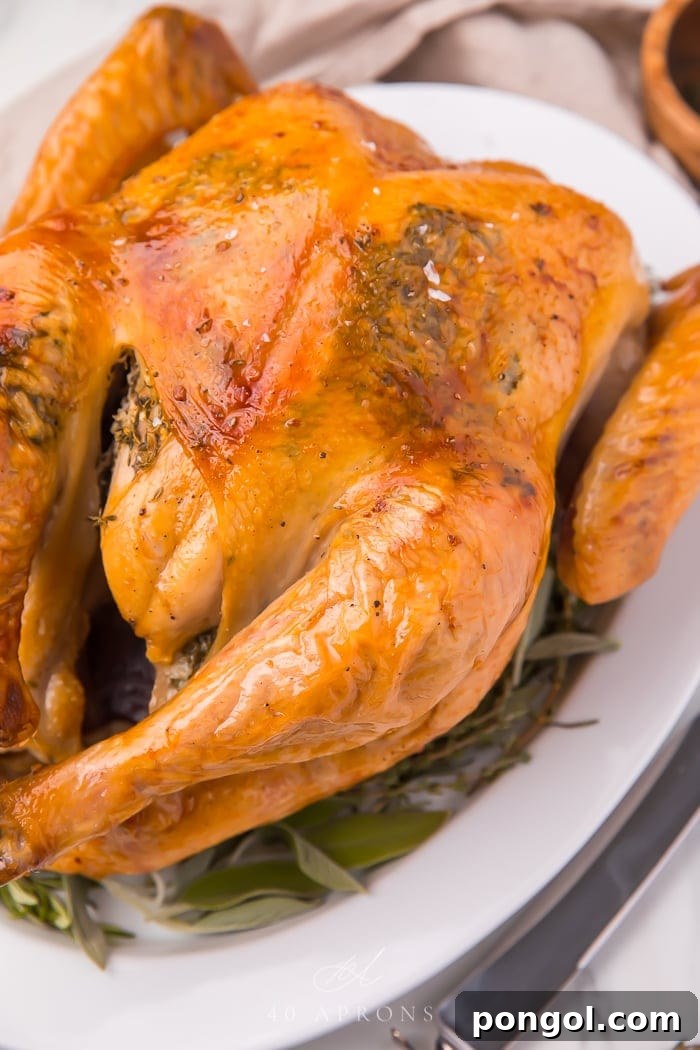
- **Initial Breast-Down Roast:** Place the turkey in your roasting pan, breast-side down, and roast for 2 hours. Roasting breast-down initially allows the juices to flow into the breast meat, keeping it exceptionally moist.
- **Flip and Finish:** After 2 hours, carefully flip the turkey so it is breast-side up. Return it to the oven and continue roasting for another 30 minutes. This final stage will perfectly brown the breast skin, giving it that irresistible golden, crispy finish.
- **Rest and Carve:** Once cooked, remove the turkey from the oven and transfer it to a large cutting board. Tent it loosely with aluminum foil and let it rest for at least 20 minutes (up to 40 minutes for larger birds). Resting is crucial; it allows the juices to redistribute throughout the meat, ensuring every slice is tender and juicy. After resting, carve the turkey and serve immediately.
Homemade Pan Gravy: The Perfect Accompaniment
No holiday turkey is complete without a rich, savory gravy. This recipe utilizes the flavorful drippings from your roasting pan to create an unbelievably delicious gravy that will be the crown jewel of your meal.
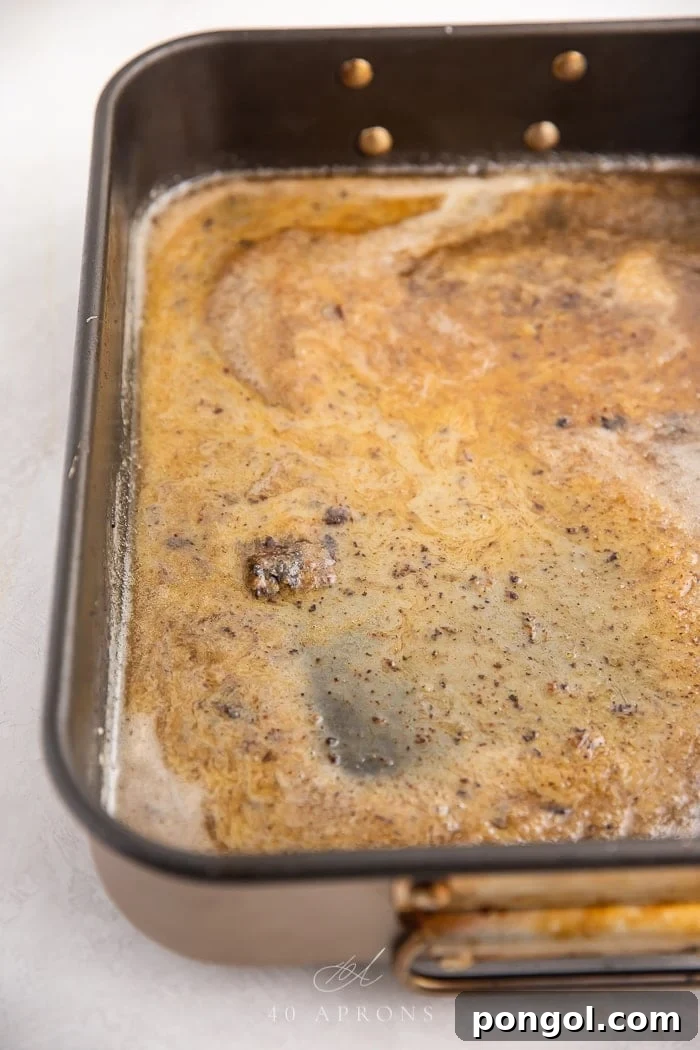
- **Start the Gravy:** While your perfectly roasted turkey is resting, carefully place the roasting pan directly onto a burner over low heat. Sprinkle in the all-purpose flour and stir constantly, scraping up any delicious browned bits (fond) from the bottom of the pan. This creates a flavorful roux that will thicken your gravy.
- **Gradually Add Stock:** Slowly pour in the turkey stock, stirring continuously to prevent lumps and ensure a smooth consistency. As the mixture heats, it will begin to thicken.
- **Simmer and Perfect:** Transfer the gravy mixture from the roasting pan to a small saucepan. Continue to simmer over low heat, stirring occasionally, until the gravy reaches your desired consistency. If you prefer a thicker gravy, you can simmer it longer; for a thinner gravy, add a splash more stock.
- **Season and Strain:** Taste the gravy and add additional freshly ground black pepper as needed. Before serving, pour the gravy through a fine-mesh sieve into a gravy boat or serving dish. This removes any small lumps or impurities, resulting in a perfectly smooth, restaurant-quality gravy.
Do You Really Need to Brine a Turkey? Understanding the Benefits
The question of whether to brine a turkey is a common one, and the answer is a resounding “yes” for most conventional birds. Brining involves soaking your turkey in a salt solution, which works through a process called osmosis to draw moisture and flavor into the meat. This simple step makes an enormous difference, resulting in a turkey that is significantly more moist, tender, and flavorful than an unbrined bird.
However, there are exceptions. If you purchase a kosher turkey, it has already been salted and processed with a high salt content, essentially pre-brining it for you. In this case, additional brining is unnecessary and could result in an unpleasantly salty bird. Similarly, many “self-basting” turkeys found in supermarkets are injected with a solution of water, salt, and other flavorings. While these can also yield a moist result without extra brining, a homemade brine often offers superior flavor control and depth.
So, the takeaway? If you opt for a standard, unbrined turkey, investing the time in a brine is highly recommended. It’s a simple process that yields incredible returns in terms of taste and texture. If time is a concern, consider a quicker brine recipe like my Quick Turkey Brine, which delivers similar benefits in less time. Don’t let the thought of a huge bucket in your fridge deter you from achieving that perfect, juicy holiday turkey!
Why Trussing Your Turkey is a Game-Changer
Trussing a turkey might sound like a daunting culinary technique reserved for professional chefs, but it’s actually a straightforward step that offers significant advantages. Tying your turkey, even with a simple method, is crucial for two main reasons: it promotes more even cooking and enhances the overall presentation of your festive bird.
When a turkey is left untrussed, its legs and wings can cook faster than the breast, leading to dry meat in some areas while others are still catching up. Trussing tucks the wings and ties the legs closer to the body, creating a more compact shape. This uniform shape allows the turkey to cook more evenly, ensuring that all parts reach the desired temperature simultaneously, preventing overcooked, dry sections.
Furthermore, a trussed turkey simply looks more appealing on your serving platter. It presents a neat, plump, and symmetrical appearance, which is particularly important for a holiday centerpiece. You don’t need a formal, elaborate truss; a simple technique using kitchen twine to loosely tie the legs together and tuck the wings underneath the body is perfectly sufficient. For a visual guide, check out this informative video from Alton Brown, demonstrating how to truss a turkey with ease.
The Secret to Crispy Skin: Air Chilling Your Turkey Overnight
After brining and rinsing, the next critical step for a truly exceptional turkey is air chilling it overnight in the refrigerator. While it might seem like an extra, unnecessary step, it is absolutely worth the effort and makes a noticeable difference in the final product.
Air chilling allows the surface of the turkey’s skin to dry out significantly. This dehydration is key to achieving that wonderfully crispy, golden-brown skin that everybody loves. If the skin remains moist, it will steam rather than roast, resulting in a rubbery texture instead of a crisp one. Beyond the skin, air chilling also helps to concentrate the turkey’s natural flavors, leading to a more intense and delicious taste. Furthermore, some culinary experts believe it contributes to an even juicier meat texture by further tightening the proteins on the surface.
So, plan ahead and ensure you allocate enough time for this crucial overnight air-drying process. It’s a simple passive step that pays huge dividends in terms of flavor, texture, and the overall success of your holiday roast.
The Butter-Under-Skin Technique: A Flavor and Moisture Boost
One of the most effective strategies for ensuring a succulent and incredibly flavorful turkey, especially the often-drier white meat, is to apply a seasoned butter mixture directly underneath the skin. While rubbing butter on top of the skin is common for browning, placing it beneath the skin offers far more profound benefits.
When butter is rubbed directly onto the meat, it melts slowly during roasting, basting the flesh from the inside out. This direct contact infuses the turkey meat with rich, aromatic flavors from the butter, garlic, and thyme. More importantly, the butter’s fat content creates a protective barrier, helping the delicate breast meat retain its natural moisture and preventing it from drying out. This technique guarantees a juicier, more tender result than you might have thought possible, transforming potentially bland white meat into a savory delight.
For an extra layer of richness and to achieve that beautiful, crispy exterior, you can also lightly rub some butter over the top of the skin. However, the true magic for moisture and flavor happens beneath the surface.
The Essential Tool: Why a Probe Thermometer Guarantees Success
Forget the guesswork and outdated “juices run clear” tests. The single most important tool in your arsenal for cooking the most succulent and juicy turkey is a reliable probe thermometer. Even if your turkey comes with a pop-up thermometer, professional-grade results are achieved with a separate, accurate meat thermometer.
Here’s how to use it for optimal safety and juiciness:
- **Accurate Placement:** Insert the thermometer into the thickest part of the turkey’s thigh, ensuring it’s close to the bone but not touching it. The bone can give an inaccurate, higher reading.
- **Double-Check (Optional but Recommended):** Since we start roasting breast-side down, it’s a good practice to also check the temperature underneath the wing, another thick part of the bird.
- **The Magic Number:** The internal temperature should register 165°F (74°C). This is the safe temperature recommended by food safety authorities for poultry.
- **The Power of Resting:** Once the turkey reaches 165°F, remove it from the oven and allow it to rest for at least 20 minutes (or even up to 40 minutes for larger turkeys). During this crucial resting period, the internal temperature will continue to rise by several degrees, a phenomenon known as “carryover cooking,” while the juices redistribute throughout the meat, resulting in an exceptionally tender and moist bird.
Relying on the “juices run clear” method is risky. Juices can appear clear before the turkey reaches a safe temperature, and conversely, some turkeys may still show a slight pinkness even after safely reaching 165°F. A meat thermometer eliminates all doubt and ensures a safe, perfectly cooked turkey every time.
Some experienced cooks prefer to remove the turkey at a slightly lower temperature, around 150-155°F (65-68°C), anticipating it will rise to 165°F during resting. While this *can* result in an even juicier turkey, it carries a higher risk of not reaching the safe temperature, especially with conventional birds. If you choose this method, it is best done with an organic or heritage turkey from a trusted source, where the bird’s health history is more transparent. For most home cooks, sticking to 165°F in the oven is the safest and most reliable approach.
The Surprising Advantage: Why Starting with a Frozen Turkey Can Be Better
It sounds counterintuitive, perhaps even blasphemous to some foodies, but there’s compelling evidence that starting with a frozen turkey can actually lead to a moister final product than a fresh one. This insight comes from extensive testing by culinary experts like those at Cook’s Illustrated, who found that frozen turkeys often outperform their fresh counterparts in terms of moisture and tenderness.
The science behind this phenomenon lies in temperature fluctuations. “Fresh” turkeys, when refrigerated, often experience varying internal temperatures during storage and transport, which can cause muscle fibers to contract and release moisture. Frozen turkeys, however, maintain a consistent, stable temperature until they are intentionally thawed. This steady state helps preserve the integrity of the muscle cells, leading to less moisture loss and a more tender texture once cooked.
Of course, if “fresh” means a truly pasture-raised turkey from a local farm, freshly processed just before you buy it, then that’s undoubtedly the superior choice. The quality and flavor of such a bird are unparalleled. But for the vast majority of turkeys available in supermarkets, opting for a frozen bird might be your best bet for a consistently juicy and tender result. Just be sure to allow ample time for proper thawing.
Additional Essential Tips for Turkey Roasting Success
Beyond the core recipe, a few extra considerations can make your turkey roasting experience smoother and even more successful:
- **Plan for Thawing:** If you’re using a frozen turkey, adequate thawing time is crucial. As a general rule, allow approximately 24 hours of refrigeration time for every 4-5 pounds of turkey. So, a 12-pound turkey will need at least three full days to thaw completely in the refrigerator. Never thaw a turkey at room temperature.
- **Serving Size Guideline:** When roasting a whole turkey, a good rule of thumb is to plan for one pound of turkey per person. If you want leftovers, or if your guests are big eaters, consider increasing this to 1.5 pounds per person.
- **Don’t Forget the Giblets!** This is a common mistake! Always remember to reach inside both cavities of the turkey and remove the neck and the bag of giblets (heart, liver, gizzard) before brining or roasting. These are often tucked away and can cause unpleasant smells or even safety issues if cooked inside the bird. You can use the neck and giblets to make a flavorful stock for your gravy.
- **Choose the Right Oil:** For rubbing the exterior of the turkey, select a high-temperature neutral oil. Avocado oil is an excellent choice as it has a high smoke point and won’t impart strong flavors, allowing the turkey’s natural taste to shine through. Other good options include grapeseed oil or light olive oil.
- **Gluten-Free Gravy Alternative:** If you or your guests follow a gluten-free or grain-free diet, easily adapt the gravy recipe. Simply swap the all-purpose flour for a gluten-free all-purpose flour blend or cassava flour. These alternatives will still create a thick, luscious gravy with a fantastic texture.
- **Basting: Is It Necessary?** Many recipes call for basting the turkey frequently. However, with this brining and butter-under-the-skin method, basting becomes largely unnecessary. Opening the oven door repeatedly actually lowers the oven temperature, extending cooking time and potentially leading to a drier bird. Trust the brining and butter to do their work!
Complete Your Feast: Delicious Dishes to Serve with Your Perfect Turkey
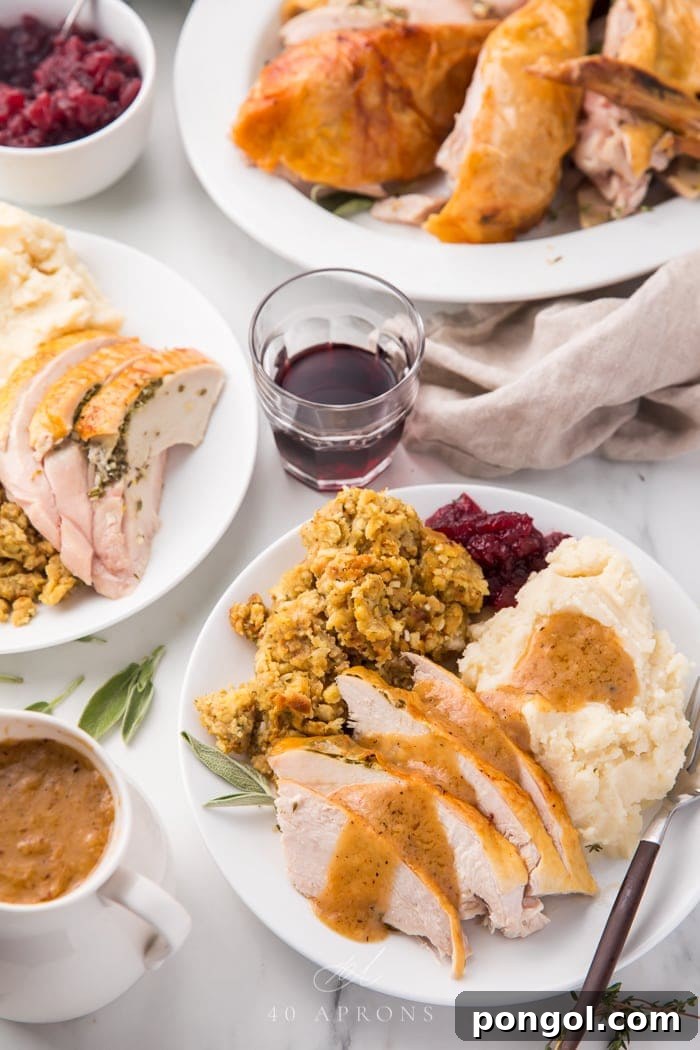
A magnificent turkey deserves equally magnificent companions. Here are some incredible side dishes that perfectly complement the rich flavors of your roast turkey and homemade gravy, ensuring a truly unforgettable holiday meal:
- The Best Paleo Stuffing
- Mom’s Cheesy Potato Casserole
- Ruth’s Chris Sweet Potato Casserole
- Green Beans with Bacon
- Cranberry Salsa
- Pineapple Stuffing
- Sweet Potato Cornbread with Cinnamon Honey Butter
- Cranberry Sauce with Rosemary and Orange
- Creamy Crockpot Mashed Potatoes
- Sweet Potato Casserole with Crunchy Pecans
- Whole30 Green Bean Casserole
You’ve mastered the perfect turkey! We’d love to hear about your experience. If you make this recipe, please consider leaving a star rating ★ below and a review. Share your culinary creations with us on Instagram, Pinterest, and Facebook, too!
Cheryl Malik
How to Cook A Turkey Perfectly (with gravy)
30 minutes
2 hours 30 minutes
13 hours
16 hours

Cheryl Malik
Save
Saved!
(toggle on to prevent screen dimming)
Equipment
-
5-gallon bucket
-
Large plastic brining bag
Ingredients
-
1 ½ cups table salt -
3 gallons water -
1 stick unsalted butter at room temperature -
6 cloves garlic minced -
6 tablespoons chopped thyme -
1 12-pound turkey thawed -
4 tablespoons
avocado oil
-
freshly ground pepper to taste -
8 tablespoons all-purpose flour -
4 cups turkey stock
Instructions
Brine the Turkey
-
The day before roasting, first thing in the morning, make your brine. Mix salt and water together until dissolved.
-
Place the brining bag in the bucket and put the bird in breast-side down. Pour the brine into the bag, making sure the entire bird is covered – no naked bits. Zip the bag up, cover, and put it in the fridge. If you don’t have space in your fridge, you can use a cooler.
-
Refrigerate for 12 hours.
-
Take the turkey out and rinse under cold water. Pat dry with paper towels, making sure to dry the inside of the cavity, too.
Air-Dry the Turkey
-
Return to the refrigerator in a roasting pan and let air-dry overnight.
Roast the Turkey
-
The day of roasting, preheat your oven to 350 degrees Fahrenheit.
-
Combine butter, garlic, and thyme in a bowl until soft. Set aside.
-
Carefully, using your fingers, peel the skin away from the turkey breast (you may have to break a membrane; that’s OK) and rub the butter mixture under the skin.
-
Truss the turkey.
-
Rub the outside of the skin with the oil and season pepper. I know, I know; it’s so hard not to sprinkle salt all over the skin at this point! But please, don’t. Your bird is already plenty salty from the brine!
-
Roast turkey breast down for 2 hours. After 2 hours, flip the turkey very carefully so that the breast side is up and return to the oven for 30 minutes to finish cooking and browning the skin on the breast.
-
Remove the turkey to a cutting board and cover with foil; let it rest for 20 minutes. Slice the turkey and serve hot.
For the Gravy
-
While the turkey is resting, put the roasting pan on a burner over low heat, sprinkle in the flour, and stir to incorporate any liquid in the pan.
-
Gradually add the turkey stock, stirring constantly. Transfer the gravy into a small pot, and simmer over low heat until it has the preferred consistency.
-
Add additional pepper to taste and strain the gravy through a fine-mesh sieve before serving.
Approximate Information for One Serving
Serving Size:
1
serving
Calories:
615
cal
Protein:
73
g
Fat:
32
g
Saturated Fat:
10
g
Trans Fat:
1
g
Cholesterol:
254
mg
Sodium:
5238
mg
Potassium:
840
mg
Total Carbs:
8
g
Fiber:
1
g
Sugar:
1
g
Net Carbs:
7
g
Vitamin A:
584
IU
Vitamin C:
6
mg
Calcium:
89
mg
Iron:
4
mg
Nutrition Disclaimers
Number of total servings shown is approximate. Actual number of servings will depend on your preferred portion sizes.
Nutritional values shown are general guidelines and reflect information for 1 serving using the ingredients listed, not including any optional ingredients. Actual macros may vary slightly depending on specific brands and types of ingredients used.
To determine the weight of one serving, prepare the recipe as instructed. Weigh the finished recipe, then divide the weight of the finished recipe (not including the weight of the container the food is in) by the desired number of servings. Result will be the weight of one serving.
Did You Make This Recipe?
Tag @40aprons on Instagram and be sure to leave a review on the blog post!
Tag @40Aprons on Instagram