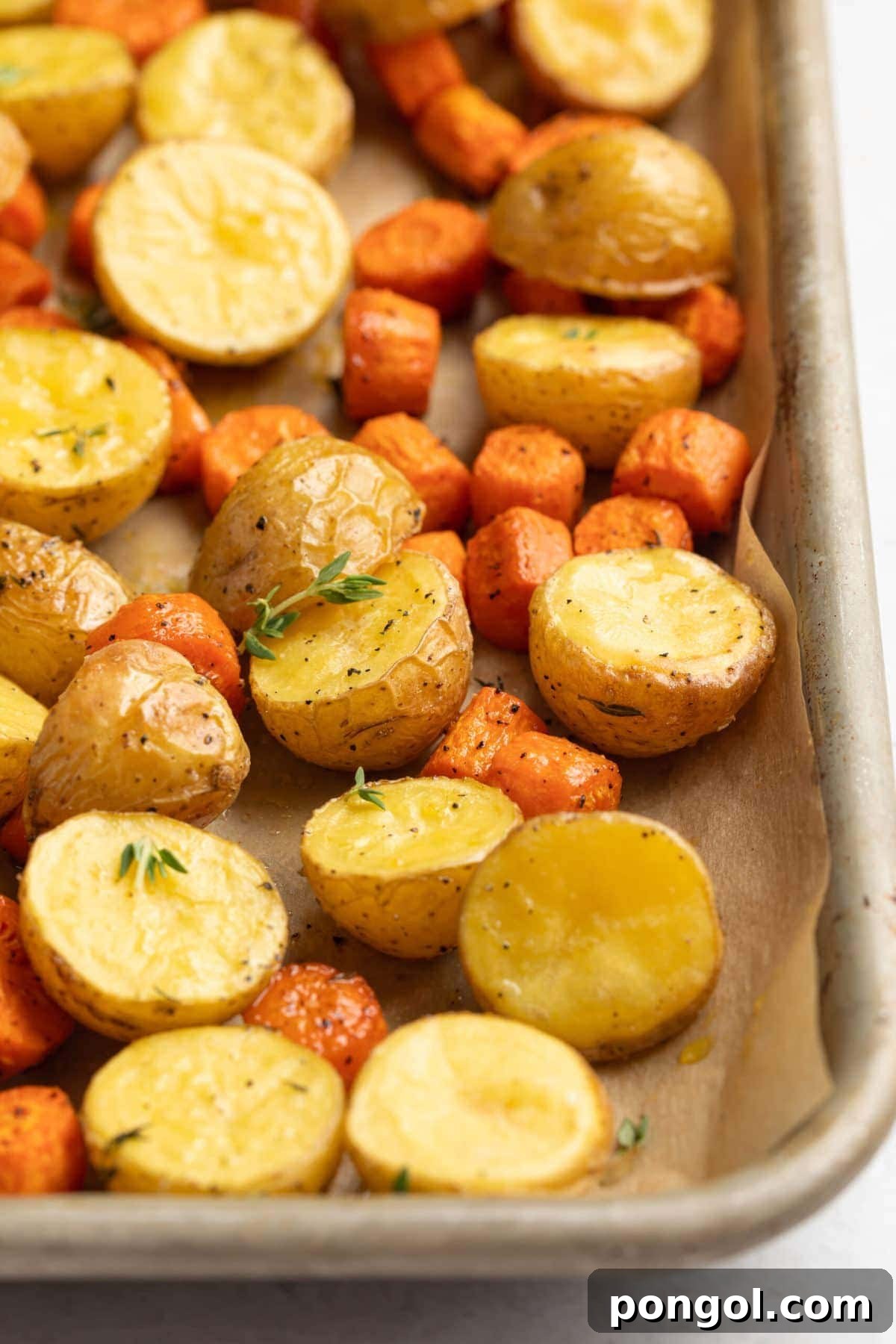
Welcome to the ultimate guide for creating the most delectable Roasted Potatoes and Carrots you’ve ever tasted! This incredibly simple recipe transforms humble root vegetables into a golden brown, tender, and deeply flavorful side dish in just 30 minutes. Perfect for a busy weeknight or a festive holiday feast, these roasted vegetables are seasoned with a touch of olive oil and fresh herbs, promising a delightful culinary experience that will impress everyone at your table. Get ready to elevate your meal with this easy-to-follow, healthy, and irresistibly delicious recipe!
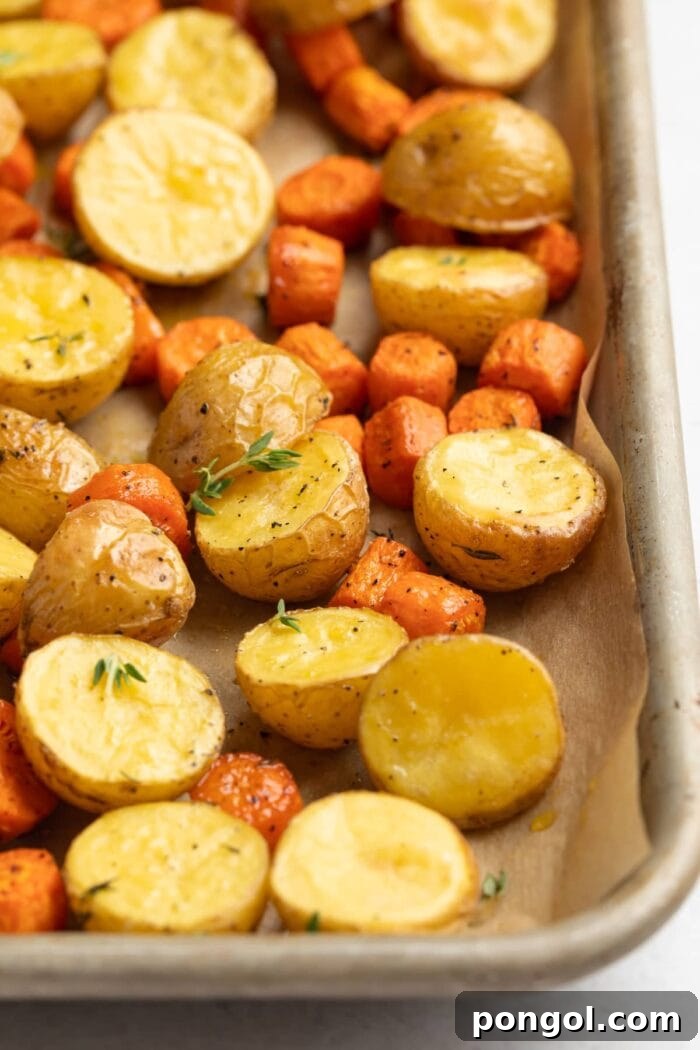
Why This Roasted Potatoes and Carrots Recipe is a Must-Try
There are countless reasons to fall in love with this roasted potato and carrot recipe. It’s more than just a side dish; it’s a testament to how simple ingredients can create extraordinary flavors. Here’s why this recipe stands out:
- Effortless Simplicity: You only need a handful of readily available ingredients, making this side dish an easy and stress-free addition to any meal, whether it’s a casual dinner or a grand holiday celebration. Minimal fuss, maximum flavor.
- Virtually Foolproof: Even novice cooks will find success with this recipe. The process is straightforward: toss all the ingredients in a large bowl, spread them on a baking sheet, and roast for about 30 minutes. It’s truly that simple to achieve a dish that looks and tastes gourmet.
- Healthy & Wholesome: Beyond being incredibly delicious, these roasted potatoes and carrots are packed with nutritional benefits. They are naturally dairy-free and gluten-free, and suitable for a paleo diet. Both potatoes and carrots are excellent sources of fiber, aiding digestion and promoting satiety. Carrots are renowned for their beta-carotene content, which converts to Vitamin A, crucial for vision and immune health. Potatoes contribute essential vitamins and minerals like Vitamin C, Vitamin B6, and potassium. This combination offers a rich array of antioxidants, helping to protect your body against cellular damage. Despite their impressive health profile, their perfectly tender texture and rich flavor ensure no one will suspect just how nutritious they are!
- Incredible Flavor & Texture: Roasting brings out the natural sweetness of carrots and the earthy goodness of potatoes. The high heat creates a delightful contrast: a slightly crispy, caramelized exterior giving way to an irresistibly soft and tender interior. The fresh herbs infuse every bite with aromatic depth, making this dish profoundly satisfying.
- Ultimate Versatility: This dish is incredibly adaptable. While perfect as a holiday staple, it’s equally at home alongside a simple weeknight roast chicken or a grilled steak. It complements a wide range of main courses, making it a reliable go-to for any occasion.
The Core Ingredients for Perfect Roasted Vegetables
The magic of this dish lies in the quality and preparation of a few key ingredients. Selecting fresh, high-quality produce and the right seasonings will make all the difference.
Baby Potatoes: The Star of the Show
For this recipe, baby potatoes are highly recommended. Their small size means they cook quickly and evenly alongside the carrots. They boast a naturally buttery, soft, and creamy texture when roasted, absorbing the flavors beautifully. Their delicate skins crisp up wonderfully, adding another layer of texture without the need for peeling. If baby potatoes aren’t available, don’t worry! You can easily substitute with one pound of other potato varieties like Yukon Gold, Red Bliss, or even Russet potatoes. When using larger potatoes, simply cut them into bite-sized pieces, roughly the same size as your carrot chunks, to ensure uniform cooking. Whether you choose to peel your potatoes or leave the skin on is a matter of personal preference. I particularly enjoy the nice crispy skin that forms during roasting, which is why I often skip the peeling step for this side dish.
Carrots: Sweetness and Color
Carrots bring a natural sweetness and vibrant color to this dish, contrasting beautifully with the earthy potatoes. When roasted, their sugars caramelize, intensifying their flavor and making them incredibly tender. Like potatoes, carrots are packed with nutrients, especially beta-carotene, an antioxidant that gives them their characteristic orange hue and converts to Vitamin A in the body. For optimal texture and cooking time, ensure your carrots are peeled and cut into pieces that are roughly the same size as your halved baby potatoes or potato chunks. This ensures they roast evenly and are perfectly tender at the same time as the potatoes.
Fresh Thyme: The Aromatic Secret
Fresh thyme is more than just an herb; it’s a holiday staple for many, filling homes with its warm, earthy, and slightly peppery aroma. Its robust flavor pairs exceptionally well with root vegetables, elevating the entire dish. If fresh thyme is not accessible, you can substitute it with 1/2 teaspoon of dried thyme in this roasted potatoes and carrots recipe. Remember that dried herbs are more concentrated than fresh, so a smaller quantity is needed. Alternatively, if you prefer the piney, citrusy notes of fresh rosemary, feel free to replace the thyme with an equal amount of fresh rosemary. Both herbs provide a fantastic aromatic lift that makes this simple side dish truly special.
Olive Oil: The Binder and Flavor Enhancer
Good quality olive oil is essential for this recipe. It coats the vegetables, allowing the seasonings to adhere, and facilitates the roasting process, creating that desirable golden-brown exterior. Olive oil also contributes its own subtle fruity and peppery notes, enhancing the overall flavor profile. For roasting, extra virgin olive oil works well, but a lighter olive oil or even avocado oil can be used if preferred.
Salt and Black Pepper: Essential Seasoning
These two pantry staples are crucial for bringing out the best in your roasted vegetables. Salt enhances the natural flavors of the potatoes and carrots, while freshly ground black pepper adds a subtle warmth and zing. Don’t be shy with the seasoning; properly seasoned vegetables are key to a delicious outcome.
Expert Tips for Achieving Perfectly Roasted Potatoes and Carrots
While this recipe is simple, a few chef’s tips can help you achieve an even more spectacular result every time. These insights ensure your vegetables are perfectly cooked, beautifully caramelized, and bursting with flavor.
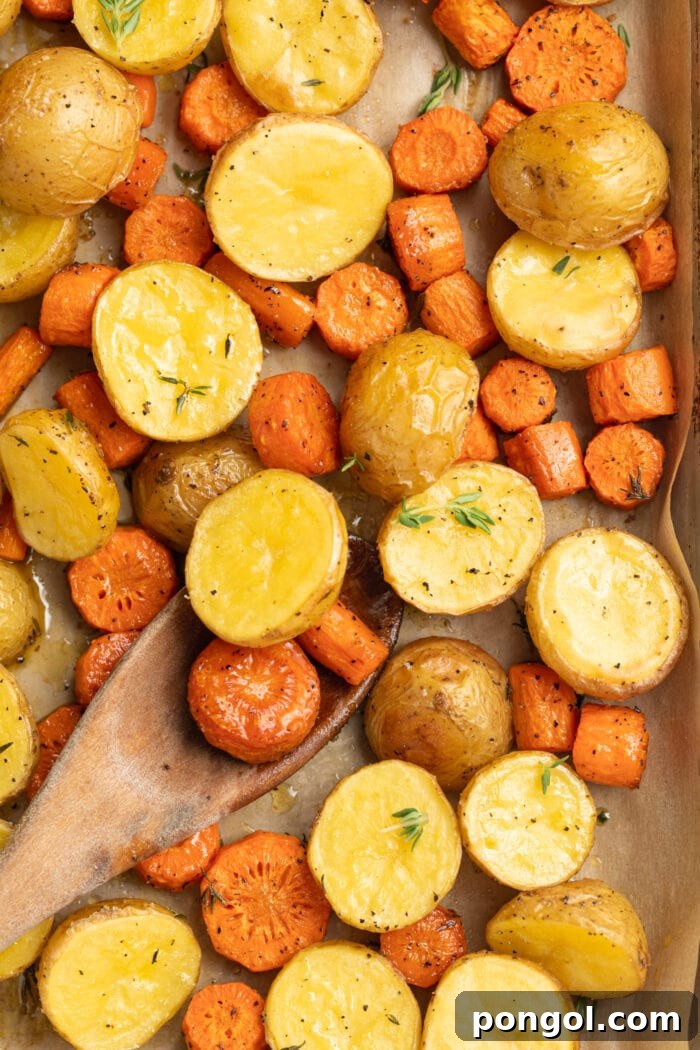
- Uniform Cutting is Key: When preparing your vegetables, strive to cut the carrots and potatoes into similar-sized pieces. Consistency in size is paramount for even cooking. If pieces are too varied, some will be overcooked and mushy while others remain undercooked. For baby potatoes, halving them is often sufficient. For larger potatoes or carrots, cut them into roughly 1-inch chunks. Don’t worry about absolute perfection – just aim for similar dimensions to ensure they roast at the same rate on the baking tray.
- Thorough Washing is a Must: Potatoes and carrots are both root vegetables, meaning they grow underground. As such, they often carry more dirt and soil than other produce. Before cooking, wash and scrub them very well under cold running water to remove as much dirt as possible. You can use a vegetable brush for this task. A clean vegetable means a better-tasting and safer dish.
- Don’t Overcrowd the Baking Sheet: This is arguably one of the most critical tips for crispy roasted vegetables. If you pile too many vegetables onto a single baking sheet, they will steam instead of roast. This results in soft, soggy vegetables rather than the desired golden-brown, crispy edges. Ensure the vegetables are spread in a single layer with a little space between each piece. If you have a large batch, use two baking sheets and rotate them halfway through cooking, or swap their positions in the oven, to ensure even heat distribution.
- Monitor and Adjust Cooking Time: The suggested 30 minutes yields a slightly crispy outside with an irresistibly soft and tender inside, which is often ideal. However, oven temperatures can vary, and personal preference plays a big role. If you prefer more well-done potatoes and carrots with a deeper char and crispier edges, simply leave them in the oven for an additional 5-10 minutes, checking frequently to prevent burning. Trust your instincts and cook to your desired level of doneness.
- Flip Halfway Through: For even browning and crispiness on all sides, gently toss or flip the potatoes and carrots halfway through the roasting time. This ensures every piece gets direct contact with the hot baking sheet and the oven’s circulating heat.
Flavorful Variations & Serving Suggestions
While delicious on their own, roasted potatoes and carrots can be customized to suit your taste or complement any meal. Here are some ideas to inspire you:
Exciting Variations:
- Garlic & Herb Infusion: Add 2-3 cloves of minced garlic along with the fresh thyme for an even more aromatic punch. A sprinkle of dried rosemary, oregano, or a mixed Italian seasoning blend can also provide a wonderful depth of flavor.
- Spicy Kick: For those who enjoy a bit of heat, a pinch of red pepper flakes or a dash of smoked paprika can add a delightful warmth and complexity.
- Citrus Brightness: Finish the dish with a squeeze of fresh lemon juice or a sprinkle of lemon zest right after roasting. The acidity brightens the flavors and adds a refreshing note.
- Sweet & Savory: A drizzle of maple syrup or a sprinkle of brown sugar over the carrots before roasting can enhance their natural sweetness and create a beautiful glaze. Balsamic glaze is another excellent option for a tangy-sweet finish.
- Cheesy Goodness (if not dairy-free): For a non-paleo, non-dairy-free option, a dusting of grated Parmesan cheese during the last 10 minutes of roasting adds a savory, salty crust.
- Different Vegetables: Extend the medley by adding other root vegetables like parsnips or sweet potatoes, or incorporate other sturdy vegetables like broccoli florets, cauliflower, or bell peppers. Just ensure they are cut to similar sizes for even cooking.
Serving Suggestions:
- Holiday Feasts: These roasted vegetables are a quintessential side for Thanksgiving, Christmas, or Easter dinners. They pair beautifully with roasted turkey, ham, or prime rib.
- Weeknight Dinners: Serve them alongside grilled chicken, baked fish, seared steak, or a simple lentil loaf for a wholesome and satisfying meal.
- Brunch Option: Combine with scrambled eggs, bacon, or a frittata for a hearty and flavorful breakfast or brunch spread.
- Vegetarian Main Course: These can serve as a substantial base for a vegetarian meal, perhaps topped with a dollop of hummus or a sprinkle of toasted nuts.
Storage and Reheating
Leftover roasted potatoes and carrots can be stored in an airtight container in the refrigerator for up to 3-4 days. To reheat, spread them on a baking sheet and warm in a 350°F (175°C) oven for about 10-15 minutes, or until heated through and slightly crispy again. Avoid reheating in the microwave, as this can make them soft and mushy.
Frequently Asked Questions (FAQs)
Can I prepare the vegetables ahead of time?
Yes, you can prep the vegetables a day in advance. Wash, scrub, and cut the potatoes and carrots, then store them in separate airtight containers in the refrigerator. You can also toss them with the olive oil and seasonings just before roasting.
Why are my roasted vegetables soggy?
Soggy vegetables are usually a result of overcrowding the baking sheet, which causes them to steam rather than roast. Ensure your vegetables are spread in a single layer with plenty of space around them. Also, check your oven temperature; a high temperature (400°F/200°C) is key for crispiness.
Can I use dried herbs instead of fresh?
Yes, you can. As a general rule, use about one-third the amount of dried herbs compared to fresh. For example, if the recipe calls for 2-3 sprigs of fresh thyme (roughly 1 tablespoon of leaves), use about 1/2 teaspoon of dried thyme.
What type of potatoes works best?
Baby potatoes, Yukon Golds, or Red Bliss potatoes are excellent choices as they have a creamy texture and roast beautifully. Russet potatoes can also be used, but they tend to be a bit starchier.
Can I add other spices?
Absolutely! Feel free to experiment with garlic powder, onion powder, paprika, cumin, or a pinch of cayenne pepper for added flavor. Adjust quantities to your personal preference.
More Delicious and Easy Side Dish Recipes
Looking for more simple and delicious sides to round out your meals? Explore these fantastic options:
- Green Beans with Bacon
- Oven-Roasted Brussels Sprouts with Bacon
- Red Potato Salad
- Air Fryer Asparagus
- 20 Gluten-Free Side Dishes
Recipe By: Sam Guarnieri
Roasted Potatoes and Carrots
Prep Time: 10 minutes
Cook Time: 30 minutes
Total Time: 40 minutes
These roasted potatoes and carrots are super simple and ready in just 30 minutes! Potatoes and carrots are tossed in a bit of oil and a sprinkling of fresh herbs, then roasted until golden brown and tender. Add this easy and delicious side dish to your holiday table!
 Sam Guarnieri
Pin Recipe
Servings: 6 servings
Equipment
- Large bowl
- Baking sheet
Ingredients
- 1 pound baby potatoes, halved
- 1 pound carrots, peeled and cut into even-sized pieces
- 3 tablespoons olive oil
- 2-3 sprigs fresh thyme (see Notes for dried thyme substitution)
- 1 teaspoon salt
- ½ teaspoon black pepper
Instructions
-
Preheat your oven to 400° Fahrenheit (200°C). Line a large baking sheet with parchment paper to prevent sticking and for easy cleanup.
-
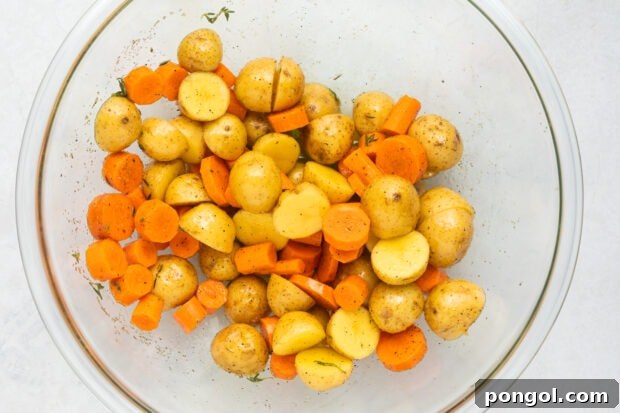
In a large mixing bowl, combine the halved baby potatoes, evenly cut carrots, olive oil, fresh thyme sprigs, salt, and black pepper. Toss vigorously until all the vegetables are thoroughly coated in the oil and seasonings. Ensure every piece is well-covered for maximum flavor.

-
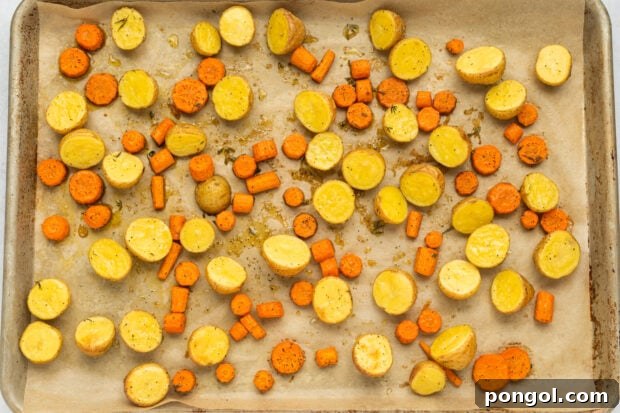
Transfer the seasoned vegetables from the bowl to the prepared baking sheet. Spread them out in a single layer, ensuring they are not overcrowded. This is crucial for achieving crispy, golden-brown results. Bake for 30 minutes, or until the potatoes and carrots are fork-tender and beautifully caramelized around the edges. For extra crispiness, you can flip them halfway through cooking.
-
Carefully remove the baking sheet from the oven. Discard the thyme sprigs (or leave them for garnish if preferred). Serve immediately and enjoy your perfectly roasted potatoes and carrots!
Recipe Notes:
- Fresh Thyme Substitution: If fresh thyme is not available, you can use ½ teaspoon of dried thyme instead.
Recipe yields approximately 6 servings. Actual number of servings will depend on your preferred portion sizes.
Nutritional values shown are general guidelines and reflect information for 1 serving, out of 6. Actual macros may vary slightly depending on specific brands and types of ingredients used.
To determine the weight of one serving, prepare the recipe as instructed. Weigh the finished recipe, then divide the weight of the finished recipe (not including the weight of the container the food is in) by 6. Result will be the weight of one serving.
Approximate Nutrition Information for One Serving
Serving Size: 1 serving
Calories: 152 cal
Protein: 2 g
Fat: 7 g
Saturated Fat: 1 g
Sodium: 444 mg
Potassium: 565 mg
Total Carbs: 21 g
Fiber: 4 g
Sugar: 4 g
Net Carbs: 17 g
Vitamin A: 12648 IU
Vitamin C: 20 mg
Calcium: 36 mg
Iron: 1 mg
Nutrition Disclaimers
Number of total servings shown is approximate. Actual number of servings will depend on your preferred portion sizes.
Nutritional values shown are general guidelines and reflect information for 1 serving using the ingredients listed, not including any optional ingredients. Actual macros may vary slightly depending on specific brands and types of ingredients used.
To determine the weight of one serving, prepare the recipe as instructed. Weigh the finished recipe, then divide the weight of the finished recipe (not including the weight of the container the food is in) by the desired number of servings. Result will be the weight of one serving.
Did You Make This Delicious Recipe?
We’d love to see your culinary creations! Tag @40aprons on Instagram and be sure to leave a review right here on the blog post to share your experience.
Tag @40Aprons on Instagram