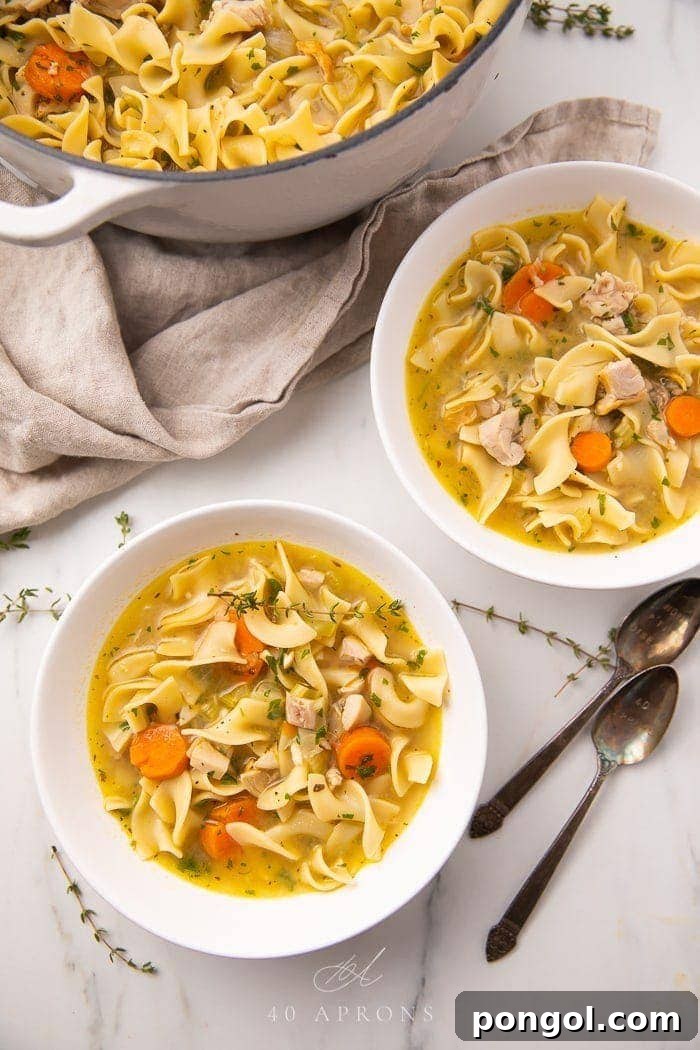
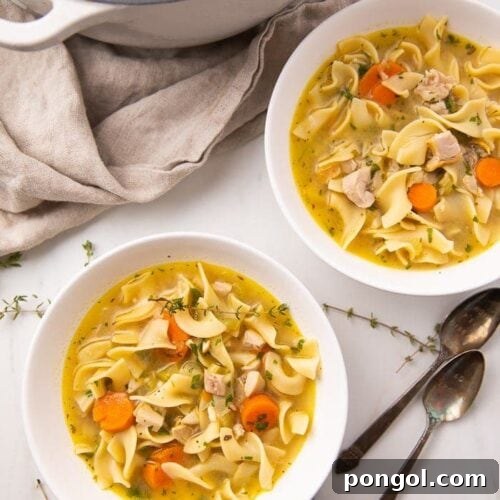
After a festive holiday feast, you’re often left with a delicious problem: an abundance of leftover turkey. While turkey sandwiches are a classic, why not transform those succulent remnants into something truly extraordinary? This incredible leftover turkey noodle soup recipe is the ultimate solution, turning what could be mundane leftovers into a comforting, flavorful, and incredibly satisfying meal. Imagine tender pieces of turkey, crisp-tender vegetables, and satisfying egg noodles swimming in a rich, aromatic broth that warms you from the inside out. This isn’t just a post-holiday meal; it’s a cozy, soul-nurturing dish you’ll find yourself craving and making long after Thanksgiving or Christmas celebrations have faded. It’s the perfect blend of nourishment and indulgence, making it ideal for chilly evenings or simply when you need a taste of homemade comfort.
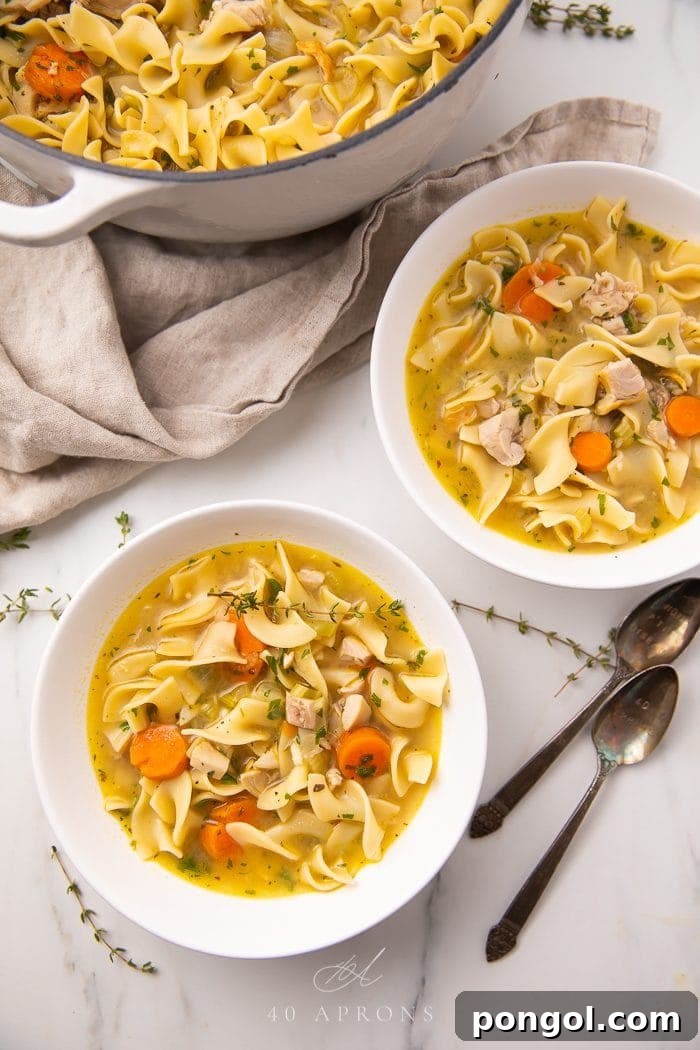
Find the complete list of measurements, ingredients, and detailed instructions in the recipe card below.
Why This Leftover Turkey Noodle Soup Recipe is a Must-Try
- Effortlessly Simple, Exceptionally Delicious: Don’t let the incredible depth of flavor fool you – this turkey noodle soup is remarkably easy to prepare. It’s designed as a one-pot wonder, meaning less cleanup and more time to savor your meal. What’s more, it yields a generous batch, perfect for feeding a hungry family on a busy weeknight or for stashing away in the freezer for those moments when cooking feels like an impossible task. This convenience doesn’t compromise on taste; every spoonful suggests hours of simmering, though it comes together in under an hour.
- A Symphony of Rich, Comforting Flavors: The heart of this soup is its absolutely incredible broth – deeply savory, infused with aromatic vegetables like carrots, celery, and onion, and fragrant herbs such as thyme and oregano. These foundational flavors create a robust base for the tender, juicy turkey and soft egg noodles. The surprise hero? A bright hint of fresh lemon juice added at the end, which magically elevates all the other ingredients, making the flavors truly sing. It’s a hearty, nourishing experience that defines true comfort food, satisfying both body and soul with its balanced and harmonious taste.
- Incredibly Adaptable and Resourceful: This recipe isn’t just a meal; it’s a smart strategy for transforming holiday leftovers. It’s wonderfully versatile and forgiving, encouraging you to customize it with what you have on hand. Want more vegetables? Toss in some mushrooms, spinach, or zucchini. Prefer a thinner soup? Easily add more broth to achieve your desired consistency. Dietary restrictions? Simply swap in gluten-free noodles or adjust seasonings to your personal preference. This flexibility makes it a go-to recipe you can truly make your own, reducing food waste and sparking creativity in the kitchen.
- Perfect for Meal Prepping and Freezing: One of the greatest benefits of this turkey and noodle soup is its impressive yield. This recipe makes a massive batch that keeps beautifully, making it an excellent candidate for meal prep. You can enjoy it throughout the week for quick lunches or dinners, or portion it out and freeze it for future meals. In fact, many believe this soup tastes even better the next day, as the flavors have more time to meld and deepen, creating an even more cohesive and delicious experience. It’s truly the gift that keeps on giving, offering warmth and convenience whenever you need it.
More Delicious Recipes to Explore
Ultimate Easter Guide: Brunch, Baskets, and Ideas for Everyone
Cottage Cheese Egg Bake
Cheesy Asparagus Casserole
Overnight Brioche French Toast Casserole
Essential Tips Before You Start Cooking
- Embrace the Broth (and the Noodles): This soup is designed to be wonderfully hearty and noodle-rich, which means the noodles will continue to absorb liquid even after they’re cooked. Start with 10 to 12 cups of chicken broth, but don’t hesitate to add more if you prefer a brothier soup, just like I do! You can easily add up to 16 cups of broth in total throughout the cooking process as the noodles expand. Keep an extra carton of broth or even water handy when reheating leftovers, as you’ll likely need to add a splash to return it to your ideal consistency. This ensures every serving is as delicious as the first.
- Always Taste and Adjust Seasoning: The saltiness of your broth and your leftover turkey can vary considerably depending on the brands and preparations you use. Therefore, it’s absolutely crucial to taste your soup before serving and adjust the seasoning accordingly. I typically add about 1 tablespoon of salt at the very end, but your palate might require more or less. Beyond salt, remember to consider pepper and the dried herbs. And don’t forget that squeeze of lemon juice—it’s a simple addition that profoundly brightens the overall flavor profile, making everything pop beautifully.
- Timing is Key for Tender Turkey: To prevent your delicious leftover turkey from becoming dry or stringy, always add it at the very end of the cooking process. You’re simply warming it through, not cooking it from scratch. This crucial step ensures that the turkey remains succulent and tender, contributing perfectly to the soup’s texture. The same rule applies if you’re opting for rotisserie chicken instead of turkey; stir it in during the final minute or two of simmering to preserve its moisture and flavor.
Exciting Recipe Variations for Your Soup
Swap for Chicken Instead of Turkey: No leftover turkey? No problem at all! This recipe works beautifully with cooked chicken. You can use shredded rotisserie chicken, any leftover roasted chicken you might have, or even quickly poached chicken breasts. You’ll need approximately 2 cups of shredded or finely chopped cooked chicken to achieve the same hearty texture.
Boost the Veggies: Don’t limit yourself to just carrots and celery! This soup welcomes a wider array of vegetables. Consider adding sliced mushrooms, halved or quartered Brussels sprouts, fresh green beans, or even diced zucchini. For ultimate convenience, a bag of frozen mixed vegetables works wonderfully; just toss them into the pot during the last 5 minutes of cooking to ensure they are heated through but still retain a slight bite.
Experiment with Different Noodles or Pasta: While classic wide egg noodles are fantastic, feel free to substitute them with any pasta shape you love. Rotini, penne, small shells, or even ditalini all work beautifully, creating a slightly different texture and aesthetic. For a gluten-free option or a lighter feel, consider using rice or orzo pasta. Remember to adjust the cooking time based on the package directions for your chosen pasta.
Make it Creamier and More Indulgent: For an extra layer of richness and a truly decadent texture, stir in about ½ cup of heavy cream or half-and-half at the very end of the cooking process. This simple addition transforms the soup into a creamy turkey noodle soup, making it even more comforting and luxurious, perfect for a special treat.
Add a Burst of Fresh Greens: For an added nutritional punch and a pop of vibrant color, stir in a few handfuls of fresh spinach, chopped kale, or Swiss chard during the last 2 minutes of cooking. The residual heat from the soup will quickly wilt the greens, integrating them seamlessly into the dish without overcooking, adding a fresh, earthy dimension.
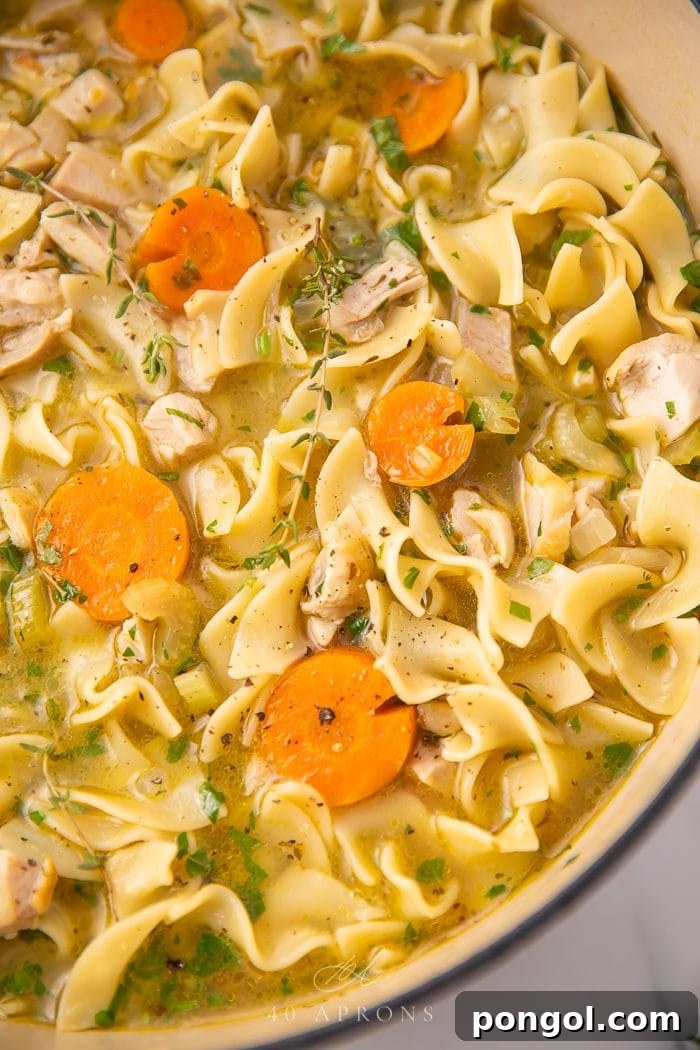
Frequently Asked Questions About Turkey Noodle Soup
Absolutely! If you don’t have leftover cooked turkey, you can certainly use raw poultry. Simply cut about 2 pounds of boneless, skinless turkey or chicken breasts into bite-sized pieces. After you’ve sautéed the garlic as per the recipe, add the raw meat to the pot. Cook it for approximately 8 to 10 minutes, stirring occasionally, until the meat is fully cooked through and no longer pink in the center. Once it’s cooked, you can proceed with the rest of the recipe as written, adding the broth and other ingredients.
The key to perfectly textured noodles is to cook them just until they are tender, avoiding overcooking. Watch them closely and follow the package directions. If you plan on making this soup ahead of time or anticipate having leftovers for several days, a great tip is to cook the noodles separately. Then, add them directly to individual bowls just before serving. This method prevents the noodles from continually absorbing broth and becoming overly soft or mushy while the soup is stored in the refrigerator.
Using homemade broth will elevate this soup to an even more incredible level of flavor! If you have the turkey carcass from your holiday meal, don’t let it go to waste. Simmer it with some aromatic vegetables (like onions, carrots, and celery scraps) and fresh herbs (such as parsley stems and bay leaves) for several hours to create your own rich, deeply flavorful turkey stock. This homemade stock will serve as an exceptionally delicious and nourishing base for your soup, adding unparalleled depth that store-bought broth simply can’t match.
No worries at all! This recipe is very flexible when it comes to noodles. Any type of pasta or noodle will work wonderfully. You can try other common pasta shapes like rotini, penne, farfalle (bow-tie pasta), or even smaller varieties like ditalini or elbow macaroni. For a gluten-free option, consider using rice noodles or your favorite gluten-free pasta. Just remember to adjust the cooking time based on the package directions for whatever pasta or noodle you choose, as cooking times can vary significantly.
Yes, you can adapt this recipe for both! For a slow cooker, combine all ingredients except the noodles, cooked turkey, fresh parsley, and lemon juice. Cook on low for 6 to 8 hours, or on high for 3 to 4 hours, until vegetables are tender and flavors have melded. During the last 30 minutes of cooking, add the noodles. Stir in the cooked turkey, parsley, and lemon juice just before serving. For an Instant Pot, use the sauté function to cook the carrots, celery, onion, and garlic. Then, add the broth, bay leaves, thyme, oregano, and pepper. Secure the lid and cook on high pressure for 5 minutes. Perform a quick release of pressure. Next, add the noodles, secure the lid again, and cook on high pressure for another 3 minutes, followed by another quick release. Finally, stir in the cooked turkey, fresh parsley, and lemon juice until warmed through.
Discover More Delicious Turkey Recipes
- Smoked Turkey Breast
- Crockpot Turkey and Stuffing
- Quick Turkey Brine
- Leftover Turkey Salad with Apples and Cranberries
- Garlic and Herb Sous Vide Turkey
- Leftover Turkey Poutine
- Leftover Turkey Casserole
- Sous Vide Turkey Breast with Crispy Skin
- Baked Turkey Wings
- Instant Pot Turkey Breast
Recipe By: Cheryl Malik
Leftover Turkey Noodle Soup
Prep Time: 10 minutes
Cook Time: 25 minutes
Total Time: 35 minutes
This delightful turkey and noodle soup recipe cleverly transforms holiday leftovers into a fresh and flavorful meal. Featuring tender turkey, an abundance of hearty vegetables, and satisfying egg noodles all bathed in a rich, savory broth, this is a truly cozy and soul-warming dish that’s perfect for storing and reheating again and again!
Servings: 8 servings
Ingredients
- 2 tablespoons olive oil
- 1 cup carrots, peeled and thinly sliced (about 1 ½ large carrots)
- 1 cup celery, thinly sliced (about 2 stalks)
- 1 cup sweet Vidalia or yellow onion, peeled and diced small (about 1 medium onion)
- 4 garlic cloves, minced
- 10-12 cups chicken broth (plus more if desired for a brothier soup)
- 2 bay leaves
- ½ teaspoon dried thyme leaves
- ½ teaspoon dried oregano
- 1 teaspoon black pepper, or to taste
- 10 ounces wide egg noodles (or your favorite noodles or pasta)
- 2 cups shredded cooked turkey
- 4 tablespoons fresh flat-leaf parsley leaves, finely chopped
- 1 tablespoon lemon juice
- Salt, to taste
Instructions
- Heat a large Dutch oven or stockpot over medium-high heat. Add the olive oil and allow it to warm.
- Add the prepared carrots, celery, and onion to the pot. Sauté for about 7 minutes, stirring occasionally, until the vegetables begin to soften.
- Stir in the minced garlic and continue to sauté for another 1 to 2 minutes, until fragrant.
- Pour in the chicken broth, then add the bay leaves, dried thyme, dried oregano, and pepper. Bring the mixture to a gentle boil and let it simmer for about 5 minutes, or until the vegetables are fork-tender. Note: If you prefer a soup with more broth, feel free to add up to an additional 64 ounces of broth at this stage, as the noodles will absorb a significant amount of liquid over time.
- Add the egg noodles to the simmering soup. Continue to boil gently for approximately 10 minutes, or until the noodles are soft and cooked through to your liking. Should the liquid level drop below your preference during this time, it’s perfectly fine to add an extra cup or two of water or broth; just be prepared to adjust the salt level at the end to maintain optimal flavor.
- Stir in the shredded cooked turkey, fresh parsley, and the optional lemon juice (which truly brightens and enhances all the flavors). Allow the soup to boil for just 1 to 2 minutes more, ensuring the turkey is thoroughly warmed through.
- Taste the soup and add salt as needed to your preference. The exact amount will depend on the saltiness of your chicken broth and turkey, as well as your personal taste. I typically add about 1 tablespoon.
- Make any final seasoning adjustments (e.g., more salt, pepper, or herbs). Carefully remove the bay leaves before serving the delicious soup immediately.
- Store any leftover soup in an airtight container in the refrigerator for 5 to 7 days, or freeze it for up to 6 months.
Recipe Notes and Tips
- Making it Gluten-Free: To easily make this turkey noodle soup gluten-free, simply swap the traditional egg noodles for your favorite gluten-free pasta or rice noodles. The cooking time should be similar, but always refer to the package instructions for the specific noodles you are using to ensure perfect texture.
- Using Raw Turkey or Chicken: If you don’t have cooked turkey, you can absolutely use raw boneless, skinless turkey or chicken breasts. Cut 2 pounds of the meat into bite-sized pieces. After sautéing the garlic, add the raw meat to the pot and cook for 8-10 minutes, stirring until it’s no longer pink and fully cooked through. Then, proceed with the recipe as written.
- Storage Suggestions: For optimal freshness, transfer any cooled leftover soup to an airtight container and refrigerate it for up to 4 to 5 days. You might find that the flavors deepen and meld even further as it sits, making it taste even better the next day!
- Freezing for Later: This soup freezes wonderfully. Ladle the cooled soup into freezer-safe containers or heavy-duty freezer bags, leaving a little headspace at the top to allow for expansion. It can be stored in the freezer for up to 3 months. When ready to enjoy, thaw it overnight in the refrigerator, then gently reheat on the stovetop over medium heat until steaming hot.
- Reheating Perfection: To reheat, warm the soup on the stovetop over medium heat or in the microwave until it is piping hot. If the noodles have absorbed a lot of the broth and the soup seems too thick, simply add a splash of water or extra chicken stock to achieve your desired consistency.
- Make-Ahead Strategy: If you plan to freeze large portions of the soup or store leftovers for more than a couple of days, a smart tip is to cook and store the noodles separately. Add the cooked noodles to individual bowls just before serving to prevent them from becoming overly soft or mushy in the broth over time.
Approximate Nutrition Information for One Serving
Calories: 238 cal | Protein: 12g | Fat: 7g | Saturated Fat: 1g | Cholesterol: 48mg | Sodium: 1425mg | Potassium: 507mg | Total Carbs: 31g | Fiber: 2g | Sugar: 3g | Net Carbs: 29g | Vitamin A: 2934IU | Vitamin C: 27mg | Calcium: 55mg | Iron: 2mg
Nutrition Disclaimers
The number of total servings shown is approximate. Actual number of servings will depend on your preferred portion sizes.
Nutritional values shown are general guidelines and reflect information for 1 serving using the ingredients listed, not including any optional ingredients. Actual macros may vary slightly depending on specific brands and types of ingredients used.
To determine the weight of one serving, prepare the recipe as instructed. Weigh the finished recipe, then divide the weight of the finished recipe (not including the weight of the container the food is in) by the desired number of servings. The result will be the weight of one serving.
Did You Make This Recipe?
Share your creation! Tag @40aprons on Instagram and make sure to leave a review on the blog post!
Tag @40Aprons on Instagram