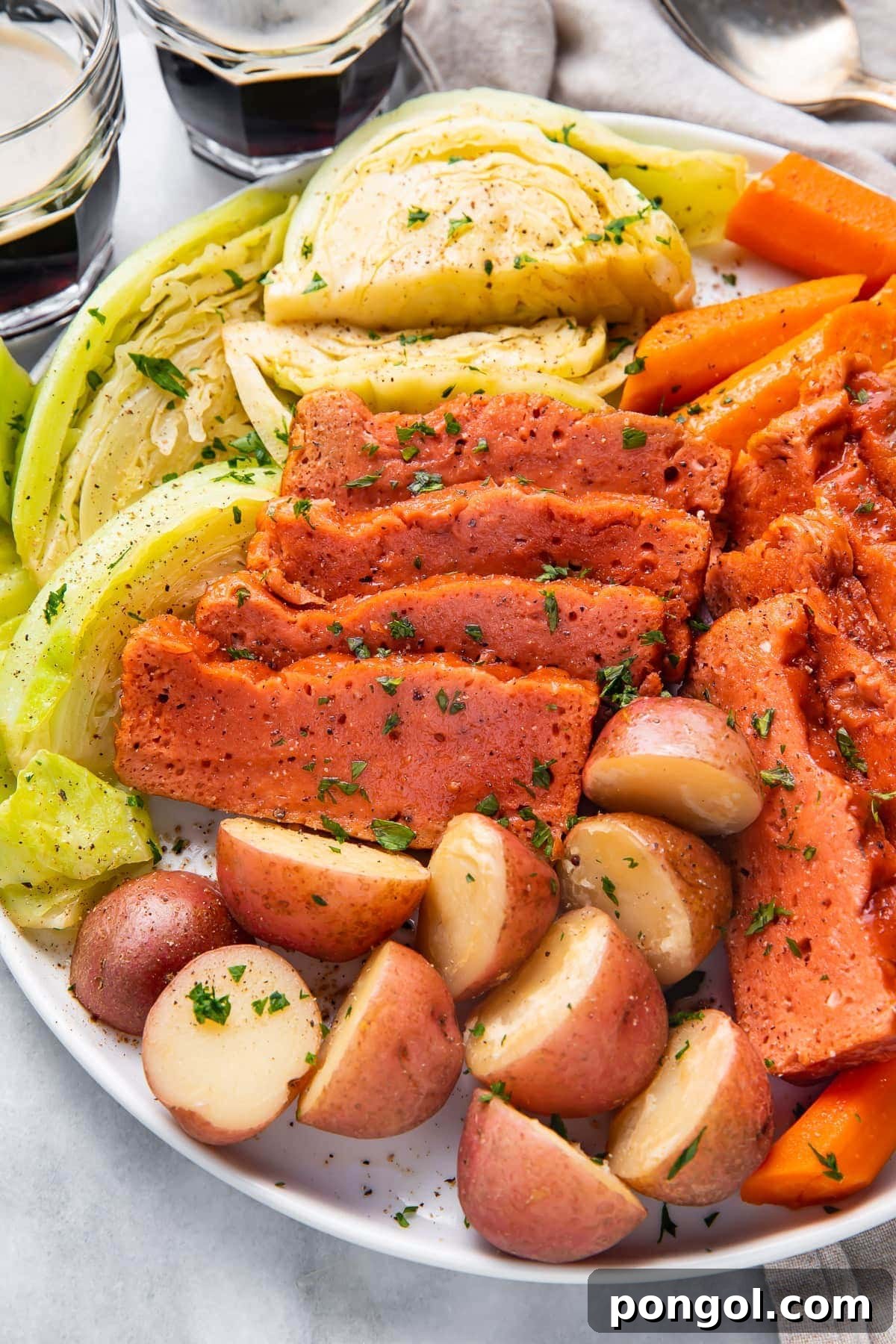
This incredible vegan corned beef and cabbage recipe redefines classic comfort food, offering a genuinely authentic and utterly delicious plant-based experience. It all begins with an easy-to-follow homemade seitan recipe, providing that perfect meaty texture, though high-quality store-bought seitan works just as wonderfully. Infused with a rich blend of traditional pickling spices, our “corned beef” delivers a deep, savory flavor that’s entirely meat-free. Served alongside tender, hearty cabbage, perfectly cooked carrots, and fluffy potatoes, this dish isn’t just a meal; it’s a celebration. Whether you’re commemorating St. Patrick’s Day or simply craving a satisfying, wholesome vegan feast, this recipe promises to be a new favorite in your culinary repertoire. Prepare to impress even the most discerning palates with this remarkably flavorful and satisfying plant-based rendition of a beloved classic.
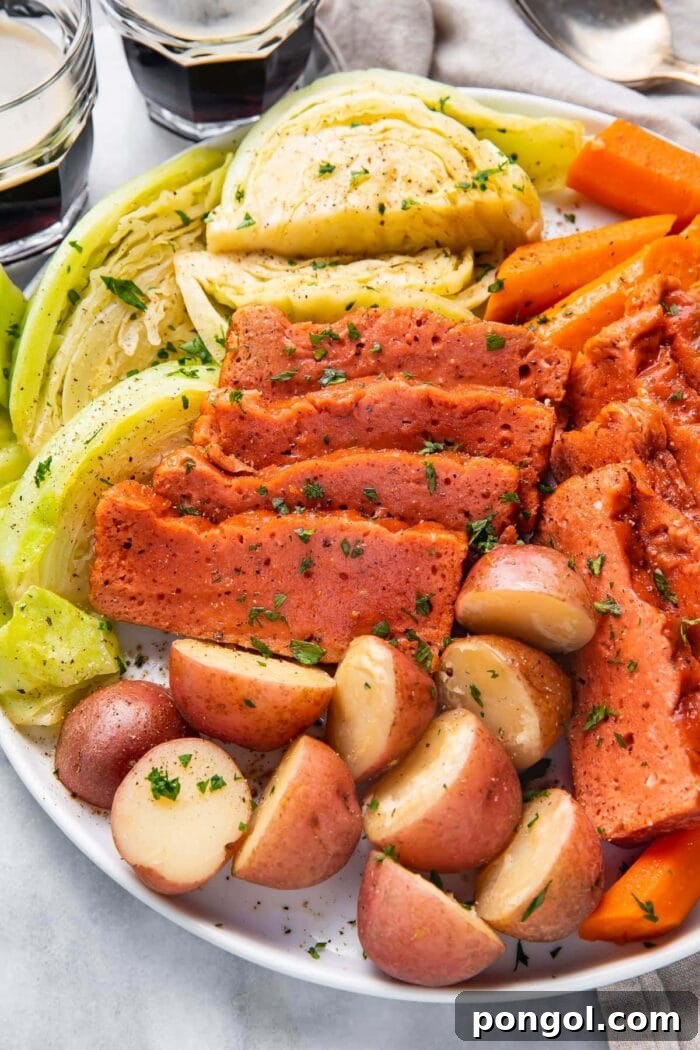
Why You’ll Love This Vegan Corned Beef and Cabbage Recipe
Our vegan corned beef and cabbage isn’t just another meatless alternative; it’s a culinary triumph that captures the essence of the traditional dish while remaining entirely plant-based. Here’s why this recipe stands out:
- Unbelievably Authentic Flavor and Texture: You’ll be amazed at how convincingly this dish mimics the taste and texture of classic corned beef and cabbage. The carefully prepared seitan, simmered with a robust blend of pickling spices, perfectly captures that savory, salty, and slightly tangy brisket flavor, complete with a satisfyingly chewy bite. It’s a true testament to the power of plant-based ingredients to replicate beloved comfort foods.
- A Complete and Satisfying Meal: This isn’t just a side dish; it’s an entire, wholesome meal packed with flavor and nutrition. You get generous slices of our delicious vegan corned beef alongside perfectly cooked, tender cabbage, sweet carrots, and creamy potatoes, all steeped in an aromatic, flavorful broth. It’s a hearty and fulfilling meal that requires no additional accompaniment.
- Incredibly Versatile for Various Dishes: While it shines as a standalone meal, this vegan corned beef is also a fantastic building block for other culinary creations. Use the succulent slices to create an incredible vegan version of our Corned Beef Sandwich. Simply swap in your favorite vegan Thousand Island or Russian dressing, and you’ve got a deli-style masterpiece. It’s also perfect for making vegan corned beef hash for breakfast or adding to savory stews.
- Naturally Plant-Based and Wholesome: Enjoy all the robust flavors without any meat, making it suitable for vegan diets and those looking to incorporate more plant-based meals. Seitan, being wheat gluten, is a fantastic source of plant protein, making this a truly satisfying and nutritious option.
Essential Ingredients for Your Plant-Based Feast
Crafting this remarkable vegan corned beef and cabbage relies on a few key ingredients that bring together its signature flavor and texture. Understanding their role will help you create the perfect dish every time.
Seitan: The Heart of Our “Corned Beef”
Seitan, often called “wheat meat,” is the star of this recipe, providing the chewy, satisfying texture that so closely resembles traditional corned beef brisket. It’s made from vital wheat gluten, which is the main protein found in wheat. When cooked, it develops a robust, firm, and shreddable consistency, making it an ideal meat substitute. I’ve included a comprehensive guide below for making your own homemade seitan “corned beef,” which allows for maximum control over flavor and texture. However, if time is of the essence or you prefer convenience, store-bought seitan works absolutely beautifully. Aim for one pound of a good quality, plain seitan, usually found in the refrigerated section of health food stores or larger supermarkets. Look for brands that offer a firmer texture for the best results in this recipe.
Pickling Spices and Mustard Seeds: The Flavor Infusion
Since we’re not using traditional beef that comes pre-brined with a spice packet, we’ll create our own aromatic infusion. This blend of pickling spices and whole mustard seeds is absolutely crucial, as it’s what gives our vegan “corned beef” its signature, authentic flavor profile. Pickling spice blends typically include a delightful mix of warm, pungent, and earthy spices such as allspice berries, whole coriander seeds, cloves, bay leaves, black peppercorns, ginger, and sometimes red pepper flakes. The mustard seeds add a distinctive sharp, peppery note that is characteristic of corned beef. Together, these spices slowly simmer with the seitan, permeating it with an incredibly deep and complex taste that will transport you straight to an Irish pub.
Fresh Vegetables: Cabbage, Carrots, and Potatoes
No corned beef and cabbage meal is complete without its iconic vegetable accompaniments. We use small red potatoes for their waxy texture that holds up well during simmering, absorbing the rich broth beautifully. Large, sweet carrots add a touch of natural sweetness and vibrant color, becoming fork-tender in the savory liquid. Finally, a large head of green cabbage, cut into thick wedges, provides that quintessential earthy and slightly sweet counterpoint, balancing the savory notes of the “corned beef.” These vegetables are not just fillers; they are integral to the complete flavor profile and traditional presentation of this beloved dish.
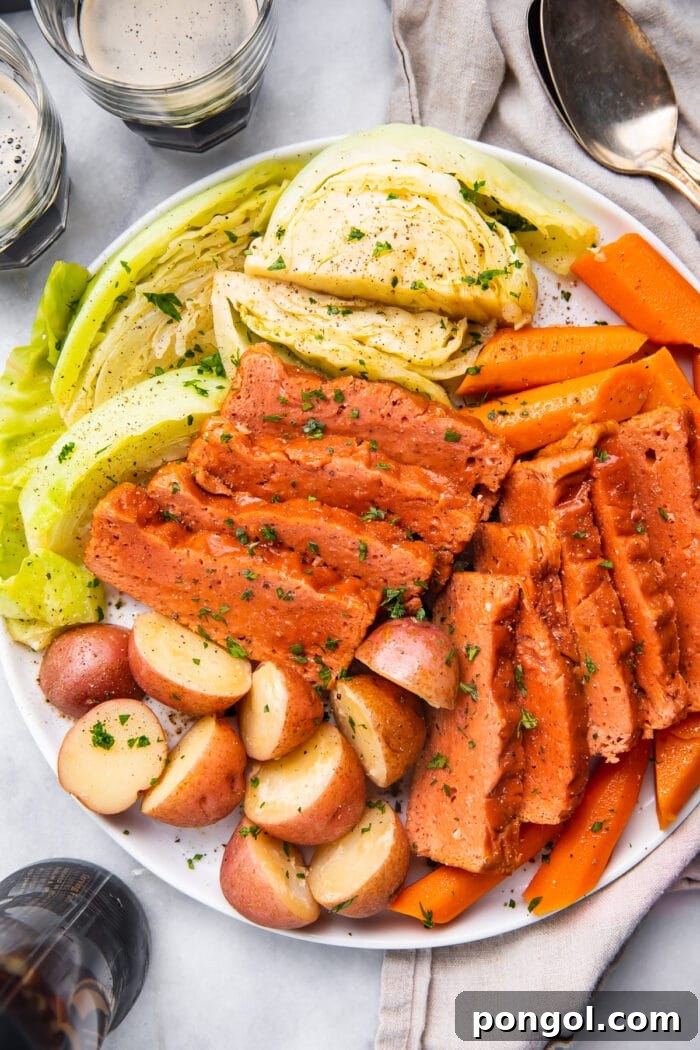
Chef’s Expert Tips for a Perfect Vegan Corned Beef
Achieving the perfect vegan corned beef and cabbage is easier than you think, especially with these insider tips:
- Mastering Spice Infusion: To achieve that deep, authentic flavor without having loose spices clinging to your seitan and vegetables, a simple trick is to contain your pickling spices and mustard seeds. Place them securely in a tea infuser ball or tie them up in a piece of cheesecloth to create a sachet. This allows the flavors to fully infuse the broth and the seitan, but keeps the spices neatly contained for easy removal before serving, ensuring a clean and pleasant eating experience.
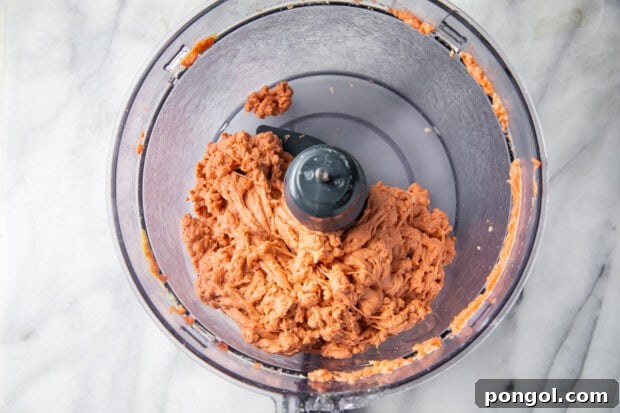
- The Art of Seitan Dough: When making homemade seitan, the consistency of your dough is paramount. The key is to achieve a dough that is “stringy and holey.” This indicates that the gluten has developed correctly, leading to a tender, chewy, and slightly shreddable texture reminiscent of brisket. If you overwork the seitan dough in the food processor, it can become overly dense and rubbery, resulting in a less appealing, tougher texture. Keep a close eye on it; stop pulsing as soon as it reaches that desirable stringy consistency.
- Optimizing Leftover Storage: Don’t let your delicious leftovers go to waste! Proper storage is essential to keep the seitan from drying out. You have two excellent options:
- Submerged in Liquid: The best method is to store the vegan corned beef in an airtight container with some of the cooking liquid. Ensure the seitan is fully submerged; this keeps it moist and continues to infuse it with flavor.
- Wrapped and Sealed: Alternatively, you can wrap the seitan tightly in foil or plastic wrap, then place it in an airtight container. While this method is effective, submerging it in liquid offers superior moisture retention and flavor preservation.
Leftovers stored correctly will keep wonderfully in the refrigerator for up to 5 days, making this an excellent meal prep option.
- Consider a Vegan Beef-Flavored Broth: While vegetable broth works perfectly, using a high-quality vegan beef-flavored broth can elevate the “beefy” essence of this dish even further. These specialized broths are designed to mimic the deeper umami notes found in traditional beef broth, enhancing the overall authenticity of your vegan corned beef and cabbage.
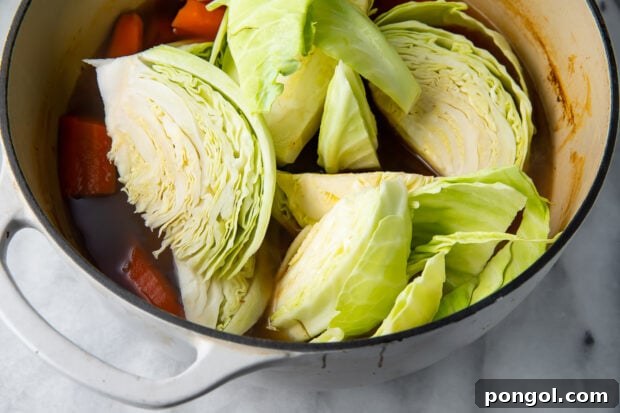
- Perfecting Vegetable Tenderness: Add your root vegetables like potatoes and carrots first, as they require a longer cooking time. Cabbage, being more delicate, should be added later in the cooking process to ensure it remains tender-crisp rather than mushy. This staggered addition guarantees all components reach their ideal tenderness simultaneously.
Serving Suggestions and Culinary Variations
While this vegan corned beef and cabbage is a spectacular standalone dish, there are many ways to enjoy and repurpose its delicious components:
- Classic Accompaniments: Serve it traditionally with a dollop of spicy brown mustard or freshly grated horseradish for an extra kick. A side of crusty rye bread is also a perfect complement for soaking up the flavorful broth.
- The Ultimate Vegan Reuben: Transform your leftovers into an epic vegan Reuben sandwich. Thinly slice the cold seitan corned beef, layer it on toasted rye bread with sauerkraut, vegan Swiss cheese, and a generous spread of vegan Russian or Thousand Island dressing. Grill until golden and melty.
- Hearty Corned Beef Hash: For a comforting breakfast or brunch, dice any leftover seitan, potatoes, and carrots. Sauté them in a skillet until browned and crispy, then serve with a side of toast or a sprinkle of fresh parsley.
- Flavorful Additions: Feel free to experiment with other vegetables like parsnips or turnips for added depth, or a splash of apple cider vinegar at the end of cooking for a brighter finish.
- Holiday Feasting: This dish is not just for St. Patrick’s Day! It makes a fantastic, hearty meal for any gathering or a cozy Sunday dinner, proving that plant-based food can be both traditional and exciting.
Frequently Asked Questions About Vegan Corned Beef
Here are some common questions about making and enjoying this plant-based delight:
- Can I make this recipe gluten-free?
Unfortunately, traditional seitan is made from vital wheat gluten, so this specific recipe for “corned beef” is not gluten-free. If you need a gluten-free option, you might look into making a “corned” tempeh or jackfruit dish, though the texture will be different. - Can I prepare the seitan ahead of time?
Absolutely! The homemade seitan can be prepared up to 3-4 days in advance. Once cooked and cooled, store it in an airtight container in the refrigerator, preferably submerged in a little of its cooking broth to keep it moist. This makes meal prep for the main dish much quicker. - What kind of broth is best to use?
A good quality vegetable broth is perfectly suitable. For an even richer, more “beefy” flavor, consider using a vegan beef-flavored broth. These are becoming increasingly available in stores and can add an extra layer of savory depth that enhances the traditional corned beef experience. - Can I freeze the vegan corned beef?
Yes, the cooked seitan “corned beef” freezes well. Slice it, then place the slices in an airtight, freezer-safe container or bag, ideally with some of the cooking liquid, for up to 2-3 months. Thaw in the refrigerator overnight before reheating gently on the stovetop or in the oven. The vegetables, however, may become mushy if frozen and thawed. - How can I adjust the spice level?
The pickling spice blend provides a mild, aromatic warmth. If you prefer a bit more heat, you can add a pinch of red pepper flakes to the broth. For a milder flavor, you can slightly reduce the amount of pickling spices. - What if I can’t find specific pickling spices?
Most grocery stores carry pre-mixed pickling spices in their spice aisle. If you can’t find them, you can create your own blend using individual whole spices like bay leaves, coriander seeds, mustard seeds, allspice berries, and black peppercorns.
More Incredible Vegan Recipes to Explore
If you loved this vegan corned beef and cabbage, you’ll be thrilled to discover more delicious plant-based creations. Expand your vegan culinary horizons with these fantastic recipes that are sure to satisfy:
- Vegan Cream Cheese
- How to Cook Tempeh
- The BEST Vegan Chocolate Chip Cookies
- Seitan Grilled Chicken with Vegan BBQ Sauce
- 45 Incredible Vegan Instant Pot Recipes
- Vegan Biscuits and Gravy
- Crispy Baked Tofu
- Vegan Creme Brulee
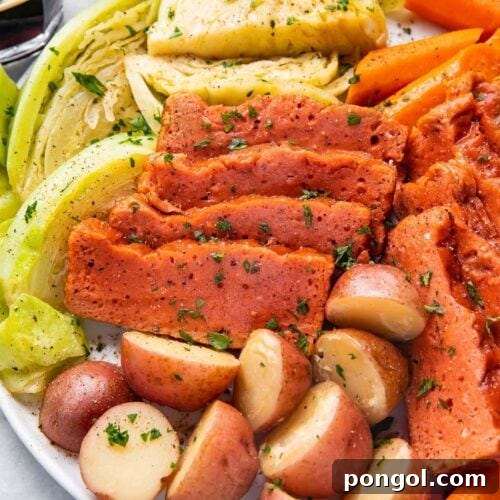
Vegan Corned Beef & Cabbage with Potatoes and Carrots
 Cheryl Malik
Equipment
-
Food processor (if making seitan)
-
Loaf pan
-
parchment paper
-
Large pot or Dutch oven
Ingredients
For Homemade “Corned Beef”
- 1 ½ cups vegetable broth or vegan beef-flavored broth
- 4 cloves garlic crushed or minced
- 2 tablespoons olive oil
- 1 ½ cups vital wheat gluten
- ¼ cup chickpea flour
- ¼ cup nutritional yeast
- 1 teaspoon paprika
- ½ teaspoon cumin
- 1 teaspoon salt to taste
- a few drops vegan red food coloring or a bit of beet powder optional, for color
For Broth and Vegetables
- 8 cups water or vegan beef-flavored broth, or vegetable broth
- 1 tablespoon salt
- 1 tablespoon brown sugar
- ½ tablespoon mustard seeds
- 2 tablespoons mixed pickling spices divided
- 10 small red potatoes
- 5 large (7 ½ inch) carrots peeled, cut into 3-inch pieces
- 1 large head cabbage outer leaves removed and cut into 8 wedges
Instructions
For the Homemade “Corned Beef”
-
In a food processor, combine all ingredients using the dough blade. Pulse until a dough forms and then becomes stringy, with visible holes. Be careful not to overmix; this stringy texture is key for a tender “brisket.”

-
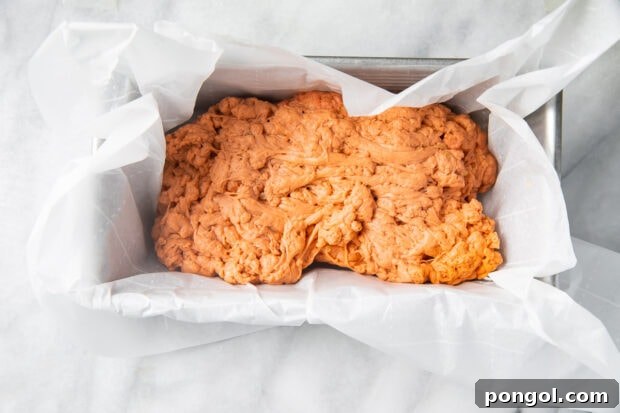
For a traditional brisket-style shape, line a loaf pan with parchment paper, leaving an overhang on the sides. Press the seitan dough evenly into the pan. Lay another piece of parchment paper on top of the seitan and weigh it down with another loaf pan or heavy, oven-safe object. Bake in a preheated oven at 325° Fahrenheit (160° Celsius) for 60 minutes. This pressing helps create a dense, uniform texture.
For the Broth and Vegetables
-
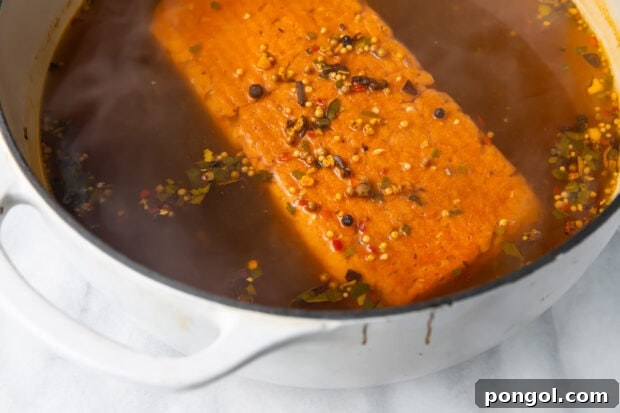
In a large pot or Dutch oven, combine water (or your chosen broth), salt, brown sugar, mustard seeds, and 1 tablespoon of the mixed pickling spices. Add the baked seitan (or store-bought seitan) to the pot. Bring the mixture to a boil, then reduce the heat to a gentle simmer and cook for 15 minutes, allowing the seitan to absorb the rich flavors.
-
Next, add the whole small red potatoes and the cut carrots to the pot. Continue to cook for approximately 10 minutes, or until the vegetables are nearly tender when pierced with a fork.
-
Finally, add the cabbage wedges to the pot, nestling them among the other ingredients. Cook for another 15 minutes, or until the cabbage is tender but still retains some texture. Once cooked, carefully remove the seitan from the pot and slice it against the grain into desired thicknesses.
-
Serve 2-4 slices of the flavorful seitan “corned beef” per person, accompanied by the tender vegetables. Drizzle with as much (or as little) of the savory broth as you like, or serve the broth on the side for dipping. Enjoy your homemade vegan St. Patrick’s Day feast!
- You can 100% use 1 pound of store-bought seitan in place of the homemade seitan! If you’re using store-bought, start your process at step 1 under the “For the Broth and Vegetables” section.
- Make it Low Carb: Most of the carbs in this recipe come from the broth and vegetables – the vegan corned beef is pretty low carb on its own! One serving of the homemade “corned beef” has 14 grams total carbs, so by skipping some of the vegetables, you can easily cut down on your carb intake. The red potatoes have the most carbs, then the cabbage, then the carrots.
Recipe yields approximately 4 servings. Nutritional values shown reflect information for 1 serving. Nutritional values do include information for the vegetables, as well as the homemade “corned beef”. Macros may vary slightly depending on the specific brands of ingredients used.
To determine the size of one serving of vegetables, prepare the recipe as instructed, then weigh the vegetables when finished. Divide the total weight (not including the weight of the bowl, pot, or plate the food is in) by 4. Result will be the weight of one serving.
Approximate Information for One Serving
Nutrition Disclaimers
Number of total servings shown is approximate. Actual number of servings will depend on your preferred portion sizes.
Nutritional values shown are general guidelines and reflect information for 1 serving using the ingredients listed, not including any optional ingredients. Actual macros may vary slightly depending on specific brands and types of ingredients used.
To determine the weight of one serving, prepare the recipe as instructed. Weigh the finished recipe, then divide the weight of the finished recipe (not including the weight of the container the food is in) by the desired number of servings. Result will be the weight of one serving.
Did You Make This Recipe?
We’d love to see your delicious creation! Tag @40aprons on Instagram and be sure to leave a review and your thoughts on the blog post. Your feedback helps our community of plant-based food lovers!
Tag @40Aprons on Instagram