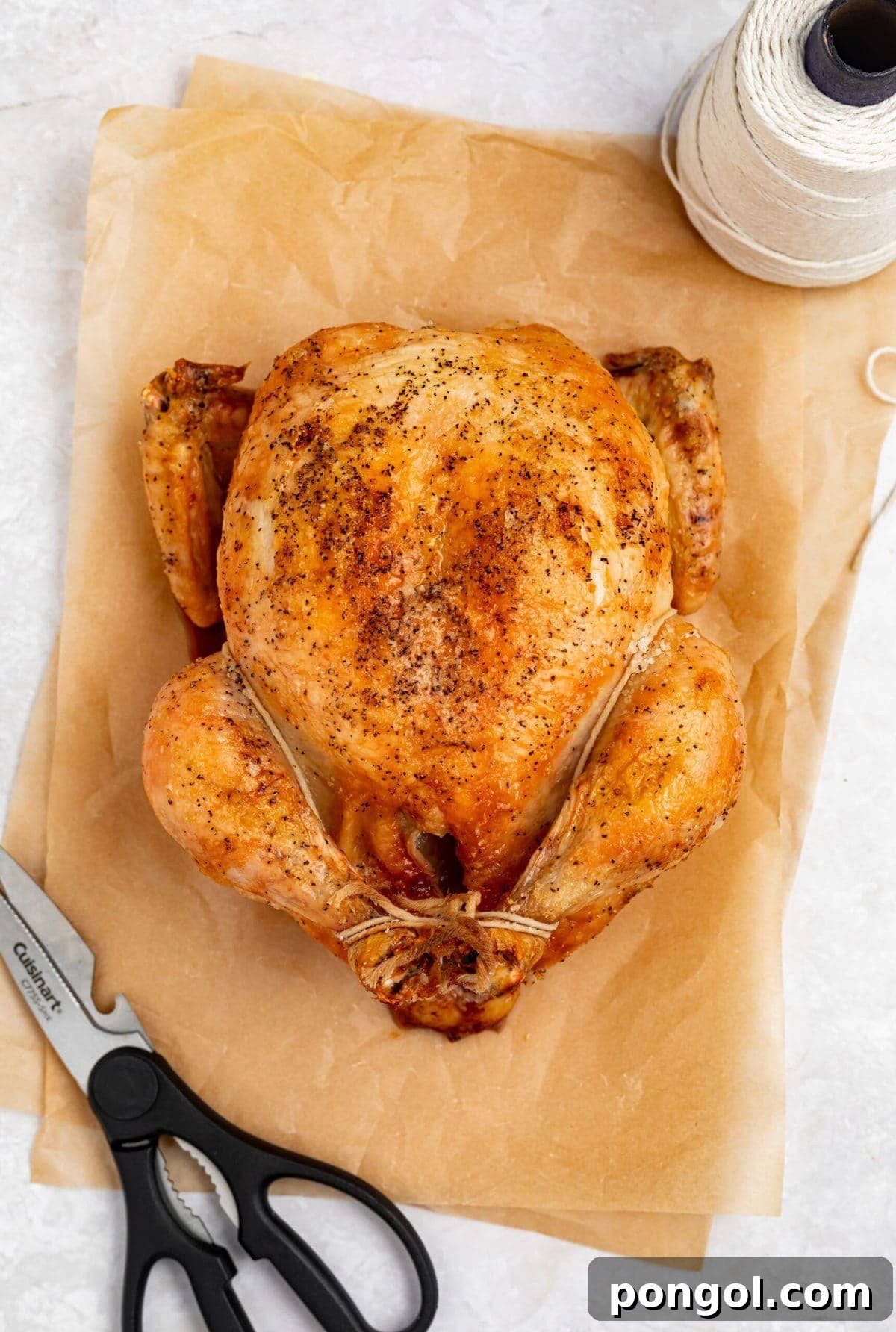
Mastering the simple art of how to truss a chicken can transform your roasting game. In just a few minutes, this technique promises a bird that cooks more evenly, boasts irresistibly crispy skin, and presents beautifully on any table. Say goodbye to dry spots and uneven browning – a perfectly trussed chicken is your secret to culinary success!
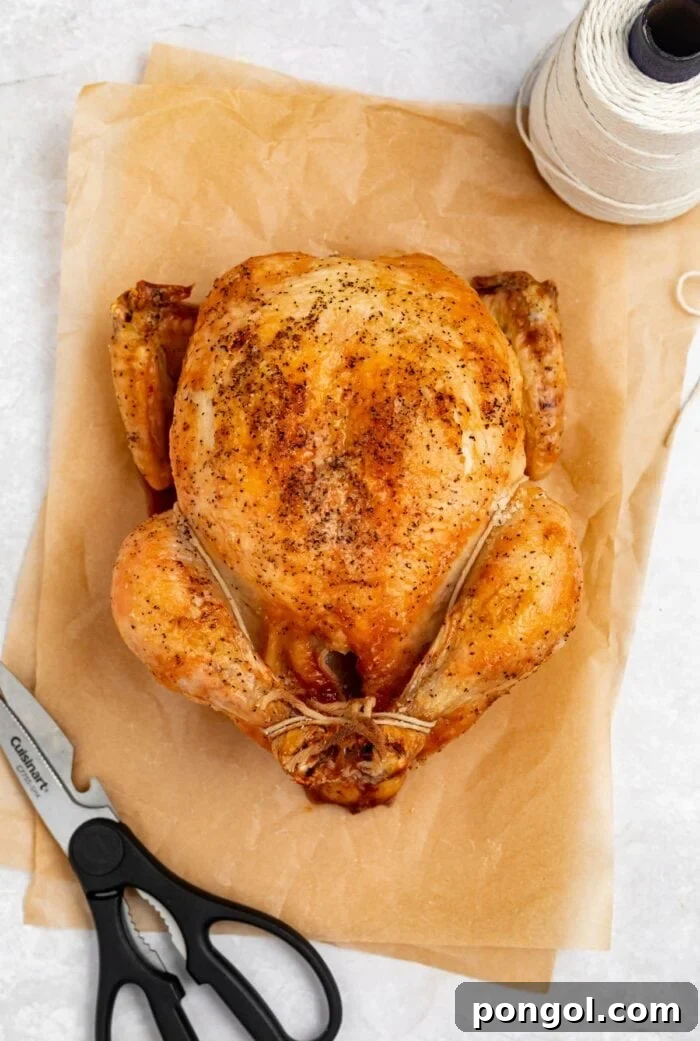
Why Truss a Chicken? Unlocking Culinary Excellence
For home cooks and seasoned chefs alike, the desire for a perfectly roasted chicken is universal. A golden-brown exterior, succulent meat, and consistently crispy skin are the hallmarks of a truly memorable meal. Achieving this ideal, however, often proves challenging with an untrussed bird. This is where the simple yet incredibly effective technique of trussing comes into play, offering a multitude of benefits that elevate your roast chicken from good to absolutely outstanding.
-
The Secret to Even Cooking and Juicier Meat
One of the primary reasons to truss a chicken is to ensure truly even cooking. When a whole chicken is left untrussed, its legs and wings protrude, exposing thinner parts of the bird to direct heat, causing them to cook faster and often dry out before the breast is done. Trussing binds the chicken into a compact, uniform shape. This allows heat to circulate more evenly around the entire bird, preventing delicate breast meat from overcooking while the legs and thighs catch up. The result? A remarkably juicy chicken, cooked perfectly from end to end, with no dry or undercooked sections.
-
Achieve Irresistibly Crispy Skin
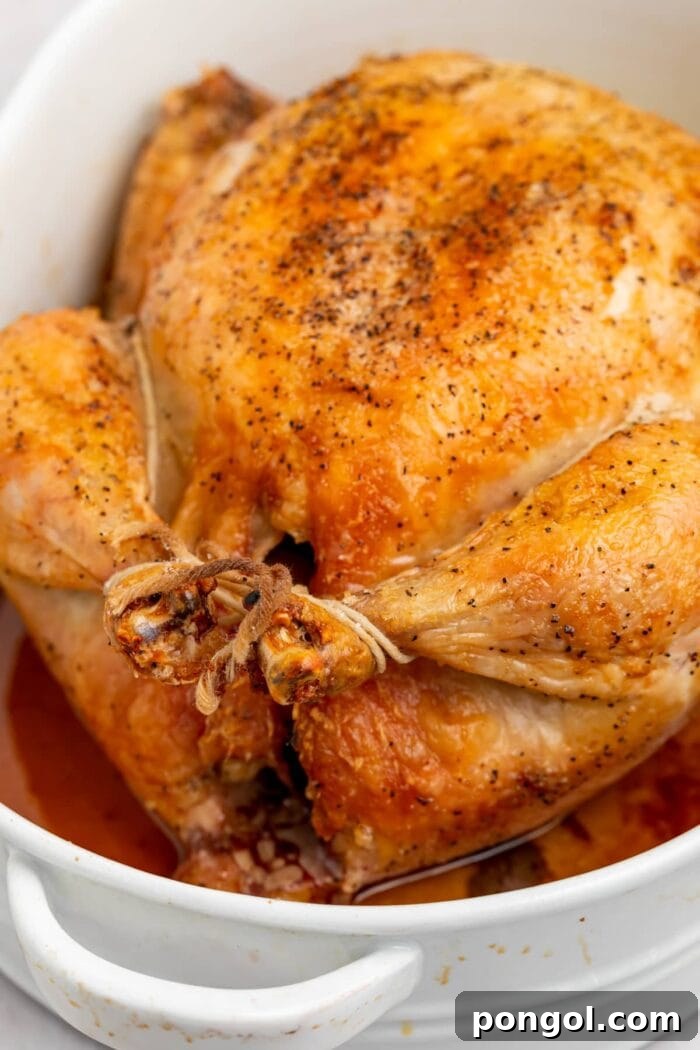
Who can resist super crispy chicken skin? Trussing plays a crucial role in achieving that coveted crunch. By tucking in the wings and securing the legs close to the body, you create a more uniform surface area. This exposes more of the skin to the direct heat of the oven, promoting consistent browning and rendering of fat. With the skin taut and evenly exposed, moisture evaporates efficiently, leading to a delightfully crispy, golden crust all around the bird, rather than just in patchy areas.
-
Enhance Presentation: A Feast for the Eyes
Beyond the practical cooking benefits, a trussed chicken simply looks better. The neat, compact shape transforms a somewhat awkward, splayed bird into an elegant, oven-ready masterpiece. This improved presentation makes for a more appealing center-piece for any dinner, whether it’s a casual family meal or a special occasion. A beautifully trussed and roasted chicken is a testament to the care and attention put into its preparation.
-
Optimize Roasting Efficiency
A compact, trussed chicken is not only aesthetically pleasing but also more efficient to roast. Its streamlined shape allows for better airflow in the oven, potentially leading to slightly faster and more predictable cooking times. The uniform shape also makes it easier to handle, transfer to and from the oven, and carve once roasted. This simple step contributes to a smoother and more successful roasting experience overall.
-
Versatility Across Recipes and Poultry
The beauty of trussing is its universal applicability. This technique can be incorporated into any whole roast chicken recipe you adore. Whether you prefer a simple seasoning of ghee, salt, and pepper, a complex herb rub, or a marinade, trussing provides the perfect foundation. Moreover, this method isn’t exclusive to chickens; it works wonders for other poultry too! Around the holidays, you can easily apply the same trussing steps to prepare a smaller turkey or duck, ensuring an equally impressive and delicious outcome.
Essential Tools for Perfect Trussing
Trussing a chicken is a low-effort, high-reward technique that requires minimal specialized equipment. With just two key items, you’ll be well on your way to roasting perfectly cooked poultry. Having the right tools ensures safety, efficiency, and the best possible results for your culinary endeavors.
-
Choosing Your Whole Chicken or Poultry
The star of the show is, of course, a whole chicken. Any size bird will work perfectly with this trussing method. For demonstration purposes, a 3 ½ pound chicken was used with excellent results, but feel free to apply this technique to smaller or larger chickens. The principle remains the same. The beauty of this method is its adaptability; you can even use it on a turkey for your holiday feasts! A well-formed, plump bird will always yield better results, so select your poultry carefully. Ensure it is fully thawed if frozen, and pat it dry thoroughly before you begin trussing – this is crucial for crispy skin.
-
The Indispensable Butcher’s Twine
Butcher’s twine is absolutely essential for trussing. This specific type of string is made from 100% cotton, is unbleached, and most importantly, is completely oven-safe. It’s designed to withstand high temperatures without melting, burning, or leaching harmful chemicals into your food. This is why it’s vital to never substitute butcher’s twine with other types of string such as craft twine, regular household string, synthetic cords, or even colored kitchen twine unless explicitly stated as food-safe. These alternatives can contain plastics, dyes, or synthetic fibers that can melt, burn, or release toxins when heated, making your food unsafe. To ensure you’re always prepared, I highly recommend purchasing a large spool of high-quality butcher’s twine. A good spool will last you for years, providing plenty of twine for all your trussing needs and any other recipes that call for culinary-grade string.
-
Other Useful Equipment
While not strictly for the trussing process itself, a good pair of sharp kitchen scissors will be invaluable for cutting the twine to the desired length and for trimming any excess after tying. You’ll also want a sturdy roasting pan and, ideally, a wire rack to lift the chicken off the bottom of the pan, promoting even air circulation and preventing the bottom from becoming soggy. A reliable meat thermometer is also crucial for ensuring the chicken reaches a safe internal temperature, regardless of whether it’s trussed or not.
Step-by-Step Guide: How to Truss a Chicken Flawlessly
Trussing a chicken might seem intimidating at first, but it’s a straightforward process that becomes second nature after a couple of tries. Follow these detailed steps to achieve a perfectly compact and roast-ready bird every time.
-
Preparation: Setting the Stage
Before you begin, ensure your chicken is completely thawed and patted dry inside and out with paper towels. Removing excess moisture is key to crispy skin. Lay a piece of butcher’s twine, approximately 3 ¼ feet (about 1 meter) long, in the center of your clean work surface. This length provides enough slack to work with comfortably, preventing frustration.
-
Step 1: Positioning the Twine Base
Carefully place the chicken on top of the twine, breast side up. Position the chicken so that the twine runs directly under its back, roughly centered. Bring the ends of the twine up and over the legs of the chicken, allowing them to rest along the crease where the leg meets the body. This initial placement forms the foundation for securing the bird.

-
Step 2: Securing the Legs for Compactness
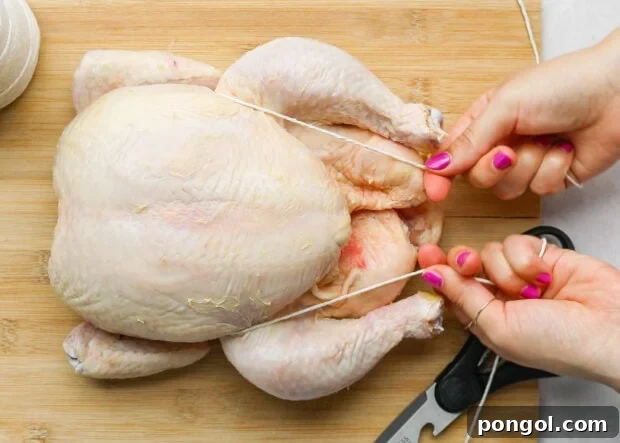
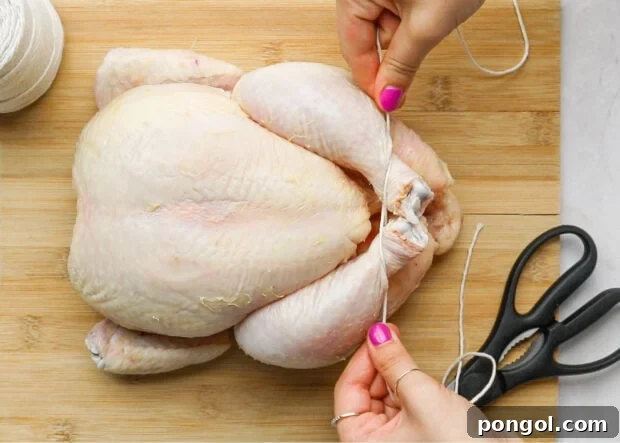
Now, bring the twine underneath the ends of each leg, then back up and over the ends. This creates a loop around each leg. Take the two strings and bring them towards each other, crossing them over one another to form a distinct “X” shape directly over the chicken’s cavity opening. This criss-cross action begins to pull the legs together.
-
Step 3: Bringing the Legs Together Firmly
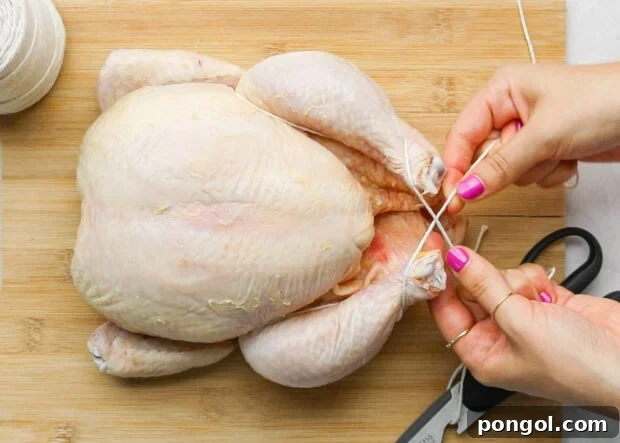
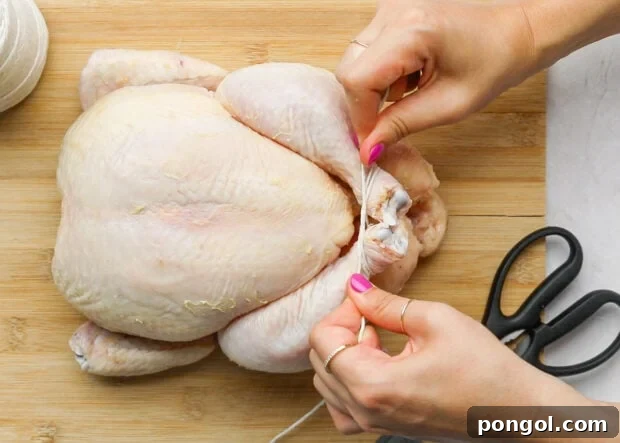
With the “X” formed, take each end of the twine and pull it back underneath each leg, effectively creating another loop, but this time drawing the legs inward. Pull the strings tightly to bring both legs very close together, almost touching. This tightens the bird’s shape, ensuring the legs cook at the same rate as the breast and don’t splay out, which can lead to dry meat.
-
Step 4: Tucking the Wings for Protection
Before tying, address the wing tips. Lift each wing tip and pull it up and behind the body of the chicken. Tuck them neatly under the chicken’s back, pinning them securely. This prevents the delicate wing tips from burning or drying out during the roasting process, contributing to a more uniformly cooked and attractive bird.
-
Step 5: Tying the Knot: Simple and Secure
With the legs secured and wings tucked, bring the ends of the twine up and over the top of the legs, meeting them in the center of the bird’s chest. Secure the twine with a simple, tight bow. You can also use a square knot or surgeon’s knot for extra security, but a well-tied bow is usually sufficient and easier to undo after cooking.
-
Step 6: Final Touches and Trimming
Once your chicken is neatly trussed and the bow is tied securely, inspect your work. Ensure the twine is snug but not so tight that it cuts into the meat. Depending on the size of your chicken and the length of your initial twine, you might have quite a bit of excess string. Use your sharp kitchen scissors to remove any extra twine with a simple snip. Too much loose twine can potentially burn in the oven or get tangled. Now your chicken is perfectly prepared and ready to be seasoned and cooked as desired!
Expert Tips for Trussing Success
While the steps for trussing are straightforward, a few expert tips can make the process even smoother and ensure consistently perfect results every time you roast poultry.
-
Practice Makes Perfect: Build Confidence
Like any new culinary technique, trussing takes a little practice. Don’t be discouraged if your first attempt isn’t flawless. I always recommend doing one “practice run” on your bird before committing to the final knot. This allows you to adjust the twine, understand the tension, and refine your technique. If you feel like you’ve messed up, simply cut off the twine and try again. Each attempt will build your confidence, and soon, you’ll be trussing like a pro.
-
The Right Twine Makes All the Difference
As mentioned, using the correct type of twine is non-negotiable for food safety. Always ensure you’re using 100% cotton, unbleached butcher’s twine. Avoid any string that is dyed, synthetic, or not explicitly labeled as food-safe. A large spool is a wise investment, guaranteeing you always have the right material on hand for all your cooking projects.
-
Crucial Pre-Trussing Steps
Before you even think about the twine, make sure your chicken is properly prepared. Patting the chicken thoroughly dry with paper towels is essential. Excess moisture on the skin will steam rather than crisp, hindering that perfect golden-brown finish. Also, ensure any giblets are removed from the cavity.
-
Timing Your Seasoning
For best results, season your chicken generously after it has been trussed. This allows you to apply seasonings evenly to the now compact and ready-to-roast surface. A simple rub of ghee or olive oil, salt, and freshly ground black pepper is often all that’s needed to create incredible flavor, but feel free to experiment with your favorite herbs and spices.
-
Adapting for Different Bird Sizes
The beauty of this trussing method is its adaptability. While demonstrated with a chicken, the exact same steps can be applied to a smaller turkey, duck, or Cornish hen. You might need to adjust the initial length of your twine slightly for significantly larger or smaller birds, but the technique of securing the legs and tucking the wings remains universal.
Beyond Trussing: Crafting the Ultimate Roast Chicken
Trussing is a vital step, but it’s just one part of the journey to a truly exceptional roast chicken. To truly elevate your meal, consider these additional elements:
-
Flavorful Seasoning Combinations
Experiment with various seasoning profiles to suit your taste. Beyond classic salt and pepper, consider fresh herbs like rosemary, thyme, and sage, or spices like paprika, garlic powder, and onion powder. A lemon cut in half and placed inside the cavity, along with some garlic cloves, can infuse the chicken with aromatic flavors from the inside out.
-
Roasting Temperatures and Timings
General guidelines for roasting a 3-4 pound chicken typically involve cooking at temperatures between 375°F (190°C) and 425°F (220°C). A higher initial temperature can help achieve crispier skin. Always use a meat thermometer inserted into the thickest part of the thigh (without touching bone) to ensure the chicken reaches a safe internal temperature of 165°F (74°C). Cooking times will vary based on oven calibration and bird size, but expect roughly 60-90 minutes for a standard chicken.
-
The Art of Resting
Perhaps one of the most overlooked, yet crucial, steps is resting the chicken after it comes out of the oven. Tent the bird loosely with foil and let it rest for at least 10-15 minutes (longer for larger birds) before carving. This allows the juices to redistribute throughout the meat, resulting in a more tender and flavorful chicken. Skipping this step often leads to dry meat as the juices will simply run out when you carve.
Frequently Asked Questions About Trussing Chicken
-
What exactly is trussing, and why do it?
Trussing is a cooking technique where you tie a whole bird (like a chicken or turkey) with butcher’s twine into a compact, uniform shape. This is done to ensure even cooking, promote crispier skin by exposing more surface area, prevent thinner parts (like wings and leg tips) from burning, and improve the overall presentation of the roasted bird.
-
Can I use any string for trussing?
Absolutely not! You must use 100% cotton, unbleached butcher’s twine. Other types of string, like craft twine, synthetic cords, or even some colored kitchen strings, can contain plastics, dyes, or chemicals that are unsafe for consumption when heated to high oven temperatures. They can melt, burn, or leach toxins into your food.
-
Does trussing only apply to chickens?
While most commonly associated with chicken, the trussing method can be applied to any whole poultry, including turkeys, ducks, and Cornish hens. The principles of creating a compact shape for even cooking and improved presentation remain the same across different types of birds.
-
Will trussing make my chicken cook faster?
Trussing doesn’t necessarily make the chicken cook significantly faster, but it makes the cooking more efficient and predictable. Because the bird is in a compact shape, heat distributes more evenly, leading to consistent cooking and reducing the likelihood of some parts being undercooked while others are overcooked.
-
What if I don’t have butcher’s twine?
If you don’t have butcher’s twine, it’s best to acquire some before attempting to truss. As mentioned, other strings are unsafe. While some people use toothpicks to secure wing tips or flaps of skin, this doesn’t achieve the same compact shape or benefits of proper trussing. For a truly well-roasted bird, investing in butcher’s twine is highly recommended.
Delicious Whole Roast Chicken Recipes You’ll Love
Once you’ve mastered the art of trussing, you’ll unlock a world of perfect roast chicken recipes. Here are some fantastic ideas to get you started:
- Slow Cooker Garlic Butter Whole Chicken with Gravy
- 30 Whole Chicken Recipes
- Spatchcock Chicken with Garlic Herb Butter
- Best Ever Easy Roast Chicken
- Quick Chicken Brine
- Mango Habanero Wings
How to Truss a Chicken
 Sam Guarnieri
Equipment
-
3 ¼ feet (approximately 1 meter) butcher’s twine
-
Sharp kitchen scissors
-
Roasting pan with a wire rack (optional but recommended)
-
Meat thermometer (for checking internal temperature)
Ingredients
- 1 whole chicken (approx. 3 ½ lbs, or your preferred size)
- Seasoning of choice (e.g., ghee or olive oil, salt, pepper, herbs)
Instructions
-
Pat the chicken thoroughly dry with paper towels. Lay a piece of butcher’s twine about 1 meter long in the center of your work surface.
-
Place the chicken on top of the twine, breast up, centering it. Bring the twine up and over the legs, down along the crease where the leg meets the body.
-
Run twine under then over the ends of each leg. Bring strings toward each other and cross them over each other to form an X.
-
Take each end of twine and pull it back underneath each leg, pulling tight to bring both legs close together.
-
Lift wing tips and pull them up and behind the body of the chicken, tucking them neatly behind the body.
-
Bring the twine up and over the legs, meeting in the center of the breast, and secure with a bow. Trim any excess twine. Season and cook chicken as desired.
- I cooked my trussed chicken following the recipe from our Best Ever Easy Roast Chicken post!
- This trussing method will also work perfectly with a turkey or other whole poultry! Simply follow the same steps.
Nutritional values shown are general guidelines and reflect information for 1 serving out of 6 from a 3 ½ pound whole chicken. Actual macros may vary slightly depending on specific brands, types, and size of chicken used.
To determine the weight of one serving, prepare the recipe as instructed. Weigh the finished recipe, then divide the weight of the finished recipe (not including the weight of the container the food is in) by the desired number of servings. Result will be the weight of one serving.
Approximate Nutritional Information for One Serving
Calories: 273cal
Protein: 24g
Fat: 19g
Saturated Fat: 5g
Trans Fat: 1g
Cholesterol: 95mg
Sodium: 89mg
Potassium: 240mg
Net Carbs: 0g
Vitamin A: 178IU
Vitamin C: 2mg
Calcium: 14mg
Iron: 1mg
Nutrition Disclaimers
Number of total servings shown is approximate. Actual number of servings will depend on your preferred portion sizes.
Nutritional values shown are general guidelines and reflect information for 1 serving using the ingredients listed, not including any optional ingredients. Actual macros may vary slightly depending on specific brands and types of ingredients used.
To determine the weight of one serving, prepare the recipe as instructed. Weigh the finished recipe, then divide the weight of the finished recipe (not including the weight of the container the food is in) by the desired number of servings. Result will be the weight of one serving.
Did You Make This Recipe?
We’d love to see your creations! Tag @40aprons on Instagram and be sure to leave a review on the blog post to share your experience!
Tag @40Aprons on Instagram