
Indulge in the extraordinary culinary experience of a restaurant-quality lobster bisque right in the comfort of your own home. This exquisite recipe, deeply inspired by the famously rich and velvety lobster bisque served at Ruth’s Chris Steakhouse, promises to elevate your home dining. Prepare to craft a luscious, creamy soup, brimming with the sophisticated notes of brandy and sherry, and, of course, an abundance of succulent lobster.

Essential Ingredients & Expert Tips Before You Begin
Crafting the perfect lobster bisque requires attention to detail, especially when it comes to key ingredients. Here’s what you need to know to achieve that sought-after restaurant-quality flavor:
- Brandy & Sherry: The Secret to Depth of Flavor – These two liquors are not just additions; they are game-changers, transforming a simple seafood soup into a truly luxurious bisque. Brandy contributes a warm, fruity, and slightly sweet undertone, while sherry offers a nutty, savory complexity that rounds out the rich lobster flavor. Together, they create an aromatic depth that is difficult to replicate.
- Substitution Options: While nothing quite matches the unique profiles of brandy and sherry, you have options if you prefer to omit alcohol or need an alternative.
- Alcoholic Alternative: For sherry, a dry white wine (like Sauvignon Blanc or dry Vermouth) can be a suitable substitute, though it will yield a slightly different flavor.
- Non-Alcoholic Alternative: If you’re looking for a non-alcoholic replacement for the total 1 cup of alcohol, try a mixture of 1/4 cup sugar-free apple juice, a splash of apple cider vinegar (for acidity), and 3/4 cup additional lobster or vegetable stock. This combination aims to mimic some of the sweetness, acidity, and liquid volume without the alcohol.
- Quality Lobster: The foundation of any great lobster bisque is, naturally, high-quality lobster. Opt for fresh lobster whenever possible for the most vibrant flavor. The shells are just as important as the meat, forming the base of your incredibly rich stock.
- Fresh Aromatics: Onions, celery, carrots (the classic mirepoix), and garlic are sautéed to create a flavorful aromatic base. Fresh herbs like tarragon and thyme infuse the bisque with delicate, complementary notes.
- Tomato Paste: This concentrated ingredient adds a subtle sweetness and a beautiful depth of color, enhancing the bisque’s characteristic hue.
- Whipping Cream: Essential for achieving the bisque’s signature creamy texture and luxurious mouthfeel. Ensure it’s at room temperature to prevent it from seizing when added to the warm soup.
- Clam Juice: A fantastic shortcut to enhance the seafood flavor without having to make a full fish stock from scratch.
Unveiling the Excellence: What Makes This Lobster Bisque a Must-Try
This isn’t just another soup recipe; it’s an experience. Here’s why this homemade lobster bisque stands head and shoulders above the rest:
- It’s exceptionally thick, lusciously creamy, and brimming with an explosion of incredible, balanced flavors. Imagine a chilly autumn evening or a crisp winter night; this bisque offers the ultimate comforting embrace, warming you from the inside out with its rich, savory profile. The velvety texture coats your palate, leaving a memorable impression.
- The Star of the Show: Premium Lobster. Do we truly need to elaborate? Beyond the undeniably delicious chunks of tender lobster meat, the true magic begins with a meticulously crafted, homemade stock derived from simmering lobster shells with carefully selected aromatics. This foundational step ensures an unparalleled depth of flavor that a pre-made stock simply cannot achieve, making every spoonful super rich and utterly delicious. The essence of the ocean is captured in every drop, building a robust base for your bisque.
- This recipe delivers a top-tier, restaurant-quality bisque that appears incredibly complex and luxurious, yet is surprisingly easy to master at home. It’s the perfect showstopper for special occasions—be it an anniversary dinner, a romantic Valentine’s Day meal, or any event where you truly wish to impress your guests with your culinary prowess. Keep this recipe handy, as it’s sure to become a cherished favorite.
- Seeking a Convenient Make-Ahead Meal? You’re in luck! A significant portion of this bisque can be prepared up to one day in advance, allowing you to focus on other aspects of your meal or simply relax. Finish the final steps right before serving dinner. This flexibility makes it an ideal choice for entertaining. Please note, however, that this recipe does not freeze well, and any finished bisque should be stored in an airtight container in the refrigerator for a maximum of 2 days to maintain its optimal quality and freshness.
- Balanced Flavor Profile: The blend of brandy and sherry, combined with a subtle sweetness from tomato paste and a hint of fresh herbs, creates a complex yet harmonious flavor that is both comforting and sophisticated.
🔪 Mastering Lobster Meat Extraction: The Best Methods Explained
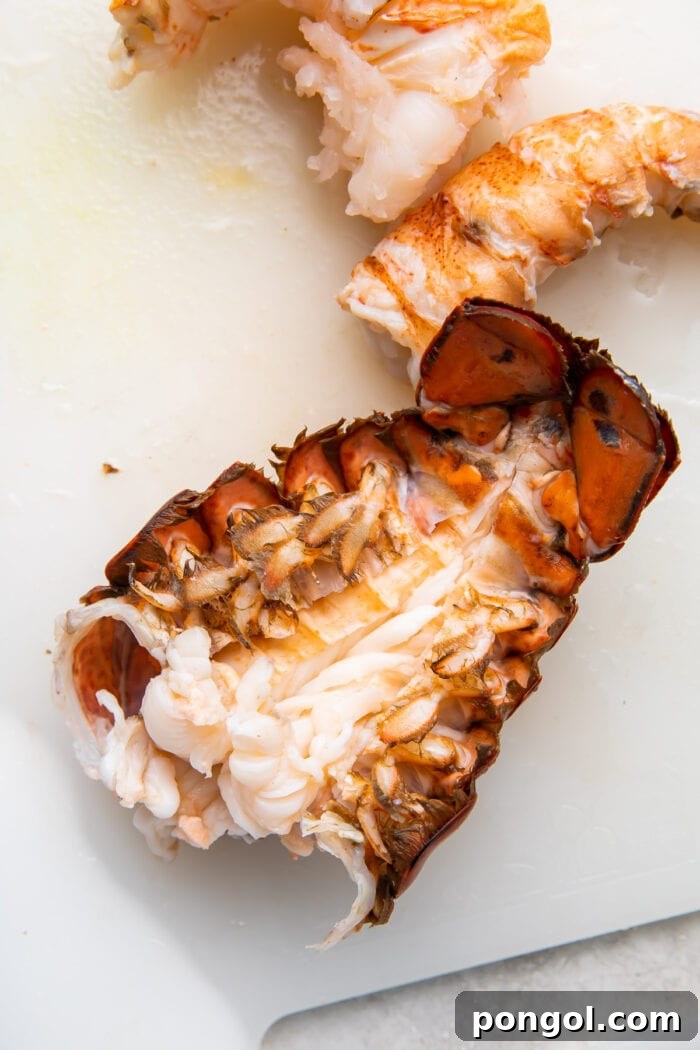
Successfully extracting the sweet, tender meat from lobster tails can seem daunting, but it’s quite straightforward with the right technique. In my experience, the simplest and most efficient method is to carefully cut away the shell from the meat. It truly is that simple, and it preserves the integrity of the lobster meat beautifully.
Method 1: The Kitchen Shear Advantage (Recommended for Ease and Precision)
For this technique, you’ll need a sturdy pair of kitchen shears. After your lobster tails have been cooked and cooled sufficiently to handle:
- Prepare the Tail: Take one cooled lobster tail from its ice bath or cooling station.
- Cut Along the Back: Using your kitchen shears, carefully cut straight down the center of the hard top shell of the tail, from the wide end down to the fan. Be careful not to cut too deep into the meat itself.
- Open the Shell: Once you’ve made the cut, gently pry open the shell. You’ll likely need to use your thumbs to pop the hard, cartilaginous membranes on the inner, softer side of the tail. This will help release the meat.
- Extract the Meat: With the shell opened, you should be able to effortlessly pull the entire piece of lobster meat out in one pristine piece. This method often yields beautifully intact tail meat, perfect for presentation or easy chopping.
Method 2: The Bare Hands Approach (When Shears Are Not Available)
If you don’t have kitchen shears or a very sharp knife at hand, or if you simply prefer a more tactile approach, you can remove the meat using just your hands:
- Position the Tail: Lay the cooled lobster tail on its side on a clean kitchen counter or a stable cutting board.
- Apply Pressure: Using both hands, press down firmly and evenly on the shell until you hear or feel it crack. This initial crack is crucial for loosening the shell.
- Open and Pull: Hold the tail with the underside (the softer, finned side) facing down and the small fins pointed towards you. Now, pull on both sides of the cracked shell. This action should further crack it open, allowing you to carefully peel back the shell and remove the meat. It might not come out in one perfect piece as often as with shears, but it will work effectively.
Once you’ve mastered these techniques, your beautifully extracted lobster meat is ready to be transformed into this magnificent lobster bisque!
Chef’s Insights & Culinary Secrets for the Ultimate Bisque
Elevate your lobster bisque from delicious to truly unforgettable with these invaluable tips from the pros:
- Generous Lobster Portions: If you’re a true aficionado of lobster, don’t hesitate to increase the amount beyond what the recipe specifies. The more lobster, the richer and more indulgent your bisque will be. While fresh lobster meat is unequivocally the best and comes highly recommended for its superior flavor and texture, frozen or even canned lobster can be used as alternatives in a pinch. Be aware, however, that these options may not yield the exact same nuanced taste as fresh lobster. If using frozen tails, ensure they are thoroughly thawed before cooking to ensure even cooking and optimal texture.
- Amplify the Flavor with Sautéed Lobster: For an even more intense and complex flavor profile, consider briefly sautéing your lobster meat before stirring it into the finished bisque.
- Melt a tablespoon of unsalted butter in a skillet over medium heat. Add a minced clove of garlic and sauté until fragrant, about 30 seconds.
- Season your coarsely chopped lobster meat with a pinch of salt and freshly cracked black pepper. For those who appreciate a kick, a tiny dash of cayenne pepper or a sprinkle of Tony Chachere’s Original Creole Seasoning can add a wonderful zesty dimension.
- Add the seasoned lobster to the skillet and sauté it just long enough to warm it through and lightly sear the edges, typically 1-2 minutes. Overcooking here will result in rubbery lobster.
- Gently fold the sautéed lobster into your bisque just before serving. This step adds another layer of buttery, garlicky goodness and enhances the natural sweetness of the lobster.
- Prioritize Cold-Water Lobster Tails: Whenever your budget allows, make the investment in cold-water lobster tails over warm-water varieties. While cold-water tails are generally more expensive, the difference in quality is significant and worthwhile. They boast a distinctly sweeter flavor profile, lacking the slightly “fishy” taste sometimes found in warm-water lobsters, and possess a far more desirable, firm yet tender texture. This choice will greatly impact the overall excellence of your bisque.
- Creative Seafood Combinations: Feel free to experiment and mix it up! This bisque recipe provides an excellent base for other types of seafood. Consider adding crab meat, succulent shrimp, or flavorful crawfish in place of (or alongside) the lobster meat. These additions can introduce exciting new flavors and boost the protein content, making the bisque even more substantial and versatile. Just remember to adjust cooking times for different seafood to avoid overcooking.
- Using a Blender for Ultra-Smoothness: For an exceptionally silky-smooth bisque, after straining the solids from the stock, consider blending a small portion of the aromatic vegetables (like some of the softened carrots and celery) with a bit of the liquid before returning it to the pot. This will add extra body and creaminess without needing more thickeners.
Tailoring Your Bisque: Delicious Recipe Variations
This lobster bisque recipe is incredibly versatile, allowing for modifications to suit various dietary needs or taste preferences without sacrificing flavor:
- Make it Dairy-Free: For those avoiding dairy, effortlessly transform this rich bisque by substituting the whipping cream with an equal amount of full-fat coconut cream. Ensure you use coconut cream, not coconut milk, for the desired thickness and richness. The subtle coconut flavor pairs surprisingly well with seafood, adding an exotic twist.
- Make it Gluten-Free: The primary thickener in this recipe is cornstarch. Pure cornstarch is naturally gluten-free; however, always be diligent and check labels to avoid any brands that might be prone to cross-contamination in their manufacturing facilities. As an excellent alternative, you can replace the 1 tablespoon of cornstarch with 2 tablespoons of arrowroot powder. Arrowroot works similarly to cornstarch as a thickener and is a fantastic gluten-free option.
- Make it Keto-Friendly: Adapting this bisque to fit a ketogenic diet is straightforward, focusing on reducing carbohydrate content.
- Reduce Carbs from Vegetables: Most of the carbs in this bisque come from the vegetables (onion, carrots, tomato) and the cornstarch. To significantly reduce net carbs, you can opt to omit the onion entirely, which will save approximately 2-3g net carbs per serving. You can also slightly reduce the amount of carrots.
- Thickener Swap: Replace the 1 tablespoon of cornstarch with 1 tablespoon of xanthan gum. Xanthan gum is a powerful, low-carb thickener; use it sparingly as a little goes a long way.
- Boost Healthy Fats: Instead of whipping cream, use heavy cream for a higher fat content, which is desirable in a keto diet.
- Mind the Tomato Paste: When selecting tomato paste, look for brands that have the lowest carbohydrate count and absolutely no added sugars. Reading nutritional labels carefully is key for maintaining ketosis.
- Spicier Bisque: Add a pinch of red pepper flakes or a dash of hot sauce (like Tabasco) during the simmering stage to introduce a pleasant heat.
- Smoked Paprika Infusion: A teaspoon of smoked paprika can add a beautiful smoky depth and enhance the bisque’s color. Add it when sautéing the aromatics.

🐟 Explore More Incredible Seafood Recipes
If you’ve enjoyed this delightful lobster bisque, you’re sure to love these other fantastic seafood dishes:
- How to Broil Lobster Tails + Garlic Butter Sauce
- Healthy Authentic Seafood Gumbo (Gluten Free, Whole30, Paleo, Low Carb)
- Refreshing Seafood Salad
- Easy Salmon Patties & Lemon-Garlic Sauce
- Tuscan Shrimp (Whole30, Paleo)
- Addictive Hot Crab Dip
- Rich and Creamy She Crab Soup
- Classic Shrimp Bisque
- Perfect Baked Fish with Lemon-Garlic Butter
- Hearty Mixed Seafood Soup

Cheryl Malik
The Best Lobster Bisque (Ruth’s Chris Copycat Recipe)
15 minutes
1 hour
1 hour
15 minutes

Cheryl Malik
Save
Saved!
4
servings
Equipment
-
Large, heavy-bottomed pot essential for boiling lobster and simmering bisque base
-
Large bowl for cooling lobster tails
-
Medium bowl for reserved cooking liquid
-
Kitchen shears optional, for easy lobster meat removal; see Notes
-
Cutting board for chopping lobster and vegetables
-
Sharp chef’s knife for precise chopping
-
2 small bowls one with lid or plastic wrap to cover for lobster meat; the other for shells
-
Refrigerator for chilling prepared lobster meat
-
Large measuring cup for collecting lobster juices
-
Large wooden spoon for stirring and pressing solids
-
Large saucepan for finishing the bisque
-
Fine mesh sieve for straining the bisque base
-
Whisk for combining ingredients smoothly
-
Small mixing bowl for cornstarch slurry
Ingredients
For the Lobster Tails
-
8
cups
water
plus more as needed to fully cover lobster tails during boiling -
3
small
lobster tails
or 2 large tails, approximately 12 ounces total, preferably cold-water variety -
cool water
enough to submerge cooked lobster tails for quick cooling
For the Lobster Bisque Base
-
2
tablespoons
olive oil
-
1
medium
onion
sliced, approximately 8 ounces, for aromatic depth -
½
cup
sliced celery
approximately 1 large stalk, part of the mirepoix base -
½
cup
sliced carrots
approximately 1 medium carrot, adds sweetness and color -
1
head
garlic
peeled, cut in half crosswise, for robust flavor -
¾
cup
chopped red tomato
approximately 1 large tomato, for acidity and color -
2
sprigs
fresh tarragon
optional, adds a delicate anise-like flavor -
6
sprigs
fresh thyme
classic herb for savory dishes -
2
large
bay leaves
for an earthy, herbal note -
½
teaspoon
whole black peppercorns
adds subtle spice to the stock -
½
cup
brandy
adds depth and complex aroma -
½
cup
sherry
contributes a nutty, savory note -
2
cups
bottled clam juice
enhances seafood flavor -
2
cups
cooking liquid
reserved after boiling lobster tails, integral to the stock -
lobster juices
reserved after chopping lobster meat and shells, adds pure lobster essence -
¼
cup
tomato paste
for color and concentrated umami flavor -
½
cup
whipping cream
at room temperature, for a rich, creamy finish -
1
tablespoon
cornstarch
for thickening the bisque -
1
tablespoon
cold water
to make a cornstarch slurry -
½
teaspoon
salt
more or less to taste, adjust at the end -
freshly cracked black pepper
to taste, for a fresh spicy kick
Serving Suggestions (All Optional)
-
chopped fresh chives
for a fresh, oniony garnish and pop of color -
a swirl of crème fraîche or extra whipping cream
for an added touch of elegance and creaminess -
a drizzle of high-quality extra virgin olive oil
for a subtle fruity aroma
Instructions
To Prepare the Lobster
-
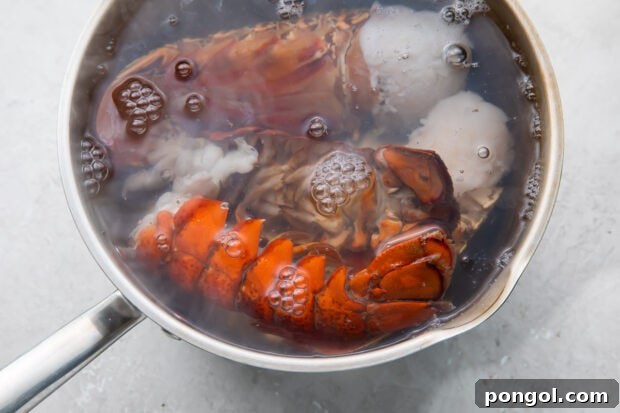
Fill a large, heavy-bottomed pot with 8 cups of water. If your lobster tails are particularly large, add more water as needed to ensure they will be completely submerged. Place the pot on your stovetop over high heat and bring the water to a rapid, rolling boil.
-
Once the water reaches a vigorous boil, carefully add the 3 small lobster tails (or 2 large tails) to the pot. Ensure they are fully submerged in the boiling water. Boil the lobster tails for exactly 5 minutes, or until they are thoroughly cooked through and their shells turn a vibrant, bright red color. This indicates they are ready.

-
Once the lobster tails are perfectly cooked, use tongs to carefully transfer them to a large bowl. Immediately add enough cool water (or an ice bath for faster cooling) to the bowl to completely submerge the lobster tails. This stops the cooking process and makes them easier to handle. Set the tails aside to cool until they are comfortable to touch.
-
While the lobster tails are cooling, return to the pot of boiling water. Carefully ladle out exactly 2 cups of this flavorful cooking liquid into a medium bowl. Try to capture as much loose lobster meat or flavorful bits of shell with the liquid as possible. This liquid is packed with flavor and will be used in your bisque. Discard any remaining cooking liquid from the pot.
-
Once the lobster tails are cool enough to handle comfortably, begin removing the meat. Carefully crack open one lobster tail and remove the meat using your preferred method (refer to the detailed “How to Remove Lobster Meat from the Shell” section above for options). Place the extracted lobster meat on a clean chopping board. Repeat this process with the remaining lobster tails. It is crucial not to discard the lobster shells, as they are essential for building the bisque’s base.
-
After all the succulent meat has been removed from the shells, use a sharp chef’s knife to coarsely chop the lobster meat into bite-sized pieces. Aim for uniform pieces that will be pleasant to eat in the soup.
-
Transfer the chopped lobster meat to a small bowl. Cover the bowl tightly with a lid or plastic wrap to prevent it from drying out, and place it in the refrigerator to keep it chilled until you’re ready to add it to the bisque.
-
Return to the lobster shells. Place the empty shells back on the cutting board. Using a chef’s knife or your kitchen shears, chop the shells into large, manageable pieces. These shell pieces are vital for the next step. Carefully transfer all the chopped shell pieces to a second small bowl and set it aside; these will form the foundation of your rich bisque stock.
-
Any remaining liquid or juices left on the cutting board after chopping the lobster meat and shells are pure liquid gold. Scrape these precious lobster juices into a large measuring cup and set aside. These will contribute significantly to the depth of flavor in your bisque.
To Make the Bisque Base
-
Place your large, heavy-bottomed pot (the same one used for boiling the lobster, if cleaned) on the stovetop over medium-high heat. Allow the pot to warm up for a minute. Once warm, add 2 tablespoons of olive oil. Continue heating the pot, swirling and tilting it as needed to ensure the oil is evenly distributed across the bottom, until the oil is hot and shimmers, indicating it’s ready for sautéing.
-
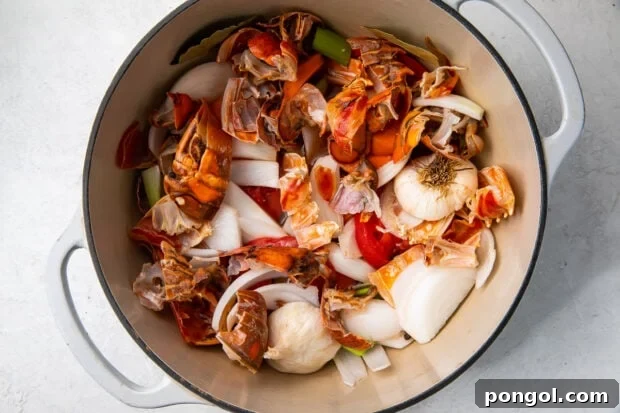
When the oil is sufficiently hot, add the reserved chopped lobster shell pieces to the pot. Sauté the shells, stirring them occasionally with a wooden spoon, for approximately 5 minutes. You’ll notice the shells beginning to darken and release their aroma. Be attentive and stir regularly to prevent the shells from burning, as this can impart a bitter flavor.
-
Once the lobster shells have deepened in color, it’s time to build your aromatic base. Add the slices of 1 medium onion, ½ cup sliced celery, ½ cup sliced carrots, 1 head of garlic (cut in half), ¾ cup chopped red tomato, 2 sprigs of fresh tarragon (if using), 6 sprigs of fresh thyme, 2 large bay leaves, and ½ teaspoon of whole black peppercorns to the pot. Stir thoroughly to incorporate all these wonderful flavors. Continue to sauté for another 5-7 minutes, until the vegetables begin to soften and become fragrant.
-
Carefully add ½ cup of brandy and ½ cup of sherry to the pot. Stir well to integrate these liquors with the shells and aromatics. Increase the heat slightly and bring the mixture to a gentle boil. Allow it to boil for approximately 5 minutes, or until the majority of the liquid has evaporated, leaving behind concentrated flavors. This step, known as deglazing, adds immense depth.
-
Now, introduce the liquid components: add 2 cups of bottled clam juice, the 2 cups of cooking liquid you reserved after boiling the lobster tails, and the precious reserved lobster juices from the cutting board. Stir everything together to combine. Reduce the heat under the pot to medium.
-
Allow the mixture to come to a strong simmer. Maintain this gentle simmer for 15 minutes. During this time, the flavors will meld and intensify, creating a rich and aromatic stock.
-
After simmering for 15 minutes, carefully remove the large pot from the heat. Place a large saucepan on your stovetop, and fit a fine mesh sieve snugly into the saucepan. Slowly and carefully pour the entire contents of the pot (shells, vegetables, and liquid) into the sieve, allowing the liquid to drain into the saucepan below.
-
Once most of the liquid has passed through, use the back of your wooden spoon to firmly press down on the solid ingredients (shells and vegetables) in the sieve. This action extracts as much remaining flavorful liquid as possible. The goal is to maximize the lobster essence in your bisque. Once thoroughly strained, discard the leftover solid ingredients; their job is done.
-
To the strained soup in the saucepan, add ¼ cup of tomato paste. Whisk vigorously until the tomato paste is completely dissolved and smoothly incorporated into the liquid. This adds a beautiful color and a subtle depth of flavor.
-
Return the saucepan to medium heat. Simmer the soup for approximately 15 minutes, allowing it to gently reduce. The goal is to concentrate the flavors and reduce the volume to about 3 cups. This reduction step is crucial for a rich, full-bodied bisque.
-
Once the soup has reduced to the desired consistency and volume, remove the saucepan from the stovetop and allow it to cool slightly for a few minutes.
-
Optional Make-Ahead Step: If you plan to serve the lobster bisque later, stop at this point. Transfer the cooled soup to an airtight container and allow it to cool completely before refrigerating it for up to 1 day. Approximately 20 minutes before you intend to serve, gently reheat the soup on the stovetop over low heat, then continue with the instructions below to finish the bisque.
-
Add the ½ cup of whipping cream (which should be at room temperature to prevent curdling) to the soup. Whisk thoroughly until the cream is fully incorporated, creating a smooth, creamy texture. Return the saucepan to the stovetop over medium-low heat and gently simmer the mixture for 5 minutes, allowing the flavors to marry.
-
While the bisque mixture simmers, prepare a cornstarch slurry. In a small mixing bowl, combine 1 tablespoon of cornstarch with 1 tablespoon of cold water. Whisk these two ingredients together until a smooth, lump-free paste forms. This slurry will be used to thicken your bisque to perfection.
-
Pour the prepared cornstarch slurry into the simmering saucepan of bisque and stir immediately to incorporate. Increase the heat under the saucepan to medium-high and bring the mixture back to a boil. Let it boil for 2 minutes, stirring constantly, until the bisque has visibly thickened to your desired consistency. The bisque should coat the back of a spoon.
-
Once the soup has reached its beautiful, thick consistency, taste the bisque. Add ½ teaspoon of salt and plenty of freshly cracked black pepper to taste, adjusting to your preference. Stir thoroughly to ensure the seasonings are evenly distributed throughout the rich soup.
-
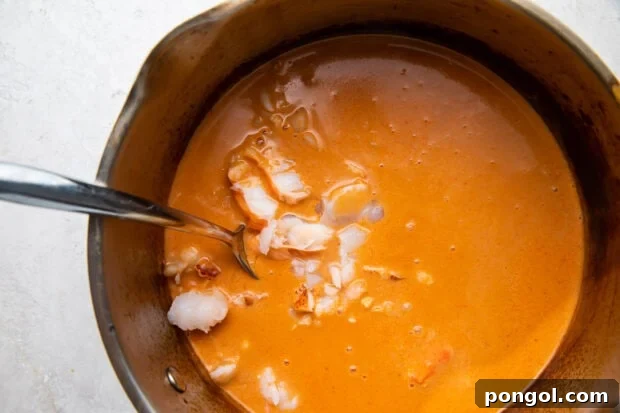
Remove the saucepan from the heat and allow it to cool slightly for a moment. Then, add the reserved, chilled chopped lobster meat to the soup. Gently stir to incorporate the lobster meat without breaking it apart. Return the saucepan to very low heat.
-
Simmer the mixture on low heat, stirring constantly and gently, just until the lobster meat is warmed through. This typically takes only 1-2 minutes; be careful not to overcook the lobster, as it will become tough.
To Serve
-
Once the lobster meat is perfectly warmed, ladle the prepared bisque generously into elegant serving bowls. For an optional, yet recommended, finishing touch, garnish each bowl with a sprinkle of freshly chopped chives. A swirl of crème fraîche or a drizzle of high-quality extra virgin olive oil can also enhance the presentation and flavor. Serve immediately and savor every spoonful of this exquisite homemade lobster bisque.
Important Notes:
- This recipe does not freeze well. Freezing and thawing can drastically alter the creamy texture and quality of the bisque.
- For optimal freshness and safety, any prepared bisque should be refrigerated in an airtight container for no more than 2 days maximum. Reheat gently over low heat, stirring frequently, to prevent separation.
Detailed Guide to Remove Lobster Meat from Tails:
For best results and to preserve the delicate meat, follow these methods:
- Using Kitchen Shears: This method offers precision and ease. Take your cooled lobster tails from their cooling bath. Using sturdy kitchen shears, carefully cut straight down the entire length of the top (hard) back shell of the tail. Then, gently pry open the shell and use your thumbs to pop the hard membranes located on the inner, softer side of the tail. Once these membranes are released, you should be able to smoothly open up the shell and effortlessly pull the whole piece of sweet lobster meat out in a single, intact piece.
- By Hand: If kitchen shears are unavailable, this manual method works effectively. Lay the cooled lobster tail on its side on a clean kitchen counter or a stable cutting board. Using both hands, press down firmly on the shell until you feel it crack along its length. Next, hold the tail with the shell facing down and the small, feathery fins pointed directly towards you. Now, pull firmly on both sides of the cracked shell to widen the opening. This will allow you to peel back the shell and carefully remove the lobster meat. It might not be as perfectly intact as with shears, but it will be just as delicious.
Approximate Nutrition Information for One Serving
Serving Size:
1
serving
Calories:
342
cal
Protein:
7
g
Fat:
18
g
Saturated Fat:
8
g
Trans Fat:
0.003
g
Cholesterol:
64
mg
Sodium:
877
mg
Potassium:
548
mg
Total Carbs:
17
g
Fiber:
3
g
Sugar:
7
g
Net Carbs:
14
g
Vitamin A:
3771
IU
Vitamin C:
17
mg
Calcium:
104
mg
Iron:
2
mg
Nutrition Disclaimers
Number of total servings shown is approximate. Actual number of servings will depend on your preferred portion sizes.
Nutritional values shown are general guidelines and reflect information for 1 serving using the ingredients listed, not including any optional ingredients. Actual macros may vary slightly depending on specific brands and types of ingredients used.
To determine the weight of one serving, prepare the recipe as instructed. Weigh the finished recipe, then divide the weight of the finished recipe (not including the weight of the container the food is in) by the desired number of servings. Result will be the weight of one serving.
Did You Make This Exquisite Recipe?
We’d love to see your culinary creation! Tag @40aprons on Instagram and be sure to leave a review and your valuable feedback on the blog post!
Tag @40Aprons on Instagram