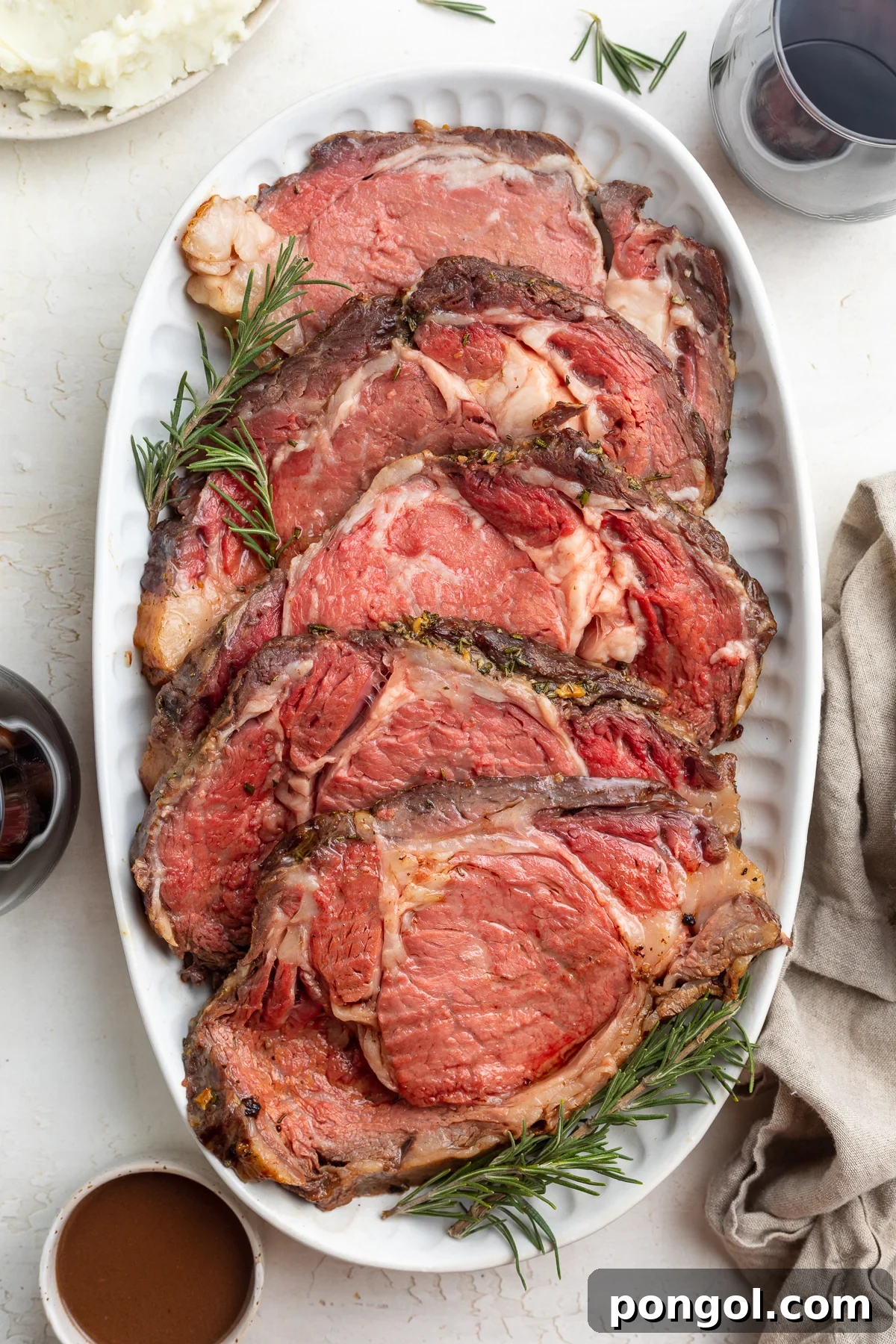
Perfect Sous Vide Prime Rib with Gluten-Free Au Jus: Your Ultimate Holiday Roast
Prepare to impress your guests with the most exquisite prime rib you’ve ever tasted. This sous vide prime rib recipe promises unparalleled tenderness, succulence, and melt-in-your-mouth flavor, making it the undeniable star of any holiday table or special gathering. By slow-cooking the prime rib in a precisely temperature-controlled water bath and finishing it with a rich garlic-herb compound butter and quick roast, we achieve a gorgeous, deeply crusted exterior and perfectly even doneness from edge to edge. To complete this show-stopping entrée, we serve it with a simple, yet incredibly flavorful, gluten-free au jus crafted from just four essential ingredients. Say goodbye to dry, overcooked roasts and hello to prime rib perfection.
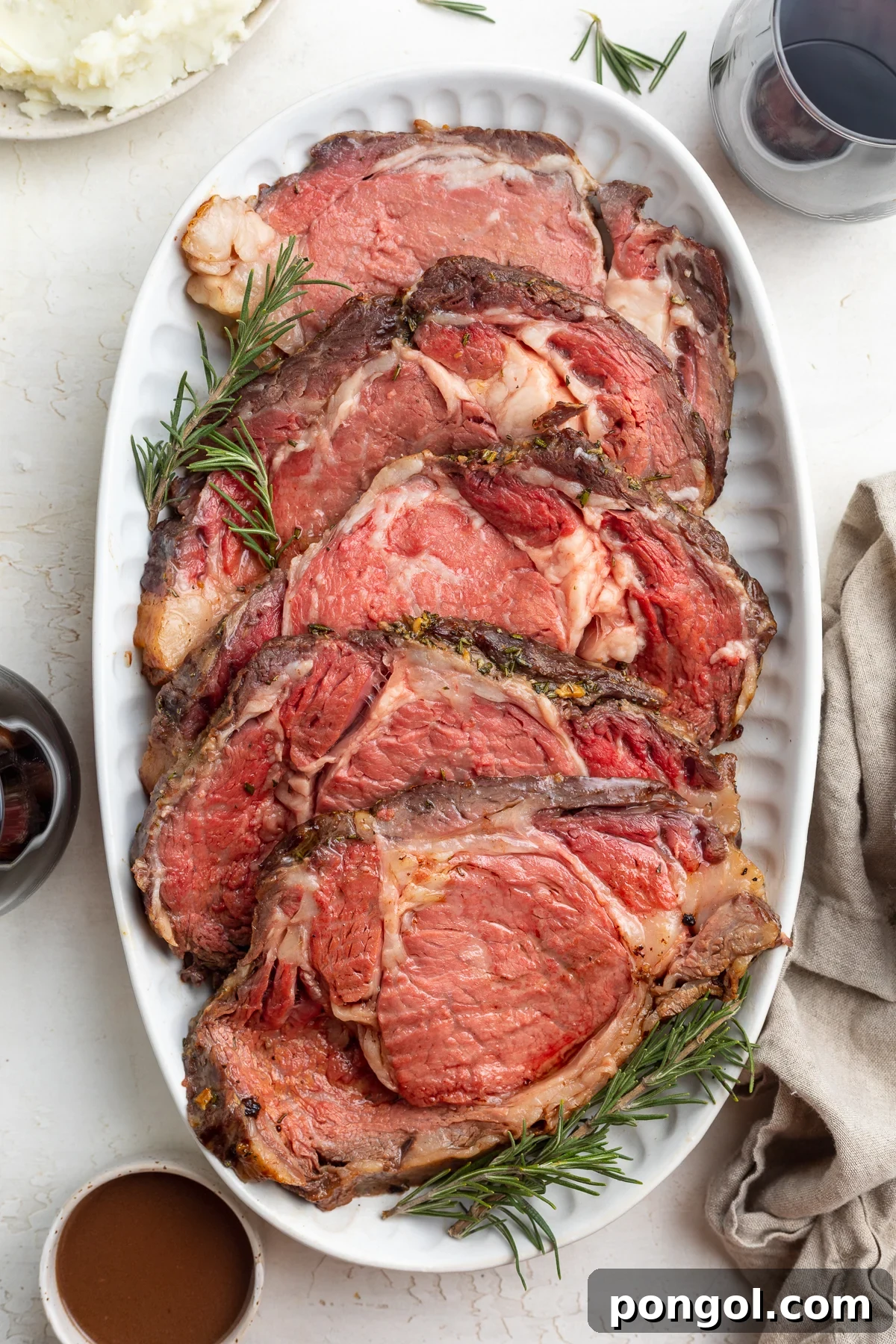
Why This Sous Vide Prime Rib Recipe Stands Out
Prime rib is a classic holiday centerpiece, and its appeal is undeniable. Known for its rich marbling and deep beefy flavor, this cut is officially graded “prime” by the USDA, signifying its superior quality and tenderness. Whether you’re working with a magnificent standing rib roast or a convenient boneless rib-eye roast, prime rib consistently delivers one of the juiciest and most flavorful experiences in the culinary world. Given its premium price point, typically reserved for festive occasions rather than weeknight dinners, it’s crucial to cook it to perfection.
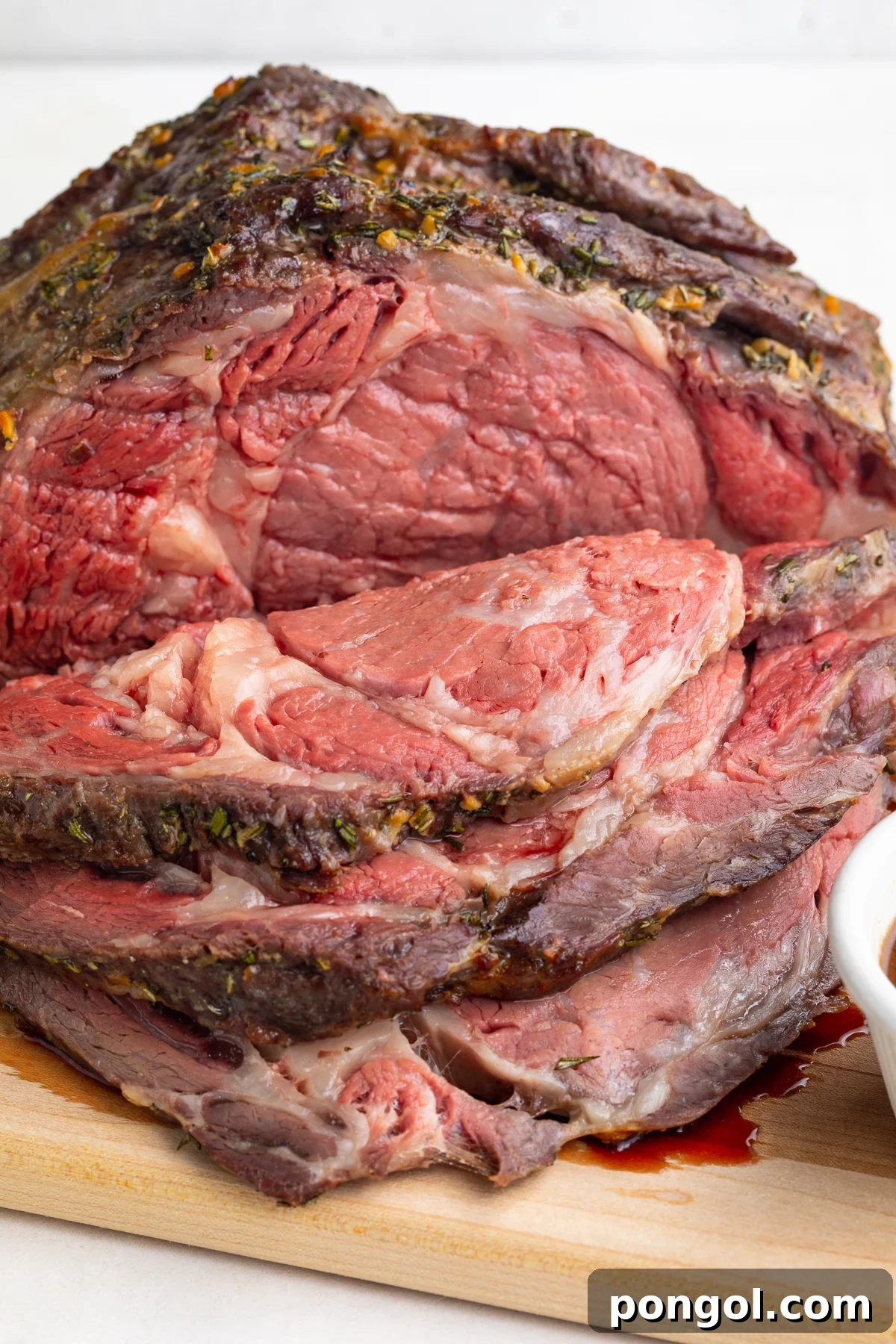
This is where the sous vide method truly shines. Traditional roasting can be a gamble, often leading to uneven cooking, dry edges, or an overcooked interior. Sous vide, however, eliminates these risks by cooking the prime rib slowly and gently in a precisely temperature-controlled water bath. This ensures an impeccably even doneness from crust to core, guaranteeing that every slice is as tender and juicy as the last. After its gentle sous vide bath, the prime rib is generously rubbed with an aromatic garlic-herb compound butter and then roasted briefly for just 10-15 minutes. This quick roast creates a magnificent, deeply golden-brown crust, locking in all those incredible juices and flavors. The result is a truly unforgettable dining experience, consistently delicious and remarkably stress-free.
Understanding Sous Vide for Prime Rib Excellence
If you’re new to sous vide, prepare to be amazed by the precision and consistency it brings to cooking, especially for a prized cut like prime rib. “Sous vide” is a French term meaning “under vacuum,” referring to the process of vacuum-sealing food in a bag and then cooking it in a precisely controlled water bath. This method allows for incredible accuracy, cooking your prime rib to the exact desired temperature from edge to edge, something that’s very difficult to achieve with conventional oven roasting.
The Advantages of Sous Vide for Your Holiday Roast:
- Unmatched Precision: Set your sous vide immersion circulator to your desired doneness (e.g., 132°F for a perfect medium-rare), and the water bath will maintain that temperature flawlessly. This eliminates the guesswork and ensures your prime rib is never overcooked.
- Edge-to-Edge Perfection: Unlike an oven, which cooks from the outside in, sous vide cooks uniformly. This means no gray, overcooked edges and a consistent vibrant pink (for rare/medium-rare) throughout the entire roast.
- Incredible Tenderness: The long, slow cooking process at a precise temperature gently breaks down tough connective tissues in the meat, resulting in an exceptionally tender and succulent texture that simply can’t be replicated by other methods.
- Reduced Stress: Sous vide frees up your oven for other dishes and allows you to cook the prime rib hours in advance. Once the sous vide process is complete, a quick sear is all that’s needed before serving, making holiday meal prep significantly less stressful.
- Flavor Infusion: By cooking the prime rib in a sealed bag with seasonings, all the flavors are locked in and deeply infused into the meat, creating a more intensely flavored roast.
Combining the controlled perfection of sous vide with a high-heat finish ensures you get the best of both worlds: a perfectly cooked interior and a tantalizing, caramelized crust that adds essential texture and flavor.
Chef’s Expert Tips for Sous Vide Prime Rib
Achieving a truly spectacular prime rib involves a few key techniques. Follow these expert tips to ensure your roast is nothing short of magnificent:
-
Thoughtful Seasoning is Key: Prime rib possesses such a magnificent flavor on its own that it’s best to keep the seasonings elegant and straightforward. A generous application of salt and freshly cracked black pepper is essential to enhance its natural taste. For the compound butter, don’t feel restricted to rosemary; while it’s a classic pairing, other fresh herbs like thyme, sage, oregano, or finely chopped parsley would be equally delicious. Feel free to create your own herb blend based on your preference. The goal is to complement, not overpower, the beef’s inherent richness.
-
The Golden Rule: Rest Your Meat! After the prime rib comes out of the hot oven, it is absolutely crucial to let it rest for a minimum of 15-20 minutes, preferably tented loosely with foil. Skipping this step means a significant loss of the meat’s precious natural juices onto your cutting board. Resting allows the muscle fibers, which contract during cooking, to relax and reabsorb these juices, redistributing them throughout the entire roast. This ensures every single bite is as moist, tender, and flavorful as possible.
-
Master the Art of Carving: When it’s finally time to slice your perfectly cooked prime rib, always remember to cut against the grain of the meat. If you’re unsure what this means, take a moment to observe the muscle fibers running parallel across the roast. Position your carving knife so that its blade is perpendicular to these fibers. Slicing against the grain shortens the muscle fibers, making the meat incredibly tender and easy to chew. Cutting with the grain, conversely, would leave you with long, tough strands of meat that are much harder to eat. A sharp carving knife is your best friend here!
Delicious Side Dishes to Complement Prime Rib
A magnificent prime rib deserves equally delicious accompaniments. Here are some fantastic side ideas that perfectly complement its rich flavor:
- Crispy Cajun Fries: A flavorful, spiced potato side that offers a delightful crunch.
- Cheesy Roasted Asparagus: A simple yet elegant vegetable dish, rich with savory cheese.
- The BEST Parmesan Truffle Fries: An indulgent and aromatic potato side, perfect for a special meal.
- Healthy Air Fryer Zucchini Fries: A lighter, crispy alternative for those seeking a vegetable-based fry.
- Classic Sweet Potato Casserole: A comforting and sweet side that balances the savory roast beautifully.
- Creamy mashed potatoes or a vibrant green bean almondine would also be excellent choices.
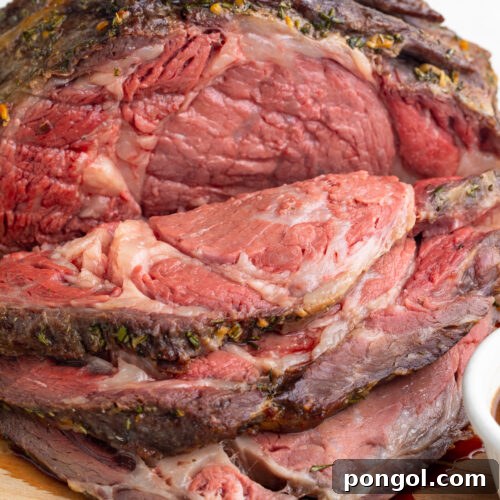
Sous Vide Prime Rib with Au Jus
Sous vide prime rib will be the star of your holiday dinner. Cooked low and slow in a temperature-controlled water bath and seasoned to perfection.

Recipe By: Sam Guarnieri
1 hour 20 minutes
8 hours 20 minutes
20 minutes
10 hours
8 servings
Pin Recipe
Equipment Needed:
- Large baking dish or baking sheet (large enough to hold prime rib)
- Aluminum Foil or plastic wrap
- Large pot or other large, heat-resistant container
- Sous vide immersion circulator
- Large food-safe vacuum sealing bags or large sealable food-safe plastic bag
- Vacuum sealer (optional, see Notes for alternative)
- Oven
- 2 small bowls
- Silicone spatula or large wooden spoon
- Paper towels
- Small skillet
- Sharp carving knife
Ingredients:
For the Prime Rib
- 1 prime rib roast, approximately 3 ½ pounds
- Salt, to taste (generous amount for seasoning)
- Freshly cracked black pepper, to taste
- ¼ cup butter, softened
- 2-3 cloves garlic, minced
- 1 tablespoon minced fresh rosemary (or other fresh herbs like thyme, sage)
For the Au Jus
- Reserved cooking juices from prime rib
- 1 tablespoon Worcestershire sauce
- ½ cup red wine (a dry red like Cabernet Sauvignon or Pinot Noir works well)
- 1 cup beef broth (preferably low sodium)
Instructions:
-
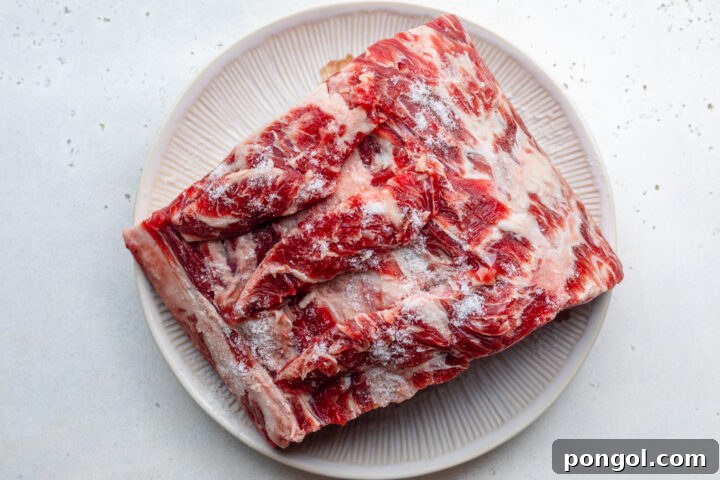
Prepare the Prime Rib for Sous Vide: Place the prime rib in a large baking dish or on a baking sheet. Generously season all sides of the prime rib with salt. This initial salting helps draw out moisture and tenderize the meat. Cover the prime rib with aluminum foil or plastic wrap. Place the baking dish in the refrigerator and chill for at least 1 hour, but no more than 12 hours. This dry brining step enhances flavor and moisture retention.

-
Set Up the Sous Vide Water Bath: When you’re ready to cook the prime rib, fill a large pot or another large, heat-resistant container with water. Insert your sous vide immersion circulator and set the temperature to 132° Fahrenheit for a perfect medium-rare (see Notes for alternate temperatures to achieve different doneness levels). Ensure the pot is deep enough that the water level falls between the minimum and maximum indicators on your circulator.
-
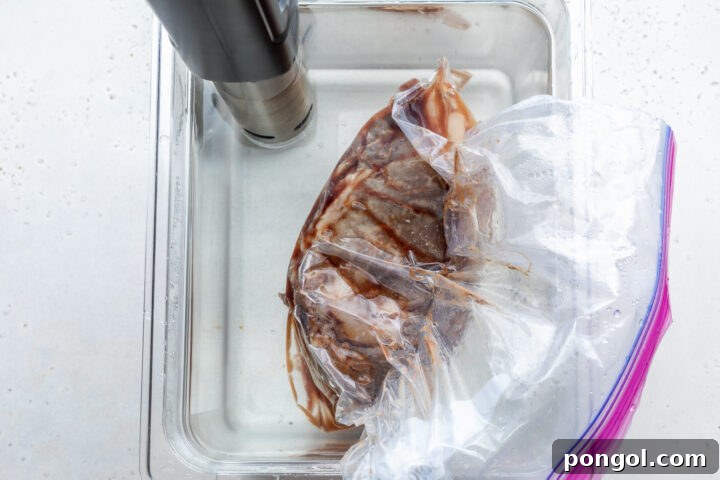
Seal the Prime Rib: Place the prime rib into a large, food-safe bag. Using a vacuum sealer, remove as much air from the bag as possible and seal it shut. If you don’t have a vacuum sealer, use the “water displacement method” (detailed in Notes) with a large, sealable plastic bag.
-
Sous Vide the Prime Rib: Once the water bath has reached its preheated temperature of 132° Fahrenheit, carefully place the sealed bag containing the prime rib into the pot. Ensure the entire prime rib is fully submerged in the water. If needed, weigh the bag down with heat-safe weights or attach silverware to the bottom of the bag to keep it submerged. Proper submersion is critical for even cooking.
-
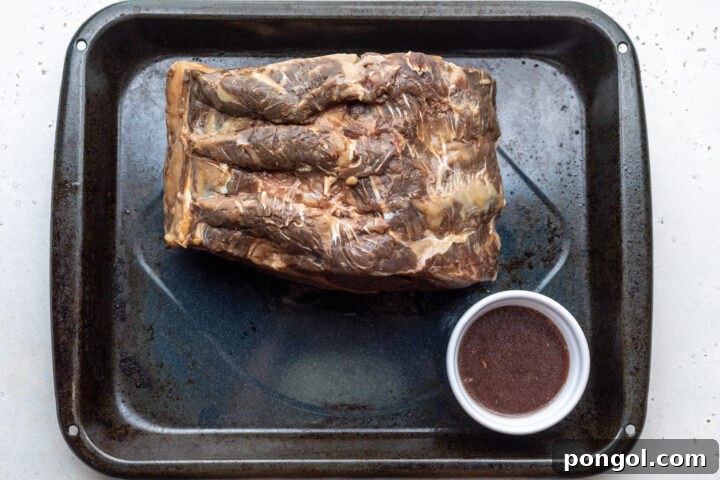
Cook and Prepare for Searing: Cook the prime rib in the water bath for 8 hours. After 8 hours, carefully remove the bag from the water bath. Transfer the prime rib from the bag to a clean baking sheet and set it aside. Importantly, reserve all the cooking liquid from the bag and set it aside; this will form the flavorful base for your au jus.
-
Prepare the Garlic-Herb Compound Butter: Preheat your oven to a high temperature of 475° Fahrenheit. In a small bowl, combine the softened butter, minced garlic, minced fresh rosemary, and a pinch of salt and pepper. Mix all ingredients thoroughly until they are fully combined and creamy. This compound butter will provide a rich, aromatic crust.
-
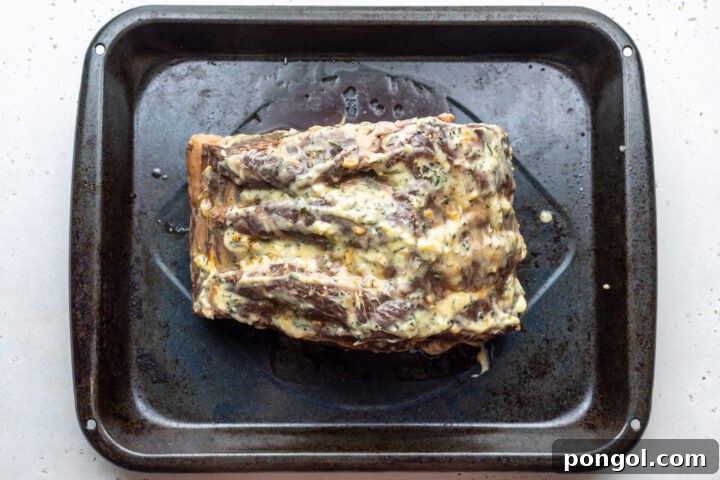
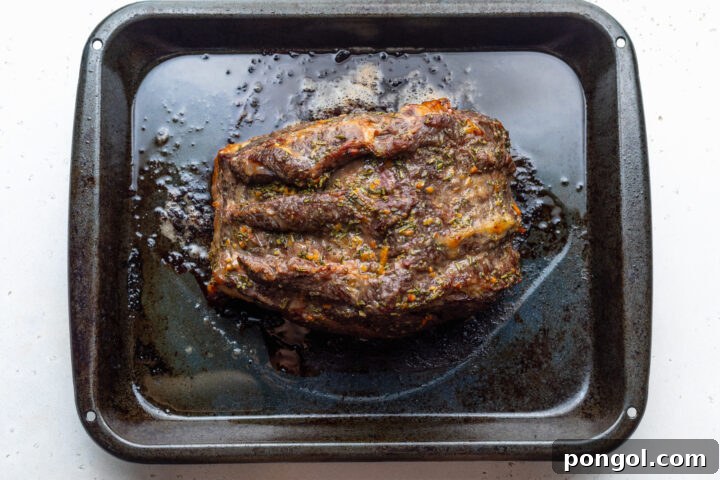
Pat Dry and Apply Butter: Using paper towels, thoroughly pat the prime rib completely dry on all sides. This step is crucial for achieving a beautiful, crispy crust during roasting. Once dried, generously cover the entire prime rib with the prepared garlic-herb butter mixture, gently rubbing it into the meat for maximum flavor and coverage.
-
Roast for a Perfect Crust: When the butter mixture has been fully applied, place the baking sheet with the prime rib into the preheated 475°F oven. Roast for 10 to 15 minutes, or until the outside of the prime rib develops a gorgeously golden-brown and crispy crust. Keep a close eye on it to prevent burning. Once the desired coloring is achieved, remove the baking sheet from the oven and let the prime rib rest for at least 15-20 minutes. This resting period is vital for retaining juices and ensuring tenderness.
-
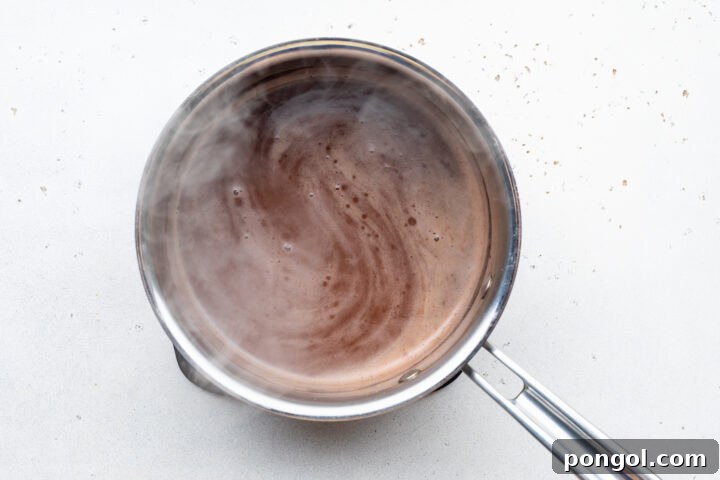
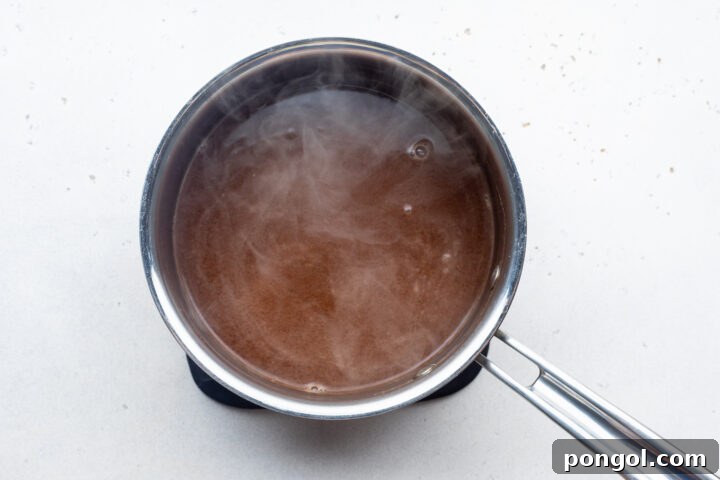
Prepare the Flavorful Au Jus: While the prime rib is resting, begin preparing your au jus. Heat a small skillet over medium heat. Add the reserved prime rib cooking juices, Worcestershire sauce, and red wine to the skillet. Whisk the ingredients together to blend them thoroughly, then simmer the mixture for 4 to 5 minutes, allowing the liquid to reduce by approximately 25% and concentrate its flavors.
-
Finish the Au Jus: Pour in the beef broth and gently whisk to incorporate it with the reduced mixture. Continue simmering until the au jus has reduced to your desired consistency – thick enough to cling slightly, but still thin. Once perfected, transfer the au jus to a small serving container or gravy boat.
-
Carve and Serve: Once rested, carve the prime rib into thick, generous slices, always cutting against the grain of the meat to ensure the most tender cuts. Serve the warm prime rib immediately with the savory au jus and your chosen side dishes. Enjoy this magnificent holiday masterpiece!
Recipe Notes:
-
Water Displacement Method (for sealing without a vacuum sealer): If you don’t have a vacuum sealer, you can use a large, high-quality, sealable food-safe plastic bag (like a Ziploc freezer bag). Place the prime rib inside the bag and seal it almost entirely, leaving about an inch open at one corner. Slowly lower the bag into the preheated sous vide water bath. The water pressure will force the air out of the bag. As the air escapes, the plastic will cling tightly to the meat. Once the food is almost entirely submerged and most of the air has been expelled, seal the remaining opening completely. Then proceed with the recipe instructions.
-
Dairy-Free Adaptation: To make this recipe dairy-free, simply substitute the regular butter with your favorite plant-based butter alternative.
Sous Vide Temperatures for Desired Doneness:
- For rare prime rib, set sous vide to 120°-130°F (49°-54°C).
- For medium-rare prime rib, set sous vide to 130°-140°F (54°-60°C). (Recommended for this recipe)
- For medium prime rib, set sous vide to 140°-150°F (60°-66°C).
- For medium-well prime rib, set sous vide to 150°-160°F (66°-71°C).
- For well-done prime rib, set sous vide to 160°-165°F (71°-74°C).
Approximate Nutrition Information for One Serving
Serving Size: 1 serving of prime rib with au jus
- Calories: 661 kcal
- Protein: 27 g
- Fat: 59 g
- Saturated Fat: 26 g
- Trans Fat: 0.2 g
- Cholesterol: 135 mg
- Sodium: 274 mg
- Potassium: 497 mg
- Total Carbohydrates: 1 g
- Fiber: 0.1 g
- Sugar: 0.3 g
- Net Carbs: 1 g
- Vitamin A: 187 IU
- Vitamin C: 1 mg
- Calcium: 24 mg
- Iron: 3 mg
Nutrition Disclaimers
Number of total servings shown is approximate. Actual number of servings will depend on your preferred portion sizes.
Nutritional values shown are general guidelines and reflect information for 1 serving using the ingredients listed, not including any optional ingredients. Actual macros may vary slightly depending on specific brands and types of ingredients used.
To determine the weight of one serving, prepare the recipe as instructed. Weigh the finished recipe (not including the weight of the container the food is in) by the desired number of servings. The result will be the weight of one serving.
Frequently Asked Questions About Sous Vide Prime Rib
Got questions about cooking prime rib with a sous vide? We’ve got answers to help you achieve perfect results every time.
-
How long does it take to sous vide prime rib?
For a 3.5-pound prime rib, the sous vide cooking time is typically 8 hours at 132°F (for medium-rare). While the immersion circulator needs time to bring the water to temperature, and resting time is required after searing, the active cooking time in the water bath is consistent. Larger roasts may require slightly longer cooking times, but the general rule for sous vide is that once it reaches temperature, it can hold there for several hours without overcooking.
-
What temperature should I sous vide prime rib for medium-rare?
For a perfect medium-rare prime rib, set your sous vide immersion circulator to 132°F (55.5°C). This temperature consistently delivers a beautiful pink center that is both tender and juicy. Refer to our “Temperatures & Results” section in the recipe notes for other doneness preferences.
-
Can I sous vide prime rib ahead of time?
Yes, absolutely! This is one of the greatest benefits of the sous vide method. You can cook the prime rib in the water bath, then immediately transfer the sealed bag to an ice bath to rapidly cool it. Once chilled, store it in the refrigerator for up to 3-4 days. When ready to serve, simply reheat it in the sous vide bath (at the original cooking temperature) for 1-2 hours to bring it back up to temperature before proceeding with the searing step.
-
Why do I need to pat the prime rib dry before searing?
Patting the prime rib thoroughly dry with paper towels before applying the compound butter and searing is a critical step. Moisture on the surface of the meat will steam rather than sear, preventing the formation of a rich, crispy crust. A dry surface allows the Maillard reaction (the browning reaction that creates complex flavors) to occur effectively, giving your prime rib that irresistible golden-brown exterior.
-
What if I don’t have a vacuum sealer for sous vide?
No problem! You can use the “water displacement method” with a high-quality, heavy-duty Ziploc freezer bag. Place your seasoned prime rib in the bag, seal it almost completely (leaving about an inch open), then slowly submerge the bag into the water bath. The water pressure will push the air out. Once nearly all the air is out, seal the remaining opening. This creates a sufficient seal for sous vide cooking.
Did You Make This Delicious Recipe?
We’d love to see your culinary creations! Tag @40aprons on Instagram and be sure to leave a review on the blog post!
Tag @40Aprons on Instagram
This revised HTML content aims for clarity, expands on key information for better SEO and reader engagement, removes all JavaScript and dynamic plugin elements, and ensures a word count well over 900 words, while maintaining the overall structure of the original article.