Beat holiday stress with this simple 5 Minute Meditation that you can do from home NOW! No experience or equipment needed for this easy, guided mini-meditation!
Effortlessly Beat Holiday Stress with This Simple 5-Minute Meditation Practice
The holiday season, while filled with joy and connection, often brings an undeniable surge of stress. From managing packed schedules and gift lists to navigating family dynamics and financial pressures, it’s easy to feel overwhelmed. But what if you could tap into a powerful tool to manage this festive frenzy, one that takes just five minutes out of your day? Introducing the life-changing practice of 5-minute meditation, designed to effortlessly melt away holiday stress and cultivate a sense of inner calm, right from the comfort of your home.
You might be thinking, “Meditation? I’ve never tried it, and I wouldn’t even know where to begin.” That’s perfectly fine! Many people share this initial apprehension. The beauty of starting with meditation is its inherent flexibility – there’s truly no ‘wrong’ way to do it. This guide is crafted specifically for beginners, offering a simple, guided approach to mini-meditation that requires no prior experience or special equipment. Just five minutes a day can begin to shift your perspective, quiet the constant mental chatter, and help you reclaim the peace and joy that the holiday season truly embodies. Prepare to transform your approach to holiday stress management and discover the profound impact a short, focused meditation can have on your overall well-being.
Unlocking Inner Peace: How a 5-Minute Meditation Can Transform Your Holidays
It sounds almost too simple to be true, doesn’t it? “Five minutes of meditation per day can change your life.” Yet, countless studies and personal testimonials attest to the profound impact even a brief, consistent meditation practice can have. In our fast-paced world, especially during the hectic holiday season, our minds are constantly racing, planning, worrying, and reliving. This incessant “brain noise” can lead to anxiety, fatigue, and a feeling of being perpetually behind. A short daily meditation offers a powerful antidote, allowing you to momentarily step off the treadmill of your thoughts and reconnect with the present moment.
For those new to meditation, the idea might seem daunting. Perhaps you imagine needing to sit in a complex yoga pose for hours, or completely empty your mind of all thoughts. These are common misconceptions. The truth is, meditation is a highly personal practice. You are empowered to create your own routine, finding a balance that feels authentic and beneficial to you. The core principle is simply setting aside a few minutes each day to bring awareness to your breath and observe your thoughts without judgment. During the run-up to Christmas and Thanksgiving, the societal pressure to do, buy, and attend more intensifies. This often results in an extra layer of stress and a pervasive sense of rushing, pulling us away from the peacefulness and gratitude that the holiday season should ideally bring. By integrating a quick 5-minute meditation, you equip yourself with a valuable tool to navigate these challenges with greater ease and resilience.
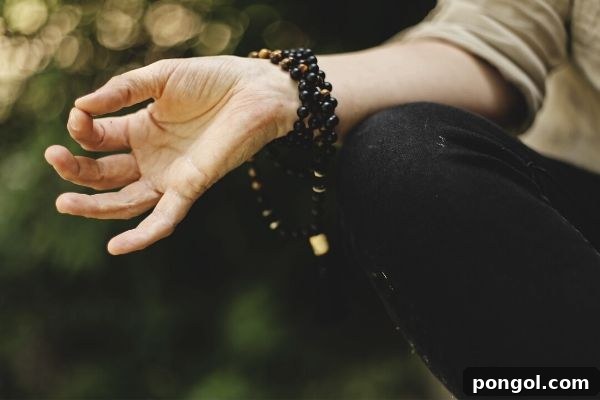
Creating Your Sanctuary: Finding a Quiet Space to Meditate
The quest for inner peace doesn’t require an elaborate home spa or a dedicated meditation room. Your personal zen can be found in a space that is simply quiet enough to minimize external distractions. The key is to choose an environment where you feel reasonably undisturbed and comfortable. Consider the temperature – not too cold, not too warm, just right – to avoid physical discomfort pulling your attention away. Even a small corner of your living room, a bedroom, or a quiet spot in your garden can become your temporary sanctuary for these five crucial minutes.
If you live in a bustling urban environment, near a busy street, or in a household with children or pets, complete silence might be an elusive luxury. In such cases, noise-canceling headphones can be an invaluable asset. Alternatively, you could try meditating early in the morning before others wake up, or late in the evening when things quiet down. The goal isn’t absolute silence, but rather minimizing disruptive sounds so you can more easily turn your attention inward. You might also consider dimming the lights, lighting a gentle candle (safely, of course), or using an essential oil diffuser with a calming scent like lavender to enhance the peaceful atmosphere. These small adjustments can signal to your mind and body that it’s time to relax and focus.

The Foundation of Calm: Finding Your Comfortable Sitting Position
Once you’ve found your quiet spot, the next step is to settle into a comfortable sitting position. Forget any preconceived notions of needing to twist yourself into a human pretzel – the goal here is comfort and stability, not acrobatic flexibility. The most important aspect of your posture is to maintain an upright spine, allowing energy to flow freely and promoting alertness without tension. You can sit cross-legged on the floor, perhaps on a cushion or a folded blanket to elevate your hips slightly, which can make it easier to keep your back straight. Alternatively, sitting on a chair is perfectly acceptable and often preferred, especially for beginners or those with physical limitations.
If you opt for a chair, try to sit towards the front of the seat, ensuring your feet are flat on the floor and your knees are at a 90-degree angle. Avoid leaning against the backrest too heavily, as this can encourage slouching and drowsiness. Instead, imagine a string gently pulling the crown of your head upwards, elongating your spine. Let your shoulders relax down and back, and place your hands comfortably in your lap, palms up or down – whatever feels natural. Once settled, gently close your eyes or soften your gaze downwards. Take a moment to do a quick body scan, noticing any areas of tension and consciously inviting them to soften. This comfortable yet alert posture is crucial for a successful 5-minute meditation, setting the stage for focused introspection.
Your Anchor to the Present: Focusing on Your Breath
The breath is the most accessible and immediate anchor to the present moment, making it an ideal focal point for your 5-minute meditation, especially for beginners. Our minds are naturally prone to wandering, a tendency that can feel amplified when we first attempt to meditate. By gently shifting your attention to your breath, you create a central point of focus that helps to ground you and pull your awareness away from distracting thoughts and back to yourself. There’s no need to force deep, unnatural breathing; simply observe your natural rhythm.
Begin by noticing the sensation of your breath as it enters and leaves your body. Feel the cool air coming in through your nose, perhaps the slight rise and fall of your chest or abdomen, and the warmer air exiting through your mouth. Don’t try to change anything, just observe. To aid concentration, you can try a simple counting technique: breathe in slowly for a count of five, and then breathe out slowly for a count of five. As you exhale, consciously allow your shoulders to drop, releasing any tension you might be holding. If your mind drifts – and it will, that’s perfectly normal – gently guide your attention back to the sensation of your breath, without judgment. Each time you bring your focus back, you are strengthening your mindfulness muscle. This practice of consistent, gentle redirection is the essence of breath-focused meditation and a powerful tool for stress relief.
Mindful Awareness: Learning to Clear Your Mind (Without Force)
One of the most common misconceptions about meditation is that you must completely empty your mind of all thoughts. This expectation can lead to frustration, especially for beginners. The reality is that the human mind is designed to think, and trying to forcibly stop thoughts is often counterproductive. Instead, the practice of “clearing your mind” in meditation is about changing your relationship with your thoughts – moving from being entangled in them to becoming a neutral observer. Don’t get too focused on whether or not you’re ‘doing it right’; the very act of showing up and trying is a success in itself.
When thoughts inevitably enter your head during your 5-minute meditation – whether they’re about your holiday to-do list, a past conversation, or future plans – acknowledge them without judgment. Simply recognize that a thought has arisen, and then gently let it go. Imagine your thoughts as clouds passing across the sky, or cars driving by on a street; you observe them, but you don’t chase after them or get into them. Shift your focus back to the present moment, typically by returning your attention to your breath. This practice cultivates a crucial skill: the ability to notice mental activity without getting swept away by it. It teaches you that you are not your thoughts, and you have the power to choose where you place your attention, a skill incredibly valuable for managing holiday stress and maintaining mental clarity.
Empowering Intentions: Discovering Your Personal Mantra
A mantra is a word, phrase, or sound repeated to aid concentration during meditation. It acts as another anchor for your mind, helping to keep it focused and guiding your intentions. For your 5-minute meditation, particularly during the often-challenging holiday season, a powerful mantra can be incredibly transformative. We’ll use a version of Metta, or Loving-Kindness meditation, which is known for cultivating compassion and positive feelings.
Begin by repeating these phrases silently to yourself: “May I be happy, may I be healthy, may I be peaceful.” Take a moment to truly feel these intentions for yourself, letting them resonate deep within. This self-compassion is a vital first step, especially when you’re feeling overwhelmed. Then, when you are ready, expand your focus and switch to: “May you be happy, may you be healthy, may you be peaceful.” This can be directed towards a loved one, a friend, or even someone with whom you are experiencing conflict – a powerful practice for diffusing tension during the holidays. Finally, extend this compassionate wish to all beings: “May all beings be happy, may all beings be healthy, may all beings be peaceful.” This broadens your perspective and reminds you of our interconnectedness.
Beyond these specific phrases, you can also incorporate personal affirmations that empower you to face the festive period with confidence. Say to yourself, “I can do this. I can handle the upcoming festivities and feel flooded with new, revitalizing energy.” This internal declaration of strength and capability helps to reframe challenges and build resilience. Mantras are not just words; they are intentions that can profoundly influence your state of mind and your ability to navigate the complexities of the holiday season with grace.

Cultivating Joy: The Practice of Gratitude
As your 5-minute meditation draws to a close, shift your focus to the powerful emotion of gratitude. Take about 30 seconds to intentionally bring to mind a few things for which you are genuinely grateful this holiday season. This can be anything from the warmth of your home, the taste of a favorite food, the kindness of a stranger, or the love of family and friends. Acknowledging the positive things and people in your life, even amidst challenges, has a profound effect on your mental well-being. Practicing gratitude helps to shift your perspective from what might be lacking or stressful to what is abundant and joyful.
The psychological benefits of gratitude are well-documented. It can reduce feelings of envy and resentment, increase happiness, improve relationships, and even boost physical health. During the holidays, when expectations can run high and stress can lead to a focus on imperfections, consciously choosing gratitude acts as a powerful counterbalance. As you recall these blessings, take a few deep, appreciative breaths, allowing the positive emotions to expand within you. This simple act of thankfulness can transform your outlook, making you more resilient to holiday stress and more open to experiencing the true spirit of the season. Integrate this practice not just into your meditation, but throughout your day, and observe the positive changes.
Embracing Serenity: Smile Like Buddha for Instant Calm
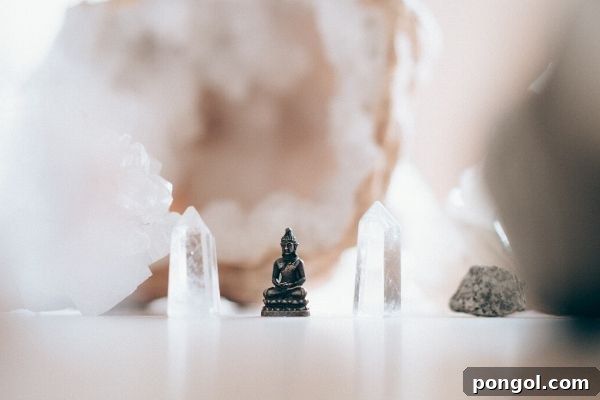
Have you ever noticed the gentle, enigmatic half-smile gracing the face of Buddha statues? There’s a profound wisdom behind that subtle expression, and it’s a technique you can effortlessly incorporate into your 5-minute meditation practice. I find it helps immensely to simply smile a little bit as you meditate. This isn’t about forced cheerfulness; it’s about a physiological response.
Scientific research into the “facial feedback hypothesis” suggests that even a subtle, conscious smile can send signals to your brain that trigger the release of endorphins and other feel-good neurotransmitters, reducing stress hormones and promoting a sense of calm. A little smile can magically relax your mind and body, softening tension in your jaw, face, and even your shoulders. Try it! Just a slight upturning of the corners of your mouth can create an immediate shift in your internal state. It’s a gentle reminder to approach your meditation, and indeed your day, with a sense of lightness and self-compassion. Remember, the goal of this mini-meditation isn’t about rigid adherence to time. You don’t have to set a timer for precisely five minutes. Just do it for as long as it feels good – whether that’s four minutes, five, ten, or whatever works best for you on any given day. Consistency and presence are more important than duration.
Guided Paths to Peace: Finding a Guided 5-Minute Meditation You Enjoy
For many beginners, and even experienced meditators, guided meditations offer an accessible and supportive pathway to mindfulness. Having guided meditation options helps take the pressure off of creating your own focused practice; instead, you simply listen to the words of someone else, allowing their voice to lead you through the steps. This can be particularly helpful when your mind feels especially busy or when you’re feeling overwhelmed by holiday stress, as it provides a clear structure and removes the guesswork from the process.
There are countless guided meditations available online, catering to various needs and durations. The key is to explore and find a voice or style that resonates with you. Some focus on breath awareness, others on body scans, loving-kindness, or specific stress-reduction techniques. Below are some excellent guided 5-minute mini meditations specifically chosen to help you beat holiday stress and cultivate inner calm. Feel free to try a few and discover which ones best support your journey to a more peaceful holiday season:
- Holiday Intentional Meditation: Focuses on setting positive intentions for the festive period.
- 5 Minute Calming Meditation: A general soothing practice for daily relaxation.
- Guided Meditation for Holiday Stress and Winter Blues: Specifically targets the emotional challenges of the season.
- 5 Minute Stress-Relief Meditation: A quick and effective tool for immediate stress reduction.

Setting the Mood: Free Music for Your 5-Minute Meditation
While guided meditations provide spoken instruction, sometimes you might prefer to simply immerse yourself in calming sounds. Ambient music or nature sounds can be incredibly effective in enhancing your meditation experience, helping to mask distracting noises and create a peaceful atmosphere. Music can gently guide your mind into a state of relaxation, making it easier to focus on your breath or simply rest in the present moment without the need for verbal guidance. Experiment with different styles to discover what resonates most deeply with you.
Here are some carefully curated free music options perfect for accompanying your 5-minute meditation, each offering a unique soundscape to foster tranquility:
- Tibetan Music: Features the rich, resonant tones of Tibetan singing bowls and chimes, known for their deep vibrational qualities that promote relaxation and healing.
- Calm Celtic Music: Evokes a sense of ancient peace and natural beauty with gentle melodies often featuring flutes, harps, and soft percussion.
- Zen Music / Nature Sounds: Combines minimalist instrumental sounds with the soothing whispers of nature, such as rain, gentle waves, or birdsong, creating a harmonious backdrop for mindfulness.
- Indian Flute & Tibetan Singing Bowl: A beautiful blend of the soulful melodies of the Indian flute with the grounding vibrations of the Tibetan singing bowl, offering a deeply meditative experience.
Choose the track that best suits your mood and environment, allowing its gentle sounds to support your journey into stillness.
Making Mindfulness a Habit: Did You Like This 5-Minute Meditation?
If you found even a hint of calm or relief during this 5-minute meditation, then the next crucial step is to integrate it into your daily routine. Just like taking vitamin D, staying hydrated, or engaging in regular exercise, meditation becomes easier to remember and more possible to keep up with when it’s scheduled and intentional. Think of it as a non-negotiable appointment with your inner peace.
Consistency is far more impactful than duration when it comes to developing a meditation practice. A short, daily 5-minute session will yield greater benefits over time than sporadic, longer sessions. Consider when you naturally have a few spare moments. If you are a morning person, adding a 5-minute meditation at the very start of your day can set a peaceful and focused tone for the hours ahead, helping you proactively manage holiday stress. Alternatively, listening to a guided meditation as part of your bedtime routine can calm a busy mind, improve sleep quality, and ensure you wake up feeling more refreshed and ready for the next day’s festivities. By consciously carving out this small window of time for yourself, you’ll have a much better chance at success, allowing the positive effects of mindfulness to accumulate and transform your entire holiday experience.
Deepening Your Journey: Bring More Mindfulness into The Holiday Season
Embracing a 5-minute meditation practice is an excellent first step towards a more mindful and less stressful holiday season. However, mindfulness is a holistic practice that can be woven into various aspects of your life. To further enhance your well-being and cultivate a deeper sense of calm amidst the festive hustle and bustle, consider exploring these complementary resources. Each offers unique perspectives and practical strategies to bring more balance, self-care, and intentional living into your daily routine, especially during a time that often demands so much of us:
- Yoga Detox Poses: Discover gentle yoga sequences that can help release physical tension and promote detoxification, offering a physical outlet for stress relief that complements your mental meditation practice.
- Self Care Ideas for a Happy Healthy You: Explore a wide range of practical self-care strategies designed to nurture your mental, emotional, and physical health, ensuring you prioritize your well-being amidst holiday demands.
- All About Lagom: Delve into the Swedish philosophy of “Lagom,” which advocates for “just enough” – a concept of balance and moderation that can be incredibly empowering for managing holiday excesses and finding contentment.
- 15 Hygge Ideas for Fall and Winter: Learn about “Hygge,” the Danish art of coziness and contentment. These ideas can help you create warm, inviting spaces and moments that foster connection and joy, reducing the pressure of elaborate holiday expectations.
By combining your daily 5-minute meditation with these mindful living practices, you can create a truly serene, joyful, and healthy holiday season, free from the overwhelming grip of stress.