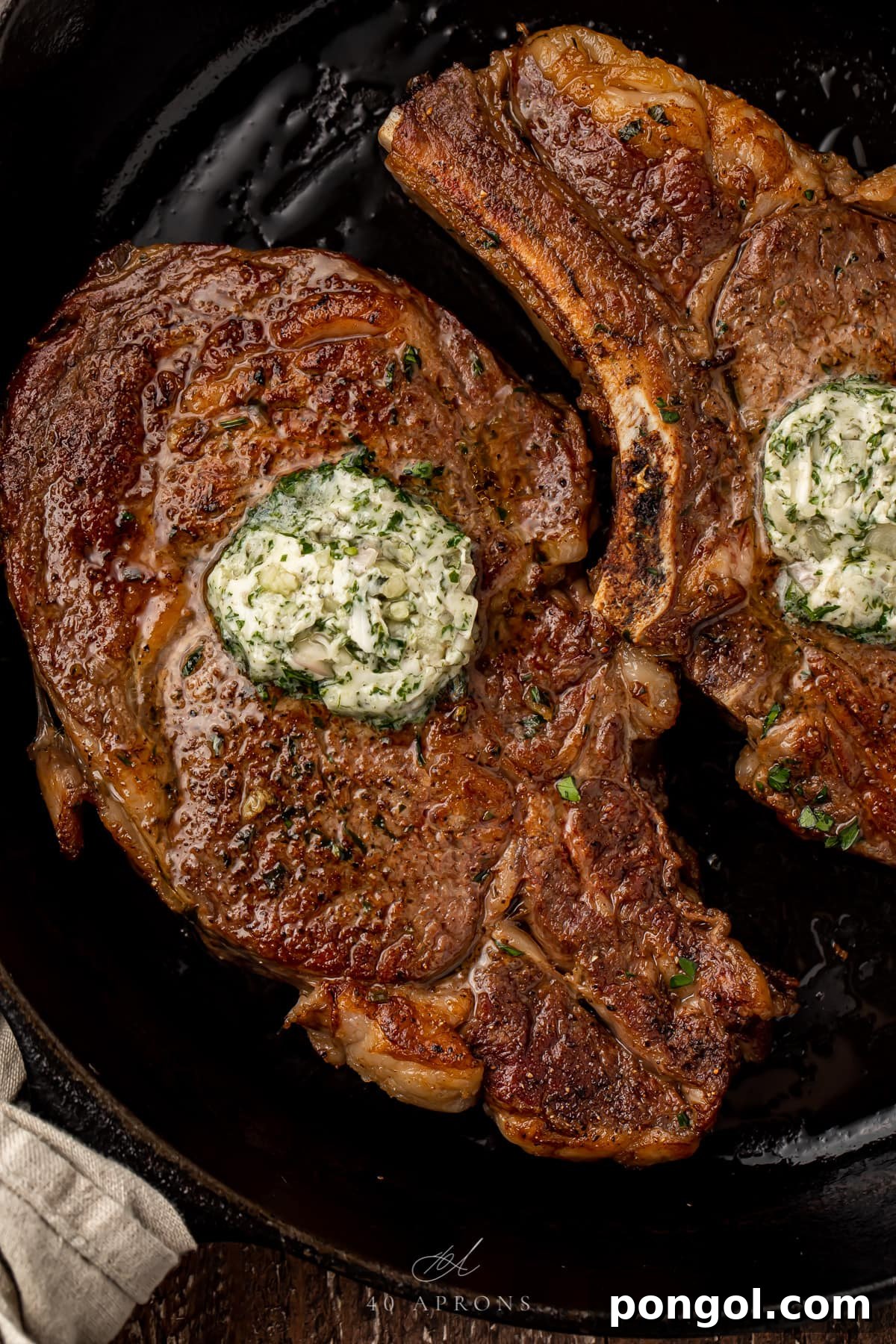
Mastering the Bone-In Ribeye: A Restaurant-Quality Reverse Sear Recipe with Garlic-Herb Butter
Unlock the secrets to a perfectly cooked, incredibly tender, and intensely flavorful bone-in ribeye steak right in your own kitchen. This guide focuses on the “reverse sear” method, a technique revered by chefs for its ability to deliver an evenly cooked interior from edge to edge and a magnificent crust. Paired with a luscious, aromatic garlic-herb butter, this recipe elevates your home cooking to restaurant-quality status, promising a dining experience that will impress. We’ll also cover how to achieve your desired steak temperature, ensuring every bite is to your preference.
This recipe is proudly sponsored by Sprouts Farmers Market, reflecting our shared commitment to quality ingredients and delicious meals. All thoughts and opinions expressed are, as always, my own.
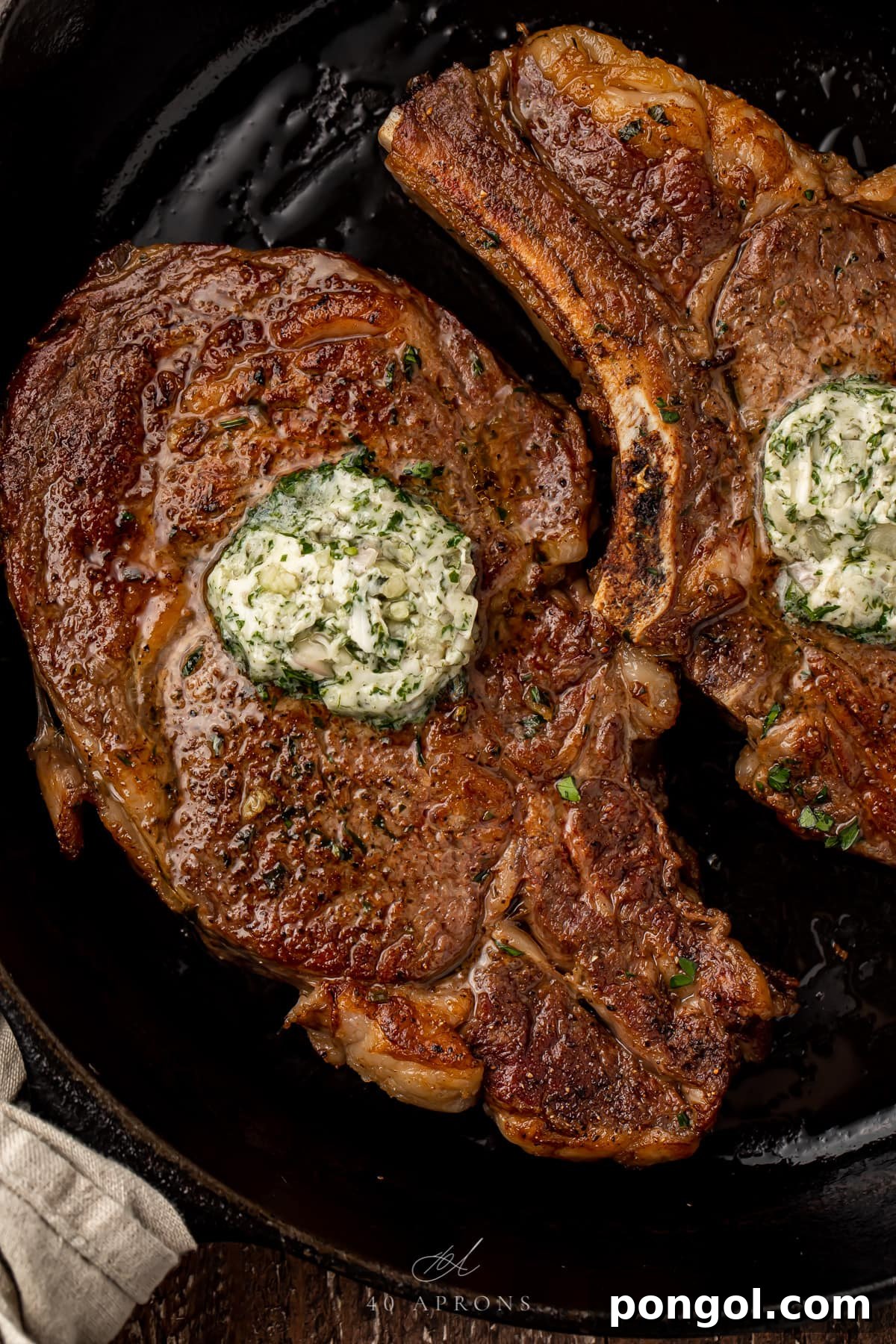
Why This Bone-In Ribeye Recipe Stands Out
- The Reverse Sear Method is Unparalleled for Ribeyes: When it comes to cooking a thick-cut steak like a ribeye, the reverse sear method is a culinary game-changer. Unlike traditional searing methods, cooking low and slow in the oven first ensures that the steak heats gently and evenly from the center to the edges. This meticulous process prevents the dreaded “gray band” often seen in conventionally cooked steaks, resulting in a consistent, perfectly pink interior. The final high-heat sear then creates an irresistibly crispy, deeply browned crust, locking in all those precious juices and amplifying the flavor. It’s the ultimate technique for achieving tender, juicy steak perfection every single time.
- Bone-In Steaks Offer Superior Flavor and Moisture: While boneless steaks have their place, the bone in a ribeye contributes significantly to the overall culinary experience. As the steak cooks, the bone marrow and connective tissues render down, infusing the surrounding meat with a depth of flavor that is simply unmatched. The bone also acts as a natural insulator, helping the meat to cook more evenly and retain moisture, resulting in a noticeably juicier steak. Though bone-in steaks may take a little longer to reach your desired doneness, the enhanced flavor, tenderness, and moisture make the extra time completely worthwhile.
- Elegance Meets Simplicity: Perfect for Any Occasion: This recipe strikes a perfect balance between ease of preparation and sophisticated presentation. Despite its impressive appearance and gourmet taste, the steps are straightforward and manageable, even for novice cooks. The combination of a perfectly cooked ribeye and a rich garlic-herb butter makes it an ideal choice for romantic date nights, celebratory dinners, or any special occasion where you want to impress without spending hours in the kitchen. It’s a dish that looks and tastes like it came from a fine dining restaurant, yet can be effortlessly prepared at home.
- Quality Ingredients Made Easy with Sprouts Farmers Market: Convenience and quality are paramount in our kitchens. This recipe is designed to be a one-stop-shop experience, with every essential ingredient readily available at Sprouts Farmers Market. From premium bone-in ribeyes sourced from heritage-breed cattle to the freshest herbs and butter for our compound butter, Sprouts ensures you have access to high-quality provisions that make a real difference in the final dish. This not only streamlines your grocery shopping but also guarantees that your steak benefits from the best possible ingredients, free from added hormones.
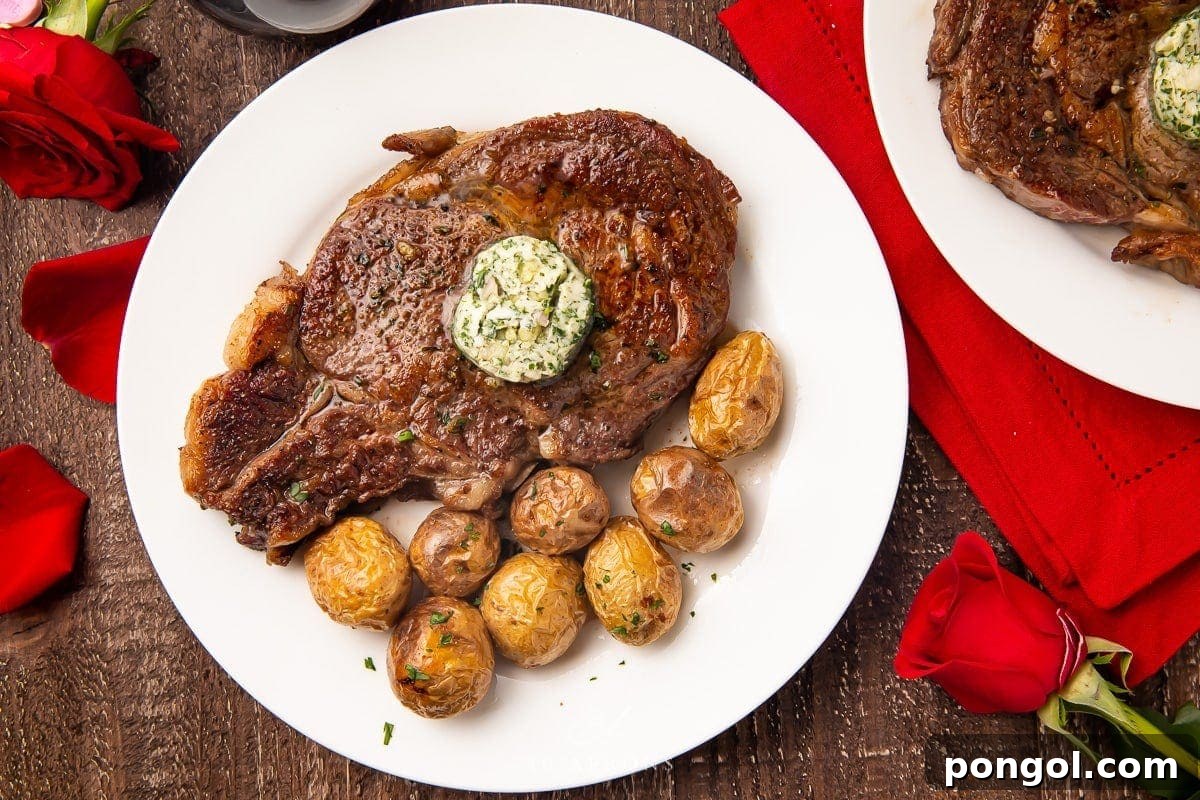
Key Ingredients for an Unforgettable Ribeye
Crafting the perfect reverse-sear bone-in ribeye begins with selecting the right components. Each ingredient plays a crucial role in developing the rich flavors and luxurious textures that make this dish so exceptional.
Bone-In Ribeyes: The star of our show! For the reverse-sear method to truly shine, we recommend selecting bone-in ribeyes that are at least 1 inch thick, ideally between 1 to 1.5 inches. This thickness allows for the gradual, even cooking that the reverse sear technique is known for, preventing the steak from cooking too quickly and drying out. Look for steaks with generous marbling – those beautiful streaks of fat that run through the muscle – as this fat renders during cooking, contributing immense flavor and moisture. I consistently find delicious, high-quality bone-in ribeyes at Sprouts Farmers Market. Their Butcher Shop offers cuts sourced from heritage-breed cattle raised right here in the U.S., ensuring no added hormones and a superior taste profile that makes all the difference.
Unsalted Butter: The foundation of our luxurious garlic-herb butter. Using unsalted butter gives you complete control over the seasoning of your compound butter and, by extension, your steak. Softened butter will blend effortlessly with the herbs and aromatics.
Fresh Herbs of Choice: This is where you can truly personalize your garlic-herb butter. While fresh parsley is a classic choice for its bright, clean notes, don’t hesitate to experiment with your favorites. Tarragon offers a subtle anise-like flavor, oregano brings a rustic, peppery warmth, and thyme provides an earthy, woody aroma. A combination of these can also create a complex and inviting bouquet of flavors. Fresh herbs are essential for that vibrant, aromatic quality that dried herbs simply cannot replicate in compound butter.
Garlic and Shallot: These aromatics provide the pungent, savory backbone for our herb butter. Freshly chopped garlic offers a bold, spicy kick that mellows beautifully, while shallots contribute a milder, sweeter oniony note, adding depth without overpowering the delicate flavors of the herbs and the steak itself. Aim for freshly minced or roughly chopped for the best flavor infusion.
Fresh Lemon Juice: A small squeeze of fresh lemon juice is a secret weapon in the garlic-herb butter. Its bright acidity cuts through the richness of the butter and steak, enhancing the overall flavor profile and adding a delightful tang that awakens the palate.
Salt and Freshly Cracked Black Pepper: The simplest seasonings, yet the most crucial. Generous seasoning of the ribeye with both salt and pepper forms the basis of its incredible flavor. For the garlic-herb butter, these seasonings tie all the aromatic elements together, creating a balanced and irresistible topping.
Achieving Steak Perfection: A Guide to Internal Temperatures
Cooking steak to your desired doneness is an art and a science. The key is precise temperature control, making an internal meat thermometer your most valuable tool. Remember, steaks continue to cook after being removed from heat – this is called “carryover cooking” – so it’s vital to pull them from the oven *before* they reach your ideal final temperature. They’ll also cook a little more during the final searing step in the cast-iron skillet.
- Rare Steaks (120°-125°F Final Temperature): For a truly rare steak with a cool, red center, remove your ribeye from the oven when its internal temperature reaches 110°F. The carryover cooking and final sear will bring it to the perfect rare.
- Medium-Rare Steaks (130°-135°F Final Temperature): The preferred doneness for many, including this recipe, resulting in a warm, red center. Remove your steaks from the oven when their internal temperature reaches 120°F. This allows for optimal carryover cooking to achieve that ideal medium-rare.
- Medium Steaks (140°-145°F Final Temperature): For a medium steak with a warm, pink center, remove it from the oven when the internal temperature hits 130°F. This ensures a juicy interior without being overly red.
- Medium-Well Steaks (150°-155°F Final Temperature): If you prefer a slightly firmer steak with just a hint of pink in the center, aim for medium-well. Remove the steaks from the oven when their internal temperature reaches 140°F.
- Well-Done Steaks (160°-175°F Final Temperature): While often criticized for being dry, a well-done steak can still be enjoyable if cooked correctly. For those who prefer no pink, remove the steaks from the oven when their internal temperature reaches 155°F. Be mindful that cooking past this point significantly increases the risk of dryness and toughness.
Chef’s Essential Tips for the Perfect Ribeye
Elevate your ribeye game with these expert tips, designed to ensure your steak is nothing short of magnificent.
- Handle with Care Using Tongs: Always use tongs when handling your bone-in ribeyes throughout the cooking process. Piercing the meat with a fork can allow precious juices to escape, leading to a drier steak. Tongs provide a firm, gentle grip without compromising the integrity of the meat.
- The Indispensable Meat Thermometer: Given the narrow temperature ranges between each level of doneness, an accurate internal meat thermometer with a probe is absolutely non-negotiable for this recipe. Leave-in style probe thermometers are particularly useful as they provide a continuous, live reading of your ribeye’s internal temperature, allowing you to monitor its progress without repeatedly opening the oven or guessing. Always double-check if your thermometer is oven-safe before using it for the initial slow cook.
- Optimal Resting Times Are Key: The magic of the reverse sear means that your ribeyes are almost ready to enjoy as soon as they’re done in the skillet. However, for maximum juiciness, allow them a brief rest (5-10 minutes) after searing. This allows the internal juices, which have migrated to the center during cooking, to redistribute throughout the steak, resulting in a more tender and flavorful bite. Plan your side dishes accordingly so everything is ready to serve simultaneously.
- Master the Dry Brine for Deeper Flavor: Don’t underestimate the power of a good dry brine. Liberally seasoning your bone-in ribeye with salt and pepper and letting it rest for an extended period is crucial for deep flavor penetration and a superior crust. A minimum of 30 minutes at room temperature is acceptable, but for truly exceptional results, ideally let the steaks stand for at least 2 hours. If resting for more than an hour, keep them in the refrigerator, then bring them back to room temperature for 30 minutes before cooking. This process draws out moisture, which then reabsorbs, seasoning the meat from within and promoting a beautiful, crispy exterior during the sear.
- Achieve the Perfect Sear: For that restaurant-quality crust, ensure your cast-iron skillet is screaming hot before adding the steaks. A touch of high-smoke-point oil (like avocado or grapeseed) can aid in even browning. During the searing process, don’t be afraid to add a pat of butter to the pan along with a sprig of fresh rosemary or thyme and a crushed garlic clove. Tilt the pan and spoon the melted butter mixture over the steaks repeatedly (basting) to infuse additional flavor and help create a golden-brown, irresistible crust.
- Side Searing for a Full Crust: Don’t forget the edges! After searing the main surfaces, use your tongs to briefly hold the sides of the ribeyes against the hot skillet. This ensures every part of the steak develops that desirable crust, contributing to the overall texture and presentation.
More Date-Night Recipes You’ll Love
- White Clam Sauce
- The Best Avocado Chocolate Mousse (Vegan, Dairy Free)
- Cookie Butter Creme Brulee
- The Best EVER Risotto Recipe
- Marry Me Chicken
- Bacon-Wrapped Scallops with Herb-Butter Sauce
- Bearnaise Sauce
- Reverse Sear Prime Rib
- Salmon Wellington
- The Best Lobster Bisque (Ruth’s Chris Copycat Recipe)
- Chicken Carbonara
- Vegan Creme Brulee
- Sous Vide Lobster Tails
- Keto Truffles
Recipe By: Cheryl Malik
5 from 6 votes
Bone-In Ribeye with Garlic-Herb Butter
This flavorful bone-in ribeye is cooked medium-rare and perfectly tender using the easy but masterful reverse sear method. Served with a delicious, easy garlic-herb butter, this recipe is better than the restaurant! With a guide on cooking to other steak temperatures, as well.

Cheryl Malik
Prep Time: 45 minutes
Cook Time: 55 minutes
Total Time: 1 hour 40 minutes
Servings: 4 servings
Pin Recipe
Save Recipe
Equipment
- Wire baking rack
- Baking sheet
- Food processor
- Plastic wrap
- Meat thermometer (preferably with a probe)
- Skillet (cast iron recommended)
- Tongs
Ingredients
For the Steaks
- 2 bone-in ribeyes (about 1″ to 1 ½” thick)
- Salt to taste
- Freshly cracked black pepper to taste
For the Garlic-Herb Butter
- ½ cup unsalted butter, softened
- 2 tablespoons fresh parsley, roughly chopped
- 2 tablespoons fresh herbs of choice (chopped, see Notes)
- 1-1½ teaspoons garlic, roughly chopped
- 2 tablespoons shallot, roughly chopped
- 1 tablespoon fresh lemon juice
- ½ teaspoon salt
- ½ teaspoon freshly cracked black pepper to taste
Instructions
-
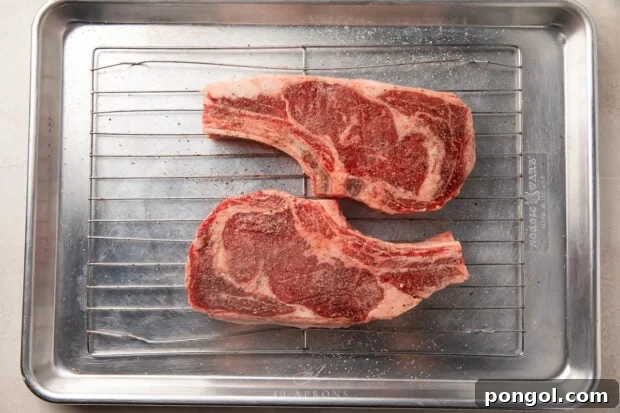
Liberally season both sides of the steaks with salt and pepper. Place them on a wire rack over a baking sheet and let stand at room temperature for at least 30 minutes, but preferably a couple of hours. If letting stand more than one hour, keep in the refrigerator, then let stand at room temperature for 30 minutes before cooking.

-
While the ribeyes are standing, prepare the garlic-herb compound butter. Place all butter ingredients (softened butter, parsley, herbs, garlic, shallot, lemon juice, salt, and pepper) into a food processor. Process until the mixture is smooth and well combined. Spoon the butter onto plastic wrap and roll it into a log shape. Chill in the refrigerator until firm.
-
Preheat your oven to 250° Fahrenheit (120°C). Place the baking sheet with the seasoned steaks into the preheated oven. Insert an internal meat thermometer with a probe into the thickest part of one of the ribeyes, avoiding the bone.
-
For medium-rare steaks (our target for this recipe), cook until the internal temperature reaches 120° Fahrenheit (49°C). This will typically take approximately 35-40 minutes, but cooking times can vary depending on the thickness and size of your steaks. Larger or thicker steaks will naturally require more time to reach temperature, emphasizing the importance of using a reliable internal meat thermometer. Refer to our guide above for alternative steak temperatures.
-
Once the internal temperature reaches 120° Fahrenheit (49°C), carefully remove the steaks from the oven. Allow them to rest on the wire rack. While the steaks rest, preheat a cast-iron skillet over high heat for 5 minutes. The skillet needs to be extremely hot for a proper sear.
-
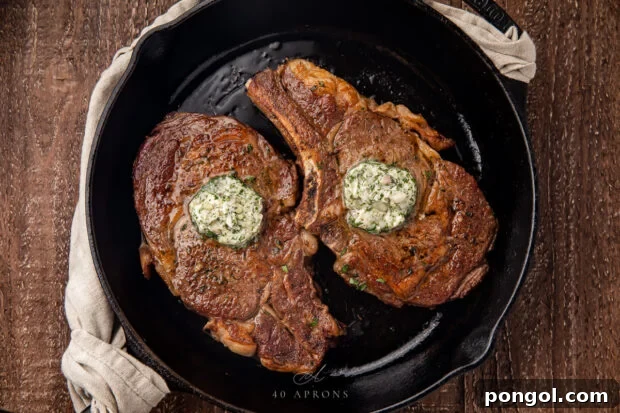
Pat the rested steaks completely dry with paper towels to ensure a crisp crust. Place the dry steaks into the screaming hot skillet. Cook for 45 seconds without moving. Flip the steaks. Immediately place a generous pat of garlic-herb compound butter (approximately 1 tablespoon per steak) on top of each ribeye. Cook for another 45 seconds. Continue flipping the steaks every 20-40 seconds, basting with the melted butter in the pan, until they achieve a rich, deep brown crust on all sides. Briefly press the sides of the ribeyes against the hot skillet with tongs until no longer red or pink.
-
Remove the seared ribeyes from the skillet and transfer them to a clean cutting board. Serve immediately, topped with additional slices of the chilled garlic-herb compound butter, allowing it to melt into the hot steak for an extra layer of flavor.
Notes
- For the garlic-herb butter, feel free to use any fresh herbs you love. While I often opt for tarragon, oregano, or thyme, your favorite combination will work wonderfully here!
Alternative Temperatures (Internal Temperature to Remove from Oven)
- Rare: Target 120°-125°F final. Remove from oven at 110°F.
- Medium Rare: Target 130°-135°F final. Remove from oven at 120°F.
- Medium: Target 140°-145°F final. Remove from oven at 130°F.
- Medium Well: Target 150°-155°F final. Remove from oven at 140°F.
- Well Done: Target 160°-175°F final. Remove from oven at 155°F.
This recipe yields 2 full ribeyes, typically providing approximately 4 servings. Nutritional values reflect information for 1 serving, which is roughly half of one ribeye. Your personal serving size and macros may vary slightly depending on the specific size of your chosen ribeyes and brands of ingredients used.
Approximate Nutrition Information for One Serving
Serving Size: 1 serving
- Calories: 456 cal
- Protein: 24 g
- Fat: 39 g
- Saturated Fat: 22 g
- Trans Fat: 1 g
- Cholesterol: 130 mg
- Sodium: 357 mg
- Potassium: 455 mg
- Total Carbs: 4 g
- Fiber: 1 g
- Sugar: 1 g
- Net Carbs: 3 g
- Vitamin A: 1043 IU
- Vitamin C: 7 mg
- Calcium: 63 mg
- Iron: 3 mg
Nutrition Disclaimers
Number of total servings shown is approximate. Actual number of servings will depend on your preferred portion sizes.
Nutritional values shown are general guidelines and reflect information for 1 serving using the ingredients listed, not including any optional ingredients. Actual macros may vary slightly depending on specific brands and types of ingredients used.
To determine the weight of one serving, prepare the recipe as instructed. Weigh the finished recipe, then divide the weight of the finished recipe (not including the weight of the container the food is in) by the desired number of servings. Result will be the weight of one serving.
Did You Make This Recipe?
We’d love to see your culinary creations! Tag @40aprons on Instagram and be sure to leave a review on the blog post to share your experience!
Tag @40Aprons on Instagram