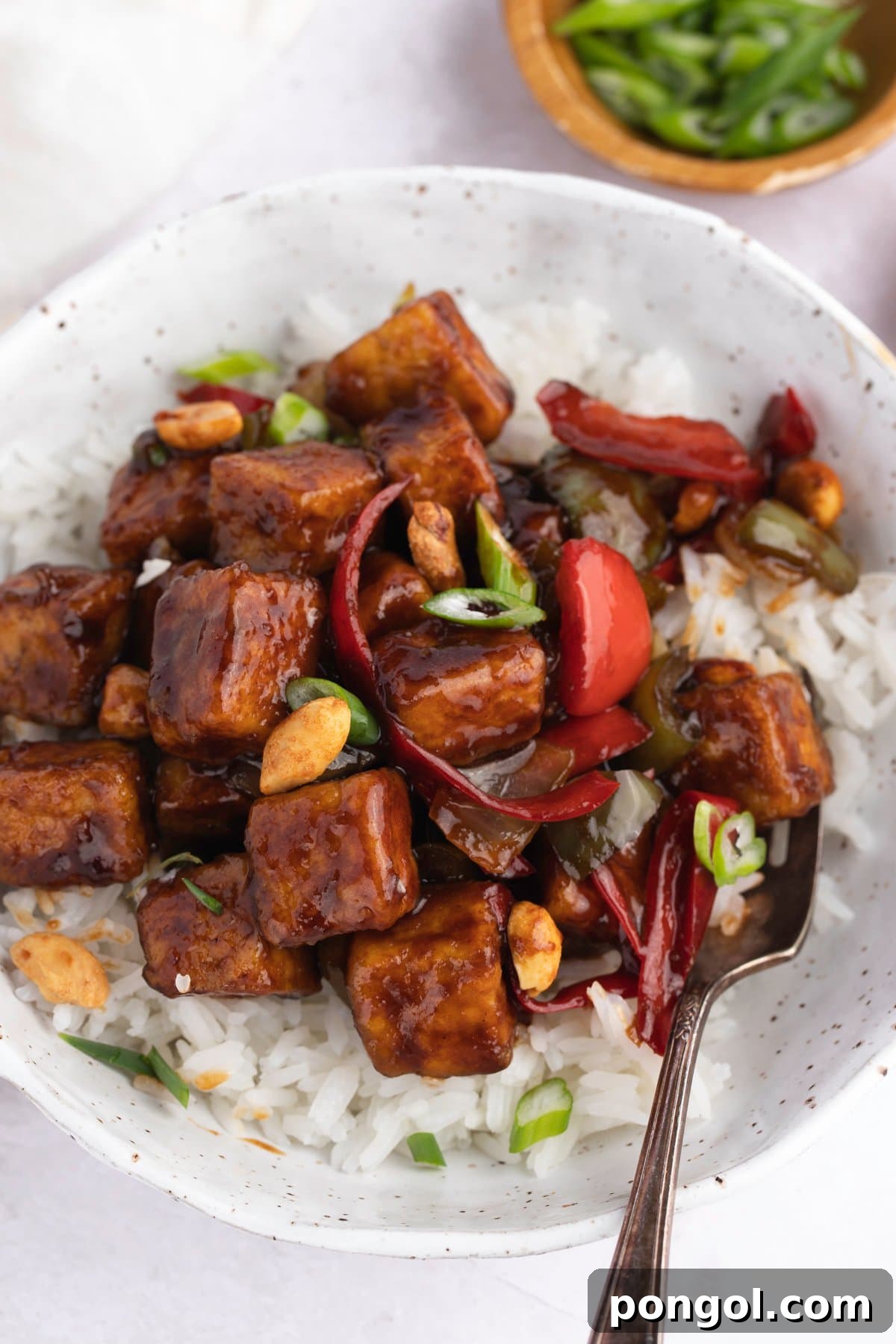
Dive into a world of vibrant flavors and satisfying textures with this incredible Crispy Kung Pao Tofu recipe. This plant-based take on the beloved Chinese-American classic masterfully combines perfectly pan-fried tofu with a rich, complex Kung Pao sauce and an assortment of tender, crisp stir-fried vegetables. Whether you’re a seasoned vegan or simply looking to incorporate more delicious plant-based meals into your diet, this dish promises to be a delightful culinary adventure. It’s not just a meal; it’s an experience – savory, sweet, and just spicy enough to tantalize your taste buds, making it an ideal choice for a quick weeknight dinner or an impressive dish for entertaining. Enjoy it on its own for a lighter meal, or pair it with steamed rice or noodles to soak up every last drop of that irresistible sauce.
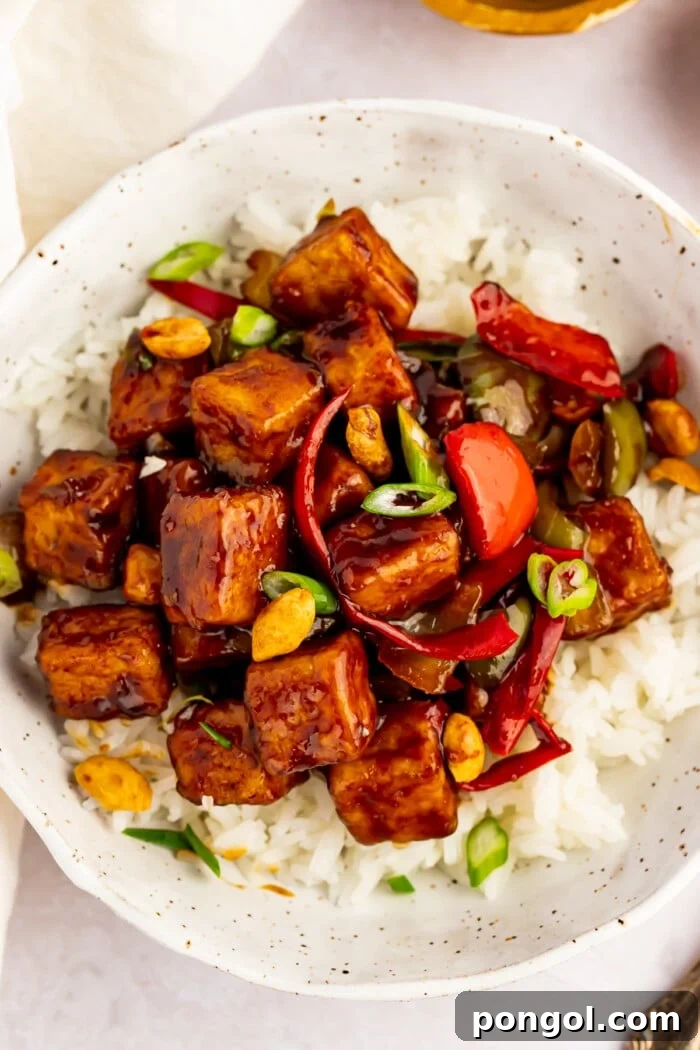
Why You’ll Fall in Love with This Vegan Kung Pao Tofu
This isn’t just another tofu recipe; it’s a culinary masterpiece that brings a burst of flavor and a delightful mix of textures to your table. Here’s why this particular Kung Pao Tofu stands out as a must-try:
- Unbeatable Crispy Tofu Perfection: Forget soggy tofu! Our method ensures each piece of extra-firm tofu is coated in cornstarch and pan-fried to golden-brown crispiness. This creates an incredibly satisfying outer layer that contrasts beautifully with the tender interior, offering a textural delight in every bite. The added crunch from roasted peanuts as a garnish elevates this experience even further.
- Rich and Balanced Kung Pao Sauce: The heart of any great Kung Pao dish is its sauce, and ours is truly exceptional. It strikes a perfect balance of sweet, savory, tangy, and a touch of heat. Crafted from a simple blend of soy sauce, hoisin, sriracha, rice vinegar, maple syrup, and sesame oil, it’s astonishingly easy to whisk together yet delivers a deeply complex flavor profile that will have you wondering why you haven’t made it sooner.
- Vibrant and Wholesome Stir-Fried Vegetables: This recipe isn’t just about the tofu; it’s packed with colorful and nutritious vegetables. Crisp bell peppers (both red and green), sweet white onions, and aromatic garlic and ginger are stir-fried to tender-crisp perfection, adding freshness, essential nutrients, and visual appeal to your plate.
- Quick and Easy Weeknight Meal: Despite its gourmet taste and appearance, this Kung Pao Tofu comes together remarkably fast. With a little prep, you can have a flavorful and satisfying vegan dinner on the table in under an hour, making it perfect for busy evenings.
- Naturally Vegan and Easily Customizable: This recipe is entirely plant-based, making it suitable for vegan diets. It’s also easily adaptable to be gluten-free by using tamari instead of soy sauce. Beyond dietary needs, you can customize the spice level, add different vegetables, or even swap out the protein.
Key Ingredients Spotlight: Crafting Your Perfect Kung Pao Tofu
Understanding the role of each ingredient is crucial to mastering this delicious vegan Kung Pao Tofu. Here’s a closer look at what makes this dish so special:
- Extra-Firm Tofu: The star of our show, extra-firm tofu is essential for achieving that desirable crispy texture. Its dense consistency holds up well to pressing and pan-frying, ensuring it doesn’t crumble during cooking. Pressing the tofu thoroughly before cubing is perhaps the most vital step for a truly crispy result, as it removes excess water that would otherwise steam the tofu instead of allowing it to brown.
- Cornstarch: This unassuming ingredient is the secret weapon for crispy tofu. A light coating of cornstarch creates a thin, delicate crust when pan-fried, locking in moisture and providing an irresistible crunch. It also helps the sauce adhere beautifully to each tofu cube.
- Kung Pao Sauce Essentials:
- Soy Sauce: Provides the fundamental savory, umami base. Opt for a low-sodium version to control saltiness, or tamari for a gluten-free alternative.
- Hoisin Sauce: A thick, fragrant sauce that adds a rich, sweet, and tangy depth. It’s a cornerstone of the classic Kung Pao flavor profile.
- Sriracha: Delivers the signature spicy kick. Adjust the amount to your preferred heat level, or omit for a milder dish.
- Rice Vinegar: Adds a bright, acidic tang that balances the sweetness and richness of the other sauce components.
- Maple Syrup: Our natural sweetener, providing a subtle, nuanced sweetness without being overly syrupy. Agave nectar or brown sugar can be used as alternatives.
- Sesame Oil: A finishing oil that imparts a distinctive nutty aroma and flavor, crucial for authentic Asian-inspired dishes.
- Water: Thins the sauce slightly, allowing it to coat the tofu and vegetables evenly and simmer to the perfect consistency.
- Aromatics:
- Red Chilis: These add both visual appeal and a significant burst of heat. Remember the chef’s tip: slicing them open intensifies the spice, so keep them whole for a milder flavor.
- Garlic & Ginger: Freshly minced garlic and grated ginger are non-negotiable for their pungent, warm, and aromatic qualities, forming the fragrant foundation of the stir-fry.
- Colorful Vegetables:
- Green and Red Bell Peppers: These add a vibrant splash of color, a sweet crunch, and a boost of vitamins.
- White Onion: Provides a foundational sweetness and savory depth to the stir-fry.
- Optional Garnishes: Peanuts, sliced green onions, and chopped cilantro not only add visual appeal but also contribute contrasting textures and fresh flavors, enhancing the overall experience.
Chef’s Pro Tips for the Ultimate Kung Pao Tofu
Achieving restaurant-quality Kung Pao Tofu at home is easier than you think, especially with these insider tips from the kitchen:
- The Golden Rule of Crispy Tofu: Press, Press, Press! This cannot be stressed enough. Even extra-firm tofu holds a surprising amount of water. To achieve truly crispy results, you absolutely must press out this liquid. Here’s how:
- Wrap the block of tofu in several layers of paper towels or a clean kitchen towel.
- Place it on a plate or cutting board.
- Top it with something heavy – another cutting board with a few heavy cookbooks, cans of soup, or even a cast-iron skillet work perfectly. This evenly distributes pressure.
- Let it sit for at least 30 minutes, ideally an hour, or even longer for the best results. The more water you remove, the crispier your tofu will become, and the better it will absorb the delicious sauce!
- Control the Heat: Handle Chilis with Care! The red chilis are a hallmark of Kung Pao, providing both flavor and heat.
- For a mild dish: Add the chilis whole to the stir-fry. Their flavor will infuse the oil, but the heat won’t be overwhelming. You can even remove them before serving if you’re very sensitive to spice.
- For medium heat: Lightly slice them once or twice to expose some of the seeds, but don’t finely chop.
- For maximum heat: Finely chop or thinly slice the chilis, allowing their seeds and internal membranes to fully release their capsaicin. Always remember to wash your hands thoroughly after handling chilis!
- Mise en Place is Your Best Friend: Stir-frying is a fast-paced cooking method. Before you even turn on the stove, ensure all your ingredients are prepped, chopped, and measured. Have your tofu coated, sauce whisked, and vegetables ready by the wok or skillet. This ensures a smooth cooking process and prevents anything from burning.
- Don’t Overcrowd the Pan: When cooking the tofu and later the vegetables, resist the urge to cram too many ingredients into the skillet at once. Overcrowding lowers the pan’s temperature, leading to steaming instead of searing and browning. Cook in batches if necessary to ensure everything gets beautifully crisp and evenly cooked.
- The Perfect Sauce Consistency: Our Kung Pao sauce is designed to thicken as it simmers. Once you add it to the skillet, keep stirring gently. It will visibly thicken in just a few minutes, creating a glossy coating for your tofu and vegetables. If it gets too thick, a splash of water can thin it down; if it’s too thin, let it simmer for another minute or two.
- Fresh Aromatics Make a Difference: While pre-minced garlic and ginger are convenient, freshly minced garlic and grated ginger offer a significantly more potent and vibrant flavor. They release their essential oils more effectively when freshly prepared, elevating the entire dish.
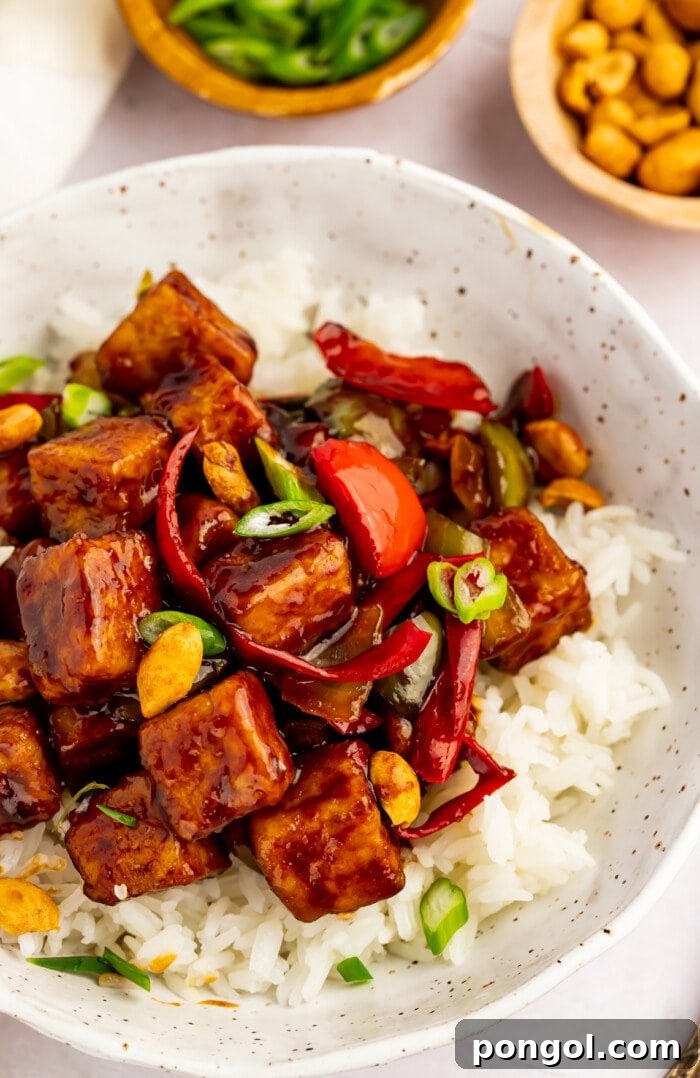
Step-by-Step Guide to Crafting Kung Pao Tofu
Follow these detailed steps to create a show-stopping vegan Kung Pao Tofu in your own kitchen:
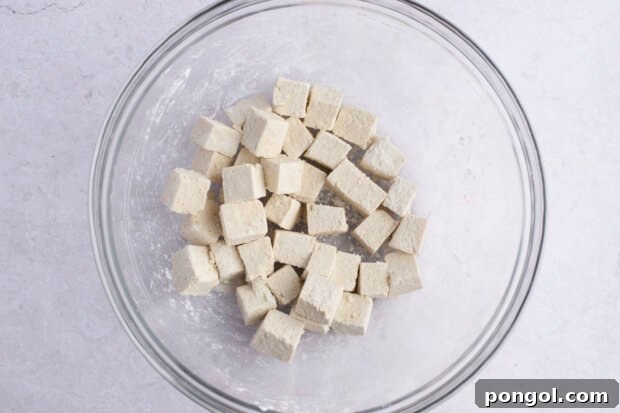
- Prepare the Tofu: After pressing the extra-firm tofu (as described in our chef’s tips), cube it into bite-sized pieces. In a large bowl, combine the cubed tofu with cornstarch and salt. Toss gently until each piece is evenly coated. This cornstarch coating is key to achieving that desirable crispy texture. Set the coated tofu aside while you prepare the sauce and heat your pan.
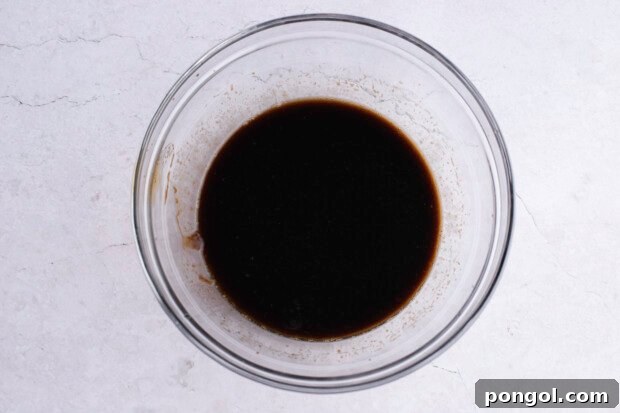
- Whisk the Kung Pao Sauce: In a medium bowl, combine all the sauce ingredients: soy sauce, hoisin sauce, sriracha (adjust to your heat preference), rice vinegar, maple syrup, and sesame oil, along with 2 tablespoons of water. Whisk thoroughly until all ingredients are well combined and the sauce is smooth. Set this flavorful mixture aside, ready to be added to the stir-fry.
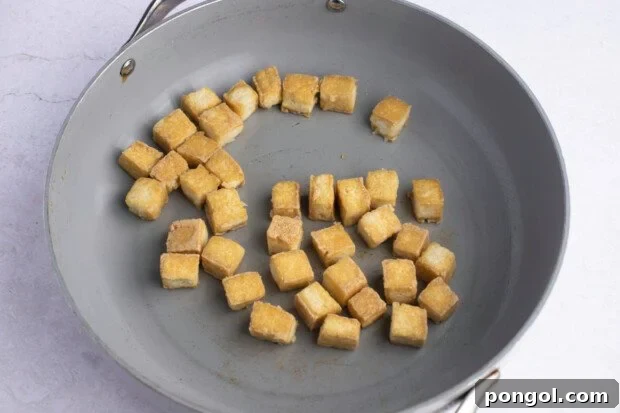
- Crisp the Tofu to Perfection: Heat the neutral oil in a large skillet or wok over medium-high heat. Once the oil is hot and shimmering (you might see slight ripples), carefully add the coated tofu cubes in a single layer, ensuring not to overcrowd the pan. Cook the tofu, flipping and stirring periodically, until all sides are beautifully golden-brown and wonderfully crispy. This usually takes about 8-12 minutes, depending on your pan and heat. Once cooked, transfer the crispy tofu to a plate or bowl and set it aside.
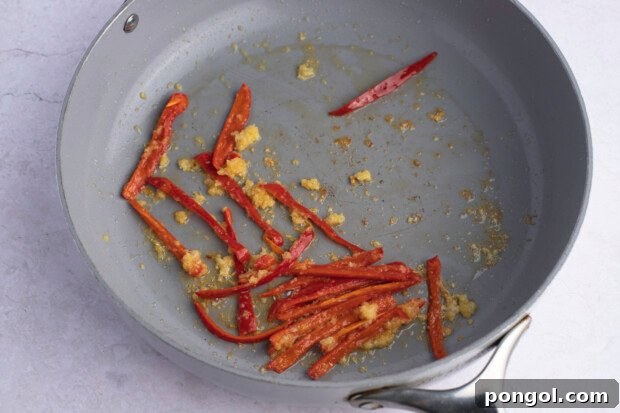
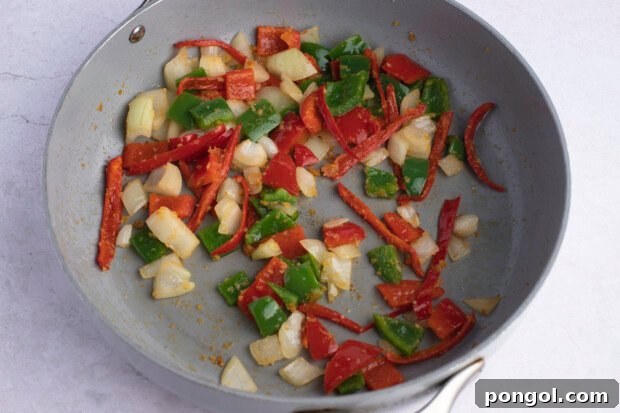
- Sauté the Aromatics: Using the same skillet (no need to clean it unless there’s excessive residue), add the red chilis (whole or sliced, depending on your desired heat), minced garlic, and grated ginger. Sauté for about 30-60 seconds, or until they become fragrant. Be careful not to burn the garlic.
- Stir-Fry the Vegetables: Add the chopped green bell pepper, red bell pepper, and white onion to the skillet. Continue to sauté, stirring frequently, for approximately 3 to 4 minutes. The goal is for the vegetables to soften slightly but still retain a pleasant crispness, maintaining their vibrant colors and fresh texture.
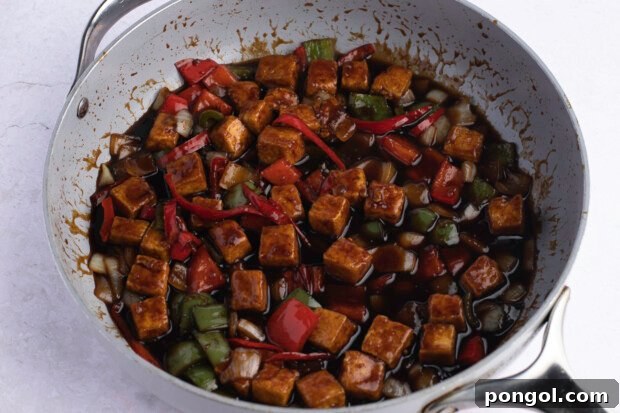
- Combine and Simmer: Return the cooked, crispy tofu to the skillet with the stir-fried vegetables. Pour the prepared Kung Pao sauce evenly over the tofu and vegetables. Stir everything well to ensure every piece is thoroughly coated in the rich sauce. Let the mixture simmer for 4 to 5 minutes, or until the sauce has thickened to a glossy consistency and clings beautifully to the ingredients.
- Serve Immediately: Your homemade Crispy Kung Pao Tofu is now ready to enjoy! Serve it hot with your desired garnishes and sides.
Serving Suggestions for Your Kung Pao Tofu
This versatile Kung Pao Tofu can be enjoyed in many ways, making it a perfect meal for any occasion. Here are some popular serving suggestions:
- Classic with Rice: The most common pairing, serving Kung Pao Tofu over a bed of fluffy white rice (jasmine or basmati work wonderfully) allows the rice to absorb all the delicious sauce. Brown rice or quinoa are also excellent healthy alternatives.
- Noodle Bowls: For a heartier meal, serve it with your favorite noodles. Lo mein noodles, ramen, or even thick udon noodles create a satisfying and slurp-worthy dish.
- Lettuce Wraps: For a lighter, low-carb option, spoon the Kung Pao Tofu into crisp lettuce cups (like butter lettuce or romaine) for a refreshing appetizer or meal.
- Steamed Vegetables: Enhance the nutritional value by serving it alongside additional steamed or blanched vegetables such as broccoli florets, snap peas, or asparagus.
- Garnish Galore: Don’t forget the garnishes! Roasted peanuts add an essential crunch and nutty flavor, sliced green onions provide a fresh, pungent bite, and a sprinkle of chopped cilantro adds a burst of herbaceous freshness. A dash of sesame seeds can also add a nice touch.
Storage and Reheating Tips
Kung Pao Tofu makes for fantastic leftovers, often tasting even better the next day as the flavors meld. Here’s how to store and reheat it:
- Storage: Allow the Kung Pao Tofu to cool completely before transferring it to an airtight container. Store it in the refrigerator for up to 3-4 days.
- Reheating on the Stovetop: For best results, reheat leftovers in a skillet over medium heat. Add a splash of water or vegetable broth if the sauce has thickened too much. Stir frequently until heated through, which helps re-crisp the tofu slightly.
- Reheating in the Microwave: While convenient, the microwave may soften the tofu. Place leftovers in a microwave-safe dish and heat in 1-minute intervals, stirring in between, until warmed to your desired temperature.
Variations & Customizations
One of the best things about stir-fries is their flexibility. Feel free to experiment and make this Kung Pao Tofu recipe your own:
- Vegetable Boost: Add other quick-cooking vegetables like broccoli florets, sliced carrots, snap peas, mushrooms, baby corn, or water chestnuts. Add them to the skillet along with the bell peppers and onion, adjusting cooking times as needed.
- Spice It Up (or Down):
- More Heat: Increase the amount of sriracha, or add a pinch of red pepper flakes with the garlic and ginger.
- Less Heat: Reduce the sriracha, use whole red chilis, or omit them entirely.
- Protein Swaps: While tofu is fantastic, you can also try this recipe with other plant-based proteins such as tempeh (cubed and pan-fried), seitan, or even hearty chickpeas.
- Make it Gluten-Free: Simply swap out regular soy sauce for tamari, ensuring all other packaged ingredients (like hoisin sauce) are certified gluten-free.
- Nut-Free Option: If you have a peanut allergy, substitute peanuts with toasted cashews, sesame seeds, or crispy fried onions for a similar textural contrast.
- A Touch of Tang: For an extra layer of complexity, a tiny splash of black vinegar (Chinkiang vinegar) can be added to the sauce.
Frequently Asked Questions (FAQs)
Here are some common questions about making this delicious Kung Pao Tofu:
- What kind of tofu is best for Kung Pao Tofu?
Extra-firm or super-firm tofu is highly recommended. These varieties contain less water and hold their shape well, making them ideal for pressing and pan-frying to achieve a crispy texture. Avoid silken or soft tofu, as they will crumble.
- Can I bake or air-fry the tofu instead of pan-frying?
Absolutely! For a healthier option or if you prefer a hands-off approach, you can bake or air-fry the cornstarch-coated tofu.
Baking: Preheat oven to 400°F (200°C). Arrange coated tofu cubes in a single layer on a parchment-lined baking sheet. Bake for 25-35 minutes, flipping halfway, until golden and crispy.
Air-Frying: Preheat air fryer to 375°F (190°C). Place coated tofu in a single layer in the air fryer basket (work in batches if necessary). Air fry for 15-20 minutes, shaking the basket every 5 minutes, until crispy. - Is this Kung Pao Tofu recipe gluten-free?
This recipe can easily be made gluten-free. Simply substitute regular soy sauce with tamari, and ensure that your hoisin sauce and any other store-bought ingredients are certified gluten-free. Always check ingredient labels carefully.
- How long does homemade Kung Pao Tofu last in the refrigerator?
Stored in an airtight container, leftover Kung Pao Tofu will keep well in the refrigerator for 3-4 days. The tofu might lose some of its crispiness, but the flavors will still be excellent.
- Can I prepare the Kung Pao sauce ahead of time?
Yes, you can definitely whisk together the Kung Pao sauce ingredients a day or two in advance. Store it in an airtight container in the refrigerator. This can help streamline your meal prep for a quick weeknight dinner.
More Delicious Vegan Recipes to Explore
If you’re loving the vibrant world of plant-based cooking, there’s a whole universe of flavors waiting for you! From savory main courses to delightful desserts, vegan cuisine offers endless possibilities for healthy, delicious, and compassionate meals. Expand your culinary repertoire with some of our other fantastic vegan creations:
- Vegan Seitan “Chicken”
- Vegan Enchiladas
- Seitan Grilled Chicken with Vegan BBQ Sauce
- The BEST Vegan Chocolate Chip Cookies
- Easy Vegan Lemon Curd
Kung Pao Tofu
Recipe By: Jasmine Comer
Prep Time: 15 minutes
Cook Time: 30 minutes
Total Time: 45 minutes
Servings: 4 servings
Crispy pan-fried tofu in a rich kung pao sauce with stir-fried vegetables create a delicious all-in-one vegan meal with tons of flavor.
 Jasmine Comer
Equipment
- Large bowl
- Large skillet
- Medium bowl
- Whisk
- Plate or bowl
Ingredients
For the Tofu
- 14 ounces extra-firm tofu (pressed well and cubed)
- 2 tablespoons cornstarch
- ⅓ teaspoon salt (or one heaping ¼ teaspoon)
- 3 tablespoon neutral oil (for cooking)
For the Sauce
- ¼ cup soy sauce
- ¼ cup hoisin sauce
- 1-2 teaspoons sriracha (to taste)
- 2 tablespoons rice vinegar
- 2 tablespoons maple syrup
- 1 teaspoon sesame oil
- 2 tablespoons water
For the Stir-Fry Vegetables
- 3 red chilis (sliced, see Notes)
- 3 cloves garlic (minced)
- 1 1-inch long piece ginger (grated)
- 1 small green bell pepper (chopped)
- 1 small red bell pepper (chopped)
- 1 small white onion (chopped)
Optional Garnishes
- Peanuts
- Sliced green onions
- Chopped cilantro
Instructions
-
Place cubed tofu in large bowl. Add cornstarch and salt, then toss to coat well. Set aside.

-
Heat neutral oil in large skillet over medium heat. Once oil is hot and shimmering, add tofu cubes. Cook, flipping and stirring periodically, until crisp and browned on all sides.
-
While tofu cooks, add all sauce ingredients to medium bowl and whisk thoroughly to combine. Set aside.
-
Transfer cooked tofu to plate or bowl and set aside. Add red chilis, garlic, and ginger to now-empty skillet and sauté until just fragrant.
-
Add bell peppers and onion to skillet. Sauté until vegetables are softened, approximately 3 to 4 minutes.
-
Return tofu to skillet and pour in prepared sauce. Stir well to coat, then let simmer 4 to 5 minutes or until sauce has thickened. Serve immediately with desired garnishes and sides.
Notes
- Red Chilies: For a milder dish, don’t slice the red chilies! Just cook them as-is. You can remove them before eating for the least amount of heat.
Nutrition Information (Approximate for One Serving)
Serving Size: 1 serving
Calories: 279 cal
Protein: 11 g
Fat: 14 g
Saturated Fat: 2 g
Cholesterol: 1 mg
Sodium: 1379 mg
Potassium: 444 mg
Total Carbs: 28 g
Fiber: 2 g
Sugar: 16 g
Net Carbs: 26 g
Vitamin A: 972 IU
Vitamin C: 90 mg
Calcium: 67 mg
Iron: 2 mg
Nutrition Disclaimers
Number of total servings shown is approximate. Actual number of servings will depend on your preferred portion sizes.
Nutritional values shown are general guidelines and reflect information for 1 serving using the ingredients listed, not including any optional ingredients. Actual macros may vary slightly depending on specific brands and types of ingredients used.
To determine the weight of one serving, prepare the recipe as instructed. Weigh the finished recipe, then divide the weight of the finished recipe (not including the weight of the container the food is in) by the desired number of servings. Result will be the weight of one serving.
Did You Make This Recipe?
We’d love to see your creations! Tag @40aprons on Instagram and share your culinary masterpiece. Don’t forget to leave a review and let us know how much you loved it!
Rate this Recipe
Tag @40Aprons on Instagram