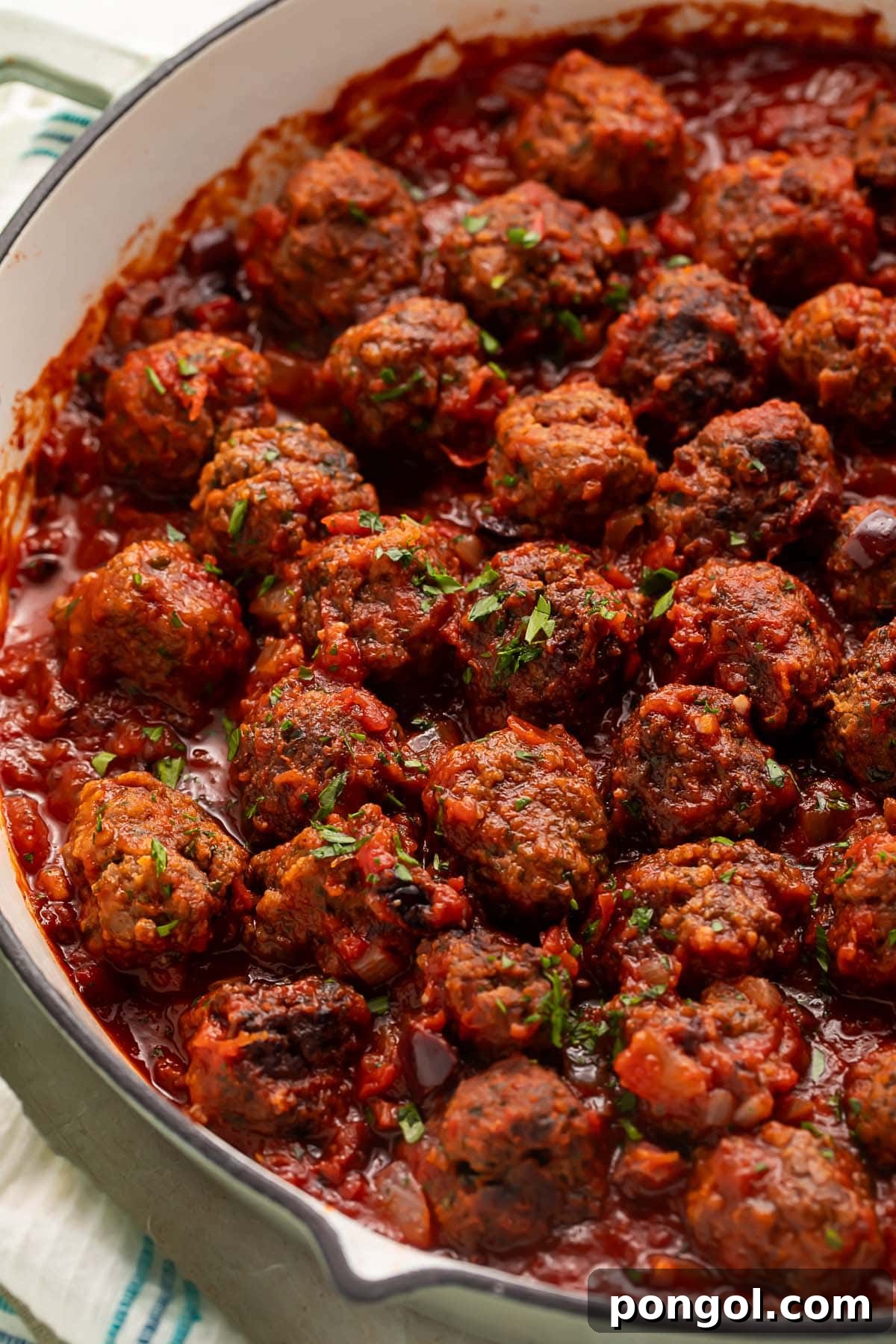
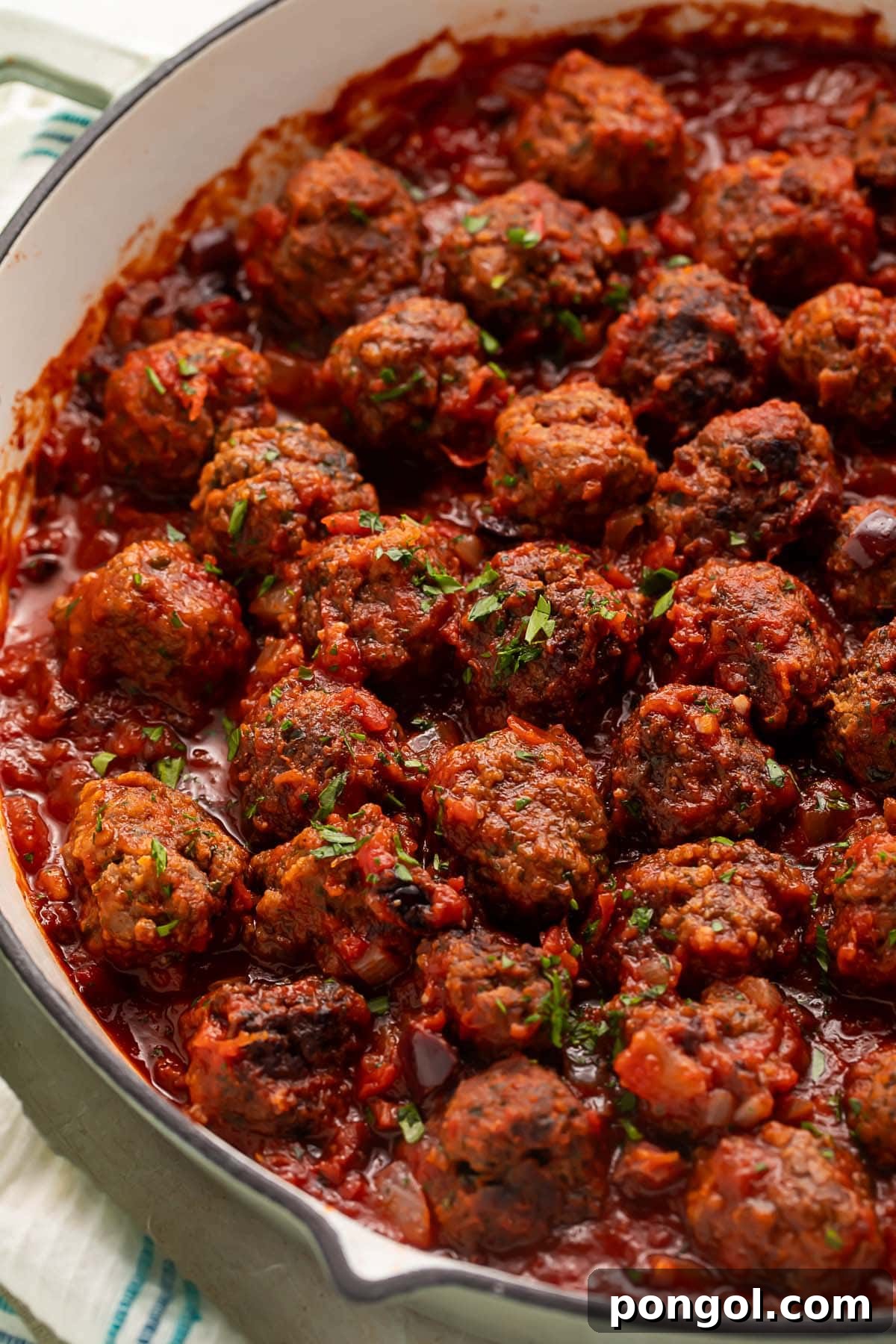
Welcome to a culinary journey that transports your taste buds straight to the vibrant markets of Morocco! These Moroccan Meatballs, known as Kefta, are a staple in North African cuisine, celebrated for their robust flavors and comforting warmth. Imagine tender, perfectly spiced meatballs crafted from lean ground beef, then slowly braised in a rich, aromatic tomato-based sauce. Served generously over a fluffy bed of lemon-kissed couscous with sweet dates, this dish strikes an exquisite balance between hearty and incredibly light. It’s a recipe that has graced our family table for over a decade, consistently earning rave reviews and becoming a cherished favorite for its exotic taste and satisfying appeal.
Why You’ll Love These Moroccan Meatballs
There’s something truly magical about Moroccan cuisine, and this Kefta recipe encapsulates all its best qualities. Here’s why this dish will quickly become a favorite in your home:
- An Explosion of Flavors: Moroccan food is synonymous with a captivating blend of spices – earthy cumin, warming ginger, a hint of fragrant cinnamon, and the fresh brightness of cilantro and lemon. These meatballs deliver on every front, offering a complex yet harmonious flavor profile that is both exotic and deeply comforting.
- Perfectly Tender Meatballs: Achieving the ideal texture for meatballs can be tricky, but this recipe ensures your Kefta are incredibly tender and juicy, never dry or dense. Braising them in the rich tomato sauce allows them to absorb all the delicious flavors while remaining moist.
- Elegant Yet Approachable: While impressive enough to serve to guests at a dinner party, this dish is surprisingly simple to prepare, making it a perfect choice for a flavorful weeknight meal. It’s an elevated comfort food that feels special without requiring hours in the kitchen.
- Wholesome and Satisfying: Packed with lean protein, fresh vegetables, and whole grains from the couscous, this meal is not only delicious but also wonderfully balanced. It’s hearty enough to satisfy, yet vibrant and light, leaving you feeling nourished without being weighed down.
- Versatile and Customizable: Whether you prefer beef, lamb, or a poultry alternative, this recipe is adaptable to your dietary preferences. Plus, the spices can be adjusted to suit your palate, from mildly aromatic to boldly piquant.
Essential Tips for Perfect Kefta
Before you dive into the cooking process, a few key considerations will ensure your Moroccan Meatballs turn out exceptional every time:
- Choose the Right Ground Meat: The fat content of your ground beef (or lamb) plays a crucial role. Opt for a ratio of 85/15 or 90/10 lean ground beef. Too lean, and your meatballs might become dry. Too fatty, and they could turn out greasy. This balance ensures tenderness and juiciness without excessive oil.
- Mindful Mixing: When combining your meatball ingredients, mix them until *just* combined. Overmixing can lead to tough meatballs. Start with a spoon or spatula, and switch to your hands for a gentle touch once the ground beef is added. The goal is to bind the ingredients without developing the meat’s proteins too much.
- Alcohol-Free Option: If you prefer to cook without alcohol, simply replace the dry white wine in the sauce with an equal amount of chicken stock or broth. The broth will still provide a flavorful liquid to deglaze the pan and contribute to the sauce’s depth.
- Uniform Meatball Size: Using a cookie scoop with a release handle is a fantastic trick for creating uniformly sized meatballs. This ensures even cooking, so all your meatballs are tender and perfectly cooked through simultaneously.
- Enhance Flavors with Chill Time: For an even deeper flavor profile and better cohesion, consider preparing the meatball mixture 1-2 hours in advance and letting it chill in the refrigerator, covered. This allows the spices to meld more thoroughly and helps the meatballs hold their shape better during cooking, resulting in juicier, more flavorful kefta.
How to Make These Incredible Moroccan Meatballs
For a comprehensive list of measurements, ingredients, and instructions, please refer to the detailed recipe card below.
Step 1: Prepare the Meatballs
In a medium mixing bowl, gently combine the egg and tomato paste until smooth. Then, fold in the finely chopped fresh cilantro, ground ginger, ground cumin, and a pinch of ground cinnamon, stirring until well incorporated. Finally, add the lean ground beef, breadcrumbs, salt, and freshly cracked black pepper. Mix with your hands or a spatula, being careful not to overmix, as this can lead to tough meatballs. The mixture should just come together. Use a cookie scoop to portion the mixture, then lightly roll each portion between your palms to form smooth, uniform balls, approximately 1 inch in diameter. This should yield about 32 meatballs.
Step 2: Cook the Meatballs
You have two excellent options for cooking your meatballs before they join the sauce:
- Baking: For a hands-off approach, preheat your oven to 350° Fahrenheit. Line a large baking sheet with aluminum foil for easy cleanup. Arrange the meatballs in a single layer and bake for 15-20 minutes, or until they are lightly browned on the outside. This method is great for preparing a large batch.
- Pan-Frying: If you prefer a richer flavor and a crispier exterior, heat 3 tablespoons of vegetable oil in a large skillet over medium-high heat until shimmering. Add the meatballs in batches, ensuring not to overcrowd the pan. Fry, turning occasionally with tongs, until golden brown on all sides. This usually takes about 5-7 minutes per batch.
Once cooked by either method, set the meatballs aside. They will finish cooking and absorb all the delicious flavors in the sauce later.
Step 3: Craft the Aromatic Sauce
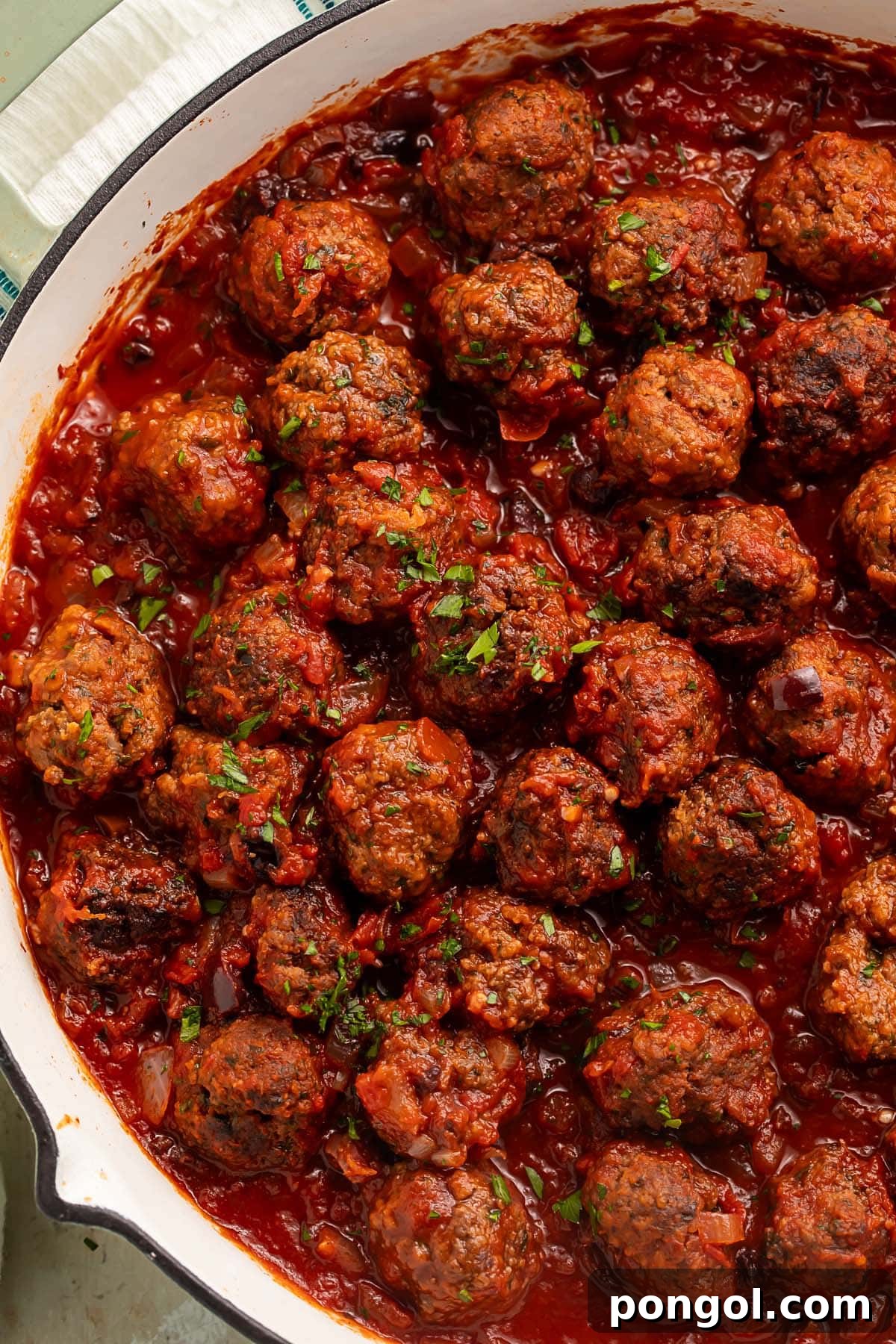
The sauce is where the Moroccan magic truly happens! In a large saucepan, heat 2 tablespoons of olive oil over medium heat. Add the diced white onion and minced fresh garlic, sautéing for about 3 minutes until softened and fragrant but not browned. Next, stir in the fresh lemon zest and chopped pitted Kalamata olives, cooking for another minute to allow their flavors to release. Deglaze the pan with ½ cup of dry white wine (or chicken stock), scraping up any browned bits from the bottom – this adds incredible depth of flavor. Let the wine reduce slightly for 1-2 minutes. Finally, incorporate the fresh lemon juice, chicken stock, crushed tomatoes, light brown sugar, crushed red pepper flakes, and a pinch of ground cinnamon. Stir well, bring to a gentle simmer, and let it cook for 7 minutes, allowing the flavors to meld. Taste and adjust seasoning with salt and freshly cracked black pepper as needed. Gently add your pre-cooked meatballs to the sauce, coating them evenly, and simmer for an additional 10 minutes, or until the meatballs are thoroughly cooked through and the sauce has thickened slightly.
Step 4: Prepare the Fluffy Couscous
While your meatballs are simmering to perfection, prepare the couscous. In a small saucepan, bring chicken stock, olive oil, and fresh lemon juice to a boil over medium-high heat. Once boiling, stir in the finely chopped dried dates and 1 cup of instant couscous. Immediately cover the saucepan with a lid and remove it from the heat. Let the couscous steam for 5 minutes. The dates will soften and infuse the couscous with a delicate sweetness, perfectly complementing the savory meatballs. After 5 minutes, uncover the pan and fluff the couscous with a fork. Season with salt and freshly cracked black pepper to taste, ensuring a light and airy texture.
Step 5: Serve and Savor
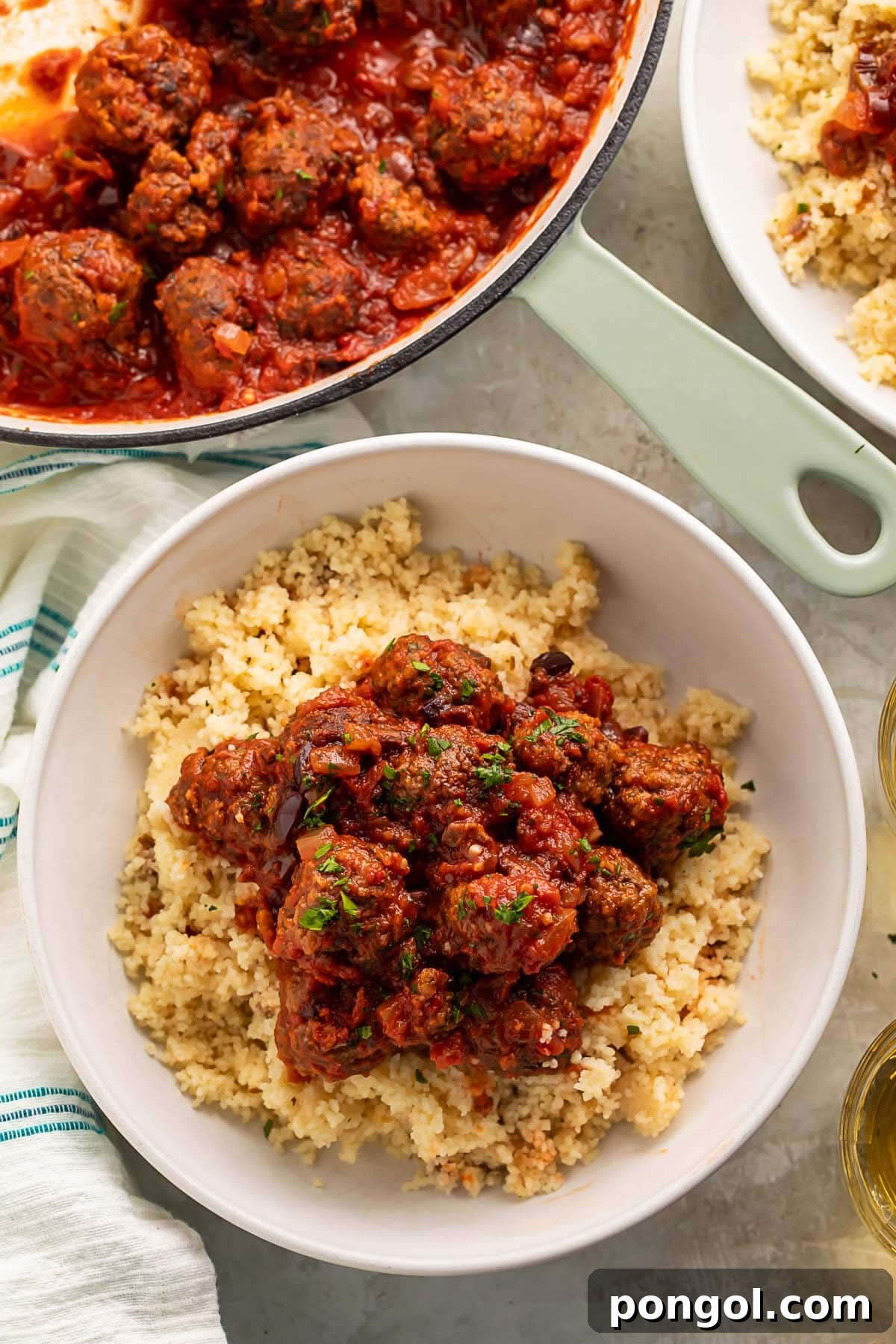
To serve, create a generous bed of the warm, fluffy couscous in individual serving bowls. Ladle a hearty portion of the Moroccan meatballs and their rich, aromatic tomato sauce over the couscous. For an added touch of freshness and vibrant color, garnish with a sprinkle of freshly chopped parsley leaves. Serve immediately and prepare to enjoy a truly unforgettable meal that delights the senses and warms the soul.
Recipe Variations and Customizations
This Moroccan Meatball recipe is wonderfully flexible, allowing for creative adaptations to suit various tastes and dietary needs:
- Experiment with Different Proteins: While ground beef is classic for kefta, feel free to try other proteins. Ground lamb will lend an even more traditional and rich Moroccan flavor. For a lighter option, ground chicken or ground turkey can be used; just be mindful of their lower fat content, which might require slightly less cooking time or a touch more moisture in the meatball mixture. For those seeking a plant-based alternative, I’ve successfully made a delicious vegan version using seitan or a high-quality plant-based ground meat substitute.
- Boost the Heat: If you enjoy a spicier kick, increase the amount of crushed red pepper flakes in the sauce. You could also add a pinch of cayenne pepper or a finely minced fresh chili to the sauce for an extra fiery dimension.
- Add More Vegetables: Enhance the nutritional value and texture of the sauce by incorporating more vegetables. Diced bell peppers (red or yellow for sweetness), chopped zucchini, or even a handful of spinach wilted in at the end would be excellent additions.
- Fresh Herb Alternatives: While cilantro is traditional, you can also experiment with a mix of fresh parsley and cilantro, or even a touch of fresh mint in the meatballs for a different aromatic note.
- Different Grains: While couscous is a classic pairing, these flavorful meatballs also go wonderfully with other grains like fluffy basmati rice, quinoa, or even a hearty whole wheat pasta.
- Sauce Enrichment: For a creamier sauce, stir in a spoonful of plain Greek yogurt or a splash of coconut milk towards the end of simmering, ensuring not to boil vigorously afterward. This will add a luscious richness and a subtle tang.
Please note that making significant changes to a recipe can sometimes alter the intended outcome. While the substitutions and variations listed here are generally reliable and have been tested or are widely recognized to work, results are not guaranteed with every modification. Always trust your instincts and adjust to your taste.
Frequently Asked Questions (FAQ)
- Can I make Moroccan Meatballs ahead of time? Absolutely! Both the meatballs and the sauce can be prepared a day in advance. Store the cooked meatballs and sauce separately in airtight containers in the refrigerator. Reheat gently on the stovetop, adding a splash of chicken stock or water if the sauce is too thick. You can also prepare the meatball mixture and form the balls, then refrigerate them uncooked for up to 24 hours before cooking.
- How do I store leftovers? Leftover Moroccan meatballs and couscous can be stored in separate airtight containers in the refrigerator for up to 3-4 days. They reheat beautifully in the microwave or on the stovetop.
- Can I freeze this dish? Yes, this recipe freezes well! Once completely cooled, store the meatballs and sauce together in a freezer-safe container for up to 3 months. Thaw overnight in the refrigerator before reheating. The couscous can also be frozen separately, though its texture might be slightly softer upon reheating.
- What else can I serve with these meatballs? While couscous is the traditional pairing, these meatballs are versatile. They would be delicious alongside a fresh green salad with a light vinaigrette, roasted vegetables, or even tucked into warm pita bread with a dollop of yogurt sauce.
- My sauce is too thin/thick. How can I fix it? If your sauce is too thin, let it simmer uncovered for a bit longer to reduce. If it’s too thick, stir in small increments of chicken stock or water until it reaches your desired consistency.
Moroccan Meatballs with Couscous Recipe
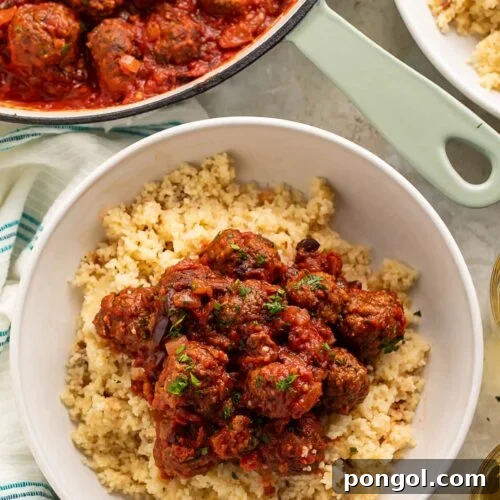
Moroccan Meatballs with Couscous
Tender meatballs served on a bed of warm, fluffy couscous with a savory, perfectly-spiced tomato gravy.
 Cheryl Malik
Equipment
-
Oven if baking meatballs
-
Large baking sheet if baking meatballs
-
Aluminum Foil if baking meatballs
-
Medium mixing bowl
-
Silicone spatula
-
Cookie scoop with release handle
-
Large plate if frying meatballs
-
Large skillet if frying meatballs
-
Stovetop
-
Tongs if frying meatballs
-
Large saucepan
-
Large wooden spoon
-
Small saucepan with lid
-
Fork
-
Serving bowls
Ingredients
For the Meatballs
- 1 large egg
- 2 tablespoons tomato paste
- ¼ cup finely chopped fresh cilantro leaves
- 1 teaspoon ground ginger
- 1 teaspoon ground cumin
- 1 pinch ground cinnamon
- 1 pound lean ground beef or lamb
- ½ cup breadcrumbs
- salt to taste
- freshly cracked black pepper to taste
- 3 tablespoons vegetable oil plus more as needed, if frying meatballs
For the Sauce
- 2 tablespoons olive oil
- ½ cup diced white onion approximately 1 small onion
- 2 tablespoons minced fresh garlic approximately 3 large cloves
- 1 tablespoon fresh lemon zest zest from approximately 1 medium lemon
- ½ cup pitted kalamata olives chopped
- ½ cup dry white wine or chicken stock, or chicken broth
- 1 tablespoon fresh lemon juice
- ¼ cup chicken stock or chicken broth, low sodium if preferred
- 1 14-ounce can crushed tomatoes
- 2 packed teaspoons light brown sugar
- 1 large pinch crushed red pepper flakes
- 1 pinch ground cinnamon
- salt to taste
- freshly cracked black pepper to taste
For the Couscous
- 2 cups chicken stock or chicken broth, low sodium if preferred
- 1 tablespoon olive oil
- 2 tablespoons fresh lemon juice juice from approximately 1 medium lemon
- ⅓ cup finely chopped dried dates
- 1 cup instant couscous
- salt to taste
- freshly cracked black pepper to taste
Serving Suggestions (All Optional)
- chopped fresh parsley leaves
Instructions
-
If baking meatballs, preheat oven to 350° Fahrenheit. Line a large baking sheet with aluminum foil and set aside. (Disregard if frying meatballs.)
To Make the Meatballs
-
Add 1 large egg and 2 tablespoons tomato paste to a medium mixing bowl. Mix ingredients together until fully combined into a smooth mixture.
-
Add ¼ cup finely chopped fresh cilantro leaves, 1 teaspoon ground ginger, 1 teaspoon ground cumin, and 1 pinch ground cinnamon to the bowl. Stir until ingredients are fully incorporated.
-
Add 1 pound lean ground beef, ½ cup breadcrumbs, salt, and freshly cracked black pepper to the bowl. Mix ingredients together with hands or a spatula until just incorporated. Be careful not to overmix.
-
Use a cookie scoop to portion the meatball mixture into individual portions, rolling each scoop between the palms of your hands quickly to smooth. Place each meatball on the prepared baking sheet or on a large plate. Repeat until the entire meatball mixture has been formed into approximately 32 individual meatballs, each approximately 1-inch in diameter.
To Bake the Meatballs
-
Place the prepared baking sheet in the preheated oven. Bake meatballs for 15 to 20 minutes or until meatballs are just lightly browned.
-
Once lightly browned, remove the baking sheet from the oven and set aside.
To Fry the Meatballs
-
Place a large skillet on the stovetop over medium-high heat. Add 3 tablespoons vegetable oil to the skillet and heat until the oil is hot and shimmery.
-
When the oil is hot, add meatballs to the skillet, working in batches as needed to avoid overcrowding the pan. Fry meatballs, flipping occasionally, until golden brown on all sides.
-
Transfer fried meatballs to a large bowl and set aside. Repeat until all meatballs have been fried, adding oil to the pan as needed.
To Make the Sauce
-
Place a large saucepan on the stovetop over medium heat. Add 2 tablespoons olive oil to the saucepan and continue heating until the oil is hot and shimmery.
-
When the oil is hot, add ½ cup diced white onion and 2 tablespoons minced fresh garlic to the saucepan. Stir to incorporate. Sauté ingredients for approximately 3 minutes or until softened but not browned.
-
Once the onion and garlic are softened, add 1 tablespoon fresh lemon zest and ½ cup pitted Kalamata olives to the saucepan. Stir to incorporate. Sauté ingredients for 1 minute.
-
Add ½ cup dry white wine to the saucepan. Stir to incorporate, scraping the bottom of the pan to loosen any onions or garlic that may have stuck. Reduce heat under the pan to low and simmer the mixture for 1 to 2 minutes or until the wine has reduced slightly.
-
When the wine has reduced, add 1 tablespoon fresh lemon juice, ¼ cup chicken stock, 1 14-ounce can crushed tomatoes, 2 packed teaspoons light brown sugar, 1 large pinch crushed red pepper flakes, and 1 pinch ground cinnamon. Stir to incorporate.
-
Simmer the mixture over low heat for 7 minutes, then taste the sauce and add salt and freshly cracked black pepper as desired. Stir to incorporate added ingredients.
-
When satisfied with the flavor of the sauce, add the cooked meatballs to the saucepan. Gently coat the meatballs in the sauce then let the mixture simmer for 10 minutes or until the meatballs are cooked through.
To Make the Couscous
-
While meatballs simmer, place a small saucepan on the stovetop over medium-high heat. Add 2 cups chicken stock, 1 tablespoon olive oil, and 2 tablespoons fresh lemon juice to the saucepan and stir to incorporate. Bring the mixture to a boil.
-
When the mixture begins to boil, add ⅓ cup finely chopped dried dates and 1 cup instant couscous. Cover the saucepan with a lid and remove it from the heat. Let the couscous cook in the covered saucepan for 5 minutes.
-
After 5 minutes, uncover the saucepan and fluff the couscous with the tines of a fork. Taste the couscous and season with salt and freshly cracked black pepper to taste.
To Serve
-
Place preferred amounts of couscous in serving bowls. Top the couscous with meatballs and plenty of sauce.
-
Garnish the dish with chopped fresh parsley leaves if desired and serve immediately.
- Yield: As-written, the recipe will make roughly 32 1-inch-diameter meatballs. Larger and smaller meatballs will change the total number of meatballs made.
- Sauce Consistency: If the sauce is too thick, add more chicken stock in small increments, stirring until fully incorporated, until the desired consistency is achieved.
Approximate Information for One Serving
Calories: 450 cal
Protein: 24 g
Fat: 18 g
Saturated Fat: 5 g
Trans Fat: 0.5 g
Cholesterol: 80 mg
Sodium: 565 mg
Potassium: 729 mg
Total Carbs: 44 g
Fiber: 4 g
Sugar: 10 g
Net Carbs: 40 g
Vitamin A: 227 IU
Vitamin C: 7 mg
Calcium: 74 mg
Iron: 4 mg
Nutrition Disclaimers
Number of total servings shown is approximate. Actual number of servings will depend on your preferred portion sizes.
Nutritional values shown are general guidelines and reflect information for 1 serving using the ingredients listed, not including any optional ingredients. Actual macros may vary slightly depending on specific brands and types of ingredients used.
To determine the weight of one serving, prepare the recipe as instructed. Weigh the finished recipe, then divide the weight of the finished recipe (not including the weight of the container the food is in) by the desired number of servings. The result will be the weight of one serving.
Did You Make This Recipe?
Tag @40aprons on Instagram and be sure to leave a review on the blog post!
Tag @40Aprons on Instagram