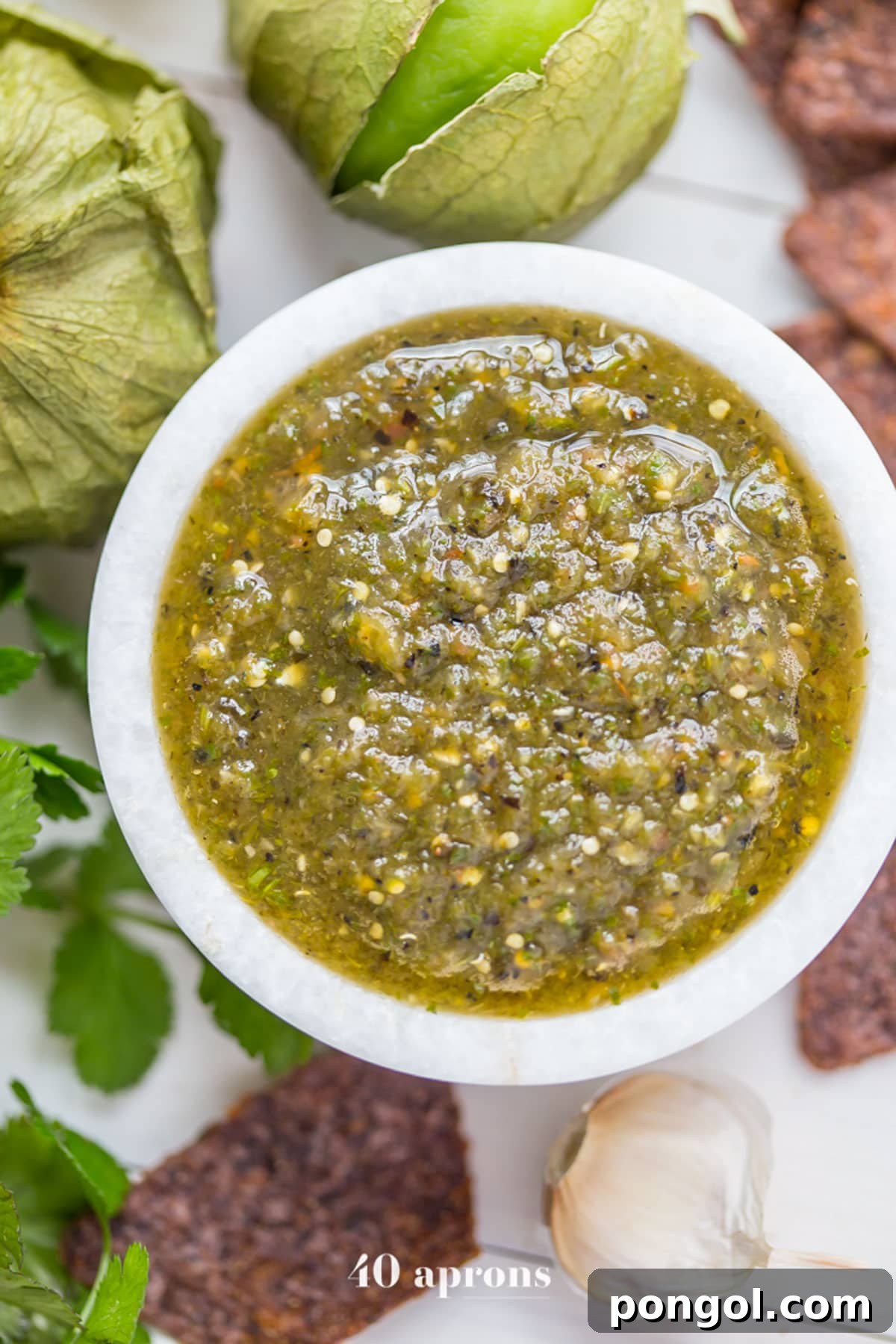
Unlock the vibrant flavors of authentic Mexican cuisine right in your own kitchen with this incredible Roasted Tomatillo Salsa Verde. Far from your average store-bought dip, this homemade salsa boasts a depth of flavor that is truly restaurant-quality, transforming simple ingredients into a zesty, bright, and slightly spicy condiment that will elevate any dish. Crafted with perfectly roasted tomatillos, fiery jalapeño, mild poblano pepper, and sweet tomato, every spoonful offers a rich, smoky complexity with just the right amount of kick.
Whether you’re looking for the ultimate snack, a versatile dip, a flavorful side dish, or an essential condiment, this salsa verde delivers. Once you experience the unparalleled taste of this fresh, handcrafted salsa, you’ll undoubtedly find yourself reaching for store-bought versions less and less, preferring the wholesome goodness and incredible flavor of a homemade creation.
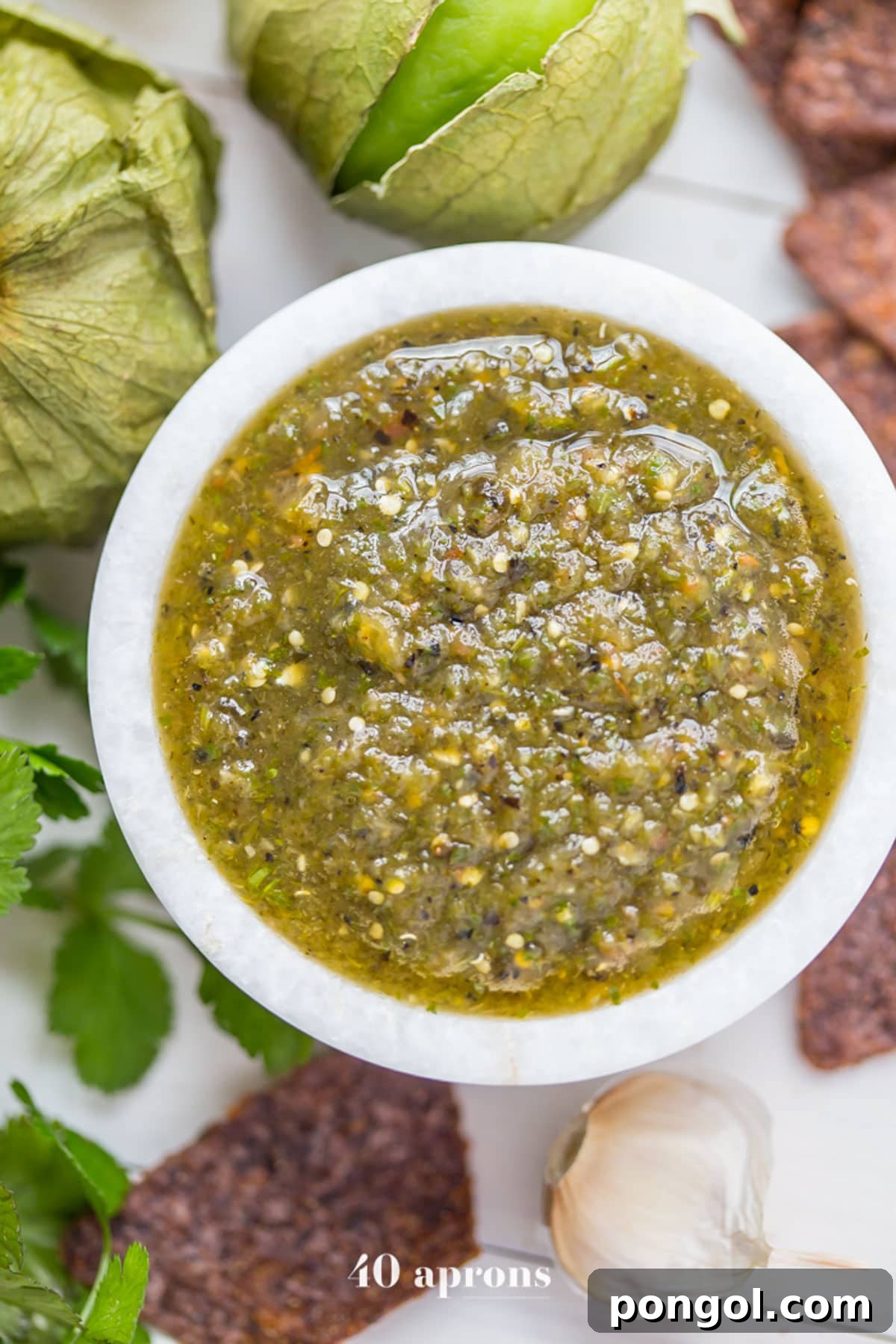
🌶️ Why This Roasted Tomatillo Salsa Verde Stands Out
This isn’t just another salsa recipe; it’s a culinary experience designed to impress with its rich, complex flavors and incredible versatility. Here’s what makes this roasted tomatillo salsa verde truly exceptional and a must-try for any Mexican food enthusiast:
- The Magic of Roasting: Unlocking Deep Flavors: While many salsa verde recipes call for raw tomatillos, our secret lies in roasting not just the tomatillos, but every single vegetable that goes into the blend. This includes the jalapeño, poblano, onion, and tomato. Roasting these ingredients under a broiler caramelizes their natural sugars, intensifying their sweetness and creating a smoky depth that simply cannot be achieved otherwise. This crucial step develops an unparalleled richness and a nuanced, savory undertone that forms the backbone of this vibrant salsa. The charred edges of the peppers and tomatillos lend a rustic, authentic flavor profile that will transport your taste buds straight to Mexico.
- A Symphony of Fresh Ingredients: Beyond the roasting, the careful selection of fresh ingredients ensures a bright and balanced flavor. Crisp tomatillos provide the signature tangy base, while a combination of jalapeño and poblano peppers offers a gentle heat with distinct earthy notes. Fresh garlic and cilantro add aromatic layers, and a touch of white vinegar brightens everything up, making each bite sing. This thoughtful blend creates a harmonious balance of zesty, savory, and spicy elements.
- Unmatched Versatility for Any Occasion: This roasted tomatillo salsa verde is far more than just a chip dip. Its robust flavor makes it an incredibly versatile addition to countless meals. It serves as an excellent base for hearty tortilla soups (or even a tortilla-less version!), adding a tangy and smoky kick. Drizzle generous amounts over carnitas bowls, use it as a flavorful sauce for tacos, nachos, or burrito bowls. It can even transform a simple breakfast by topping a Mexican omelette. Its adaptability means you’ll find endless ways to incorporate this delicious salsa into your culinary repertoire.
- Perfectly Seasonal & Fresh: Tomatillos are at their peak during late summer and early fall, typically from August through October. This makes roasted tomatillo salsa an ideal recipe to enjoy when fresh produce is abundant and at its best. Embracing seasonal ingredients ensures the brightest and most authentic flavors, making this salsa a perfect staple for your autumn month meals.
🌿 Key Ingredients for the Perfect Salsa Verde
Creating an outstanding salsa verde begins with understanding the role each ingredient plays. Here’s a closer look at the stars of this recipe:
- Tomatillos: The Tangy Heart: Tomatillos are the foundation of any great salsa verde. When selecting tomatillos, look for ones with dry, intact husks that are tightly wrapped. Beneath the husk, the fruit should be firm but not rock-hard, and definitely not squishy or discolored (yellowing indicates over-ripeness, browning suggests spoilage). They should be bright green, which contributes to the salsa’s signature vibrant color and characteristic tangy flavor. Roasting them softens their tartness and brings out a subtle sweetness and earthy undertone.
- Jalapeño Pepper: The Essential Kick: The jalapeño is responsible for the gentle heat in this salsa. Roasting the jalapeño significantly mellows its spice level, making it quite mild. If you prefer a truly mild salsa, be sure to remove the seeds and white ribs (placenta) before blending, as these are where most of the capsaicin (the heat compound) resides. For a spicier version, you can leave some or all of the seeds and ribs intact, or even swap it for a serrano pepper.
- Poblano Pepper: Smoky Depth, Mild Heat: Poblano peppers are larger and much milder than jalapeños, offering more of an earthy, smoky flavor rather than intense heat. Roasting them adds a beautiful char and deepens their taste, contributing to the salsa’s overall complexity without overwhelming the palate with spiciness. Like the jalapeño, removing the seeds and ribs will further reduce any residual heat.
- White Onion & Roma Tomato: Sweetness and Balance: Half a white onion, when roasted, transforms from pungent to subtly sweet and caramelized, adding a fantastic depth of flavor. A single roma tomato, also roasted, provides a touch of sweetness and balances the tanginess of the tomatillos, contributing to a well-rounded flavor profile and a slightly richer texture.
- Fresh Garlic & Cilantro: Aromatic Brightness: Two cloves of garlic, peeled and roasted, become wonderfully sweet and mellow, infusing the salsa with an irresistible aromatic quality. Fresh cilantro is non-negotiable for authentic salsa verde, providing a burst of herbaceous brightness that ties all the flavors together. Always use fresh cilantro for the best results.
- White Vinegar & Salt: The Finishing Touch: A modest amount of white vinegar not only enhances the tanginess of the tomatillos but also helps to neutralize some of the peppers’ capsaicin, contributing to the salsa’s mildness. Salt is crucial for seasoning and bringing out all the individual flavors, so always taste and adjust as needed.
👩🏼🍳 Expert Tips for Perfect Homemade Salsa Verde
Achieving restaurant-quality salsa verde at home is simple with a few expert insights. Follow these chef’s tips to ensure your salsa is always a delicious success:
- The Critical Resting Period: While this salsa is delicious right after preparation, its flavors deepen and meld beautifully with a little time to rest. If you can, chill the salsa for at least a couple of hours, or even overnight. This resting period allows all the roasted notes, tang, and spice to harmonize, resulting in a significantly richer and bolder flavor profile. This step is a game-changer for truly exceptional salsa.
- Adjusting Consistency Like a Pro: As the salsa rests, it naturally thickens a bit. If you find it becomes too thick for your preference or intended use, simply thin it out with a little water, a splash of vegetable broth, or even a bit of lime juice. Add liquid gradually, stirring well after each addition, until you achieve your desired consistency. Remember to taste and adjust the seasoning (salt, cilantro, or a touch more vinegar) to account for the added liquid.
- Mastering the Heat Level: This recipe is designed to produce a relatively mild salsa, especially since roasting both jalapeño and poblano peppers significantly reduces their natural heat. Poblano peppers are inherently milder than jalapeños to begin with. If you are sensitive to heat, proactively remove all seeds and white ribs from both peppers before blending. The white vinegar also plays a small role in neutralizing some capsaicin. For those who love more spice, consider leaving some seeds and ribs in the jalapeño, or substitute the jalapeño with a spicier serrano pepper for an extra kick.
- Selecting the Freshest Tomatillos: The quality of your tomatillos will greatly impact the final taste of your salsa. When shopping, always prioritize these characteristics:
- Intact Husks: Choose tomatillos that still have their papery husks firmly attached. This protects the fruit and is a sign of freshness.
- Vibrant Green Color: Look for bright green tomatillos. Avoid any that are yellowed or browned, as this indicates over-ripeness or spoilage.
- Firm to the Touch: Gently squeeze the tomatillos. They should feel firm but yield slightly, not hard like a rock, and definitely not squishy. A squishy tomatillo is past its prime.
- Achieving the Perfect Roast: When broiling, keep a close eye on your vegetables, as broilers can vary greatly in intensity. Arrange the vegetables in a single layer on your baking sheet to ensure even charring. Use tongs to turn them frequently to get a nice blistered skin on all sides without burning them entirely. The goal is a good char for flavor, not incineration.
- Food Processor vs. Blender: While a food processor is excellent for achieving a chunky or smoother salsa, a regular blender can also work. For a blender, you might need to add a splash of water or lime juice to get things moving, especially if you prefer a thicker consistency. Pulse, don’t continuously blend, to control the texture and avoid over-processing into a watery purée.
- Storage for Longevity: Store any leftover salsa in an airtight container in the refrigerator. Properly stored, it will maintain its peak freshness and flavor for up to two weeks. The flavors will continue to deepen over time, making it even more delicious on day two or three!
🍽️ Serving Suggestions & Creative Pairings
This roasted tomatillo salsa verde is incredibly versatile, adding a burst of fresh, smoky flavor to a wide array of dishes. Here are some ideas to inspire your culinary adventures:
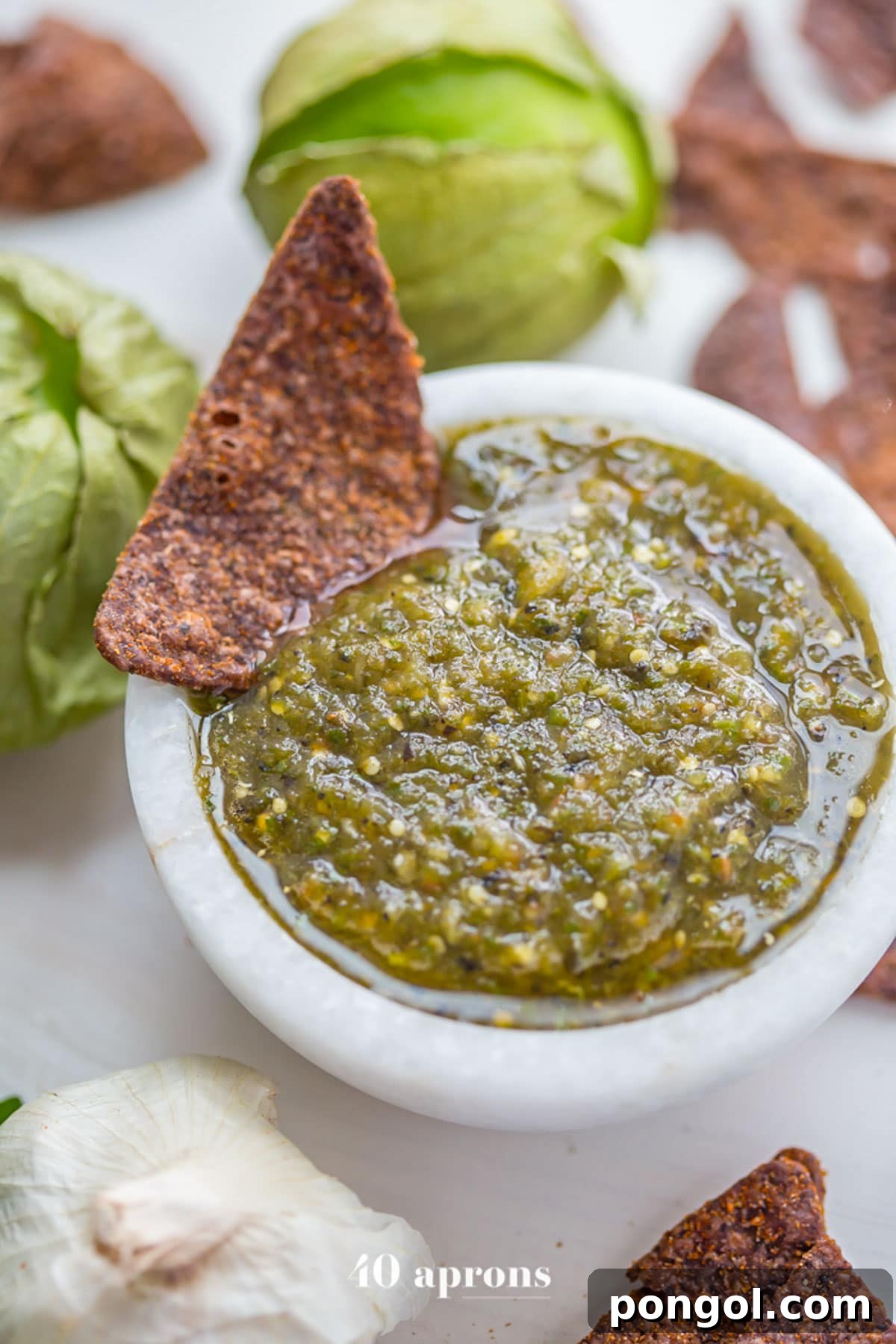
- The Classic Dip: Serve it simply with your favorite tortilla chips, especially blue corn chips, for an irresistible snack or appetizer. Its vibrant color and zesty taste make it a crowd-pleaser.
- Mexican Cuisine Enhancer:
- Tacos and Burritos: Spoon generous amounts over chicken, beef, or vegetarian tacos. It’s also perfect for enlivening Instant Pot chicken tacos or adding moisture and flavor to burrito bowls.
- Enchiladas and Chilaquiles: This salsa is an ideal sauce for green enchiladas or chilaquiles, providing an authentic, homemade base that is far superior to canned versions.
- Nachos & Quesadillas: Drizzle it over crispy pork rind nachos or serve as a side for cheesy quesadillas.
- Carnitas: It pairs exceptionally well with rich pork carnitas, cutting through the richness with its bright acidity. Try it on Chipotle Whole30 Carnitas bowls.
- Soup Base: Use it as a flavorful foundation for chicken tortilla soup or other Mexican-inspired soups. Its roasted depth adds a wonderful complexity.
- Breakfast Booster: Liven up your morning eggs, breakfast burritos, or even a Mexican omelette with a dollop of this fresh salsa.
- Grilled Meats & Fish: The bright, smoky flavors make it an excellent accompaniment to grilled chicken, steak, or white fish.
- Salad Dressing Alternative: Thin it slightly with a bit of olive oil and use it as a zesty dressing for green salads or grain bowls.
💃🏼 Explore More Favorite Salsa Recipes
- Roasted Chili Corn Salsa (Chipotle Copycat)
- Tomatillo Red Chili Salsa
- Roasted Salsa
- Smoky Guajillo Salsa Recipe (Whole30, Vegan, Paleo)
- Best Restaurant Style Salsa Recipe
- Avocado Salsa
- Keto Salsa
- Green Tomato Salsa
- Cucumber Salsa
Cheryl Malik
Roasted Tomatillo Salsa
15 minutes
15 minutes
30 minutes

Cheryl Malik
6
servings
Equipment
-
Broiler
-
large baking sheet
-
Tongs
-
Sharp paring knife
-
Food processor
-
serving bowl or airtight container
Ingredients
-
1 ½
pounds
tomatillos
approximately 10-14 large tomatillos; husks removed, tomatillos washed -
1
medium
jalapeño pepper
approximately 1 ounce -
1
medium
poblano pepper
approximately 4 ounces -
half of one medium white onion
approximately 3-4 ounces, quartered -
1
roma tomato
approximately 2 ounces, halved -
2
cloves
garlic
peeled -
¼
cup
chopped fresh cilantro
plus more as needed -
1 ½
teaspoons
white vinegar -
½
teaspoon
salt
more or less to taste
Instructions
-
Preheat broiler on high and position rack approximately 8 to 10 inches beneath heating element.
-
Place 1 ½ pounds tomatillos, 1 medium jalapeño pepper, 1 medium poblano pepper, half of one medium white onion, and 1 roma tomato on baking sheet, spreading ingredients out across pan so each can roast evenly.
-
Place baking sheet under preheated broiler. Broil, turning all ingredients over occasionally, until tomatillos, jalapeño, and poblano are blistered and charred on all sides.
-
Remove baking sheet from broiler and set aside to cool slightly.
-
Once cooled enough to handle, pull stem out of poblano pepper and discard. Remove seeds and ribs from poblano and discard. Repeat with jalapeño pepper if desired.
-
Place roasted tomatillos, jalapeño, poblano, onion, and tomato in bowl of food processor. Add 2 cloves garlic, ¼ cup chopped fresh cilantro, 1 ½ teaspoons white vinegar, and ½ teaspoon salt, then secure lid on food processor.
-
Pulse ingredients in food processor until all ingredients are mostly uniform in size. Taste salsa and add more cilantro and/or salt if desired.
-
Continue pulsing salsa until desired texture is achieved, then transfer salsa to serving bowl and serve immediately. Alternately, transfer salsa to airtight container and refrigerate until ready to serve.
Notes for Perfection:
- Jalapeño Pepper: For a spicier salsa, replace the jalapeño with a serrano pepper. This will significantly increase the heat level.
- Leftovers: Refrigerate any unused salsa in an airtight container for up to 2 weeks. The flavors often deepen and improve after a day or two! Ingredients may settle during storage – just stir well to recombine before serving.
- Freezing: For longer storage, this salsa freezes beautifully. Transfer cooled salsa to freezer-safe containers or bags, leaving a little headspace. It can be frozen for up to 3-4 months. Thaw in the refrigerator overnight before serving.
Approximate Information for One Serving
Serving Size:
1
serving
Calories:
53
cal
Protein:
2
g
Fat:
1
g
Saturated Fat:
0.2
g
Sodium:
197
mg
Potassium:
406
mg
Total Carbs:
10
g
Fiber:
3
g
Sugar:
6
g
Net Carbs:
7
g
Vitamin A:
374
IU
Vitamin C:
37
mg
Calcium:
18
mg
Iron:
1
mg
Nutrition Disclaimers
Number of total servings shown is approximate. Actual number of servings will depend on your preferred portion sizes.
Nutritional values shown are general guidelines and reflect information for 1 serving using the ingredients listed, not including any optional ingredients. Actual macros may vary slightly depending on specific brands and types of ingredients used.
To determine the weight of one serving, prepare the recipe as instructed. Weigh the finished recipe, then divide the weight of the finished recipe (not including the weight of the container the food is in) by the desired number of servings. Result will be the weight of one serving.
❓ Frequently Asked Questions (FAQs)
- Can I prepare this salsa ahead of time?
Absolutely! This salsa is one of those dishes that actually tastes better the next day. The flavors need time to meld and deepen, so making it a few hours or even a full day in advance is highly recommended. Just store it in an airtight container in the refrigerator.
- How long does homemade salsa verde last?
When stored properly in an airtight container in the refrigerator, your roasted tomatillo salsa verde will stay fresh and delicious for up to two weeks. Always use a clean spoon to serve to avoid introducing contaminants.
- Can I freeze roasted tomatillo salsa verde?
Yes, this salsa freezes beautifully! Allow the salsa to cool completely before transferring it to freezer-safe bags or containers. Leave about an inch of headspace if using rigid containers to allow for expansion. It can be frozen for up to 3-4 months. Thaw it overnight in the refrigerator before serving, and stir well to reincorporate any separated liquids.
- What if I don’t have a food processor?
No problem! A regular blender can be used instead. For a chunkier salsa, pulse the ingredients briefly. For a smoother consistency, blend longer, but be careful not to over-process. You might need to add a tablespoon or two of water or lime juice to help the ingredients blend if they’re too thick. Alternatively, for a truly rustic salsa, you can finely chop all the roasted ingredients by hand, then mix with the garlic, cilantro, vinegar, and salt.
- How do I choose ripe tomatillos?
Look for firm, bright green tomatillos with intact, dry husks. The husk should not be sticky. Avoid yellowed or soft tomatillos, as these are either overripe or spoiled. If the husk feels loose or is already partially open, it’s a good sign they’re ripe, but ensure the fruit inside is still firm and green.
- Can I use canned tomatillos for this recipe?
While fresh tomatillos are highly recommended for their superior flavor and texture, especially after roasting, you can use canned whole tomatillos if fresh ones are unavailable. Drain and rinse them thoroughly before adding to your food processor. Keep in mind that canned tomatillos will lack the smoky, charred depth that roasting fresh ones provides, so the flavor profile will be different.
- What if my salsa is too watery?
If your salsa turns out too thin, you can try a few remedies. You can let it sit uncovered in the refrigerator for a few hours; some of the liquid might evaporate. Another option is to gently simmer it on the stovetop over low heat until some of the moisture cooks off. Be careful not to cook it for too long, as it can change the fresh flavor. Adding another roasted roma tomato (or even a tablespoon of tomato paste) can also help thicken it slightly without drastically altering the taste.
Did You Make This Delicious Salsa?
We’d love to hear about it! Tag @40aprons on Instagram to share your culinary creation and be sure to leave a review on this blog post!
Tag @40Aprons on Instagram