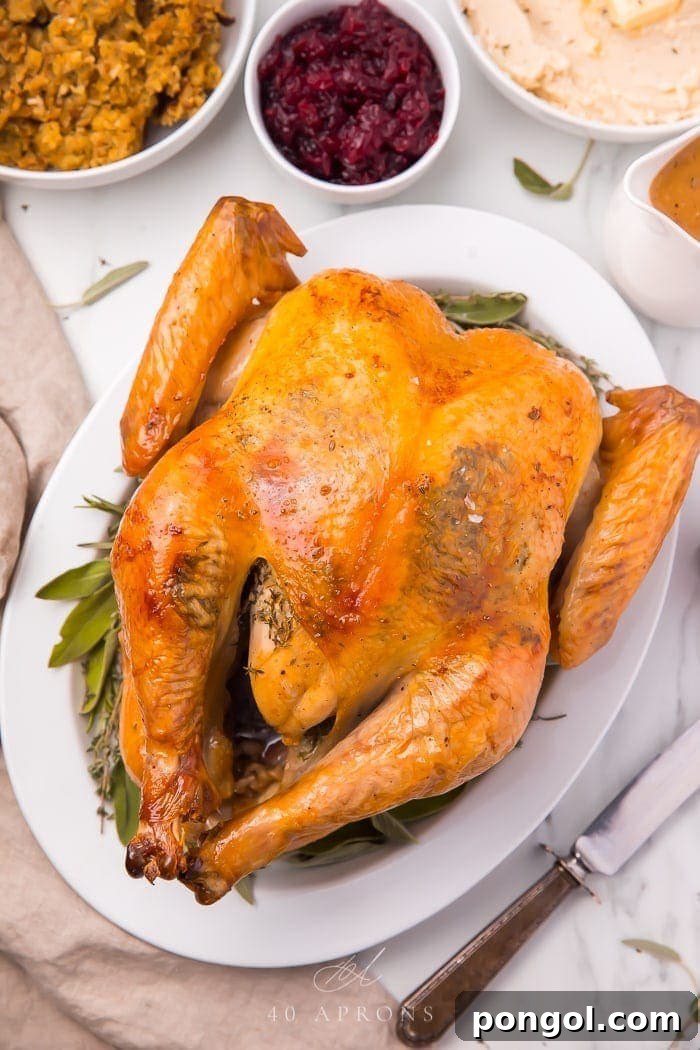
Learning how to brine a turkey is the secret to consistently tender, irresistibly moist, and incredibly flavorful poultry every holiday season. This simple yet highly effective turkey brine recipe will transform your Thanksgiving or Christmas turkey into a show-stopping centerpiece. Forget dry, bland birds – achieving a succulent, juicy turkey has never been easier!
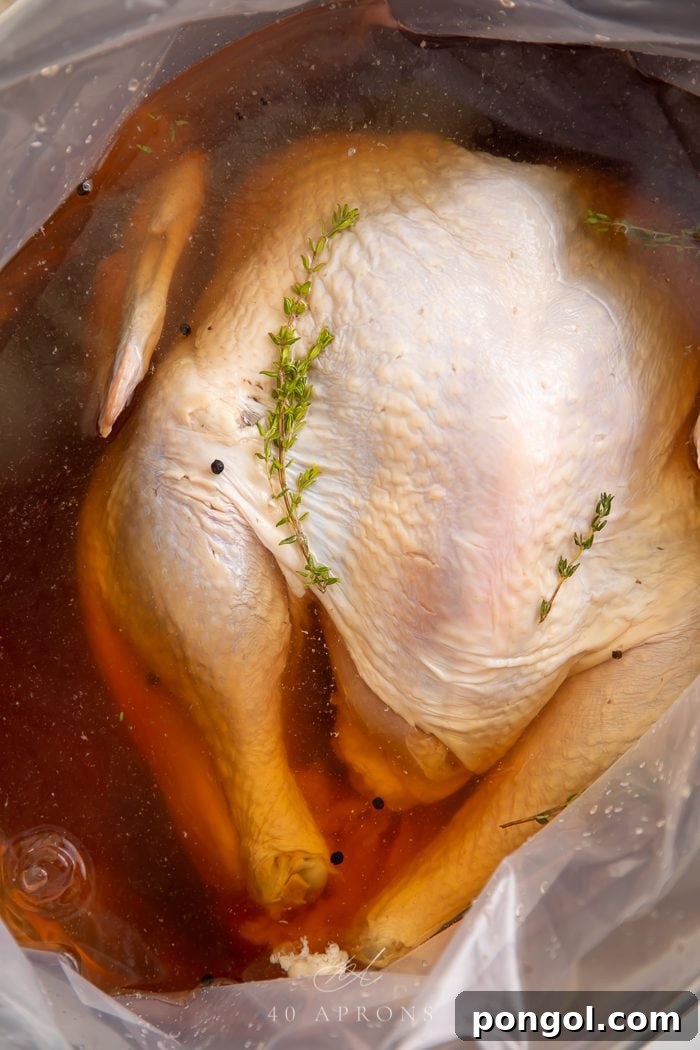
For years, I’ve relied on the magic of brining to elevate my poultry dishes, and I can confidently say it makes an unparalleled difference in achieving remarkably juicy and tender meat. If you’re aiming for a truly memorable holiday meal, mastering the art of brining is the one crucial step you absolutely shouldn’t skip!
Planning your holiday dinner and wondering how much turkey to prepare to satisfy all your guests? Get all the essential details on calculating the perfect amount per person by checking out our comprehensive guide here.
Why This Turkey Brine Recipe Is Your New Holiday Essential
This isn’t just another recipe; it’s your foolproof guide to a truly spectacular holiday bird. Here’s why this particular turkey brine stands out:
- Effortless Simplicity: At its core, this is a remarkably straightforward brine, requiring only fundamental ingredients like salt and water. While you have the option to enhance it with various aromatics and spices to suit your taste, the basic recipe is incredibly simple, making it accessible for home cooks of all experience levels.
- Unforgettable Flavor Infusion: Beyond merely adding moisture, brining introduces incredible flavor deep into the turkey’s meat. This ensures that every single bite of your holiday turkey is savory, well-seasoned, and profoundly satisfying, far beyond what simple seasoning can achieve.
- Consistently Perfect Texture: Bid farewell to dry, bland, or stringy turkey. This proven brining method guarantees a succulent, juicy interior with meat that remains tender and moist even after roasting. The added benefit? A beautifully golden-brown and crispy skin every single time, making it the best turkey brine recipe for consistently reliable results.
- Elevates Any Turkey: Whether you’re a seasoned chef or preparing your first holiday meal, this recipe has the power to transform even a standard, store-bought bird into a truly restaurant-quality centerpiece that will impress everyone at your table.
Understanding the Science: What Exactly Is Turkey Brining?
Brining is a culinary technique that involves soaking your turkey in a specially prepared salt solution, typically a mixture of salt, water, and often optional flavor enhancers like herbs, spices, and a touch of sugar. This process might seem like magic, but it’s rooted in fundamental science.
At its heart, brining works on the principle of osmosis and protein denaturation. The salt in the solution causes the muscle fibers in the turkey to loosen and unravel (denature). This structural change allows the muscle cells to absorb and retain significantly more moisture than they would otherwise. As the turkey soaks, the salted water penetrates deep into the meat, carrying with it the dissolved salt and any other flavors from your chosen aromatics. This results in a turkey that is:
- Incredibly Moist: The increased water retention means the turkey is much less likely to dry out during the intense heat of roasting.
- Deeply Flavorful: The brine seasons the meat from the inside out, ensuring flavor permeates every part, rather than just sitting on the surface.
- Tender: The softened muscle fibers contribute to a more tender texture, making the meat easier to carve and more pleasant to eat.
While often associated with managing a “huge bucket” (and yes, it can require a bit of space in your refrigerator!), the effort is truly minimal compared to the incredible, game-changing results. Imagine a holiday turkey so tender and juicy that it practically melts in your mouth – that’s the transformative power of a good brine. It’s an essential step for Thanksgiving, Christmas, or any special occasion where a perfectly cooked turkey is desired.
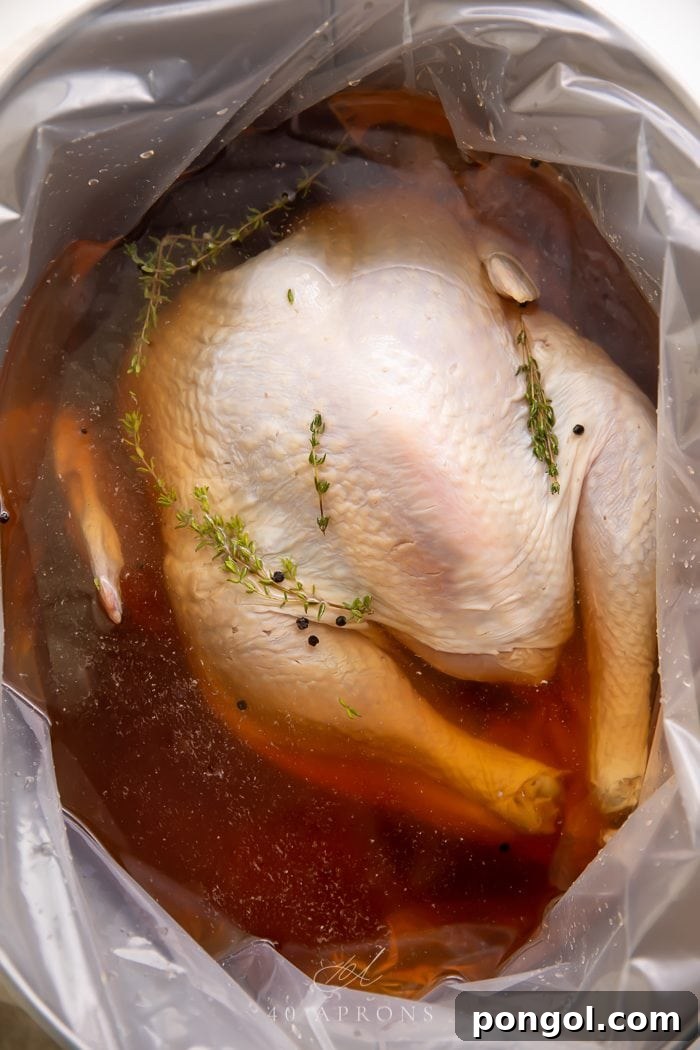
Choosing the Right Turkey for Optimal Brining Success
The type of turkey you select from the grocery store plays a critical role in your brining journey. Not all turkeys benefit equally from this preparation method, and some should be avoided altogether:
- Kosher Turkeys: If you purchase a kosher turkey, it is imperative that you **do not** brine it. Kosher birds are already processed with a significant amount of salt to meet kosher dietary laws, effectively pre-brining the bird. Adding more salt through an external brine would result in an excessively salty and potentially unpalatable turkey. Consider a kosher turkey as your convenient shortcut to a highly flavorful, pre-seasoned bird, eliminating the need for additional brining and safeguarding your kitchen from potential saltwater spills!
- Self-Basting Turkeys: Similar to kosher turkeys, many self-basting turkeys are injected with a solution containing water, salt, and other flavor enhancers. While typically not as heavily salted as kosher turkeys, they still have an elevated sodium content. If you opt for a self-basting bird, proceed with caution: you may need to reduce the brining time significantly or consider skipping the brine altogether to avoid over-salting. Always check the label for ingredients and sodium content.
- Standard (Non-Kosher, Non-Self-Basting) Turkeys: These are your prime candidates for this homemade turkey brine recipe. If your turkey is plain, unseasoned, and hasn’t been pre-treated with any solutions (often labeled as “natural” or “minimally processed” with no added solutions), then brining is highly recommended. It will infuse the necessary moisture and flavor that would otherwise be missing, making an immense difference in the final taste and texture of your roasted masterpiece. Rest assured, the brining process is simple, and the rewards of a truly juicy turkey are well worth the minimal effort!
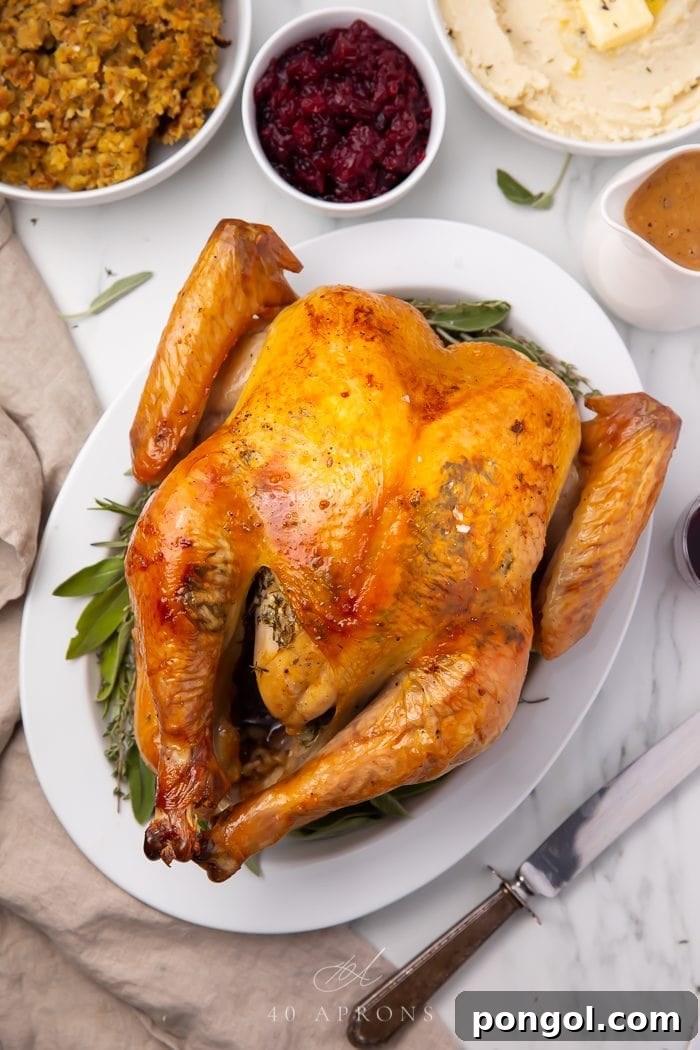
The Foundation of Flavor: Selecting the Right Salt for Your Brine
The type of salt you choose for your turkey brine is not merely a minor detail; it is a critical component that significantly affects the outcome of your perfectly brined turkey. For this specific recipe, we strongly recommend using **common table salt**. Its fine grain and consistent density make it incredibly easy to dissolve in water and ensure accurate, consistent measurements every time.
However, if you decide to use other types of salt, such as coarser kosher salt or sea salt, you must meticulously adjust the quantities. Different salts have varying crystal sizes and densities, meaning a “cup” of table salt will have a distinctly different sodium content and weight compared to a “cup” of kosher salt or sea salt. Using the wrong ratio can lead to an undesirable outcome – either an excessively salty turkey or, conversely, an ineffective brine that fails to deliver the desired moisture and flavor. To ensure absolute precision, an online salt calculator can be an invaluable tool. You can find a reliable salt calculator here, which will help you convert measurements for different salt types to maintain the correct salt-to-water ratio crucial for successful brining.
Our perfected ratio for this recipe is **1/2 cup of table salt for every 1 gallon of water**. This precise proportion has been meticulously tested to provide optimal brining results without making the turkey overly salty. It is imperative to adhere strictly to this ratio and the specified type of table salt for this recipe. If you are following a different recipe that specifically calls for kosher salt or sea salt, ensure you follow its instructions to the letter. Do not mix and match salt types or ratios from various recipes, as this is a very common pitfall that can lead to unintended and disappointing culinary results.
Beyond the essential salt and water, you can infuse even more holiday spirit and depth of flavor into your turkey brine. Consider adding a variety of aromatic ingredients such as bay leaves, smashed garlic cloves, whole black peppercorns, strips of fresh orange or lemon peel, or generous sprigs of fresh rosemary and thyme. These optional additions contribute complex layers of flavor, transforming a simple brine into a deeply aromatic and savory bath for your turkey. Remember, these are optional and can be adjusted to perfectly suit your personal taste preferences and holiday traditions.
Choosing the Perfect Container for Your Turkey Brine Setup
Successfully brining a large turkey requires more than just the right ingredients; it also demands a suitable container that can safely accommodate the bird and several gallons of brine. Here are several practical and food-safe options for setting up your turkey brining station:
- Heavy-Duty Brine Bags: These are specifically designed for brining large poultry and are often found at most grocery stores or kitchen supply shops, particularly during the holiday season. Brine bags are made from robust, food-safe plastic and are incredibly convenient as they can be placed inside a cooler or a large stockpot, effectively minimizing mess and making cleanup easier.
- Food-Safe 5-Gallon Buckets: A clean, food-grade 5-gallon bucket (readily available at hardware stores) is an excellent and economical choice for brining. It is absolutely essential to ensure the bucket is explicitly labeled as “food-safe” to prevent any chemical leaching or contamination of your turkey.
- Very Large Stockpot or Deep Roasting Pan: If you possess an exceptionally large stockpot (think 20 quarts or more) or a deep, commercial-sized roasting pan, these can also serve as suitable brining vessels. The paramount requirement is that the turkey must be fully submerged in the brine without any parts exposed, and the entire setup should fit securely and stably in your refrigerator.
- Clean, Insulated Cooler: For larger turkeys or when refrigerator space is a luxury you don’t have, a thoroughly cleaned, insulated cooler is a fantastic and highly effective choice. Place the brining bag (containing the turkey and brine) into the cooler, then fill the remaining space around the bag with plenty of ice. This method is excellent for maintaining a consistently cold and safe temperature (below 40°F / 4°C) throughout the entire brining process.
- Water Bath Containers: For enthusiasts of sous vide cooking, a large, food-grade water bath container can be repurposed as a suitable vessel, especially if you have a reliable way to keep it adequately chilled. While not for actual sous vide cooking in this context, their considerable size and food-safe properties make them adaptable. (For those interested in exploring true sous vide cooking, check out our popular recipes for Sous Vide Eggs or Sous Vide Chicken Breast.)
Whichever container you select, always ensure it is meticulously cleaned and sanitized before use. Furthermore, verify that it is large enough to completely submerge the turkey in the brine without overflowing, and that it can be securely covered and stored at a consistently safe, cold temperature throughout the brining duration.
Expert Tips for a Perfectly Brined Turkey Every Time
To ensure your turkey brine experience is a resounding success, keep these professional tips in mind:
- Always Check Your Turkey’s Label: Reiterate the crucial point: avoid brining kosher or self-basting turkeys, as they already contain added salt or brining solutions. Double-check the packaging to prevent an overly salty bird.
- Full Submersion is Non-Negotiable: It’s absolutely vital that your entire turkey is completely submerged in the brine solution. If parts of the bird float to the surface, use a large, clean plate weighted down with heavy cans or sealed bags of ice (if using a cooler) to keep it fully underwater. Consistent contact with the brine ensures even seasoning and moisture absorption throughout the turkey.
- Timing is Paramount (Don’t Over-Brine): While brining adds invaluable moisture, excessive brining can lead to a mushy texture and an unpleasantly salty flavor. Adhere closely to the recommended brining times. For most standard turkeys, 12 to 24 hours is typically ideal, depending on the turkey’s size. Smaller birds need less time, larger birds may benefit from slightly longer, but rarely more than 24 hours.
- No Extra Salt Post-Brining: Your turkey will have absorbed plenty of salt during the brining process. Skip any additional salting, seasoned rubs, or spice blends that contain salt before roasting. You can certainly use salt-free herb blends, fresh herbs, or spices if desired to enhance flavor without adding more sodium.
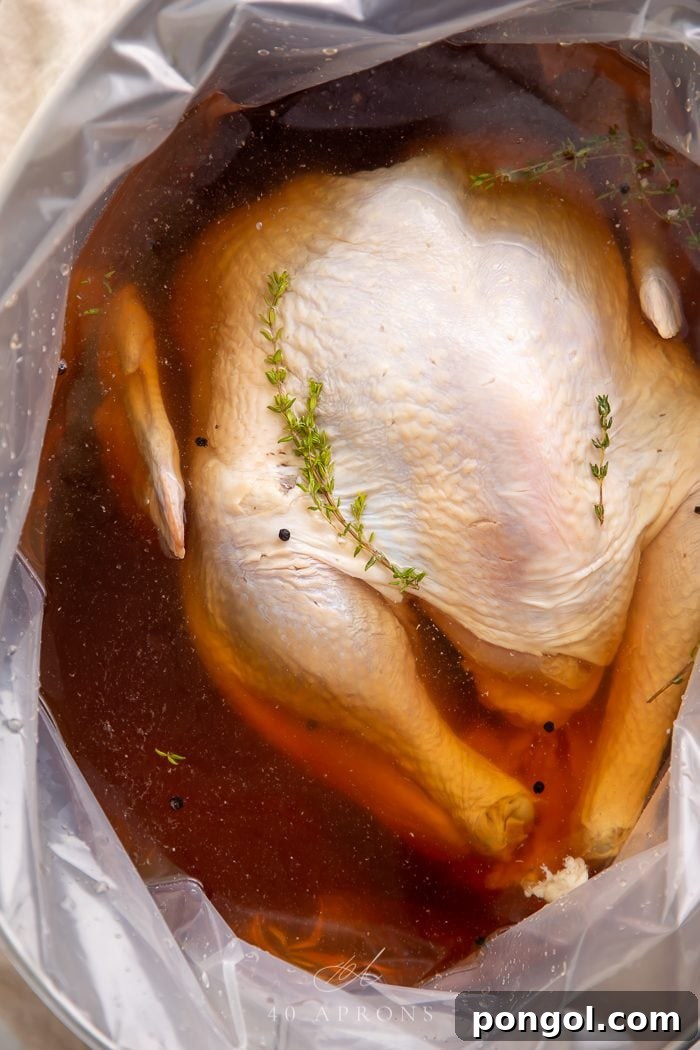
- The Breast-Side Down Technique: For optimal moisture distribution and to protect the leaner breast meat, place your turkey breast-side down in the brine. The breast meat, which is notoriously prone to drying out faster than the dark meat, will benefit immensely from being fully immersed and will absorb more critical moisture. (Please note: some photos may not reflect this specific technique, but it’s a chef’s secret for achieving a remarkably juicier breast!)
- Measure Ingredients Precisely: Accuracy in your salt-to-water ratio is absolutely paramount for a successful brine. Use proper measuring cups for your table salt and ensure the water quantity is exact. Do not eyeball ingredients for brining; precision here prevents problems later.
- Personalize with Aromatics: Feel empowered to infuse your brine with your favorite fresh herbs and aromatic spices. Fresh thyme, robust rosemary, fragrant bay leaves, whole peppercorns, crushed garlic cloves, and even strips of citrus peel (orange or lemon) can all contribute wonderful, complex layers of flavor to your holiday turkey.
- Prioritize Food Safety & Temperature: Always keep your turkey and the brine mixture thoroughly refrigerated (at or below 40°F / 4°C) throughout the entire brining period. If you’re utilizing a cooler, ensure it remains continuously packed with ice to maintain safe temperatures and prevent any bacterial growth.
Deep Dive into Further Brining Resources
For those eager to explore the intricate science, various methodologies, and advanced tips for brining poultry, here are some highly recommended external resources that offer invaluable insights:
- Serious Eats Food Lab: Delve into the scientific principles, comprehensive comparisons of different brining techniques (wet vs. dry), and debunking common myths at the renowned Serious Eats Food Lab. Their detailed articles provide invaluable, research-backed insights into achieving culinary perfection.
- Cook’s Illustrated: For a reliable, foundational recipe and consistently test-kitchen-approved brining techniques, consult the basic Cook’s Illustrated turkey brine recipe. Their meticulous approach ensures repeatable success.
- Alton Brown’s Good Eats: If you appreciate a blend of accessible science, engaging humor, and practical, no-nonsense advice, Alton Brown’s approach to turkey brining on Good Eats provides a classic and highly effective method that’s both educational and entertaining.
Complete Your Holiday Feast with These Delicious Sides!
A perfectly brined, succulent turkey deserves equally spectacular accompaniments to round out your holiday table. Elevate your meal with these fan-favorite side dishes that beautifully complement your show-stopping turkey:
- Roasted Radishes with Brown Butter
- Whole30 Sweet Potato Casserole
- Whole30 Crockpot Mashed Potatoes (vegan)
- Whole30 Green Beans
How To Brine A Turkey: The Best Simple Recipe
Recipe By: Cheryl Malik
Rating: 5 out of 5 stars from 2 votes
Prep Time: 10 minutes
Resting Time: 20 hours
Total Time: 20 hours 10 minutes
Learning how to brine a turkey is the key to dependably tender and moist turkey every holiday season. This easy method will elevate your holiday roast.

Cheryl Malik
Ingredients
- 1 ½ cups table salt
- 3 gallons water
- ⅔ packed cup brown sugar (optional, see Notes for keto alternative)
- 1 tablespoon peppercorns (optional)
- 3-5 sprigs fresh thyme (optional)
Instructions
- Prepare the Brine: The day before you plan to roast your turkey (ideally first thing in the morning), begin by making the brine. In your chosen large, food-safe container, thoroughly mix the table salt with the water until the salt is completely dissolved. If you’re using optional ingredients like brown sugar, peppercorns, or fresh thyme, add them to the mixture now and stir until well combined.
- Submerge the Turkey: Carefully place a heavy-duty brining bag inside your chosen food-safe bucket or container. Gently lower the turkey into the bag, ensuring it is placed breast-side down. This orientation helps the breast meat absorb maximum moisture, which is crucial for preventing it from drying out during the roasting process.
- Add the Brine and Seal: Pour the entire prepared brine solution over the turkey, making absolutely certain that the entire bird is fully submerged. There should be no “naked bits” exposed to the air. Carefully zip or securely seal the brining bag, then cover the bucket or container tightly.
- Refrigerate for Brining: Transfer the covered container with the turkey and brine to your refrigerator. If fridge space is a concern or you have a very large turkey, a clean, insulated cooler filled with ice can be used, ensuring the temperature remains consistently below 40°F (4°C). Allow the turkey to brine for a minimum of 12 hours. For larger turkeys (over 15 lbs), you might extend this to 18-24 hours, but avoid going beyond 24 hours to prevent over-salting or a mushy texture.
- Rinse Thoroughly: After the designated brining period, carefully remove the turkey from the brine solution and discard the spent brine. Rinse the turkey thoroughly under cold running water, making sure to flush both the inside of the cavity and all over the exterior. This step is absolutely crucial to remove any excess surface salt and prevent the final roasted turkey from being too salty.
- Pat Dry: Using a generous amount of paper towels, meticulously pat the entire turkey dry, paying special attention to thoroughly drying the inside of the cavity as well. The drier the skin, the crispier and more golden it will become during roasting.
Air-Dry for Crispy Skin
- Overnight Air-Drying: Once rinsed and thoroughly patted dry, return the turkey to your refrigerator. Place it on a roasting rack set inside a roasting pan. Leave it uncovered to air-dry overnight (for at least 8-12 hours). This critical post-brining step allows the skin to dry out completely, which is essential for developing that coveted golden-brown and wonderfully crispy skin when roasted, as it eliminates any surface moisture that would otherwise create steam.
Recipe Notes & Pro Tips
- Kosher Turkey Warning: As a crucial reminder, do not brine a kosher turkey; it’s already pre-salted for you.
- Ensure Full Submersion: Always make sure the turkey is entirely covered by the brine. If it floats, use a heavy plate with weights or cans on top to keep it submerged.
- Avoid Over-Brining: Strictly adhere to the recommended brining times (12-24 hours) to prevent an overly salty taste or a less desirable mushy texture in your turkey.
- No Post-Brine Salting: Your turkey will be perfectly seasoned internally from the brine. Do not add any further salt or salt-containing rubs after brining.
- Breast Down for Juiciness: For maximum moisture retention in the white meat, brine the turkey breast-side down.
- Precision with Salt: Use table salt and measure the quantities precisely as stated in the recipe for optimal results.
- Customize with Herbs: Feel free to add your favorite fresh herbs like rosemary, sage, or bay leaves, along with other aromatics for enhanced flavor depth.
- Keto Option: To easily make this brine keto-friendly, substitute the brown sugar with ⅔ packed cup of Brown Swerve or another erythritol-based brown sugar substitute of your choice.
Approximate Nutrition Information for One Serving
(Based on 8 servings, values are approximate and may vary slightly.)
- Serving Size: 1 serving
- Calories: 73 cal
- Protein: 1 g
- Fat: 1 g
- Saturated Fat: 1 g
- Sodium: 7150 mg
- Potassium: 45 mg
- Total Carbs: 19 g
- Fiber: 1 g
- Sugar: 18 g
- Net Carbs: 18 g
- Vitamin A: 25 IU
- Vitamin C: 1 mg
- Calcium: 69 mg
- Iron: 1 mg
Nutrition Disclaimers
The number of total servings shown is approximate. The actual number of servings will ultimately depend on your preferred portion sizes and the size of your turkey.
Nutritional values provided are general guidelines and reflect information for 1 serving based solely on the ingredients listed in this recipe, not including any optional ingredients. Actual macronutrients and micronutrients may vary slightly depending on the specific brands, types, and exact quantities of ingredients used.
To accurately determine the weight of one serving, prepare the recipe precisely as instructed. Once finished, weigh the entire cooked recipe (excluding the weight of the container or serving dish), then divide that total weight by your desired number of servings. The result will be the approximate weight of a single serving.
Did You Make This Perfectly Brined Turkey Recipe?
We absolutely love seeing your culinary creations! Share your holiday masterpiece with us! Tag @40aprons on Instagram and, most importantly, don’t forget to leave a review right here on the blog post to share your experience and feedback with our community!
Tag @40Aprons on Instagram