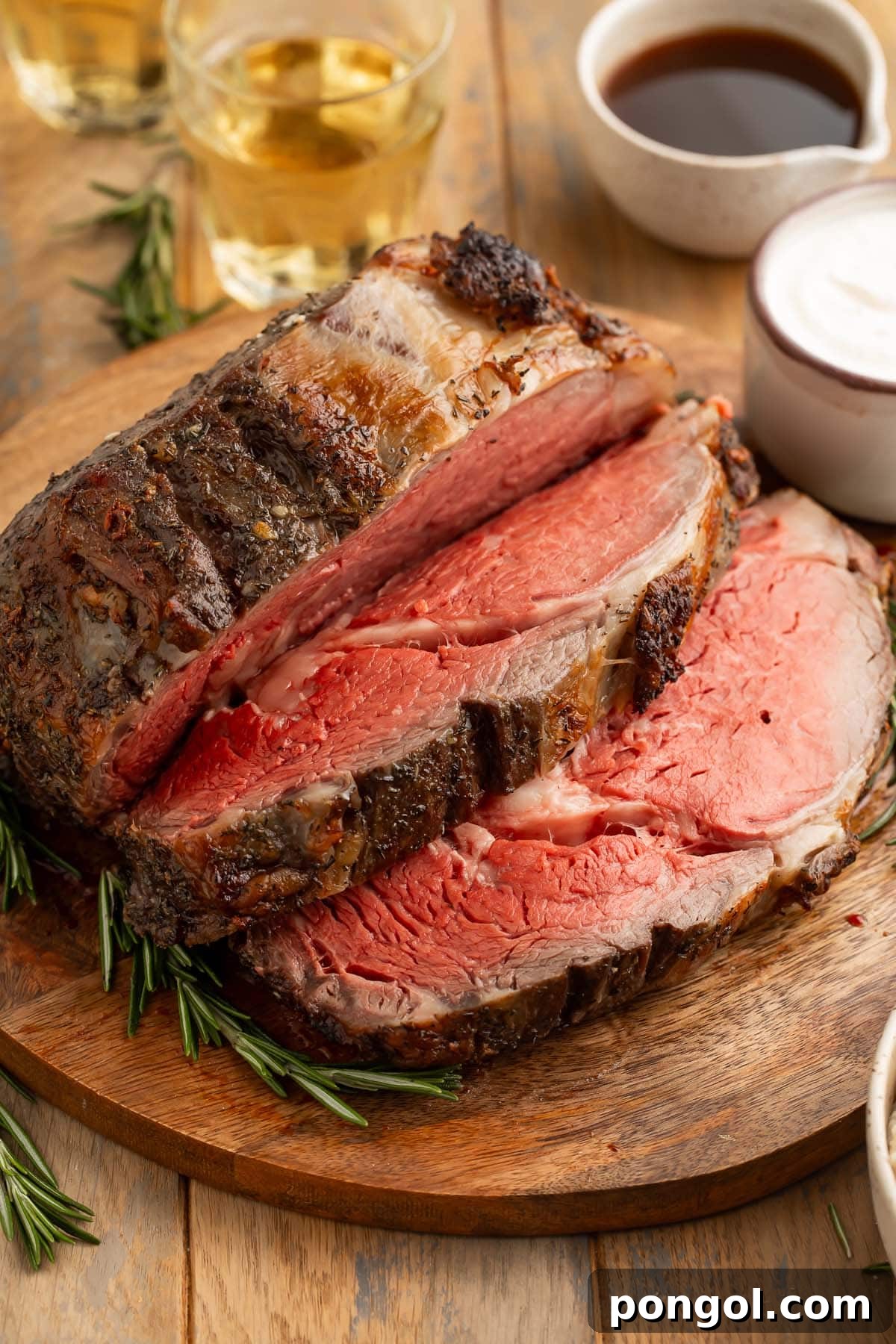
Welcome to the definitive guide for mastering the art of Reverse Sear Prime Rib, a truly spectacular dish that promises to elevate your holiday gatherings or any special occasion. This foolproof method guarantees a prime rib that’s incredibly juicy and tender on the inside, complemented by an irresistibly crisp and savory crust on the outside. By cooking the roast low-and-slow before a final high-temperature sear, we unlock unparalleled flavor and texture, making every slice a memorable culinary experience. We’ll guide you through each step, from selecting the perfect cut to crafting a rich au jus and a zesty horseradish sauce, ensuring your prime rib becomes the star of your feast.
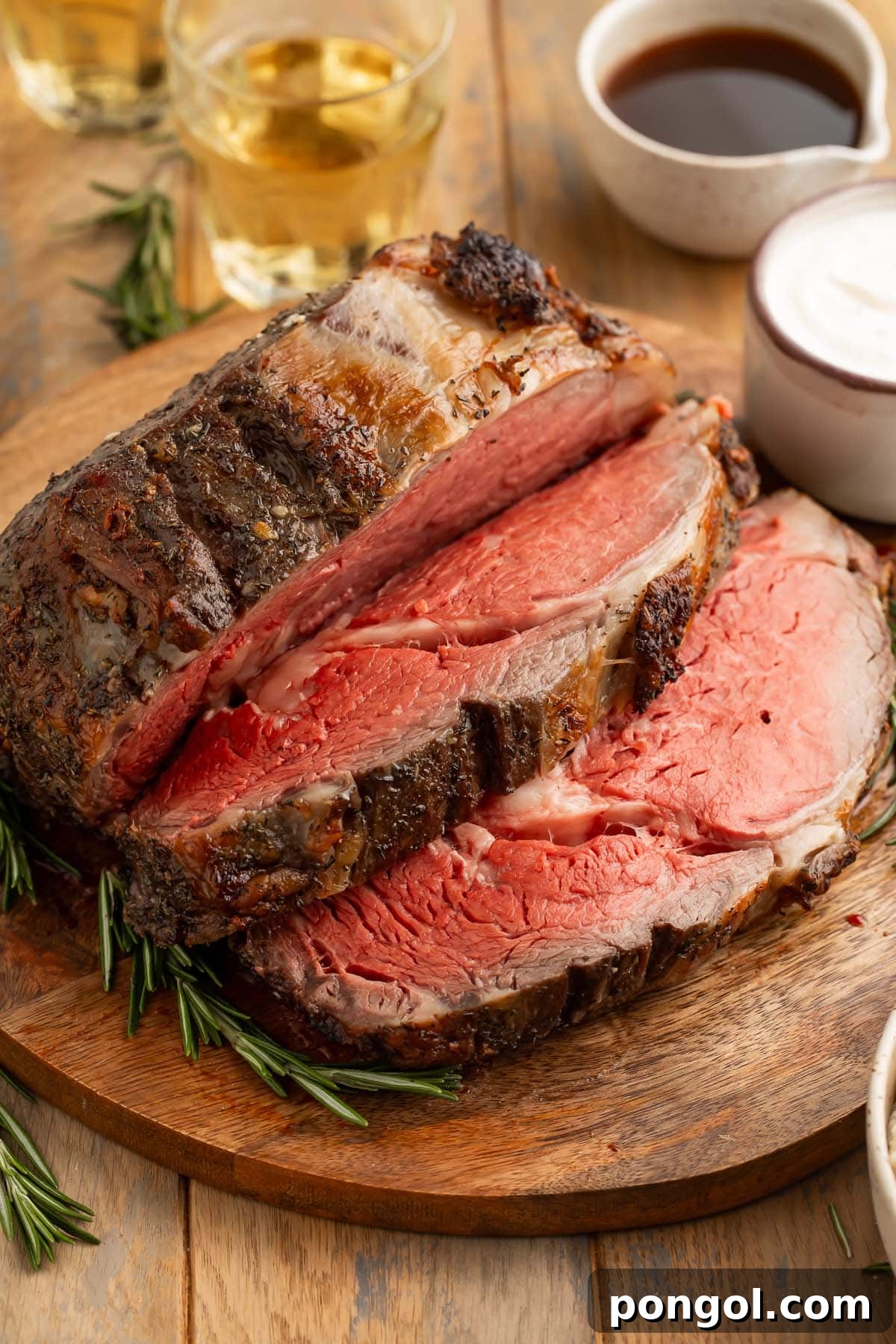
Essential Preparations: Before You Begin Your Prime Rib Journey
Embarking on the creation of a magnificent prime rib requires a little planning and understanding of the star ingredient. Here’s what you need to know to set yourself up for success:
- Selecting Your Prime Rib: A truly exceptional prime rib begins with the right cut. Look for a standing rib roast that boasts generous marbling – those fine streaks of fat within the lean meat. This intramuscular fat is key to a tender, juicy, and flavorful roast, as it melts during cooking, basting the meat from within. Bone-in roasts often offer more flavor and cook more evenly due to the insulating properties of the bones.
- Portion Planning: How much prime rib do you need to feed your hungry guests? A reliable rule of thumb is to plan for approximately 1 pound of bone-in prime rib per person. Keep in mind that a significant portion of this weight comes from the bones, so a 10-pound roast will yield closer to 6-7 pounds of actual meat. Adjust accordingly for lighter or heartier appetites. For instance, a 10-pound roast is ideal for 8-10 people.
- Bringing it to Temperature: For the most even cooking and a consistent internal temperature from edge to edge, it’s crucial to let your prime rib come closer to room temperature before it enters the oven. Remove it from the refrigerator at least 3-4 hours prior to cooking. This step prevents the exterior from overcooking while the interior struggles to catch up, leading to a perfectly uniform doneness.
- Dry Brining for Flavor: The initial salting process isn’t just about seasoning; it’s a form of dry brining. Applying kosher salt generously to all surfaces of the roast and letting it sit uncovered in the fridge allows the salt to draw moisture out of the meat, dissolve in it, and then be reabsorbed, carrying the salt deep into the muscle fibers. This process tenderizes the meat and enhances its flavor significantly, leading to a juicier end product.
Why This Reverse Sear Prime Rib Recipe Stands Out as the Absolute Best
Among the many ways to prepare a prime rib, the reverse sear method has emerged as a clear favorite for its simplicity and consistently superior results. This isn’t just another prime rib recipe; it’s a game-changer that delivers a roast unlike any other. Here’s why we wholeheartedly love this particular approach:
- Unwavering Foolproof Results: The biggest advantage of the reverse sear is its incredible reliability. Unlike traditional high-heat searing followed by roasting, this method reduces the chances of overcooking the outer layers while the center remains raw. The gradual, low-temperature cooking provides a larger window to achieve your desired internal temperature, making it far more forgiving for home cooks. You’ll achieve a perfect, even doneness from edge to edge with minimal effort and maximum confidence.
- Unbeatable Tenderness and Juiciness: By starting at a low oven temperature (around 200°F), the meat cooks gently and slowly. This controlled environment allows the muscle fibers to relax and the connective tissues to break down gradually, resulting in an exceptionally tender roast. The low heat also minimizes moisture loss, locking in all those delicious natural juices, creating a prime rib that practically melts in your mouth.
- The Ultimate Crispy, Flavorful Crust: The magic of the reverse sear truly shines in its finishing stage. After the slow roast, the prime rib is briefly blasted with intense heat (500°F or higher). This high temperature creates the coveted Maillard reaction on the surface – a chemical process that browns the meat and develops a deeply savory, complex flavor and a wonderfully crisp crust. It’s the perfect contrast to the tender interior, adding a textural dimension that elevates the entire dish.
- Ideal for Holiday Feasts: Preparing a prime rib for Christmas or any special gathering can be daunting, but the reverse sear method simplifies the process. While the roast slowly cooks, you have ample time (approximately 3 hours of mostly hands-off cooking) to prepare your side dishes, set the table, or simply relax and enjoy the festive atmosphere. The resting period before the final sear also provides a natural break in the cooking process, further easing the pressure of timing everything perfectly for your guests. If you’re a family that treasures prime rib on holidays, this is the method you absolutely *must* try!
Expert Insights for a Flawless Reverse Sear Prime Rib
Achieving prime rib perfection isn’t just about following the steps; it’s about understanding the nuances. Here are some invaluable tips from Cheryl to ensure your roast is nothing short of magnificent:
- Embrace the Marbling: When selecting your standing rib roast, prioritize cuts with a generous amount of marbling. Marbling, the visible streaks of fat interspersed within the lean meat, is a direct indicator of flavor and juiciness. As the roast cooks, this intramuscular fat renders, basting the meat from within, ensuring a succulent and rich taste. Don’t be shy about asking your butcher for a well-marbled piece!
- The Indispensable Rest Time: This is a crucial step that many home cooks overlook, but it’s vital for a superior prime rib. After the initial low-and-slow roasting and before the high-heat sear, allow the prime rib to rest, tented loosely with foil, for at least 20 minutes. This rest period allows the meat’s muscle fibers to relax and reabsorb the juices that have been pushed to the center during cooking. Skipping this step means the precious juices will escape when you carve, resulting in a drier roast. Importantly, you only need to rest the roast *once* before the final high-heat sear, and not again after achieving the crust.
- Master the Art of Carving Against the Grain: Even the most perfectly cooked prime rib can be tough if carved incorrectly. Always slice the meat against the grain, meaning perpendicular to the direction of the muscle fibers. Identifying the grain might require a close look, but cutting across these fibers shortens them, resulting in tender, easy-to-chew slices. Cutting parallel to the grain, however, will leave you with long, chewy fibers, regardless of how perfectly you cooked the roast.
- Trust Your Meat Thermometer, Not Just the Clock: Cooking times are always approximate because every oven is different, and roasts vary in size and shape. The only way to guarantee your desired doneness is with a reliable internal meat thermometer. Insert the probe into the thickest part of the roast, avoiding the bone. This precision tool is your best friend for achieving perfect results every time.
- Season Generously and Thoroughly: Don’t underestimate the power of salt and pepper. Apply kosher salt liberally to all surfaces, ensuring an even coating. The dry brining process will work its magic. For an extra layer of flavor, consider incorporating a robust rub like our garlic-rosemary butter mixture. The herbs and aromatics will infuse the meat, creating a delicious crust.
- Bone-In vs. Boneless: While this recipe specifies bone-in, it’s worth noting the differences. Bone-in roasts often offer deeper flavor due to the bone marrow and connective tissues, and the bones act as a natural insulator, promoting more even cooking. Boneless roasts are easier to carve but may cook slightly faster and require more diligent temperature monitoring.
Please note: Making significant changes to a recipe can impact the outcome. Any substitutions or variations listed here are suggested modifications believed to work, but results are not guaranteed. For your first attempt, it’s always best to stick to the original recipe as closely as possible.
The Ultimate Reverse Sear Prime Rib
 Cheryl Malik
Equipment
-
2 small mixing bowls: For preparing the horseradish sauce and the herb butter.
-
2 whisks: Essential for blending ingredients smoothly.
-
Large roasting pan with a rack: To allow for even air circulation around the prime rib, ensuring a uniform roast.
-
Food-safe plastic wrap: For covering the prime rib during dry brining and the horseradish sauce for chilling.
-
Refrigerator: For chilling and dry brining the roast.
-
Oven: The heart of the reverse searing process.
-
Basting Brush optional but recommended for even butter spreading: Ensures a complete and even coating of the herb butter.
-
Aluminum Foil: For tenting the roast during its crucial resting period.
-
Reliable internal meat thermometer: The absolute most critical tool for achieving perfect doneness.
-
Small saucepan: For simmering the rich au jus.
Ingredients
For the Prime Rib
- 1 10-pound bone-in standing rib roast: Choose a well-marbled roast for optimal flavor and tenderness.
- 2 tablespoons kosher salt: Essential for dry brining and seasoning.
- ½ cup unsalted butter at room temperature: For the rich, flavorful herb crust.
For the Garlic-Rosemary Crust (Optional, but highly recommended)
- 2 tablespoons minced fresh rosemary: Adds an aromatic, earthy note.
- 1 tablespoon minced garlic approximately 5 large cloves: A pungent aromatic for depth of flavor.
- freshly ground black pepper to taste: For a sharp, spicy kick.
For the Jus (Optional, but highly recommended)
- 4 tablespoons prime rib drippings: The flavorful foundation of your jus, collected from the roasting pan.
- 4 tablespoons dry red wine or low-sodium beef broth: For deglazing the pan and adding depth.
- 2 cups low-sodium beef broth: To form the savory liquid base.
- salt to taste: To adjust seasoning.
- freshly ground black pepper to taste: To round out the flavor profile.
For the Horseradish Sauce (Optional, but highly recommended)
- 1 cup full-fat sour cream: Provides a creamy, tangy base.
- ½ cup full-fat mayonnaise: Adds richness and smoothness.
- 2 tablespoons prepared horseradish: The signature spicy kick. Adjust to your heat preference.
- 1 teaspoon white wine vinegar: Brightens the flavors and adds a touch of acidity.
- ½ teaspoon salt more or less to taste: Season to your liking.
Instructions
Preparing the Horseradish Sauce
-
In a small mixing bowl, combine 1 cup full-fat sour cream, ½ cup full-fat mayonnaise, 2 tablespoons prepared horseradish, 1 teaspoon white wine vinegar, and ½ teaspoon salt. Using a whisk, stir all ingredients together until they are thoroughly blended and smooth. Taste and adjust salt or horseradish if desired.
-
Cover the bowl tightly with a lid or food-safe plastic wrap. Place it in the refrigerator to chill for at least 1 hour. Chilling allows the flavors to meld beautifully, enhancing the sauce’s zest and creaminess. This can be prepared a day in advance for convenience.
The Reverse Sear Prime Rib Process
-
Begin by placing your magnificent 1 10-pound bone-in standing rib roast onto a large roasting pan, preferably fitted with a wire rack to allow for even air circulation.
-
Generously sprinkle 2 tablespoons of kosher salt over all sides of the rib roast, ensuring a thorough and even coating. This dry brining step is crucial for tenderizing the meat and enhancing its flavor.
-
Loosely cover the seasoned rib roast with food-safe plastic wrap, or leave it uncovered if your refrigerator is clean and free of strong odors. Place the roasting pan in the refrigerator and chill for a significant period, anywhere from 8 to 12 hours. This extended chill time allows the salt to penetrate deeply, transforming the meat’s texture and seasoning it from within.
-
After the chilling period, remove the roasting pan from the refrigerator and discard the plastic wrap. Let the rib roast stand at room temperature for approximately 30 minutes to 1 hour. This step is vital for ensuring the roast cooks evenly, preventing the outer layers from overcooking while the center remains too cool.
-
Preheat your oven to a low temperature of 200° Fahrenheit (93° Celsius). This gentle heat is key to the “low-and-slow” aspect of the reverse sear, promoting even cooking and maximum juiciness.
-
In a separate small mixing bowl, combine ½ cup of room temperature butter, 2 tablespoons of minced fresh rosemary, 1 tablespoon of minced garlic, and a generous amount of freshly ground black pepper. Mix these ingredients thoroughly until they are well incorporated, forming a fragrant herb butter.
-
Using a basting brush or your hands, spread the aromatic herb butter mixture evenly over all surfaces of the rib roast. This butter crust will contribute significantly to the final flavor and the beautiful caramelized exterior.
-
Carefully place the roasting pan with the prepared rib roast into the preheated 200°F oven. Roast for approximately 3 hours, or until the internal temperature of the rib roast reaches your desired doneness (e.g., 115° Fahrenheit for medium-rare, keeping in mind carry-over cooking). Use an internal meat thermometer inserted into the thickest part of the roast, avoiding the bone, for accurate measurement. Note: Refer to the “Internal Temperatures for Desired Doneness” section below for specific temperatures.
-
Once the rib roast reaches the target internal temperature, carefully remove the pan from the oven. Tent the pan loosely with aluminum foil to trap some heat and allow the roast to rest for 20 minutes. This resting period is critical for the juices to redistribute throughout the meat, ensuring every slice is succulent. The internal temperature will also continue to rise by a few degrees during this time (carry-over cooking).
-
While the roast is resting, increase your oven temperature dramatically to 500° Fahrenheit (260° Celsius). This high heat is what will create the spectacular crispy crust.
-
When the oven has fully reached 500° Fahrenheit, uncover the roast and return the pan to the oven. Bake the roast for 5 to 10 minutes, or until all sides are beautifully browned and caramelized, forming a crisp crust. Keep a close eye on it during this phase, as the high heat can quickly lead to burning.
-
Once the prime rib has achieved its gorgeous crust, remove the pan from the oven and set it aside while you prepare the accompanying au jus. There is no need for further resting after this searing step, as the juices have already redistributed.
Crafting the Perfect Jus
-
While your magnificent prime rib is resting or after its final sear, retrieve a medium saucepan and place it on your stovetop over high heat. This will be used to create the flavorful jus.
-
Carefully pour the rendered fat and flavorful brown bits (drippings) from the roasting pan into the saucepan. You’ll need approximately 4 tablespoons of prime rib drippings. Add 4 tablespoons of red wine (or low-sodium beef broth) to deglaze the pan and scrape up any remaining flavorful bits. Finally, add 2 cups of low-sodium beef broth to the saucepan. Whisk all ingredients together until well incorporated and smooth.
-
Bring the mixture to a rapid boil over high heat. Once boiling, immediately reduce the heat under the saucepan to medium-low. Allow the mixture to gently simmer for approximately 5 minutes, giving the flavors time to meld and deepen slightly.
-
After 5 minutes of simmering, taste the jus and add salt and freshly ground black pepper as desired to achieve your preferred flavor balance. When you are satisfied with the rich, savory taste, carefully transfer the jus into a serving container, such as a gravy boat. Note: If the drippings contain any small pieces of meat or impurities, strain the jus through a fine mesh sieve before transferring it to the serving container for a smoother consistency.
To Serve Your Masterpiece
-
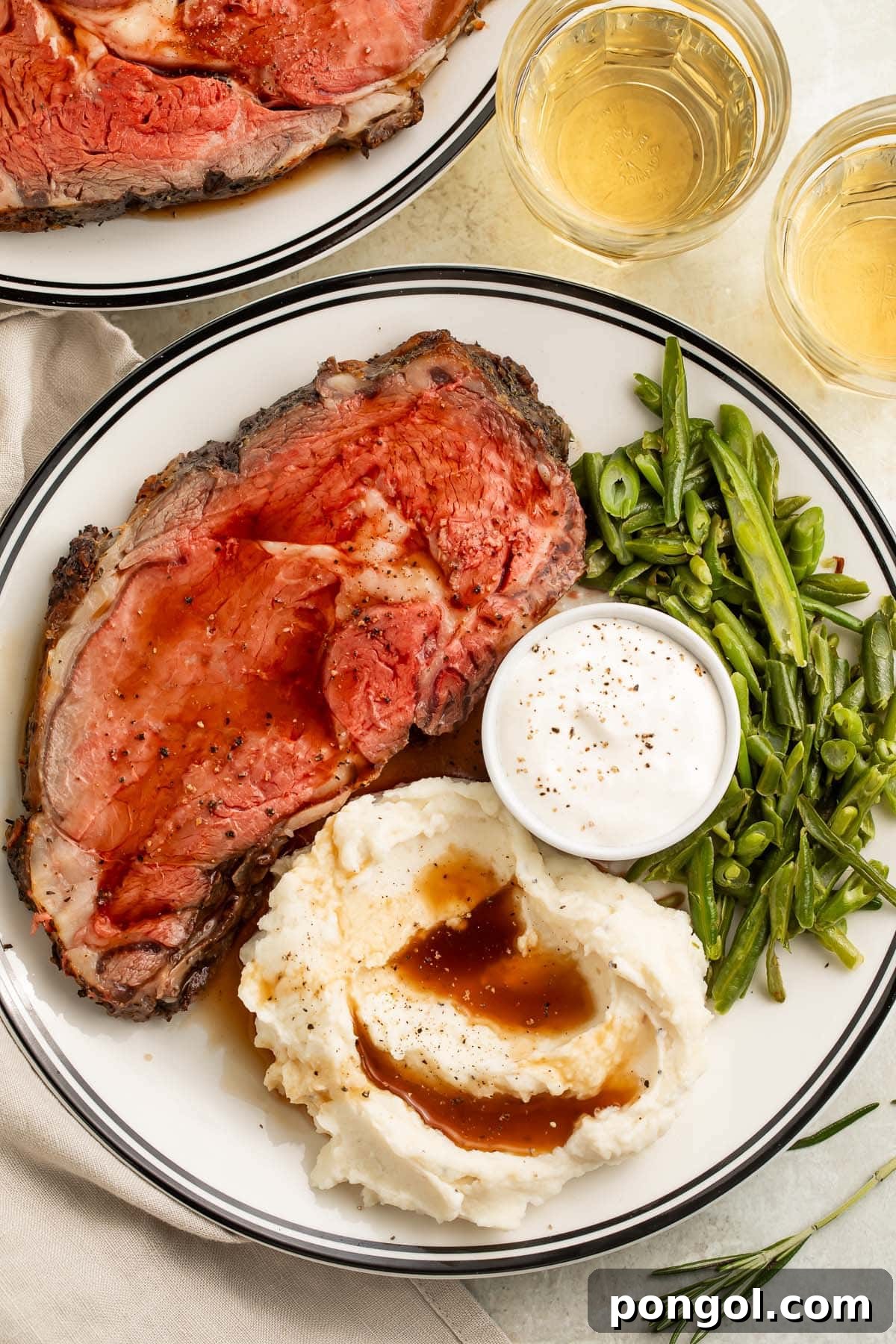
With your prime rib perfectly cooked and crusted, it’s time for the grand finale: carving. Carefully slice the prime rib into individual portions of your desired thickness, always cutting against the grain to ensure maximum tenderness. Serve the warm prime rib immediately alongside the creamy, zesty prepared horseradish sauce and the rich, savory au jus. Enjoy your incredible holiday feast!
Important Notes & Pro Tips for Prime Rib Success
- Embrace the Meat Thermometer: Always rely on the internal temperature of your rib roast, not just the suggested cooking time. Every oven is unique and can cook at different rates. A good quality leave-in thermometer is an invaluable tool for precision and peace of mind.
- Utilize Those Bones: Don’t discard the bones after enjoying your magnificent roast! They are packed with flavor and nutrients. Use them to make your own rich, nourishing homemade bone broth, perfect for soups, sauces, or sipping.
- Storage and Reheating: Leftover prime rib can be stored in an airtight container in the refrigerator for 3-4 days. To reheat without drying it out, slice the cold prime rib thinly and warm gently in a pan with a splash of beef broth, or in a low oven (250°F) until just warmed through. Avoid high heat, which can quickly overcook the meat.
- Pairing Suggestions: Prime rib pairs wonderfully with classic holiday sides like creamy mashed potatoes, roasted asparagus, green bean casserole, or a fresh winter salad. For wine, a bold Cabernet Sauvignon, Merlot, or a robust Zinfandel would be excellent choices to complement the rich flavors of the beef.
Internal Temperatures for Desired Doneness (Before Resting)
Remember that the internal temperature will rise by 5-10 degrees during the resting period (carry-over cooking).
- Rare – Remove prime rib from oven when internal temperature reaches 110° Fahrenheit (43°C). Final temperature will be around 115-120°F.
- Medium-Rare – Remove prime rib from oven when internal temperature reaches 115° Fahrenheit (46°C). Final temperature will be around 120-125°F.
- Medium – Remove prime rib from oven when internal temperature reaches 120° Fahrenheit (49°C). Final temperature will be around 125-130°F.
- Medium-Well – Remove prime rib from oven when internal temperature reaches 130° Fahrenheit (54°C). Final temperature will be around 135-140°F.
- Well – Remove prime rib from oven when internal temperature reaches 140° Fahrenheit (60°C). Final temperature will be around 145-150°F.
Approximate Nutritional Information for One Serving
Nutrition Disclaimers
The total number of servings shown is an approximation. The actual number of servings will depend on your preferred portion sizes and the specific cut of meat.
Nutritional values provided are general guidelines and reflect information for one serving based on the ingredients listed, excluding any optional components. Actual macros may fluctuate slightly depending on the specific brands and types of ingredients used.
To precisely determine the weight of one serving, prepare the recipe as instructed. Weigh the entire finished dish (excluding the container’s weight), then divide this total weight by your desired number of servings. This calculation will provide the exact weight for each portion.
Did You Master This Recipe?
We absolutely love seeing your culinary creations! Share your beautiful Reverse Sear Prime Rib on Instagram and tag @40aprons. Don’t forget to leave a glowing review and tell us how much you loved it!
Tag @40Aprons on Instagram
More Exquisite Holiday Entrées to Impress Your Guests
If you’re looking for more show-stopping main courses to delight your guests, explore these other fantastic recipes:
- Sous Vide Prime Rib with Au Jus: Precision cooking for ultimate tenderness.
- The Best Lobster Bisque (Ruth’s Chris Copycat Recipe): A luxurious and rich appetizer or light entrée.
- Grilled Spatchcock Turkey with Gravy: A faster, juicier way to cook a whole turkey.
- Sous Vide Tri Tip with Easy Chimichurri Sauce: Tender beef with a vibrant, fresh sauce.
- Easy Air Fryer Whole Chicken with Crispy Skin: Perfectly roasted chicken with minimal fuss.
- The Best Filet Mignon Recipe Ever with Garlic Herb Compound Butter (Reverse Sear): Another stellar reverse sear for premium cuts.
- One-Pan Cranberry Rosemary Chicken: Simple, flavorful, and easy cleanup.
- Easy Prime Rib with Au Jus Recipe and Perfect Creamy Horseradish Sauce: A classic take, also incredibly delicious.
- Crispy Chicken Fritta: A delightful and crispy chicken dish for something different.