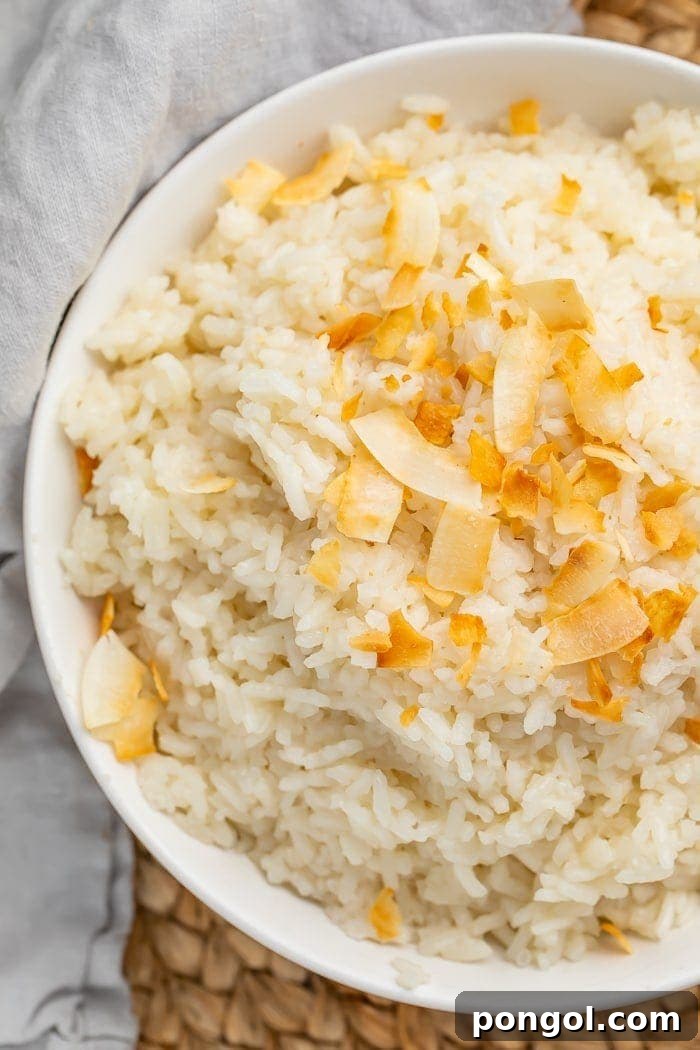
Prepare to elevate your culinary experience with this truly exquisite coconut rice recipe. We’re talking about rice that is perfectly tender, bursting with authentic, heavenly coconut flavor, offering a delightful creamy texture without being heavy. Whether you’re planning an Asian-inspired feast, a vibrant tropical dinner, or a hearty Caribbean meal, this aromatic side dish is the essential ingredient that will transform your recipes from ordinary to extraordinary.
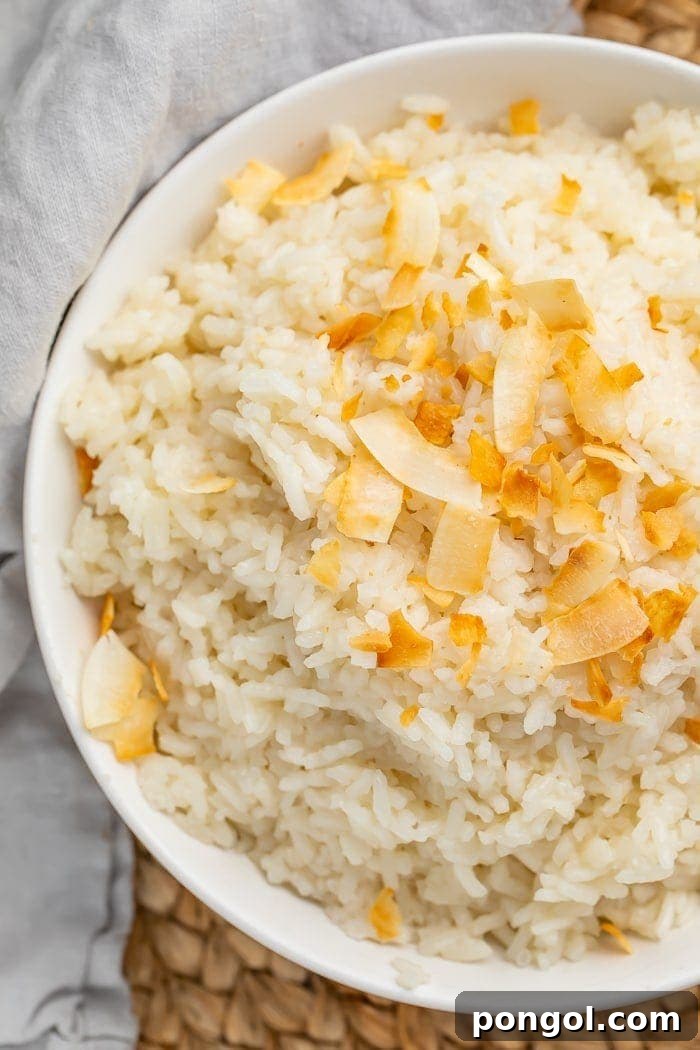
If you’ve ever enjoyed the luscious coconut rice from dishes like our popular Jerk Chicken Bowls, get ready for a version that will truly amaze you. This recipe takes ordinary basmati rice and transforms it into a remarkable culinary delight. Unlike simpler methods that merely substitute water with coconut water, our approach incorporates both rich coconut milk and fragrant coconut oil. The result is a profoundly aromatic, wonderfully creamy, and intensely coconut-infused rice that stands out on any plate.
This versatile side dish is a fantastic accompaniment to a wide array of global cuisines, including Chinese, Thai, Caribbean, Hawaiian, and even Indian. Its delicate sweetness and rich flavor profile create a perfect harmony with savory main courses, while also complementing dishes with a sweeter touch. Imagine pairing it with crispy coconut shrimp, tangy orange chicken, a fiery spicy curry, or sweet and savory Hawaiian chicken with pineapple. Are you feeling hungry yet? This coconut rice isn’t just a side; it’s an experience waiting to happen, enhancing every bite with its tropical essence.
Why This Coconut Rice Recipe Is Unquestionably the Best
What makes this particular coconut rice recipe so exceptional? It’s a combination of carefully selected ingredients and a simple, effective cooking method that maximizes flavor and texture. We don’t just add coconut; we infuse it at every stage to ensure a depth of flavor that’s both authentic and irresistible. This recipe guarantees perfectly separated, fluffy grains of rice, each coated in a luxurious, subtly sweet, and wonderfully aromatic coconut embrace. It’s designed to be effortlessly delicious, making it a staple in your kitchen for weeknight dinners and special occasions alike.
The Magic Behind the Flavor: Key Ingredients Explained
Each ingredient in this recipe plays a crucial role in creating the ultimate coconut rice. We’ve chosen them specifically for their ability to contribute to the dish’s unique aroma, texture, and unparalleled taste. Understanding why these components are vital will help you appreciate the simplicity and brilliance of this recipe.
- Basmati Rice: The Foundation of Flavor & Texture
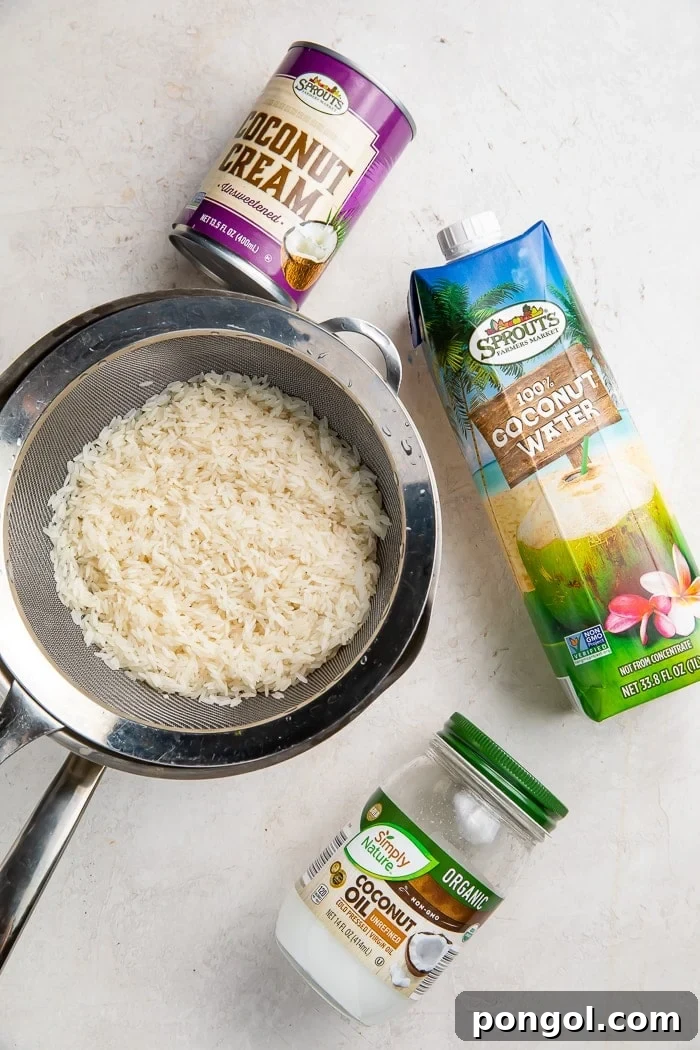
Known for its delightful fragrance and longer, slender grains, basmati rice is our top choice for this dish. Its non-sticky nature ensures that each grain cooks separately and perfectly, allowing it to absorb the rich coconut liquids without becoming mushy. This creates a fluffy, tender rice that’s ideal for soaking up any accompanying sauces, making every spoonful a flavorful experience. While other types of rice can be used, basmati truly shines here, offering a superior texture and aromatic complement to the coconut. - Full-Fat Coconut Milk: Creaminess and Richness Unmatched
This is the heart of our coconut rice. Full-fat coconut milk not only provides the signature coconut flavor but also imparts a luxurious creaminess that elevates the rice beyond simple side dish status. It’s essential for achieving that rich, indulgent texture that makes this recipe so satisfying. Opt for good quality full-fat coconut milk for the best results, as it contains natural fats that contribute to both the flavor and consistency. - Coconut Water (or Plain Water): Enhancing the Coconut Factor
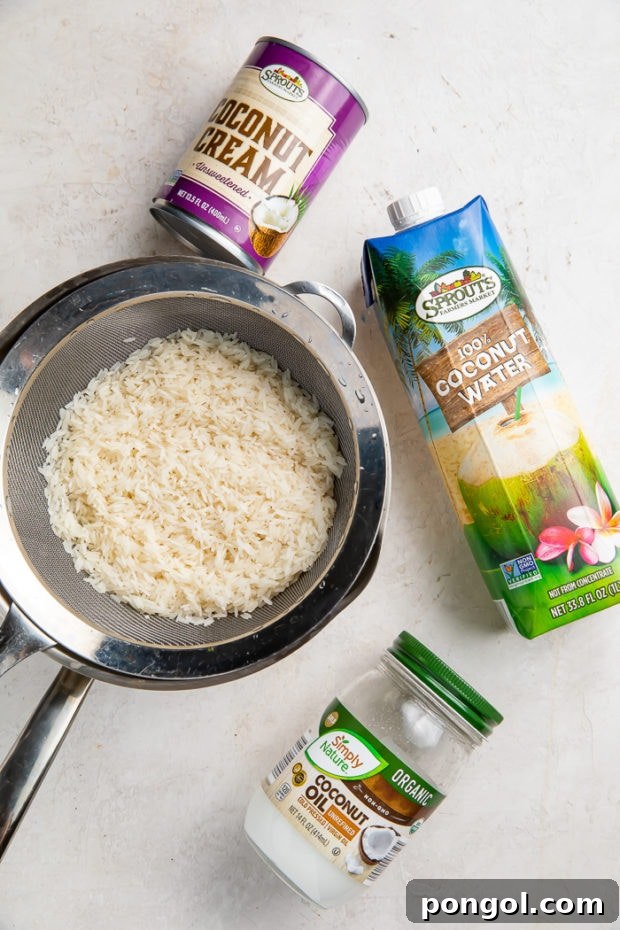
While you could use plain water, incorporating coconut water significantly boosts the overall coconut flavor, making it even more pronounced and delicious. It adds another layer of tropical sweetness and depth, ensuring that the coconut essence permeates every grain. If coconut water isn’t readily available, regular water will work, but for the ultimate experience, coconut water is highly recommended. - Unrefined Coconut Oil: For Extra Aroma and Silky Smoothness
A tablespoon of unrefined coconut oil is a secret weapon in this recipe. It helps to further enhance the creamy texture of the rice and infuses it with an extra layer of fragrant coconut aroma. This addition ensures the rice is incredibly tender and subtly glossy, making it even more appealing. Unrefined coconut oil is preferred for its stronger, more natural coconut scent and taste. - Honey or Granulated Sugar: Balancing Sweetness
A touch of sweetness is crucial to bringing out the natural tropical notes of the coconut. Honey adds a subtle, complex sweetness and a hint of floral aroma, while granulated sugar offers a clean, straightforward sweetness. Both options work beautifully to balance the savory elements and enhance the rich coconut flavor. Choose based on your preference or dietary needs (sugar for a vegan option). - A Pinch of Salt: The Flavor Harmonizer
Often overlooked, salt is vital for balancing the sweetness and richness of the other ingredients. It brightens the flavors and prevents the dish from tasting overly sweet or flat. Just a small amount is enough to round out the profile and make every component sing.
How to Make Perfect Coconut Rice: A Simple Step-by-Step Guide
Creating this delicious coconut rice is surprisingly easy, requiring minimal effort for maximum flavor payoff. Follow these straightforward steps to achieve perfectly cooked, aromatic rice every time.
- Prepare Your Ingredients: Begin by measuring out all your ingredients accurately. This ensures everything is ready when you start cooking, making the process smooth and stress-free. There’s no need to rinse the basmati rice for this recipe, as the starch contributes to the creamy texture.
- Combine All Ingredients: In a medium-sized saucepan with a tight-fitting lid, combine the uncooked basmati rice, full-fat coconut milk, coconut water (or plain water), unrefined coconut oil, salt, and your chosen sweetener (honey or sugar). Give it a quick stir to ensure all ingredients are well mixed and the rice is evenly submerged.
- Bring to a Boil: Place the saucepan over medium-high heat and bring the mixture to a rolling boil. Keep an eye on it to prevent it from boiling over, as coconut milk can foam up.
- Stir and Reduce Heat: Once boiling, give the rice a single, gentle stir to redistribute the grains and ensure nothing is sticking to the bottom. Immediately reduce the heat to medium-low. This quick adjustment is key to preventing the rice from burning and ensuring it cooks evenly.
- Cover and Simmer: Cover the saucepan tightly with its lid. Allow the rice to simmer undisturbed for precisely 10 minutes. Resist the urge to lift the lid during this time, as trapped steam is essential for proper cooking.
- Rest and Fluff: After 10 minutes, remove the saucepan from the heat but keep the lid on. Let the rice rest for another 5 minutes. This resting period allows the remaining steam to finish cooking the rice and helps the grains to firm up. Finally, remove the lid and gently fluff the rice with a fork before serving. Enjoy the incredible aroma!
-

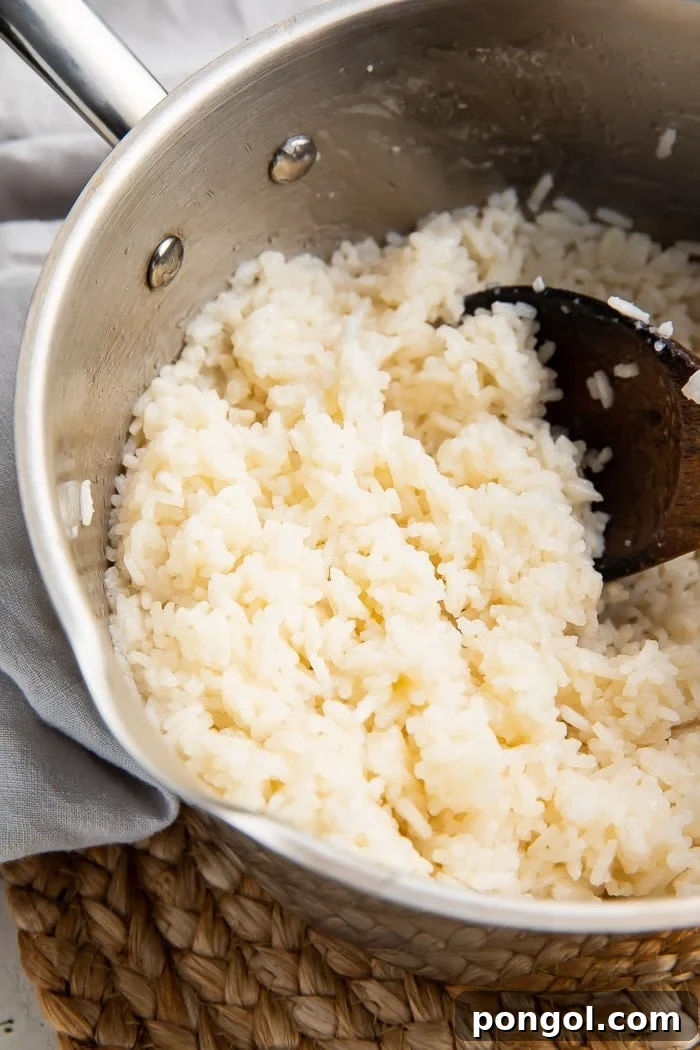
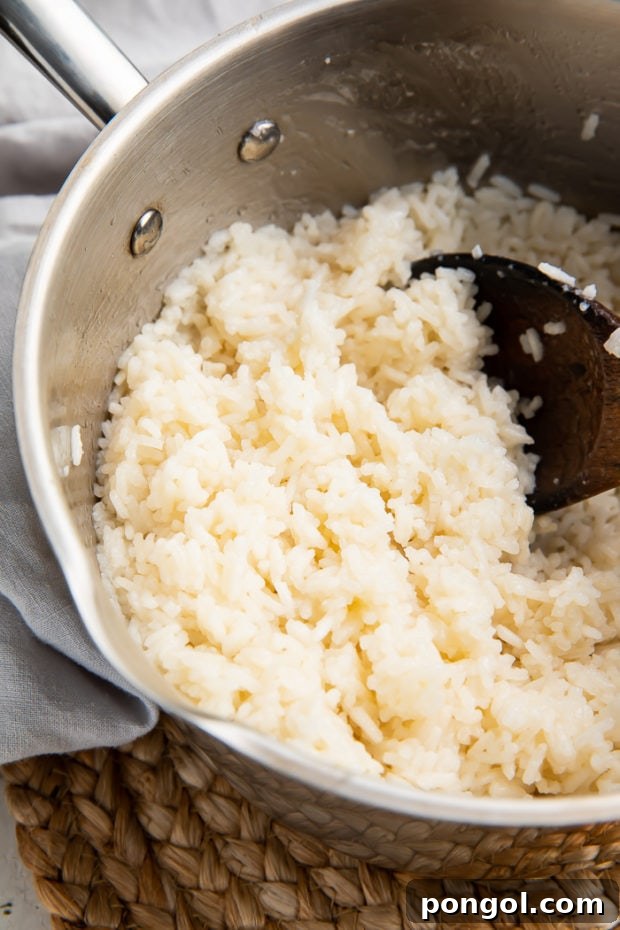
Ingredients simmering to perfection. -
The rice absorbing all the rich coconut flavors.
Chef’s Secrets for Flawless Coconut Rice Every Time
Achieving consistently perfect coconut rice is easy with these expert tips:
- Vegan Modification: To ensure this recipe is completely vegan-friendly, simply substitute the honey with an equal amount of granulated sugar. Both provide the necessary sweetness and balance to the coconut flavor, making it suitable for all dietary preferences.
- Rice Type Considerations: This recipe has been specifically optimized for basmati rice, which yields the best texture and aroma. If you opt to use a different type of rice, it’s crucial to monitor the cooking process closely to prevent overcooking or undercooking.
- White Rice: Most standard white rice varieties (like jasmine or long-grain white rice) will have a similar cooking time to basmati, approximately 10-15 minutes of simmering. However, their liquid absorption might differ slightly, so observe carefully.
- Brown Rice: If using brown rice, be aware that it requires significantly more liquid and a longer cooking time, typically around 45 minutes of simmering, followed by a longer resting period. Adjust the liquid amount as per the brown rice package instructions, usually about 2-2.5 cups of liquid per cup of brown rice, and extend the cooking duration.
- Short-Grain Rice: Short-grain rice varieties tend to be stickier due to higher starch content. While you can make coconut rice with them, the texture will be less fluffy and more cohesive, which might be desirable for certain dishes. Adjust liquid accordingly.
- Do Not Lift the Lid: Once you’ve covered the pot and reduced the heat, resist the temptation to peek! Lifting the lid allows precious steam to escape, which is vital for the rice to cook properly and evenly.
- Resting is Essential: Don’t skip the 5-minute resting period after cooking. This allows the residual heat and steam to continue cooking the rice gently, resulting in perfectly tender, fluffy grains and preventing a gummy texture.
- Adjust Sweetness to Taste: The amount of honey or sugar suggested is a guideline. Feel free to adjust it to your personal preference. If you’re serving it with a very sweet main dish, you might want to reduce the sugar in the rice.
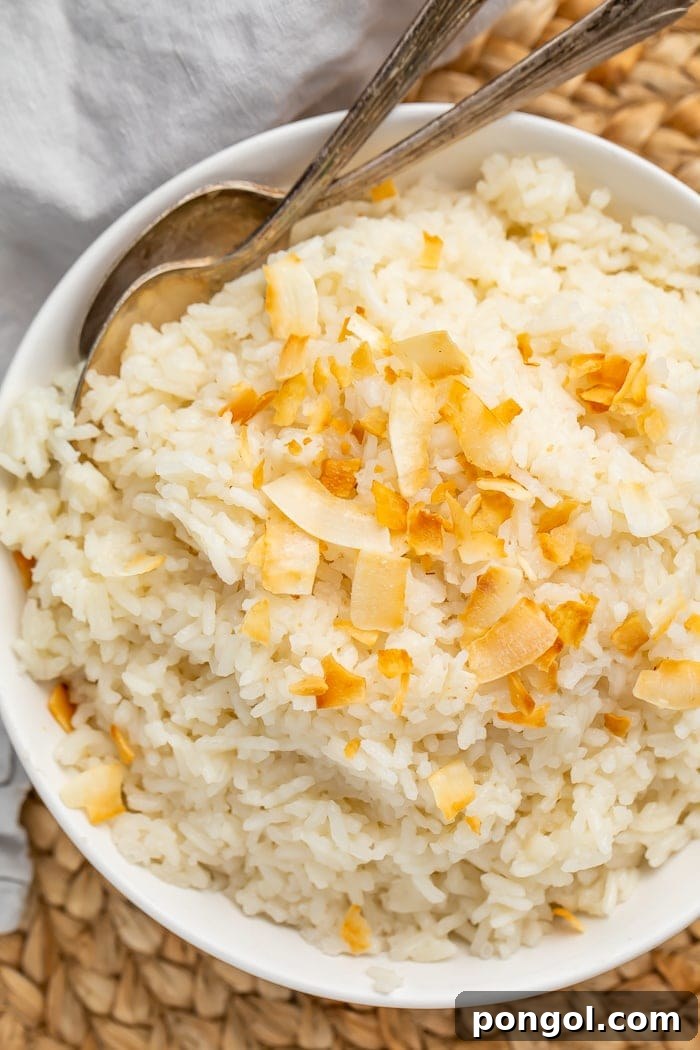
Serving Suggestions: What to Pair with This Aromatic Coconut Rice
The versatility of coconut rice makes it an ideal complement to a wide range of dishes. Its subtle sweetness and rich texture can enhance both spicy and mild flavors. Here are some inspiring ideas to get you started:
- Asian Cuisine: Pair it with classic Thai curries (red, green, or Massaman), flavorful stir-fries, sticky Chinese orange chicken, or even a simple grilled fish with a soy-ginger glaze.
- Tropical & Caribbean Dishes: It’s the perfect match for jerk chicken or pork, pineapple chicken skewers, grilled shrimp, or any seafood dish with a mango salsa. Imagine it alongside a vibrant Hawaiian poke bowl.
- Indian Cuisine: Serve it with a rich and creamy chickpea tikka masala, a spicy vindaloo, or a comforting lentil dal. The coconut rice beautifully balances the robust spices.
- Seafood: Beyond shrimp, consider serving it with pan-seared scallops, baked cod, or even a spicy seafood stew. The coconut notes complement the delicate flavors of the ocean.
- Vegetarian & Vegan Options: Excellent with roasted vegetables, a black bean stew, a hearty vegetable curry, or plant-based protein dishes like crispy tofu or tempeh.
Storage and Reheating Tips for Coconut Rice
To enjoy your delicious coconut rice for longer, proper storage and reheating are key:
- Storage: Allow leftover coconut rice to cool completely at room temperature (this should take no more than 1 hour) before transferring it to an airtight container. Store it in the refrigerator for up to 3-4 days.
- Freezing: For longer storage, you can freeze coconut rice. Once cooled, spread it in a single layer on a baking sheet and freeze for about an hour until individual grains are firm. Then transfer to a freezer-safe bag or container, removing as much air as possible. It can be frozen for up to 1-2 months. Thaw overnight in the refrigerator before reheating.
- Reheating on the Stovetop: For best results, reheat leftover coconut rice on the stovetop. Add a splash of water or a little extra coconut milk (about 1-2 tablespoons per cup of rice) to a non-stick pan. Add the rice, cover, and heat over low to medium heat, stirring occasionally, until heated through and fluffy.
- Reheating in the Microwave: Place the rice in a microwave-safe bowl, add a tablespoon of water or coconut milk, cover with a microwave-safe lid or damp paper towel, and heat on high for 1-2 minutes, stirring halfway, until hot.
Frequently Asked Questions About Coconut Rice
Can I use different types of rice for this recipe?
Yes, while basmati rice is recommended for its ideal texture and aroma, you can use other long-grain white rice varieties like jasmine rice. However, cooking times and liquid absorption might vary slightly, so always monitor your rice to prevent it from becoming mushy or dry. Brown rice will require significantly more liquid and a longer cooking time (around 45 minutes).
Is this coconut rice recipe vegan?
The original recipe can be made vegan by simply swapping honey for granulated sugar. All other ingredients are plant-based, making it a wonderful vegan-friendly side dish when this substitution is made.
How can I make my coconut rice even more coconut-y?
To intensify the coconut flavor, ensure you’re using full-fat coconut milk and coconut water. You can also try adding a pinch of shredded unsweetened coconut to the rice during the last few minutes of cooking, or as a garnish before serving.
What if my coconut rice is too sticky or too dry?
If your rice is too sticky, it likely absorbed too much liquid or was stirred too much during cooking. For future attempts, reduce the liquid slightly or ensure you only stir once at the beginning. If it’s too dry, it might need a bit more liquid or wasn’t cooked long enough. You can try adding a tablespoon or two of hot water or coconut milk, covering it, and letting it steam for an additional 2-3 minutes on very low heat.
More Delicious & Easy Recipes to Explore
- Jerk Chicken Bowls with Mango Salsa and Coconut Rice
- Instant Pot Brown Rice
- White Clam Sauce
- Chickpea Tikka Masala
Cheryl Malik
Creamy Coconut Rice
2 minutes
13 minutes
15 minutes

Cheryl Malik
6
servings
Ingredients
- 1 ½ cup basmati rice (uncooked)
- 1 (13.5-ounce) can full-fat coconut milk
- 1 ¼ cup water or coconut water
- 1 tablespoon unrefined coconut oil
- ½ teaspoon salt
- 1 tablespoon honey or granulated sugar
Instructions
-
Combine all ingredients in a medium-sized saucepan.
-
Bring to a boil over medium-high heat. Stir once, then immediately reduce heat to medium-low. Cover and cook for 10 minutes. Do not lift the lid during cooking.
-
Remove from heat and let rest, covered, for 5 minutes before fluffing with a fork and serving.
- Vegan Option: Use granulated sugar instead of honey.
- Other Rice Types: This recipe is designed for basmati. If using other white rice, cook time is similar; monitor closely. Brown rice requires about 45 minutes of cooking.
Approximate Nutrition Information for One Serving
Calories: 356cal
Protein: 5g
Fat: 18g
Saturated Fat: 16g
Sodium: 258mg
Potassium: 346mg
Total Carbs: 45g
Fiber: 3g
Sugar: 6g
Net Carbs: 42g
Vitamin C: 3mg
Calcium: 35mg
Iron: 2mg
Nutrition Disclaimers
Number of total servings shown is approximate. Actual number of servings will depend on your preferred portion sizes.
Nutritional values shown are general guidelines and reflect information for 1 serving using the ingredients listed, not including any optional ingredients. Actual macros may vary slightly depending on specific brands and types of ingredients used.
To determine the weight of one serving, prepare the recipe as instructed. Weigh the finished recipe, then divide the weight of the finished recipe (not including the weight of the container the food is in) by the desired number of servings. The result will be the weight of one serving.
Did You Make This Recipe?
Tag @40aprons on Instagram and be sure to leave a review on the blog post!
Tag @40Aprons on Instagram